
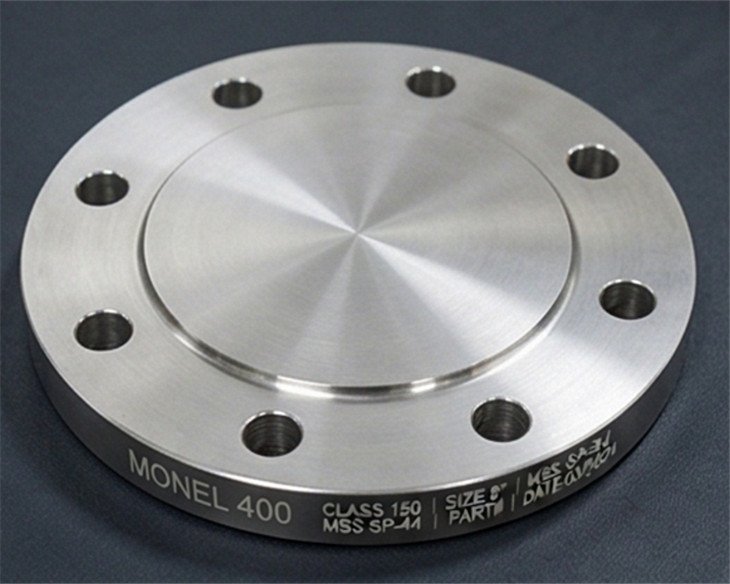
Warum PMI-Tests für Flansche aus legiertem Stahl wichtig sind
Direkte Antwort
Positive material identification verifies selected alloying elements in a flange and helps detect material mix-ups. Handheld XRF is effective for many heavier elements such as chromium, molybdenum and nickel, but it does not reliably measure carbon. OES may be required when carbon or other light elements are essential to grade confirmation.
Wichtige Erkenntnisse
- Choose the PMI method for the elements that distinguish the required grade.
- PMI verifies chemistry, not heat treatment, mechanical properties or defect-free condition.
- Every reading must trace to an item, Hitzezahl, calibrated instrument and acceptance procedure.
What PMI can and cannot confirm
PMI compares measured elemental composition with an approved grade library or acceptance range. It is valuable when multiple carbon, alloy and stainless grades move through the same supply chain.
It cannot prove tensile properties, Zähigkeit, microstructure, heat treatment or pressure rating. A complete release uses PMI alongside certificates, markings, dimensional inspection and specified NDE.
XRF versus OES
| Method | Stärke | Limitation/consideration |
|---|---|---|
| Handheld XRF | Fast identification of many alloying elements with minimal surface marking | Carbon and some light elements are not reliably measured |
| Optical emission spectroscopy | Can measure carbon and additional light elements with suitable calibration | Requires surface preparation and leaves a small burn mark |
Build a defensible PMI plan
Define whether testing is 100 percent or sample-based, which surfaces may be tested, acceptance ranges, retest rules and how results are recorded. Clean coatings, scale and contamination from the test spot because surface condition can affect readings.
Use certified reference materials and calibration checks required by the project procedure. The report should record instrument serial number, Operator, date, item number, heat and results.
PMI controls during fabrication and shipment
Material can be mixed after incoming inspection. For critical work, identification should be maintained through cutting, Bearbeitung, subcontract heat treatment, NDE and final packing. Final PMI at the marked flange can confirm the released item remains connected to the intended grade.
Colour coding may support segregation, but it should not replace durable marking and documented traceability.
Häufig gestellte Fragen
Can XRF distinguish F91 from every similar grade?
Not always, especially where carbon or light-element differences are decisive. The approved PMI procedure should define when OES or laboratory analysis is needed.
Does PMI damage the flange?
XRF is generally non-destructive. OES creates a small prepared burn spot that should be placed and refinished under an approved procedure.
Is PMI required by ASTM A182 for every flange?
Project purchase orders frequently add PMI, but the required extent must be confirmed from the material specification, code and supplementary requirements.
Primäre Standards, auf die verwiesen wird
Always verify the edition specified by the purchase order and obtain the complete controlled standard for design and acceptance.
Fordern Sie ein Angebot für einen Flansch aus legiertem Stahl an
Senden Sie die Materialqualität, Standard, NPS, Druckklasse, Flanschtyp, gegenüber, Rohrplan, Mengen- und Prüfanforderungen. SASA FLANGE will review the technical description before quotation.
Verwandte Beiträge
ZfP-Prüfmethoden für geschmiedete Flansche aus legiertem Stahl
A buyer-focused guide to non-destructive testing methods for forged alloy…

Anforderungen an die Härteprüfung für F11, F22- und F91-Flansche
A practical guide to specifying and interpreting hardness tests on…
So lesen Sie ASTM A182-Flanschmarkierungen
A field guide to interpreting ASTM A182 and ASME B16.5…
Geschmiedete vs. gegossene Flansche: Was für kritische Rohrleitungen sicherer ist?
A balanced engineering comparison of forged and cast flanges for…