
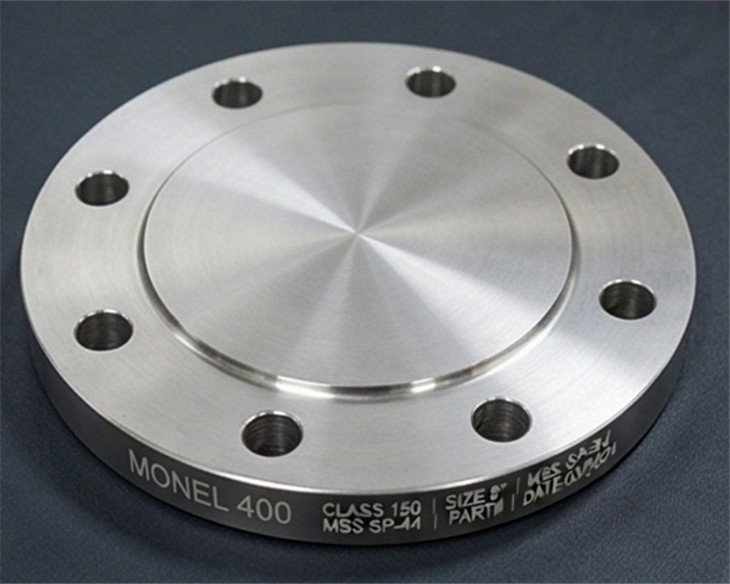
Druck-Temperatur-Werte für Flansche aus legiertem Stahl verstehen
Direkte Antwort
A flange pressure–temperature rating is the maximum allowable gauge pressure listed for a material group and flange class at a stated temperature under the standard’s conditions and notes. It is not the same as system allowable pressure, test pressure or operating pressure. The piping designer must apply the governing code and evaluate the complete joint.
Wichtige Erkenntnisse
- Material, class and temperature form one rating decision.
- Interpolation and temperature selection must follow the standard’s rules and notes.
- External loads, transients, corrosion and joint assembly can govern even when table pressure is adequate.
What the ASME rating table tells you
The table links a material group to maximum allowable pressure values across temperature rows for each class. Wenn die Temperatur steigt, allowable material strength often decreases and the listed flange pressure rating changes.
Use the exact material designation. Similar commercial names or nominal chemistries do not prove that two grades share a rating group.
What the table does not tell you
The flange table does not complete the piping design. It does not evaluate corrosion allowance, Ermüdung, water hammer, nozzle loads, gasket relaxation, bolt preload, thermal gradients or the suitability of the fluid for the material.
It also does not replace the piping code rules for design pressure, occasional loads, testing or component qualification.
Common rating mistakes
- Treating Class as a fixed psi number
- Using operating temperature instead of design temperature
- Reading the table for the wrong material group
- Ignoring notes and size restrictions
- Mixing editions between design documents and vendor data
- Assuming the flange rating also qualifies the gasket and bolting
A defensible rating workflow
- Confirm design pressure and temperature cases.
- Confirm exact flange material and standard edition.
- Locate the material group and class table.
- Verify size and flange type scope.
- Check gasket, Verschraubung, attached components and external loads.
- Record the calculation reference and engineering approval.
This workflow gives procurement a traceable basis for the class shown on the purchase order.
Häufig gestellte Fragen
Is hydrotest pressure the same as flange rating?
NEIN. Hydrotest pressure is established by the governing code and test procedure. The test condition must remain within applicable component and material limits.
Can rating tables be interpolated?
Apply only the interpolation and temperature rules permitted by the adopted standard and project design procedure.
Why can two Class 600 flanges have different ratings?
Different materials have different allowable properties at temperature, so their material-group tables can assign different pressures.
Primäre Standards, auf die verwiesen wird
Überprüfen Sie immer die in der Bestellung angegebene Auflage und holen Sie sich den vollständigen kontrollierten Standard für Design und Abnahme ein.
Fordern Sie ein Angebot für einen Flansch aus legiertem Stahl an
Senden Sie die Materialqualität, Standard, NPS, Druckklasse, Flanschtyp, gegenüber, Rohrplan, Mengen- und Prüfanforderungen. SASA FLANGE Wir werden die technische Beschreibung vor dem Angebot prüfen.
Verwandte Beiträge
C-2000 vs. C22-Flansche: Materialauswahl und RFQ-Prüfungen
Vergleichen Sie die Materialidentitäten der Flansche C-2000 und C22, Servicebedingungen, forging…
ZfP-Prüfmethoden für geschmiedete Flansche aus legiertem Stahl
Ein käuferorientierter Leitfaden zu zerstörungsfreien Prüfmethoden für Schmiedelegierungen…

Anforderungen an die Härteprüfung für F11, F22- und F91-Flansche
Ein praktischer Leitfaden zur Spezifizierung und Interpretation von Härtetests…
So lesen Sie ASTM A182-Flanschmarkierungen
Ein praktischer Leitfaden zur Interpretation von ASTM A182 und ASME B16.5…