
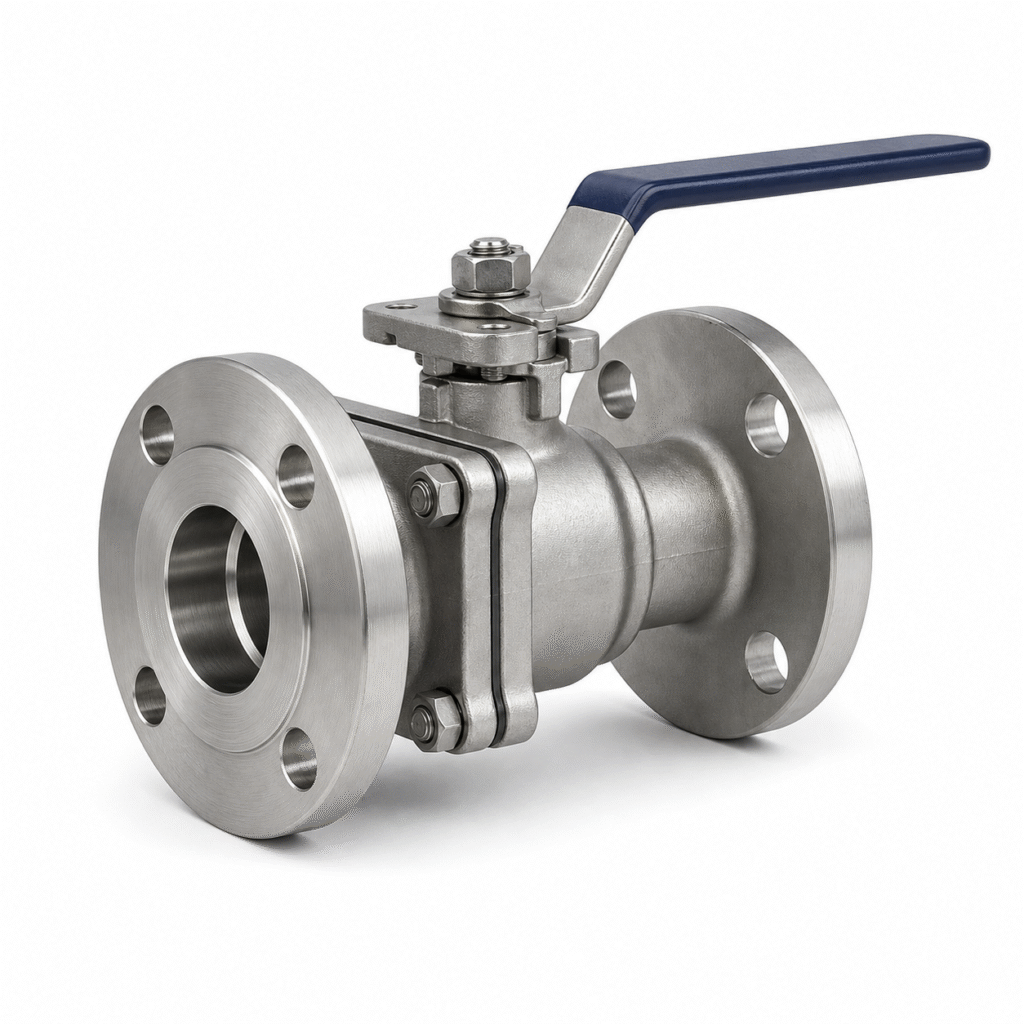
Hochwertige vs. minderwertige Ventilkörper: Hauptunterschiede
Direkte Antwort
A high-quality valve body uses verified material, controlled casting or forging, accurate machining and documented inspection to maintain pressure-boundary integrity under its specified service conditions. A low-quality body may look acceptable from the outside yet contain material substitutions, Porosität, Einschlüsse, cracks or dimensional errors that raise the risk of leakage, deformation and premature failure.
Bei Öl und Gas, chemische Verarbeitung, power generation and other demanding industries, the valve body is the principal pressure-containing part of a valve. It supports the bonnet or cover, contains the internal trim and connects the valve to the piping system. Its quality directly influences safety, operating stability, maintenance frequency and lifecycle cost.
Comparing a high-quality valve body with a low-quality alternative therefore requires more than checking price, weight or surface finish. Buyers should evaluate the complete evidence package: materielle Identität, Herstellungsweg, Wärmebehandlung, Druckstufe, dimensional conformity, nondestructive examination, pressure-test records and traceability.
Wichtige Erkenntnisse
- Material certificates and heat-number traceability are more reliable than appearance alone.
- Pressure-boundary quality and closure tightness are related but separate acceptance questions.
- A higher purchase price can produce a lower total cost when it prevents leaks, shutdowns and early replacement.
- The valve must comply with the exact product standard, design basis and project specification stated in the purchase order.
High-quality vs low-quality valve bodies at a glance
| Evaluation point | High-quality valve body | Low-quality valve body | Operational consequence |
|---|---|---|---|
| Material | Specified grade with verified chemistry, properties and heat traceability | Unverified, substituted or recycled feedstock with inconsistent properties | Korrosion, cracking or loss of pressure capability |
| Herstellung | Controlled casting, Schmieden, heat treatment and machining | Poor process control, rough machining or concealed repairs | Porosität, Einschlüsse, distortion and dimensional mismatch |
| Sealing interfaces | Accurate seat pockets, gasket faces and body-bonnet geometry | Rough, misaligned or unstable interfaces | Seat leakage or external leakage |
| Pressure and temperature | Rated and tested to the specified standard and service envelope | Unsupported rating claims or incomplete testing | Deformation, leakage or pressure-boundary failure |
| Dokumentation | MTC, Inspektionsprotokolle, test reports and permanent marking | Generic certificates, missing records or broken traceability | Uncertain compliance and difficult root-cause analysis |
| Lifecycle cost | Predictable maintenance and longer reliable service | Frequent repair, shutdown or early replacement | Higher total ownership cost |
1. Material quality and manufacturing process
A quality valve body begins with the correct material specification. Kohlenstoffstahl, Edelstahl, low-alloy steel, duplex stainless steel and nickel alloys each have different strength, Korrosion, temperature and fabrication characteristics. The best material is not simply the most expensive grade; it is the material approved for the process medium, Auslegungsdruck, design temperature and damage mechanisms.
For cast bodies, foundry controls should address melting practice, pouring temperature, mold quality, solidification and heat treatment. Visual appearance cannot reveal internal shrinkage, gas porosity, nonmetallic inclusions or hot tears. Kritische Gussteile erfordern daher möglicherweise zusätzlich zur Oberflächenprüfung eine Röntgen- oder Ultraschallprüfung. Für geschmiedete Karosserien, die Schmiedereduktion, Kornfluss, Wärmebehandlung und Bearbeitungsroute wirken sich auf die Stabilität und die mechanische Leistung aus.
Bei Körpern mit geringer Qualität wird möglicherweise eine falsche Note verwendet, Mischschrott oder schlecht kontrollierte Wärmebehandlung. Sie können auch Schweißreparaturen enthalten, die nicht qualifiziert wurden, dokumentiert oder genehmigt. Selbst wenn ein Körper eine grundlegende Chemieprüfung besteht, es kann immer noch inakzeptable mechanische Eigenschaften aufweisen, Mikrostruktur oder innere Defekte. Die Materialidentifizierung ist ein Teil der Verifizierung, nicht die gesamte Qualitätsentscheidung.
2. Die Dichtleistung hängt von der Körpergenauigkeit ab
Ventilleckagen werden oft als Sitz- oder Packungsproblem diskutiert, Aber die Körpergeometrie ist von grundlegender Bedeutung. Gesäßtaschen, Führungsflächen, Karosserie-Motorhaube-Verbindungen, Die Dichtungsflächen des Deckels und die Ausrichtung des Schafts müssen innerhalb der angegebenen Toleranzen bearbeitet werden. Wenn diese Schnittstellen rau sind, verzerrt oder nicht richtig ausgerichtet, Selbst gute Verkleidungen und Dichtungen sorgen möglicherweise nicht für eine stabile Abdichtung.
Ein hochwertiges Gehäuse unterstützt die wiederholbare Montage und behält die Ausrichtung bei, wenn sich Druck und Temperatur ändern. Oberflächenbeschaffenheit und Maßkontrolle sollten mit der Konstruktionszeichnung und der geltenden Norm übereinstimmen. Bei der Verschlussprüfung wird dann die Sitzdichtheit des fertigen Ventils überprüft, während Schalentests die Druckgrenze bewerten. Ein Test sollte nicht als Beweis für den anderen vorgelegt werden.
An einem minderwertigen Ventil, Eine anfängliche Leckage kann durch übermäßiges Anziehen verdeckt werden, temporäre Versiegelung oder ein optimistisches Testprotokoll. Im Dienst, Temperaturwechsel, Vibration, Korrosion und Flüssigkeitserosion können die zugrunde liegende Fehlausrichtung oder das schwache Material freilegen. Das Ergebnis kann ein interner Bypass sein, diffuse Emissionen oder ein externes Leck mit Folgen für Sicherheit und Umwelt.
3. Druck- und Temperaturbeständigkeit
Eine zuverlässige Druckstufe ergibt sich aus der Ventilkonstruktion, Körpermaterialgruppe, Wandstärke, Verbindung beenden, Temperatur und maßgeblicher Standard zusammen betrachtet. Eine Klassen- oder PN-Bezeichnung ist kein universeller Druckwert. Wenn sich die Betriebstemperatur ändert, Auch die verfügbare Druckstufe kann sich ändern.
Hochwertige Ventile werden nach einem dokumentierten Verfahren mit kalibrierten Geräten getestet, geeignete Prüfflüssigkeit, definierte Haltezeit und Akzeptanzkriterien. ASME B16.34 befasst sich mit Druck-Temperatur-Bewertungen und anderen Konstruktionsanforderungen in seinem Anwendungsbereich, während API 598 Und ISO 5208 werden häufig für die Ventilinspektion und Druckprüfung herangezogen. In der Bestellung muss die anwendbare Norm angegeben sein, Edition und eventueller projektspezifischer Ergänzungen.
The frequently repeated claim that every valve body must be tested at exactly 1.5 times its rated pressure is too broad. Test pressure depends on the applicable valve standard, Material, rating basis and test type. Buyers should request the actual test procedure and report instead of accepting an unsupported multiplier or a vague “hydro tested” statement.
4. Service life, reliability and total ownership cost
A properly selected and manufactured valve body can provide many years of reliable service, but no responsible supplier should promise a universal lifespan. Corrosion rate, Erosion, fatigue cycles, creep exposure, Thermoschock, Vibration, Betriebshäufigkeit und Wartungsqualität wirken sich alle auf die Haltbarkeit aus.
Hochwertige Karosserien werden mit entsprechender Wandstärke konstruiert, Übergangsgeometrie und Korrosionszuschlag, sofern erforderlich. Eine kontrollierte Wärmebehandlung und Fehlerakzeptanz reduzieren das Risiko einer frühen Rissbildung oder Verformung. Vollständige Aufzeichnungen machen auch zukünftige Inspektions- und Wartungsentscheidungen zuverlässiger.
Billiganbieter erscheinen manchmal wirtschaftlich, weil der anfängliche Kaufpreis sichtbar ist, während die Risikokosten verborgen bleiben. Ein undichtes oder festsitzendes Ventil kann den Bau eines Gerüsts erfordern, Isolierung, Dekontamination, Arbeit, Ersatzteile und Produktionsausfälle. In kontinuierlich arbeitenden Anlagen, Selbst eine ungeplante Abschaltung kann den Preisunterschied zwischen qualifizierter und fragwürdiger Ausrüstung überschreiten.
Die Gesamtbetriebskosten sollten daher die Inspektion umfassen, Installation, Energieverlust, Wartung, Ausfallzeit, environmental exposure and replacement—not only the supplier’s quotation. A high-quality valve body creates value by making performance more predictable across the operating life of the system.
5. Why valve body quality matters in real applications
Safety in hazardous service
In flammable, giftig, high-pressure or corrosive service, pressure-boundary integrity is a primary safeguard. A sound body, correctly selected material and verified body-bonnet joint help reduce the likelihood of loss of containment. Fire-safe or fugitive-emission claims, wo erforderlich, must apply to the tested valve configuration rather than the body material alone.
Reliability in continuous production
Raffinerien, chemical plants and power stations often depend on valves that remain available between planned turnarounds. Dimensional stability, Korrosionsbeständigkeit und rückverfolgbare Herstellung reduzieren die Wahrscheinlichkeit von Anhaftungen, Leckage und Notfallwartung. Eine zuverlässige Ventilleistung trägt auch dazu bei, dass die umfassendere Prozesssteuerungs- und Isolationsstrategie wie vorgesehen funktioniert.
Compliance und Überprüfbarkeit
Konformität ist mehr als nur das Drucken von APIs, ASME, ISO oder GB/T auf einem Typenschild. Das Ventil sollte der spezifischen Produktnorm entsprechen, Materialspezifikation, Druckklasse, Verbindung beenden, Testanforderung und Projektdatenblatt. Ein vollständiges Qualitätsdossier ermöglicht dem Käufer, Prüfer und Betreiber bestätigen, was geliefert wurde und wie es angenommen wurde.
So beurteilen Sie die Qualität des Ventilkörpers vor dem Kauf
- Definieren Sie den Dienst: Geben Sie das Medium an, Auslegung und Betriebsdruck, Temperaturbereich, Korrosionszuschlag, Radfahren und anwendbare Linienklasse.
- Geben Sie das Körpermaterial vollständig an: den Materialstandard einbeziehen, genaue Note, Produktform, Wärmebehandlung und jegliche Sauer- oder Tieftemperaturanforderungen.
- Confirm the manufacturing route: identify cast, forged or fabricated construction and require approval for repairs or deviations where appropriate.
- Review traceability: match the heat number and permanent marking to the material test certificate and manufacturing records.
- Set inspection requirements: define visual, dimensional, surface and volumetric examination based on the valve type, material and service criticality.
- Verify pressure testing: request the applicable standard, calibrated gauge records, test pressure, Dauer, medium and acceptance result.
- Check the complete valve: body quality does not compensate for unsuitable trim, Sitze, Stängel, Verpackung, Verschraubung, actuator or end connections.
- Evaluate the supplier: review manufacturing capability, Qualitätsmanagement, previous performance and responsiveness to technical questions.
Warning signs include a certificate that cannot be tied to the body marking, a rating without a stated design standard, reluctance to disclose the manufacturing route, unusually low weight, unexplained weld repairs and a price that cannot support the specified inspection plan.
Häufig gestellte Fragen
Can visual inspection identify a high-quality valve body?
Visual inspection can find surface cracks, poor finish, damaged flange faces, irregular marking and some repair evidence, but it cannot confirm chemistry, mechanical properties or internal soundness. Documentation and the specified tests are also required.
Is a forged valve body always better than a cast body?
NEIN. Forging can provide a dense worked structure, while casting enables complex and large shapes. A qualified cast body may be entirely suitable. The decision depends on the valve design, Größe, Material, Service, inspection level and governing standard.
Does a pressure test prove the valve will never leak?
NEIN. A pressure test verifies defined acceptance criteria at the test conditions. It does not guarantee future performance under corrosion, Temperaturwechsel, Vibration, Erosion, incorrect installation or operation outside the design envelope.
Why can a premium valve have a lower lifecycle cost?
Reliable construction can reduce unplanned maintenance, Leckage, production loss and replacement frequency. Lifecycle evaluation should consider the consequence of failure and operating cost as well as purchase price.
Explore related industrial valve products
Compare body materials, valve construction, Druckklasse, end connections, Sitze, trim and inspection requirements against your project data sheet before requesting a quotation.
Schwimmender Kugelhahn aus EdelstahlKeilschieberventil aus Edelstahl
Verwandte Beiträge
ASTM B564 UNS N06625 Flansche: Grad 1 vs. Note 2
Erfahren Sie, wie ASTM B564 bewertet wird 1 und Note 2 anwenden…
C-2000 vs. C22-Flansche: Materialauswahl und RFQ-Prüfungen
Vergleichen Sie die Materialidentitäten der Flansche C-2000 und C22, Servicebedingungen, Schmieden…
ASTM A182 F51 vs. F60 Flansche: S31803 vs. S32205 erklärt
Vergleichen Sie die Duplexflansche ASTM A182 F51 und F60, einschließlich S31803/S32205…
UNS S32750 vs. S32760 Flansche: ASTM A182 F53 oder F55?
Vergleichen Sie die Super-Duplex-Flansche S32750 und S32760, einschließlich ASTM A182…