
Nikel 200 Flensa: Teknologi Mengejutkan Mengubah Segalanya
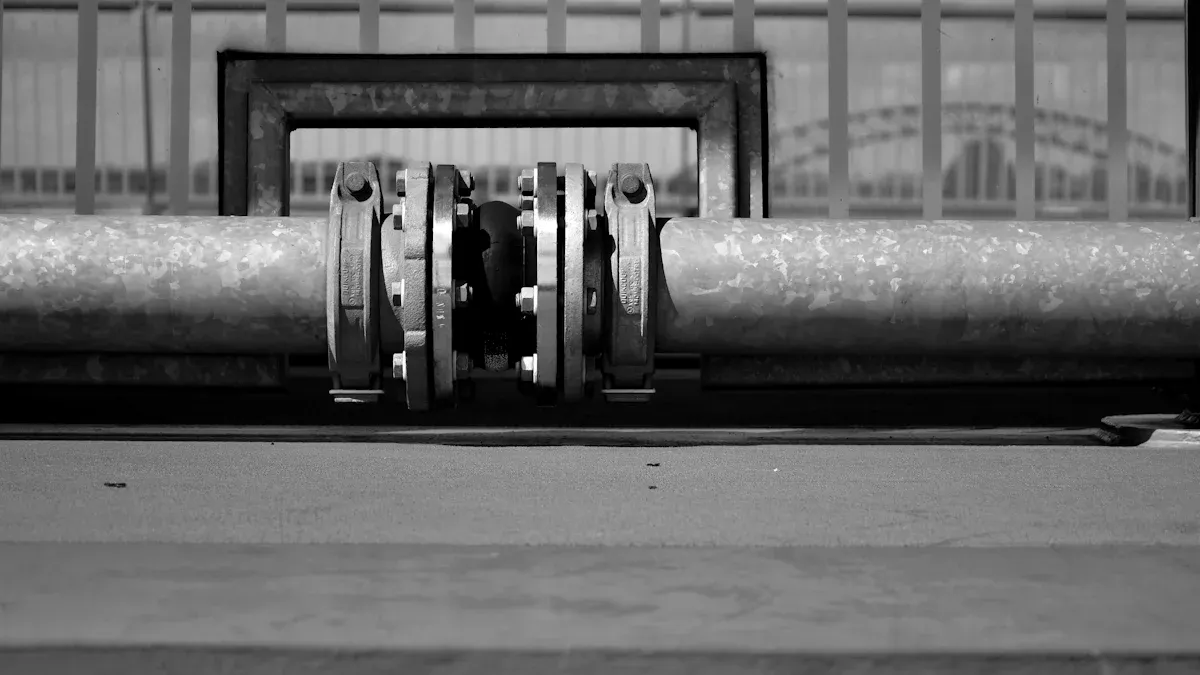
Significant manufacturing innovation integrates advanced forging with digital twin technology and automated quality control. This synergy of physical and digital processes creates components with superior microstructural integrity and dimensional accuracy. These technologies directly improve the strength and reliability of Nikel 200 flensa for critical industrial applications.
Industry data reveals that corrosion and material defects account for approximately 19% Dan 11% of flange failures, respectively. Modern manufacturing directly targets these vulnerabilities to enhance operational safety and performance.
This focus on quality supports a growing global market for high-performance components like Hastelloy C276 pipe fittings and industrial flanges, which is projected to reach $7,393.4 million by 2031.
Poin Penting
- New manufacturing methods make Nickel 200 flanges stronger and more reliable. These methods use advanced forging, digital models, and automated checks.
- Advanced forging changes the metal inside the flange. This makes the flange very strong and precise. It helps prevent problems like cracks.
- Digital twin technology creates a virtual copy of the flange. Engineers use this copy to test and improve the design. This helps find problems before making the real flange.
- Automation and robots make flanges with high accuracy. They ensure every flange meets strict quality rules. This also makes the workplace safer.
- Better quality checks ensure each flange is perfect. These checks use special tests to find hidden flaws. They also confirm the material is pure Nickel 200.
Advanced Forging for Superior Grain Structure
The foundation of a high-performance Nickel 200 flange lies in its manufacturing process. Advanced forging techniques are not just about shaping metal; they are about fundamentally re-engineering the material at a microscopic level. These methods create a refined, uniform grain structure. This enhancement directly translates to superior mechanical strength and reliability in demanding industrial environments.
Precision Closed-Die Forging
Precision closed-die forging is a transformative step in produksi flensa. In this process, a heated Nickel 200 workpiece is pressed between two custom dies that completely enclose the material. The immense pressure refines the metal’s internal microstructure into a sub-microcrystalline structure. This process eliminates internal voids and creates an optimal grain flow that follows the flange’s contour, significantly improving its strength and hardness compared to other methods.
This technique delivers exceptional dimensional accuracy and consistency. Key benefits include:
- High Repeatability: Ensures every flange meets identical specifications for high-volume production.
- Superior Surface Finish: Reduces the need for extensive secondary finishing.
- Strict Tolerances: Guarantees precise dimensions for seamless installation and leak-proof performance.
Catatan: The precision of closed-die forging can achieve an accuracy increase to approximately 0.025 mm. This minimizes post-forging machining, saving both time and material costs while delivering a geometrically perfect component.
Isothermal Forging
Isothermal forging elevates precision to the next level. This advanced method involves heating both the workpiece and the dies to the same temperature and maintaining it throughout the forging process. For a high-performance material like Nickel 200, this is critical. It prevents the material from cooling too quickly, which eliminates the risk of thermal stress and surface cracking. The result is a flange with flawless structural integrity, free from the hidden defects that can compromise safety and operational lifespan.
Optimizing Nickel 200 Flanges with Digital Twins

Advanced forging creates a strong physical component. Digital twin technology provides the intelligence to perfect it. A digital twin is a virtual, real-time replica of the flange and its manufacturing process. This innovation allows engineers to simulate, predict, and optimize every variable before a single piece of metal is forged, bridging the gap between design and production.
Simulating the Forging Process
Digital twins revolutionize how manufacturers approach forging. By creating a virtual model of the entire process, engineers can run countless simulations to refine parameters like temperature, tekanan, and die speed. This virtual testing ground identifies the most efficient path to a perfect component, significantly reducing material waste and production costs. This optimization is achieved through several key advantages:
- Virtual Optimization: Engineers simulate the forging process to correct potential errors before production begins, preventing material loss from flawed initial runs.
- Material Usage Optimization: Simulation tools calculate the exact amount of raw material needed, minimizing excess and scrap.
- Reduction of Physical Prototypes: Virtual testing drastically decreases the need for costly and material-intensive physical prototypes.
Predicting Stress and Failure Points
The true power of a digital twin lies in its predictive capabilities. It can forecast how Nikel 200 flensa will behave under extreme operational stress. By integrating data from simulations and real-world sensors, these models can pinpoint potential weak spots, stress concentrations, and areas prone to fatigue. This foresight is invaluable for safety-critical applications.
Advanced methods like the Digital Twin for Structural Static Test Monitoring (DT-SSTM) create high-precision models for real-time stress evaluation. This approach combines simulation data with experimental validation, achieving superior accuracy in predicting structural integrity and ensuring components perform reliably under load.
This predictive analysis allows for design enhancements that reinforce vulnerable areas, ensuring the final product offers maximum durability and a long, reliable service life. It represents a proactive approach to safety and quality assurance.
Automation in Flange Manufacturing
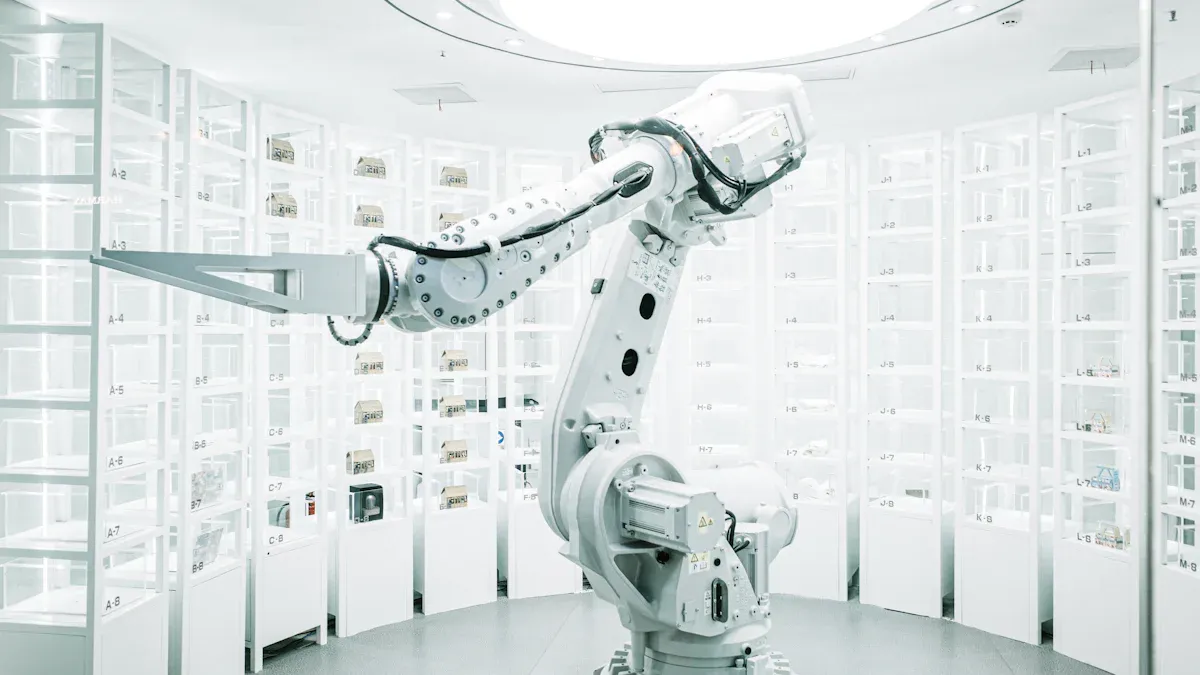
While advanced forging and digital twins create a blueprint for perfection, automation brings that design to life with unparalleled consistency and precision. In modern manufacturing, automation is not just about speed; it is about eliminating human variability to produce a flawless component every time. This integration of robotics and automated machining ensures that every Nickel 200 flange adheres to the strictest quality standards.
Robotic Handling for Consistency
Robots handle the heavy, repetitive, and hazardous tasks of moving Nickel 200 workpieces. Robotic arms transfer hot billets from the furnace to the forge and then to machining centers with exact, repeatable movements. This consistency is crucial for maintaining thermal uniformity and preventing defects. Lebih-lebih lagi, robotic handling creates a significantly safer work environment.
Key safety and consistency benefits include:
- Eliminating Heavy Lifting: Robots manage heavy materials, minimizing the risk of musculoskeletal injuries for workers.
- Preventing Fatigue-Related Errors: Unlike humans, robots do not experience fatigue. They perform strenuous tasks with consistent precision over long shifts, reducing mistakes.
- Ensuring Worker Safety: Robots operate in hazardous conditions, keeping employees at a safe distance from extreme temperatures and sharp edges.
Automated Machining for Precision
Setelah menempa, the flange moves to automated machining centers for final finishing. Computer Numerical Control (CNC) machines execute precise cutting and drilling operations based on the digital design. This process is critical for creating the flange’s sealing faces, lubang baut, and other features that demand tight tolerances. Automated machining guarantees that every flange is a perfect geometric match to its specification.
A critical metric for performance is the surface finish on the sealing face. Automated CNC machining can achieve a surface roughness of Ra ≤ 1.6 mikrometer, creating an exceptionally smooth surface for a reliable, segel anti bocor.
This level of precision ensures flawless interoperability and performance.
| Fitur | Tolerance Range (mikrometer) |
|---|---|
| Flatness | ±50.8 |
| Konsentrisitet | ±25.4 |
| Permukaan Selesai (Ra) | 0.81-1.6 |
Next-Generation Quality Assurance
Digital design and automated production set the stage for a perfect flange. Next-generation quality assurance (QA) provides the final, critical verification. These advanced inspection technologies move beyond simple spot-checks, integrating directly into the production line to guarantee that every single flange meets exacting standards for material purity and structural soundness.
In-Line Non-Destructive Testing (NDT)
In-line Non-Destructive Testing (NDT) embeds inspection directly into the manufacturing flow. Sensor-equipped robotic devices use intelligent algorithms for high-precision defect monitoring. This automated approach replaces traditional manual inspections, which often suffer from low efficiency and blind spots. Modern NDT offers a far more reliable and comprehensive evaluation.
Key NDT methods ensure total structural integrity:
- Phased Array Ultrasonic Testing (PAUT): This advanced technique is highly effective for flange inspection. It detects subtle flaws like crevice corrosion without requiring costly system downtime. Specialized scanners, like the LYNCS™, provide full circumferential coverage of the critical sealing face.
- Pengujian Ultrasonik: This method sends high-frequency sound waves through the flange. Analysts examine the returning energy to identify internal flaws or variations in material thickness.
- Pengujian Eddy Saat Ini: An alternating electrical current creates a magnetic field around the flange. This field induces eddy currents within the material, and any disruption in these currents signals a surface or near-surface defect.
Advanced PAUT systems record complete scan files. This capability enhances quality assurance and traceability, allowing for sophisticated pattern recognition to identify potential issues before they become critical failures.
Advanced Spectrometry for Material Purity
The performance of a Nickel 200 flange depends entirely on its chemical composition. Advanced spectrometry is a quality control technique that verifies the material’s elemental purity with incredible precision. This process confirms that the flange is manufactured from true, commercially pure wrought nickel with a minimum nickel content of 99.6% (UNS N02200).
This verification is not just a formality; it is a guarantee of performance. By confirming the exact elemental makeup, manufacturers ensure the flange delivers the expected corrosion resistance, especially against alkalis, and meets the strict requirements of standards like ASTM B564. Spectrometry provides the definitive proof that the material’s integrity is uncompromised, ensuring reliability in demanding chemical processing and power generation applications.
How Innovations Impact Flange Specification
Modern manufacturing innovations do more than improve flange quality. They fundamentally change how engineers specify components. These technologies empower manufacturers to meet stricter industry regulations and create highly customized solutions for unique challenges. This capability ensures that Nickel 200 flanges provide optimal performance in specialized applications.
Meeting Stricter Industry Standards (ASME B16.5)
Adherence to standards like ASME B16.5 is non-negotiable for safety and interoperability. Advanced manufacturing techniques make compliance more robust and verifiable. A key area of improvement is material traceability and marking. Modern methods provide durable, data-rich identification that lasts the component’s entire lifecycle.
These innovations enhance quality assurance and support smart asset management:
- Durable Marking: Laser marking and dot peen systems create precise, permanent identifiers that resist corrosion and wear.
- Enhanced Traceability: Flanges are marked with unique IDs, barcodes, or QR codes.
- Instant Data Access: A simple scan of a QR code can provide instant access to digital documentation, including material certificates and compliance reports.
This level of traceability is critical. Flange markings provide essential data like material grade, peringkat tekanan, dan dimensi, which reduces the risk of system failures and ensures safe operation.
Enabling Complex and Custom Geometries
Standard flanges serve many purposes, but advanced industries often require custom solutions. Innovations in forging and machining now make complex and custom geometries achievable. Demanding sectors like aerospace and subsea engineering require components with intricate designs to integrate multiple functions into a compact footprint. Misalnya, flanges may need internal channels for fluid control or irregular shapes to fit within tight assemblies.
This level of customization is possible thanks to advanced machining technology. 5-axis CNC machining allows cutting tools to move across five different axes simultaneously. This capability enables the creation of complex surfaces and deep internal cavities in a single setup. The process delivers exceptional precision and a superior surface finish, turning a complex digital design into a perfectly manufactured Nickel 200 flens.
The Tangible Benefits for Your Application
The integration of advanced manufacturing technologies delivers significant, measurable advantages for industrial operations. These innovations translate directly into superior component performance and smarter financial outcomes, ensuring that specifying modern flanges is a strategic investment.
Enhanced Durability and Lifespan
Advanced manufacturing directly extends the operational life of a flange. The refined, uniform grain structure created by precision forging provides exceptional resistance to wear, kelelahan, dan korosi. Digital twin technology further enhances this durability by enabling quick product development with fewer defects. Engineers use these virtual models to optimize designs and eliminate weak points before production even begins.
This proactive approach results in components that perform reliably for longer periods. Key benefits include:
- Operational Improvement: Flanges are designed for maximum resilience, reducing the frequency of maintenance cycles.
- Fewer Defects: Advanced QA and simulation minimize the risk of premature failure from hidden flaws.
- Value Addition: The enhanced quality ensures components withstand harsh industrial environments, adding significant value through extended service life.
Achieving a Lower Total Cost of Ownership
A higher initial purchase price for an advanced component often leads to a lower Total Cost of Ownership (TCO). While a standard flange may seem cheaper upfront, a TCO analysis reveals the true cost over its lifecycle. Cheaper, inferior parts frequently generate higher long-term expenses from increased maintenance and unexpected downtime.
A comprehensive TCO analysis considers more than just the sticker price. It must include the initial purchase, installation labor, cost of downtime, expected lifespan, and future replacement costs.
Misalnya, a lower-cost part that fails early requires an extra replacement cycle. This additional cycle introduces significant expenses from new labor and lost revenue during machine downtime. Sebaliknya, premium Nikel 200 flensa, manufactured with superior techniques, offer a longer lifespan. This extended durability reduces the cost-per-hour of operation and delivers a far better return on investment by minimizing costly interruptions and maintenance demands.
Key innovations—advanced forging, digitalization, and automated QA—collectively produce superior Nickel 200 flensa. These components deliver measurable improvements in durability and reliability. Specifying Nickel 200 flanges manufactured with these modern techniques is crucial for ensuring optimal performance and a better return on investment in demanding environments. The future of manufacturing is data-driven, moving toward smart factories and enhanced operational excellence.
To leverage these advancements, consult with suppliers who can validate their use of automated processes, in-line NDT, and full material traceability for your next project.
Pertanyaan Umum
What makes Nickel 200 ideal for corrosive environments?
Nikel 200 (UNS N02200) contains a minimum of 99.6% pure nickel. This high purity provides exceptional resistance to many corrosive media, particularly reducing chemicals and caustic alkalis. Its composition ensures reliable performance in demanding applications like chemical processing and power generation.
How does advanced forging improve flange reliability?
Teknik penempaan tingkat lanjut, like closed-die forging, refine the metal’s internal grain structure. This process eliminates microscopic voids and aligns the grain flow with the flange’s shape. The result is a denser, stronger component with superior resistance to fatigue and mechanical stress.
Mengapa demikian ASME B16.5 compliance important for these flanges?
Adherence to the ASME B16.5 standard is critical. It governs flange dimensions, bahan, and pressure-temperature ratings. Compliance guarantees that flanges are safe, dapat diandalkan, and interchangeable, which prevents leaks and ensures system integrity in high-pressure industrial environments.
What role does a digital twin play in manufacturing? ⚙️
A digital twin is a virtual model of the flange and its production process. Engineers use it to simulate forging and machining, predict stress points, and optimize the design. This technology reduces physical prototyping and ensures the final product meets performance requirements before manufacturing begins.
Posting Terkait
Flensa C-2000 vs C22: Pemilihan Material dan Pemeriksaan RFQ
Bandingkan identitas material flensa C-2000 dan C22, kondisi layanan, penempaan…
Metode Inspeksi NDT untuk Flensa Baja Paduan Tempa
Panduan yang berfokus pada pembeli tentang metode pengujian non-destruktif untuk paduan tempa…
Persyaratan Pengujian Kekerasan untuk F11, Flensa F22 dan F91
Panduan praktis untuk menentukan dan menafsirkan uji kekerasan…
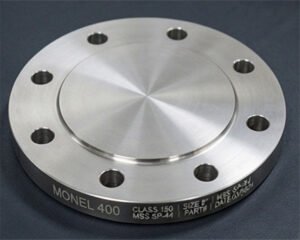
Cara Membaca Tanda Flange ASTM A182
Panduan lapangan untuk menafsirkan ASTM A182 dan ASME B16.5…
Tidak ada komentar