
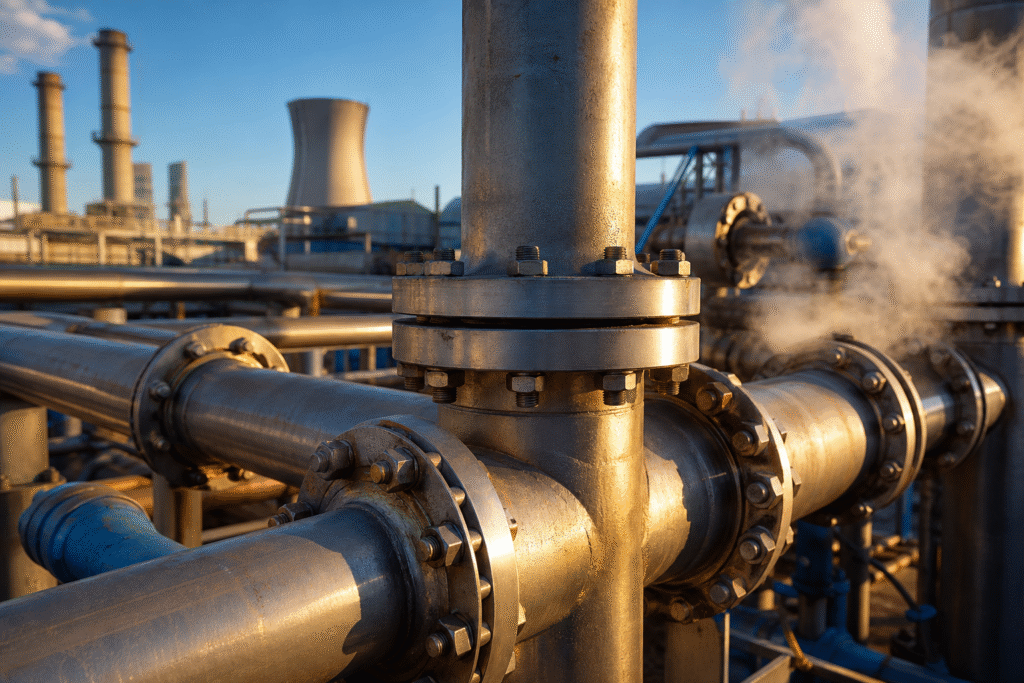
Pasar Flange Pipa Stainless Steel: 7 Wawasan yang Didukung Data tentang Jenis, Kegunaan, Seleksi ASME B16.5 dan B16.47
Permintaan flensa pipa baja tahan karat terus meningkat sebagai pengendalian korosi, integritas tekanan, dan biaya siklus hidup menjadi hal penting dalam pengadaan industri. Menurut Penelitian Grand View (2024), pasar flensa industri global dihargai $5.8 miliar masuk 2023 dan diperkirakan akan tercapai $7.2 miliar oleh 2030, which makes flange selection more strategic than ever.
Untuk insinyur dan pembeli, the most intriguing hidden advantages of stainless steel pipe flange products are their versatility, daya tahan, and compatibility with major standards such as ASME B16.5 dan B16.47. Karena itu, choosing the right stainless steel flange is no longer only a material question, but a performance and compliance decision.
Mengapa pasar flensa pipa baja tahan karat berkembang di seluruh sektor industri
The industrial flange market is benefiting from capital investment in energy, infrastruktur air, sistem lepas pantai, dan pemrosesan kimia. Menurut Statista (2024), industri minyak dan gas menyumbang sekitar 35% konsumsi flensa global, which confirms how critical reliable flange connections remain in high-risk service.
Selain itu, supply chains are increasingly anchored in Asia. Menurut IBISWorld (2024), Asia-Pasifik menyumbang lebih dari itu 45% produksi flensa global, dengan Tiongkok sebagai produsen terbesar, which directly influences global lead times, cost structures, and sourcing strategy.
That production concentration matters for procurement teams seeking both quality and pricing discipline. Sebagai akibat, buyers are comparing flange manufacturers not only on unit cost, but also on certification readiness, EN 10204 3.1 dokumentasi, dan konsistensi pemesinan.
Menurut Intelijen Mordor (2024), industrial piping component demand is being supported by refinery upgrades, LNG investment, and desalination growth across Asia and the Middle East. Lebih-lebih lagi, stainless grades are gaining share because corrosion-related failures remain one of the most expensive avoidable maintenance events in process plants.
ASME and ASTM standards continue to shape purchasing criteria globally. Misalnya, ASME B16.5 mencakup flensa pipa dan fitting flensa hingga NPS 24, ketika ASME B16.47 mengatasi flensa baja berdiameter besar dari NPS 26 melalui NPS 60 (ASME, 2023).
Secara praktis, that means engineers must align nominal pipe size, kelas tekanan, tipe menghadap, and material grade before issuing RFQs. Namun, many competitor pages still emphasize general product descriptions and overlook critical data such as size range, peringkat tekanan, dan ruang lingkup pemeriksaan.
Untuk pembeli B2B, the hidden advantages of sourcing from an experienced manufacturer include shorter communication cycles, pemesinan khusus, and stronger traceability. SASA FLANGE supports this demand with stainless steel flanges, flensa baja karbon, flensa paduan, dan alat kelengkapan pipa untuk Minyak & Gas, Petrokimia, Kekuatan, Laut, Pengolahan Air, dan aplikasi Konstruksi.
Dengan ISO 9001:2015 dan sertifikasi PED 2014/68/EU, SASA FLANGE aligns manufacturing with international project requirements. Lebih-lebih lagi, the company produces materials such as 304, 316, 316L, 904L, 2205, 2507, A105, A182, tidak konel, Monel, Hastelloy, and Titanium for a broad range of service conditions.
As procurement teams face tighter shutdown windows, delivery reliability is becoming a differentiator. Menurut Riset Pasar Masa Depan (2024), industrial maintenance spending tied to piping reliability is expected to grow steadily through the decade, especially in aging process infrastructure.
That trend favors suppliers that combine CNC machining, PMI, pemeriksaan dimensi, and hydrostatic or NDT coordination where required. Karena itu, a stainless steel pipe flange should be evaluated as part of total installed performance, not just as a commodity line item.
Jenis flensa pipa baja tahan karat, keuntungan tersembunyi, dan faktor seleksi teknis
The most common question from engineers is not whether stainless flanges work, but which types deliver the best balance of strength, efisiensi fabrikasi, dan ketahanan terhadap korosi. This is where the intriguing value of stainless steel pipe flange design becomes clear, because geometry, bahan, and pressure class must work together.
Seperti John Reynolds, consulting materials engineer and former refinery reliability specialist, negara bagian: “Most flange problems are selection problems, not product problems, because the wrong facing, nilai, or assembly practice can defeat even a premium alloy.” That observation is consistent with field experience in refining, pengolahan air, dan sistem perpipaan laut.
According to ASTM and common industry practice, forged stainless flanges are often produced to ASTM A182 persyaratan, while plate products may reference ASTM A240 depending on design and fabrication route (ASTM, 2023). Lebih-lebih lagi, 304 Dan 316 remain the most widely specified stainless grades because they offer a strong balance of formability, kemampuan las, dan ketahanan terhadap korosi.
Menurut Penelitian Grand View (2024), corrosion-resistant alloy adoption is increasing in fluid handling applications due to lifecycle savings and lower replacement frequency. Selain itu, nilai dupleks seperti 2205 dan super dupleks 2507 are gaining attention where chloride stress, mengadu, and high strength requirements converge.
Sebagai Dr. Maria Chen, ilmuwan material di bidang teknik korosi, negara bagian: “316L is often the practical baseline for moderate chloride service, but duplex grades become economically compelling when pressure, ketebalan dinding, and pitting resistance are considered together.” Karena itu, buyers should not assume that the lowest alloy cost delivers the lowest project cost.
The main stainless steel pipe flange types include the following:
- Weld neck flange for high pressure and cyclic service where stress distribution is critical.
- Slip on flange for simpler installation and lower cost in moderate pressure systems.
- Flensa buta untuk penghentian saluran, pengujian tekanan, dan titik ekspansi di masa depan.
- Socket weld flange for small bore, high pressure piping with compact assembly.
- Threaded flange for low-pressure systems where welding is undesirable.
- Lap joint flange for systems requiring frequent dismantling and alignment flexibility.
Among these types, leher las, mengenakan, and blind remain the three most commonly discussed flange categories in industrial buying cycles. Namun, the correct choice depends on vibration, siklus termal, media korosif, available welding procedure qualification, dan akses pemeliharaan.
Buyers should also compare flange face options carefully. Wajah terangkat, wajah datar, and ring type joint configurations affect gasket selection, stres baut, keandalan penyegelan, and total joint integrity.
Saat memilih flensa pipa stainless steel, engineers usually review these factors first:
- Kelas material seperti 304, 304L, 316, 316L, 904L, 2205, atau 2507.
- Standar yang berlaku seperti ASME B16.5, ASME B16.47, DIN, JIS, gost, atau EN 1092.
- Kelas tekanan, termasuk 150, 300, 600, 900, 1500, Dan 2500 jika memungkinkan.
- Size range from 1/2 inci ke 60 inci, depending on standard and design.
- Tipe menghadap termasuk RF, FF, dan RTJ.
- Required test certificates such as EN 10204 3.1, PMI, kekerasan, or NDT reports.
ASME B16.5 and B16.47 should not be treated as interchangeable references. ASME B16.5 mainly applies through NPS 24, while B16.47 governs larger diameters and includes Series A and Series B dimensional differences that affect bolt patterns and interchangeability (ASME, 2023).
That distinction has direct cost implications. Misalnya, mismatching B16.47 Series A and Series B flanges can delay shutdown work, create gasket incompatibility, and force expensive field modifications.
Material choice also determines real performance. 304 or 304L often suits food processing, water service, and general industrial environments, ketika 316 or 316L is typically preferred for chemical exposure, offshore spray, dan media yang mengandung klorida.
Untuk kondisi yang lebih parah, 904L, rangkap 2205, dan super dupleks 2507 offer stronger resistance to localized corrosion. Paduan nikel seperti Inconel, Monel, and Hastelloy are often specified when temperature, layanan asam, or aggressive chemistry exceeds conventional stainless capability.
Didukung oleh permesinan CNC canggih dan pengujian kualitas yang komprehensif, SASA FLANGE menawarkan ukuran khusus dari 1/2 inci ke 60 inches with factory-direct support. Selain itu, perusahaan memasok siku, kaos, reduksi, and caps to support complete piping packages rather than isolated flange orders.
For procurement teams managing multi-standard projects, this matters. It reduces vendor fragmentation and helps maintain dimensional consistency across stainless steel flanges and fittings.
ASME B16.5, B16.47, ASTM, DIN, and EN compliance for stainless steel flanges
Standards compliance is one of the strongest predictors of successful project execution. Karena itu, a stainless steel pipe flange must be reviewed against pressure-temperature ratings, toleransi, metalurgi, persyaratan pemeriksaan, and end-user specifications before purchase approval.
Menurut ASME, B16.5 establishes dimensions, bahan, toleransi, menandai, dan pengujian flensa hingga NPS 24. Sebaliknya, ASME B16.47 mencakup flensa baja berdiameter besar dari NPS 26 ke NPC 60 and is especially relevant in water transmission, laut, dan sistem utilitas proses (ASME, 2023).
Standar ASTM mendefinisikan kimia material dan sifat mekanik. For forged or rolled alloy and stainless flanges, ASTM A182 is widely used, ketika ASTM A240 commonly applies to plate materials for pressure parts and fabricated components (ASTM, 2023).
Proyek-proyek Eropa dan internasional sering kali menyebutkan EN 1092 dan persyaratan PED. Sebagai akibat, exporters must understand how pressure equipment compliance, CE-related documentation, and mill traceability affect acceptance in the EU market.
Pos pemeriksaan kepatuhan yang paling penting meliputi:
- Kesesuaian dimensi dengan ASME B16.5, ASME B16.47, DIN, JIS, gost, atau EN 1092.
- Kesesuaian materi dengan ASTM A182, ASTM A240, atau setara yang disetujui pelanggan.
- Pressure-temperature rating confirmation based on material group and flange class.
- Dokumen inspeksi seperti EN 10204 3.1, ketertelusuran nomor panas, and PMI records.
- Project-specific requirements such as NACE MR0175, PED 2014/68/UE, IKLAN 2000, or DNV references.
NACE compliance becomes especially important in sour service. Menurut NACE MR0175 / ISO 15156, material selection in H2S-containing environments must consider hardness limits, corrosion cracking resistance, and environmental severity.
Procurement teams should also verify whether third-party inspection is required. In many EPC projects, TPI witness points for raw material review, final dimensional checks, menandai, and packing can be mandatory.
Saat membandingkan standar, engineers often focus on these practical distinctions:
- ASME B16.5 is common for refinery, kimia, and general process piping up to NPS 24.
- ASME B16.47 is typical for large-diameter utility, laut, dan sistem air.
- EN 1092 is often used in European installations and PED-governed projects.
- DIN and JIS remain important where legacy equipment or regional specifications apply.
Menurut ISO (2023), standardized dimensions and material traceability reduce interchange issues and support safer maintenance planning. Lebih-lebih lagi, consistent marking and documentation improve warehouse control for contractors managing mixed-origin stock.
Dengan ISO 9001:2015, PED 2014/68/UE, dan IKLAN 2000 kredensial, SASA FLANGE is positioned for international quality assurance expectations. Flensa manufaktur masuk 304, 316, 904L, 2205, 2507 dan nilai premium lainnya, the company supports both standard and custom requirements for industrial end users.
Buyers can also strengthen vendor qualification by reviewing machining capability, kontrol perlakuan panas, and calibration records. Lebih-lebih lagi, access to dukungan penjualan teknis can shorten specification review and reduce RFQ ambiguity before production begins.
For authoritative technical references, engineers should review current documentation directly from ASME and applicable ASTM material standards. That step is especially valuable when projects involve mixed flange classes, unusual alloys, or elevated temperature duty.
Panduan aplikasi: how to choose stainless steel pipe flange for oil, gas, kimia, kekuatan, dan layanan kelautan
A stainless steel pipe flange should always be selected according to service medium, tekanan operasi, suhu, tunjangan korosi, dan filosofi pemeliharaan. Namun, many sourcing decisions still begin with price alone, which can lead to avoidable failures and premature replacement.
Dalam Minyak & Gas, flange reliability affects uptime, keamanan, and inspection intervals. Menurut Statista (2024), the sector represents roughly 35% konsumsi flensa global, so specification discipline is essential in upstream, tengah sungai, dan proyek hilir.
For sour or chloride-bearing service, 316L, rangkap 2205, atau super dupleks 2507 may be more appropriate than standard 304. Selain itu, RTJ or weld neck configurations are often preferred for higher-pressure duties and more demanding leak-tightness requirements.
Di pabrik petrokimia dan kimia, corrosion mechanism matters more than generic material labeling. Karena itu, engineers should evaluate pitting, korosi celah, retak korosi tegangan, and cleaning chemistry before selecting stainless, rangkap, or nickel alloy flanges.
Power generation applications often involve high temperature, siklus termal, and steam service. Sebagai akibat, tipe flensa, retensi beban baut, and metallurgy should be reviewed together rather than as separate line items.
Marine and shipbuilding systems demand strong resistance to seawater exposure and galvanic effects. Karena itu, 316L, 2205, atau 2507 may offer better long-term value than lower-alloy alternatives, especially in splash zones and ballast-related systems.
Water treatment and desalination projects frequently face chloride-rich conditions and continuous service expectations. Menurut Riset Pasar Masa Depan (2024), water infrastructure investment remains a major driver for corrosion-resistant piping components worldwide.
These application-specific guidelines can help engineers choose correctly:
- Use 304/304L for general industrial service, potable water, and less aggressive media.
- Use 316/316L for marine atmosphere, perpindahan kimia, dan paparan klorida sedang.
- Use 904L where stronger resistance to reducing acids or chlorides is required.
- Menggunakan 2205 atau 2507 where higher strength and pitting resistance justify the alloy upgrade.
- Pilih flensa leher las untuk tekanan berat, siklus termal, or fatigue-sensitive service.
- Choose slip on flanges for moderate service where fabrication simplicity and cost matter.
- Choose blind flanges for isolation, pengujian hidro, dan titik perluasan sistem di masa depan.
Untuk proyek khusus, flange dimensions may need to match legacy systems, spesifikasi proyek, atau standar campuran. That is why custom drilling, menghadap, thickness adjustment, and non-standard material sourcing can become critical purchasing factors.
Porsi 50+ negara-negara di seluruh Minyak & Gas, Petrokimia, Kekuatan, dan industri Kelautan, SASA FLANGE supports custom manufacturing with competitive factory-direct pricing. Lebih-lebih lagi, integrated supply of elbows, kaos, reduksi, topi, and flanges helps procurement managers simplify supplier coordination.
As Peter Lang, senior piping engineer in EPC project execution, negara bagian: “The best flange supplier is the one that closes specification gaps before production, because every mismatch discovered at site costs exponentially more.” That insight is especially relevant for shutdown-driven projects and export shipments.
Buyers should also ask for practical commercial data before final award:
- Available size range and pressure classes.
- Standard stock grades and custom-alloy lead times.
- Ruang lingkup inspeksi, TPI support, dan paket dokumentasi.
- Minimum order quantity and partial shipment options.
- Menandai, kemasan, and export protection methods.
These details are often the hidden advantages behind successful supply performance. Karena itu, the smartest way to choose stainless steel flanges is to align engineering requirements with manufacturing capability from the start.
Future outlook for stainless steel flanges and strategic buying recommendations
The medium-term outlook for stainless steel pipe flange demand remains positive. Menurut Penelitian Grand View (2024), the market is projected to expand from $5.8 miliar masuk 2023 ke $7.2 miliar oleh 2030, didukung oleh energi, air, and industrial maintenance investment.
Asia-Pacific will likely remain the dominant production center. Menurut IBISWorld (2024), the region already accounts for more than 45% produksi flensa global, which means global buyers should continue refining supplier qualification and logistics planning in parallel.
Pada saat yang sama, end users are becoming more selective. They increasingly want shorter lead times, kemampuan penelusuran yang lebih kuat, and alloy-specific technical support rather than generic catalogue listings.
That shift creates opportunity for manufacturers that combine standards knowledge, broad materials capability, and responsive engineering communication. Sebaliknya, suppliers that offer only basic product descriptions may struggle in high-specification projects.
Procurement managers should consider these strategic actions:
- Standardize approved material and flange type matrices by service condition.
- Prequalify vendors based on certifications, kemampuan permesinan, dan kualitas dokumentasi.
- Meminta EN 10204 3.1 and PMI support for critical stainless and duplex orders.
- Memeriksa ASME B16.5 versus B16.47 dimensional compatibility before PO release.
- Bundle flanges and fittings where possible to reduce supply chain fragmentation.
For many industrial buyers, the intriguing hidden advantages of a reliable stainless steel pipe flange supplier include reduced rework, faster drawing clarification, and fewer site-level surprises. Karena itu, the most effective sourcing strategy balances price, kepatuhan, and total project execution risk.
Companies planning upcoming flange packages can review technical options early with SASA FLANGE to align grade, standar, and delivery requirements. That approach supports better purchasing decisions across stainless steel flanges, flensa paduan, and matching pipe fittings.
Pertanyaan yang Sering Diajukan
Untuk apa flensa baja tahan karat??
●Flensa baja tahan karat digunakan untuk menyambung pipa, katup, pompa, and pressure equipment in systems that require corrosion resistance, kekuatan, dan penyegelan yang andal.
●Menurut Statista (2024), industri minyak dan gas menyumbang sekitar 35% konsumsi flensa global, which shows how important flanged joints are in critical process systems.
●Secara praktis, these flanges are widely used in oil and gas, pabrik petrokimia, pembangkit listrik, perpipaan laut, pengolahan air, pengolahan makanan, and general industrial utilities.
●Engineers often select 304 atau 316 stainless steel flanges when they need durability, clean service performance, and better resistance to rust than carbon steel in wet or chemically active environments.
●Common applications include line transitions, nozel peralatan, maintenance access points, temporary blind closures, and high-integrity bolted joints in ASME B16.5 or B16.47 systems.
●Misalnya, weld neck flanges are preferred in high-pressure and thermal cycling service, while slip on flanges can be used in moderate pressure lines where cost and fabrication speed matter.
●Seperti John Reynolds, consulting materials engineer, negara bagian: “Flensa bukan sekadar konektor, because it is a pressure boundary that must survive the real chemical and mechanical duty of the plant.”
●That is why buyers should evaluate media, kelas tekanan, menghadap flensa, and documentation before placing an order.
●Projects that require EN 10204 3.1 sertifikat, PMI, or PED-aligned supply should only be sourced from qualified manufacturers with proven export experience.
●Untuk proyek yang membutuhkan ketahanan korosi, standards-compliant flange packages, bekerja dengan produsen mapan seperti SASA FLANGE helps ensure proper grade selection, akurasi dimensi, dan dukungan dokumentasi penuh.
Apakah mereka membuat alat kelengkapan pipa stainless steel?
●Ya, manufacturers that supply industrial flanges commonly also make stainless steel pipe fittings such as elbows, kaos, reduksi, and caps for complete piping systems.
●Menurut Penelitian Grand View (2024), continued growth in the industrial flange market reflects wider investment in piping networks, which also supports demand for matching stainless steel fittings.
●In B2B procurement, sourcing flanges and fittings together improves dimensional consistency, ketertelusuran panas, and project coordination across a complete line class.
●Typical stainless fitting standards include ASME B16.9 untuk alat kelengkapan las butt, while material requirements often reference ASTM grades aligned with the project specification.
●The most common stainless materials are 304, 304L, 316, dan 316L, although 904L, 2205, 2507, and nickel alloys may be specified for more severe environments.
●Buyers often prefer bundled supply because it reduces supplier fragmentation and simplifies inspection, sedang mengemas, and shipping control for EPC and maintenance projects.
●As Peter Lang, insinyur perpipaan senior, negara bagian: “When flanges and fittings come from aligned manufacturing and QA systems, site fit-up usually becomes faster and more predictable.”
●That advantage is especially important for shutdown work, marine retrofits, and export projects with strict documentation requirements.
●Selain itu, complete package sourcing makes it easier to verify bevels, schedules, kompatibilitas pengelasan, and material certificates before material reaches the site.
●For projects that need stainless steel flanges and fittings in one coordinated order, produsen seperti SASA FLANGE can support integrated supply with standards-based production and custom manufacturing options.
Apa sajakah jenis flensa baja tahan karat?
●Berbagai jenis flensa baja tahan karat termasuk leher las, mengenakan, buta, las soket, berulir, dan flensa sambungan pangkuan, each designed for specific service conditions.
●ASME B16.5 Dan ASME B16.47 tentukan persyaratan dimensi untuk banyak flensa ini, with B16.5 generally covering sizes up to NPS 24 and B16.47 covering NPS 26 ke NPC 60 (ASME, 2023).
●Weld neck flanges are typically selected for high-pressure or cyclic service because their tapered hub improves stress distribution and joint reliability.
●Slip on flanges are easier to align and weld, so they are frequently used in moderate-pressure systems where fabrication efficiency is important.
●Blind flanges close the end of a piping system, which makes them useful for isolation, pemeliharaan, pengujian hidro, dan titik ekspansi di masa depan.
●Socket weld flanges are common in small bore, layanan bertekanan tinggi, while threaded flanges are used where welding should be avoided or field conditions limit hot work.
●Lap joint flanges work with stub ends and are useful when frequent dismantling or rotational alignment is needed.
●Menurut ISO (2023), standardized flange dimensions reduce interchangeability issues and improve maintenance planning in mixed-source piping systems.
●Because each flange type has different cost, kekuatan, and sealing implications, engineers should choose based on service medium, kelas tekanan, frekuensi pemeliharaan, dan metode instalasi.
●For projects requiring help with stainless steel flange types, standar, dan kesesuaian materi, pembeli dapat berkonsultasi SASA FLANGE for application-focused support.
Sebutkan tiga jenis flensa?
●The three most commonly referenced flange types in industrial purchasing are weld neck flanges, slip pada flensa, dan flensa buta.
●These three types appear frequently because they cover a large share of process piping requirements, from high-pressure line connections to line closures and moderate-duty installations.
●Weld neck flanges are generally considered the best option for severe service because they provide strong fatigue resistance and smoother stress transition into the pipe wall.
●Slip on flanges are popular for lower-cost fabrication and easier assembly, although they are usually less suitable for the most demanding cyclic or high-integrity service.
●Blind flanges do not connect to pipe directly, but they are essential for testing, isolasi pemeliharaan, and blocking off future tie-in points.
●Menurut ASME (2023), flange dimensions and pressure classes must match the governing standard, so even common flange types should not be ordered without confirming B16.5 or B16.47 details.
●Sebagai Dr. Maria Chen, ilmuwan material, negara bagian: “A common flange type can still fail early if the alloy, kelas tekanan, or facing is wrong for the chemical environment.”
●That is why good flange selection always combines geometry, metalurgi, kompatibilitas paking, and bolting practice.
●Untuk tim pengadaan, the best approach is to standardize selection rules by service category rather than rely on habit or lowest initial price.
●For projects that need technical review of weld neck, mengenakan, or blind flange options, working with experienced suppliers such as SASA FLANGE can reduce specification risk and purchasing delays.
Bagaimana cara memilih di antara keduanya 304 Dan 316 nilai flensa pipa baja tahan karat?
●Memilih 304 stainless steel pipe flange grades for general service and select 316 atau 316L saat paparan klorida, suasana laut, or stronger corrosion resistance is required.
●The key difference is that 316 mengandung molibdenum, which improves resistance to pitting and crevice corrosion in more aggressive environments.
●In many water, makanan, dan aplikasi industri umum, 304 or 304L performs well and offers an economical solution with good weldability and availability.
●Namun, in coastal plants, chemical units, dan sistem lepas pantai, 316 or 316L often provides better lifecycle value because it reduces the risk of localized corrosion and replacement.
●Menurut Penelitian Grand View (2024), corrosion-resistant material adoption is increasing across industrial fluid handling because end users are focusing more on total ownership cost.
●Kelas tekanan, suhu, prosedur pengelasan, bahan kimia pembersih, and maintenance intervals should also be reviewed before final grade approval.
●As John Reynolds states: “The alloy that looks more expensive on day one can be the cheaper option over ten years if corrosion downtime is avoided.”
●That statement reflects why engineers should compare service chemistry and expected maintenance cost, tidak hanya harga beli.
●For projects involving chlorides, paparan laut, atau pengolahan kimia, requesting technical guidance and documentation is a prudent step before ordering.
●For grade selection support across 304, 316, 904L, 2205, dan paduan premium lainnya, pembeli dapat menghubungi SASA FLANGE for application-based recommendations.
Apa yang mempengaruhi harga flensa pipa stainless steel dan waktu tunggu?
●Stainless steel pipe flange price and lead time depend mainly on material grade, ukuran, kelas tekanan, tipe flensa, kompleksitas pemesinan, persyaratan pemeriksaan, dan jumlah pesanan.
●Menurut IBISWorld (2024), Asia-Pasifik menyumbang lebih dari itu 45% produksi flensa global, so regional manufacturing capacity and freight conditions have a direct impact on global pricing and delivery.
●Standar 304 Dan 316 flanges in common ASME B16.5 sizes usually offer shorter lead times than duplex, paduan nikel, or non-standard drilled flanges.
●Large-diameter B16.47 flanges, pemesinan RTJ, custom facings, PMI requirements, and third-party inspection often increase both manufacturing time and total landed cost.
●Raw material volatility also plays a major role, especially for molybdenum-bearing stainless grades and high-performance alloys such as Inconel, Monel, dan Hastelloy.
●Selain itu, kemasan ekspor, dokumentasi, PED-related paperwork, Dan EN 10204 3.1 certification requirements can influence commercial terms.
●Buyers can improve quoting accuracy by providing complete data, including nominal pipe size, jadwal, standar, kelas tekanan, menghadap, bahan, kuantitas, and required certificates.
●That level of detail reduces clarification cycles and helps suppliers issue faster, more reliable quotations.
●For high-value industrial purchases, the best practice is to compare not only price, but also compliance scope, ketertelusuran, and realistic delivery performance.
●For projects requiring competitive factory-direct pricing with clear technical review, buyers can request a quotation from SASA FLANGE based on their exact specification.
Posting Terkait
Selesai Wajah Flange: Penjelasan Gerigi Konsentris vs Spiral
Gerigi konsentris dan spiral keduanya merupakan penyelesaian permukaan flensa yang dikerjakan dengan mesin…
Rangkap 2205 vs Flensa 316L: Bahan Mana Yang Harus Anda Pilih?
Jawaban cepat: Rangkap 2205 flensa biasanya merupakan kandidat yang lebih kuat…

Definisi Flensa Lubang, Detail dan Ikhtisar Flensa ASME B16.36: Data Pasar, Panduan Seleksi dan Wawasan Kepatuhan
Pasar flensa industri global dihargai $5.8 miliar…

Panduan Pasar Flensa Pembuangan Hitam: Bahan, 3.5″ Kesesuaian, dan Data Sumber B2B untuk Flensa Wastafel Dapur
Permintaan flensa pembuangan hitam meningkat sebagai pembeli perlengkapan dapur…