
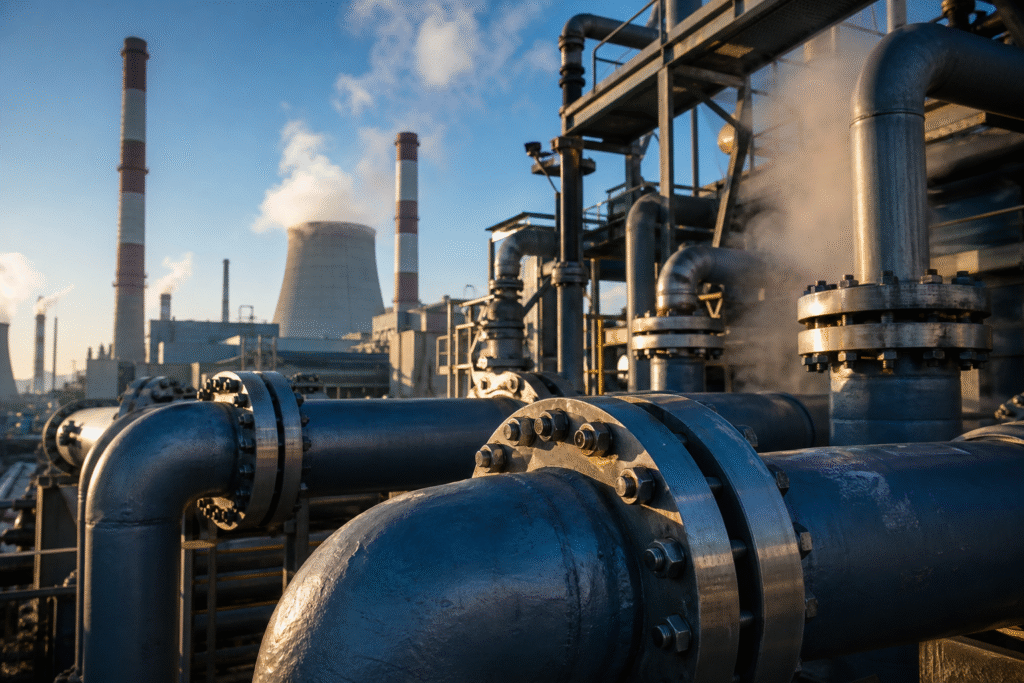
Pasar Flange Pipa Stainless Steel: 2024 Data, Standar ASME, dan Panduan Seleksi Pembeli Industri
Pasar flensa pipa baja tahan karat tetap menjadi bagian penting dari infrastruktur perpipaan global. Menurut Penelitian Grand View (2024), pasar flensa industri global dihargai $5.8 miliar masuk 2023 dan diperkirakan akan tercapai $7.2 miliar oleh 2030.
Untuk tim pengadaan, pertumbuhan itu mencerminkan kenyataan sederhana. Stainless Steel Flanges continue to support safety, pengendalian korosi, and long service life across oil and gas, petrokimia, kekuatan, laut, dan sistem pengolahan air.
Global Demand Trends for Stainless Steel Pipe Flange Supply
Demand growth is strongest in projects that require corrosion resistance, ketertelusuran, dan tekanan integritas. Menurut Statista (2024), industri minyak dan gas menyumbang sekitar 35% konsumsi flensa global.
That figure matters because upstream, tengah sungai, and refinery systems often specify Stainless, Baja, Flanges in 304, 316, 316L, rangkap, dan nilai paduan nikel. Lebih-lebih lagi, permintaan pembeli semakin meningkat EN 10204 3.1 dokumentasi, PMI, and hydrostatic or dimensional inspection before shipment.
Regional manufacturing capacity also shapes sourcing strategy. Menurut IBISWorld (2024), Asia-Pasifik menyumbang lebih dari itu 45% produksi flensa global, dengan Tiongkok sebagai produsen terbesar.
Sebagai akibat, many EPC contractors and distributors source from qualified Chinese manufacturers that can combine volume output with standards compliance. This approach helps buyers reduce lead times on common ASME B16.5 and ANSI-compatible sizes while preserving quality requirements.
Namun, not all flange suppliers offer the same technical depth. Engineers need more than a product list. They need a partner that understands pressure class selection, tipe yang dihadapi, corrosion allowances, kompatibilitas paking, and matching Pipe schedules such as S/10s, S/40, and XXH.
Di situlah SASA FLANGE adds value for industrial buyers. Dengan ISO 9001:2015 dan sertifikasi PED 2014/68/EU, the company manufactures Stainless Steel Flanges, flensa baja karbon, flensa paduan, and fittings for demanding process systems.
Its production range covers common and custom products in 304, 316, 316L, 904L, 2205, 2507, A105, A182, tidak konel, Monel, Hastelloy, dan Titanium. Selain itu, SASA FLANGE supports buyers with factory-direct supply, pemesinan CNC, and comprehensive quality testing for projects across 50+ negara.
Procurement managers also care about lifecycle economics, bukan hanya harga satuan. Menurut Intelijen Mordor (2024), corrosion-related maintenance can account for a significant share of total piping ownership costs in aggressive service environments.
Karena itu, selecting the correct stainless steel pipe flange grade can lower shutdown risk and replacement frequency. In chloride-bearing media, Misalnya, 316L or duplex grades often provide better value than lower-alloy alternatives despite a higher upfront cost.
Many buyers start with availability and standard dimensions, then move to application fit. Untuk alasan itu, product access matters. Buyers seeking project support can review capabilities through SASA FLANGE informasi perusahaan and discuss specifications directly via dukungan penjualan teknis.
How to Select Stainless Steel Flanges by Type, Peringkat, and Service Conditions
Flange selection should always begin with operating pressure, suhu desain, komposisi sedang, dan metode bergabung. Setelah itu, engineers can compare Threaded, Tergelincir, Pengelasan Soket, Buta, Sambungan Putaran, and Weld Neck options against system performance requirements.
Seperti John Reynolds, materials and corrosion specialist, negara bagian: “The cost of the wrong alloy or flange geometry is rarely the purchase price; it is the unplanned outage that follows.” That principle applies directly to stainless steel pipe flange selection in corrosive and cyclic service.
Menurut Riset Pasar Masa Depan (2024), process industries continue to increase spending on higher-performance piping components as reliability targets tighten. Lebih-lebih lagi, demand for corrosion-resistant alloy flanges is rising faster than basic commodity categories in several industrial regions.
In technical terms, the choice between Threaded and Weld Neck designs affects both installation and long-term fatigue performance. A Threaded flange allows easier assembly without hot work, while a Weld Neck flange provides superior stress distribution under pressure and thermal cycling.
Untuk sistem kritis, Weld Neck remains the preferred option because its tapered hub reduces stress concentration at the Pipe-to-flange transition. Menurut ASME B16.5, pressure-temperature ratings depend on material group, kelas, and design conditions, so buyers must verify the complete rating table rather than rely only on nominal class.
Common stainless steel flange types include the following:
- Weld Neck flanges for high pressure, suhu tinggi, and severe cyclic loading.
- Slip-On flanges for moderate service where easier alignment and lower cost are priorities.
- Socket Weld flanges for small-bore, sistem bertekanan tinggi.
- Threaded flanges for low-pressure service or locations where welding is restricted.
- Blind flanges for line ends, pengujian, dan isolasi pemeliharaan.
- Lap Joint flanges for systems that need frequent dismantling and stub-end rotation.
Pemilihan material juga sama pentingnya. ASTM A182 F304 and F316 remain standard choices for many industrial applications, while 316L offers lower carbon content for improved weldability and reduced sensitization risk.
When chlorides, layanan asam, or higher mechanical requirements appear, engineers often upgrade to 904L, rangkap 2205, atau super dupleks 2507. Sebaliknya, highly aggressive chemical service may require nickel alloys such as Inconel, Monel, or Hastelloy, depending on process chemistry.
Sebagai Dr. Karen Holt, senior materials engineer, negara bagian: “A stainless steel pipe flange should never be selected by alloy name alone; kadar klorida, suhu, pH, and fabrication route all matter.” Her advice aligns with ASTM, NACE, and refinery best practice.
Schedule matching also deserves close review. A flange bored for S/10s Pipe differs from one bored for heavier wall thickness, and mismatch can complicate fit-up, flow profile, dan kepatuhan kode.
Typical buyer checkpoints include:
- Kisaran ukuran nominal, seperti 1/2 inci ke 60 inci.
- Kelas tekanan, termasuk 150, 300, 600, 900, 1500, Dan 2500.
- Tipe menghadap, such as Raised Face, Wajah Datar, atau RTJ.
- Kelas materi, termasuk 304, 316, 316L, 904L, 2205, Dan 2507.
- Kompatibilitas jadwal pipa, including S/10s and heavier schedules.
- Persyaratan pengujian, seperti PMI, kekerasan, ferit, and hydrotest support.
- Dokumentasi, including MTC to EN 10204 3.1.
Didukung oleh permesinan CNC canggih dan pengujian kualitas yang komprehensif, SASA FLANGE supports these requirements with custom manufacturing in standard and non-standard dimensions. Buyers can review available categories at industrial flange and fitting products and request application-specific recommendations through SASA FLANGE kontak.
Price remains a factor, yet lowest price rarely means lowest project cost. According to ISO-aligned procurement studies in process manufacturing, non-conforming components can trigger expensive rework, penundaan situs, and traceability failures.
Karena itu, engineers should compare supplier capability, not just quote totals. A supplier that controls machining, verifikasi bahan baku, and final inspection typically reduces project risk more effectively than a trader without manufacturing oversight.
ASME, ASTM, DIN, dan Persyaratan EN untuk Flensa Baja Tahan Karat
Standards compliance forms the core of industrial flange purchasing. For most international projects, buyers will reference ASME B16.5, ASME B16.47, ASTM A182, ASME B16.9, DIN, JIS, gost, dan EN 1092 depending on plant location and end-user specifications.
ASME B16.5 mengatur dimensi, toleransi, peringkat tekanan-suhu, menandai, and testing for many common flange classes up to NPS 24. ASTM A182 mencakup paduan tempa atau canai dan flensa pipa baja tahan karat, perlengkapan palsu, dan katup untuk layanan suhu tinggi (ASTM, current standard).
European projects often add PED 2014/68/EU and EN 1092 persyaratan. Selain itu, offshore and marine work may involve DNV, NORWEGIA, or owner-specific material restrictions and documentation rules.
Buyers should also distinguish between dimensional standards and material standards. ASME B16.5 tells you how the flange is designed and dimensioned, ketika ASTM A182 tells you what the forging material must meet chemically and mechanically.
For corrosive oilfield and refinery service, NACE MR0175 atau ISO 15156 may apply when sulfide stress cracking is a concern. Karena itu, stainless steel flange selection in sour environments requires a documented review of hardness, alloy condition, and service limits.
A practical comparison looks like this:
- ASME B16.5: dimensi flensa, peringkat, menghadap, toleransi, menandai.
- ASME B16.47: flensa berdiameter lebih besar, biasanya NPS 26 ke 60.
- ASTM A182: forged stainless and alloy steel material requirements.
- ASME B16.9: perlengkapan pengelasan buttwelding buatan pabrik.
- EN 1092: Dimensi flensa Eropa dan sebutan tekanan.
- NACE MR0175: material guidance for H2S-containing service.
Menurut ASME, flange class does not represent pressure in psi directly. Alih-alih, class ratings depend on temperature and material group, which is why a Class 300 stainless flange performs differently from a Class 300 carbon steel flange at elevated temperature.
Documentation quality often separates qualified suppliers from generic vendors. Reputable manufacturers provide heat number traceability, laporan dimensi, PMI when requested, and certificates aligned with PED and EN 10204 3.1.
SASA FLANGE integrates these expectations into project supply. Dengan ISO 9001:2015, PED 2014/68/UE, dan IKLAN 2000 kredensial, the company supports international buyers who need consistent records for audits, end-user approval, dan pelepasan pengiriman.
Lebih-lebih lagi, buyers should confirm surface finish and facing details for gasket compatibility. Wajah Terangkat, Sambungan Tipe Cincin, and Flat Face designs each influence sealing behavior, distribusi beban baut, and maintenance practice.
To verify current code references, engineers should consult the official ASME source at ASME.org. This step is especially important when projects cite the latest edition or customer-specific addenda.
Dalam banyak tender, standards compliance is not optional. It directly affects bid acceptance, asuransi, dan keselamatan operasional. Demikian, stainless steel pipe flange sourcing should include a documented review of code edition, format MTC, ruang lingkup pengujian, and end-use conditions before PO release.
Panduan Aplikasi Minyak dan Gas Bumi, Kimia, Kekuatan, Laut, dan Sistem Air
Each industry uses stainless steel pipe flange products differently. The right selection depends on fluid chemistry, tunjangan korosi, kelas tekanan, metode instalasi, dan ekspektasi inspeksi.
Dalam minyak dan gas, corrosion and pressure integrity drive specification. Menurut Statista (2024), sektor ini mewakili tentang 35% konsumsi flensa global, which explains the strong demand for Weld Neck, RTJ, and sour-service-capable materials.
Typical industry guidance includes:
- Minyak dan Gas: Weld Neck or RTJ flanges in 316L, rangkap 2205, or approved sour-service grades.
- Pengolahan Kimia: 316L, 904L, Hastelloy, or other CRA materials based on chlorides and acids.
- Pembangkit Listrik: high-temperature alloy flanges with strict dimensional and material traceability.
- Kelautan dan Pembuatan Kapal: 316L and duplex grades for chloride resistance and long-term durability.
- Pengolahan Air: 304 atau 316 depending on chloride level, desinfektan, and cost targets.
Di pabrik kimia, the key issue is media compatibility. Karena itu, engineers often compare 304 melawan 316 versus 904L using corrosion charts, batas suhu, and cleaning cycles before selecting a final specification.
Marine and offshore systems face another challenge. Salt exposure accelerates pitting and crevice corrosion, so 316L may work in many non-critical systems, while duplex grades often deliver better longevity in harsher seawater-adjacent service.
Power generation projects focus heavily on reliability and documentation. Sebagai akibat, buyers typically request strict conformance to ASTM and ASME standards, plus positive material identification and controlled machining tolerances.
Where site welding is difficult, a Stainless Steel Threaded Pipe Flange may be practical for smaller lines. Namun, for high vibration, kejutan termal, atau siklus tekanan berulang, engineers usually prefer Weld Neck over Threaded configurations.
Common procurement considerations include:
- Operating pressure and temperature envelope.
- Mekanisme korosi, termasuk pitting, SCC, erosi, or galvanic interaction.
- Jenis flensa yang diperlukan, such as Blind, Tergelincir, berulir, or Weld Neck.
- Jadwal pipa dan kecocokan bore, including S/10s.
- Tingkat inspeksi, seperti PMI, UT, ferit, or third-party witness.
- Delivery timeline, MOQ, dan persyaratan pengepakan ekspor.
Because projects vary, standard catalog data is not enough. Manufacturers must also support custom drilling, permukaan khusus, dimensi non-standar, and bundled supply of elbows, kaos, reduksi, dan topi.
SASA FLANGE offers that broader scope across flanges and fittings for industrial systems. Flensa manufaktur masuk 304, 316, 904L, 2205, 2507 dan nilai premium lainnya, the company supports engineered orders from 1/2 inci ke 60 inci dengan harga langsung pabrik yang kompetitif.
For buyers consolidating packages, this capability reduces vendor coordination and inspection complexity. It also helps align flange, Pipa, and fitting specifications across one procurement route, which can improve delivery control on EPC and shutdown projects.
From a commercial standpoint, lead time now matters as much as metallurgy. According to supply chain tracking by industry analysts in 2024, buyers increasingly favor suppliers that hold raw material access and machining flexibility rather than relying only on finished-goods stock.
That trend supports a smarter sourcing model. Instead of searching only for “stainless steel pipe flange for sale,” procurement teams should verify technical support, cakupan standar, and custom manufacturing capability before placing repeat orders.
Future Outlook for Stainless Steel Flanges and Smarter Procurement Strategy
Prospek pasar tetap positif. Menurut Penelitian Grand View (2024), pasar flensa industri diperkirakan akan tumbuh $5.8 miliar masuk 2023 ke $7.2 miliar oleh 2030, reflecting sustained infrastructure and process plant investment.
Pada saat yang sama, pembeli menjadi lebih selektif. They want digital traceability, stable pricing, cakupan paduan yang lebih luas, and consistent export documentation, especially for regulated industries and multinational projects.
Menurut IBISWorld (2024), Asia-Pasifik telah memberikan kontribusi lebih dari itu 45% produksi flensa global. Karena itu, supplier qualification in China and other regional hubs will remain central to cost-effective global sourcing strategies.
Untuk tim pembelian, several actions improve results:
- Standardize approved grades and flange classes for repeat applications.
- Match flange type to service severity rather than defaulting to the lowest-cost design.
- Confirm Pipe schedule, especially S/10s and other thin-wall stainless applications.
- Memerlukan EN 10204 3.1 documentation and traceability for critical systems.
- Prakualifikasi pemasok dengan ISO 9001:2015 and PED capabilities for export projects.
- Gabungkan flensa dan perlengkapan jika memungkinkan untuk menyederhanakan kontrol kualitas.
Selain itu, procurement should work closely with engineering during RFQ development. This practice prevents common errors such as incomplete facing details, omitted schedule data, or vague references to “ANSI” without the actual ASME dimensional standard.
Leading buyers now treat flange sourcing as a risk-management function, bukan sekedar pembelian komoditas. That shift favors manufacturers that can discuss standards, material behavior, permesinan, and inspection with confidence.
SASA FLANGE fits this model by combining international certifications, kemampuan material yang luas, and custom production support for industrial end users. For buyers planning the next project or looking to improve current sourcing performance, a direct technical discussion through SASA FLANGE can help refine specifications, reduce procurement risk, and secure the right Stainless Steel Flanges for the application.
Pertanyaan yang Sering Diajukan
Untuk apa flensa baja tahan karat??
●Stainless steel flanges are used to connect Pipe, katup, pompa, and pressure equipment in systems that require corrosion resistance and reliable sealing under mechanical load.
●Menurut Statista (2024), industri minyak dan gas menyumbang sekitar 35% konsumsi flensa global, which shows how essential flanges are in critical process piping.
●They are commonly installed in petrochemical units, sistem kelautan, jalur proses makanan, instalasi pengolahan air, and power facilities where dismantling, inspeksi, or equipment replacement must remain practical.
Flensa apa yang terbuat dari baja tahan karat?
●Common stainless steel flange types include Weld Neck, Tergelincir, Buta, Pengelasan Soket, Sambungan Putaran, and Threaded designs produced in grades such as ASTM A182 F304, F304L, F316, dan F316L.
●ASME B16.5 covers many of these configurations up to NPS 24, ketika ASTM A182 defines the forging material requirements for stainless and alloy steel flanges.
●For buyers who need chloride resistance, welded service performance, or food-grade corrosion behavior, selecting the right geometry and alloy together is more important than choosing by price alone.
Apakah mereka membuat alat kelengkapan pipa stainless steel?
●Ya, produsen memproduksi alat kelengkapan pipa stainless steel seperti siku, kaos, reduksi, and caps to match flange and Pipe specifications in ASME B16.9 dan standar terkait.
●SASA FLANGE supplies both Stainless Steel Flanges and fittings in 304, 316, 316L, 904L, 2205, Dan 2507, which helps buyers maintain metallurgical consistency across one package.
●Untuk proyek rekayasa, it is best to source flanges and fittings together so the documentation, ketertelusuran panas, and schedule compatibility remain aligned from the start.
Jenis flensa pipa apa yang paling kuat?
●Weld Neck is generally the strongest standard piping flange because its tapered hub improves stress distribution at the junction between the flange and Pipe.
●ASME-based design practice favors Weld Neck flanges for high pressure, suhu tinggi, dan layanan siklik, especially where vibration or thermal fatigue may occur.
●Although strength also depends on alloy, ketebalan dinding, dan kondisi pengoperasian, engineers usually select Weld Neck for the most demanding industrial duties.
What is the ASME standard for stainless steel flanges?
●The main ASME dimensional standard for stainless steel flanges is ASME B16.5, while larger diameters may fall under ASME B16.47 and material requirements commonly follow ASTM A182.
●Standar-standar ini menentukan dimensi, pengeboran, peringkat tekanan-suhu, menghadap, menandai, toleransi, and the forged stainless material properties required for industrial service.
●Before placing an order, buyers should confirm the exact standard edition, kelas tekanan, tipe menghadap, and material grade so the delivered flange matches the project specification precisely.
How do I choose stainless steel pipe flange sizes and schedules?
●Stainless steel pipe flange sizes are selected by nominal Pipe size, kelas tekanan, menghadap, and bore to match the required Pipe schedule, including common thin-wall options such as S/10s.
●Menurut Penelitian Grand View (2024), the flange market is expanding with infrastructure demand, and that trend increases the importance of accurate dimensional matching to avoid costly site rework.
●Untuk pengadaan praktis, buyers should submit nominal size, jadwal, standar, kelas, paduan, and facing details together and confirm dimensions with a qualified manufacturer before production begins.
Posting Terkait
Selesai Wajah Flange: Penjelasan Gerigi Konsentris vs Spiral
Gerigi konsentris dan spiral keduanya merupakan penyelesaian permukaan flensa yang dikerjakan dengan mesin…
Rangkap 2205 vs Flensa 316L: Bahan Mana Yang Harus Anda Pilih?
Jawaban cepat: Rangkap 2205 flensa biasanya merupakan kandidat yang lebih kuat…

Definisi Flensa Lubang, Detail dan Ikhtisar Flensa ASME B16.36: Data Pasar, Panduan Seleksi dan Wawasan Kepatuhan
Pasar flensa industri global dihargai $5.8 miliar…

Panduan Pasar Flensa Pembuangan Hitam: Bahan, 3.5″ Kesesuaian, dan Data Sumber B2B untuk Flensa Wastafel Dapur
Permintaan flensa pembuangan hitam meningkat sebagai pembeli perlengkapan dapur…