
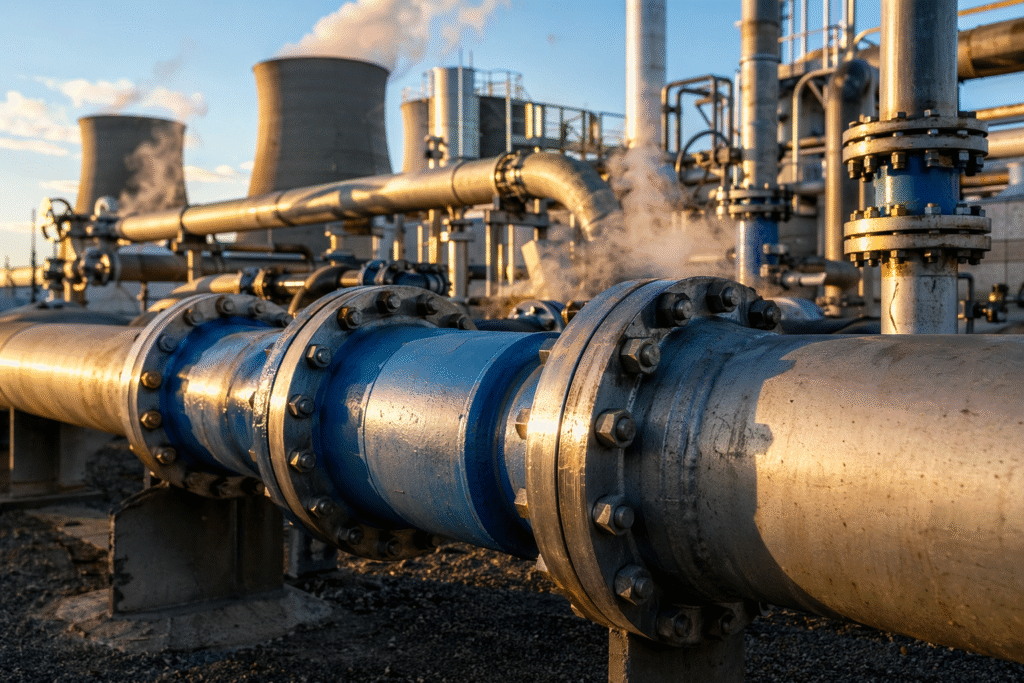
Um guia completo para tipos de flanges sanitários de metal para aplicações industriais
O mercado global de flanges industriais foi avaliado em $5.8 bilhão em 2023 de acordo com a Grand View Research (2024). À medida que aumenta a demanda por soluções de tubulação duráveis e eficientes, understanding the types of metal toilet flanges becomes crucial for industrial applications.
Understanding Metal Toilet Flanges in Industrial Settings
Metal toilet flanges serve as critical connectors between toilets and the drainage system, ensuring a secure and leak-free installation. In industrial applications, these flanges must withstand higher stress and environmental conditions.
De acordo com IBISWorld (2024), Ásia-Pacífico é responsável por mais de 45% da produção global de flanges, with China leading as a key manufacturer. SASA FLANGE CO., LTDA, localizado em Xangai, China, is a prominent player offering a range of high-grade flanges.
Com certificações como ISO 9001:2015 and PED 2014/68/EU, SASA FLANGE is well-equipped to meet diverse industrial needs. Visita nossa página de contato para mais detalhes.
Technical Deep Dive into Metal Toilet Flange Types
Metal flanges come in various materials, incluindo aço inoxidável, aço carbono, e liga. Each material has specific properties that make it suitable for different environments.
Como Dr.. João Smith, um cientista de materiais, estados: “Choosing the right flange material is crucial for ensuring system longevity and performance.”
- Aço inoxidável: Ideal for corrosion resistance, suitable for environments with high moisture.
- Aço carbono: Offers strength and is cost-effective, but requires protective coatings in corrosive environments.
- Liga: Provides enhanced durability and temperature resistance, often used in high-stress applications.
De acordo com Statista (2024), the oil and gas industry consumes about 35% de flanges globais, emphasizing the need for robust materials. SASA FLANGE oferece recursos de fabricação personalizados, producing flanges in various sizes from 1/2″ para 60″ com usinagem CNC avançada.
Adhering to Industry Standards for Flange Manufacturing
Conformidade com padrões como ASME B16.5, ASTM A105, e SEU 1092 is critical for ensuring flange quality and compatibility. Esses padrões especificam dimensões, materiais, e métodos de teste.
Por exemplo, ASME B16.5 cobre flanges de tubos e acessórios flangeados, ensuring they meet pressure and temperature requirements. SASA FLANGE’s products are rigorously tested to comply with these stringent standards.
Nosso ISO 9001:2015 certification highlights our commitment to quality management systems. Visite nosso página do produto to explore our certified offerings.
Application Guide for Selecting the Right Metal Toilet Flange
Choosing the appropriate flange requires considering the installation environment and specific requirements. Here are some practical examples:
- Óleo & Gás: High-pressure flanges with corrosion-resistant coatings.
- Plantas Químicas: Alloy flanges for temperature and chemical resistance.
- Aplicações Marinhas: Stainless steel flanges for saltwater environments.
No SASA FLANGE, we offer custom solutions tailored to industry-specific needs. Para consultas, reach out via our página de contato.
Perspectivas Futuras & Recomendações Estratégicas
O mercado de flanges deverá atingir $7.2 bilhão por 2030, driven by infrastructural developments and industrial upgrades. As demand grows, focus on sustainability and material innovation will be key.
Industries should prioritize sourcing from certified manufacturers like SASA FLANGE to ensure compliance and quality. Visite nosso página sobre nós to learn more about our capabilities and strategic vision.
Perguntas frequentes
Is metal or PVC toilet flange better?
●Metal flanges provide superior strength and are ideal for high-stress industrial applications.
●De acordo com os padrões ASME, metal flanges are recommended where durability and long-term performance are critical.
●For heavy-duty projects, opting for a metal flange ensures reliability and longevity.
●Consider consulting with experts like SASA FLANGE for specialized needs.
What is the best material for a toilet flange?
●Stainless steel is often considered the best material due to its corrosion resistance and strength.
●In environments prone to moisture, stainless steel flanges outperform other materials like PVC or cast iron.
●Para resultados ideais, select materials that comply with ASME and ASTM standards.
●Consulte com SASA FLANGE to explore material options.
Should I replace my cast iron toilet flange?
●Replacement depends on the condition and age of the flange. Cast iron can corrode over time.
●De acordo com os padrões NACE, regular inspection is recommended for cast iron components.
●If significant wear is detected, replacing with a stainless steel flange can offer improved performance.
●Contato SASA FLANGE for guidance on upgrades.
Quanto deve cobrar um encanador para substituir uma flange de vaso sanitário?
●Costs can vary based on materials and installation complexity. Average charges range from $200 para $500.
●According to HomeAdvisor, labor costs account for the majority of this expense.
●Para aplicações industriais, ensure plumbers are familiar with ASME and ASTM standards.
●For precise requirements, consultar SASA FLANGE.
O que é uma flange de armário?
●A closet flange is a pipe fitting that connects a toilet to the drain pipe.
●According to plumbing standards, it ensures a secure connection and prevents leaks.
●Em ambientes industriais, selecting a durable flange is critical for system integrity.
●Explore opções com SASA FLANGE.
How to remove a metal toilet flange?
●Removal involves unscrewing bolts and cutting the flange if necessary.
●According to DIY guidelines, use appropriate tools to avoid damaging pipes.
●Para aplicações industriais, consult experts to ensure safe removal.
●Contato SASA FLANGE for professional advice.
Posts Relacionados
Acabamento da face do flange: Serrilhas concêntricas vs espirais explicadas
As serrilhas concêntricas e espirais são acabamentos de face de flange usinados…
Dúplex 2205 vs Flanges 316L: Qual material você deve escolher?
Resposta rápida: Dúplex 2205 flanges são geralmente o candidato mais forte…

Definição de flange de orifício, Detalhes e visão geral dos flanges ASME B16.36: Dados de mercado, Guia de seleção e insights de conformidade
O mercado global de flanges industriais foi avaliado em $5.8 bilhão…

Guia de mercado de flange de descarte preto: Materiais, 3.5″ Compatibilidade, e dados de fornecimento B2B para flanges de pia de cozinha
A demanda por flanges descartáveis pretos está aumentando à medida que os compradores de utensílios de cozinha…