Descrição
Resposta rápida
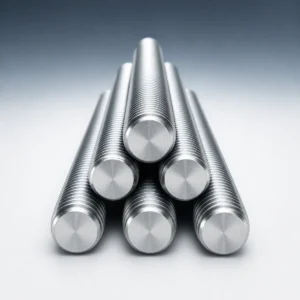
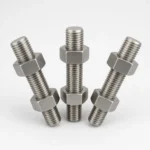
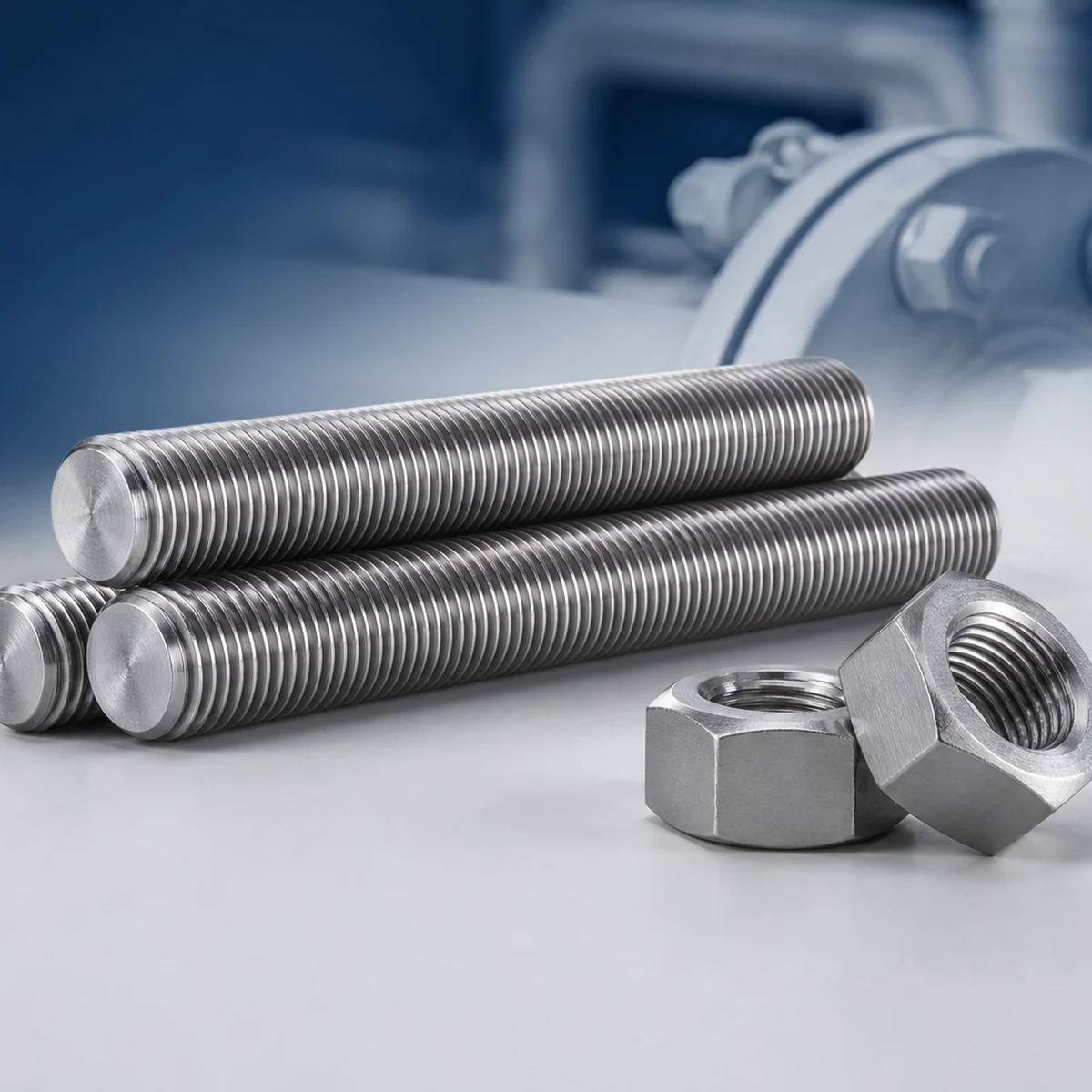
Superduplex 2507 stud bolts use UNS S32750 for high-strength bolting in aggressive chloride and seawater environments. The RFQ should define the UNS grade, condição material, mechanical requirements, thread system, compatible nuts, testes de corrosão, PMI and traceability rather than relying on the trade name “2507” alone.
Especificações do produto
| Designação de materiais | Super duplex stainless steel 2507; UNS S32750; EN 1.4410 |
|---|---|
| Material / bar reference | ASTM A276 ou ASTM A479 when the ordered bar form, UNS grade and condition are covered |
| Finished fastener reference | Project fastener specification, ou ASTM F593 where the exact alloy, condition and dimensions are within scope |
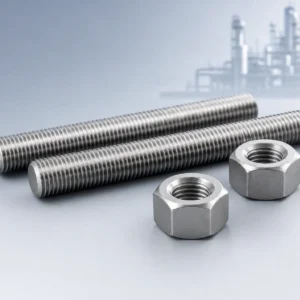
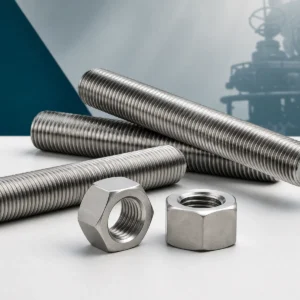
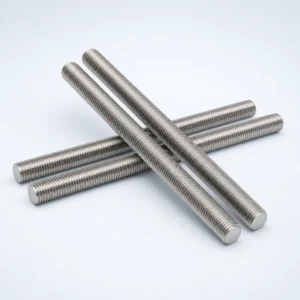
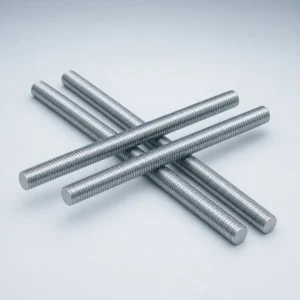
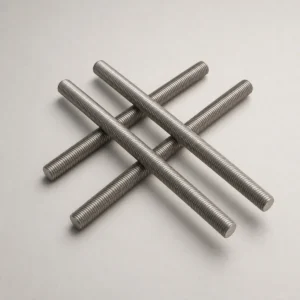
| Configuração do pino | Fully threaded stud bolts; custom double-end details by approved drawing |
| Inch threads | UNC, UNF and 8UN to ASME B1.1 conforme especificado |
| Metric threads | Coarse or fine metric threads to ASME B1.13M / ISO requirements as specified |
| Dimensões | Diameter and length to flange bolting schedule, ASME B18.31.2 reference or approved drawing |
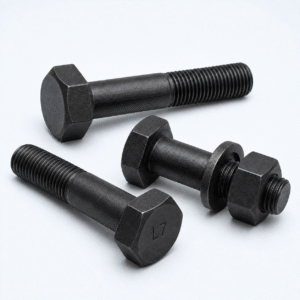
| Nozes correspondentes | Compatible heavy hex or project-design nuts supplied after material and property review |
| Documentação | EN 10204 3.1 CTM, heat traceability and dimensional report; PMI/NDT/testing optional |
Why specify Super Duplex 2507 parafusos prisioneiros?
2507 provides a higher localized-corrosion margin than 2205 and is frequently evaluated for seawater, desalination and offshore duties. Its high alloy content and duplex microstructure demand controlled solution annealing and manufacturing practice. Procurement should focus on verified material condition and project acceptance criteria.
Corrosion resistance and material limits
UNS S32750 is designed for strong resistance to pitting, crevice corrosion and chloride stress-corrosion cracking. Service limits cannot be assigned from PREN or grade name alone; temperatura, crevice geometry, biofouling, chemical cleaning and process excursions all influence performance.
Nota de engenharia: Material selection must be based on the complete process environment and governing design code. Product-page information is not a design allowable or a guarantee of service life.
Temperature and mechanical-property control
Super duplex fasteners are generally selected for aqueous corrosion service, not unrestricted elevated-temperature exposure. Confirm code allowables, low-temperature toughness and any sour-service hardness or qualification requirements for the actual product size and condition.
Aplicações típicas
- Seawater injection and firewater systems
- Offshore production and subsea equipment
- Desalination high-pressure piping
- Flue-gas desulfurization equipment
- Chloride-bearing chemical and pulp processing
Padrões, threads and flange fit-up
The material specification controls alloy chemistry, formulário do produto, heat treatment and mechanical tests. The finished-fastener specification controls stud manufacture and acceptance. The flange standard or bolting schedule controls diameter, thread and length. These documents perform different jobs and should all be identified at order review.
Cut threads and rolled threads can produce different dimensional, surface and residual-stress characteristics. State the required manufacturing method when it is a design requirement. Thread fit, end chamfers, nut engagement and exposed thread allowance must match the assembly procedure.
Nozes correspondentes, lubrication and galling control
High-alloy studs should be purchased as part of an engineered bolting system. Nut material and proof strength must support the specified stud properties without creating an unacceptable corrosion couple. Clean threads, controlled surface finish and an approved lubricant reduce galling and torque scatter.
Torque values are not universal. Friction coefficient, coating or lubricant, nut condition, tightening sequence and reuse policy all affect achieved preload. Use a project-approved torque-tension or hydraulic-tensioning procedure.
Fabricação, inspeção e documentação
Production can include material verification, sawing, preparação final, thread machining or rolling, cleaning, dimensional inspection and permanent identification. Heat numbers remain traceable through manufacturing. Additional controls can include PMI, dureza, tensile tests, impact tests, microstructure examination, testes de corrosão, ultrasonic testing or dye penetrant testing when specified.
Inspection documents should identify the ordered UNS grade, material specification and condition—not only a trade name. Inspeção de terceiros, EN 10204 3.2 certification and customer hold points can be incorporated before production when agreed.
What to include in your RFQ
Define solution-annealed condition, minimum mechanical properties, ferrite or microstructure checks, ASTM G48 method and acceptance criteria if required, PMI extent, NORSOK or IOGP requirements and marking/traceability rules.
- Exact UNS designation and governing material specification/edition
- Finished-fastener and dimensional standard
- Diâmetro, série de tópicos, pitch and overall length
- Required material condition and mechanical properties
- Nut and washer material, dimensions and quantity
- Temperatura de projeto, process environment and special service standard
- Teste, inspeção, traceability and certificate type
- Lubrication, revestimento, marcação, packing and delivery requirements
Authoritative material reference
Review Outokumpu Forta super duplex stainless steel data together with the contractually required ASTM/ASME/ISO editions. Manufacturer literature supports material screening; the purchase order and governing code control supply.
Related stud bolt materials
Perguntas frequentes
When is 2507 selected instead of 2205?
2507 is considered when the chloride, temperature or crevice conditions require more localized-corrosion resistance. Final selection belongs to the project materials engineer.
É ASTM G48 testing automatic?
Não. Specify the method, temperatura, exposure time, sampling and acceptance criterion on the purchase order if project qualification requires it.
Are S32750 and S32760 interchangeable?
Não. They are separate UNS grades with different chemistry and qualification histories. Do not substitute without written engineering approval.
Can matching super duplex nuts be supplied?
Sim, subject to the required nut dimensions, força, especificação de materiais, heat treatment and anti-galling procedure being defined and reviewed.
Trade names are used for material identification. INCONEL®, INCOLOY® and MONEL® are trademarks of Special Metals Corporation; HASTELLOY® is a trademark of Haynes International, Inc. SASA FLANGE supplies products to the specifications stated on the accepted order.