
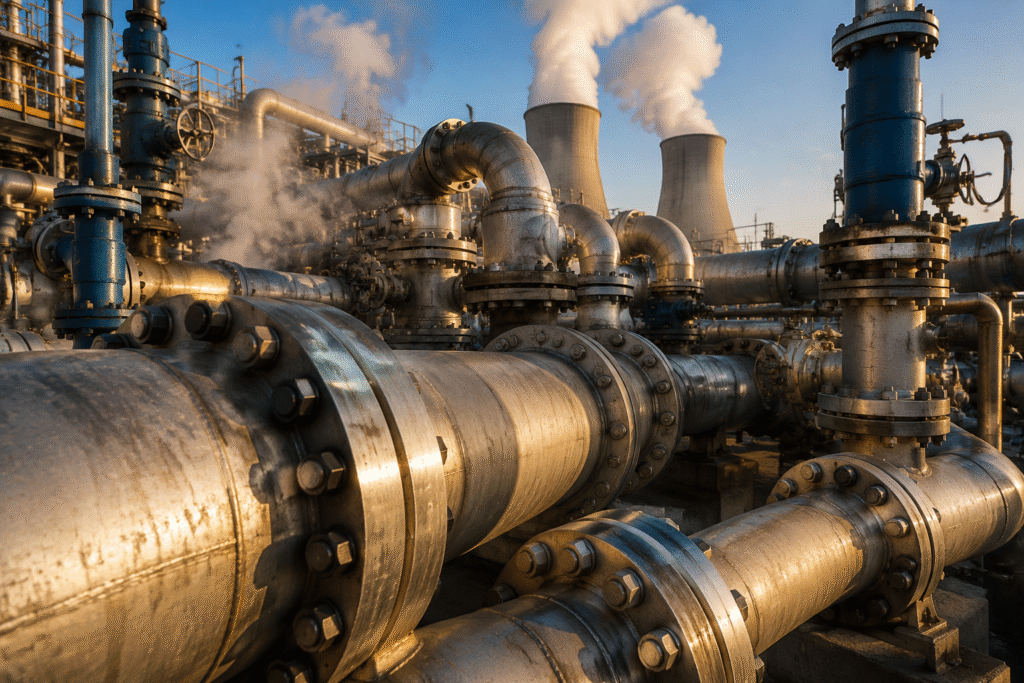
Mercado de flanges de tubos de aço inoxidável: 7 Insights baseados em dados sobre tipos, Usos, e como escolher o flange certo
De acordo com a pesquisa Grand View (2024), o mercado global de flanges industriais foi avaliado em $5.8 bilhão em 2023 e está projetado para atingir $7.2 bilhão por 2030. Esse crescimento faz flange de tubo de aço inoxidável selection more important for EPC contractors, OEMs, e compradores industriais que precisam de resistência à corrosão, rastreabilidade, e desempenho estável a longo prazo.
Para equipes de compras, the intriguing and sometimes hidden advantages of stainless steel pipe flange products go beyond corrosion resistance alone. Grau do material, tipos de flange, classe de pressão, enfrentando, escopo de inspeção, and compliance all influence lifecycle cost, risco de desligamento, and project approval speed.
As a manufacturer serving Oil & Gás, Petroquímica, Geração de energia, Marinho, Tratamento de Água, e setores de construção, SASA FLANGE fornece flanges de aço inoxidável, flanges de liga, flanges de aço carbono, e acessórios para tubos em 304, 316, 316eu, 904eu, 2205, 2507, A182, Inconel, Monel, Hastelloy, e graus de titânio. Com ISO 9001:2015 e certificações PED 2014/68/EU, the company supports buyers who need technical consistency and export-ready documentation.
Tendências de demanda industrial que moldam a aquisição de flanges de tubos de aço inoxidável
De acordo com IBISWorld (2024), Ásia-Pacífico é responsável por mais de 45% da produção global de flanges, sendo a China o maior fabricante. Portanto, sourcing strategy increasingly depends on supplier qualification, capacidade de usinagem, and documentation control rather than geography alone.
De acordo com Statista (2024), a indústria de petróleo e gás é responsável por aproximadamente 35% do consumo global de flanges. That concentration keeps demand strong for ASME B16.5 pescoço de solda, escorregar, cego, rosqueado, and socket weld configurations in stainless and duplex grades.
Em termos práticos, buyers now compare more than price per piece. They assess mill traceability, Cobertura do PMI, EN 10204 3.1 certificados, desempenho de corrosão, and readiness for project specifications such as ASTM A182 F304/F304L, F316/F316L, F51, e F53.
Market growth also reflects infrastructure modernization and replacement demand. Inteligência Mordor (2024) notes that process industries continue investing in corrosion-resistant piping systems as operators seek longer service intervals and lower maintenance costs.
That trend explains why stainless materials remain attractive in aggressive media. In chloride-bearing, marinho, and chemically exposed systems, the hidden advantages of a properly specified stainless steel pipe flange include lower leak risk, resistência à oxidação mais forte, and more predictable inspection outcomes.
No entanto, not all Stainless Steel Flanges? perform equally in service. Engineers must choose flange geometry, química de materiais, and class rating based on temperature, pressão, mecanismo de corrosão, and welding practice.
Por exemplo, 304 and 304L often work well in general industrial service, processamento de alimentos, and moderate atmospheric environments. Em contraste, 316 and 316L usually offer better pitting resistance because molybdenum improves performance in chlorides and chemical service.
De acordo com a Pesquisa de Mercado Futuro (2024), industrial stainless demand continues to expand with energy, dessalinização, and process plant investment, especially where corrosion-related downtime carries high economic impact. Como resultado, buyers increasingly ask for total installed cost comparisons rather than headline pricing only.
That procurement behavior favors manufacturers with broad standards coverage and stable output. Apoiado por usinagem CNC avançada e testes de qualidade abrangentes, SASA FLANGE oferece tamanhos personalizados de 1/2" para 60" and supports ANSI, DIN, JIS, GOST, e PT 1092 requirements for export projects.
Adicionalmente, short documentation cycles matter in global bidding. ISO 9001:2015, PED 2014/68/EU, e ANÚNCIO 2000 alignment can reduce approval friction for EPC packages that require strict supplier prequalification.
Tipos de flange de tubo de aço inoxidável, Materiais, e vantagens ocultas no serviço
The most effective way to choose a stainless steel pipe flange is to match flange design to loading condition and corrosion environment. Tipos, materiais, and facing details must work together, otherwise even premium material can underperform.
Como John Butterfield, Engenheiro de Tubulação Sênior, estados: “Most flange failures start with a specification mismatch, not a metal defect.” His point is practical because the wrong facing, junta, or schedule transition often creates leakage before corrosion becomes critical.
De acordo com ASME B16.5, dimensões do flange, perfuração, revestimentos, and pressure-temperature ratings must follow controlled tolerances for NPS 1/2 através 24. Larger diameters often move into ASME B16.47 Series A or Series B, which directly affects bolt load, intercambialidade, and procurement planning (ASME, 2023).
From a materials standpoint, ASTM A182 remains a core forged flange specification for austenitic, duplex, e graus de liga. ASTM requirements support mechanical properties, química, tratamento térmico, and identification practices that buyers use to verify compliance (ASTM, 2024).
Common stainless steel pipe flange material choices include the following:
- ASTM A182 F304/F304L for general corrosion resistance and good weldability.
- ASTM A182 F316/F316L for improved chloride resistance and wider chemical service.
- ASTM A182 F904L for strong resistance in aggressive acidic environments.
- ASTM A182 F51 and F53 for duplex and super duplex service requiring higher strength and chloride stress corrosion resistance.
- Nickel alloy options such as Inconel, Monel, and Hastelloy for severe corrosive or high-temperature conditions.
Each grade has intriguing performance differences. Por exemplo, 316L often becomes the preferred choice in offshore skids and water treatment units, enquanto 2205 duplex can reduce wall thickness in some pressure applications because its yield strength exceeds austenitic grades.
Como Dr.. Elena Varga, Cientista de Materiais, estados: “Selecting stainless by corrosion mechanism is more reliable than selecting by brand familiarity.” That means engineers should review pitting resistance, crevice corrosion behavior, faixa de temperatura, and weldability before they choose a Flange or matching Pipe component.
Different flange types also solve different installation and maintenance needs:
- Flange de pescoço soldado: Melhor para alta pressão, serviço cíclico, and severe temperature changes.
- Deslizar no flange: Cost-effective and easier to align for low to moderate pressure service.
- Flange cega: Usado para fechar extremidades de linha, bicos, ou aberturas de vasos de pressão.
- Flange roscada: Useful where welding is restricted or field hot work should be minimized.
- Flange de solda de soquete: Common in small-bore high-pressure piping systems.
- Flange de junta sobreposta: Helpful where frequent dismantling and alignment flexibility matter.
Em muitos projetos, weld neck remains the strongest type of piping flange because its tapered hub transfers stress smoothly into the pipe wall. Portanto, refinarias, usinas de energia, and offshore modules often specify weld neck flanges for critical service, especially in higher classes and fatigue-prone lines.
Price, no entanto, should not be judged by material alone. Stainless steel pipe flange price changes with forging route, raw material volatility, complexidade de usinagem, tipo de revestimento, NDT scope, quantidade, and whether testing includes PMI, suporte para hidroteste, verificação de ferrite, ou inspeção de testemunhas de terceiros.
De acordo com as orientações da NACE, exposição ao cloreto, Presença de H2S, and temperature all influence alloy suitability in sour and corrosive systems (NACE, 2023). Portanto, procurement teams should not assume 304, 316, and duplex grades are interchangeable.
Buyers also ask about size coverage. Standard stainless steel pipe flange sizes typically run from 1/2" through 24" sob ASME B16.5, while larger diameters are available under B16.47 and EN systems, incluindo 4 flange de tubo de aço inoxidável de polegada, 2 polegada, and custom drilling patterns for project packages.
Com capacidade de fabricação em 304, 316, 904eu, 2205, 2507 e outras notas premium, SASA FLANGE supports both standard and custom orders for flanges and fittings. Servindo 50+ países em todo o petróleo & Gás, Petroquímica, Poder, e indústrias marítimas, the company aligns product supply with engineering drawings, Requisitos do MTC, and export packaging needs.
ASME, ASTM, DIN, and EN Compliance Requirements for Stainless Steel Flanges
Standards control interchangeability, integridade de pressão, and inspection acceptance. Para compradores, compliance is not a paperwork exercise because incorrect standard selection can stop installation or trigger costly NCRs.
ASME B16.5 cobre dimensões, tolerâncias, classificações de pressão-temperatura, marcações, and facings for pipe flanges and flanged fittings within its scope (ASME, 2023). ASME B16.47 extends coverage to larger diameter flanges, enquanto ASME B16.9 applies to factory-made wrought butt welding fittings.
Os padrões ASTM definem requisitos de materiais. ASTM A182 is widely used for forged or rolled alloy and stainless steel flanges, acessórios forjados, válvulas, e peças para serviços em altas temperaturas, enquanto ASTM A240 placa de cobertura, folha, and strip products for pressure-containing components (ASTM, 2024).
European and international projects often specify DIN, EN 1092, PED 2014/68/EU, e ANÚNCIO 2000 requisitos. Portanto, export suppliers must manage dimensional differences, regras de marcação, and certificate expectations across regions.
The following comparison helps procurement teams review common standard frameworks:
- ASME B16.5: Common for NPS 1/2 para 24, Aula 150 para 2500, RF/RTJ/FF facings.
- ASME B16.47: Common for larger diameters, Series A and Series B configurations.
- ASTM A182: Especificação de material para flanges forjados em aço inoxidável e liga.
- EN 1092-1: European dimensional and pressure designation system using PN ratings.
- DIN: Legacy German dimensional practices still used in many replacement systems.
- NACE MR0175/ISO 15156: Orientação material para ambientes de serviço ácidos.
For formal reference, engineers often verify standard requirements directly through ASME. That is especially important when project specifications call for specific facing finishes, materiais de aparafusamento, or temperature derating rules.
Em setores regulamentados, documentation quality often determines whether goods clear inspection on first submission. EN 10204 3.1 certificados, rastreabilidade do número de calor, relatórios de inspeção dimensional, and PMI records support acceptance for critical packages.
According to ISO guidance and PED practice, pressure equipment components require traceability and conformity processes that match intended service category and market destination (ISO, 2023; DEP, 2014/68/UE). Como resultado, material mix-up prevention and clear marking become essential for stainless and duplex orders.
SASA FLANGE opera com ISO 9001:2015, PED 2014/68/EU, e ANÚNCIO 2000 credenciais, which strengthens confidence for buyers who need controlled manufacturing and export compliance. Backed by advanced machining and quality testing, the company can support flange ratings, opções de enfrentamento, and project documentation aligned to engineering requisitions.
Adicionalmente, stainless steel flanges and fittings should be ordered as a system, not as isolated components. Matching schedule, preparação de bisel, tolerância à corrosão, and gasket compatibility improves joint performance and simplifies site assembly.
That is why experienced buyers request technical review before issuing final purchase orders. For projects requiring traceable stainless steel pipe flange supply, buyers can coordinate specifications directly through SASA FLANGE to confirm standards, tamanhos, and test documents before production begins.
Como escolher o flange de tubo de aço inoxidável certo para óleo, Gás, Químico, Poder, e Sistemas Marítimos
Application defines material choice more than catalog familiarity. Engineers should first identify pressure class, temperatura de projeto, mecanismo de corrosão, composição de mídia, nível de inspeção, e método de instalação.
Em óleo & Gas systems, weld neck and RTJ flanges commonly appear in high-pressure hydrocarbon service. The oil and gas sector consumes about 35% de flanges globais, de acordo com Statista (2024), so specification discipline remains critical for upstream, meio do caminho, e projetos de refinaria.
For petrochemical and chemical processing lines, 316eu, 904eu, and nickel alloys often outperform standard 304 in chloride-rich or acidic service. Portanto, buyers should compare corrosion data, not only nominal stainless designation.
Power generation projects frequently combine thermal cycling with pressure loading. Nestes casos, forged stainless or alloy weld neck flanges usually offer better fatigue resistance and joint reliability than simpler types.
Shipbuilding and marine systems create a different challenge because salt spray, umidade, and crevice conditions accelerate localized corrosion. Classes duplex como 2205 e 2507 are often chosen where higher strength and chloride resistance justify the added material cost.
Water treatment and desalination facilities often evaluate 316L, duplex, and super duplex materials for pumps, derrapagens, and pipe headers. According to industry analysts at Mordor Intelligence (2024), desalination and industrial water reuse continue to increase demand for corrosion-resistant piping components.
When buyers choose a flange, they should review the following criteria:
- Pressure rating and temperature range.
- Grau do material e tolerância à corrosão.
- Tipo de flange, como pescoço de solda, escorregar, cego, rosqueado, ou solda de soquete.
- Facing type including raised face, cara plana, e junta tipo anel.
- Pipe schedule compatibility and bore alignment.
- Padrões aplicáveis, como ASME B16.5, ASTM A182, EN 1092, ou DIN.
- Required testing, incluindo PMI, inspeção dimensional, e EN 10204 3.1 certificação.
- Project lead time, quantity breakpoints, and packaging for export delivery.
Por exemplo, um 4 flange de tubo de aço inoxidável de polegada na classe 150 may suit a low-pressure utility header, while a similar nominal size in Class 600 weld neck design may be required for hot process service. The size looks similar, but the application demands a different forging, transição de parede, estilo de junta, and bolting load.
Da mesma maneira, Stainless Steel Threaded Pipe Flange designs work well where welding is not preferred, but they are rarely the best answer for severe vibration or high cyclic stress. Como resultado, engineering review should always precede a cost-driven substitution.
Custom manufacturing also matters in replacement and brownfield work. Oferecendo tamanhos personalizados de 1/2" para 60" com preços competitivos direto da fábrica, SASA FLANGE can support non-standard drilling, revestimentos especiais, and material combinations that align with legacy systems and retrofit constraints.
Procurement teams should also compare flange manufacturers on response quality. A supplier that clarifies material dual certification, origin traceability, and test scope early will usually reduce project risk more effectively than a supplier that only offers the lowest quote.
Perspectivas Futuras, Pricing Strategy, and Recommendations for Industrial Buyers
The flange market outlook remains positive because energy, água, and process industries continue replacing aging infrastructure. Pesquisa Grand View (2024) projects the market to reach $7.2 bilhão por 2030, which indicates sustained demand for high-integrity stainless and alloy components.
Ao mesmo tempo, buyers should expect continued pricing pressure from alloy surcharges, freight volatility, and project-specific inspection requirements. Portanto, strategic sourcing should focus on total value, não apenas o preço inicial do flange do tubo de aço inoxidável.
De acordo com IBISWorld (2024), Ásia-Pacífico mantém 45% da produção global de flanges, which means supplier selection in the region can significantly influence lead time and competitiveness. No entanto, documentation reliability and machining consistency should remain primary screening factors.
Como Mark Ellison, Analista de Mercado Industrial, estados: “The best industrial purchase order is the one that prevents rework in the field.” That quote reflects a simple truth for EPC and MRO buyers: verified compliance, usinagem precisa, and responsive technical support create measurable savings.
Para gerentes de compras, several practical steps improve outcomes:
- Standardize approved grades such as F304L, F316L, F51, and F53 by service condition.
- Solicitar EN 10204 3.1 certificates and PMI for critical stainless and duplex orders.
- Confirmar ASME, ASTM, DIN, or EN dimensional systems before RFQ release.
- Align flange type with maintenance access, restrições de soldagem, and fatigue exposure.
- Evaluate suppliers on quality records, experiência de exportação, and responsiveness to technical clarifications.
Em última análise, the hidden advantages of stainless steel pipe flange selection appear over the full operating life of the system. Better corrosion resistance, stronger dimensional control, and reliable compliance reduce leakage events, exposição ao desligamento, e ciclos de substituição.
Para compradores que comparam tipos de flanges de aço inoxidável, acessórios para tubos, and project documentation options, a technical discussion early in the sourcing cycle can prevent specification drift. Manufacturers with broad material capability, international standards coverage, and proven quality systems, como SASA FLANGE, can support more accurate decisions before the RFQ becomes a costly field issue.
Perguntas frequentes
Para que são usados os flanges de aço inoxidável?
●Flanges de aço inoxidável são usadas para conectar tubos, válvulas, bombas, e equipamentos em sistemas que exigem resistência à corrosão, integridade de pressão, e fácil acesso para manutenção.
●De acordo com Statista (2024), o setor de petróleo e gás representa aproximadamente 35% do consumo global de flanges, which shows how important flanged joints remain in critical industrial piping.
●Eles são amplamente utilizados em petróleo e gás, petroquímico, geração de energia, marinho, tratamento de água, processamento de alimentos, and pharmaceutical plants because they simplify assembly, inspeção, and replacement.
●Common uses include line terminations, branch connections, bicos de vasos, pump suction and discharge points, and isolation points that need gasketed, bolted joints.
●Para projetos que exigem ASME B16.5 ou PT 1092 compliance and traceable material certification, trabalhando com fabricantes estabelecidos como SASA FLANGE helps ensure dimensional accuracy and document control.
Quais flanges são feitas de aço inoxidável?
●Many flange types are made of stainless steel, incluindo pescoço de solda, escorregar, cego, rosqueado, solda de soquete, and lap joint designs in grades such as 304, 316, 316eu, 904eu, 2205, e 2507.
●ASTM A182 is one of the key specifications for forged stainless steel flanges, and it covers widely used grades for pressure piping and high-temperature service (ASTM, 2024).
●The right type depends on service conditions because weld neck flanges perform well in severe duty, while slip on flanges often suit less demanding applications with easier installation needs.
●Engineers also choose stainless flanges by facing type, classe de pressão, and corrosion environment, not by material grade alone.
●When buyers need stainless steel flange types matched to pipe schedule, estilo de junta, e padrões de projeto, they should confirm technical details with suppliers before placing the order.
Eles fazem acessórios para tubos de aço inoxidável?
●Sim, os fabricantes produzem acessórios para tubos de aço inoxidável, como cotovelos, camisetas, redutores, and caps to match stainless piping systems and flange assemblies.
●De acordo com ASME B16.9, butt welding fittings must meet dimensional requirements that support proper alignment and weld preparation in process piping systems (ASME, 2023).
●Esses acessórios estão comumente disponíveis em 304, 316, 316eu, duplex, and nickel alloy grades for industries that need corrosion resistance and clean internal flow paths.
●Matching flange and fitting material helps maintain corrosion performance and simplifies documentation, especially when buyers need EN 10204 3.1 certificates or PMI records.
●For integrated packages of stainless steel flanges and fittings, sourcing from an experienced manufacturer like SASA FLANGE can reduce compatibility issues and lead-time fragmentation.
Qual é o tipo mais resistente de flange de tubulação?
●Na maioria das aplicações de tubulação industrial, the weld neck flange is considered the strongest type because its tapered hub distributes stress more evenly into the pipe wall.
●ASME B16.5 weld neck flanges are widely specified for high-pressure, alta temperatura, and cyclic service because they offer strong fatigue performance when properly welded and aligned (ASME, 2023).
●They are especially common in refineries, plantas químicas, and power stations where vibration, expansão térmica, and pressure cycling increase the importance of joint reliability.
●No entanto, the strongest practical choice still depends on class rating, grau de material, enfrentando, e condições de serviço, so strength should be evaluated as a system requirement rather than a catalog label.
●For critical lines, buyers should request technical review, certificação de materiais, and dimensional verification before approving a flange substitution.
Como faço para escolher entre 304 e 316 classes de flange de tubo de aço inoxidável?
●Escolher 304 or 304L for general service and choose 316 ou 316L quando a exposição ao cloreto, chemical severity, or marine conditions require better corrosion resistance.
●De acordo com a orientação de materiais da indústria, molibdênio em 316 improves pitting and crevice corrosion resistance compared with 304, which makes it a common upgrade in coastal and chemical applications (ASTM, 2024).
●304 often provides a lower initial cost, mas 316 can deliver lower lifecycle cost when corrosion risk would otherwise shorten service intervals or increase maintenance demands.
●Buyers should also compare weldability, faixa de temperatura, product availability, and inspection requirements before finalizing the grade.
●For projects with uncertain service chemistry, a supplier with broad material capability can help review the application and avoid under-specification.
What standards apply to stainless steel pipe flange sizes and pricing?
●Stainless steel pipe flange sizes usually follow ASME B16.5, ASME B16.47, DIN, ou PT 1092 padrões, while pricing depends on grade, tamanho, classe de pressão, enfrentando, testando, e quantidade.
●De acordo com a pesquisa Grand View (2024), o mercado global de flanges industriais foi avaliado em $5.8 bilhão em 2023, and that demand level continues to influence raw material cost and manufacturing lead times.
●UM 2 polegada ou 4 inch stainless steel pipe flange may vary greatly in price depending on whether it is slip on, pescoço de solda, or blind, and whether the material is 304L, 316eu, 2205, ou 2507.
●Additional cost factors include CNC machining time, forged blank availability, perfuração especial, PMI, inspeção de terceiros, e embalagens de exportação.
●To compare quotes accurately, buyers should submit the exact standard, nota, tamanho, aula, enfrentando, and documentation requirements with the RFQ.
Posts Relacionados
Acabamento da face do flange: Serrilhas concêntricas vs espirais explicadas
As serrilhas concêntricas e espirais são acabamentos de face de flange usinados…
Dúplex 2205 vs Flanges 316L: Qual material você deve escolher?
Resposta rápida: Dúplex 2205 flanges são geralmente o candidato mais forte…

Definição de flange de orifício, Detalhes e visão geral dos flanges ASME B16.36: Dados de mercado, Guia de seleção e insights de conformidade
O mercado global de flanges industriais foi avaliado em $5.8 bilhão…

Guia de mercado de flange de descarte preto: Materiais, 3.5″ Compatibilidade, e dados de fornecimento B2B para flanges de pia de cozinha
A demanda por flanges descartáveis pretos está aumentando à medida que os compradores de utensílios de cozinha…