
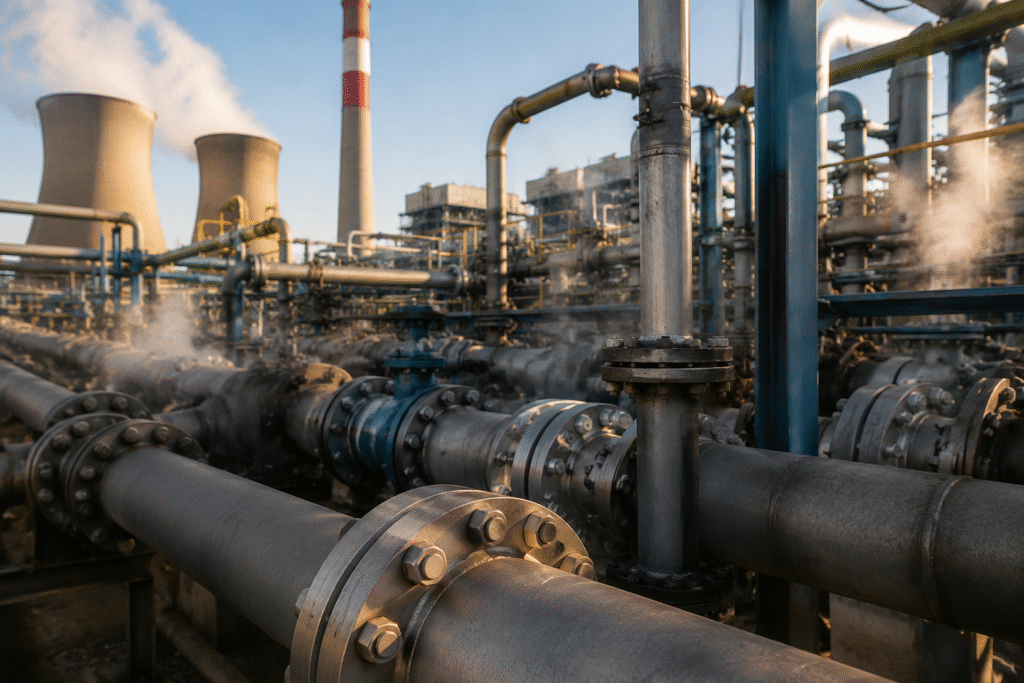
Materiais de flange de aço inoxidável e aquisições estratégicas
De acordo com a pesquisa Grand View (2024), o mercado global de flanges industriais foi avaliado em $5.8 bilhão em 2023 e está projetado para atingir $7.2 bilhão por 2030. Esse crescimento faz com que flange de tubo de aço inoxidável a critical component for buyers comparing performance, custo do ciclo de vida, and compliance in industrial piping systems.
Para engenheiros e equipes de compras, the most common buying questions are no longer just about Flanges?. They also involve hidden advantages, seleção de materiais, classe de pressão, tempo de espera, EN 10204 3.1 documentação, and whether Stainless Steel or alloy options better fit corrosive or high-temperature Pipe service.
Why the Stainless Steel Pipe Flange Market Keeps Expanding in Industrial Projects
Industrial demand remains strong because flanges sit at the center of maintenance access, equipment integration, and code-compliant piping design. De acordo com Statista (2024), a indústria de petróleo e gás é responsável por aproximadamente 35% do consumo global de flanges, which shows how heavily upstream, meio do caminho, and downstream projects depend on reliable flange connections.
Adicionalmente, Ásia-Pacífico é responsável por mais de 45% da produção global de flanges, sendo a China o maior fabricante (IBISWorld, 2024). Portanto, global buyers increasingly evaluate supplier quality systems, capacidade de usinagem, and traceability alongside price.
The market is also becoming more specification-driven. ASME B16.5 e ASME B16.47 continue to define dimensional and pressure-rating requirements for many industrial flange systems, enquanto ASTM A182 e ASTM A240 shape material expectations for forged and plate products (ASME, 2023; ASTM, 2024).
As corrosion control becomes more important, stainless grades remain a preferred choice in chemical processing, dessalinização, serviço marítimo, and hygienic systems. De acordo com a Inteligência Mordor (2024), corrosion-related maintenance can account for a significant share of plant operating expenditure, which is why many buyers now prioritize lifecycle value over first-cost alone.
This is where the hidden advantages of stainless steel pipe flange procurement become clear. Buyers gain corrosion resistance, estabilidade dimensional, strong mechanical properties, and broad standard compatibility in one component category.
No entanto, not all stainless flanges are equal. Grau do material, rota de forjamento, tipo de revestimento, and inspection level all influence performance in service.
Com ISO 9001:2015 e certificações PED 2014/68/EU, SASA FLANGE serves project buyers needing traceable stainless steel flanges and fittings for Oil & Gás, Petroquímica, Poder, Marinho, e sistemas de tratamento de água. A empresa fabrica flanges em 304, 316, 316eu, 904eu, 2205, 2507 e outras notas premium, while also supporting carbon steel, liga, and special materials for mixed-specification projects.
Além disso, procurement teams now expect suppliers to support both standard and custom requirements. That includes sizes from 1/2 polegada para 60 polegada, pressure classes such as 150, 300, 600, 900, 1500, e 2500, plus face options like RF, FF, RTJ, and custom-machined profiles.
Como resultado, fabricantes com usinagem CNC, Capacidade PMI, and hydrostatic or NDE support have a stronger competitive position. In industrial B2B purchasing, technical confidence often decides the order before unit price does.
Tipos de flange de tubo de aço inoxidável, Vantagens ocultas, and Material Selection Insights
When engineers compare flange types, they usually begin with pressure, temperatura, perfil de corrosão, e acesso para manutenção. Yet the Most overlooked factor is often the interaction between flange type and piping operation, especially under cyclic load, exposição ao cloreto, or repeated thermal shock.
Como John Peterson, Engenheiro de Tubulação Sênior, estados: “Selecting the wrong flange type can raise leak risk more than selecting the wrong pressure class, because joint behavior depends on installation, enfrentando, aparafusamento, and service conditions together.” That is why a technical review should cover geometry, compatibilidade da junta, and material metallurgy rather than only nominal size.
The most common stainless flange Types include weld neck, escorregar, cego, solda de soquete, rosqueado, e junta sobreposta. Each design offers different stress distribution, fabrication convenience, and maintenance advantages in industrial service.
- Flange de pescoço soldado: Melhor para alta pressão, vibração, and thermal cycling due to its tapered hub.
- Deslizar no flange: Easier alignment and lower fabrication cost for low to medium pressure lines.
- Flange cega: Usado para isolar, inspecionar, or future-proof line ends and vessel nozzles.
- Flange de solda de soquete: Common in small-bore high-pressure piping where bore alignment matters.
- Flange roscada: Useful where welding is restricted or temporary disassembly is required.
- Flange de junta sobreposta: Suitable for systems needing frequent dismantling and stub-end rotation.
A seleção do tipo de material é igualmente importante. Inoxidável 304 and 304L are common for general industrial service, enquanto 316 and 316L provide stronger resistance to chlorides and many aggressive media.
For more demanding service, buyers may specify 904L, duplex 2205, superduplex 2507, or nickel alloys such as Inconel, Monel, e Hastelloy. De acordo com a Pesquisa de Mercado Futuro (2024), demand for corrosion-resistant alloys in process industries is rising at over 5% CAGR, reflecting tighter uptime and durability targets.
Buyers should also understand temperature behavior. High-carbon stabilized grades or dual-certified materials may improve performance in elevated-temperature or welded systems, depending on code and process requirements.
Como Dr.. Emily Zhang, Cientista de Materiais, estados: “Em sistemas contendo cloreto, the difference between 304 e 316 is not marginal over time; it often becomes visible in maintenance frequency, gasket integrity, and total joint reliability.” Portanto, the correct grade can reduce leakage events and replacement cycles.
De acordo com as orientações da NACE e dados de corrosão da indústria, chloride stress corrosion cracking risk rises significantly in austenitic stainless steels at elevated temperature, particularly when fabrication and insulation conditions trap contaminants (NACE, 2023). Portanto, duplex and higher-alloy options often provide better long-term value in offshore, dessalinização, e dever químico.
The hidden advantages of a properly specified stainless steel pipe flange include more than corrosion resistance. Buyers also gain clean surface finish, broad media compatibility, low maintenance, and strong availability across ASME, DIN, JIS, GOST, e sistemas EN.
Apoiado por usinagem CNC avançada e testes de qualidade abrangentes, SASA FLANGE can supply forged and plate flange configurations matched to customer drawings and international standards. That capability helps EPC contractors simplify sourcing for mixed-material projects that include elbows, camisetas, redutores, bonés, and related pipe fittings.
Specification reviews should include the following checkpoints before issuing a PO.
- Padrão aplicável: ANSI B16.5, ANSI B16.47, DIN, JIS, GOST, ou PT 1092.
- Grau do material: 304, 304eu, 316, 316eu, 904eu, 2205, 2507, A182 F316L, ou liga especial.
- Classe de pressão ou classificação PN: Aula 150 para 2500 or PN10 to PN100.
- Tipo de revestimento: RF, FF, RTJ, língua e sulco, or custom profile.
- Wall schedule match: Sch 10, Sch 40, Sch 80, XS, or custom bore.
- Teste e documentação: PMI, UT, PT, dureza, suporte para hidroteste, EN 10204 3.1, PED declaration.
According to ISO-aligned manufacturing studies, dimensional nonconformity and missing traceability remain among the top causes of flange rejection in export markets (ISO, 2023). Por esse motivo, serious buyers often prequalify vendors based on QA systems before commercial negotiation begins.
Many procurement managers also ask how to Choose between forged and plate Flanges. Em geral, forged flanges offer better grain flow and mechanical consistency, while plate flanges can be cost-effective for lower-pressure and larger-diameter service.
No entanto, the final choice should reflect service severity, código de projeto, e nível de inspeção. A low-price flange that fails PMI or dimensional inspection can create far greater shutdown cost than its purchase savings.
ASME, ASTM, DIN, e conformidade EN para flanges de aço inoxidável
Standards compliance is where engineering intent turns into safe procurement. ASME B16.5 cobre flanges de tubos e conexões flangeadas até NPS 24, enquanto ASME B16.47 aborda diâmetros maiores, typically from NPS 26 através do NPS 60 (ASME, 2023).
Os padrões ASTM definem a química do material e as propriedades mecânicas. Por exemplo, ASTM A182 cobre flanges de tubos de liga forjada ou laminada e aço inoxidável, acessórios forjados, e válvulas para serviço em alta temperatura, enquanto ASTM A240 addresses chromium and chromium-nickel stainless plate, folha, e tira (ASTM, 2024).
Projetos europeus e internacionais exigem frequentemente EN 1092-1 and PED alignment. Portanto, suppliers must understand dimensional differences, requisitos de marcação, rastreabilidade de materiais, and conformity assessment expectations before production starts.
- ASME B16.5: Common for NPS 1/2 para 24, classificações de pressão-temperatura, revestimentos, dimensões, tolerâncias, and marking.
- ASME B16.47: Large diameter flange dimensions and classes for heavy industrial systems.
- ASTM A182: Forged stainless and alloy flange material requirements.
- ASTM A240: Plate material for stainless products and related composition limits.
- EN 1092-1: European flange dimensions and PN system.
- NACE MR0175 / ISO 15156: Material suitability guidance for sour service environments.
For regulatory reference, buyers can review the latest technical standards directly from ASME. This is especially useful when reconciling project specifications across EPC firms, usuários finais, e inspetores terceirizados.
Inspection and documentation are just as important as dimensional compliance. In export and regulated projects, buyers often require heat number traceability, CTMs, Verificação do PMI, verificações de dureza, e EN 10204 3.1 certificados.
According to DNV project quality guidance (2023), documentation gaps are a frequent cause of approval delay for pressure-containing components in offshore and marine applications. Portanto, supplier responsiveness on quality dossiers can materially affect commissioning schedules.
Com ISO 9001:2015 e certificações PED 2014/68/EU, SASA FLANGE supports buyers who need documented quality control, rastreabilidade de materiais, and export-ready compliance packages. The company also works with DIN, JIS, GOST, e PT 1092 requirements for multinational projects where one flange schedule rarely fits every line class.
Adicionalmente, compliance should include application-specific material review. Sour service, exposição ao cloreto, água desmineralizada, or high-temperature oxidation each change the recommended stainless grade and testing scope.
As Michael Reeves, Industry Analyst, notas: “Compliance is no longer a paperwork exercise; it is a supply-chain risk control tool that protects installation timelines and plant uptime.” That view is increasingly shared by procurement teams managing multi-country projects.
Em termos práticos, a well-specified stainless steel pipe flange order should state the standard, material, aula, enfrentando, quantidade, nível de inspeção, e pacote de documentação. This approach reduces ambiguity and prevents late-stage technical clarifications that delay shipment.
Guia de aplicação: Como escolher flanges para óleo, Gás, Químico, Poder, e Sistemas Marítimos
Application-based selection is the fastest way to narrow options. Different sectors place very different stress on a stainless steel pipe flange, even when the nominal size appears identical.
Em sistemas de petróleo e gás, classe de pressão, risco de serviço azedo, and maintenance accessibility dominate specification decisions. Since this sector consumes about 35% da demanda global de flanges (Estadista, 2024), flange reliability directly influences shutdown planning and leak prevention.
For upstream gathering and refinery units, weld neck and RTJ configurations are common in severe service. Duplex or super duplex grades may also be selected where chlorides, H2S, and pressure combine to challenge standard austenitic stainless steels.
No processamento petroquímico e químico, media compatibility is usually the first screen. Portanto, 316eu, 904eu, Hastelloy, or Monel options may be justified when chloride concentration, acid exposure, or purity requirements exceed the capability of 304-grade materials.
Power generation projects often evaluate both temperature and pressure cycling. Como resultado, forged flanges with controlled chemistry, stable machining tolerances, and reliable gasket seating become essential for steam, condensado, e linhas de processo auxiliares.
Marine and shipbuilding systems add a different challenge. Spray de sal, intermittent wetting, vibração, and limited maintenance windows all increase the value of corrosion-resistant materials and precise flange alignment.
- Óleo & Gás: Priorize a classe de pressão, Revisão da NACE, RTJ or weld neck selection, e rastreabilidade total.
- Processamento Químico: Match grade to medium, temperatura, and corrosion rate, then confirm gasket compatibility.
- Geração de energia: Focus on cyclic loading, serviço de vapor, bolting integrity, and material consistency.
- Marinho: Consider chloride resistance, planejamento de manutenção compacto, and coating or insulation interaction.
- Tratamento de Água: Evaluate chlorides, disinfectant chemistry, e longos intervalos de manutenção.
- Construction and OEM: Balance code compliance, delivery speed, and fabrication convenience.
Common purchasing variables should also be reviewed before final approval.
- Nominal size and matching pipe schedule.
- Pressure-temperature rating versus process envelope.
- Corrosion allowance and expected service life.
- Required face finish and gasket system.
- Welding method and field fabrication constraints.
- Tempo de espera, stock availability, e necessidades de usinagem personalizadas.
Oferecendo tamanhos personalizados de 1/2 polegada para 60 polegada com preços competitivos direto da fábrica, SASA FLANGE supports buyers who need standard and nonstandard stainless steel flanges plus matching elbows, camisetas, redutores, e bonés. Servindo 50+ países em todo o petróleo & Gás, Petroquímica, Poder, e indústrias marítimas, the company can assist with drawing-based manufacturing and multi-standard sourcing.
When buyers compare vendors, they should ask for more than a catalog. They should verify manufacturing route, machining tolerance control, Disponibilidade do CTM, Capacidade PMI, and actual export experience for project-critical lines.
That process reveals the hidden advantages of working with experienced flange manufacturers rather than trading-only suppliers. Better technical alignment often means fewer NCRs, smoother inspection, e menor custo total instalado.
Perspectivas futuras para aquisição de flanges de tubos de aço inoxidável e recomendações estratégicas de compra
The market outlook remains positive because energy investment, manutenção industrial, and water infrastructure upgrades continue to support flange demand. De acordo com a pesquisa Grand View (2024), the global flange market is on track to add $1.4 bilhões em valor por 2030, which indicates sustained competition for quality-assured supply.
Ao mesmo tempo, os compradores estão se tornando mais seletivos. De acordo com IBISWorld (2024), Ásia-Pacífico lidera com mais de 45% da produção global, yet procurement teams increasingly differentiate suppliers by documentation quality, capacidade de resposta, and ability to meet project-specific standards.
Portanto, strategic sourcing should combine technical prequalification with commercial evaluation. The most Common mistake is buying purely on unit price while ignoring inspection cost, delivery risk, and replacement expense.
For practical results, procurement managers should use a structured approach.
- Standardize approved grades for recurring service conditions.
- Especifique ASME, ASTM, DIN, or EN standard references clearly in RFQs.
- Solicitar EN 10204 3.1 material certificates and PMI where required.
- Align flange type with maintenance strategy, not just initial fabrication cost.
- Compare total cost of ownership for 304, 316eu, duplex, and alloy options.
Digital procurement will also shape future buying behavior. More buyers now expect fast drawing review, material cross-reference support, and prompt technical response from flange vendors before issuing large-volume orders.
Naquele ambiente, suppliers that combine manufacturing depth with clear engineering support will stand out. For projects requiring stainless steel pipe flange expertise, usinagem personalizada, and certified export documentation, conectando-se com SASA FLANGE is a practical next step for technical evaluation and quotation planning.
Perguntas frequentes
Quais são os diferentes tipos de flanges de aço inoxidável?
●Os tipos de flange de aço inoxidável mais comuns são pescoço de solda, escorregar, cego, solda de soquete, rosqueado, e junta sobreposta, com ASME B16.5 defining dimensions for many standard sizes.
●De acordo com Statista (2024), oil and gas uses about 35% da demanda global de flanges, which is why weld neck and RTJ-based configurations are widely specified for severe service.
●Weld neck flanges suit high-pressure and thermal cycling lines, while slip on flanges are often selected for easier fit-up and lower fabrication cost in moderate service.
●Flanges cegos isolam as extremidades da linha, threaded flanges help where welding is limited, and lap joint flanges support frequent dismantling in maintenance-heavy systems.
●For projects requiring multiple flange types across one piping class, trabalhando com fabricantes estabelecidos como SASA FLANGE helps ensure dimensional consistency and complete traceability.
Quais são os três tipos de flanges?
●Os três tipos de flanges mais comumente referenciados em discussões industriais básicas são pescoço de solda, escorregar, e flanges cegas.
●These three cover many practical needs because weld neck handles demanding service, slip on supports economical installation, and blind creates reliable shutoff points for testing or expansion.
●ASME B16.5 remains the leading dimensional standard for these designs in many international projects, especially from NPS 1/2 através do NPS 24.
●De acordo com a pesquisa Grand View (2024), the flange market reached $5.8 bilhão em 2023, which reflects the large installed base where these three flange styles continue to dominate.
●For engineering-grade selection, buyers should confirm not just the type but also the material grade, enfrentando, classe de pressão, and pipe schedule before ordering.
Tamanhos de flange de tubo de aço inoxidável: what sizes are available?
●Standard stainless steel pipe flange sizes typically start at 1/2 inch and extend to 24 polegada abaixo ASME B16.5, enquanto ASME B16.47 covers larger sizes up to 60 inch for many applications.
●Actual size availability depends on the flange type, classe de pressão, grau de material, and whether the product is forged or plate-based.
●Por exemplo, um 4 flange de tubo de aço inoxidável de polegada na classe 150 ou 300 is common in stock programs, but larger diameters and higher classes often require scheduled production.
●De acordo com IBISWorld (2024), A Ásia-Pacífico produz mais de 45% de flanges globais, so international supply is broad, but buyers should still verify lead time and inspection scope for nonstandard dimensions.
●For projects requiring custom bores, RF faces, Ranhuras RTJ, or drawing-based dimensions, fabricantes como SASA FLANGE can support custom machining and documentation.
Preço de flange de tubo de aço inoxidável: what affects the cost?
●O preço do flange do tubo de aço inoxidável é afetado principalmente pela qualidade do material, tamanho, classe de pressão, tipo de flange, complexidade de usinagem, requisitos de inspeção, e quantidade do pedido.
●Por exemplo, 316L usually costs more than 304, enquanto duplex 2205, 2507, and nickel alloys such as Inconel or Hastelloy increase price further because alloy content and processing are more demanding.
●Documentation and testing also influence cost, especially when buyers request PMI, UT, Conformidade com PED, ou EN 10204 3.1 certificates for regulated applications.
●De acordo com a pesquisa Grand View (2024), espera-se que o mercado atinja $7.2 bilhão por 2030, and that growth often correlates with stronger demand for high-specification, higher-value flange products rather than only low-cost commodity items.
●The best buying strategy is to compare total installed cost, because a lower-priced flange without proper traceability or tolerance control can create far higher field and shutdown expense.
Stainless Steel Slip On Flange: when should you choose it?
●A Stainless Steel Slip On Flange is typically chosen for low to medium pressure service where easy pipe alignment and economical fabrication are priorities.
●Porque o tubo desliza para dentro do flange antes da soldagem de ângulo, installation can be faster than with weld neck designs in less severe applications.
●No entanto, slip on flanges generally offer lower fatigue resistance than weld neck flanges, so engineers should review pressure cycling, vibração, and leak-critical service carefully.
●As piping engineers often note, slip on designs work well in utility, água, and general process lines, but they are less preferred for severe thermal cycling or high-integrity hydrocarbon service.
●For buyers needing stainless steel flanges and fittings with matching schedules and controlled machining tolerances, established suppliers can help confirm whether a slip on design is the right technical choice.
How do I choose reliable flange manufacturers or a flange vendor?
●Reliable flange manufacturers should provide clear compliance with ASME, ASTM, DIN, ou padrões EN, plus traceable MTCs, números de calor, and inspection support.
●Buyers should review whether the vendor has ISO 9001:2015 certificação, PED capability for relevant projects, CNC machining capacity, and experience shipping to regulated industries.
●De acordo com orientação da DNV (2023), documentation quality is a common cause of project delay, so vendor responsiveness on quality dossiers matters almost as much as manufacturing capacity.
●It is also smart to verify material range, because suppliers that can provide 304, 316eu, 904eu, 2205, 2507, A105, A182, and special alloys are better equipped for mixed-specification projects.
●For procurement teams that want factory-direct support, tamanhos personalizados, and coordinated supply of flanges plus pipe fittings, engaging with SASA FLANGE can simplify technical review and purchasing execution.
Posts Relacionados
Acabamento da face do flange: Serrilhas concêntricas vs espirais explicadas
As serrilhas concêntricas e espirais são acabamentos de face de flange usinados…
Dúplex 2205 vs Flanges 316L: Qual material você deve escolher?
Resposta rápida: Dúplex 2205 flanges são geralmente o candidato mais forte…

Definição de flange de orifício, Detalhes e visão geral dos flanges ASME B16.36: Dados de mercado, Guia de seleção e insights de conformidade
O mercado global de flanges industriais foi avaliado em $5.8 bilhão…

Guia de mercado de flange de descarte preto: Materiais, 3.5″ Compatibilidade, e dados de fornecimento B2B para flanges de pia de cozinha
A demanda por flanges descartáveis pretos está aumentando à medida que os compradores de utensílios de cozinha…