
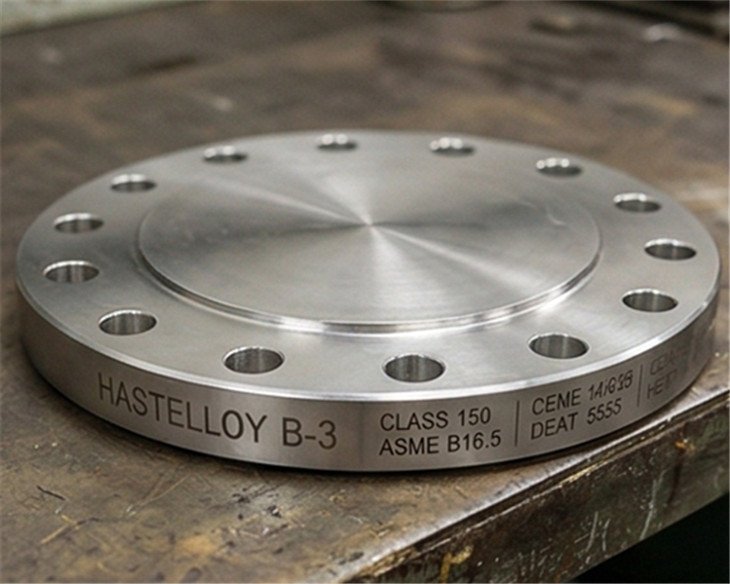
Tại sao xử lý nhiệt lại quan trọng đối với mặt bích thép hợp kim ASTM A182
Trả lời trực tiếp
Heat treatment develops the microstructure and mechanical properties required for an ASTM A182 alloy-steel grade. A forging with correct chemistry but incorrect thermal processing may not meet tensile, hardness or high-temperature performance requirements. The required treatment depends on grade, kích thước phần, specification edition and project requirements.
Bài học chính
- Heat treatment is a production requirement, not a certificate formality.
- Furnace records, thermocouple control and test results should trace to the forging heat and batch.
- Later welding or repair heat cycles must be controlled so they do not compromise the supplied condition.
What heat treatment changes
Heating, holding and cooling control phase transformation, grain condition, precipitation and residual stress. These features influence strength, độ dẻo, sự dẻo dai, hardness and elevated-temperature behaviour.
Different grades use different routes, such as normalizing and tempering or quench-and-temper processes. The manufacturer must follow the applicable grade requirements rather than applying one shop cycle to every chrome-moly flange.
Why forging section size matters
A large flange hub and rim do not heat and cool at the same rate as a small test coupon. Furnace loading, soak time, transfer time and cooling medium affect uniformity. Test specimens must represent the product in the manner required by the specification and purchase order.
For critical orders, buyers may request furnace charts, calibrated-instrument records and defined test locations.
Special attention for F91
F91 properties depend on its normalized-and-tempered condition. An unapproved subcritical or excessive heat cycle can change hardness and long-term performance. Welding and PWHT therefore need coordination with the base-material condition.
PMI cannot verify microstructure. độ cứng, thử nghiệm cơ khí, thermal records and any specified metallurgical examination provide different pieces of evidence.
Heat-treatment documents to review
- Material grade and heat number
- Furnace identification and calibration status
- Cycle temperatures, hold time and cooling method
- Batch or item traceability
- Độ bền kéo, impact and hardness results as applicable
- Records of re-heat treatment or repair
Certificate review should resolve inconsistent dates, heat numbers or treatment descriptions before release.
Câu hỏi thường gặp
Can hardness alone prove correct heat treatment?
KHÔNG. Hardness is useful evidence but must be evaluated with chemistry, thermal records, mechanical tests and specified acceptance criteria.
Does final machining require new heat treatment?
Normal cold machining does not usually recreate the bulk heat-treatment cycle, but heavy repair, hot forming or welding may trigger additional requirements.
Should heat-treatment charts be requested?
They are valuable for critical or project-specified orders. The RFQ should state whether charts are required for review or final documentation.
Tiêu chuẩn cơ bản được tham chiếu
Luôn xác minh phiên bản được chỉ định trong đơn đặt hàng và đạt được tiêu chuẩn được kiểm soát hoàn chỉnh về thiết kế và nghiệm thu.
Yêu cầu báo giá mặt bích thép hợp kim
Gửi lớp vật liệu, tiêu chuẩn, NPS, lớp áp lực, loại mặt bích, đối mặt, lịch trình đường ống, yêu cầu về số lượng và kiểm tra. SASA FLANGE sẽ xem xét mô tả kỹ thuật trước khi báo giá.
bài viết liên quan
Mặt bích C-2000 so với C22: Lựa chọn vật liệu và kiểm tra RFQ
So sánh nhận dạng vật liệu mặt bích C-2000 và C22, điều kiện dịch vụ, forging…
Phương pháp kiểm tra NDT đối với mặt bích thép hợp kim rèn
Hướng dẫn tập trung vào người mua về các phương pháp thử nghiệm không phá hủy đối với hợp kim rèn…

Yêu cầu kiểm tra độ cứng cho F11, Mặt bích F22 và F91
Hướng dẫn thực tế để xác định và giải thích các phép thử độ cứng trên…
Cách đọc dấu mặt bích ASTM A182
Hướng dẫn hiện trường để giải thích ASTM A182 và ASME B16.5…