
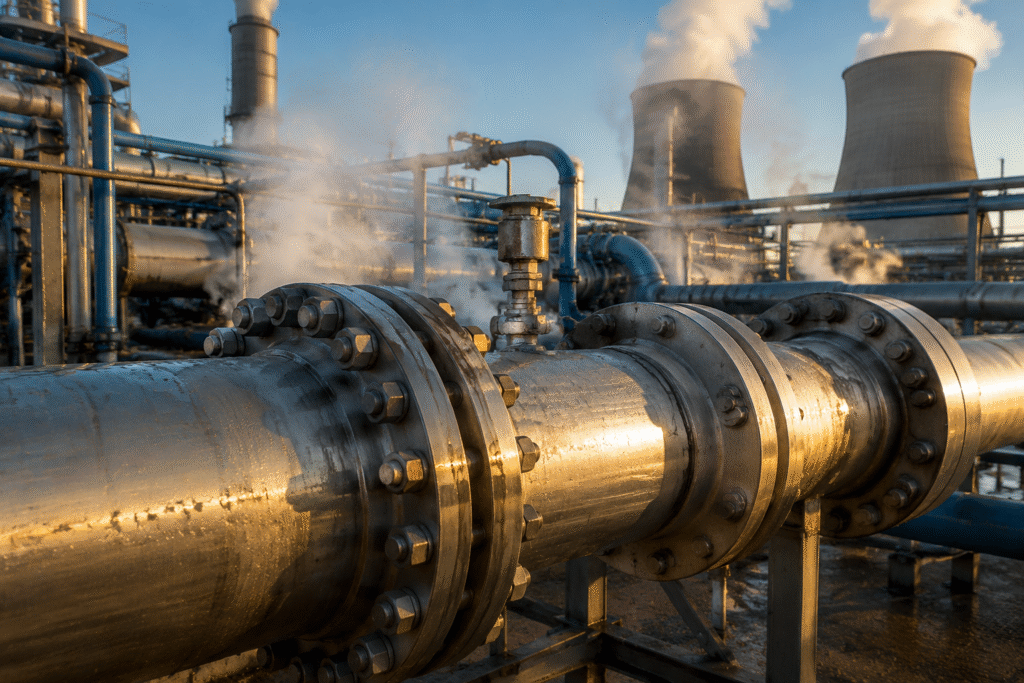
Thị trường mặt bích ống thép không gỉ: 2024 dữ liệu, Ưu điểm tiềm ẩn, Các loại, Công dụng, và Cách chọn ASME B16.5 & Mặt bích B16.47
Theo nghiên cứu của Grand View (2024), thị trường mặt bích công nghiệp toàn cầu được định giá ở mức $5.8 tỷ trong 2023 và dự kiến sẽ đạt $7.2 tỷ bởi 2030. That growth explains why the stainless steel pipe flange has become a strategic component for engineers and procurement teams balancing corrosion resistance, tính toàn vẹn áp lực, và chi phí vòng đời.
Đối với người mua công nghiệp, the most intriguing point is not only product availability. The hidden advantages of stainless steel pipe flange selection often appear later in service life through lower maintenance, khả năng tương thích phương tiện mạnh mẽ hơn, and better compliance with ASME, ASTM, DIN, và tiêu chuẩn EN.
Why the stainless steel pipe flange market keeps expanding in critical industries
Theo IBISWorld (2024), Châu Á - Thái Bình Dương chiếm hơn 45% sản xuất mặt bích toàn cầu, với Trung Quốc là nhà sản xuất lớn nhất. Kết quả là, buyers now expect broader grade availability, thời gian thực hiện nhanh hơn, and more competitive factory-direct sourcing for stainless steel flanges and fittings.
Theo Statista (2024), ngành dầu khí chiếm khoảng 35% tiêu thụ mặt bích toàn cầu. Vì thế, flange suppliers that serve upstream, giữa dòng, and downstream users must support high-integrity applications, truy xuất nguồn gốc, and pressure-temperature compliance.
Demand is also rising in water treatment, phát điện, đóng tàu, và nhà máy hóa dầu. Trong những lĩnh vực này, a stainless steel pipe flange often outperforms coated carbon steel when chloride exposure, độ ẩm, or aggressive chemicals shorten maintenance cycles.
Theo Mordor Intelligence (2024), the industrial pipe components market continues to benefit from refinery upgrades and infrastructure modernization across Asia and the Middle East. Hơn thế nữa, người mua ngày càng yêu cầu EN 10204 3.1 tài liệu kiểm tra, Kiểm tra PMI, and PED-compliant manufacturing records before purchase approval.
That shift has changed how engineers evaluate flanges. Giá cả vẫn quan trọng, Tuy nhiên, procurement teams now compare machining accuracy, sealing face finish, material heat number traceability, and whether the flange vendor can manufacture both standard and custom dimensions.
SASA FLANGE hoạt động trong môi trường này với ISO 9001:2015 và chứng nhận PED 2014/68/EU. With stainless steel, thép cacbon, hợp kim, hai mặt, hợp kim niken, and titanium options, the company supports projects that require ASME B16.5, ASME B16.47, DIN, JIS, GOST, và VN 1092 Tuân thủ.
Đối với nhiều nhà thầu EPC, a supplier’s product range matters as much as unit cost. A manufacturer that can supply weld neck, trượt vào, mù, ổ cắm hàn, khớp nối, and threaded flange styles alongside elbows, áo thun, bộ giảm tốc, and caps reduces vendor complexity.
Theo Nghiên cứu thị trường Tương lai (2024), stainless and alloy piping components are seeing above-average demand growth in corrosive processing environments due to durability and lower replacement frequency. Do đó, lifecycle economics now play a larger role in bidding decisions than initial purchase price alone.
BẰNG SASA FLANGE phục vụ dầu & Khí đốt, hóa dầu, Phát điện, Đóng tàu & Hàng hải, Xử lý nước, và ngành xây dựng, its positioning aligns with the segments driving most industrial flange demand. Được hỗ trợ bởi gia công CNC tiên tiến và kiểm tra chất lượng toàn diện, the company supports custom sizes from 1/2" đến 60" cho các dự án toàn cầu.
Technical guide to stainless steel pipe flange types, ưu điểm tiềm ẩn, và lựa chọn vật liệu
A stainless steel pipe flange is not a commodity in demanding service. The correct flange type, đối mặt, lớp áp lực, and metallurgy directly affect gasket sealing, duy trì tải bu lông, hiệu suất ăn mòn, và độ tin cậy lâu dài.
Như John Reynolds, piping reliability specialist and former refinery corrosion engineer, tiểu bang: “Most flange failures are selection failures before they become mechanical failures in service.” That expert view reflects a common reality in refineries and chemical plants where material mismatch can trigger leakage, ăn mòn kẽ hở, or premature shutdowns.
Các loại không gỉ phổ biến nhất vẫn còn 304, 304L, 316, và 316L. Tuy nhiên, 904L, hai mặt 2205, siêu song công 2507, and nickel alloys such as Inconel, Monel, and Hastelloy are increasingly specified where chloride stress, dịch vụ chua, or aggressive acids exceed the capability of conventional austenitic stainless steel.
According to ASTM material specifications used across the industry, ASTM A182 bao gồm hợp kim rèn hoặc cán và mặt bích không gỉ, phụ kiện, van, và các bộ phận cho dịch vụ nhiệt độ cao (ASTM, 2024). Trong thực tế, ASTM A182 F304/F304L and F316/F316L are the benchmark grades for many stainless steel pipe flange applications.
According to NACE and plant corrosion studies cited by industry analysts, molybdenum-bearing 316/316L typically offers stronger pitting resistance than 304/304L in chloride-containing media (NACE, 2023). Vì thế, hàng hải, ngoài khơi, and chemical users often choose 316L when process conditions include salt exposure or mild acidic service.
Flange type selection should match process duty and installation method:
- Mặt bích cổ hàn: ưa thích cho áp suất cao, đạp xe nhiệt, và các dòng quy trình quan trọng.
- Trượt trên mặt bích: cost-effective for lower-pressure systems and easier alignment during fabrication.
- Mặt bích mù: dùng để chấm dứt, cô lập, or pressure-test a pipeline or nozzle opening.
- Mặt bích hàn ổ cắm: Thích hợp cho đường dây cao áp có lỗ khoan nhỏ.
- Mặt bích ren: useful where welding is restricted or field hot work is undesirable.
- Mặt bích khớp nối: selected for systems requiring frequent dismantling and easy alignment.
The hidden advantages of premium flange machining are often overlooked during sourcing. Yet sealing face flatness, độ đồng tâm, căn chỉnh lỗ khoan, and serration finish strongly affect gasket seating stress and leak prevention.
Như Tiến sĩ. Milan Patel, materials scientist in corrosion-resistant alloys, tiểu bang: “In flange service, metallurgy and machining quality are inseparable because poor surface control can undermine even the best alloy.” Vì lý do này, engineers often specify dimensional inspection, PMI, and hydrostatic or relevant quality tests on critical orders.
ASME B16.5 bao gồm mặt bích ống và phụ kiện mặt bích từ NPS 1/2 thông qua NPS 24, trong khi ASME B16.47 bao gồm mặt bích thép đường kính lớn từ NPS 26 thông qua NPS 60 (ASME, 2024). Do đó, buyers searching B16.5 and B16.47 flanges? should verify not only size range but also series, đối mặt, khoan, and pressure class compatibility.
Typical stainless steel pipe flange procurement variables include:
- Phạm vi kích thước: 1/2" đến 60" depending on standard and manufacturing route.
- Các lớp áp lực: Lớp học 150, 300, 600, 900, 1500, Và 2500.
- Tùy chọn đối mặt: RF, FF, RTJ, lưỡi và rãnh, and male-female.
- Lớp vật liệu: 304, 316, 316L, 904L, 2205, 2507, Lớp A182, và hợp kim niken.
- Tài liệu: EN 10204 3.1, MTC, hồ sơ xử lý nhiệt, báo cáo chiều, và PMI.
Trong nhiều dự án, the decision is not simply 304 so với 316. Buyers may need to choose between corrosion margin and capital cost, or between standard stock and custom forged products with long-lead metallurgy.
Ví dụ, 304 is widely used for water, chế biến thực phẩm, và dịch vụ công nghiệp tổng hợp. Ngược lại, 316L is usually preferred for chlorides, môi trường biển, and more aggressive chemical streams.
Duplex and super duplex grades offer another set of intriguing benefits. They provide higher strength than common austenitic stainless steels, which can reduce wall thickness in some piping designs while maintaining strong resistance to chloride-related corrosion.
According to industry pricing benchmarks compiled by procurement platforms in 2024, stainless flanges can cost 2 ĐẾN 5 times more than carbon steel flanges depending on grade and size. Tuy nhiên, total installed cost may still favor stainless when repainting, thời gian ngừng hoạt động, and replacement intervals are considered.
SASA FLANGE sản xuất mặt bích ở 304, 316, 904L, 2205, 2507 và các hạng cao cấp khác. Ngoài ra, it supports elbows, áo thun, bộ giảm tốc, và mũ, which helps EPC buyers consolidate sourcing under one qualified supplier.
For buyers comparing flange manufacturers or a flange vendor for export projects, documentation is a major differentiator. Làm việc với SASA FLANGE can simplify communication on dimensions, thử nghiệm, đánh dấu, and certification for global supply chains.
ASME, ASTM, DIN, EN, and PED requirements that shape stainless steel flange purchasing
Tiêu chuẩn xác định khả năng thay thế lẫn nhau, safety margin, and regulatory acceptance. Vì thế, every stainless steel pipe flange purchase should start with the governing design code, đặc điểm kỹ thuật vật liệu, and end-user documentation requirements.
The main standards frequently referenced in global projects include:
- ASME B16.5 for flanges NPS 1/2 ĐẾN 24.
- ASME B16.47 for large-diameter flanges NPS 26 ĐẾN 60.
- ASME B16.9 for butt-weld fittings such as elbows, áo thun, và bộ giảm tốc.
- ASTM A182 cho mặt bích rèn không gỉ và hợp kim.
- EN 1092 về kích thước mặt bích và ký hiệu áp suất của mặt bích Châu Âu.
- Tiêu chuẩn DIN và JIS để tương thích theo chiều khu vực.
- NACE MR0175 for sour service material requirements in applicable environments.
Theo Chỉ thị về Thiết bị Áp lực, PED 2014/68/EU requires conformity assessment for pressure equipment placed on the EU market when thresholds are met (Ủy ban Châu Âu, 2024). Kết quả là, many European buyers ask for PED declarations, truy xuất nguồn gốc vật liệu, and documented manufacturing controls before approving a flange supplier.
ASME and EN systems are not interchangeable by assumption. Even when nominal size looks similar, mẫu lỗ bu lông, chỉ định áp lực, độ dày, and facing details may differ.
The practical comparison below helps procurement teams avoid specification errors:
- ASME Class system: typically expressed as Class 150, 300, 600, 900, 1500, 2500.
- EN system: commonly expressed as PN ratings such as PN10, PN16, PN25, PN40.
- kích thước ASME: aligned with inch-based piping systems widely used in Oil & Khí đốt.
- EN/DIN dimensions: often used in European industrial and municipal systems.
Tuân thủ vật liệu cũng quan trọng không kém. ASTM A182 forged grades define chemistry and mechanical properties, while supplementary buyer requirements may add hardness limits, kiểm soát ferit, kiểm tra ăn mòn, or impact testing.
In aggressive service, users may also specify NACE MR0175, DNV, or NORSOK criteria. That is common in offshore, khí chua, and subsea-linked systems where standard stainless may not be enough without tighter qualification.
According to ISO guidance and common manufacturing QA practice, traceability from raw material to finished flange remains essential for high-spec projects (ISO, 2024). Vì thế, leading buyers ask for heat number marking, Xác minh PMI, and final inspection records on each batch.
SASA FLANGE hỗ trợ ISO 9001:2015, PED 2014/68/EU, và AD 2000 requirements for relevant projects. Hơn nữa, its production scope covers stainless steel flanges, mặt bích thép carbon, mặt bích hợp kim, Và ASME B16.9 pipe fittings for integrated package supply.
Engineers should also confirm facing type and gasket compatibility. A raised face flange paired with the wrong gasket style can compromise seal load, even when the material grade and pressure class are correct.
Để tham khảo, buyers can review official technical information directly from ASME. That step is particularly useful when reviewing pressure-temperature ratings, B16.5 versus B16.47 scope, or deviations in project specifications.
When a project combines multiple standards, supplier capability becomes critical. Làm việc với SASA FLANGE gives buyers access to custom manufacturing, sản xuất đa tiêu chuẩn, and coordinated inspection support for export orders.
How to choose the right flange for Oil & Khí đốt, hóa chất, quyền lực, hàng hải, và dự án xử lý nước
Choosing the right flange starts with service conditions rather than catalog convenience. Thành phần phương tiện, áp suất vận hành, chu kỳ nhiệt độ, cơ chế ăn mòn, and maintenance accessibility should shape the final decision.
trong dầu & Khí đốt, weld neck flange designs remain the preferred choice for critical pressure service. Because the oil and gas industry consumes about 35% of all flanges globally (chính khách, 2024), this segment strongly influences best practice in material selection and inspection rigor.
Để xử lý hóa dầu và hóa chất, corrosion mechanism matters more than generic stainless labeling. clorua, hợp chất lưu huỳnh, and acidic media can quickly separate acceptable performance from premature leakage risk.
Power generation buyers often focus on temperature, Mệt mỏi, và độ ổn định cơ học lâu dài. Vì thế, ASTM A182 stainless and alloy grades are specified with greater scrutiny for boilers, trao đổi nhiệt, and auxiliary piping systems.
Marine and shipbuilding users usually prioritize seawater resistance and external corrosion durability. In those applications, 316L, hai mặt 2205, và siêu song công 2507 often provide stronger long-term value than general-purpose grades.
Water treatment systems present a different balance. Chống ăn mòn, khả năng làm sạch, and total ownership cost usually matter more than extreme pressure class.
Use this selection checklist before issuing a purchase order:
- Confirm design standard: ASME B16.5, ASME B16.47, EN 1092, DIN, hoặc JIS.
- Verify size and class: Ví dụ 4 mặt bích ống thép không gỉ inch, Lớp học 300 RF.
- Match alloy to media: 304, 316L, 904L, 2205, 2507, hoặc hợp kim niken.
- Define flange type: cổ hàn, trượt vào, mù, xâu chuỗi, khớp nối, hoặc mối hàn ổ cắm.
- Specify testing: PMI, kiểm tra chiều, độ cứng, NDE, hydrotest if applicable.
- Request documents: EN 10204 3.1, MTC, danh sách đóng gói, và giấy chứng nhận tuân thủ.
For practical use cases:
- Dầu & Gas gathering line: A182 F316L weld neck flange, ASME B16.5 Lớp học 600 RF.
- Desalination skid: hai mặt 2205 slip on or weld neck depending design pressure.
- Chemical reactor nozzle: 904L or Hastelloy flange where high chloride or acid exposure exists.
- Marine ballast line: 316L or duplex flange with verified corrosion-resistant finishing.
- Power plant auxiliary piping: A182 stainless or alloy flange selected to thermal duty.
thời gian dẫn, chiến lược chứng khoán, and packaging are also important. A flange manufacturer that offers both standard and custom machining can reduce schedule risk when EPC drawings change late in the project cycle.
SASA FLANGE cung cấp kích thước tùy chỉnh từ 1/2" đến 60" với giá cả cạnh tranh trực tiếp tại nhà máy. Phục vụ 50+ các quốc gia trên khắp dầu mỏ & Khí đốt, hóa dầu, Quyền lực, và ngành hàng hải, the company is positioned for buyers needing repeatable quality and export-ready documentation.
Procurement managers should compare more than the stainless steel pipe flange price. They should evaluate machining tolerance, coating or pickling condition, identification marking, and after-sales responsiveness if field questions arise.
As Sarah Kim, senior sourcing analyst in industrial flow control, tiểu bang: “The lowest flange quote often becomes the highest project cost when documentation, kiểm soát dung sai, or delivery discipline fails.” That is why approved-vendor status usually depends on quality systems as much as on unit price.
Triển vọng tương lai về tìm nguồn cung ứng mặt bích ống thép không gỉ và khuyến nghị mua chiến lược
Theo nghiên cứu của Grand View (2024), thị trường mặt bích dự kiến sẽ tăng trưởng từ $5.8 tỷ trong 2023 ĐẾN $7.2 tỷ bởi 2030. Hơn thế nữa, dự án chuyển đổi năng lượng, LNG infrastructure, khử muối, and industrial retrofits will keep demand firm for corrosion-resistant flanges and fittings.
Asia-Pacific will likely remain the dominant production base over the next several years. Tuy nhiên, buyers will continue shifting toward suppliers that can combine cost efficiency with certified quality systems, metallurgical breadth, and faster engineering communication.
Digital procurement is also changing supplier evaluation. Engineers increasingly request CAD support, inspection photos, truy xuất nguồn gốc nhiệt, and real-time production updates before placing larger annual contracts.
Vì thế, strategic buyers should take four actions. Đầu tiên, standardize approved grades and flange types by service category. Thứ hai, prequalify suppliers by certification and export experience. thứ ba, request clear testing and documentation packages. thứ tư, compare lifecycle cost instead of focusing only on initial flange price.
For companies managing global projects, dual-sourcing standard items while reserving complex custom flanges for a qualified specialist is often the most resilient approach. That model improves supply continuity without compromising critical application control.
A reliable stainless steel pipe flange partner should support technical clarification as well as shipment execution. Đối với các dự án yêu cầu ASME B16.5, B16.47, ASTM A182, EN 1092, and premium grades such as 316L, 904L, 2205, hoặc 2507, buyers can discuss specifications directly with SASA FLANGE for practical manufacturing guidance and quotation support.
Câu hỏi thường gặp
Mặt bích thép không gỉ dùng để làm gì?
●Mặt bích thép không gỉ được sử dụng để kết nối đường ống, van, máy bơm, và thiết bị trong các hệ thống đòi hỏi sức mạnh, chống ăn mòn, and repeatable sealing performance.
●Theo Statista (2024), ngành dầu khí chiếm khoảng 35% tiêu thụ mặt bích toàn cầu, which shows how important flanged joints remain in critical process service.
●Chúng được sử dụng rộng rãi trong các nhà máy hóa dầu, đường ống biển, ván trượt xử lý nước, food processing lines, and power generation facilities because grades like 304, 316L, và song công 2205 handle different media and temperature conditions.
●Engineers usually select them when they need easier maintenance access than welded-only systems, because flanges allow disassembly for inspection, thay thế miếng đệm, and equipment isolation.
●Đối với các dự án yêu cầu ASME B16.5 hoặc VN 1092 Tuân thủ, làm việc với các nhà sản xuất có uy tín như SASA FLANGE giúp đảm bảo loại mặt bích, đối mặt, and material match the real process duty.
Họ có sản xuất phụ kiện đường ống bằng thép không gỉ không?
●Đúng, manufacturers that produce stainless steel flanges often also supply stainless steel pipe fittings such as elbows, áo thun, bộ giảm tốc, và mũ để ASME B16.9 kích thước.
●Theo Nghiên cứu thị trường Tương lai (2024), corrosion-resistant piping components are seeing sustained demand growth because buyers want longer service life and lower replacement frequency in aggressive environments.
●Trong thực tế mua sắm, buying flanges and fittings from one qualified source can simplify dimensional coordination, truy xuất nguồn gốc vật liệu, and documentation control for the entire piping package.
●Common fitting grades include 304, 316, 316L, 904L, 2205, Và 2507, while special projects may specify Inconel, Monel, Hastelloy, or titanium for more severe service.
●For integrated packages that need flanges and fittings with EN 10204 3.1 chứng nhận, người mua có thể liên hệ SASA FLANGE to reduce vendor complexity and improve project coordination.
Mặt bích ống loại nào bền nhất?
●The weld neck flange is generally considered the strongest standard piping flange for high-pressure and high-temperature service because its tapered hub distributes stress more evenly into the pipe.
●ASME B16.5 recognizes weld neck flanges across multiple pressure classes up to Class 2500, which is one reason they are preferred in refineries, nhà máy điện, và hệ thống ngoài khơi.
●Sức mạnh, Tuy nhiên, does not depend on design alone, because alloy choice, độ dày của tường, gasket load, bolt tightening, and service conditions all affect final performance.
●Ví dụ, a duplex 2205 or A182 F316L weld neck flange in the correct class will usually outperform a lower-grade slip on flange in severe cyclic service, even if both meet nominal dimensional requirements.
●Đối với các ứng dụng quan trọng, buyers should verify design standard, đặc điểm kỹ thuật vật liệu, and inspection scope before ordering from any flange manufacturer or flange vendor.
Các loại mặt bích thép không gỉ khác nhau là gì?
●Các loại mặt bích inox chính là cổ hàn, trượt vào, mù, ổ cắm hàn, xâu chuỗi, và khớp nối, and each type serves a different installation and service requirement.
●Theo ASME (2024), ASME B16.5 covers common flange configurations for NPS 1/2 bởi vì 24, trong khi ASME B16.47 áp dụng cho đường kính lớn hơn từ NPS 26 bởi vì 60.
●Weld neck flanges suit severe service, slip on flanges support economical fabrication, blind flanges isolate systems, threaded flanges avoid welding, and lap joint flanges simplify alignment and dismantling.
●Selection should also include facing style such as RF, FF, hoặc RTJ, because a mismatch between flange face and gasket style can cause leakage even when material and class are correct.
●When evaluating stainless steel flange types for a new project, it is best to review pressure, nhiệt độ, phương tiện truyền thông, and maintenance needs before finalizing the bill of materials.
Làm thế nào để tôi lựa chọn giữa ASME B16.5 Và ASME B16.47 mặt bích?
●ASME B16.5 is generally used for pipe flanges from NPS 1/2 ĐẾN 24, trong khi ASME B16.47 is used for large-diameter steel flanges from NPS 26 ĐẾN 60.
●Theo ASME (2024), the two standards differ not only in size scope but also in dimensional conventions, which means buyers must confirm drilling, độ dày, đối mặt, and series details before ordering.
●Về mặt thực tế, B16.5 is common in refinery and process piping, whereas B16.47 becomes essential for larger headers, dòng nước, and plant utility mains.
●Engineers should also verify whether the project requires Series A or Series B under B16.47, because interchangeability cannot be assumed across all large-diameter flange designs.
●For export projects with mixed standards, a qualified supplier can help review drawings and prevent costly specification mismatches before production begins.
Điều gì ảnh hưởng đến giá mặt bích ống thép không gỉ?
●Giá mặt bích ống thép không gỉ chủ yếu bị ảnh hưởng bởi loại hợp kim, kích cỡ, lớp áp lực, tuyến đường rèn, phạm vi gia công, yêu cầu kiểm tra, và khối lượng đặt hàng.
●According to industry pricing benchmarks referenced in 2024 procurement reports, stainless flanges can cost 2 ĐẾN 5 times more than carbon steel flanges depending on grade and dimensions.
●Ví dụ, Một 4 mặt bích ống thép không gỉ inch trong 304 may be significantly less expensive than the same item in 316L, 904L, hoặc song công 2205 because alloying elements and manufacturing controls increase cost.
●Các yêu cầu bổ sung như PMI, EN 10204 3.1 chứng nhận, Tài liệu PED, special packing, or custom drilling will also raise total price but often reduce project risk.
●Buyers should compare delivered value instead of unit price alone, especially when corrosion resistance, thời gian hoạt động, and compliance documentation are important to plant performance.
bài viết liên quan
Mặt bích hoàn thiện: Giải thích về răng cưa đồng tâm và xoắn ốc
Các răng cưa đồng tâm và xoắn ốc đều được gia công hoàn thiện mặt bích…
song công 2205 so với mặt bích 316L: Bạn nên chọn chất liệu nào?
Trả lời nhanh: song công 2205 mặt bích thường là ứng cử viên mạnh hơn…

Định nghĩa mặt bích lỗ, Chi tiết và tổng quan về mặt bích ASME B16.36: Dữ liệu thị trường, Hướng dẫn lựa chọn và thông tin chi tiết về tuân thủ
Thị trường mặt bích công nghiệp toàn cầu được định giá ở mức $5.8 tỷ…

Hướng dẫn thị trường mặt bích xử lý màu đen: Nguyên vật liệu, 3.5″ Khả năng tương thích, và dữ liệu tìm nguồn cung ứng B2B cho mặt bích bồn rửa nhà bếp
Nhu cầu mặt bích xử lý màu đen đang tăng lên khi người mua đồ đạc nhà bếp…