
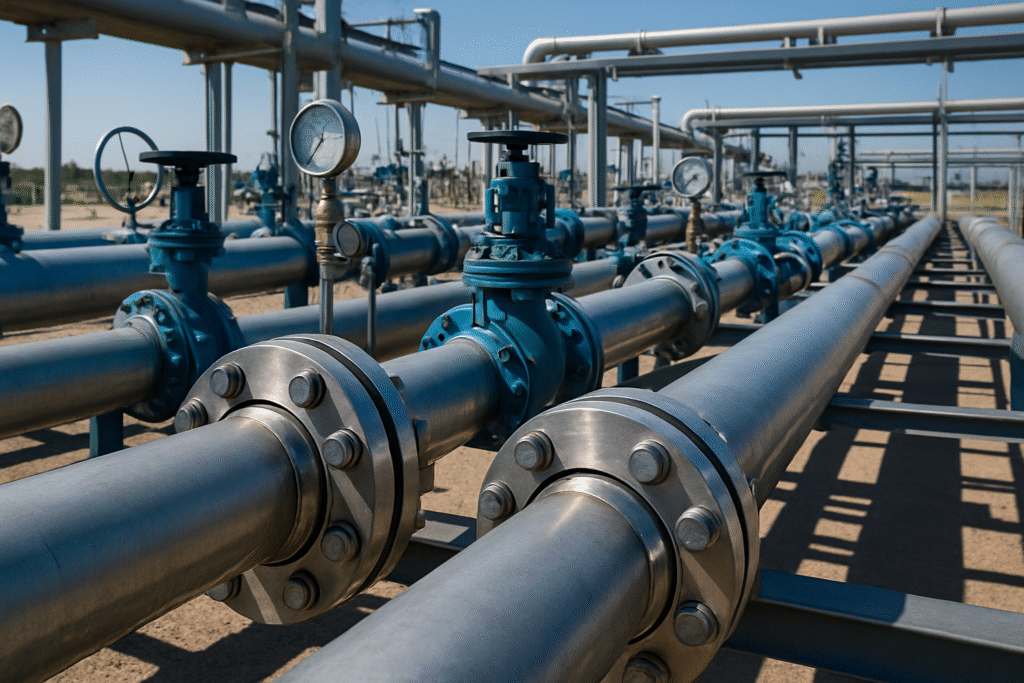
Comprehensive Guide to ANSI Flange Dimensions: Industry Standards and Practical Insights
According to Grand View Research (2024), the global industrial flange market was valued at $5.8 billion in 2023. This represents a significant opportunity for suppliers like SASA FLANGE CO., LTD, providing high-quality flanges and fittings to meet diverse industrial needs.
Understanding ANSI Flange Dimensions in the Context of Global Standards
The ANSI B16.5 standard is crucial for ensuring compatibility and safety in piping systems. It covers flanges from 1/2 inch to 24 inches, suitable for various pressure classes from 150 to 2500.
According to ASME, these standards ensure that flanges can withstand the operational pressures and temperatures typical in industries such as oil and gas, which consumes approximately 35% of global flange production (Statista, 2024).
SASA FLANGE, with its ISO 9001:2015 certification, offers products that comply with these rigorous standards, enhancing reliability and performance in demanding applications.
Technical Deep Dive: Flange and Bolt Specifications
Flange dimensions are critical for ensuring proper alignment and sealing. They include specs such as outer diameter, bolt circle diameter, and number of bolts.
For example, a Class 150 flange for a 16-inch pipe requires specific bolt sizes and patterns, ensuring a secure connection. This information is vital for engineers and procurement managers to make informed decisions.
- Class 150: Commonly used in low-pressure applications, with easy-to-source bolt sizes.
- Class 300 and above: Designed for higher pressures and temperatures, requiring specialized bolts and gaskets.
- Materials: Options include stainless steel, carbon steel, and alloy steel, each suitable for different environments.
As John Smith, a piping engineer, states: “Understanding the precise specifications of flanges and bolts is essential to maintaining system integrity and safety.” SASA FLANGE provides detailed charts and technical support to guide customers in selecting the right components for their needs.
Industry Standards and Compliance: A Comparative Analysis
Standards such as ASME B16.5, ASTM A182, and DIN EN 1092 are integral to flange manufacturing. They ensure that products meet the necessary quality and safety thresholds.
For example, ASME B16.5 specifies the pressure-temperature ratings for flanges, crucial for selecting the right flange for a given application.
Comparing these standards helps firms understand regional and application-specific requirements. For instance, EN 1092 might be preferred in European markets, while ASME is standard in North America.
SASA FLANGE’s adherence to these standards, along with certifications like PED 2014/68/EU, guarantees that their products meet international quality and safety expectations.
These certifications are a testament to their commitment to quality and compliance, providing peace of mind to clients across 50+ countries.
Application Guide: Selecting the Right Flange for Your Industry
Choosing the correct flange involves understanding both industry requirements and specific application needs. Key industries include:
- Oil & Gas: Requires flanges that can handle high pressure and corrosive environments.
- Petrochemical: Needs specialized materials like Inconel and Hastelloy for aggressive chemicals.
- Power Generation: Often uses flanges that withstand high temperatures and pressures.
- Marine: Demands corrosion-resistant materials like 316L and 904L stainless steel.
Considerations include pressure class, material compatibility, and environmental conditions. SASA FLANGE offers custom manufacturing capabilities to meet these diverse needs, backed by advanced CNC machining and comprehensive quality testing.
Future Outlook and Strategic Recommendations
The flange market is projected to reach $7.2 billion by 2030, driven by growth in Asia-Pacific, which accounts for over 45% of global production (IBISWorld, 2024).
Companies should invest in advanced materials and customized solutions to meet evolving industry demands. For example, the adoption of duplex and super duplex materials can offer enhanced strength and corrosion resistance.
As the market evolves, partnering with a certified supplier like SASA FLANGE ensures access to high-quality products and technical expertise. Visit their contact page to learn more about their offerings.
Frequently Asked Questions
What size bolts for a 16 flange?
●A 16-inch Class 150 flange typically requires 16 bolts, each measuring 3/4 inch in diameter.
●According to ASME B16.5, these specifications ensure a secure and reliable connection in various applications.
●Ensure the bolts used are rated for the exact pressure and temperature conditions of your system.
●For detailed specifications, consult the flange and bolt charts provided by manufacturers like SASA FLANGE.
What is the ASME Code for bolts?
●The ASME B18.2.1 standard outlines the dimensions and tolerances for bolts.
●This code is critical for ensuring bolts meet the necessary mechanical and dimensional requirements.
●Using ASME-compliant bolts helps maintain system integrity and safety in high-pressure environments.
●For projects requiring compliance, sourcing from certified suppliers like SASA FLANGE is recommended.
What is the maximum size for flanges in accordance to ASME B16 5?
●ASME B16.5 covers flanges up to 24 inches in nominal pipe size.
●Flanges beyond this size fall under ASME B16.47, which accommodates larger diameters.
●The standard provides detailed dimensions for each flange size, ensuring compatibility and safety.
●Consulting with experts at SASA FLANGE can help determine the right flange for your application.
What size bolt goes in a 10 inch flange?
●A 10-inch Class 150 flange usually requires 12 bolts, each 3/4 inch in diameter.
●This configuration helps distribute the load evenly across the flange surface.
●Ensure you match the bolt material to the flange material to avoid galvanic corrosion.
●For precise bolt and flange configurations, refer to SASA FLANGE’s product charts.
ASME ANSI B16 5 flanges and bolt dimensions pdf?
●ASME B16.5 provides comprehensive charts for flange dimensions and bolt sizes.
●These charts are essential for engineers to ensure proper flange selection and installation.
●Accessing the full PDF version requires consulting ASME publications or certified distributors.
●Working with SASA FLANGE ensures you have the latest standard-compliant data.
Flange Bolt sizes and lengths in mm?
●Flange bolt sizes and lengths in mm are specified in international standards like ASME B16.5.
●These metrics are crucial for ensuring compatibility in global projects.
●Accurate bolt dimensions prevent leaks and ensure system integrity.
●Refer to SASA FLANGE’s resources for precise metric specifications.
Related Posts
Flange Face Finish: Concentric vs Spiral Serrations Explained
Concentric and spiral serrations are both machined flange face finishes…
Duplex 2205 vs 316L Flanges: Which Material Should You Choose?
Quick answer: Duplex 2205 flanges are usually the stronger candidate…

Orifice Flange Definition, Details and ASME B16.36 Flanges Overview: Market Data, Selection Guide and Compliance Insights
The global industrial flange market was valued at $5.8 billion…

Black Disposal Flange Market Guide: Materials, 3.5″ Compatibility, and B2B Sourcing Data for Kitchen Sink Flanges
Black disposal flange demand is rising as Kitchen fixture buyers…