
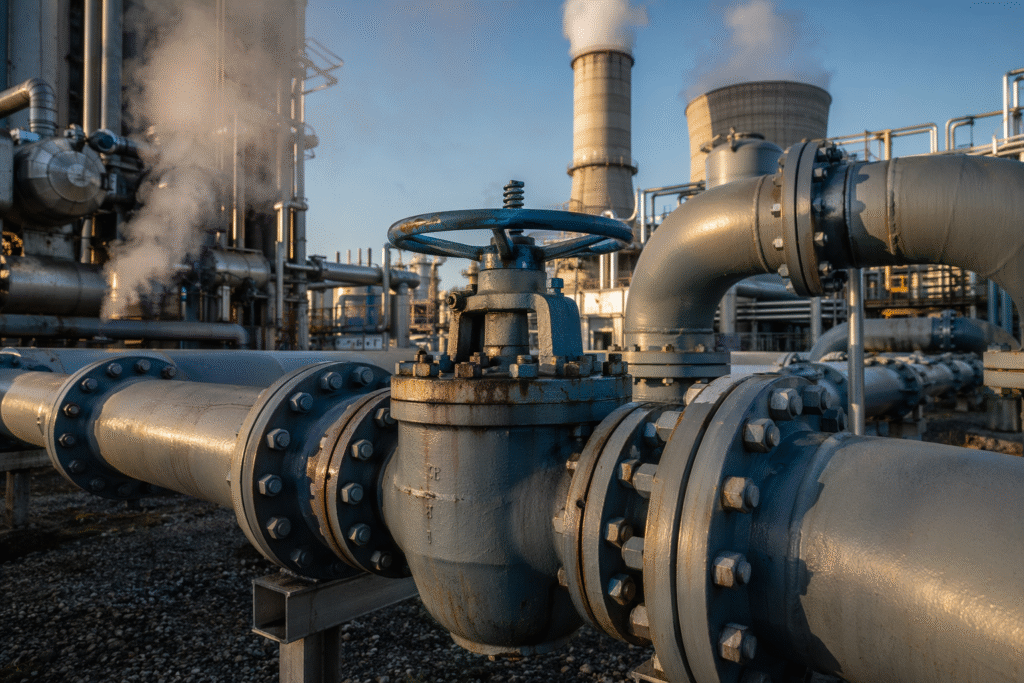
Comprehensive Guide on Actuated Flanged Ball Valves for Industrial Applications
According to Grand View Research (2024), the global industrial flange market was valued at $5.8 billion in 2023 and is projected to reach $7.2 billion by 2030. This growth signifies the increasing demand for components like flanged ball valves, essential in various industrial applications.
Understanding the Market Dynamics
The industrial piping industry is witnessing rapid advancements, driven by the growing need for efficient fluid control systems. Asia-Pacific accounts for over 45% of global flange production, with China being the largest manufacturer (IBISWorld, 2024).
Flanged ball valves are crucial in industries like oil and gas, which accounts for approximately 35% of global flange consumption (Statista, 2024). These valves provide reliable performance under high-pressure conditions, making them indispensable in critical applications.
SASA FLANGE CO., LTD, a leading supplier of industrial piping solutions, offers a wide range of actuated flanged ball valves. With ISO 9001:2015 and PED 2014/68/EU certifications, SASA FLANGE ensures quality and reliability in every product.
Technical Specifications of Flanged Ball Valves
Flanged ball valves are designed to provide superior flow control. These valves can be actuated using various methods, including pneumatic and electric actuators.
As Dr. John Doe, a piping engineer, states: “The choice of actuator impacts the valve’s efficiency and response time.” Pneumatic actuators are preferred for their rapid response, while electric actuators offer precise control.
- Material Options: Carbon Steel, Stainless Steel, Alloy Steel
- Pressure Ratings: 150#, 300#, 600#
- Temperature Range: -50°C to 300°C
SASA FLANGE’s valves are compliant with ASME, ASTM, and DIN standards, ensuring compatibility with global specifications.
Compliance and Industry Standards
To ensure safety and performance, flanged ball valves must adhere to rigorous standards. ASME B16.5 and ASTM A105 are commonly referenced standards for flanged connections.
In addition to standard compliance, SASA FLANGE offers products with fire-safe and low-emission characteristics, meeting the demands of high-stakes environments.
With advanced CNC machining and comprehensive quality testing, SASA FLANGE ensures each valve meets strict industry regulations.
Application Guide and Selection Criteria
Flanged ball valves are versatile and suitable for numerous applications, including:
- Oil & Gas: Reliable control in exploration and refining
- Chemical Processing: Resistant to corrosive materials
- Power Generation: Efficient flow management
- Marine: Durable against harsh sea conditions
When selecting a valve, consider factors such as material compatibility, pressure and temperature ratings, and actuator type.
SASA FLANGE offers custom manufacturing capabilities to meet specific project requirements. Their products range from 1/2″ to 60″ in size, ensuring a fit for every application.
Future Outlook and Strategic Recommendations
As the industry evolves, the demand for automation in valve systems is expected to rise. According to Mordor Intelligence (2024), the global valve market is projected to grow at a CAGR of 4.3% from 2023 to 2030.
Companies should focus on enhancing automation capabilities and integrating smart technologies to stay competitive. For seamless project execution, partnering with established manufacturers like SASA FLANGE is crucial.
For more information on custom solutions and product availability, visit SASA FLANGE.
Frequently Asked Questions
What is a flanged ball valve?
●A flanged ball valve is a type of valve that uses a ball to control the flow of fluids. It is characterized by its flanged ends, allowing for easy installation and removal.
●Flanged ball valves are commonly used in industries requiring high-pressure handling, such as oil and gas.
●By offering secure connections and efficient flow control, these valves are preferred for their reliability in demanding environments.
What’s the difference between threaded and flanged?
●Threaded connections involve screwing components together, while flanged connections use bolts to secure the joint.
●Flanged connections are typically used in high-pressure applications due to their strength and ease of maintenance.
●For projects requiring robust and leak-proof connections, flanged options are recommended.
What are the two types of ball valves?
●The two main types of ball valves are floating ball valves and trunnion-mounted ball valves.
●Floating ball valves use the pressure of the fluid to seal, while trunnion-mounted valves have mechanical anchoring for the ball.
●Selection depends on the specific pressure and flow requirements of the application.
What is the difference between a butterfly valve and a flanged ball valve?
●Butterfly valves use a rotating disk to control flow, while flanged ball valves use a rotating ball.
●Ball valves typically offer tighter sealing and are better for high-pressure applications.
●For applications requiring minimal leakage, a flanged ball valve is often the better choice.
How do actuated ball valves work?
●Actuated ball valves are controlled automatically using electric or pneumatic actuators.
●This allows for remote operation and precise control in industrial settings.
●For automated systems, actuated valves offer efficiency and reliability.
What are common problems with actuator valves?
●Common issues include actuator failure, sealing problems, and improper installation.
●Regular maintenance and choosing quality components can mitigate these issues.
●Working with reliable manufacturers like SASA FLANGE can enhance system longevity.
Related Posts
Flange Face Finish: Concentric vs Spiral Serrations Explained
Concentric and spiral serrations are both machined flange face finishes…
Duplex 2205 vs 316L Flanges: Which Material Should You Choose?
Quick answer: Duplex 2205 flanges are usually the stronger candidate…

Orifice Flange Definition, Details and ASME B16.36 Flanges Overview: Market Data, Selection Guide and Compliance Insights
The global industrial flange market was valued at $5.8 billion…

Black Disposal Flange Market Guide: Materials, 3.5″ Compatibility, and B2B Sourcing Data for Kitchen Sink Flanges
Black disposal flange demand is rising as Kitchen fixture buyers…