
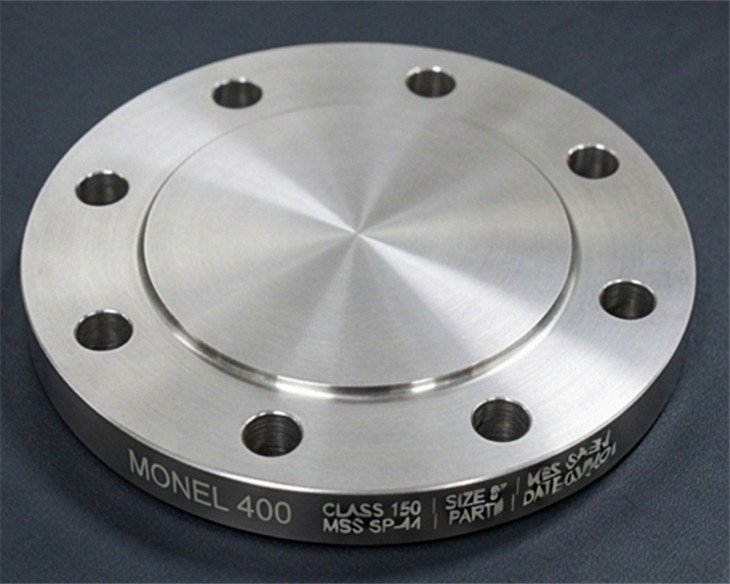
A105 vs. A182 Flansche
Direkte Antwort
ASTM A105 is a carbon-steel forging specification for pressure-system piping components. ASTM A182 covers a family of low-alloy and stainless grades for pressure service, including F11, F22, F91, F304L and F316L. daher, a useful comparison is A105 versus a specific A182 grade, not A105 versus “A182” as though A182 were one material.
Wichtige Erkenntnisse
- A105 is a carbon-steel specification; A182 contains many alloy and stainless grades.
- The material specification and the flange dimensional standard perform different jobs.
- Substitution requires temperature, Korrosion, welding, bolting and line-class review.
Material scope: one carbon grade versus a grade family
ASTM A105/A105M covers forged carbon-steel components for ambient and higher-temperature pressure systems. ASTM A182/A182M covers forged low-alloy and stainless piping components. The A182 grade suffix is essential because F22 and F316L, for example, solve very different engineering problems.
| Decision point | ASTM A105 | ASTM A182 |
|---|---|---|
| Materialfamilie | Carbon steel | Multiple low-alloy and stainless grades |
| Complete order designation | A105/A105M | A182/A182M plus exact grade and condition |
| Common selection driver | General pressure piping and economy | Temperatur, corrosion or grade-specific properties |
| Maßstandard | Specified separately, häufig ASME B16.5 oder ASME B16.47 as applicable | |
When A105 is commonly selected
A105 is widely used in carbon-steel process, Dienstprogramm, oil-and-gas and steam piping where the design code and material class permit it. Its economic advantage is meaningful when the service does not require the elevated-temperature performance of chrome-moly steel or the corrosion resistance of stainless steel.
That does not make A105 universal. Low-temperature toughness, sour-service restrictions, high-temperature strength, external corrosion and process-side corrosion still need review. A coating may protect an exterior surface, but it does not change the base metal into a corrosion-resistant alloy.
When an A182 grade is the better fit
Low-alloy A182 grades such as F11, F22 and F91 are selected within engineered high-temperature systems. Austenitic stainless grades such as F304L and F316L may be selected for corrosion resistance, cleanliness or low-temperature behavior. Duplex and other grades address additional combinations of strength and corrosion performance.
The designer should compare allowable stress at temperature, oxidation and corrosion mechanisms, Wärmeausdehnung, Schweißbarkeit, heat-treatment needs and compatibility with the adjoining pipe. Choosing an A182 grade only because its room-temperature tensile strength is higher is not an adequate basis.
How to write an unambiguous flange order
Separate the material requirement from the dimensional requirement. “4-inch Class 300 A182 flange” omits the grade, Typ, facing and bore. A reviewable description would state the ASTM grade, ASME standard, NPS, Klasse, Flanschtyp, facing and pipe schedule, followed by testing and documentation requirements.
- Materialspezifikation, exact grade and edition
- ASME standard, NPS, Klasse, type and facing
- Bore or weld end matched to the pipe schedule
- Wärmebehandlung, impact testing and hardness limits where applicable
- PMI, NTE, coating and marking requirements
- EN 10204 3.1 or other required inspection document
Häufig gestellte Fragen
Ist ASTM A182 stronger than ASTM A105?
That is too broad a comparison because A182 includes many grades. Compare the exact grade, Wärmebehandlung, section size and allowable stress at the design temperature.
Can an A105 flange connect to an A182 flange?
Only when the piping design approves the ratings, thermal behavior, corrosion effects, Dichtung, bolting and any welding requirements.
Does ASME B16.5 define A105 or A182 chemistry?
NEIN. ASME B16.5 addresses flange dimensions and pressure-temperature rating rules; the ASTM material specification defines chemistry and material properties.
Primäre Standards, auf die verwiesen wird
- ASTM A105/A105M-26 – Carbon Steel Forgings for Piping Applications
- ASTM A182/A182M – Geschmiedete oder gewalzte Rohrleitungskomponenten aus Legierung und Edelstahl
- ASME B16.5-2025 – Rohrflansche und Flanschverbindungen, NPS 1/2 Durch NPS 24
Die Standards wurden anhand der Herausgeberseiten überprüft 3 August 2026. Kaufen und wenden Sie immer die vom Projekt angegebene Edition an.
Fordern Sie ein Angebot für einen Flansch aus legiertem Stahl an
Senden Sie die Materialqualität, Standard, NPS, Druckklasse, Flanschtyp, gegenüber, Rohrplan, Mengen- und Prüfanforderungen. Unser Team wird die technische Beschreibung vor dem Angebot prüfen.
Verwandte Beiträge
ASTM A182 F51 vs. F60 Flansche: S31803 vs. S32205 erklärt
Vergleichen Sie die Duplexflansche ASTM A182 F51 und F60, including S31803/S32205…
UNS S32750 vs. S32760 Flansche: ASTM A182 F53 oder F55?
Vergleichen Sie die Super-Duplex-Flansche S32750 und S32760, einschließlich ASTM A182…

Kann ein PN16-Flansch mit einer ASME-Klasse kombiniert werden? 150 Ventil?
Kann einen PN16-Flansch mit einer ASME-Klasse 150 verschrauben…
Kann EN 1092-1 Typ B1/B2-Verbindung mit ASME-Raised-Flanschen?
Kann EN 1092-1 Typ B1 oder B2 passen zu einem…