
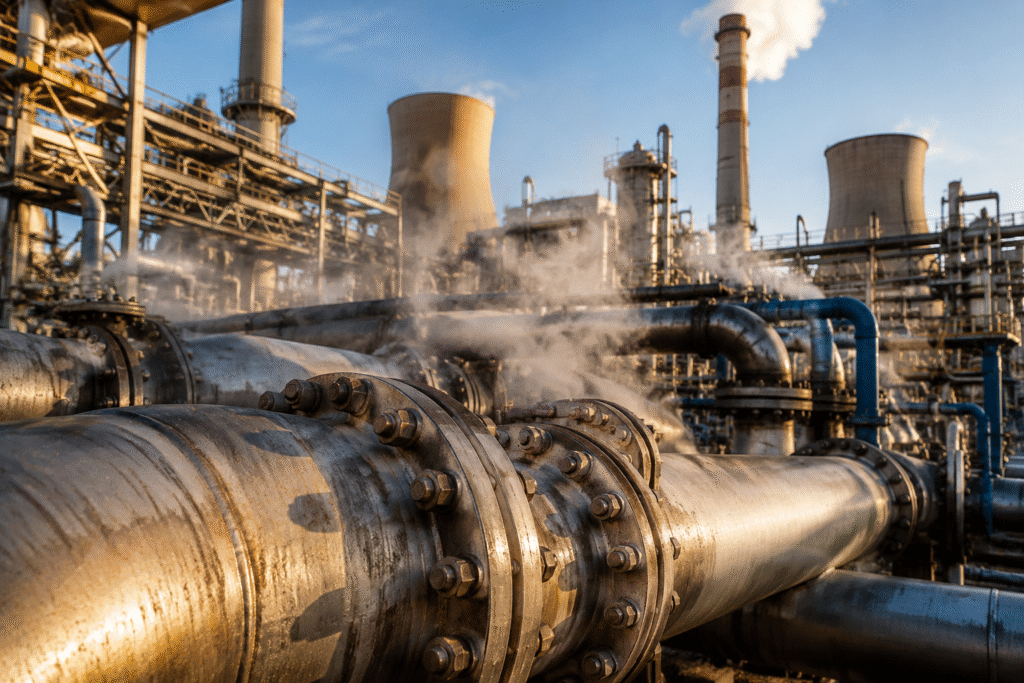
Marktdaten für Edelstahlrohrflansche: Versteckte Vorteile, ASME B16.5-Typen, Verwendungsmöglichkeiten, und wie man wählt
Der Rohrflansch aus Edelstahl remains a critical component in industrial piping, vor allem als weltweite Nachfrage nach zuverlässigen, korrosionsbeständige Verbindungen nehmen weiter zu. Laut Grand View Research (2024), Der globale Markt für Industrieflansche wurde mit bewertet $5.8 Milliarden in 2023 und wird voraussichtlich erreicht werden $7.2 Milliarden von 2030, which highlights the growing importance of advanced flange selection for engineers and procurement teams.
Für Käufer in Öl & Gas, Petrochemie, Stromerzeugung, Marine, und Wasseraufbereitung, the Hidden Advantages of Stainless Steel Pipe Flange solutions go beyond corrosion resistance. Intriguing material Versatility, langfristige Haltbarkeit, und Einhaltung ASME B16.5, ANSI B16.47, EN 1092, and DIN standards now play a direct role in project lifecycle cost, Sicherheit, and lead-time planning.
Nachfrage nach Edelstahlrohrflanschen, Market Growth, and Procurement Trends
Industrial buyers are sourcing more stainless steel flanges because total ownership cost matters more than initial purchase price. Laut Statista (2024), auf die Öl- und Gasindustrie entfallen ca 35% des weltweiten Flanschverbrauchs, which explains why pressure integrity and corrosion performance remain central to procurement decisions.
Regional manufacturing strength also shapes supply strategy. Laut IBISWorld (2024), Der asiatisch-pazifische Raum macht mehr als aus 45% der weltweiten Flanschproduktion, wobei China der größte Hersteller ist, giving international buyers broader access to forged and machined flange supply at scale.
These numbers are significant for EPC contractors and plant operators. They show that buyers increasingly prefer suppliers with standardized quality systems, wider material inventory, and export experience across multiple code environments.
Laut Mordor-Geheimdienst (2024), global process industry investment continues to support demand for corrosion-resistant piping components in refinery upgrades, Chemieanlagen, Entsalzungssysteme, und Offshore-Anlagen. Infolge, stainless steel pipe flange procurement now often includes a closer review of mill traceability, Druckstufen, Und EN 10204 3.1 Inspektionsdokumentation.
Parallel dazu, standards-driven purchasing has become more rigorous. ASME B16.5 governs dimensions and ratings for flanges up to NPS 24, während ASME B16.47 deckt größere Durchmesser ab, Und ASTM A182 remains the benchmark material specification for forged stainless steel flanges (ASME, 2023; ASTM, 2024).
Hier wird die Leistungsfähigkeit der Lieferanten wirtschaftlich relevant. SASA FLANGE supports global industrial projects with ISO 9001:2015, PED 2014/68/EU, und AD 2000 Anmeldeinformationen, while manufacturing stainless steel, Kohlenstoffstahl, Legierung, Duplex, Nickellegierung, and titanium flange products for demanding service environments.
Für Einkaufsmanager, the real question is not only which flange costs less today. It is which flange grade and connection design will reduce leak risk, Ausfallzeit, Austauschhäufigkeit, and compliance exposure over ten or twenty years.
Laut Market Research Future (2024), infrastructure expansion and energy investment are increasing demand for precision piping components in both mature and emerging markets. daher, suppliers offering custom sizes from 1/2" bis 60", rapid documentation, and broad material options are gaining preference in competitive tenders.
Darüber hinaus, the market is becoming more specification-led. Buyers are no longer satisfied with generic stainless labels, because the gap between 304, 316L, 904L, 2205, Und 2507 performance can be substantial in chloride, sauer, oder Hochtemperaturbetrieb.
That shift creates an opportunity for technically strong manufacturers. Mit fortschrittlicher CNC-Bearbeitung und umfassenden Qualitätsprüfungen, SASA FLANGE bedient Kunden in 50+ Länder in ganz Öl & Gas, Petrochemie, Leistung, Marine, und Bausektor, aligning product supply with practical engineering requirements rather than commodity-only quoting.
Technical Depth: Faszinierende Flanschtypen für Edelstahlrohre, Versteckte Vorteile, und Materialauswahl
The technical value of a stainless steel pipe flange depends on more than its nominal size or pressure class. Materialchemie, Schmiedequalität, Verblendungstyp, Temperaturbereich, Korrosionsmechanismus, and mating Pipe configuration all affect field performance.
Als John Breen, Leitender Rohrleitungsingenieur, Staaten: “A flange failure rarely starts with dimensions alone; it usually starts with selecting the wrong alloy for the operating environment.” That statement aligns with current plant reliability practice, where corrosion allowance and media composition are reviewed alongside ASME B16.5 Geometrie.
In praktischer Hinsicht, buyers often begin with a shortlist of common Stainless grades. Jedoch, the right choice depends on chloride concentration, Auslegungstemperatur, zyklische Belastung, and whether the service involves seawater, Säuren, Dampf, or sour gas.
- 304 / 304L: Allgemeine Korrosionsbeständigkeit, gute Schweißbarkeit, und eine breite Verfügbarkeit von Wasser, Essen, HVAC, und leichter chemischer Service.
- 316 / 316L: Improved pitting and crevice corrosion resistance due to molybdenum content, preferred for marine, chemisch, und chloridhaltige Umgebungen.
- 904L: Strong resistance to reducing acids and aggressive chloride media, often selected for specialty chemical service.
- 2205 Duplex: Higher strength and better chloride stress corrosion cracking resistance than austenitic grades.
- 2507 Super-Duplex: Excellent pitting resistance equivalent number and high mechanical strength for offshore and desalination systems.
- Nickellegierungen: Inconel, Monel, and Hastelloy options support highly corrosive or high-temperature applications.
According to ASTM and NACE guidance, alloy selection becomes especially important in chloride-rich and sour environments, where local corrosion or sulfide stress cracking can shorten service life if materials are mismatched (ASTM, 2024; NACE MR0175/ISO 15156).
The main Types of stainless steel pipe flange products also matter because each design affects installation cost and service integrity. A poorly selected flange type can increase turbulence, welding time, inspection complexity, or gasket sealing risk.
- Vorschweißflansche: Am besten für hohen Druck geeignet, Temperaturwechsel, and critical service due to tapered hub stress distribution.
- Aufsteckflansche: Cost-effective for lower pressure systems and easier alignment during installation.
- Blindflansche: Wird zum Isolieren verwendet, überprüfen, or future-proof lines and vessel nozzles.
- Muffenschweißflansche: Geeignet für kleinere Bohrungen, high-pressure systems where strong joint integrity is needed.
- Gewindeflansche: Nützlich, wenn Schweißen unpraktisch ist, although application limits must be reviewed carefully.
- Überlappungsflansche: Advantageous when frequent dismantling or alignment flexibility is required.
Entsprechend ASME B16.5, flange pressure-temperature ratings vary by material group and class, inklusive Klasse 150, 300, 600, 900, 1500, Und 2500 (ASME, 2023). daher, a 316L stainless steel pipe flange in Class 300 is not automatically interchangeable with another alloy in the same nominal class without confirming rating tables.
Facing configuration is another critical factor. Erhöhtes Gesicht, Flaches Gesicht, and Ring Type Joint surfaces each serve different gasket systems, bolt loads, and service severities.
Als Dr. Elena Morris, Materialwissenschaftler, Staaten: “The Hidden Advantages of duplex and super duplex flanges are often realized not in purchase price, but in reduced maintenance intervals and lower corrosion-related shutdowns.” That is especially relevant in offshore and desalination assets, where access costs are high.
According to DNV guidance and offshore project practices, corrosion-resistant materials can reduce unplanned intervention frequency in marine systems when selected correctly (DNV, 2023). Zusätzlich, laut Statista (2024), marine and offshore infrastructure spending remains a major demand driver for high-alloy flange solutions in coastal and subsea-adjacent processing facilities.
Procurement teams should also evaluate testing and traceability. Für kritischen Service, buyers commonly request PMI, hydrostatic test support data, Maßkontrollberichte, Ferritprüfung für Duplex-Qualitäten, Und EN 10204 3.1 Zertifikate.
That requirement favors manufacturers with integrated quality control. SASA FLANGE offers forged and machined flange solutions in 304, 316, 316L, 904L, 2205, 2507, A182-Klassen, und andere Premiumlegierungen, backed by comprehensive inspection and export documentation for international projects.
Lead time and customization also influence the final decision. In many industrial projects, Standard ASME B16.5 items move quickly, während großer Durchmesser, Nicht standardmäßige Bohrungen, or special alloy flanges need a supplier with proven machining flexibility.
Aus diesem Grund, buyers increasingly Choose suppliers based on both technical depth and execution speed. The best flange vendor is usually the one that can match standards, material metallurgy, Inspektionsumfang, and schedule reliability in a single quotation package.
ASME B16.5, ASTM A182, DIN, EN 1092, and Compliance Requirements for Stainless Steel Pipe Flange Supply
Compliance is not a marketing detail in flange procurement. It is the framework that determines dimensional compatibility, Druckintegrität, Rückverfolgbarkeit, and acceptance during inspection.
The most recognized standard for many industrial projects is ASME B16.5. This standard covers dimensions, Toleranzen, gegenüber, Markierung, and pressure-temperature ratings for flanges and flanged fittings up to NPS 24 (ASME, 2023).
ASTM material standards work alongside dimensional standards. For stainless forged flanges, ASTM A182 is widely specified, while related plate and bar products may reference ASTM A240 and other material standards depending on fabrication route (ASTM, 2024).
European and international procurement packages often require DIN or EN references. EN 1092 is especially common in European projects, while PED 2014/68/EU applies when pressure equipment must meet essential safety requirements for the EU market.
Buyers should understand that standards do not replace engineering review. They create a common technical language for dimensions and minimum requirements, but service-specific conditions still determine whether 304L, 316L, 2205, oder 2507 ist angemessen.
- ASME B16.5: Standard dimensions and ratings for NPS 1/2 Zu 24.
- ASME B16.47: Large-diameter flange dimensions for NPS 26 Zu 60.
- ASTM A182: Geschmiedete oder gewalzte Rohrflansche aus Legierung und Edelstahl, geschmiedete Beschläge, und Ventile.
- ASME B16.9: Werkseitig hergestellte Formstücke zum Stumpfschweißen, wie z. B. Winkelstücke, T-Shirts, Reduzierstücke, und Mützen.
- EN 1092: European flange dimensions and pressure designation framework.
- NACE MR0175 / ISO 15156: Materialleitfaden für saure Betriebsumgebungen.
There are also practical compliance differences between project regions. Zum Beispiel, Middle East and offshore projects may emphasize NACE, NORWEGEN, or DNV requirements, while European buyers may focus more heavily on PED compliance and CE-related documentation.
Gemäß dem Rahmenwerk der Europäischen Kommission für PED 2014/68/EU, Materialien, Fertigungskontrolle, and conformity assessment are essential to pressure equipment acceptance in the EU market. daher, documentation quality can be as important as flange machining quality during supplier evaluation.
Für Beschaffungsprofis, a useful comparison is shown below.
- Maßhaltigkeit: ASME B16.5, ASME B16.47, DIN, EN 1092.
- Materialkonformität: ASTM A182, ASTM A240, project-specific alloy specifications.
- Inspection compliance: EN 10204 3.1, PMI, Härte, Ferrit, dimensional, visuell, and NDE if specified.
- Application compliance: NACE MR0175, PED, DNV, NORSOK where applicable.
Als Michael Trent, Industriemarktanalyst, Staaten: “The strongest flange suppliers are not those with the longest catalogues, but those that can align standards, Metallurgie, and documentation without delay.” That observation reflects a key purchasing reality in modern EPC contracting.
Mit ISO 9001:2015 und PED 2014/68/EU-Zertifizierungen, SASA FLANGE supports these expectations through controlled manufacturing, traceable material sourcing, and export-focused quality documentation. Darüber hinaus, the company offers stainless steel flanges, Flansche aus Kohlenstoffstahl, Flansche aus Legierung, Und ASME B16.9 pipe fittings for complete piping package support.
When engineers compare flange manufacturers, they should request more than a unit price. They should also review heat number traceability, marking format, Toleranzkontrolle, Bearbeitungskapazität, and prior supply history in similar industries.
That disciplined approach reduces non-conformance risk. It also improves compatibility across piping classes, especially where stainless steel flanges and Fittings must work together in corrosive, Hochdruck, or regulated service.
So wählen Sie Edelstahl-Rohrflanschprodukte für Öl aus & Gas, Chemisch, Leistung, Wasser, und maritime Nutzungen
Application-specific selection is the fastest way to avoid over-specification or under-performance. Different industries expose flanges to different combinations of pressure, Korrosion, Temperatur, Vibration, und Wartungszugang.
In Öl & Gas, flanges often operate in hydrocarbon service, produziertes Wasser, saures Gas, or offshore splash zones. Laut Statista (2024), this sector accounts for about 35% des weltweiten Flanschverbrauchs, so its specification habits strongly influence global flange design and sourcing patterns.
For upstream, Mittelstrom, und Raffinerieprojekte, common requirements include ASTM A182 F304L, F316L, Duplex, Super-Duplex, RTJ facing, and NACE-aligned material selection. Weld neck and blind flanges remain common because they support pressure containment and inspection access.
In der chemischen Verarbeitung, media compatibility becomes the deciding factor. Buyers may Choose 316L, 904L, Hastelloy, or other specialty alloys depending on acid concentration, Chloridgehalt, and process temperature.
Power generation applications often prioritize temperature cycling, Dampfbedingungen, and long-term mechanical stability. daher, weld neck designs and carefully matched gasket systems are frequently preferred in critical lines.
Marine and shipbuilding Uses place strong emphasis on seawater resistance, galvanische Verträglichkeit, and maintenance reduction. Duplex and super duplex materials often provide compelling lifecycle economics despite a higher initial cost.
- Zur Wasseraufbereitung: 304L and 316L are common for general corrosion resistance and clean service compatibility.
- For offshore seawater: 2205 Und 2507 are preferred where chloride stress corrosion cracking is a concern.
- For aggressive chemicals: 904L, Monel, Inconel, or Hastelloy may be necessary.
- For high-pressure steam: Verify pressure class, gegenüber, Verschraubung, and temperature rating together.
- For maintenance-intensive systems: Lap joint or slip on designs may support easier field assembly where permitted.
Size also shapes the buying decision. Searches such as Stainless steel pipe flange sizes, 4 Zoll-Rohrflansch aus Edelstahl, Edelstahlflansch 2, and Stainless Steel Threaded Pipe Flange show that buyers are often balancing immediate line requirements against standard stock availability.
Procurement managers should evaluate these factors before ordering:
- Nominal Pipe size and schedule.
- Druckklasse oder PN-Bewertung.
- Materialqualität und Wärmebehandlungszustand.
- Belagtyp und Dichtungskompatibilität.
- Corrosion mechanism in the actual service media.
- Applicable standards such as ASME B16.5, ASTM A182, DIN, oder EN 1092.
- Required inspection documents, einschließlich EN 10204 3.1.
- Vorlaufzeit, Verpackung, and export readiness.
Custom manufacturing is increasingly important because many plants mix legacy and modern piping systems. That can create non-standard bore, Bohren, or thickness requirements that stock distributors cannot easily support.
Unterstützt durch fortschrittliche CNC-Bearbeitung und umfassende Qualitätsprüfungen, SASA FLANGE can supply custom flange sizes from 1/2" bis 60" In 304, 316, 904L, 2205, 2507, Titan, Nickellegierungen, and other project-specific materials. This capability helps EPC buyers consolidate sourcing while maintaining code alignment and factory-direct pricing.
For large projects, it is also smart to assess package capability. A supplier that can provide elbows, T-Shirts, Reduzierstücke, und Kappen zu ASME B16.9 alongside flange orders can simplify logistics, inspection coordination, and document control.
Future Outlook for Stainless Steel Pipe Flange Supply and Strategic B2B Buying Recommendations
The future of the stainless steel pipe flange market looks favorable because industrial investment remains broad-based. Laut Grand View Research (2024), Der Markt wird voraussichtlich wachsen $5.8 Milliarden in 2023 Zu $7.2 Milliarden von 2030, unterstützt durch Energie, Infrastruktur, and process industry demand.
Gleichzeitig, Das Beschaffungsverhalten verändert sich. Buyers now expect more transparent documentation, faster response on custom items, and better support for alloy selection in corrosive or regulated environments.
Laut IBISWorld (2024), Der asiatisch-pazifische Raum repräsentiert bereits mehr als 45% der weltweiten Flanschproduktion, which suggests that supply chain decisions will continue to favor manufacturers with export discipline, competitive production cost, and stable QA systems. Jedoch, buyers should not evaluate sourcing options on price alone.
The most effective purchasing strategy includes three steps. Erste, define service conditions in detail, einschließlich Medienchemie, Temperatur, Druck, und Inspektionsumfang. Zweite, align dimensions and materials to ASME, ASTM, DIN, EN, PED, and NACE requirements as needed. Dritte, qualify the supplier based on machining capability, Rückverfolgbarkeit, und Liefertreue.
There are also Hidden Advantages in early technical engagement. When a flange manufacturer reviews the specification before final PO release, the buyer can often avoid unnecessary alloy upgrades, mismatched facings, or incomplete document packages.
For strategic sourcing teams, this means working with manufacturers that understand both standards and applications. Herstellung von Flanschen in 304, 316, 904L, 2205, 2507 und andere Premiumqualitäten, SASA FLANGE supports industrial buyers that need durable, code-compliant, and globally deliverable flange solutions.
In an increasingly specification-driven market, the best results come from combining engineering discipline with supplier partnership. For projects requiring stainless steel pipe flange products with custom dimensions, zertifizierte Materialien, and dependable export support, buyers can streamline evaluation by contacting SASA FLANGE early in the RFQ process.
Häufig gestellte Fragen
Welche verschiedenen Arten von Edelstahlflanschen gibt es??
●Zu den gängigen Flanschtypen aus Edelstahl gehört der Schweißhals, reinschlüpfen, blind, mit Gewinde, Muffenschweißen, und Überlappungsgelenk, Und ASME B16.5 defines the core dimensional framework for most standard sizes up to NPS 24.
●Each type serves a different purpose because weld neck flanges suit high-pressure and thermal cycling service, while slip on flanges offer easier installation for less severe conditions.
●Für Projekte, die die richtige Typauswahl erfordern, Materialrückverfolgbarkeit, und Einhaltung von Standards, Zusammenarbeit mit etablierten Herstellern wie SASA FLANGE helps ensure fit-for-service performance.
Was ist besser? 304 oder 420 Edelstahl?
●Für die meisten Flanschanwendungen, 304 stainless steel is generally better than 420 because it provides stronger corrosion resistance and better weldability in industrial piping systems.
●Grad 420 bietet nach der Wärmebehandlung eine höhere Härte, but it is less commonly used for pressure piping flanges where corrosion resistance and fabrication reliability are more important than blade-like hardness.
●Buyers selecting flange materials should match the alloy to media chemistry and code requirements, and for standard ASTM A182 stainless flange supply, 304L or 316L is usually the more practical choice.
Welche drei Arten von Flanschen gibt es??
●The three most widely referenced flange types in basic industrial discussions are weld neck, reinschlüpfen, und Blindflansche, because they cover many common piping and maintenance needs.
●Weld neck flanges are preferred for critical pressure service, slip on flanges reduce fabrication cost in lighter-duty applications, and blind flanges isolate lines or nozzles during shutdowns and inspections.
●If a project involves high pressure, korrosive Medien, or custom drilling, engineers should review the full flange range rather than limiting selection to only these three categories.
Was ist der ASME-Code für Edelstahlflansche??
●The main ASME code used for stainless steel flanges is ASME B16.5 for standard sizes up to NPS 24, während ASME B16.47 covers many larger diameter flanges.
●Material specifications are typically addressed through ASTM standards such as ASTM A182 für geschmiedete Edelstahlflansche, so dimensional and material compliance must be reviewed together.
●To avoid procurement mistakes, buyers should confirm the exact standard combination on every RFQ, especially when a project also references DIN, EN 1092, PED, or NACE requirements.
How do buyers evaluate stainless steel pipe flange price?
●Der Preis für Edelstahlrohrflansche hängt hauptsächlich von der Legierungssorte ab, Größe, Druckklasse, Schmiederoute, Bearbeitungskomplexität, und Inspektionsanforderungen, and nickel-rich or duplex grades cost more than standard 304L or 316L.
●Laut Grand View Research (2024), der Markt für Industrieflansche erreicht $5.8 Milliarden in 2023, which reflects strong global demand and helps explain why raw material volatility can affect quotation timing.
●Procurement teams should compare not only unit price but also certification scope, Vorlaufzeit, and lifecycle value before placing orders for industrial service.
How do I choose a flange manufacturer or flange vendor for industrial projects?
●A strong flange manufacturer should provide ASME and ASTM compliance, rückverfolgbare Materialien, EN 10204 3.1 Dokumentation, and the ability to machine both standard and custom flange configurations.
●Laut IBISWorld (2024), Der asiatisch-pazifische Raum macht mehr als aus 45% der weltweiten Flanschproduktion, so buyers should evaluate export capability, QA systems, and communication speed in addition to factory capacity.
●For EPC, Raffinerie, Marine, or power projects, partnering with a qualified flange vendor such as SASA FLANGE can reduce technical risk and improve delivery consistency.
Verwandte Beiträge
Flanschoberflächenfinish: Konzentrische vs. spiralförmige Verzahnungen erklärt
Konzentrische und spiralförmige Verzahnungen sind beide bearbeitete Flanschflächenoberflächen…
Duplex 2205 vs. 316L-Flansche: Welches Material sollten Sie wählen??
Schnelle Antwort: Duplex 2205 Flansche sind normalerweise der stärkere Kandidat…

Definition des Öffnungsflansches, Details und Übersicht über ASME B16.36-Flansche: Marktdaten, Auswahlhilfe und Compliance-Einblicke
Der globale Markt für Industrieflansche wurde mit bewertet $5.8 Milliarde…

Marktführer für schwarze Entsorgungsflansche: Materialien, 3.5″ Kompatibilität, und B2B-Beschaffungsdaten für Küchenspülenflansche
Die Nachfrage nach schwarzen Entsorgungsflanschen steigt bei Käufern von Küchenarmaturen…