
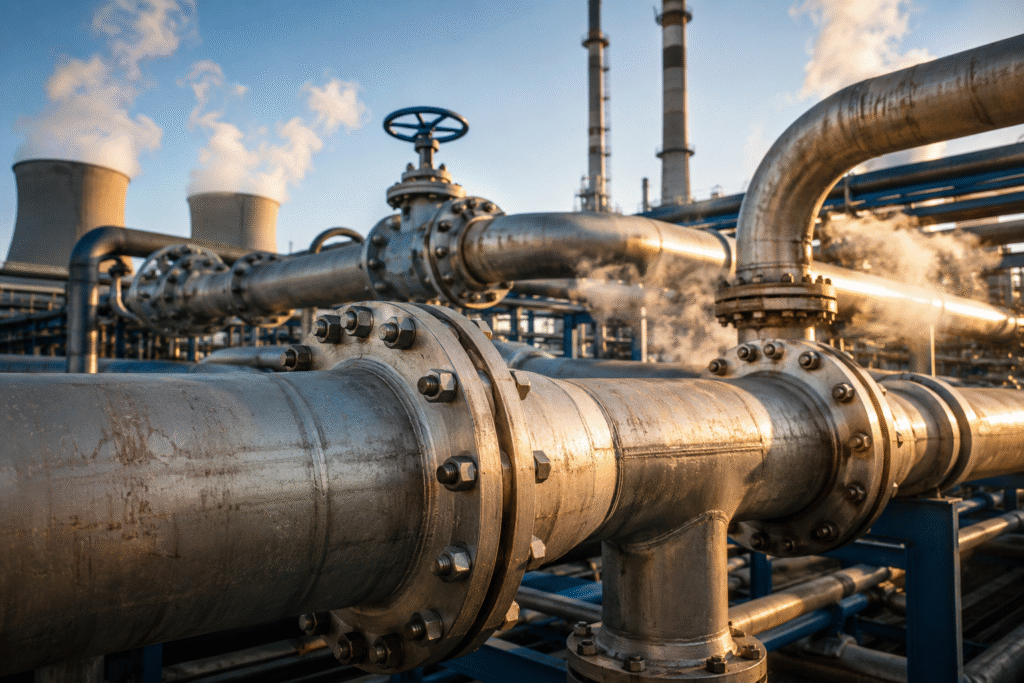
Panduan Pasar Flange Pipa Stainless Steel: $5.8B Data Industri, Keuntungan Tersembunyi, Jenis, Kegunaan, dan Cara Memilih
Menurut Penelitian Grand View (2024), pasar flensa industri global dihargai $5.8 miliar masuk 2023 dan diperkirakan akan tercapai $7.2 miliar oleh 2030. For buyers evaluating a stainless steel pipe flange, this growth reflects a clear shift toward corrosion-resistant, standards-compliant components that support longer service life and lower maintenance risk.
Lebih-lebih lagi, procurement teams now expect more than basic supply. They need verified metallurgy, traceable inspection records, and reliable lead times across stainless, baja karbon, rangkap, dan nilai paduan nikel.
Why the Stainless Steel Pipe Flange Market Is Growing Worldwide
Industrial demand remains strong because flanges sit at the center of safe, serviceable piping systems. They connect valves, pompa, kapal, and line pipe while allowing inspection, pemeliharaan, and future modification.
Menurut IBISWorld (2024), Asia-Pasifik menyumbang lebih dari itu 45% produksi flensa global, dengan Tiongkok sebagai produsen terbesar. Karena itu, global sourcing strategies increasingly focus on suppliers that can combine scale, jaminan kualitas, dan mengekspor dokumentasi.
Menurut Statista (2024), industri minyak dan gas menyumbang sekitar 35% konsumsi flensa global. This matters because upstream, tengah sungai, and downstream projects often require pressure-temperature performance under ASME classes from 150 ke 2500 dan seterusnya.
Selain itu, corrosion risk continues to drive stainless adoption in chemical processing, sistem kelautan, dan pengolahan air. Stainless steel pipe flange assemblies offer strong resistance to oxidation, serangan klorida, and product contamination when the correct grade is selected.
As Mark Delaney, Insinyur Perpipaan Senior, negara bagian: “Flange failures rarely begin at the flange alone. They usually start with poor material selection, mismatched standards, or uncontrolled installation practices.” That observation aligns with field experience across refinery, di lepas pantai, dan sistem utilitas.
Buyers also compare more than price per piece. They evaluate inspection capability, EN 10204 3.1 sertifikasi, ketersediaan PMI, akurasi pemesinan, and heat traceability from forged bar or plate source to finished product.
Untuk alasan ini, produsen seperti SASA FLANGE position themselves around certified production and export readiness rather than commodity-only pricing. Dengan ISO 9001:2015 dan sertifikasi PED 2014/68/EU, the company supports projects that demand both compliance and commercial flexibility.
Lebih-lebih lagi, the hidden advantages of stainless flanges extend beyond corrosion resistance. They often reduce repainting, minimize contamination in clean processes, and improve lifecycle cost in aggressive media compared with lower-alloy alternatives.
Common procurement searches also show how the market behaves. Engineers look for stainless steel pipe flange sizes, 4 opsi flensa pipa baja tahan karat inci, jenis flensa baja tahan karat, and stainless steel flanges and fittings because specification accuracy directly affects installation success.
Material versatility is another growth factor. Buyers can source 304, 316, 316L, 904L, 2205, 2507, A182, tidak konel, Monel, Hastelloy, and Titanium depending on corrosion allowance, suhu desain, and project budget.
Sebagai akibat, a modern sourcing decision is rarely about one flange alone. It is about the total package of standards compliance, integritas tekanan, toleransi dimensi, and logistics reliability across the entire piping bill of materials.
Technical Differences: Jenis Flensa Stainless Steel, Keuntungan Tersembunyi, and How Engineers Choose
The most common stainless steel flanges types include weld neck, tergelincir, buta, las soket, berulir, dan sambungan pangkuan. Each type serves a different stress profile, maintenance requirement, and fabrication method under standards such as ANSI B16.5, ANSI B16.47, dan EN 1092-1.
Weld neck designs remain the preferred option for cyclic service and high-pressure lines because the tapered hub improves stress distribution. Sebaliknya, slip-on flanges support lower-pressure services where simpler alignment and lower fabrication cost matter more.
Menurut Intelijen Mordor (2024), process plant operators increasingly prioritize lifecycle cost over initial component cost in corrosion-critical systems. Karena itu, 316L, rangkap 2205, dan super dupleks 2507 continue gaining specification share in chloride-containing environments.
Menurut Riset Pasar Masa Depan (2024), global demand for corrosion-resistant alloy piping components is expected to grow at over 4% CAGR selama dekade ini. That trend supports broader use of premium forged flanges in offshore, desalinasi, dan layanan kimia.
Sebagai Dr. Helen Wu, Ilmuwan Material, negara bagian: “The strongest commercial result comes from matching alloy chemistry to the process environment, not from over-specifying the highest-cost grade.” This is especially true when chloride content, suhu, pH, and cleaning chemistry vary during operation.
Ketika para insinyur memilih flensa pipa baja tahan karat, they usually review several technical variables before issuing a purchase order. These variables influence both safety and total installed cost.
- Kelas materi: 304, 304L, 316, 316L, 904L, 2205, 2507, atau opsi paduan nikel.
- Kelas tekanan: 150, 300, 600, 900, 1500, atau 2500 di bawah ASME B16.5.
- Tipe menghadap: Federasi Rusia, RTJ, FF, or custom machined finishes.
- Connection design: leher las, tergelincir, buta, berulir, las soket, atau sambungan pangkuan.
- Standar dimensi: ASME, DIN, JIS, gost, atau EN 1092.
- Ruang lingkup inspeksi: PMI, dukungan uji hidro, inspeksi visual, pemeriksaan dimensi, Dan EN 10204 3.1 dokumentasi.
304 and 304L are often selected for general industrial service, food systems, and moderate corrosion conditions. Namun, 316 and 316L typically offer better pitting resistance because molybdenum improves performance in chloride-bearing media.
Nilai dupleks seperti 2205 add higher strength and better chloride stress corrosion cracking resistance. Akibatnya, many offshore, pupuk, and seawater handling systems specify duplex to reduce wall thickness or extend service life.
Blind flanges serve isolation and future expansion points. Sementara itu, threaded and socket weld flanges remain useful for smaller bore lines where welding access, pembongkaran, or system layout creates specific installation constraints.
Procurement managers should also distinguish between forging standards and dimensional standards. ASTM A182 covers forged or rolled alloy and stainless materials for flanges, perlengkapan, katup, dan bagian, ketika ASME B16.5 mengatur dimensi, kelas tekanan, toleransi, dan persyaratan penandaan.
The American Society of Mechanical Engineers confirms these dimensional requirements through ASME standar, and buyers should always verify the latest edition before final approval. Dalam proyek yang diatur, kesesuaian PED, sertifikat materi, and heat number traceability are equally important.
SASA FLANGE memproduksi flensa di 304, 316, 904L, 2205, 2507 dan nilai premium lainnya, sambil juga memasok siku, kaos, reduksi, dan tutup untuk paket perpipaan lengkap. Didukung oleh permesinan CNC canggih dan pengujian kualitas yang komprehensif, the company supports custom sizes from 1/2" ke 60" for Oil & Gas, Petrokimia, Kekuatan, dan industri Kelautan.
Another hidden advantage is standardization across multinational projects. When buyers align flange type, menghadap, pola baut, and inspection protocol early, they reduce site rework, shorten installation windows, and limit expensive mismatch claims.
Misalnya, A 4 inch stainless steel pipe flange in ASME Class 300 RF differs fundamentally from a 4 inch EN 1092 PN40 flange. membosankan, pengeboran, ketebalan, and mating compatibility may not match even if the nominal size appears similar.
Karena itu, the best way to choose a flange is to start with service conditions, then move to standard, nilai, kelas, dan menghadap. Setelah itu, review testing, dokumentasi, and delivery schedule before confirming the final data sheet.
ASME, ASTM, DIN, dan Standar EN untuk Kepatuhan Flange Pipa Stainless Steel
Standards control fit, integritas tekanan, and interchangeability across the piping system. Without standard compliance, even high-quality material can fail to integrate correctly during fabrication or maintenance.
ASME B16.5 mencakup flensa pipa dan fitting flensa dari NPS 1/2 melalui 24. ASME B16.47 memperluas cakupan untuk diameter yang lebih besar, which are common in water transmission, laut, and bulk process applications (ASME, 2023).
ASTM A182 defines the material requirements for forged stainless and alloy steel flanges. ASTM A240 berlaku untuk piring, lembaran, dan strip untuk bejana tekan dan aplikasi umum, and it often appears in plate flange or fabricated component specifications (ASTM, 2023).
Proyek Eropa mungkin menentukan EN 1092-1 and PED 2014/68/EU requirements. Selain itu, marine and offshore applications can involve DNV, NORWEGIA, or owner-specific technical clauses depending on class society and project region.
The key compliance checkpoints usually include the following items.
- Correct dimensional standard such as ASME B16.5, B16.47, DIN, JIS, atau EN 1092.
- Correct forging or plate material standard such as ASTM A182 atau ASTM A240.
- Pressure-temperature rating verification for the selected alloy.
- Facing finish and gasket compatibility review.
- Full traceability with heat number and mill test certificates.
- Opsional EN 10204 3.1, PMI, kekerasan, ferit, Dan NACE MR0175 review where applicable.
Menurut ISO (2023), documented quality management systems reduce process variation and improve traceability in critical manufacturing sectors. That is why buyers increasingly favor audited suppliers with formal quality systems rather than traders with limited production control.
Untuk layanan asam, corrosion control is not optional. NACE MR0175 Dan ISO 15156 requirements may apply when hydrogen sulfide exposure can trigger sulfide stress cracking in susceptible materials (NACE, 2023).
Lebih-lebih lagi, flange selection must consider the mating components. A premium forged flange will not deliver safe performance if bolts, jenis paking, jadwal pipa, and welding procedure qualification are mismatched.
Below is a simple standards comparison that many engineers use during procurement review.
- ASME B16.5: Primary dimensional standard for NPS 1/2 ke 24 flensa.
- ASME B16.47: Large diameter flange dimensions beyond B16.5 range.
- ASTM A182: Forged stainless and alloy material requirements.
- ASME B16.9: Dimensional standard for buttweld fittings such as elbows and tees.
- EN 1092-1: European flange dimensional and pressure designation standard.
- PED 2014/68/UE: Kerangka peraturan untuk peralatan tekanan yang ditempatkan di pasar UE.
SASA FLANGE integrates these requirements into export-oriented manufacturing and inspection workflows. Dengan ISO 9001:2015, PED 2014/68/UE, dan IKLAN 2000 kredensial, the company helps buyers reduce approval delays on international EPC and OEM projects.
Selain itu, porsi 50+ negara-negara di seluruh Minyak & Gas, Petrokimia, Kekuatan, and Marine industries requires more than machining capability. It requires disciplined document control, marking accuracy, packaging protection, and responsive technical communication from RFQ to shipment.
Buyers looking for a compliant stainless steel pipe flange should also verify whether the order requires forged, machined-from-bar, or plate-cut construction. The manufacturing route affects grain flow, sifat mekanik, thickness limits, dan biaya.
When certification packages are required, established manufacturers can simplify procurement. For projects requiring PED documentation or custom dimensional review, pembeli bisa kontak SASA FLANGE early to align standards, kelas materi, and testing scope before production starts.
Panduan Aplikasi: Kegunaan, Bahan, and Selection Criteria for Different Industries
Stainless steel flanges serve very different duties across industries, so selection should always start with media, tekanan, suhu, dan mekanisme korosi. A flange that performs well in clean water may fail quickly in chloride brine, gas asam, atau layanan bersepeda termal.
Dalam minyak dan gas, weld neck and RTJ configurations are common in high-pressure and hydrocarbon service. Because this sector accounts for approximately 35% konsumsi flensa global, project buyers often standardize materials and classes to simplify spare parts and shutdown planning (Negarawan, 2024).
Di pabrik petrokimia, 316L, 904L, and alloy grades may be preferred where acidic streams or chlorides challenge standard austenitic stainless. Lebih-lebih lagi, blind flanges are widely used for line isolation, titik uji hidro, dan ikatan di masa depan.
Dalam pembangkit listrik, temperature and cyclic loading strongly influence type selection. Karena itu, weld neck flanges and higher alloy materials often provide better long-term integrity in steam, kondensat, and auxiliary chemical systems.
Marine and shipbuilding applications demand strong resistance to seawater exposure and crevice corrosion. Sebagai akibat, rangkap 2205 dan super dupleks 2507 are frequently specified for seawater, pemberat, and desalination systems where 304 may be inadequate.
Water treatment and construction projects often balance durability with budget. Di sektor-sektor ini, 304 Dan 316 stainless can provide excellent value, particularly where system cleanliness, penampilan, and moderate corrosion resistance are important.
Engineers usually choose among flange types based on these practical criteria.
- Use weld neck for high pressure, suhu tinggi, getaran, dan layanan siklik.
- Use slip-on where alignment ease and lower fabrication cost are priorities.
- Use blind flanges for isolation, end closures, dan perluasan sistem di masa depan.
- Use threaded flanges in small-bore systems where welding should be minimized.
- Use socket weld for compact, high-pressure small-bore piping.
- Use lap joint where frequent dismantling and rotation alignment are required.
Material choice follows a similar decision path.
- 304/304L: General corrosion resistance and cost-effective fabrication.
- 316/316L: Better chloride resistance and broader chemical suitability.
- 904L: Stronger performance in reducing acids and severe corrosion service.
- 2205 rangkap: Higher strength and better SCC resistance than common austenitic grades.
- 2507 super dupleks: High pitting resistance for seawater and harsh offshore media.
- Paduan nikel: Extreme corrosion or temperature service where stainless is insufficient.
Menurut Penelitian Grand View (2024), continued infrastructure investment and industrial modernization are supporting long-term demand for engineered piping components. That trend favors suppliers who can provide both stainless steel flange types and matching fittings under one quality system.
SASA FLANGE offers custom manufacturing for flanges and pipe fittings including elbows, kaos, reduksi, dan topi, which helps buyers consolidate sourcing. This is particularly useful when projects need coordinated bevels, schedules, tanda, and documentation across multiple component categories.
Untuk tim pengadaan, selection should not stop at alloy and class. They should also confirm gasket compatibility, bahan baut, flange facing finish, ruang lingkup pengujian, and packaging for sea shipment or long-term site storage.
Lead time planning is equally important. Flensa berdiameter besar, nilai super dupleks, and special machining usually require earlier technical approval than common 304 atau 316 item.
When the application includes custom dimensions, standar campuran, or multi-material packages, early supplier engagement can reduce revision cycles. Buyers can review technical details with SASA FLANGE to align drawings, standar, and inspection expectations before commercial release.
Prospek Masa Depan untuk Pasokan Flange Pipa Stainless Steel dan Rekomendasi Pembelian Strategis
Prospek pasar tetap positif seperti halnya energi, air, laut, and industrial process projects continue expanding globally. Menurut Penelitian Grand View (2024), pasar flensa industri diperkirakan akan tumbuh $5.8 miliar masuk 2023 ke $7.2 miliar oleh 2030.
Pada saat yang sama, sourcing will become more technical. Buyers increasingly ask for full traceability, PMI, kepatuhan PED, and mixed-material package supply rather than standalone commodity flanges.
Menurut IBISWorld (2024), Asia-Pacific already represents over 45% produksi flensa global. Karena itu, supplier evaluation should focus on manufacturing discipline, pengalaman ekspor, and documented compliance instead of geography alone.
Strategic buyers can improve results with a few consistent practices.
- Standardize approved grades and pressure classes across plants where possible.
- Request clear documentation requirements at RFQ stage.
- Confirm dimensional standard compatibility before issuing purchase orders.
- Evaluate lifecycle cost, bukan hanya harga satuan.
- Use qualified suppliers for project-critical and regulated applications.
Seperti James Porter, Analis Pasar Industri, negara bagian: “The best-performing procurement teams reduce total risk by locking technical scope early and auditing supply capability before the first shipment.” That is especially important for high-value shutdowns and export projects.
In the years ahead, the most competitive suppliers will combine machining capacity, metallurgy expertise, and fast document turnaround. For buyers seeking a stainless steel pipe flange partner with certified systems, cakupan materi yang luas, dan dukungan langsung dari pabrik, it makes sense to speak with SASA FLANGE during the specification stage rather than after problems appear.
Pertanyaan yang Sering Diajukan
Untuk apa flensa baja tahan karat??
●Flensa baja tahan karat digunakan untuk menyambung pipa, katup, pompa, dan bejana tekan dalam sistem yang membutuhkan kekuatan, ketahanan terhadap korosi, dan akses perawatan yang mudah.
●Menurut Statista (2024), minyak dan gas menyumbang sekitar 35% konsumsi flensa global, which shows how important flanged joints are in critical industrial piping.
●They are common in oil and gas, petrokimia, laut, pengolahan air, pengolahan makanan, and power generation because they support inspection, pembersihan, dan penggantian peralatan.
●Common uses include line termination, valve connection, nozel peralatan, blind isolation points, and spool assembly in both low-pressure and high-pressure services.
●For projects requiring certified materials and traceable production, bekerja dengan produsen mapan seperti SASA FLANGE helps ensure compliance with standards such as ASME B16.5 Dan ASTM A182.
Flensa apa yang terbuat dari baja tahan karat?
●Banyak desain flensa standar terbuat dari baja tahan karat, termasuk leher las, tergelincir, buta, berulir, las soket, dan jenis sambungan pangkuan.
●ASTM A182 commonly covers forged stainless steel flanges, ketika ASME B16.5 and B16.47 define the dimensions, kelas tekanan, and drilling patterns for these products.
●Typical stainless grades include 304, 304L, 316, 316L, 904L, 2205, Dan 2507, and each grade fits different corrosion, suhu, dan persyaratan kekuatan.
●Misalnya, 316L is often selected for chloride exposure, sementara dupleks 2205 offers higher strength and improved stress corrosion cracking resistance in more aggressive service.
●Buyers should match flange type and alloy grade to process conditions, dan produsen seperti SASA FLANGE can help confirm the correct combination for project service data.
Apakah mereka membuat alat kelengkapan pipa stainless steel?
●Ya, manufacturers widely produce stainless steel pipe fittings such as elbows, kaos, reduksi, and caps for use with stainless steel flange systems.
●ASME B16.9 covers factory-made buttweld fittings, and these fittings are often supplied in 304, 316, 316L, rangkap, and nickel alloy grades to match the connected piping materials.
●Using matched flange and fitting materials improves corrosion performance, weld compatibility, and documentation consistency across the piping package.
●Menurut Riset Pasar Masa Depan (2024), demand for corrosion-resistant piping components continues to rise as process industries prioritize lifecycle value over initial purchase price.
●For complete project supply with coordinated flanges and fittings, buyers can work with SASA FLANGE to streamline technical review and procurement.
Jenis flensa pipa apa yang paling kuat?
●Flensa leher las umumnya dianggap sebagai jenis flensa pipa standar terkuat untuk tekanan tinggi, suhu tinggi, dan layanan siklik.
●The tapered hub and butt-welded connection reduce stress concentration, which is why ASME B16.5 weld neck flanges are preferred in many refinery, di lepas pantai, dan aplikasi daya.
●Kekuatan juga tergantung pada kualitas material, ketebalan dinding, kelas tekanan, dan kualitas instalasi, so the strongest flange is not defined by geometry alone.
●Untuk layanan yang parah, engineers may combine weld neck geometry with duplex, super dupleks, or nickel alloy materials to improve both mechanical performance and corrosion resistance.
●The best recommendation is to evaluate service pressure, suhu, media, and code requirements before selection, especially for Class 600 ke 2500 aplikasi.
Bagaimana Anda memilih di antara keduanya 304 Dan 316 nilai flensa pipa baja tahan karat?
●Memilih 304 for general service and lower chloride exposure, dan pilih 316 or 316L when the system faces chlorides, harsher chemicals, or higher corrosion risk.
●Molibdenum di 316 meningkatkan ketahanan pitting, which makes it a common upgrade for marine, kimia, and coastal plant environments.
●Sebagai Dr. Helen Wu, Ilmuwan Material, negara bagian: “The right alloy depends on the actual process chemistry, not on assumptions based only on price or tradition.”
●Menurut Intelijen Mordor (2024), operators increasingly favor lifecycle cost analysis, which often supports 316L over 304 when maintenance and downtime risks are high.
●Buyers should review media composition, suhu, kimia pembersih, and expected service life before selecting the final stainless grade.
Standar apa yang berlaku untuk ukuran flensa pipa baja tahan karat dan peringkat tekanan?
●ASME B16.5 is the main standard for stainless steel pipe flange sizes and pressure classes from NPS 1/2 melalui 24, ketika ASME B16.47 mencakup banyak diameter yang lebih besar.
●ASTM A182 defines material requirements for forged stainless flanges, dan EN 1092-1 is widely used for European dimensional and pressure designation requirements.
●These standards control outside diameter, lingkaran baut, jumlah lubang baut, ketebalan, dimensi menghadap, dan batas tekanan-suhu, so they directly affect interchangeability.
●Menurut ASME (2023), dimensional standardization is essential for safe assembly, maintenance efficiency, and pressure boundary reliability across industrial piping systems.
●The safest approach is to confirm standard, kelas, menghadap, and bore schedule on every datasheet before purchase, especially when ASME and EN systems may be mixed.
Posting Terkait
Selesai Wajah Flange: Penjelasan Gerigi Konsentris vs Spiral
Gerigi konsentris dan spiral keduanya merupakan penyelesaian permukaan flensa yang dikerjakan dengan mesin…
Rangkap 2205 vs Flensa 316L: Bahan Mana Yang Harus Anda Pilih?
Jawaban cepat: Rangkap 2205 flensa biasanya merupakan kandidat yang lebih kuat…

Definisi Flensa Lubang, Detail dan Ikhtisar Flensa ASME B16.36: Data Pasar, Panduan Seleksi dan Wawasan Kepatuhan
Pasar flensa industri global dihargai $5.8 miliar…

Panduan Pasar Flensa Pembuangan Hitam: Bahan, 3.5″ Kesesuaian, dan Data Sumber B2B untuk Flensa Wastafel Dapur
Permintaan flensa pembuangan hitam meningkat sebagai pembeli perlengkapan dapur…