
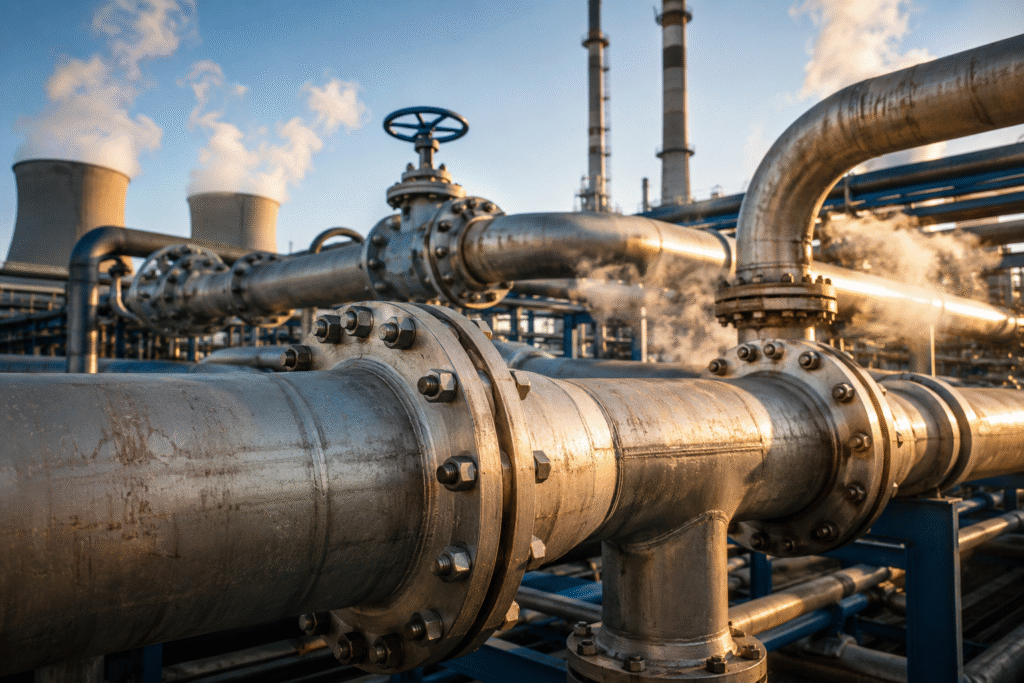
دليل سوق شفة أنابيب الفولاذ المقاوم للصدأ: $5.8ب بيانات الصناعة, المزايا الخفية, أنواع, الاستخدامات, وكيفية الاختيار
وفقا لأبحاث جراند فيو (2024), تم تقييم سوق الفلنجات الصناعية العالمية بـ $5.8 مليار في 2023 ومن المتوقع أن يصل $7.2 مليار بواسطة 2030. For buyers evaluating a stainless steel pipe flange, this growth reflects a clear shift toward corrosion-resistant, standards-compliant components that support longer service life and lower maintenance risk.
علاوة على ذلك, procurement teams now expect more than basic supply. They need verified metallurgy, traceable inspection records, and reliable lead times across stainless, الصلب الكربوني, دوبلكس, ودرجات سبائك النيكل.
Why the Stainless Steel Pipe Flange Market Is Growing Worldwide
Industrial demand remains strong because flanges sit at the center of safe, serviceable piping systems. They connect valves, مضخات, السفن, and line pipe while allowing inspection, صيانة, and future modification.
بحسب موقع IBISWorld (2024), حسابات آسيا والمحيط الهادئ لأكثر من 45% من إنتاج شفة العالمية, مع كون الصين أكبر منتج. لذلك, global sourcing strategies increasingly focus on suppliers that can combine scale, ضمان الجودة, ووثائق التصدير.
بحسب موقع ستاتيستا (2024), تمثل صناعة النفط والغاز ما يقرب من 35% من استهلاك شفة العالمية. This matters because upstream, منتصف الطريق, and downstream projects often require pressure-temperature performance under ASME classes from 150 ل 2500 وما بعدها.
فضلاً عن ذلك, corrosion risk continues to drive stainless adoption in chemical processing, الأنظمة البحرية, ومعالجة المياه. Stainless steel pipe flange assemblies offer strong resistance to oxidation, هجوم بالكلوريد, and product contamination when the correct grade is selected.
كما مارك ديلاني, مهندس الأنابيب الأول, الدول: “Flange failures rarely begin at the flange alone. They usually start with poor material selection, mismatched standards, or uncontrolled installation practices.” That observation aligns with field experience across refinery, في الخارج, وأنظمة المرافق.
Buyers also compare more than price per piece. They evaluate inspection capability, EN 10204 3.1 شهادة, توافر مؤشر مديري المشتريات (PMI)., دقة الآلات, and heat traceability from forged bar or plate source to finished product.
لهذا السبب, الشركات المصنعة مثل SASA FLANGE position themselves around certified production and export readiness rather than commodity-only pricing. مع ISO 9001:2015 وشهادات PED 2014/68/EU, the company supports projects that demand both compliance and commercial flexibility.
بالإضافة إلى, the hidden advantages of stainless flanges extend beyond corrosion resistance. They often reduce repainting, minimize contamination in clean processes, and improve lifecycle cost in aggressive media compared with lower-alloy alternatives.
Common procurement searches also show how the market behaves. Engineers look for stainless steel pipe flange sizes, 4 inch stainless steel pipe flange options, stainless steel flange types, and stainless steel flanges and fittings because specification accuracy directly affects installation success.
Material versatility is another growth factor. Buyers can source 304, 316, 316ل, 904ل, 2205, 2507, أ182, إنكونيل, مونيل, هاستيلوي, and Titanium depending on corrosion allowance, درجة حرارة التصميم, and project budget.
نتيجة ل, a modern sourcing decision is rarely about one flange alone. It is about the total package of standards compliance, سلامة الضغط, التحمل الأبعاد, and logistics reliability across the entire piping bill of materials.
Technical Differences: Stainless Steel Flanges Types, المزايا الخفية, and How Engineers Choose
The most common stainless steel flanges types include weld neck, سهل الارتداء, أعمى, لحام المقبس, مترابطة, ومفاصل اللفة. Each type serves a different stress profile, maintenance requirement, and fabrication method under standards such as ANSI B16.5, أنسي B16.47, و إن 1092-1.
Weld neck designs remain the preferred option for cyclic service and high-pressure lines because the tapered hub improves stress distribution. في المقابل, slip-on flanges support lower-pressure services where simpler alignment and lower fabrication cost matter more.
بحسب معلومات موردور (2024), process plant operators increasingly prioritize lifecycle cost over initial component cost in corrosion-critical systems. لذلك, 316ل, دوبلكس 2205, والسوبر دوبلكس 2507 continue gaining specification share in chloride-containing environments.
وفقا لأبحاث السوق في المستقبل (2024), global demand for corrosion-resistant alloy piping components is expected to grow at over 4% CAGR through the decade. That trend supports broader use of premium forged flanges in offshore, تحلية المياه, والخدمة الكيميائية.
كما د. هيلين وو, عالم المواد, الدول: “The strongest commercial result comes from matching alloy chemistry to the process environment, not from over-specifying the highest-cost grade.” This is especially true when chloride content, درجة حرارة, الرقم الهيدروجيني, and cleaning chemistry vary during operation.
When engineers choose a stainless steel pipe flange, they usually review several technical variables before issuing a purchase order. These variables influence both safety and total installed cost.
- درجة المادة: 304, 304ل, 316, 316ل, 904ل, 2205, 2507, or nickel alloy options.
- فئة الضغط: 150, 300, 600, 900, 1500, أو 2500 تحت ASME B16.5.
- تواجه النوع: الترددات اللاسلكية, آر تي جيه, FF, or custom machined finishes.
- Connection design: لحام الرقبة, سهل الارتداء, أعمى, مترابطة, لحام المقبس, أو مفصل اللفة.
- معيار الأبعاد: ASME, DIN, JIS, غوست, أو إن 1092.
- نطاق التفتيش: مؤشر مديري المشتريات, دعم الهيدروتست, التفتيش البصري, الشيكات الأبعاد, و EN 10204 3.1 الوثائق.
304 and 304L are often selected for general industrial service, food systems, and moderate corrosion conditions. لكن, 316 and 316L typically offer better pitting resistance because molybdenum improves performance in chloride-bearing media.
درجات دوبلكس مثل 2205 add higher strength and better chloride stress corrosion cracking resistance. بالتالي, many offshore, الأسمدة, and seawater handling systems specify duplex to reduce wall thickness or extend service life.
Blind flanges serve isolation and future expansion points. في أثناء, threaded and socket weld flanges remain useful for smaller bore lines where welding access, التفكيك, or system layout creates specific installation constraints.
Procurement managers should also distinguish between forging standards and dimensional standards. ASTM A182 covers forged or rolled alloy and stainless materials for flanges, التجهيزات, الصمامات, وأجزاء, بينما ASME B16.5 يحكم الأبعاد, فئات الضغط, التسامح, ومتطلبات وضع العلامات.
The American Society of Mechanical Engineers confirms these dimensional requirements through ASME المعايير, and buyers should always verify the latest edition before final approval. In regulated projects, PED conformity, شهادات المواد, and heat number traceability are equally important.
SASA FLANGE تصنع الشفاه في 304, 316, 904ل, 2205, 2507 وغيرها من الدرجات الممتازة, مع توفير المرفقين أيضًا, المحملات, مخفضات, and caps for complete piping packages. مدعومة بتصنيع CNC المتقدم واختبار الجودة الشامل, تدعم الشركة المقاسات المخصصة من 1/2" إلى 60" for Oil & الغاز, البتروكيماويات, قوة, والصناعات البحرية.
Another hidden advantage is standardization across multinational projects. When buyers align flange type, تواجه, نمط الترباس, and inspection protocol early, they reduce site rework, shorten installation windows, and limit expensive mismatch claims.
على سبيل المثال, أ 4 inch stainless steel pipe flange in ASME Class 300 RF differs fundamentally from a 4 inch EN 1092 PN40 flange. The bore, حفر, سماكة, and mating compatibility may not match even if the nominal size appears similar.
لذلك, the best way to choose a flange is to start with service conditions, then move to standard, درجة, فصل, وتواجه. After that, review testing, الوثائق, and delivery schedule before confirming the final data sheet.
ASME, ASTM, DIN, ومعايير EN الخاصة بالامتثال لشفة أنابيب الفولاذ المقاوم للصدأ
Standards control fit, سلامة الضغط, and interchangeability across the piping system. Without standard compliance, even high-quality material can fail to integrate correctly during fabrication or maintenance.
ASME B16.5 يغطي حواف الأنابيب والتجهيزات ذات الحواف من NPS 1/2 خلال 24. ASME B16.47 يمتد التغطية لأقطار أكبر, which are common in water transmission, البحرية, and bulk process applications (ASME, 2023).
ASTM A182 defines the material requirements for forged stainless and alloy steel flanges. ASTM A240 ينطبق على لوحة, ملزمة, وشريط لأوعية الضغط والتطبيقات العامة, and it often appears in plate flange or fabricated component specifications (ASTM, 2023).
قد تحدد المشاريع الأوروبية EN 1092-1 and PED 2014/68/EU requirements. فضلاً عن ذلك, marine and offshore applications can involve DNV, النرويج, or owner-specific technical clauses depending on class society and project region.
The key compliance checkpoints usually include the following items.
- Correct dimensional standard such as ASME B16.5, ب16.47, DIN, JIS, أو إن 1092.
- Correct forging or plate material standard such as ASTM A182 أو ASTM A240.
- Pressure-temperature rating verification for the selected alloy.
- Facing finish and gasket compatibility review.
- Full traceability with heat number and mill test certificates.
- خياري EN 10204 3.1, مؤشر مديري المشتريات, صلابة, الفريت, و NACE MR0175 review where applicable.
وفقا للايزو (2023), documented quality management systems reduce process variation and improve traceability in critical manufacturing sectors. That is why buyers increasingly favor audited suppliers with formal quality systems rather than traders with limited production control.
للخدمة الحامضة, corrosion control is not optional. NACE MR0175 و ISO 15156 requirements may apply when hydrogen sulfide exposure can trigger sulfide stress cracking in susceptible materials (NACE, 2023).
علاوة على ذلك, flange selection must consider the mating components. A premium forged flange will not deliver safe performance if bolts, نوع الحشية, جدول الأنابيب, and welding procedure qualification are mismatched.
Below is a simple standards comparison that many engineers use during procurement review.
- ASME B16.5: Primary dimensional standard for NPS 1/2 ل 24 الشفاه.
- ASME B16.47: Large diameter flange dimensions beyond B16.5 range.
- ASTM A182: Forged stainless and alloy material requirements.
- ASME B16.9: Dimensional standard for buttweld fittings such as elbows and tees.
- EN 1092-1: European flange dimensional and pressure designation standard.
- بيد 2014/68/الاتحاد الأوروبي: الإطار التنظيمي لمعدات الضغط المطروحة في سوق الاتحاد الأوروبي.
SASA FLANGE integrates these requirements into export-oriented manufacturing and inspection workflows. مع ISO 9001:2015, بيد 2014/68/الاتحاد الأوروبي, و م 2000 أوراق اعتماد, the company helps buyers reduce approval delays on international EPC and OEM projects.
بالإضافة إلى ذلك, خدمة 50+ الدول عبر النفط & الغاز, البتروكيماويات, قوة, and Marine industries requires more than machining capability. It requires disciplined document control, marking accuracy, packaging protection, and responsive technical communication from RFQ to shipment.
Buyers looking for a compliant stainless steel pipe flange should also verify whether the order requires forged, machined-from-bar, or plate-cut construction. The manufacturing route affects grain flow, الخصائص الميكانيكية, thickness limits, والتكلفة.
When certification packages are required, established manufacturers can simplify procurement. For projects requiring PED documentation or custom dimensional review, يمكن للمشترين اتصال SASA FLANGE early to align standards, الصف المادي, and testing scope before production starts.
دليل التطبيق: الاستخدامات, مواد, and Selection Criteria for Different Industries
Stainless steel flanges serve very different duties across industries, so selection should always start with media, ضغط, درجة حرارة, وآلية التآكل. A flange that performs well in clean water may fail quickly in chloride brine, الغاز الحامض, أو خدمة ركوب الدراجات الحرارية.
في النفط والغاز, weld neck and RTJ configurations are common in high-pressure and hydrocarbon service. Because this sector accounts for approximately 35% من استهلاك شفة العالمية, project buyers often standardize materials and classes to simplify spare parts and shutdown planning (رجل دولة, 2024).
في مصانع البتروكيماويات, 316ل, 904ل, and alloy grades may be preferred where acidic streams or chlorides challenge standard austenitic stainless. بالإضافة إلى, blind flanges are widely used for line isolation, hydrotest points, والارتباطات المستقبلية.
في توليد الطاقة, temperature and cyclic loading strongly influence type selection. لذلك, weld neck flanges and higher alloy materials often provide better long-term integrity in steam, المكثفات, and auxiliary chemical systems.
Marine and shipbuilding applications demand strong resistance to seawater exposure and crevice corrosion. نتيجة ل, دوبلكس 2205 والسوبر دوبلكس 2507 are frequently specified for seawater, الصابورة, and desalination systems where 304 may be inadequate.
Water treatment and construction projects often balance durability with budget. في هذه القطاعات, 304 و 316 stainless can provide excellent value, particularly where system cleanliness, مظهر, and moderate corrosion resistance are important.
Engineers usually choose among flange types based on these practical criteria.
- Use weld neck for high pressure, ارتفاع درجة الحرارة, اهتزاز, والخدمة الدورية.
- Use slip-on where alignment ease and lower fabrication cost are priorities.
- Use blind flanges for isolation, end closures, وتوسيع النظام في المستقبل.
- Use threaded flanges in small-bore systems where welding should be minimized.
- Use socket weld for compact, high-pressure small-bore piping.
- Use lap joint where frequent dismantling and rotation alignment are required.
Material choice follows a similar decision path.
- 304/304ل: General corrosion resistance and cost-effective fabrication.
- 316/316ل: Better chloride resistance and broader chemical suitability.
- 904ل: Stronger performance in reducing acids and severe corrosion service.
- 2205 دوبلكس: Higher strength and better SCC resistance than common austenitic grades.
- 2507 سوبر دوبلكس: High pitting resistance for seawater and harsh offshore media.
- سبائك النيكل: Extreme corrosion or temperature service where stainless is insufficient.
وفقا لأبحاث جراند فيو (2024), continued infrastructure investment and industrial modernization are supporting long-term demand for engineered piping components. That trend favors suppliers who can provide both stainless steel flange types and matching fittings under one quality system.
SASA FLANGE offers custom manufacturing for flanges and pipe fittings including elbows, المحملات, مخفضات, والقبعات, which helps buyers consolidate sourcing. This is particularly useful when projects need coordinated bevels, الجداول الزمنية, علامات, and documentation across multiple component categories.
لفرق المشتريات, selection should not stop at alloy and class. They should also confirm gasket compatibility, مادة الترباس, flange facing finish, نطاق الاختبار, and packaging for sea shipment or long-term site storage.
Lead time planning is equally important. الشفاه ذات القطر الكبير, درجات سوبر دوبلكس, and special machining usually require earlier technical approval than common 304 أو 316 items.
When the application includes custom dimensions, معايير مختلطة, or multi-material packages, early supplier engagement can reduce revision cycles. Buyers can review technical details with SASA FLANGE to align drawings, المعايير, and inspection expectations before commercial release.
التوقعات المستقبلية لتوريد شفة أنابيب الفولاذ المقاوم للصدأ وتوصيات الشراء الإستراتيجية
The market outlook remains positive as energy, ماء, البحرية, and industrial process projects continue expanding globally. وفقا لأبحاث جراند فيو (2024), من المتوقع أن ينمو سوق الفلنجات الصناعية من $5.8 مليار في 2023 ل $7.2 مليار بواسطة 2030.
في نفس الوقت, sourcing will become more technical. Buyers increasingly ask for full traceability, مؤشر مديري المشتريات, الامتثال PED, and mixed-material package supply rather than standalone commodity flanges.
بحسب موقع IBISWorld (2024), Asia-Pacific already represents over 45% من إنتاج شفة العالمية. لذلك, supplier evaluation should focus on manufacturing discipline, تجربة التصدير, and documented compliance instead of geography alone.
Strategic buyers can improve results with a few consistent practices.
- Standardize approved grades and pressure classes across plants where possible.
- Request clear documentation requirements at RFQ stage.
- Confirm dimensional standard compatibility before issuing purchase orders.
- Evaluate lifecycle cost, ليس فقط سعر الوحدة.
- Use qualified suppliers for project-critical and regulated applications.
As James Porter, محلل السوق الصناعي, الدول: “The best-performing procurement teams reduce total risk by locking technical scope early and auditing supply capability before the first shipment.” That is especially important for high-value shutdowns and export projects.
In the years ahead, the most competitive suppliers will combine machining capacity, metallurgy expertise, and fast document turnaround. For buyers seeking a stainless steel pipe flange partner with certified systems, تغطية مادية واسعة, والدعم المباشر من المصنع, it makes sense to speak with SASA FLANGE during the specification stage rather than after problems appear.
الأسئلة المتداولة
ما هي الشفاه الفولاذ المقاوم للصدأ المستخدمة ل?
●تستخدم الشفاه المصنوعة من الفولاذ المقاوم للصدأ لتوصيل الأنابيب, الصمامات, مضخات, and pressure vessels in systems that require strength, مقاومة التآكل, وسهولة الوصول إلى الصيانة.
●بحسب موقع ستاتيستا (2024), يمثل النفط والغاز حوالي 35% من استهلاك شفة العالمية, which shows how important flanged joints are in critical industrial piping.
●They are common in oil and gas, البتروكيماويات, البحرية, معالجة المياه, تجهيز الأغذية, and power generation because they support inspection, تنظيف, واستبدال المعدات.
●Common uses include line termination, valve connection, فوهات المعدات, blind isolation points, and spool assembly in both low-pressure and high-pressure services.
●For projects requiring certified materials and traceable production, العمل مع الشركات المصنعة القائمة مثل SASA FLANGE helps ensure compliance with standards such as ASME B16.5 و ASTM A182.
ما هي الشفاه المصنوعة من الفولاذ المقاوم للصدأ?
●العديد من تصميمات الحافة القياسية مصنوعة من الفولاذ المقاوم للصدأ, بما في ذلك الرقبة اللحام, سهل الارتداء, أعمى, مترابطة, لحام المقبس, وأنواع مفاصل اللفة.
●ASTM A182 commonly covers forged stainless steel flanges, بينما ASME B16.5 and B16.47 define the dimensions, فئات الضغط, and drilling patterns for these products.
●Typical stainless grades include 304, 304ل, 316, 316ل, 904ل, 2205, و 2507, and each grade fits different corrosion, درجة حرارة, and strength requirements.
●على سبيل المثال, 316L is often selected for chloride exposure, بينما دوبلكس 2205 offers higher strength and improved stress corrosion cracking resistance in more aggressive service.
●Buyers should match flange type and alloy grade to process conditions, والشركات المصنعة مثل SASA FLANGE can help confirm the correct combination for project service data.
هل يصنعون تجهيزات أنابيب الفولاذ المقاوم للصدأ?
●نعم, manufacturers widely produce stainless steel pipe fittings such as elbows, المحملات, مخفضات, and caps for use with stainless steel flange systems.
●ASME B16.9 covers factory-made buttweld fittings, and these fittings are often supplied in 304, 316, 316ل, دوبلكس, and nickel alloy grades to match the connected piping materials.
●Using matched flange and fitting materials improves corrosion performance, weld compatibility, and documentation consistency across the piping package.
●وفقا لأبحاث السوق في المستقبل (2024), demand for corrosion-resistant piping components continues to rise as process industries prioritize lifecycle value over initial purchase price.
●For complete project supply with coordinated flanges and fittings, buyers can work with SASA FLANGE to streamline technical review and procurement.
ما هو أقوى نوع من شفة الأنابيب?
●Weld neck flanges are generally considered the strongest standard piping flange type for high-pressure, ارتفاع درجة الحرارة, والخدمة الدورية.
●The tapered hub and butt-welded connection reduce stress concentration, which is why ASME B16.5 weld neck flanges are preferred in many refinery, في الخارج, وتطبيقات الطاقة.
●Strength also depends on material grade, سمك الجدار, فئة الضغط, and installation quality, so the strongest flange is not defined by geometry alone.
●For severe service, engineers may combine weld neck geometry with duplex, سوبر دوبلكس, or nickel alloy materials to improve both mechanical performance and corrosion resistance.
●The best recommendation is to evaluate service pressure, درجة حرارة, وسائط, and code requirements before selection, especially for Class 600 ل 2500 التطبيقات.
كيف تختار بين 304 و 316 درجات شفة أنابيب الفولاذ المقاوم للصدأ?
●يختار 304 for general service and lower chloride exposure, and choose 316 or 316L when the system faces chlorides, harsher chemicals, or higher corrosion risk.
●الموليبدينوم في 316 improves pitting resistance, which makes it a common upgrade for marine, كيميائية, and coastal plant environments.
●كما د. هيلين وو, عالم المواد, الدول: “The right alloy depends on the actual process chemistry, not on assumptions based only on price or tradition.”
●بحسب معلومات موردور (2024), operators increasingly favor lifecycle cost analysis, which often supports 316L over 304 when maintenance and downtime risks are high.
●Buyers should review media composition, درجة حرارة, كيمياء التنظيف, and expected service life before selecting the final stainless grade.
ما هي المعايير المطبقة على أحجام شفة أنابيب الفولاذ المقاوم للصدأ وتقييمات الضغط?
●ASME B16.5 is the main standard for stainless steel pipe flange sizes and pressure classes from NPS 1/2 خلال 24, بينما ASME B16.47 covers many larger diameters.
●ASTM A182 defines material requirements for forged stainless flanges, و إن 1092-1 is widely used for European dimensional and pressure designation requirements.
●These standards control outside diameter, دائرة الترباس, عدد فتحات الترباس, سماكة, مواجهة الأبعاد, وحدود درجة الحرارة والضغط, so they directly affect interchangeability.
●بحسب ASME (2023), dimensional standardization is essential for safe assembly, maintenance efficiency, and pressure boundary reliability across industrial piping systems.
●The safest approach is to confirm standard, فصل, تواجه, and bore schedule on every datasheet before purchase, especially when ASME and EN systems may be mixed.
الوظائف ذات الصلة
شفة الوجه النهاية: شرح متحدة المركز مقابل التسنينات الحلزونية
تعتبر كل من المسننات المركزة واللولبية عبارة عن تشطيبات وجه شفة مُشكَّلة آليًا…
دوبلكس 2205 مقابل الشفاه 316L: ما هي المواد التي يجب عليك اختيارها؟?
إجابة سريعة: دوبلكس 2205 الشفاه عادة ما تكون المرشح الأقوى…

تعريف شفة الفوهة, التفاصيل ونظرة عامة على الشفاه ASME B16.36: بيانات السوق, دليل الاختيار ورؤى الامتثال
تم تقييم سوق الفلنجات الصناعية العالمية بـ $5.8 مليار…

دليل سوق شفة التخلص الأسود: مواد, 3.5″ التوافق, وبيانات مصادر B2B لحواف حوض المطبخ
يتزايد الطلب على شفة التخلص السوداء مع المشترين لتركيبات المطبخ…