
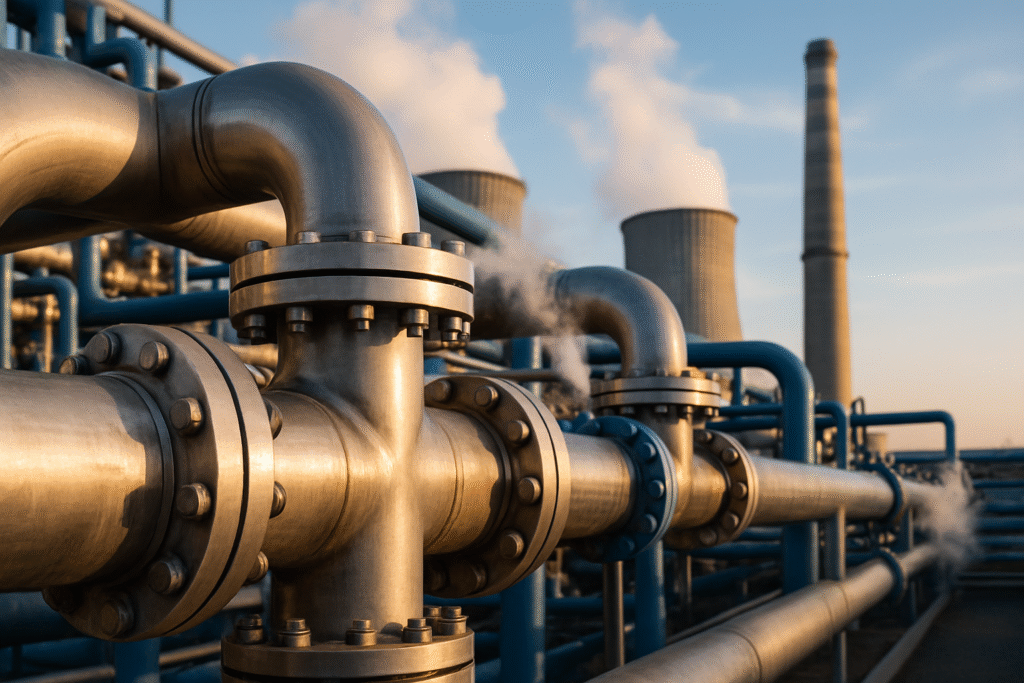
Flensa Pipa Baja Tahan Karat: Panduan Berbasis Data untuk Keuntungan Tersembunyi, Jenis, Kegunaan, dan Cara Memilih Flensa yang Paling Umum
Itu flensa pipa baja tahan karat pasar berada di pusat keandalan perpipaan industri. Menurut Penelitian Grand View (2024), pasar flensa industri global dihargai $5.8 miliar masuk 2023 dan diperkirakan akan tercapai $7.2 miliar oleh 2030, which shows why engineers keep comparing the hidden advantages, jenis, kegunaan, and how to choose the most common flanges.
Untuk tim pengadaan, this is not just a component decision. It affects pressure integrity, kehidupan korosi, frekuensi pemeliharaan, and total installed cost across oil and gas, petrokimia, kekuatan, laut, dan sistem pengolahan air.
Global demand trends shaping stainless steel pipe flange sourcing
Demand for the stainless steel pipe flange continues to expand because process plants now require longer service life and tighter compliance. Menurut IBISWorld (2024), Asia-Pasifik menyumbang lebih dari itu 45% produksi flensa global, dengan Tiongkok sebagai produsen terbesar.
That production concentration matters for buyers. It influences lead time, penetapan harga, kapasitas pemesinan, and access to stainless grades such as 304, 316, 316L, 904L, 2205, Dan 2507.
Menurut Statista (2024), industri minyak dan gas menyumbang sekitar 35% konsumsi flensa global. Karena itu, manufacturers that supply upstream, tengah sungai, and downstream projects usually build stronger expertise in pressure classes, corrosion allowances, dan pengendalian dokumentasi.
Dalam praktiknya, buyers rarely choose by price alone. They compare raw material traceability, kualitas penempaan, Akurasi pemesinan CNC, EN 10204 3.1 sertifikasi, and dimensional compliance with ASME B16.5 atau ASME B16.47.
Menurut Intelijen Mordor (2024), global investments in water infrastructure and industrial processing continue to support demand for corrosion-resistant piping components. Selain itu, duplex and super duplex materials gain share where chloride exposure and lifecycle cost drive procurement decisions.
This is where supplier capability becomes strategic. SASA FLANGE serves customers in more than 50 countries and manufactures stainless steel flanges, flensa baja karbon, flensa paduan, and pipe fittings for demanding industrial service.
Dengan ISO 9001:2015 dan sertifikasi PED 2014/68/EU, SASA FLANGE aligns production with global project requirements. Lebih-lebih lagi, the company supplies materials including 304, 316, 316L, 904L, 2205, 2507, A105, A182, tidak konel, Monel, Hastelloy, dan Titanium.
Menurut Riset Pasar Masa Depan (2024), corrosion-resistant alloys are among the fastest-growing material categories in process industries because operators are under pressure to reduce unplanned shutdowns. Sebagai akibat, the stainless steel pipe flange has become a lifecycle asset rather than a commodity item.
The competitor landscape often focuses on long grade lists. Namun, buyers usually need more than a catalog. They need a clear framework that explains intriguing material differences, peringkat tekanan, jenis flensa umum, and the hidden advantages of choosing the right flange for each service condition.
Stainless steel pipe flange selection: intriguing material advantages, jenis, and expert insights
The first step in selecting a stainless steel pipe flange is to match metallurgy to media, suhu, tekanan, dan metode fabrikasi. In many industrial systems, the most common flanges are weld neck, mengenakan, buta, las soket, dan desain berulir.
Menurut ASME B16.5, dimensi flensa, toleransi, peringkat tekanan-suhu, menandai, and testing requirements must remain consistent across standardized classes such as 150, 300, 600, 900, 1500, Dan 2500 (ASME, 2023). Karena itu, geometry and rating selection are just as important as material grade.
Seperti John Reynolds, corrosion specialist and former chief engineer, negara bagian: “Most flange failures are not caused by the flange alone. They result from a mismatch between material, lari, paking, dan kondisi proses.”
That insight explains why 304 Dan 316 do not solve every problem. Although both are common austenitic stainless grades, kandungan klorida, senyawa belerang, high temperature cycling, and cleaning chemistry can change the correct choice quickly.
Menurut ASTM A182/A182M, forged or rolled alloy and stainless steel pipe flanges must meet chemical composition, sifat mekanik, perlakuan panas, dan persyaratan penandaan (ASTM, 2024). Buyers should therefore verify whether a stainless steel pipe flange is supplied to ASTM A182 F304/F304L, F316/F316L, F321, F347, or duplex grades such as F51 and F53.
The most common stainless grades for industrial flange service include the following:
- 304/304L: Strong general corrosion resistance and excellent weldability for water, makanan, dan tugas kimia ringan.
- 316/316L: Added molybdenum improves resistance to chlorides and aggressive media in marine and chemical service.
- 904L: Higher nickel and molybdenum support better resistance in sulfuric and high-corrosion environments.
- 2205 rangkap: Higher strength and improved pitting resistance for offshore, desalinasi, dan jalur proses.
- 2507 super dupleks: Premium performance for severe chloride and high-pressure applications.
According to NACE guidance for sour service selection, corrosion cracking risk rises sharply when chloride concentration, suhu, and tensile stress interact inappropriately (NACE, 2023). Akibatnya, duplex and nickel alloys often outperform basic austenitic grades in severe service.
Sebagai Dr. Karen Vernon, ilmuwan material dalam paduan industri, negara bagian: “The hidden advantages of duplex flange materials are not limited to corrosion resistance. Their higher yield strength can also reduce wall thickness and support lighter system designs.”
Untuk para insinyur, flange type matters as much as alloy. A weld neck flange usually performs best in high-pressure and thermal cycling service because the tapered hub reduces stress concentration.
Sebaliknya, slip on flanges may reduce fabrication cost in moderate service. Namun, they generally provide lower fatigue resistance than weld neck designs in demanding duty.
Threaded flanges work where welding is not desirable. Tetap, they are usually limited to smaller sizes and lower-risk systems, especially where vibration or cyclic service can loosen threaded joints.
Common selection criteria include:
- Pressure class and operating temperature.
- Pipe schedule and outside diameter compatibility.
- Mekanisme korosi, termasuk pitting, celah, SCC, or general attack.
- Desain bersama, gaya paking, and bolt loading requirements.
- Inspection needs, termasuk PMI, dukungan uji hidro, dan penyelesaian permukaan.
- Persyaratan dokumentasi seperti EN 10204 3.1 and PED traceability.
Didukung oleh permesinan CNC canggih dan pengujian kualitas yang komprehensif, SASA FLANGE menawarkan ukuran khusus dari 1/2 inci ke 60 inches across ANSI, DIN, JIS, gost, dan standar EN. This manufacturing breadth helps buyers consolidate sourcing for both standard and project-specific piping packages.
Menurut tolok ukur manajemen mutu ISO, certified process control lowers documentation errors and improves repeatability in industrial supply chains (ISO, 2023). That is one reason many EPC buyers prefer producers with stable material traceability, calibrated inspection systems, dan mengekspor pengalaman.
Secara praktis, choosing the most common flanges should never mean choosing the simplest answer. Alih-alih, it means selecting the flange design and stainless grade that best fit lifecycle cost, fabrication constraints, and compliance obligations.
Standar, ukuran, and compliance for stainless steel pipe flange procurement
International projects demand rigorous compliance because flange interchangeability depends on exact dimensional standards. The stainless steel pipe flange used in a refinery, offshore module, or power plant must match both line class requirements and local regulatory expectations.
The core standards usually include ASME B16.5 untuk NPS 1/2 melalui 24 Dan ASME B16.47 untuk diameter yang lebih besar, ketika ASME B16.9 covers buttweld fittings such as elbows, kaos, reduksi, dan topi (ASME, 2023). Di Eropa, EN 1092 is widely applied for PN-rated flanges.
Material standards and regional standards work together. ASTM A182 governs forged stainless and alloy flanges, while DIN and JIS systems define alternative dimensional frameworks for global installations.
Buyers should compare standards carefully because a pressure class 150 flange is not the same as a PN16 flange in every detail. Selain itu, facing types such as raised face, wajah datar, RTJ, and tongue-and-groove affect gasket selection and bolting loads.
- ASME B16.5: Standard for pipe flanges and flanged fittings up to NPS 24.
- ASME B16.47: Flensa baja berdiameter besar dari NPS 26 ke 60.
- ASTM A182: Forged or rolled alloy and stainless steel flange material standard.
- EN 1092: Dimensi flensa Eropa dan sebutan tekanan.
- DIN: German dimensional tradition still used in many industrial projects.
- NACE MR0175/ISO 15156: Material selection reference for sour service resistance.
Menurut kerangka PED Komisi Eropa, pressure equipment suppliers must maintain conformity assessment procedures where applicable under PED 2014/68/EU (Komisi Eropa, 2024). Karena itu, documentation is not optional for many export projects.
Key compliance documents typically requested by EPCs include:
- EN 10204 3.1 sertifikat uji materi.
- Heat number traceability and PMI records.
- Laporan inspeksi dimensi.
- Hardness and mechanical test results.
- deklarasi PED, jika diperlukan.
- ISO 9001:2015 catatan kualitas.
Bagi banyak pembeli, supplier auditability is now a major selection factor. Dengan ISO 9001:2015, PED 2014/68/UE, dan IKLAN 2000 kredensial, SASA FLANGE supports projects that demand documented process control and export-ready quality files.
The company also manufactures flanges and fittings in stainless, baja karbon, baja paduan, rangkap, super dupleks, dan paduan nikel berkinerja tinggi. That broad capability simplifies multi-material packages for offshore, petrokimia, dan proyek pembangkit listrik.
When buyers compare flange manufacturers, they should also review machining tolerance control and facing finish consistency. Even a premium stainless steel pipe flange can underperform if serration finish, penyelarasan lubang, or drilling accuracy falls outside tolerance.
For authoritative reference, procurement teams can cross-check dimensional and materials requirements at ASME. This step helps avoid mismatches between purchase orders, inspection plans, and field installation realities.
How to choose stainless steel pipe flange designs for oil, gas, kimia, kekuatan, dan layanan kelautan
Application context determines whether a stainless steel pipe flange delivers value or risk. The same flange that performs well in clean water may fail early in chlorides, gas asam, kejutan termal, or acidic washdown duty.
Dalam minyak dan gas, pressure class and corrosion mechanism drive most decisions. Menurut Statista (2024), oil and gas accounts for around 35% konsumsi flensa global, so this sector sets many of the market’s technical expectations.
For upstream and midstream systems, buyers often select weld neck flanges in ASTM A182 F316/F316L, F51, or F53 where pressure cycling and corrosion threats are significant. Where sour service applies, engineers should check NACE MR0175 compatibility and hardness limits.
Di pabrik petrokimia, gasket seating reliability and media compatibility matter greatly. Lebih-lebih lagi, menghadap flensa, lari, and gasket material must work as a complete sealing system.
Untuk pembangkit listrik, temperature stability becomes critical. Saluran uap, sistem kondensat, and heat recovery units may require stainless grades or alloy materials that maintain mechanical integrity under thermal cycles.
Marine and shipbuilding projects often move toward 316L, 2205, atau 2507 because seawater and splash-zone exposure accelerate pitting and crevice corrosion. Karena itu, initial flange price should be weighed against dry-dock maintenance cost and replacement intervals.
Water treatment and desalination plants also demand careful selection. Duplex grades frequently offer a better balance of strength and chloride resistance than standard 304 atau 316 in aggressive saline service.
When evaluating stainless steel flange types, engineers typically compare:
- Flensa leher las: Terbaik untuk tekanan tinggi, suhu tinggi, dan layanan siklik.
- Selipkan flensa: Lower fabrication cost for moderate pressure applications.
- Flensa buta: Digunakan untuk mengakhiri jalur, header, dan nozel bejana tekan.
- Flensa las soket: Common in smaller bore, sistem perpipaan bertekanan tinggi.
- Flensa berulir: Useful where welding must be avoided.
- Flensa sambungan putaran: Supports systems needing frequent dismantling.
Useful selection questions include:
- What is the exact process medium and chloride content?
- What are the design and upset temperatures?
- What pressure class is required under the applicable code?
- Will the joint face vibration, shock, or frequent maintenance cycles?
- Does the project require ASME, DIN, EN, JIS, or mixed compliance?
- Are custom bore, pengeboran, or facing modifications necessary?
Offering custom manufacturing and factory-direct pricing, SASA FLANGE supports project buyers needing tailored drilling patterns, bahan khusus, and mixed-standard packages. This is especially useful when standard catalog parts do not align with EPC specifications.
As Michael Porter, senior piping engineer in refinery projects, negara bagian: “The best flange is the one that minimizes risk at installation and throughout operation, not simply the one with the lowest unit cost.” That is why experienced buyers evaluate machining quality, MTC completeness, and after-sales responsiveness alongside material grade.
Misalnya, A 4 inch stainless steel pipe flange for marine cooling duty may need 316L or duplex construction, raised face geometry, dan kelas 150 atau 300 rating depending on the line design. Sebaliknya, a stainless steel threaded pipe flange for utility service may prioritize installation convenience over maximum fatigue resistance.
Karena itu, the way to choose flanges is always application-first. The intriguing hidden advantages come from matching flange design, kimia bahan, ruang lingkup pemeriksaan, and total lifecycle economics.
Market outlook, strategic sourcing advice, and next steps for industrial buyers
The outlook for stainless steel pipe flange demand remains positive because process industries continue to invest in reliability, pengendalian korosi, and energy infrastructure. Menurut Penelitian Grand View (2024), pasar flensa industri diperkirakan akan tumbuh $5.8 miliar masuk 2023 ke $7.2 miliar oleh 2030.
Menurut IBISWorld (2024), Asia-Pacific remains the dominant production center with more than 45% keluaran global. Akibatnya, buyers that establish strong supplier relationships in China can often secure better lead times and broader material availability.
Namun, strategic sourcing is about more than geography. It requires balancing compliance, kualitas permesinan, logistics resilience, and communication speed across every purchase order.
Procurement teams can reduce risk by following several practical steps:
- Standardize approved materials by service category.
- Tentukan ASME, ASTM, DIN, or EN dimensions clearly on RFQs.
- Meminta EN 10204 3.1 certificates and PMI for critical lines.
- Confirm flange facing, pengeboran, and bore details before production.
- Audit supplier quality systems and export documentation workflows.
- Compare total installed cost rather than ex-works price alone.
These actions matter because even common flanges can create delays when documentation is incomplete or dimensions are mismatched. Lebih-lebih lagi, rework at site usually costs far more than tighter purchasing controls at the source.
SASA FLANGE combines broad materials coverage, mesin CNC canggih, and international certifications to support project-driven purchasing. For buyers needing stainless steel flanges and fittings in 304, 316, 904L, 2205, 2507, dan paduan khusus, discussing technical requirements early can improve both compliance and lead time through direct engineering support.
Pertanyaan yang Sering Diajukan
Mana yang lebih baik 304 atau 420 baja tahan karat?
●304 is generally better for a stainless steel pipe flange because it offers stronger corrosion resistance and weldability than 420 in most industrial piping systems.
●According to ASTM material classifications, 304 is an austenitic stainless grade while 420 is a martensitic grade that prioritizes hardness over corrosion performance in many wet or chemical environments.
●For flange service, engineers usually prefer 304 atau 316 because sealing surfaces, baut beban, and welded joints demand toughness and fabrication stability rather than knife-grade hardness.
Apa Kode ASME untuk flensa baja tahan karat?
●The primary ASME code for stainless steel pipe flange dimensions is ASME B16.5 untuk NPS 1/2 melalui 24 Dan ASME B16.47 for larger diameters up to 60 inci.
●Material requirements are commonly specified under ASTM A182 untuk flensa baja tahan karat palsu, which works alongside ASME dimensional and pressure-temperature standards.
●Buyers should always match the required ASME standard, kelas tekanan, tipe menghadap, and ASTM grade on the purchase order to avoid interchangeability problems during installation.
Apa itu 5 jenis baja tahan karat?
●Lima keluarga utama baja tahan karat adalah austenitik, feritik, martensit, rangkap, and precipitation-hardening grades.
●Dalam pembuatan flensa industri, nilai austenitik seperti 304 Dan 316 are the most common, sementara nilai dupleks seperti 2205 are chosen for higher strength and chloride resistance.
●For projects requiring corrosion control, integritas tekanan, and certified traceability, bekerja dengan produsen mapan seperti SASA FLANGE supports more accurate material selection.
Industri apa yang paling banyak menggunakan baja tahan karat?
●Oil and gas is one of the largest end-use sectors for flanges, dan menurut Statista (2024), that industry accounts for approximately 35% konsumsi flensa global.
●Namun, stainless steel is also heavily used in petrochemical, laut, pengolahan air, pengolahan makanan, konstruksi, and power generation applications because of its corrosion resistance and long service life.
●Buyers should evaluate actual media, suhu, and code requirements rather than choosing stainless purely by industry habit.
Apa jenis flensa baja tahan karat yang paling umum?
●Jenis flensa baja tahan karat yang paling umum adalah leher las, mengenakan, buta, las soket, berulir, dan flensa sambungan pangkuan.
●Menurut ASME B16.5, these flange types are standardized for dimensions and ratings, which helps engineers maintain compatibility across classes such as 150, 300, Dan 600.
●Weld neck flanges are usually recommended for high-pressure or cyclic service, while slip on and threaded flanges are more suitable for moderate-duty installations.
Bagaimana cara memilih ukuran dan grade flensa pipa stainless steel yang tepat?
●Anda harus memilih ukuran flensa dengan mencocokkan ukuran nominal pipa, jadwal, membosankan, kelas tekanan, and facing details to the piping specification and applicable standard.
●Grade selection should then follow service conditions, dengan 304 atau 316 for common corrosion duty and 2205, 2507, or 904L for more severe chloride or chemical exposure.
●For project-specific requirements such as custom drilling, standar campuran, atau paduan khusus, consulting SASA FLANGE can help prevent costly specification errors.
Posting Terkait
Selesai Wajah Flange: Penjelasan Gerigi Konsentris vs Spiral
Gerigi konsentris dan spiral keduanya merupakan penyelesaian permukaan flensa yang dikerjakan dengan mesin…
Rangkap 2205 vs Flensa 316L: Bahan Mana Yang Harus Anda Pilih?
Jawaban cepat: Rangkap 2205 flensa biasanya merupakan kandidat yang lebih kuat…

Definisi Flensa Lubang, Detail dan Ikhtisar Flensa ASME B16.36: Data Pasar, Panduan Seleksi dan Wawasan Kepatuhan
Pasar flensa industri global dihargai $5.8 miliar…

Panduan Pasar Flensa Pembuangan Hitam: Bahan, 3.5″ Kesesuaian, dan Data Sumber B2B untuk Flensa Wastafel Dapur
Permintaan flensa pembuangan hitam meningkat sebagai pembeli perlengkapan dapur…