
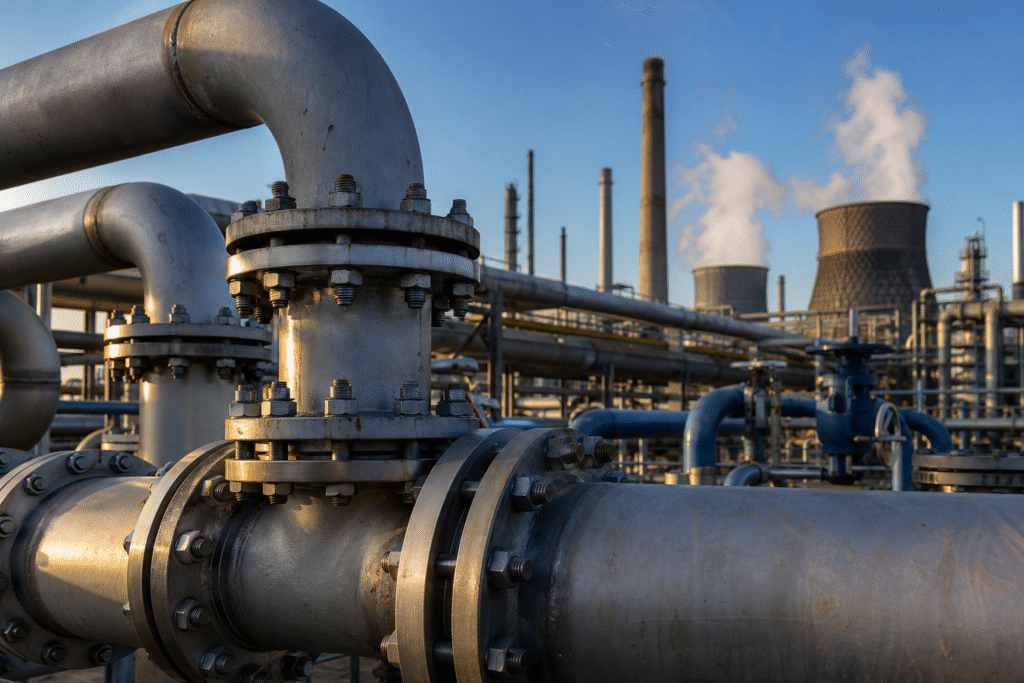
Panduan Pasar Flange Pipa Stainless Steel: Jenis, Kegunaan, Standar dan Cara Memilih dalam a $5.8 Miliar Industri
Itu flensa pipa baja tahan karat remains one of the most specified components in industrial piping because sealing reliability, ketahanan terhadap korosi, dan kepatuhan kode secara langsung mempengaruhi waktu kerja pabrik. Menurut Penelitian Grand View (2024), pasar flensa industri global dihargai $5.8 miliar masuk 2023 dan diperkirakan akan tercapai $7.2 miliar oleh 2030, which shows how critical flanges are to energy, kimia, laut, dan infrastruktur air.
Untuk manajer pengadaan dan insinyur perpipaan, the most common challenge is not finding flanges in general. It is choosing the right stainless steel pipe flange material, tipe menghadap, kelas tekanan, and standard for a specific service condition.
Industrial Demand for Stainless Steel Pipe Flange Solutions Is Expanding Worldwide
Global demand is rising because projects now require longer service life, pemeliharaan yang lebih rendah, and stronger compliance documentation. Menurut IBISWorld (2024), Asia-Pasifik menyumbang lebih dari itu 45% produksi flensa global, dengan Tiongkok sebagai produsen terbesar.
That manufacturing concentration matters for buyers seeking scale, waktu tunggu yang lebih pendek, and competitive export pricing. Namun, supply alone is not enough, because industrial purchasers also need traceability, akurasi dimensi, and mill-certified material chemistry.
Menurut Statista (2024), industri minyak dan gas menyumbang sekitar 35% konsumsi flensa global. Karena itu, stainless and alloy flange suppliers that serve upstream, tengah sungai, pengilangan, and petrochemical projects must understand pressure-temperature ratings, layanan asam, and corrosive media compatibility.
Di banyak tanaman, flange failure does not begin with dramatic rupture. Alih-alih, it starts with small gasket seating problems, poor bolt load distribution, or incorrect material substitution during maintenance.
Seperti John Reynolds, insinyur korosi dan material, negara bagian: “Flange selection is never just about pressure class. It is about the full system, termasuk kimia media, cyclic temperature, kompatibilitas paking, and fabrication quality.”
This is why buyers increasingly prefer suppliers that can support both standard and project-specific requirements. Dengan ISO 9001:2015 dan sertifikasi PED 2014/68/EU, SASA FLANGE supports industrial customers needing stainless steel flanges, flensa baja karbon, flensa paduan, and pipe fittings for regulated environments.
Lebih-lebih lagi, material versatility has become a decisive sourcing factor. Sebagai tambahan 304, 316, dan 316L, many projects now specify 904L, rangkap 2205, super dupleks 2507, nilai A182, paduan nikel, and titanium for more severe duty cycles.
Menurut Intelijen Mordor (2024), process industries are increasing investment in corrosion-resistant piping systems as operators target lower lifecycle costs and fewer shutdown-related losses. Sebagai akibat, stainless steel pipe flange procurement increasingly focuses on total value rather than unit price alone.
For engineering contractors, the most common purchasing filters include pressure rating, dimension standard, paket dokumentasi, dan konsistensi pemesinan. Misalnya, a refinery may require ASME B16.5 Kelas 300 flensa leher las masuk ASTM A182 F316L dengan EN 10204 3.1 sertifikasi, while a desalination plant may prioritize duplex grades for chloride resistance.
Didukung oleh permesinan CNC canggih dan pengujian kualitas yang komprehensif, SASA FLANGE manufactures flanges and fittings for Oil & Gas, Petrokimia, Pembangkit Listrik, Pembuatan kapal & Laut, Pengolahan Air, dan Konstruksi. Buyers that need standard and custom sizes can also review broader production capabilities through the company’s rangkaian produk and manufacturing profile on its tentang halaman.
Jenis Flange Pipa Stainless Steel, Bahan, and the Most Common Selection Criteria
The most common flange decision starts with connection type. Namun, the better question is which flange type best matches operating pressure, tingkat getaran, inspection accessibility, kendala pengelasan, dan frekuensi pemeliharaan.
Sebagai Dr. Robert Stevens, piping systems analyst, negara bagian: “The wrong flange type can increase installation cost, but the wrong material grade can multiply lifecycle cost. Good engineering balances both from the start.”
Menurut Riset Pasar Masa Depan (2024), corrosion-resistant alloy demand in industrial piping continues to outpace conventional material growth in several processing sectors. Selain itu, stainless steel remains a preferred option where cleanliness, ketahanan terhadap oksidasi, and media purity are important.
Untuk aplikasi flensa pipa baja tahan karat, the most common material grades include 304, 304L, 316, dan 316L. Nilai 304 suits general industrial service, ketika 316 and 316L offer improved resistance in chloride-bearing and chemical environments.
Higher-performance projects may specify 321 for elevated temperatures, 347 for stabilized service, atau dupleks 2205 where strength and chloride stress corrosion resistance matter. In aggressive offshore and desalination service, 2507 super duplex or 904L may deliver better long-term performance.
- 304 / 304L: Ketahanan korosi secara umum, pengolahan makanan, pengolahan air, mild chemical service.
- 316 / 316L: Better pitting resistance, paparan laut, petrokimia, perpipaan proses.
- 321 / 347: Elevated-temperature service with improved stability.
- 2205 Rangkap: Higher strength and chloride resistance than austenitic grades.
- 2507 Super Dupleks: Severe marine, di lepas pantai, and high-chloride process environments.
- 904L: Strong resistance in reducing acids and difficult chemical media.
Buyers also compare flange face types because sealing performance varies by service condition. Raised face is the most common for industrial plants, ring type joint is preferred for high-pressure critical service, and flat face is used where mating equipment cannot tolerate concentrated gasket loads.
- Flensa Leher Las: Terbaik untuk tekanan tinggi, siklus termal, and critical lines.
- Selipkan Pada Flange: Economical and easy to align for moderate service.
- Flensa Berulir: Berguna jika pengelasan dibatasi.
- Flensa Las Soket: Cocok untuk lubang kecil, sistem bertekanan tinggi.
- Flensa Buta: Digunakan untuk mengisolasi, mengakhiri, or inspect piping systems.
- Flensa Sambungan Putaran: Practical where frequent dismantling is required.
Menurut ASME B16.5, flange dimensions and pressure-temperature ratings must align with pressure class, kelompok materi, dan kondisi layanan (ASME, 2023). Karena itu, engineers should never treat a 4 inch stainless steel pipe flange as interchangeable across all standards, because facing details, membosankan, pengeboran, and rating can differ.
Material certification is equally important. ASTM A182 biasanya mencakup flensa pipa baja tahan karat dan paduan tempa atau canai, perlengkapan palsu, katup, dan suku cadang untuk layanan suhu tinggi (ASTM, 2023).
For buyers reviewing the most common purchase requests, these are the usual specification checkpoints:
- Ukuran pipa nominal dari 1/2 inci ke 60 inci.
- Kelas tekanan seperti 150, 300, 600, 900, 1500, atau 2500.
- Standard including ANSI B16.5, ANSI B16.47, DIN, JIS, gost, atau EN 1092.
- Kelas material seperti 304, 316L, 2205, 2507, A105, or A182.
- Tipe menghadap seperti RF, FF, atau RTJ.
- Inspection and documentation including PMI, hydro test support, Dan EN 10204 3.1.
Dalam praktiknya, the question “How do I choose flanges?” should be answered by process data, bukan kenyamanan katalog. Kisaran suhu, kimia fluida, tunjangan korosi, and joint criticality must drive the decision.
Manufacturing execution also affects field performance. Menawarkan ukuran khusus dari 1/2 inci ke 60 inci dengan harga langsung pabrik yang kompetitif, SASA FLANGE supplies stainless steel pipe flange products and matching elbows, kaos, reduksi, dan penutup untuk paket perpipaan terintegrasi.
ASME, ASTM, DIN, dan Persyaratan EN untuk Kepatuhan Flange Pipa Stainless Steel
Standar mendefinisikan pertukaran, safety margins, dan ekspektasi inspeksi. Akibatnya, any serious stainless steel pipe flange supplier must map products clearly to the correct dimensional, bahan, and regulatory framework.
The most widely referenced dimensional standards for industrial flanges include ANSI B16.5 and ANSI B16.47 for larger diameters. ASME B16.9 governs many butt weld fittings used together with flange systems, sementara DI 1092 covers many European flange applications.
Key standards buyers should verify include:
- ASME B16.5: Flensa pipa dan fitting flensa untuk NPS 1/2 melalui 24.
- ASME B16.47: Flensa baja berdiameter besar untuk NPS 26 melalui 60.
- ASTM A182: Forged or rolled alloy and stainless steel flange materials.
- ASME B16.9: Perlengkapan las pantat tempa buatan pabrik.
- EN 1092-1: European flanges and dimensions.
- DIN dan JIS: Regional dimensional systems for project-specific compatibility.
According to the European Commission’s Pressure Equipment Directive, pressure-retaining components sold into applicable EU markets may require conformity assessment and technical documentation under PED 2014/68/EU. Karena itu, exporters serving Europe must align material traceability and inspection records with customer and regulatory expectations.
NACE MR0175 Dan ISO 15156 become essential where sour service is present. In oil and gas environments containing hydrogen sulfide, kekerasan bahan, perlakuan panas, and metallurgy control can determine whether a flange is acceptable.
As Emily Carter, insinyur perpipaan senior, negara bagian: “Standards are not paperwork afterthoughts. They are the framework that keeps global projects buildable, auditable, and safe.”
The table below summarizes the most common compliance focus areas:
- Kepatuhan dimensi: ASME B16.5, B16.47, EN 1092, DIN, JIS.
- Kepatuhan materi: ASTM A182, ASTM A240 where plate-backed components are relevant.
- Dokumentasi: Keterlacakan nomor panas, MTC, EN 10204 3.1, laporan PMI.
- Quality systems: ISO 9001:2015 pengendalian manufaktur.
- Regulatory export requirements: PED 2014/68/UE, IKLAN 2000 dimana ditentukan.
For authoritative dimensional and code references, buyers should also review the official ASME resource at ASME.org. That step is particularly useful when cross-checking project specifications against supplier quotations.
Dengan ISO 9001:2015, PED 2014/68/UE, dan IKLAN 2000 kredensial, SASA FLANGE supports customers that require documented compliance rather than generic trading supply. This is especially relevant for EPC contractors and OEMs that need consistent quality records over multi-batch procurement cycles.
Cara Memilih Produk Flange Pipa Stainless Steel untuk Oli, Gas, Kimia, Kekuatan, dan Proyek Kelautan
Application drives selection. Even the most common stainless steel flange types perform differently once chloride exposure, getaran, kelelahan termal, or shutdown maintenance frequency are considered.
Dalam minyak dan gas, weld neck and RTJ configurations are often preferred for high-pressure hydrocarbon lines. Menurut Statista (2024), sektor ini mewakili tentang 35% konsumsi flensa global, so its technical preferences strongly influence worldwide sourcing patterns.
Untuk pabrik petrokimia dan kimia, 316L, 904L, and nickel alloys are often reviewed for corrosive streams. Where crevice corrosion or pitting is a concern, buyers should compare PREN-related material performance and actual process chemistry rather than relying only on generic grade descriptions.
Dalam pembangkit listrik, thermal cycling becomes a major factor. Karena itu, flange design should consider pressure class, perilaku paking, and welding quality to reduce leak risk during startup and shutdown sequences.
Marine and shipbuilding environments create another challenge because salt exposure accelerates corrosion on lower-grade materials. Rangkap 2205 and 316L are therefore common review candidates, tergantung pada suhu, tekanan, and cost targets.
Water treatment and desalination projects often prioritize corrosion resistance and lifecycle value over lowest purchase price. Sebagai akibat, duplex and super duplex grades can deliver stronger economics where chloride content is high.
When buyers compare stainless steel flange types and uses, these selection criteria are the most practical:
- Media proses, termasuk kandungan klorida, keasaman, and solids.
- Design pressure and temperature versus flange class limits.
- Weldability and fabrication method.
- Tingkat inspeksi, including PMI and third-party verification.
- Standar yang diperlukan, seperti ASME, DIN, JIS, atau EN 1092.
- Total installed cost versus lifecycle maintenance cost.
- Lead time and packaging for export projects.
Misalnya, A 2 inch threaded stainless steel pipe flange may suit utility service where welding is undesirable. Namun, sebuah Kelas 600 weld neck flange in ASTM A182 F316L is more appropriate for critical process lines with higher stress concentration and thermal cycling.
Procurement teams should also compare complete package capability, not only standalone flange quotes. When the same supplier can provide elbows, kaos, reduksi, topi, and matching metallurgy, project coordination usually improves and documentation becomes easier to manage.
Flensa manufaktur masuk 304, 316, 904L, 2205, 2507 dan nilai premium lainnya, SASA FLANGE supports custom production for industrial projects that require standard and non-standard dimensions. Porsi 50+ negara-negara di seluruh Minyak & Gas, Petrokimia, Kekuatan, dan industri Kelautan, the company aligns supply capability with export documentation and quality control expectations.
Future Outlook for Stainless Steel Pipe Flange Sourcing and Strategic Buying Recommendations
The flange market is becoming more specification-driven and less commodity-driven. Menurut Penelitian Grand View (2024), market value is expected to increase from $5.8 miliar masuk 2023 ke $7.2 miliar oleh 2030, which reflects ongoing industrial investment and replacement demand.
Selain itu, buyers now face stronger pressure to reduce total cost of ownership. That means corrosion failures, maintenance shutdowns, and delayed documentation can outweigh a lower unit price very quickly.
Menurut IBISWorld (2024), Asia-Pacific contributes over 45% produksi flensa global, so global buyers will continue sourcing from the region for capacity and cost efficiency. Namun, the best purchasing strategy will combine regional manufacturing advantage with verified quality systems, pengendalian metalurgi, dan daya tanggap komunikasi.
Procurement leaders should take five practical steps before placing the next flange order:
- Lock the exact standard, kelas materi, menghadap, and pressure class in the RFQ.
- Request MTC and EN 10204 3.1 documentation requirements in writing.
- Clarify whether the application involves chlorides, layanan asam, atau siklus termal.
- Compare lifecycle suitability, not just stainless steel pipe flange price.
- Choose a supplier that can support both standard flanges and related fittings.
Di tahun-tahun mendatang, pengadaan digital, third-party inspection integration, and traceability expectations will likely intensify. Karena itu, established manufacturers that combine technical depth with export experience will be better positioned than generic resellers.
For buyers evaluating the most common flange types, kegunaan, dan persyaratan kepatuhan, the key is disciplined specification. When projects require certified stainless, paduan, and custom-machined flange solutions, engineers and sourcing teams can streamline discussion by contacting SASA FLANGE with service conditions, gambar, and target standards early in the process.
Pertanyaan yang Sering Diajukan
Untuk apa flensa baja tahan karat digunakan?
●Flensa baja tahan karat digunakan untuk menyambung pipa, katup, pompa, dan peralatan tekanan sambil memungkinkan perakitan, pembongkaran, inspeksi, and maintenance in industrial piping systems.
●Menurut Statista (2024), minyak dan gas menyumbang sekitar 35% konsumsi flensa global, which shows how central flanged joints are in process-critical service.
●Dalam praktiknya, engineers specify a stainless steel pipe flange when corrosion resistance, kebersihan, or temperature stability matters more than lowest initial cost.
●Kegunaan umum termasuk lini petrokimia, perpipaan lepas pantai, selip pengolahan air, sistem food grade, and marine installations where carbon steel may corrode too quickly.
●Untuk proyek yang membutuhkan bahan bersertifikat, verifikasi kelas tekanan, dan dokumentasi siap ekspor, bekerja dengan produsen mapan seperti SASA FLANGE helps reduce sourcing risk.
Apa sajakah jenis flensa baja tahan karat?
●Jenis flensa baja tahan karat yang paling umum adalah leher las, mengenakan, buta, berulir, las soket, dan flensa sambungan pangkuan, and each serves a different mechanical and maintenance purpose.
●ASME B16.5 defines dimensional requirements for many standard flange types, so buyers should confirm the standard before comparing sizes or prices across suppliers.
●Weld neck flanges are preferred for severe pressure and thermal cycling, while slip on flanges are often selected for moderate service because installation is simpler and more economical.
●Sistem isolasi flensa buta, threaded flanges avoid welding in certain services, and lap joint flanges support frequent dismantling where the stub end design is advantageous.
●For projects requiring help to choose flanges by pressure class, kelas materi, dan menghadapi konfigurasi, menghubungi SASA FLANGE can speed up technical evaluation.
Sebutkan tiga jenis flensa?
●Tiga jenis flensa yang paling sering dirujuk dalam diskusi industri dasar adalah leher las, mengenakan, and blind flanges because they cover many core piping connection needs.
●These three are widely used because they balance structural strength, kepraktisan instalasi, and system isolation capability across many plant environments.
●Weld neck flanges provide the strongest stress transition, slip on flanges are cost-effective for moderate conditions, and blind flanges terminate or block off a line for testing or future expansion.
●Namun, this simplified grouping should not replace full engineering review, because threaded, sambungan pangkuan, and socket weld designs may be more suitable for specific services.
●Untuk proyek-proyek penting, engineers should match flange type to code, media, and maintenance strategy rather than relying on the most common catalog option.
What is the ASTM standard for stainless steel flanges?
●The principal ASTM material standard for forged stainless steel flanges is ASTM A182, which covers forged or rolled alloy and stainless steel pipe flanges, perlengkapan, katup, and related parts.
●ASTM A182 addresses material chemistry and mechanical property requirements, ketika ASME B16.5 or B16.47 usually governs dimensional details and pressure-temperature ratings.
●Buyers sometimes confuse ASTM and ASME roles, but ASTM generally defines the material specification and ASME generally defines design dimensions and pressure classifications.
●Misalnya, a procurement description may call for ASME B16.5 Kelas 300 flensa leher las masuk ASTM A182 F316L, which combines a dimensional standard with a material grade requirement.
●For regulated applications, it is also advisable to request EN 10204 3.1 certificates and verify traceability from raw material to finished flange.
Bagaimana cara memilih di antara keduanya 304, 316, 2205, Dan 2507 bahan flensa pipa stainless steel?
●The correct material depends on chloride exposure, proses kimia, tekanan, suhu, and lifecycle expectations rather than simple price comparison.
●Nilai 304 is common for general service, 316 and 316L improve corrosion resistance in chemical and marine environments, 2205 offers higher strength and chloride resistance, Dan 2507 is selected for severe high-chloride duty.
●Menurut Riset Pasar Masa Depan (2024), demand for corrosion-resistant alloys in industrial piping continues to grow as operators prioritize lower maintenance and longer service intervals.
●Secara praktis, 316L is often the starting point for more corrosive services, sementara dupleks 2205 may reduce wall thickness needs because of its higher mechanical strength.
●If the process involves seawater, layanan asam, or aggressive chemical streams, buyers should ask for a material review tied to actual operating data before finalizing the order.
Apa yang mempengaruhi harga flensa pipa stainless steel dan waktu tunggu?
●Harga flensa pipa baja tahan karat terutama bergantung pada kualitas material, ukuran, kelas tekanan, kompleksitas pemesinan, kuantitas, ruang lingkup pengujian, dan persyaratan dokumentasi.
●Menurut Penelitian Grand View (2024), pasar flensa industri global tercapai $5.8 miliar masuk 2023, and stronger demand in energy and processing sectors can influence lead times for forged stainless grades.
●A 4 pipa baja tahan karat inci mengarah ke dalam 304 may be priced very differently from a Class 600 flensa leher las di 316L, 2205, atau 2507 because raw material cost and machining time increase significantly.
●Lead time also changes when buyers request PED compliance, inspeksi pihak ketiga, PMI, pengeboran khusus, or non-standard dimensions under DIN, JIS, or EN specifications.
●To improve quoting accuracy, procurement teams should send full technical details, including standard, ukuran, kelas tekanan, bahan, menghadap, kuantitas, dan kebutuhan sertifikasi, at the RFQ stage.
Posting Terkait
Selesai Wajah Flange: Penjelasan Gerigi Konsentris vs Spiral
Gerigi konsentris dan spiral keduanya merupakan penyelesaian permukaan flensa yang dikerjakan dengan mesin…
Rangkap 2205 vs Flensa 316L: Bahan Mana Yang Harus Anda Pilih?
Jawaban cepat: Rangkap 2205 flensa biasanya merupakan kandidat yang lebih kuat…

Definisi Flensa Lubang, Detail dan Ikhtisar Flensa ASME B16.36: Data Pasar, Panduan Seleksi dan Wawasan Kepatuhan
Pasar flensa industri global dihargai $5.8 miliar…

Panduan Pasar Flensa Pembuangan Hitam: Bahan, 3.5″ Kesesuaian, dan Data Sumber B2B untuk Flensa Wastafel Dapur
Permintaan flensa pembuangan hitam meningkat sebagai pembeli perlengkapan dapur…