
904L フランジ ガイド: ASTM A182 F904L 材質, ASME B16.5規格, 申請と選定
904L型フランジ are specified for piping systems where acid exposure, 塩化物, contamination risk and long operating life can make standard stainless steels difficult to justify. Known by the UNS designation N08904, 904L is a low-carbon, high-alloy austenitic stainless steel with substantially more nickel and molybdenum than 316L, together with a copper addition.
That alloy design can improve resistance in selected reducing-acid and chloride-bearing services, but the material name alone does not guarantee a reliable flange joint. Engineers must still match the flange type, 圧力クラス, 直面している, ボア, ガスケット, ボルト締め, 溶接手順, inspection level and governing code to the actual process conditions.
This guide explains how to specify ASTM A182 F904L flanges, how 904L compares with 316L and duplex stainless steel, which standards are commonly referenced, and what information buyers should include in a complete RFQ.
Why 904L Stainless Steel Is Selected for Industrial Flanges
904L belongs to the high-alloy austenitic stainless steel family. Its combination of chromium, ニッケル, molybdenum and copper is intended to extend corrosion resistance beyond that of conventional 300-series grades in specific media. The very low carbon level also helps limit sensitization associated with welding, provided suitable fabrication controls are followed.
The main reasons engineers evaluate a 904L stainless steel flange include:
- Improved resistance to selected reducing acids, including certain sulfuric-acid conditions
- Better resistance than 316L to pitting and crevice corrosion in some chloride environments
- Good general corrosion resistance across a broad range of process media
- A fully austenitic structure with useful forming and welding characteristics
- Availability in forged flange forms for critical process-piping connections
These advantages do not make 904L universal. Corrosion behavior changes with concentration, 温度, エアレーション, 不純物, 速度, deposits and shutdown conditions. A grade that performs well in one concentration of acid may behave differently in another. Material selection should therefore be based on the project corrosion study or documented service experience.
Flanges deserve particular attention because they combine a pressure boundary with a gasketed joint. Crevices, stagnant liquid, surface damage and dissimilar materials can create conditions that are more severe than those in a straight pipe. The complete joint must be evaluated, not only the flange forging.
904L vs 316L vs Duplex 2205: Practical Selection Differences
316l, 904L and duplex 2205 can all be considered “corrosion-resistant stainless steels,” but they solve different engineering problems. A useful comparison begins with corrosion mechanism, 機械的要件, fabrication practices and total installed cost.
| 選択要素 | 316l | 904l / UNS N08904 | 二重 2205 |
|---|---|---|---|
| General position | Widely available general-purpose molybdenum-bearing stainless steel | High-alloy austenitic grade for more demanding acid and chloride conditions | Higher-strength duplex grade with strong chloride resistance |
| Key alloy feature | Moderate nickel and molybdenum | Higher nickel and molybdenum plus copper | Mixed austenitic-ferritic structure with higher chromium and nitrogen |
| 強さ | Standard austenitic strength level | Comparable austenitic design approach | Typically higher strength, which may influence component design |
| Fabrication focus | Well-established welding practice | Clean handling, controlled heat input and suitable consumables | Heat input and phase-balance control are especially important |
| Typical buying driver | Availability and cost efficiency | Resistance to selected aggressive process media | Strength plus resistance in many chloride services |
904L is often evaluated when 316L does not provide sufficient margin but the project still benefits from an austenitic alloy. 二重 2205 may offer a different balance of strength and chloride resistance, while super duplex or nickel alloys may be required for still more severe conditions.
Substitution should never be based on price or alloy ranking alone. 圧力温度定格, piping-code allowables, welding qualification, gasket behavior, availability and compatibility with adjoining pipe and fittings must all be checked before changing the specified grade.
ASTM A182 F904L and ASME B16.5 フランジ規格
A flange specification normally combines a material standard with a dimensional standard. “904L flange” identifies the alloy family but does not define the dimensions, rating class or facing.
ASTM A182/A182M is commonly referenced for forged or rolled alloy and stainless steel pipe flanges, 鍛造継手, バルブおよび関連部品. F904L is the grade designation generally associated with UNS N08904 in forged flange procurement. Buyers should state the required edition and confirm that every project requirement is covered by the purchase specification.
ASME B16.5 covers pressure-temperature ratings, 材料, 寸法, 公差, マーキング, testing and designation methods for pipe flanges and flanged fittings within its stated size and class ranges. Large-diameter projects may reference ASME B16.47, while European projects often use EN 1092-1 dimensional requirements.
A complete description may therefore read:
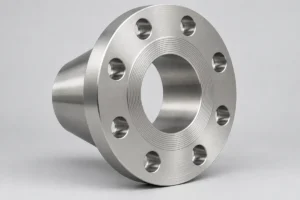
- ASTM A182 F904L weld neck flange, ASME B16.5, NPS 4, クラス 300, 上げられた顔, bore to match the specified pipe schedule
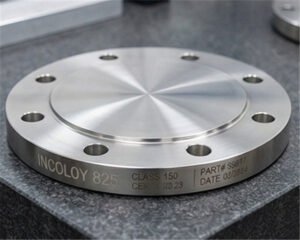
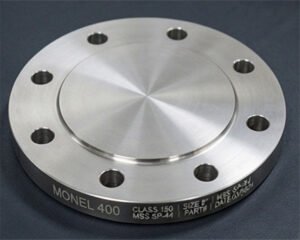
- ASTM A182 F904L blind flange, ASME B16.5, NPS 2, クラス 600, RF
- 904L plate or forged flange to EN 1092-1, with the applicable type and PN designation defined by the project
ASME B16.5 includes classes 150, 300, 400, 600, 900 そして 1500 適用可能なサイズ全体にわたって, クラス付き 2500 coverage over a more limited size range. The standard defines the geometry and rating framework; it does not remove the engineer’s responsibility to confirm material allowables and suitability under the governing piping code.
904L Flange Types, Facings and Joint Configuration
904L can be supplied in the flange configurations normally used in process piping. The correct form depends on pressure, 温度, パイプ壁, fatigue risk, installation method and maintenance philosophy.
- ウェルドネックフランジ: preferred for many critical, 高圧, cyclic or high-temperature services because the tapered hub provides a gradual load transition.
- スリップオンフランジ: may suit less severe systems where alignment and installation economy are priorities, subject to project-code limitations.
- ブラインドフランジ: closes piping ends, nozzles or inspection openings and must be checked carefully for pressure and bending loads.
- Socket-weld flange: used in selected small-bore systems, with attention to crevice and welding requirements.
- ねじ付きフランジ: avoids field welding in permitted services but is not appropriate for every corrosive or cyclic application.
- Lap-joint flange: can be paired with a suitable stub end where alignment, dismantling or alloy-cost strategy supports the design.
Common facings include raised face (RF), 平らな面 (FF) and ring-type joint (RTJ). 嵌合フランジ, gasket and bolting must be compatible with the facing. An RTJ designation, 例えば, requires the correct groove details and ring gasket material; it is not simply an alternative surface finish.
For weld neck flanges, the RFQ should identify the matching pipe schedule or exact bore. 交換作業のため, buyers should also check outside diameter, 厚さ, ボルトサークル, hole size, facing height and any nonstandard drilling before ordering.
Where 904L Flanges Are Commonly Considered
The strongest applications for 904L are those in which its specific corrosion behavior justifies the additional alloy cost and procurement control. Typical evaluation areas include chemical processing, fertilizer production, pulp and paper plants, pollution-control systems, pharmaceutical processing and selected marine or water-treatment duties.
Chemical and acid-processing systems
904L is associated with equipment handling selected sulfuric-acid conditions and other aggressive process streams. Concentration and temperature are decisive, so a general material label should never replace corrosion data for the actual process.
Pollution-control and flue-gas treatment
Wet scrubbers and related systems can combine chlorides, acidic condensate, deposits and fluctuating temperatures. Flange crevices and gasket interfaces must be included in the materials review.
パルプ, paper and fertilizer production
Process chemicals, wash liquors and contamination can create demanding corrosion conditions. Traceable materials and consistent surface handling are important where plant reliability depends on long maintenance intervals.
海兵隊, coastal and water-treatment service
904L may be considered for selected chloride-bearing environments, but seawater is not a single, simple condition. 温度, 生物活性, 預金, flow and crevice geometry affect risk. 二重, super duplex or nickel alloys may be more suitable in some seawater duties.
In every sector, compatibility between the flange, パイプ, weld metal, gasket and fasteners matters. Mixed-alloy joints can introduce galvanic or fabrication concerns that are not resolved by specifying a higher-alloy flange alone.
製造業, Testing and Documentation for F904L Flanges
Premium alloy procurement depends on traceability and manufacturing discipline. A correct marking is useful only when it can be connected to verified raw material, controlled processing and final inspection.
Important manufacturing and quality controls include:
- Approved raw material with heat-number traceability
- Controlled forging and solution heat treatment as required by the material specification
- Dedicated or thoroughly cleaned tooling to reduce iron contamination
- ボアのCNC加工, 直面している, hub and bolt pattern
- Dimensional inspection against the specified standard and drawing
- Positive material identification when required
- Visual inspection and project-specified liquid penetrant, ultrasonic or other NDE
- Mechanical and corrosion testing where required by the purchase specification
- Final cleaning, protected sealing faces and moisture-resistant export packing
For many international orders, の EN 10204 3.1 inspection certificate is requested. The certificate package should match the purchase order and preserve the relationship between heat number, test results, quantity and final product marking.
Buyers should define supplementary testing before quotation. Adding PMI, intergranular-corrosion testing, ultrasonic examination or third-party inspection after production can affect lead time and may not be technically equivalent to controls planned from the beginning.
How to Prepare a Complete 904L Flange RFQ
A clear RFQ reduces commercial assumptions and helps the manufacturer review manufacturability, raw-material availability and inspection scope. 少なくとも, provide:
- 材質の指定, のような ASTM A182 F904L / UNS N08904
- Flange type and nominal pipe size
- ASME class or EN PN designation
- Dimensional standard and required edition
- Facing type and surface-finish requirement
- パイプスケジュール, wall thickness or exact bore for weld neck flanges
- Quantity and any project drawing or special dimension
- 設計圧力, design temperature and service medium when technical review is requested
- PMI, 臨死体験, corrosion testing and third-party inspection requirements
- Certificate level, マーキング, 梱包と配送の要件
For welded assemblies, also identify the adjoining pipe grade and any project welding restrictions. Suitable filler metal, heat input, 清潔さ, interpass control and post-weld cleaning should be addressed by qualified welding procedures.
SASA FLANGE supports corrosion-resistant flange enquiries in standard and project-specific configurations. Review the wider flange product range, または send your 904L flange RFQ with the size, クラス, タイプ, quantity and document requirements for technical and commercial review.
Frequently Asked Questions About 904L Flanges
とは何ですか ASTM A182 F904L flange?
It is a forged or rolled piping flange specified in the 904L stainless steel grade commonly associated with UNS N08904. ASTM A182/A182M addresses the material requirements, while a dimensional standard such as ASME B16.5 defines flange geometry, class and related requirements.
Is 904L better than 316L for every corrosive service?
いいえ. 904L can provide improved resistance in selected acid and chloride conditions, but suitability depends on the exact medium, 集中, temperature and joint environment. In some services, デュプレックス, super duplex or a nickel alloy may be the more appropriate selection.
Which 904L flange types are available?
Common configurations include weld neck, スリッポン, 盲目, ソケット溶接, threaded and lap-joint flanges. Availability depends on size, クラス, 標準, raw-material route and project inspection requirements.
Can 904L flanges be supplied to ASME B16.5?
はい, when the selected material is permitted by the applicable code and the requested size and class fall within the standard’s scope. The order should state both the material specification and ASME B16.5 dimensional requirements.
What certificates should buyers request?
A typical order may require an EN 10204 3.1 証明書, chemical and mechanical results, 熱価トレーサビリティ, dimensional inspection and PMI records. Additional NDE or corrosion testing should be stated in the RFQ.
What information is needed for a quotation?
材料グレードを提供します, フランジタイプ, サイズ, クラスまたは PN, 寸法規格, 直面している, ボアまたはパイプのスケジュール, 量, テスト範囲, certificate level and delivery destination. Drawings should be included for nonstandard dimensions.
関連投稿
コメントはありません