説明
簡単な回答
インコネル 718 stud bolts use UNS N07718, a precipitation-hardened nickel alloy selected when high tensile and yield strength must be retained through a demanding temperature range. Strength depends on the specified solution and aging treatment, so heat-treatment condition, product size and mechanical tests are essential ordering data.
Product specifications
| 材質の指定 | Precipitation-hardening nickel-chromium Alloy 718; UNS N07718; W.Nr. 2.4668 |
|---|---|
| 材料 / bar reference | ASTM B637 bar and forging stock in the ordered solution-treated and aged condition |
| Finished fastener reference | ASTM F2281 for heat-resistant stainless and nickel-alloy fasteners, or the governing aerospace, energy or project specification |
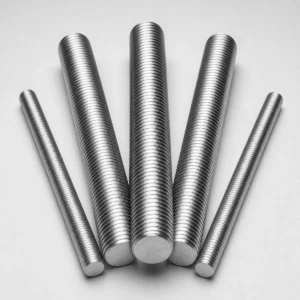
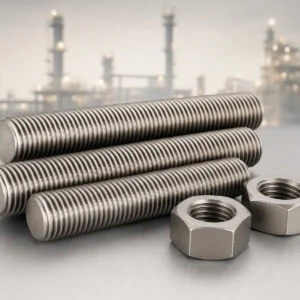
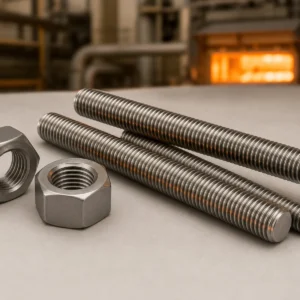
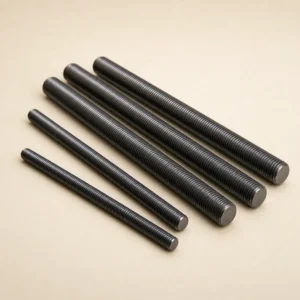
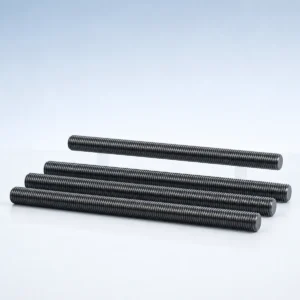
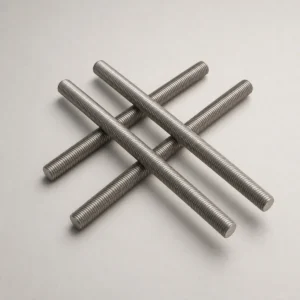
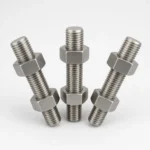
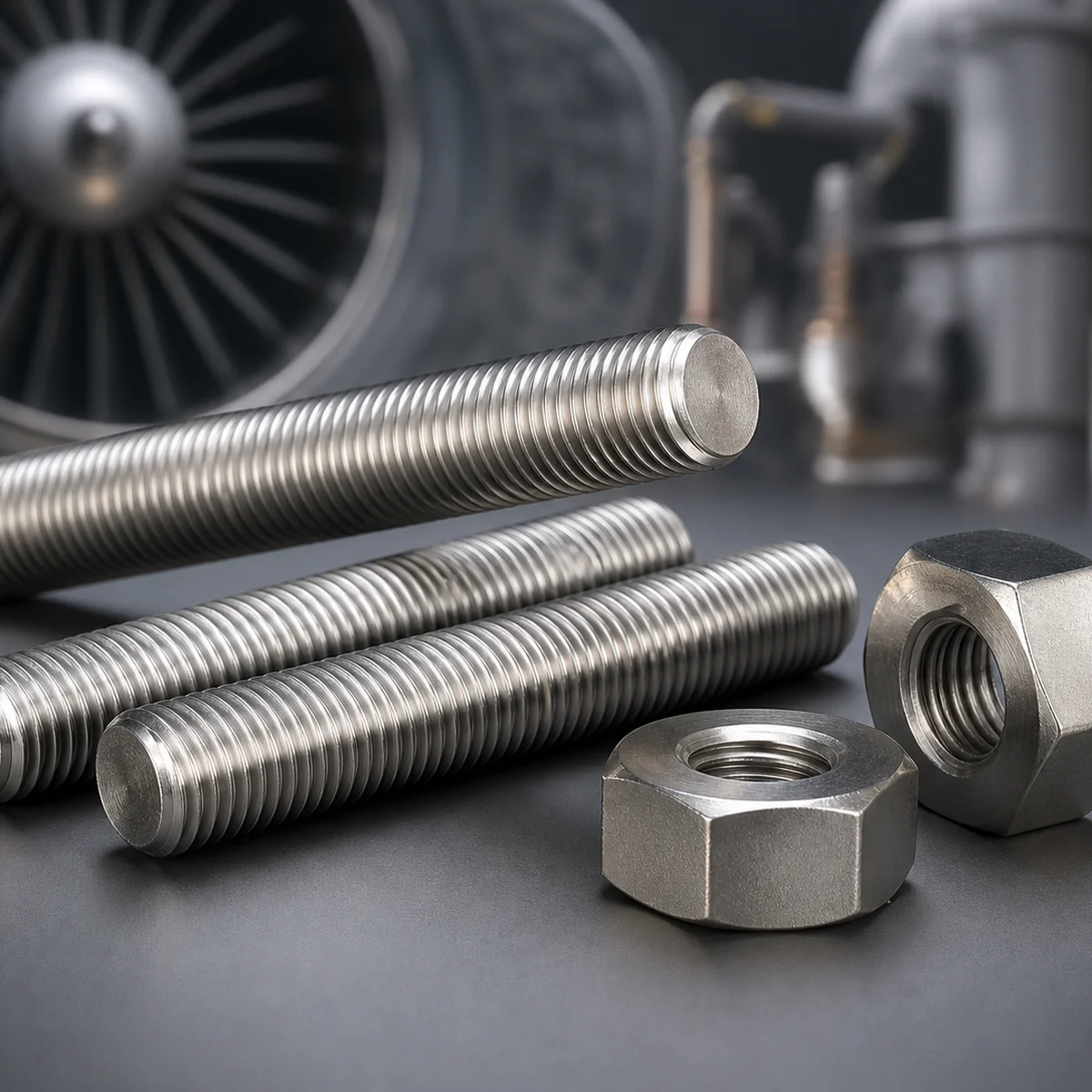
| Stud configuration | Fully threaded stud bolts; custom double-end details by approved drawing |
| Inch threads | UNC, UNF and 8UN to ASME B1.1 as specified |
| Metric threads | Coarse or fine metric threads to ASME B1.13M / ISO requirements as specified |
| 寸法 | Diameter and length to flange bolting schedule, ASME B18.31.2 reference or approved drawing |
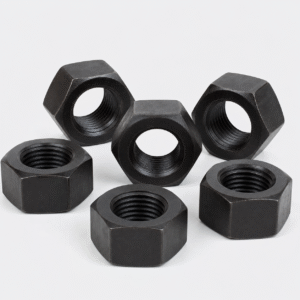
| マッチするナット | Compatible heavy hex or project-design nuts supplied after material and property review |
| ドキュメント | EN 10204 3.1 MTC, heat traceability and dimensional report; PMI/NDT/testing optional |
Why specify Inconel 718 スタッドボルト?
合金 718 is a strength-led choice for turbines, rotating equipment, power systems and other highly loaded connections. It should not be treated as a higher-strength version of every corrosion alloy: corrosion chemistry, 温度, relaxation, notch behavior and joining system must all be evaluated.
Corrosion resistance and material limits
The alloy provides useful corrosion and oxidation resistance in many environments, but it is usually selected for its precipitation-hardened strength. For severe reducing acids or stagnant seawater crevices, another alloy may offer a better corrosion match even if its strength is lower.
エンジニアリングノート: Material selection must be based on the complete process environment and governing design code. Product-page information is not a design allowable or a guarantee of service life.
Temperature and mechanical-property control
Mechanical properties depend strongly on solution treatment and aging cycle. The design engineer must specify the condition and use code-approved allowables for the actual temperature. Generic room-temperature test data are not a substitute for a bolted-joint calculation.
代表的な用途
- Gas turbines and power-generation equipment
- Aerospace engines and high-strength fixtures
- Oilfield and downhole equipment
- High-temperature process and pressure equipment
- Cryogenic and high-load engineered connections
基準, threads and flange fit-up
The material specification controls alloy chemistry, 製品形態, heat treatment and mechanical tests. The finished-fastener specification controls stud manufacture and acceptance. The flange standard or bolting schedule controls diameter, thread and length. These documents perform different jobs and should all be identified at order review.
Cut threads and rolled threads can produce different dimensional, surface and residual-stress characteristics. State the required manufacturing method when it is a design requirement. Thread fit, end chamfers, nut engagement and exposed thread allowance must match the assembly procedure.
マッチするナット, lubrication and galling control
High-alloy studs should be purchased as part of an engineered bolting system. Nut material and proof strength must support the specified stud properties without creating an unacceptable corrosion couple. Clean threads, controlled surface finish and an approved lubricant reduce galling and torque scatter.
Torque values are not universal. Friction coefficient, coating or lubricant, nut condition, tightening sequence and reuse policy all affect achieved preload. Use a project-approved torque-tension or hydraulic-tensioning procedure.
製造業, 検査と文書化
Production can include material verification, sawing, 準備を終える, thread machining or rolling, クリーニング, dimensional inspection and permanent identification. Heat numbers remain traceable through manufacturing. Additional controls can include PMI, 硬度, tensile tests, impact tests, microstructure examination, corrosion testing, ultrasonic testing or dye penetrant testing when specified.
Inspection documents should identify the ordered UNS grade, material specification and condition—not only a trade name. 第三者による検査, EN 10204 3.2 certification and customer hold points can be incorporated before production when agreed.
What to include in your RFQ
Define ASTM B637 状態, heat-treatment cycle or governing fastener specification, room/elevated-temperature tests, 硬度, thread method, stress-relief restrictions, nut system, NDT, PMI and traceability.
- Exact UNS designation and governing material specification/edition
- Finished-fastener and dimensional standard
- 直径, スレッドシリーズ, pitch and overall length
- Required material condition and mechanical properties
- Nut and washer material, dimensions and quantity
- 設計温度, process environment and special service standard
- テスト, 検査, traceability and certificate type
- Lubrication, コーティング, マーキング, packing and delivery requirements
Authoritative material reference
Review Special Metals INCONEL alloy 718 technical data together with the contractually required ASTM/ASME/ISO editions. Manufacturer literature supports material screening; the purchase order and governing code control supply.
Related stud bolt materials
よくある質問
Why is heat treatment critical for Alloy 718 studs?
The alloy develops high strength through controlled solution treatment and aging. A different condition can produce different properties and must not be assumed equivalent.
缶合金 718 replace Alloy 625?
自動的ではありません. 718 usually provides higher strength, その間 625 may be preferred for particular corrosion conditions or fabrication requirements.
Can threads be rolled after aging?
Thread manufacturing sequence affects properties and residual stress. State the governing specification and required sequence so manufacturing can be reviewed before production.
What test reports can be supplied?
EN 10204 3.1 MTCs, heat-treatment records, 機械的試験, 硬度, 寸法, PMI and agreed NDT can be supplied as required by the order.
Trade names are used for material identification. INCONEL®, INCOLOY® and MONEL® are trademarks of Special Metals Corporation; HASTELLOY® is a trademark of Haynes International, Inc. SASA FLANGE supplies products to the specifications stated on the accepted order.