
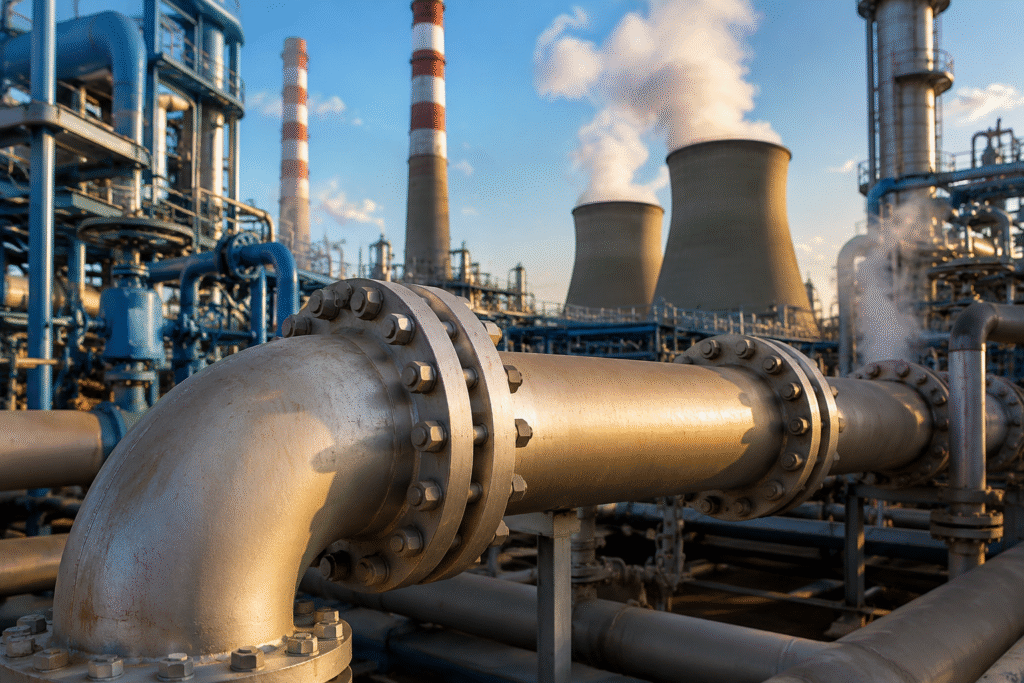
ステンレス鋼管フランジ市場ガイド: 7 データポイント, 隠れた利点, 種類, 用途, と選び方
産業プロジェクトが耐久性を重視する中、ステンレス鋼管フランジの需要は増加し続けています, 耐食性, とライフサイクル価値. グランドビューリサーチによると (2024), 世界の工業用フランジ市場は次のように評価されました。 $5.8 億で 2023 に達すると予測されています $7.2 10億まで 2030, which makes stainless steel pipe flange selection a strategic procurement decision.
エンジニアとバイヤー向け, the most intriguing factor is not only price. It is the hidden advantages of material grade, 圧力定格, 寸法コンプライアンス, and long-term maintenance performance across oil and gas, 石油化学, 海洋, および電源アプリケーション.
Why stainless steel pipe flange demand is rising in global industry
Industrial buyers now evaluate flanges with a total-cost perspective rather than a simple unit-price comparison. 結果として, ステンレス, デュプレックス, ニッケル合金, and specialty steel flange solutions are gaining share in corrosive and high-temperature service.
IBISWorldによると (2024), アジア太平洋地域が占める割合は超過 45% 世界のフランジ生産量の, 中国が最大の製造国である. したがって, sourcing strategy increasingly focuses on quality-certified manufacturers that can combine scale, トレーサビリティ, および輸出コンプライアンス.
統計局によると (2024), 石油・ガス産業が約 35% 世界のフランジ消費量の. This high share explains why ASME pressure classes, ASTM 材料グレード, NACE requirements, and EN inspection documentation remain central in almost every serious RFQ.
加えて, water treatment and marine sectors are expanding their use of 316L, 2205, そして 2507 flange products because chloride attack remains a major reliability risk. モルドール情報局によると (2024), corrosion-related maintenance can represent a significant share of unplanned industrial shutdown cost in process industries.
That market reality changes how engineers choose pipe flanges. Instead of asking only which flange fits, buyers now ask which flange grade, 直面している, スケジュールマッチ, and test documents reduce operating risk over 10 に 20 年.
ASME B16.5 remains the primary dimensional standard for pipe flanges up to NPS 24, その間 ASME B16.47 より大きな直径をカバーします (ASME, 2023). ASTM A182 is widely used for forged stainless steel flanges, とEN 1092 remains essential for many European projects.
These standards matter because interchangeability affects construction speed and leak integrity. Even a small dimensional mismatch at raised face height, ボルトサークル, or bore tolerance can delay site installation and increase rework cost.
For global EPC contractors, supplier capability is as important as the product itself. SASA FLANGE このニーズをサポートする ISO 9001:2015, PED 2014/68/EU, とAD 2000 資格, フランジの製造中 304, 316, 316l, 904l, 2205, 2507, A105, A182, インコネル, モネル, ハステロイ, とチタン.
さらに, buyers increasingly expect one source for both flange and fitting packages. That is why integrated suppliers offering elbows, ティー, 減速機, and caps alongside flange products can shorten procurement cycles and simplify quality documentation.
マーケットリサーチの将来によると (2024), infrastructure modernization and energy investment continue to support steady growth in industrial piping components worldwide. その結果, the versatility of stainless steel flanges becomes more relevant where projects must balance corrosion resistance, 規範への準拠, and predictable delivery schedules.
ステンレス鋼製管フランジの種類, 材料グレード, そして隠れた利点
There are several flange types, yet their suitability depends on service conditions more than simple familiarity. The most common Types include weld neck, スリップオン, 盲目, ソケット溶接, ラップジョイント, and threaded Flanges, and each Flange design has different stress behavior.
ジョン・ブリーン役, 上級配管エンジニア, 州: “The best flange is rarely the cheapest flange; it is the design that matches pressure, 温度, 腐食プロファイル, and inspection requirements with the lowest lifetime failure risk.” This view reflects standard engineering practice in critical line classes.
ウェルドネック フランジは、テーパー付きハブにより応力分散が改善されるため、高圧および周期的なサービスに推奨されます。. Slip on flange products cost less to install initially, however they generally offer lower fatigue resistance than weld neck designs.
Blind flanges seal the end of a line, ノズル, または容器の開口部. Socket weld flanges suit small-bore, 高圧配管, while threaded designs are useful where welding must be avoided.
- 溶接ネックフランジ: 高圧に最適, 高温, そして厳しいサービス.
- スリップオンフランジ: economical for low to medium pressure lines and easier alignment.
- ブラインドフランジ: 隔離に使用される, メンテナンス, and hydrotest closure.
- ソケット溶接フランジ: common for small-bore systems requiring strong bore support.
- ねじ付きフランジ: 溶接が制限されている場合、または現場での組み立てを簡素化する必要がある場合に適しています.
- ラップジョイントフランジ: useful where frequent dismantling and alignment flexibility are required.
素材の選択も同様に重要です. ASTM A182 F304 and F304L remain the most widely specified stainless steel grades for general industrial service because they offer strong corrosion resistance and competitive cost.
ASTM A182 F316 and F316L provide better resistance to chlorides and many aggressive process chemicals due to molybdenum addition. したがって, 316L often becomes the default Choose option in marine piping, オフショアスキッド, 淡水化システム, および化学物質移送ライン.
For severe conditions, 904l, デュプレックス 2205, そしてスーパーデュプレックス 2507 deliver higher pitting resistance and stronger mechanical performance. According to NACE guidance and chloride service practice, duplex materials are often selected when 316L approaches its corrosion limit in seawater or high-chloride process media.
According to ASTM and industry specification practice, low-carbon grades such as 304L and 316L reduce the risk of sensitization after welding (ASTM, 2023). 結果として, they are widely used in fabricated piping systems that require post-fabrication corrosion reliability.
Surface facing also affects sealing. 盛り上がった顔, 平らな面, RTJ, and tongue-and-groove configurations must match gasket type, 圧力クラス, and mating flange arrangement to avoid leakage.
- 304/304l: general process lines, 食品グレードのサービス, mild chemical duty.
- 316/316l: 海洋, 塩化物, 医薬品, 水処理, オフショア.
- 904l: stronger resistance in acidic and chloride-rich environments.
- 2205 二重: 強度が高く、耐塩化物応力腐食性が向上.
- 2507 スーパーデュプレックス: aggressive offshore and subsea service.
- ニッケル合金: extreme temperature and corrosive chemical processing.
According to ISO and PED documentation practices, 材料のトレーサビリティ, PMI, 水圧試験の記録, そして EN 10204 3.1 certificates are often mandatory for project approval (ISO, 2023). That is why procurement teams should review more than dimensions and price.
博士として. エレナ・モリス, 材料科学者, 州: “Corrosion allowance is not a substitute for correct alloy selection, 特に塩化物の場合, 温度サイクル, and crevice geometry combine.” Her point is especially relevant for compact flange layouts and insulated outdoor piping.
The hidden Advantages of a correctly selected stainless steel pipe flange include reduced gasket failures, fewer shutdowns, 交換頻度を下げる, and easier audit compliance. 対照的に, an under-specified Flange may create leakage, ボルトの緩み, or unexpected corrosion within only a few operating cycles.
SASA FLANGE supports standard and custom manufacturing from 1/2 インチから 60 インチ, with competitive factory-direct pricing and advanced CNC machining. 包括的な品質テストによる裏付け, the company supplies stainless, 炭素鋼, 合金, and high-performance grades for projects in more than 50 国.
For buyers comparing stainless steel flange 2 インチ, 4 インチステンレス鋼管フランジ, or large-diameter ASME B16.47 アセンブリ, schedule matching is essential. Bore alignment between the flange and Pipe must match wall thickness to maintain flow profile and weld integrity.
基準, コンプライアンス, and inspection requirements for industrial pipe flanges
Compliance is not an administrative step. It is the framework that determines whether a Flange can be accepted for pressure service, exported to regulated markets, and installed without project delay.
ASME B16.5 寸法を定義します, 公差, 圧力温度定格, フェーシング, フランジおよびフランジ付き継手のマーキング要件. ASME B16.47 extends this coverage to larger sizes, その間 ASME B16.9 governs many butt weld fittings used in the same line classes (ASME, 2023).
ASTM standards control material chemistry and mechanical properties. ASTM A182 鍛造または圧延合金およびステンレス鋼の管フランジをカバーします。, 鍛造継手, および高温用バルブ, その間 ASTM A240 addresses plate products often used for some flange manufacturing routes.
European projects commonly reference EN 1092, PED 2014/68/EU, とAD 2000. さらに, DIN and JIS standards remain relevant when projects require regional interchangeability or legacy plant compatibility.
For sour service and upstream applications, NACE MR0175 または ISO 15156 may apply depending on line medium and project specification. したがって, flange selection must align with the corrosion mechanism, 硬度限界, and metallurgical restrictions defined in the full piping class.
- ASME B16.5: dimensions and pressure classes for NPS 1/2 を通して 24.
- ASME B16.47: large-diameter flange dimensions.
- ASTM A182: forged stainless and alloy steel flange material specification.
- ASME B16.9: butt weld fittings used with flange-connected systems.
- EN 1092: ヨーロッパのフランジ寸法と圧力指定.
- NACE MR0175 / ISO 15156: material requirements for H2S-containing service.
According to DNV and offshore quality practice, documentation gaps are one of the most common causes of package approval delays in marine and energy projects (DNV, 2024). 結果として, leading buyers request MTCs, 熱数トレーサビリティ, 寸法検査報告書, PMI記録, and sometimes ferrite or hardness testing.
Inspection scope varies by industry. Oil and gas projects may request RT, ユタ州, PT, or PMI on selected items, while pharmaceutical or ultra-clean service may focus more on surface finish, 清潔さ, and passivation control.
The following comparison helps engineers align standards with practical procurement needs.
- 石油とガス: ASME, ASTM, API, ネイス, EN 10204 3.1, PMI, hardness review.
- 石油化学: ASME B16.5, ASTM A182, corrosion test review, トレーサビリティ.
- 発電: high-temperature alloy verification, mechanical test records, 寸法検査.
- Marine and Water Treatment: 316l, 2205, 2507, chloride-focused grade selection, PED or class documentation where required.
と ISO 9001:2015 および PED 2014/68/EU 認証, SASA FLANGE is positioned to support buyers that need export-ready documentation and controlled manufacturing quality. This is particularly important when a project combines stainless steel flanges and fittings across multiple size ranges and pressure classes.
Engineers should also verify flange marking and packaging standards. Clear heat number traceability, pressure class marking, grade identification, and corrosion-protective packing reduce receiving errors and site confusion.
For authoritative technical reference, buyers should review current standards directly from ASME. That extra step helps avoid using obsolete tables or non-conforming dimensions copied from outdated catalogs.
How to choose stainless steel pipe flange for oil, ガス, 化学薬品, 力, および海洋システム
How should buyers Choose the right stainless steel pipe flange? The answer starts with process data, then moves through standards, 材料の適合性, 幾何学, とサプライヤーの能力.
石油とガスにおいて, pressure class and corrosion environment usually drive the first decision. 統計局によると (2024), this industry consumes about 35% グローバルフランジ体積の, so line class discipline is especially mature in upstream, 中流, and refinery applications.
For hydrocarbon service with moderate corrosion, 304 または 316 grades may be sufficient in utility and non-critical systems. しかし, 塩化物への曝露, 酸っぱい状態, or offshore atmosphere often shift the specification toward 316L, 2205, または 2507, depending on project engineering rules.
石油化学プラント内, temperature cycling and chemical exposure often make weld neck designs the preferred option. Their geometry better supports fatigue resistance at the hub-to-pipe transition, especially in pumps, コンプレッサー, and hot process headers.
Power generation systems require close attention to temperature and pressure. Higher operating temperature may also require alloy selection beyond standard stainless, particularly in superheated steam, aggressive condensate, or flue gas treatment systems.
Marine and shipbuilding users focus heavily on chloride attack and maintenance access. したがって, 316l, デュプレックス 2205, そしてスーパーデュプレックス 2507 frequently outperform lower-alloy grades in seawater and splash-zone environments.
- Check design pressure and temperature against ASME class ratings.
- Match flange bore to pipe schedule and wall thickness.
- Confirm corrosion resistance for chlorides, 酸, H2S, or mixed media.
- Choose facing type to match gasket and mating flange.
- Review weldability, 検査の必要性, and heat treatment requirements.
- リクエスト EN 10204 3.1 certification and traceability for critical service.
- Verify dimensions to ASME, DIN, JIS, ゴスト, or EN standards as required.
Procurement teams also compare delivery capability. A supplier that can produce flanges, 肘, ティー, 減速機, and caps under one QA system can reduce interface risk and simplify vendor approval.
This is where supplier depth matters. SASA FLANGE からのカスタムサイズを提供します 1/2 インチから 60 インチ, 油を供給します & ガス, 石油化学, 力, 海兵隊, および水処理部門, and supports material options from 304 and 316L to Inconel, モネル, ハステロイ, とチタン.
The most practical buying process includes a technical bid tab. Compare not only unit cost, but also lead time, テスト範囲, compliance documents, 梱包方法, and ability to support urgent revisions.
マーク・エリソン役, 産業市場アナリスト, 州: “Reliable flange procurement is about consistency under specification pressure, because one missing certificate can hold an entire piping package.” That is why disciplined RFQ preparation improves both schedule and cost control.
For projects searching stainless steel pipe flange for sale or stainless steel pipe flange price, the best approach is to define service conditions first. Then request a quote based on exact grade, 標準, サイズ, 圧力クラス, 直面している, 量, and required documents.
Future outlook for stainless steel flanges and strategic sourcing recommendations
市場の見通しは引き続き明るい, especially where energy, インフラストラクチャー, and water investment continue. グランドビューリサーチによると (2024), the flange market is expected to expand from $5.8 億で 2023 に $7.2 10億まで 2030, which reflects sustained demand for engineered connection components.
同時に, material expectations are rising. Buyers increasingly prefer suppliers that can deliver stainless, デュプレックス, and nickel alloy flange packages with short lead times and auditable quality systems.
IBISWorldによると (2024), 中国は依然として地域内で最大の製造拠点であり、 45% 世界生産量の. したがって, global buyers should combine cost competitiveness with rigorous supplier qualification, document review, and pre-shipment inspection.
デジタル調達も市場を変える. Engineers now expect fast access to drawings, MTC, PMI記録, and dimensional data, not just a basic product list or generic Flange catalogue.
将来を見据えて, the most intriguing opportunity lies in lifecycle optimization. Projects that Choose the correct stainless steel pipe flange grade early often reduce maintenance events, improve shutdown planning, and gain better spare-part standardization.
戦略的に, buyers should standardize approved material lists for common media, maintain a dimensional matrix for ASME and EN applications, and prequalify suppliers with proven export documentation capability. さらに, they should align flange sourcing with fitting packages to reduce mismatch risk at installation.
For companies evaluating long-term sourcing partners, consistent compliance, flexible manufacturing, and responsive technical support matter more than headline price alone. For specific dimensional, 材料, or documentation requirements, 連絡する SASA FLANGE can help procurement teams shorten bid cycles and improve specification clarity.
よくある質問
ステンレス鋼フランジにはどのような種類がありますか?
●ステンレス鋼フランジの主なタイプはウェルドネックです。, スリップオン, 盲目, ソケット溶接, ねじ切りされた, そしてラップジョイント, そして ASME B16.5 defines the dimensional framework for most standard sizes.
●Weld neck designs are usually chosen for high-pressure and cyclic service, while slip on flange products are common in lower-pressure systems because they simplify alignment and fabrication.
●For projects requiring exact type selection, のような確立されたメーカーと協力する SASA FLANGE helps ensure the flange style matches pressure class, 直面している, 材質グレード, 及び検査範囲.
どちらが良いですか 304 または 420 ステンレス鋼?
●For most pipe flange applications, 304 stainless steel is better than 420 なぜなら 304 offers stronger corrosion resistance and is widely used under ASTM A182 and related industrial specifications.
●学年 420 has higher hardness after heat treatment, but it is less suitable for many corrosive piping environments, especially where moisture, 化学薬品, または塩化物が存在する.
●If the application involves flange connections, process media, or outdoor service, engineers usually recommend 304, 316, or duplex grades rather than 420, そして SASA FLANGE can assist with grade confirmation.
ステンレス鋼を最も多く使用している産業は何ですか?
●The oil and gas industry is one of the largest users of industrial flanges, そしてStatistaによると (2024), それはおよそを占めます 35% 世界のフランジ消費量の.
●Stainless steel is also heavily used in petrochemical, 水処理, 海洋, 食品加工, and pharmaceutical plants because corrosion resistance and hygiene performance are critical.
●When specifying flange material for these industries, buyers should evaluate chloride exposure, 温度, cleaning cycles, and documentation requirements before selecting 304, 316l, 2205, or higher-alloy options.
3種類のフランジとは何ですか?
●The three most commonly referenced flange types in basic industrial discussions are weld neck, スリップオン, and blind flanges because they cover many pressure, インストール, and isolation needs.
●Weld neck flange designs support severe service, slip on flange products are cost-effective for simpler systems, and blind flanges are used to close or isolate the end of a piping run.
●Although these three are common, a complete specification should also consider socket weld, ねじ切りされた, and lap joint types so the final connection suits the actual process condition.
ステンレス鋼管フランジの価格に影響を与えるもの?
●Stainless steel pipe flange price mainly depends on raw material grade, フランジタイプ, サイズ, 圧力クラス, 直面している, テスト要件, そして注文量, and duplex or nickel alloy options usually cost more than 304 または316L.
●グランドビューリサーチによると (2024), 産業用フランジ市場に到達 $5.8 億で 2023, which reflects strong demand and explains why alloy volatility and delivery schedules can influence quotations.
●The best way to get an accurate price is to submit the exact standard, サイズ, クラス, 材料, 量, and documentation requirement to a qualified manufacturer rather than relying on generic online listings.
How do I choose a flange manufacturer for API and industrial projects?
●A good flange manufacturer should demonstrate ISO 9001:2015 品質管理, 追跡可能な原材料, compliance with ASME and ASTM standards, and the ability to provide EN 10204 3.1 必要な場合の証明書.
●IBISWorldによると (2024), アジア太平洋地域が占める割合は超過 45% 世界のフランジ生産量の, so manufacturer selection should focus on verified capability instead of region alone.
●For API-related and industrial sourcing, buyers should compare manufacturing range, テスト範囲, 輸出書類, 配送の信頼性, and technical response speed before approving a supplier.
関連投稿

オリフィスフランジの定義, 詳細と ASME B16.36 フランジの概要: 市場データ, 選択ガイドとコンプライアンスに関する洞察
世界の工業用フランジ市場は次のように評価されました。 $5.8 十億…

ブラックディスポフランジ市場ガイド: 材料, 3.5″ 互換性, キッチン シンク フランジの B2B 調達データ
キッチン設備の購入者として黒色の使い捨てフランジの需要が高まっています…