
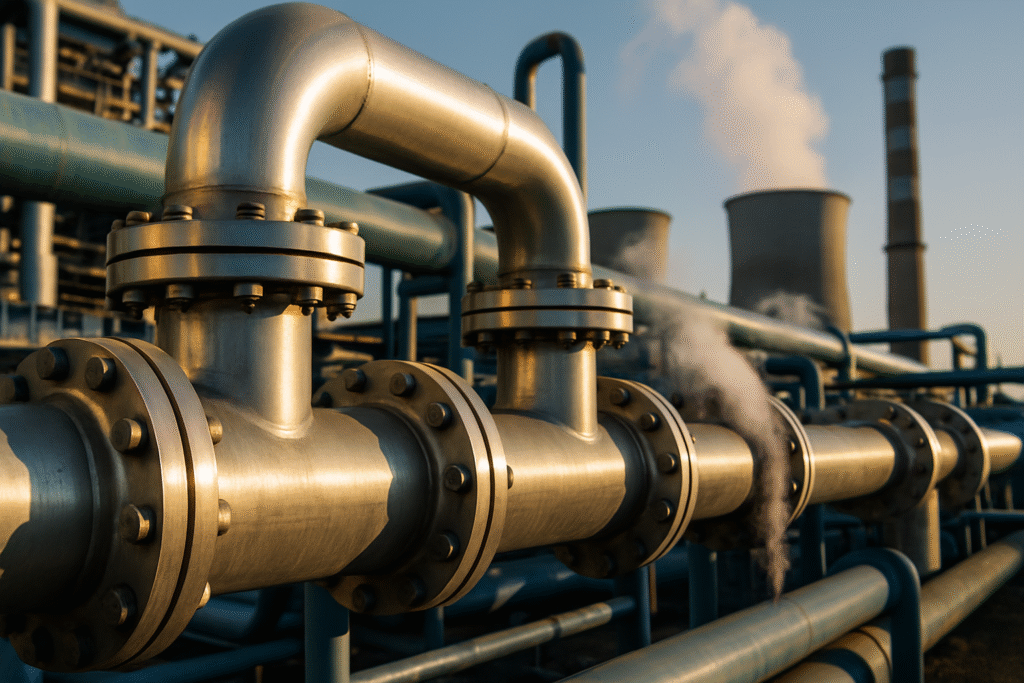
Mercado de flanges de tubos de aço inoxidável por US$ 5,8 bilhões: Vantagens ocultas, Tipos, Usos, e como escolher flanges
De acordo com a pesquisa Grand View (2024), o mercado global de flanges industriais foi avaliado em $5.8 bilhão em 2023 e está projetado para atingir $7.2 bilhão por 2030. That growth highlights why stainless steel pipe flange selection has become a strategic decision for engineers, Empreiteiros EPC, and industrial buyers managing corrosion, temperatura, e custo do ciclo de vida.
For industrial systems, the intriguing value of Stainless Steel Hidden Advantages lies in durability, limpeza, e integridade da pressão. Além disso, the right Steel flange design improves safety, reduces leakage risk, and supports long-term Pipe system reliability across demanding applications.
Industrial Demand for Stainless Steel Pipe Flange Solutions Is Rising Across Global Applications
De acordo com IBISWorld (2024), Ásia-Pacífico é responsável por mais de 45% da produção global de flanges, sendo a China o maior fabricante. Portanto, procurement teams increasingly compare regional manufacturing capabilities, certification strength, and lead-time performance before approving stainless steel pipe flange suppliers.
De acordo com Statista (2024), a indústria de petróleo e gás é responsável por aproximadamente 35% do consumo global de flanges. That figure is significant because upstream, meio do caminho, and downstream assets all require high-integrity flange joints for pressure-containing service.
Em paralelo, tratamento de água, construção naval, geração de energia, and petrochemical projects continue to expand their use of Stainless and alloy Flanges. Como resultado, buyers now expect broader material availability, de 304 e 316L para duplex 2205, superduplex 2507, 904eu, Inconel, Monel, Hastelloy, e titânio.
De acordo com a Inteligência Mordor (2024), global investment in industrial process infrastructure remains strong in energy transition and water sectors. Consequentemente, demand for stainless steel pipe flange products is shifting toward corrosion-resistant grades that can lower maintenance frequency and extend operating life.
Material selection also reflects operating media and temperature. Por exemplo, 304 and 304L remain common for general service, enquanto 316 and 316L are often preferred for chloride exposure, atmosferas marinhas, e manuseio agressivo de produtos químicos.
For elevated temperature service, engineers may specify stabilized or heat-resistant grades such as 321, 347, or higher alloy materials. Em contraste, duplex grades like 2205 can provide a valuable balance of strength and pitting resistance in offshore and process applications.
Como [Dr.. Helen Morris], Engenheiro de Materiais, estados: “Flange reliability is not determined by alloy alone; it depends on the full interaction between material grade, classe de pressão, acabamento frontal, aparafusamento, and service environment.” That point matters because many failures originate from poor specification alignment rather than from obvious manufacturing defects.
Hoje, B2B buyers need more than a price list. They need traceability, precisão dimensional, conformidade da classe de pressão, EN 10204 3.1 documentação, and confidence that the supplier understands ASME, ASTM, DIN, JIS, GOST, e requisitos EN.
SASA FLANGE supports that expectation with ISO 9001:2015 e certificações PED 2014/68/EU, broad export experience, and manufacturing coverage across stainless steel flanges, flanges de aço carbono, flanges de liga, e acessórios para tubos. Adicionalmente, a empresa atende Petróleo & Gás, Petroquímica, Geração de energia, Construção naval & Marinho, Tratamento de Água, and Construction sectors in more than 50 países.
For procurement teams comparing Flanges? by lifecycle value, supplier capability matters as much as metallurgy. Portanto, buyers should evaluate machining accuracy, Disponibilidade do PMI, suporte para hidroteste, controle de marcação, and documentation discipline before issuing a final PO.
Technical Insights on Stainless Steel Pipe Flange Types, Avaliações, e vantagens ocultas
The most important step in choosing stainless steel pipe flange products is matching type, material, and pressure class to the service condition. No entanto, many buyers still focus on unit price first, even though rework, tempo de inatividade, and leakage costs often far exceed the initial component cost.
De acordo com a Pesquisa de Mercado Futuro (2024), industrial process operators are prioritizing components that reduce maintenance and unplanned shutdown risk. Portanto, the Hidden Advantages of premium Stainless Steel flanges include lower corrosion-related replacement frequency, better cleanability, and stronger value in critical applications.
De acordo com ASME B16.5, dimensões padrão do flange, enfrentando, perfuração, and pressure-temperature ratings vary by class and material group (ASME, 2023). Como resultado, uma aula 150 flange and a Class 600 flange may share nominal pipe size but perform very differently under pressure and temperature loads.
Como [Michael Trento], Engenheiro de Tubulação Sênior, estados: “Selecting the wrong facing or pressure class can negate the benefits of even the best alloy.” That is why experienced sourcing teams review gasket compatibility, acabamento de flange, carga do parafuso, and thermal cycling conditions together.
Os tipos e usos comuns de flange de tubo de aço inoxidável incluem o seguinte:
- Weld neck flanges for high-pressure and high-temperature service requiring strong stress distribution.
- Slip-on flanges for moderate service where easier alignment and lower installed cost are priorities.
- Blind flanges for end closures, system isolation, and hydrostatic test points.
- Socket weld flanges for smaller bore, sistemas de tubulação de alta pressão.
- Threaded flanges for low-pressure systems where welding is undesirable.
- Lap joint flanges for systems needing frequent dismantling or alignment flexibility.
In many refinery and chemical applications, 316L is specified because molybdenum improves resistance to pitting and crevice corrosion. Em contraste, 304L often remains a cost-effective option for non-chloride environments and general industrial service.
Dúplex 2205 deserves special attention for offshore, dessalinização, and chloride-bearing media. De acordo com as orientações da NACE, duplex stainless steels can offer improved chloride stress corrosion cracking resistance compared with common austenitic grades in suitable conditions (NACE, 2023).
Pressure performance depends on more than alloy choice. It also depends on flange standard, espessura da parede, temperatura de projeto, tipo de revestimento, and bolting system. Portanto, buyers asking about stainless steel pipe flange sizes or 4 inch stainless steel pipe flange options should always specify NPS, agendar, classe de pressão, enfrentando, and standard together.
Typical specification points include:
- Padrões: ANSI B16.5, ANSI B16.47, EN 1092-1, DIN, JIS, GOST.
- Materiais: ASTM A182 F304, F304L, F316, F316L, F904L, F51, F53, Titânio, ligas de níquel.
- Aulas de pressão: 150, 300, 600, 900, 1500, 2500.
- Opções de enfrentamento: RF, FF, RTJ.
- Faixa de tamanho: 1/2 polegada para 60 polegada, depending on type and standard.
- Documentos de inspeção: EN 10204 3.1, PMI, relatórios dimensionais, dureza, NDE as required.
According to ASTM material specifications, forged stainless steel flanges commonly fall under ASTM A182, while plate products often reference ASTM A240 (ASTM, 2024). Além disso, acessórios como cotovelos, camisetas, redutores, and caps often follow ASME B16.9 para dimensões e tolerâncias.
SASA FLANGE fabrica flanges em 304, 316, 316eu, 904eu, 2205, 2507, A105, A182, Inconel, Monel, Hastelloy, and Titanium for global industrial projects. Apoiado por usinagem CNC avançada e testes de qualidade abrangentes, the company supports standard and custom orders with factory-direct pricing and export documentation.
For buyers evaluating stainless steel flange types, it is practical to compare not just material cost but installed performance. A slightly higher-grade flange may reduce gasket failures, cut maintenance intervals, and improve total cost of ownership over years of continuous operation.
Além disso, lead time and dimensional consistency affect project execution. Portanto, working with an established manufacturer such as SASA FLANGE can simplify sourcing for mixed-material packages that include flanges plus elbows, camisetas, redutores, e bonés.
ASME, ASTM, DIN, e normas EN que regem a conformidade de flanges de tubos de aço inoxidável
Industrial flange purchasing should begin with standards compliance, not only with catalog dimensions. That approach reduces mismatch risk, supports inspection planning, and protects system integrity during commissioning and operation.
The most frequently referenced standard for many imperial flange dimensions is ASME B16.5. Abrange dimensões, tolerâncias, classificações de pressão-temperatura, marcação, and materials for flanges and flanged fittings within specified size ranges (ASME, 2023).
Para diâmetros maiores, os compradores geralmente especificam ASME B16.47. In Europe and international projects, EN 1092-1 and DIN flange standards are also common, especially where project specifications, Conformidade com PED, or legacy equipment require those systems.
Material and manufacturing standards remain equally important. ASTM A182 governs forged or rolled alloy and stainless steel pipe flanges, acessórios forjados, e válvulas para serviço em alta temperatura, enquanto ASTM A240 covers chromium and chromium-nickel stainless steel plate, folha, e tira (ASTM, 2024).
Para serviço corrosivo, procurement teams should also review NACE requirements where sour service or corrosion cracking risk exists. Além disso, PED 2014/68/EU may apply for pressure equipment entering the European market, making traceability and documentation non-negotiable.
Uma lista de verificação prática de conformidade inclui:
- Dimensional standard confirmation, como ASME B16.5 ou PT 1092-1.
- Material specification confirmation, como ASTM A182 F316L.
- Pressure class or PN rating verification at design temperature.
- Facing type and gasket compatibility review.
- Heat number traceability and marking inspection.
- Mill test certificate and EN 10204 3.1 documentação.
- PMI opcional, testes de ferrite, dureza, or NDE for critical service.
De acordo com as orientações de gestão de qualidade ISO, consistent process control reduces quality variability and strengthens customer confidence (ISO, 2024). That is one reason international buyers often prefer suppliers with audited systems and documented inspection workflows.
SASA FLANGE opera com ISO 9001:2015, PED 2014/68/EU, e ANÚNCIO 2000 credenciais, which are highly relevant for regulated export projects. Além disso, the company can support custom manufacturing for sizes from 1/2 polegada para 60 polegada, incluindo RF, FF, and RTJ facings across multiple standards.
For buyers balancing cost and compliance, documentation quality should not be treated as an afterthought. Na verdade, incomplete test records can delay project approvals more than minor price differences ever will.
That is especially true in Oil & Gás, Poder, and Marine work, where class societies, EPCs, and end users often perform rigorous material verification. Portanto, flange sourcing should align with both the technical datasheet and the project ITP from the start.
Como escolher flanges para óleo, Gás, Químico, Poder, Marinho, and Water Applications
A escolha do flange de tubo de aço inoxidável correto requer uma abordagem baseada em serviços. Buyers should begin with fluid type, nível de cloreto, temperatura, pressão, tolerância à corrosão, code requirement, e acesso para manutenção.
Para petróleo & Gas systems, weld neck flanges are frequently preferred for high-pressure lines, separadores, e tubulação de processo. Their geometry improves stress transition, which helps under cyclic loads and elevated temperatures.
In petrochemical and chemical processing plants, 316eu, 904eu, and higher alloys often become necessary as media aggressiveness increases. Além disso, gasket chemistry and bolt material must match the corrosion environment to avoid weak points in the assembly.
Para geração de energia, steam conditions and temperature drive the selection. Aço carbono, liga de aço, or stainless may all be appropriate depending on pressure rating, oxidation risk, and code design limits.
Marine and shipbuilding systems often face salt spray and chloride exposure. Portanto, 316eu, duplex 2205, ou super duplex 2507 can provide stronger long-term resistance than basic grades in many seawater-adjacent applications.
Water treatment and desalination projects bring a different challenge. Corrosion resistance remains vital, but buyers must also consider cleanliness, disinfection chemistry, e intervalos de manutenção.
When engineers Choose Flanges, these criteria should be reviewed together:
- Operating pressure and temperature versus ASME or EN rating tables.
- Mídia de processo, teor de cloreto, e mecanismo de corrosão.
- Tipo de flange necessário, como pescoço de solda, cego, deslizamento, ou rosqueado.
- Compatibility with Pipe schedule, espessura da parede, and fitting geometry.
- Facing style, seleção de juntas, e material de aparafusamento.
- Nível de inspeção, pacote de documentação, and project certification needs.
- Custo total instalado, not only initial purchase price.
Como [Laura Cheng], Analista de Mercado Industrial, estados: “Procurement success comes from matching flange specification to operational risk, not from choosing the cheapest line item.” That perspective is especially relevant when shutdown costs can exceed component cost by several orders of magnitude.
De acordo com as orientações da DNV para sistemas offshore e marítimos, material selection in corrosive environments should consider both design life and inspection accessibility (DNV, 2023). Portanto, more durable alloys may be economically justified where replacement access is difficult.
SASA FLANGE supports project-specific manufacturing for stainless steel flanges and pipe fittings, incluindo cotovelos, camisetas, redutores, e bonés para ASME B16.9 e padrões relacionados. Adicionalmente, the company offers custom sizes, mixed-material orders, and export support for buyers needing consolidated sourcing.
For projects requiring certified and responsive supply, buyers can discuss dimensions, materiais, and documents directly through SASA FLANGE. This is particularly useful for clients comparing stainless steel pipe flange price, disponibilidade, and quality records before tender submission.
Perspectivas futuras para aquisição de flanges de tubos de aço inoxidável e recomendações estratégicas de compra
A perspectiva para a demanda por flanges de tubos de aço inoxidável permanece positiva porque a energia, água, and industrial infrastructure investment continues worldwide. De acordo com a pesquisa Grand View (2024), espera-se que o mercado atinja $7.2 bilhão por 2030, which indicates sustained long-term demand for qualified manufacturers.
Ao mesmo tempo, buyers face more complex specifications, tighter compliance expectations, and pressure to reduce lifecycle cost. Portanto, strategic sourcing now requires earlier technical engagement between engineering, Controle de qualidade, e equipes de compras.
Several trends are shaping future buying decisions:
- Greater use of duplex and super duplex alloys in chloride-rich environments.
- Higher demand for documentation transparency and digital traceability.
- Supplier consolidation for flanges and fittings under one quality system.
- Stronger preference for PED-ready and export-compliant production.
- Increased evaluation of total cost of ownership rather than piece price alone.
De acordo com Statista (2024), energy-sector flange demand remains a primary market driver, while water and process industries add diversification. Como resultado, suppliers able to combine alloy range, precisão de usinagem, and quality documentation will hold a stronger position.
Procurement teams should standardize approved material lists, define inspection requirements clearly, and confirm standards before RFQ release. Além disso, they should request MTCs, rastreabilidade térmica, pressure class confirmation, and dimensional details in the quotation stage, not after award.
For organizations buying stainless steel flanges and Fittings across multiple projects, supplier consistency can reduce approval time and expedite logistics. Buyers seeking dependable technical support, fabricação personalizada, and certified export supply can review options through SASA FLANGE capacidades do produto and discuss project details directly with the team.
Perguntas frequentes
Para que são usados os flanges de aço inoxidável?
●Flanges de aço inoxidável são usadas para conectar seções de tubos, válvulas, bombas, and equipment in pressurized systems across oil and gas, petroquímico, poder, marinho, e aplicações de tratamento de água.
●De acordo com Statista (2024), a indústria de petróleo e gás é responsável por aproximadamente 35% do consumo global de flanges, which shows how critical flange joints are in process infrastructure.
●They are selected when buyers need corrosion resistance, força, facilidade de limpeza, and reliable sealing performance under varying temperature and pressure conditions.
●For projects requiring certified materials and EN 10204 3.1 documentação, trabalhando com fabricantes estabelecidos como SASA FLANGE helps ensure compliance and traceability.
Quais flanges são feitas de aço inoxidável?
●Flanges comuns de aço inoxidável incluem pescoço de solda, deslizamento, cego, rosqueado, solda de soquete, e projetos de juntas sobrepostas produzidos em classes como 304, 304eu, 316, 316eu, 904eu, 2205, e 2507.
●ASTM A182 is the most common forged material specification for stainless steel flanges, enquanto ASME B16.5 e ASME B16.47 define many standard dimensions and pressure classes.
●Different grades serve different applications because 316L performs better than 304L in chloride-bearing environments, enquanto duplex 2205 offers higher strength and improved corrosion resistance in many process conditions.
●Buyers should match flange type and alloy to service media, temperatura, and maintenance strategy before issuing a final purchase order.
Qual é a classificação de pressão do flange do tubo de aço inoxidável?
●A classificação de pressão de um flange de tubo de aço inoxidável depende da norma vigente, grupo de materiais, classe de flange, and operating temperature rather than on size alone.
●Under ASME B16.5, classificações comuns incluem Classe 150, 300, 600, 900, 1500, e 2500, and allowable pressure decreases as temperature rises.
●UM 4 flange de tubo de aço inoxidável de polegada na classe 300 does not have the same allowable pressure as a 4 inch flange in Class 600, even if both are made from similar stainless material.
●Engineering teams should verify the exact pressure-temperature table in the applicable standard and confirm gasket, aparafusamento, and facing compatibility before selection.
Eles fazem acessórios para tubos de aço inoxidável?
●Sim, os fabricantes produzem acessórios para tubos de aço inoxidável, como cotovelos, camisetas, redutores, bonés, pontas de esboço, and special fabricated components for industrial piping systems.
●ASME B16.9 is a key dimensional standard for many butt weld fittings, and ASTM specifications define the applicable stainless steel material grades used in production.
●De acordo com a pesquisa Grand View (2024), industrial flange demand is growing steadily, and that trend also supports broader demand for matching stainless steel flanges and Fittings in integrated packages.
●For procurement efficiency, many buyers prefer a supplier that can provide both flanges and fittings under one quality system with consistent documentation.
Como faço para escolher entre 304, 316eu, e 2205 for stainless steel pipe flange applications?
●304 é amplamente utilizado para serviços gerais, 316L is preferred for stronger corrosion resistance in chloride exposure, e 2205 is often selected when higher strength and improved pitting resistance are required.
●NACE guidance indicates duplex grades can offer better resistance to chloride stress corrosion cracking than common austenitic grades in suitable service conditions.
●Custo, química da mídia, fabrication requirements, and inspection needs should all be evaluated together because the lowest alloy cost may not produce the lowest lifecycle cost.
●Para aplicações críticas, it is best to request technical review, CTMs, and material traceability before confirming the grade.
Quais fatores afetam o preço e o prazo de entrega do flange do tubo de aço inoxidável?
●O preço e o prazo de entrega do flange do tubo de aço inoxidável dependem do tipo de liga, tipo de flange, tamanho, classe de pressão, condições do mercado de matérias-primas, complexidade de usinagem, e requisitos de documentos.
●De acordo com IBISWorld (2024), Ásia-Pacífico é responsável por mais de 45% da produção global de flanges, which means regional manufacturing capacity strongly influences availability and export pricing.
●Tamanhos personalizados, Revestimentos RTJ, Teste PMI, Documentação PED, and nickel alloy or duplex materials typically increase both cost and delivery time compared with standard 304 or 316L flanges.
●Buyers can reduce delays by issuing complete RFQs that specify standard, tamanho, aula, enfrentando, grau de material, quantidade, and inspection requirements from the start.
Posts Relacionados
Acabamento da face do flange: Serrilhas concêntricas vs espirais explicadas
As serrilhas concêntricas e espirais são acabamentos de face de flange usinados…
Dúplex 2205 vs Flanges 316L: Qual material você deve escolher?
Resposta rápida: Dúplex 2205 flanges são geralmente o candidato mais forte…

Definição de flange de orifício, Detalhes e visão geral dos flanges ASME B16.36: Dados de mercado, Guia de seleção e insights de conformidade
O mercado global de flanges industriais foi avaliado em $5.8 bilhão…

Guia de mercado de flange de descarte preto: Materiais, 3.5″ Compatibilidade, e dados de fornecimento B2B para flanges de pia de cozinha
A demanda por flanges descartáveis pretos está aumentando à medida que os compradores de utensílios de cozinha…