
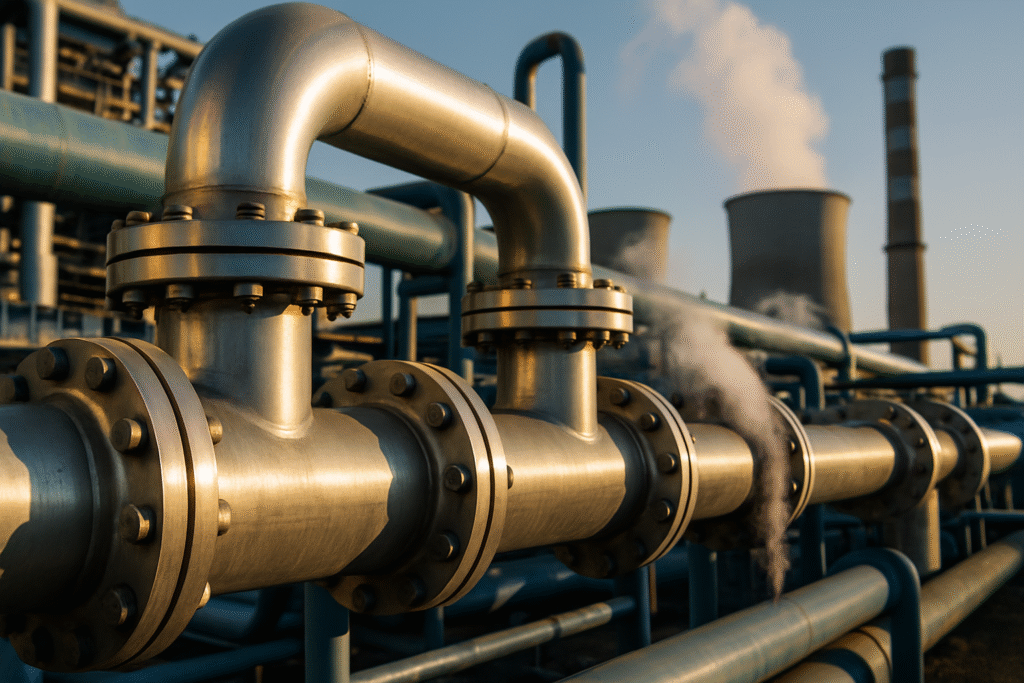
ステンレス鋼管フランジ市場は58億ドル: 隠れた利点, 種類, 用途, とフランジの選び方
グランドビューリサーチによると (2024), 世界の工業用フランジ市場は次のように評価されました。 $5.8 億で 2023 に達すると予測されています $7.2 10億まで 2030. That growth highlights why stainless steel pipe flange selection has become a strategic decision for engineers, EPC請負業者, and industrial buyers managing corrosion, 温度, とライフサイクルコスト.
For industrial systems, the intriguing value of Stainless Steel Hidden Advantages lies in durability, 清潔さ, and pressure integrity. さらに, the right Steel flange design improves safety, reduces leakage risk, and supports long-term Pipe system reliability across demanding applications.
Industrial Demand for Stainless Steel Pipe Flange Solutions Is Rising Across Global Applications
IBISWorldによると (2024), アジア太平洋地域が占める割合は超過 45% 世界のフランジ生産量の, 中国が最大の製造国である. したがって, procurement teams increasingly compare regional manufacturing capabilities, certification strength, and lead-time performance before approving stainless steel pipe flange suppliers.
統計局によると (2024), 石油・ガス産業が約 35% 世界のフランジ消費量の. That figure is significant because upstream, 中流, and downstream assets all require high-integrity flange joints for pressure-containing service.
並行して, 水処理, 造船, 発電, and petrochemical projects continue to expand their use of Stainless and alloy Flanges. 結果として, buyers now expect broader material availability, から 304 and 316L to duplex 2205, スーパーデュプレックス 2507, 904l, インコネル, モネル, ハステロイ, とチタン.
モルドール情報局によると (2024), global investment in industrial process infrastructure remains strong in energy transition and water sectors. その結果, demand for stainless steel pipe flange products is shifting toward corrosion-resistant grades that can lower maintenance frequency and extend operating life.
Material selection also reflects operating media and temperature. 例えば, 304 and 304L remain common for general service, その間 316 and 316L are often preferred for chloride exposure, 海洋大気, 積極的な化学物質の取り扱い.
For elevated temperature service, engineers may specify stabilized or heat-resistant grades such as 321, 347, or higher alloy materials. 対照的に, duplex grades like 2205 can provide a valuable balance of strength and pitting resistance in offshore and process applications.
として [博士. ヘレン・モリス], 材料エンジニア, 州: “Flange reliability is not determined by alloy alone; it depends on the full interaction between material grade, 圧力クラス, フェーシング仕上げ, ボルト締め, and service environment.” That point matters because many failures originate from poor specification alignment rather than from obvious manufacturing defects.
今日, B2B buyers need more than a price list. They need traceability, 寸法精度, 圧力クラスのコンプライアンス, EN 10204 3.1 ドキュメント, and confidence that the supplier understands ASME, ASTM, DIN, JIS, ゴスト, およびEN要件.
SASA FLANGE supports that expectation with ISO 9001:2015 および PED 2014/68/EU 認証, broad export experience, and manufacturing coverage across stainless steel flanges, 炭素鋼フランジ, 合金フランジ, およびパイプ継手. さらに, その会社は石油を供給しています & ガス, 石油化学, 発電, 造船 & 海兵隊, 水処理, and Construction sectors in more than 50 国.
For procurement teams comparing Flanges? by lifecycle value, supplier capability matters as much as metallurgy. したがって, buyers should evaluate machining accuracy, PMIの利用可能性, 水圧試験のサポート, マーキング制御, and documentation discipline before issuing a final PO.
Technical Insights on Stainless Steel Pipe Flange Types, 評価, と隠れた利点
The most important step in choosing stainless steel pipe flange products is matching type, 材料, and pressure class to the service condition. しかし, many buyers still focus on unit price first, even though rework, ダウンタイム, and leakage costs often far exceed the initial component cost.
マーケットリサーチの将来によると (2024), industrial process operators are prioritizing components that reduce maintenance and unplanned shutdown risk. したがって, the Hidden Advantages of premium Stainless Steel flanges include lower corrosion-related replacement frequency, better cleanability, and stronger value in critical applications.
によると ASME B16.5, 標準フランジ寸法, 直面している, 掘削, and pressure-temperature ratings vary by class and material group (ASME, 2023). 結果として, クラス 150 flange and a Class 600 flange may share nominal pipe size but perform very differently under pressure and temperature loads.
として [マイケル・トレント], 上級配管エンジニア, 州: “Selecting the wrong facing or pressure class can negate the benefits of even the best alloy.” That is why experienced sourcing teams review gasket compatibility, フランジ仕上げ, ボルト荷重, and thermal cycling conditions together.
一般的なステンレス鋼管フランジの種類と用途は次のとおりです。:
- Weld neck flanges for high-pressure and high-temperature service requiring strong stress distribution.
- Slip-on flanges for moderate service where easier alignment and lower installed cost are priorities.
- Blind flanges for end closures, system isolation, and hydrostatic test points.
- Socket weld flanges for smaller bore, 高圧配管システム.
- Threaded flanges for low-pressure systems where welding is undesirable.
- Lap joint flanges for systems needing frequent dismantling or alignment flexibility.
In many refinery and chemical applications, 316L is specified because molybdenum improves resistance to pitting and crevice corrosion. 対照的に, 304L often remains a cost-effective option for non-chloride environments and general industrial service.
二重 2205 deserves special attention for offshore, 脱塩, and chloride-bearing media. NACE ガイダンスによると, duplex stainless steels can offer improved chloride stress corrosion cracking resistance compared with common austenitic grades in suitable conditions (ネイス, 2023).
Pressure performance depends on more than alloy choice. It also depends on flange standard, 壁の厚さ, 設計温度, 対面タイプ, and bolting system. したがって, buyers asking about stainless steel pipe flange sizes or 4 inch stainless steel pipe flange options should always specify NPS, スケジュール, 圧力クラス, 直面している, and standard together.
Typical specification points include:
- 基準: ANSI B16.5, ANSI B16.47, EN 1092-1, DIN, JIS, ゴスト.
- 材料: ASTM A182 F304, F304L, F316, F316L, F904L, F51, F53, チタン, ニッケル合金.
- 圧力クラス: 150, 300, 600, 900, 1500, 2500.
- フェイシングオプション: RF, FF, RTJ.
- サイズ範囲: 1/2 インチから 60 インチ, depending on type and standard.
- 検査書類: EN 10204 3.1, PMI, 寸法レポート, 硬度, NDE as required.
ASTM 材料仕様によると, forged stainless steel flanges commonly fall under ASTM A182, while plate products often reference ASTM A240 (ASTM, 2024). さらに, 肘などの金具, ティー, 減速機, and caps often follow ASME B16.9 寸法と公差については.
SASA FLANGE でフランジを製造します 304, 316, 316l, 904l, 2205, 2507, A105, A182, インコネル, モネル, ハステロイ, and Titanium for global industrial projects. 高度な CNC 加工と包括的な品質テストに裏付けられています, the company supports standard and custom orders with factory-direct pricing and export documentation.
For buyers evaluating stainless steel flange types, it is practical to compare not just material cost but installed performance. A slightly higher-grade flange may reduce gasket failures, cut maintenance intervals, and improve total cost of ownership over years of continuous operation.
加えて, lead time and dimensional consistency affect project execution. したがって, working with an established manufacturer such as SASA FLANGE can simplify sourcing for mixed-material packages that include flanges plus elbows, ティー, 減速機, そしてキャップ.
ASME, ASTM, DIN, およびステンレス鋼管フランジの準拠を管理する EN 規格
Industrial flange purchasing should begin with standards compliance, not only with catalog dimensions. That approach reduces mismatch risk, supports inspection planning, and protects system integrity during commissioning and operation.
The most frequently referenced standard for many imperial flange dimensions is ASME B16.5. 寸法をカバーします, 公差, 圧力温度定格, マーキング, and materials for flanges and flanged fittings within specified size ranges (ASME, 2023).
より大きな直径の場合, 購入者はよく指定します ASME B16.47. In Europe and international projects, EN 1092-1 and DIN flange standards are also common, especially where project specifications, PED準拠, or legacy equipment require those systems.
Material and manufacturing standards remain equally important. ASTM A182 鍛造または圧延合金およびステンレス鋼の管フランジを管理します, 鍛造継手, および高温用バルブ, その間 ASTM A240 covers chromium and chromium-nickel stainless steel plate, シート, そして剥ぎます (ASTM, 2024).
腐食サービス用, procurement teams should also review NACE requirements where sour service or corrosion cracking risk exists. さらに, PED 2014/68/EU may apply for pressure equipment entering the European market, making traceability and documentation non-negotiable.
A practical compliance checklist includes:
- 寸法規格の確認, のような ASME B16.5 またはEN 1092-1.
- Material specification confirmation, のような ASTM A182 F316L.
- Pressure class or PN rating verification at design temperature.
- Facing type and gasket compatibility review.
- Heat number traceability and marking inspection.
- Mill test certificate and EN 10204 3.1 ドキュメント.
- オプションの PMI, フェライト試験, 硬度, or NDE for critical service.
ISO品質管理ガイダンスによる, consistent process control reduces quality variability and strengthens customer confidence (ISO, 2024). That is one reason international buyers often prefer suppliers with audited systems and documented inspection workflows.
SASA FLANGE operates with ISO 9001:2015, PED 2014/68/EU, とAD 2000 資格, which are highly relevant for regulated export projects. さらに, the company can support custom manufacturing for sizes from 1/2 インチから 60 インチ, RFを含む, FF, and RTJ facings across multiple standards.
For buyers balancing cost and compliance, documentation quality should not be treated as an afterthought. 実際には, incomplete test records can delay project approvals more than minor price differences ever will.
That is especially true in Oil & ガス, 力, and Marine work, where class societies, EPC, and end users often perform rigorous material verification. したがって, flange sourcing should align with both the technical datasheet and the project ITP from the start.
オイル用フランジの選び方, ガス, 化学薬品, 力, 海兵隊, and Water Applications
適切なステンレス鋼管フランジを選択するには、サービスベースのアプローチが必要です. Buyers should begin with fluid type, 塩化物濃度, 温度, プレッシャー, 腐食代, code requirement, およびメンテナンスアクセス.
For Oil & ガスシステム, weld neck flanges are frequently preferred for high-pressure lines, セパレーター, およびプロセス配管. Their geometry improves stress transition, which helps under cyclic loads and elevated temperatures.
石油化学および化学処理プラント, 316l, 904l, and higher alloys often become necessary as media aggressiveness increases. 加えて, gasket chemistry and bolt material must match the corrosion environment to avoid weak points in the assembly.
発電用, steam conditions and temperature drive the selection. 炭素鋼, 合金鋼, or stainless may all be appropriate depending on pressure rating, oxidation risk, and code design limits.
Marine and shipbuilding systems often face salt spray and chloride exposure. したがって, 316l, デュプレックス 2205, またはスーパーデュプレックス 2507 can provide stronger long-term resistance than basic grades in many seawater-adjacent applications.
Water treatment and desalination projects bring a different challenge. Corrosion resistance remains vital, but buyers must also consider cleanliness, disinfection chemistry, and maintenance intervals.
When engineers Choose Flanges, these criteria should be reviewed together:
- Operating pressure and temperature versus ASME or EN rating tables.
- プロセスメディア, 塩化物含有量, と腐食のメカニズム.
- 必要なフランジのタイプ, ウェルドネックなど, 盲目, スリッポン, またはネジ式.
- Compatibility with Pipe schedule, 壁の厚さ, and fitting geometry.
- Facing style, ガスケットの選択, そしてボルト締めの材質.
- 検査レベル, ドキュメントパッケージ, and project certification needs.
- 総設置コスト, not only initial purchase price.
として [Laura Cheng], 産業市場アナリスト, 州: “Procurement success comes from matching flange specification to operational risk, not from choosing the cheapest line item.” That perspective is especially relevant when shutdown costs can exceed component cost by several orders of magnitude.
According to DNV guidance for offshore and marine systems, material selection in corrosive environments should consider both design life and inspection accessibility (DNV, 2023). したがって, more durable alloys may be economically justified where replacement access is difficult.
SASA FLANGE supports project-specific manufacturing for stainless steel flanges and pipe fittings, 肘も含めて, ティー, 減速機, そしてキャップを ASME B16.9 および関連規格. さらに, the company offers custom sizes, 混合材料の注文, and export support for buyers needing consolidated sourcing.
For projects requiring certified and responsive supply, buyers can discuss dimensions, 材料, and documents directly through SASA FLANGE. This is particularly useful for clients comparing stainless steel pipe flange price, 可用性, and quality records before tender submission.
ステンレス鋼管フランジ調達の今後の見通しと戦略的な購入の提案
ステンレス鋼管フランジの需要見通しは依然として明るい。, 水, and industrial infrastructure investment continues worldwide. グランドビューリサーチによると (2024), 市場は到達すると予想されます $7.2 10億まで 2030, which indicates sustained long-term demand for qualified manufacturers.
同時に, buyers face more complex specifications, tighter compliance expectations, and pressure to reduce lifecycle cost. したがって, strategic sourcing now requires earlier technical engagement between engineering, QA, および調達チーム.
Several trends are shaping future buying decisions:
- Greater use of duplex and super duplex alloys in chloride-rich environments.
- Higher demand for documentation transparency and digital traceability.
- Supplier consolidation for flanges and fittings under one quality system.
- Stronger preference for PED-ready and export-compliant production.
- Increased evaluation of total cost of ownership rather than piece price alone.
統計局によると (2024), energy-sector flange demand remains a primary market driver, while water and process industries add diversification. 結果として, suppliers able to combine alloy range, 加工精度, and quality documentation will hold a stronger position.
Procurement teams should standardize approved material lists, define inspection requirements clearly, and confirm standards before RFQ release. さらに, they should request MTCs, ヒートトレーサビリティ, 圧力クラスの確認, and dimensional details in the quotation stage, not after award.
For organizations buying stainless steel flanges and Fittings across multiple projects, supplier consistency can reduce approval time and expedite logistics. Buyers seeking dependable technical support, カスタム製造, and certified export supply can review options through SASA FLANGE 製品の機能 and discuss project details directly with the team.
よくある質問
ステンレス鋼フランジは何に使用されますか?
●パイプセクションの接続にはステンレス鋼のフランジが使用されます, バルブ, パンプス, and equipment in pressurized systems across oil and gas, 石油化学, 力, 海洋, および水処理用途.
●統計局によると (2024), 石油・ガス産業が約 35% 世界のフランジ消費量の, which shows how critical flange joints are in process infrastructure.
●They are selected when buyers need corrosion resistance, 強さ, 洗浄性, and reliable sealing performance under varying temperature and pressure conditions.
●For projects requiring certified materials and EN 10204 3.1 ドキュメント, のような確立されたメーカーと協力する SASA FLANGE helps ensure compliance and traceability.
ステンレス鋼製のフランジは何ですか?
●一般的なステンレス鋼フランジにはウェルドネックが含まれています, スリッポン, 盲目, ねじ切りされた, ソケット溶接, and lap joint designs produced in grades such as 304, 304l, 316, 316l, 904l, 2205, そして 2507.
●ASTM A182 is the most common forged material specification for stainless steel flanges, その間 ASME B16.5 そして ASME B16.47 define many standard dimensions and pressure classes.
●Different grades serve different applications because 316L performs better than 304L in chloride-bearing environments, 両面印刷中 2205 offers higher strength and improved corrosion resistance in many process conditions.
●Buyers should match flange type and alloy to service media, 温度, and maintenance strategy before issuing a final purchase order.
What is the pressure rating of stainless steel pipe flange?
●The pressure rating of a stainless steel pipe flange depends on the governing standard, マテリアルグループ, フランジクラス, and operating temperature rather than on size alone.
●下 ASME B16.5, 一般的な評価にはクラスが含まれます 150, 300, 600, 900, 1500, そして 2500, and allowable pressure decreases as temperature rises.
●あ 4 クラスのインチステンレス鋼管フランジ 300 does not have the same allowable pressure as a 4 クラスのインチフランジ 600, even if both are made from similar stainless material.
●Engineering teams should verify the exact pressure-temperature table in the applicable standard and confirm gasket, ボルト締め, and facing compatibility before selection.
ステンレス鋼の管継手を製造していますか?
●はい, メーカーはエルボなどのステンレス鋼管継手を製造しています, ティー, 減速機, キャップ, スタブエンド, and special fabricated components for industrial piping systems.
●ASME B16.9 is a key dimensional standard for many butt weld fittings, and ASTM specifications define the applicable stainless steel material grades used in production.
●グランドビューリサーチによると (2024), 工業用フランジの需要は着実に増加している, and that trend also supports broader demand for matching stainless steel flanges and Fittings in integrated packages.
●For procurement efficiency, many buyers prefer a supplier that can provide both flanges and fittings under one quality system with consistent documentation.
どちらかを選択するにはどうすればよいですか 304, 316l, そして 2205 for stainless steel pipe flange applications?
●304 一般的なサービスに広く使用されています, 316L is preferred for stronger corrosion resistance in chloride exposure, そして 2205 is often selected when higher strength and improved pitting resistance are required.
●NACE guidance indicates duplex grades can offer better resistance to chloride stress corrosion cracking than common austenitic grades in suitable service conditions.
●料金, メディア化学, fabrication requirements, and inspection needs should all be evaluated together because the lowest alloy cost may not produce the lowest lifecycle cost.
●クリティカルなアプリケーション向け, it is best to request technical review, MTC, and material traceability before confirming the grade.
ステンレス鋼管フランジの価格とリードタイムに影響を与える要因は何ですか?
●ステンレス鋼管フランジの価格と納期は合金グレードによって異なります, フランジタイプ, サイズ, 圧力クラス, 原材料市況, 加工の複雑さ, および書類要件.
●IBISWorldによると (2024), アジア太平洋地域が占める割合は超過 45% 世界のフランジ生産量の, which means regional manufacturing capacity strongly influences availability and export pricing.
●カスタムサイズ, RTJフェーシング, PMIテスト, PED ドキュメント, and nickel alloy or duplex materials typically increase both cost and delivery time compared with standard 304 or 316L flanges.
●Buyers can reduce delays by issuing complete RFQs that specify standard, サイズ, クラス, 直面している, 材質グレード, 量, and inspection requirements from the start.
関連投稿

オリフィスフランジの定義, 詳細と ASME B16.36 フランジの概要: 市場データ, 選択ガイドとコンプライアンスに関する洞察
世界の工業用フランジ市場は次のように評価されました。 $5.8 十億…

ブラックディスポフランジ市場ガイド: 材料, 3.5″ 互換性, キッチン シンク フランジの B2B 調達データ
キッチン設備の購入者として黒色の使い捨てフランジの需要が高まっています…