
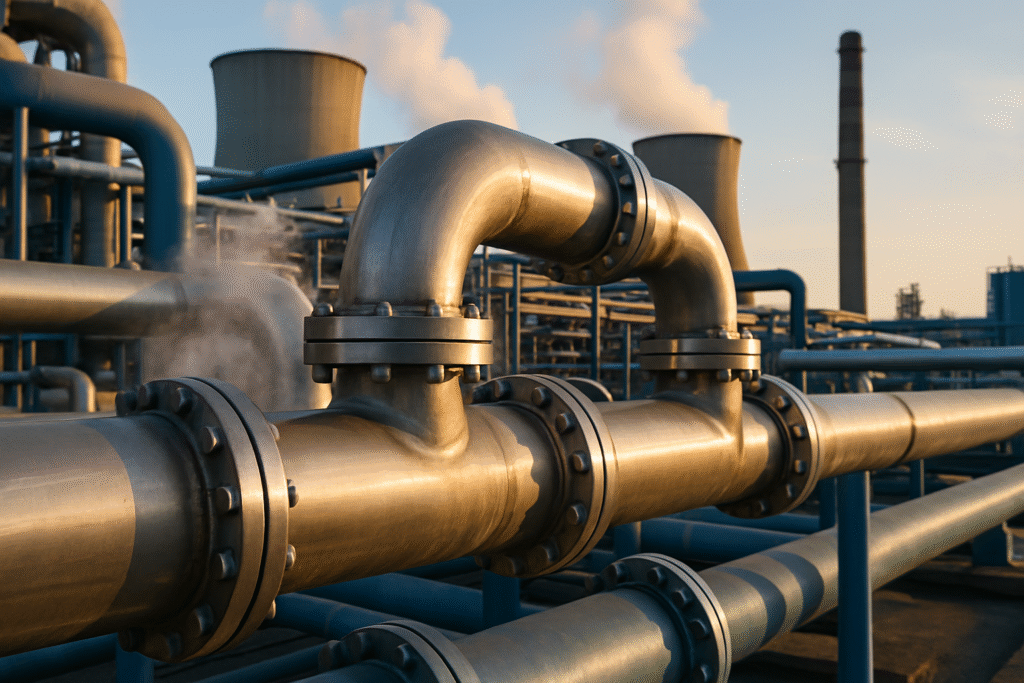
Guia de mercado de flange de tubo de aço inoxidável: $5.8Dados da indústria B, Padrões ANSI, e insights de seleção
O flange de tubo de aço inoxidável market sits at the center of modern process piping, onde o tempo de atividade, resistência à corrosão, e a conformidade do código afetam diretamente o custo do projeto. De acordo com a pesquisa Grand View (2024), o mercado global de flanges industriais foi avaliado em $5.8 bilhão em 2023 e está projetado para atingir $7.2 bilhão por 2030.
Para equipes de compras e engenheiros, que o crescimento reflete uma realidade prática. Stainless Steel Flanges remain a preferred solution for critical Pipe systems in oil and gas, processamento químico, serviço marítimo, e geração de energia.
Tendências de demanda global moldando a aquisição de flanges para tubos de aço inoxidável
De acordo com IBISWorld (2024), Ásia-Pacífico é responsável por mais de 45% da produção global de flanges, sendo a China o maior fabricante. Portanto, os compradores avaliam cada vez mais não apenas o preço, mas também rastreabilidade, qualidade de usinagem, documentação de exportação, e confiabilidade de entrega.
De acordo com Statista (2024), a indústria de petróleo e gás é responsável por aproximadamente 35% do consumo global de flanges. That concentration makes ANSI and ASME compliance essential, especially for upstream skids, unidades de refinaria, LNG modules, and high-pressure utility lines.
In contrast to basic catalog pages, serious B2B buyers need more than a parts list. They need material compatibility, pressure-temperature logic, face type selection, escopo de inspeção, and confidence in mill test documentation.
De acordo com a Inteligência Mordor (2024), industrial infrastructure investment in water treatment and energy transition projects continues to support demand for corrosion-resistant piping components. Adicionalmente, duplex and high-alloy grades are gaining share where chloride exposure and sour service conditions reduce the life of standard carbon steel.
As piping engineer Michael R. Stevens, Educação Física, estados: “A flange is not just a connector; it is a controlled sealing interface, and the wrong material or facing can compromise the whole system.” That point explains why experienced EPC buyers review ASTM grade, acabamento frontal, compatibilidade de aparafusamento, and gasket performance together.
Por esta razão, the most requested Stainless, Aço, Flanges often include weld neck, deslizamento, cego, solda de soquete, junta sobreposta, and Threaded designs. No entanto, the correct choice depends on pressure class, ciclagem térmica, tolerância à corrosão, e acesso para manutenção.
De acordo com a Pesquisa de Mercado Futuro (2024), global process industry modernization is increasing demand for standardized flanged connections in modular fabrication. Como resultado, suppliers that can deliver both common sizes and project-specific machining hold a strong advantage.
SASA FLANGE atende esse mercado com flanges de aço inoxidável, flanges de aço carbono, flanges de liga, and pipe fittings for customers in more than 50 países. Com ISO 9001:2015 e certificações PED 2014/68/EU, the company supports projects that require documented quality systems and export-ready compliance records.
Manufacturing capability also matters when schedules tighten. Apoiado por usinagem CNC avançada e testes de qualidade abrangentes, SASA FLANGE oferece tamanhos personalizados de 1/2" para 60" across grades such as 304, 316, 316eu, 904eu, 2205, 2507, A105, A182, Inconel, Monel, Hastelloy, e titânio.
Além disso, buyers increasingly expect a supplier to support both standard and special applications. That includes ANSI B16.5, ANSI B16.47, DIN, JIS, GOST, e PT 1092 dimensões, as well as EN 10204 3.1 documentation for controlled projects.
The competitive takeaway is clear. A modern flange supplier must combine stock depth, technical advising, certified production, and responsive logistics rather than relying only on keyword-heavy product listings.
Technical Selection Factors for Stainless Steel Pipe Flange Performance
A stainless steel pipe flange must match the service fluid, pressão de projeto, temperatura operacional, face de flange, e método de união. Portanto, engineers typically begin with the piping class, then confirm material grade, ASME dimensions, tipo de junta, e requisitos de aparafusamento.
De acordo com ASME B16.5, as classificações de pressão-temperatura variam de acordo com o grupo e a classe do material, not by class number alone (ASME, 2020). Na prática, um 600# flange in ASTM A182 F316 does not carry the same assumptions as a carbon steel counterpart in a different temperature range.
Como Dr.. Elena Morris, cientista de materiais, estados: “316L remains a strong general-purpose choice, but chloride concentration, pH swings, and crevice conditions can quickly justify duplex or super austenitic upgrades.” That is why material selection must reflect actual service chemistry, not only nominal media names.
Em muitos projetos, engineers compare the following flange types before finalizing the bill of materials:
- Flange de pescoço soldado for severe service, carregamento cíclico, and high-integrity butt weld transitions.
- Flange deslizante for lower-pressure systems where fabrication speed and cost matter.
- Flange cego for line ends, isolation points, and hydrotest closures.
- Flange de solda de soquete for small-bore high-pressure systems.
- Flange Rosqueada for installations where welding is impractical or hazardous.
- Flange de junta sobreposta for systems requiring frequent dismantling or costly alloy stub ends.
For smaller bore utility lines, a Threaded stainless steel pipe flange can reduce field welding and simplify replacement work. No entanto, it is usually reserved for limited service ranges because threaded joints are less suitable for severe vibration and repeated thermal cycling.
Face type is equally important. Raised Face remains common in refinery and chemical service, while Ring Type Joint is preferred where high pressure and sealing integrity demand metal-to-metal gasket seating.
Common specification checkpoints include:
- ASTM A182 F304, F304L, F316, F316L, F51, F53, and specialty nickel alloys.
- ANSI / ASME B16.5 dimensions for NPS 1/2 através 24.
- ANSI B16.47 for larger diameter flanges.
- Facing options such as RF, FF, RTJ, Língua e sulco, and Male-Female.
- Classes including 150, 300, 600#, 900, 1500, e 2500.
- Testing and documents such as PMI, hydrotest support records, dureza, ferrita, e EN 10204 3.1.
According to ASTM material specifications, forged stainless flanges for pressure service are commonly produced under ASTM A182 requisitos (ASTM, 2024). Além disso, chemical composition control and heat treatment records help confirm corrosion resistance and mechanical reliability in critical services.
For buyers focused on 304 e 316 inventory, the commercial distinction is straightforward. Nota 304 offers strong general corrosion resistance and competitive cost, enquanto 316 and 316L add molybdenum for improved resistance in chloride-bearing environments.
No entanto, not every corrosive service should default to 316L. In seawater splash zones, sour systems, or aggressive chlorides, 2205 duplex, 2507 superduplex, 904eu, or nickel alloys may provide a lower total life-cycle cost despite higher purchase prices.
According to NACE guidance for corrosive oilfield environments, material selection must reflect sulfide stress cracking and chloride conditions where applicable (NACE, 2023). Como resultado, flange choice should align with the full piping material class rather than an isolated component substitution.
Dimension control also affects installation efficiency. A poor hub bore match, incorrect bolt circle, or rough serration finish can delay turnarounds and increase gasket failure risk.
This is where manufacturing discipline matters. SASA FLANGE supplies Stainless Steel Flanges and fittings produced to ANSI B16.5, ANSI B16.47, ASME B16.9, DIN, JIS, GOST, e PT 1092, helping procurement teams consolidate sourcing under one qualified supplier.
De acordo com os princípios de gestão de qualidade ISO, repeatability in inspection, rastreabilidade, and document control reduces supplier-related nonconformance risk (ISO, 2015). Portanto, buyers should ask for dimensional inspection reports, certificados de teste de materiais, and marking standards before placing project orders.
Another practical issue is size availability. A catalog may show common 2 polegada, 4 polegada, ou 6 inch Stainless Steel Flanges, yet project success often depends on reducing flanges, furos especiais, drilled blanks, or nonstandard combinations that support skids and packaged equipment.
As industrial analyst Peter Lang notes: “The winning flange supplier is often the one that solves exceptions fast, not the one that lists the most generic SKUs.” That insight is especially relevant for EPC procurement, where schedule pressure rewards technical responsiveness.
Portanto, the best sourcing strategy balances stock with customization. Buyers should confirm machining tolerances, números de calor, third-party inspection options, and lead times before approving a purchase order for any stainless steel pipe flange package.
ASME, ASTM, DIN, and EN Standards That Govern Stainless Steel Flanges
Padrões definem intercambialidade, integridade de pressão, e expectativas de inspeção. Without them, even premium-looking flanges can create bolt-up problems, vazamento, or rejected packages at site.
The most referenced codes and standards for Stainless Steel Flanges include ASME B16.5, ASME B16.47, ASTM A182, ASME B16.9, DIN, e PT 1092. Além disso, European projects may require PED 2014/68/EU compliance and supporting declarations.
Key standard relationships are summarized below:
- ASME B16.5: Covers dimensions, tolerâncias, materials groups, classificações de pressão-temperatura, marcação, and testing for NPS 1/2 para 24.
- ASME B16.47: Covers large-diameter steel flanges beyond standard B16.5 ranges.
- ASTM A182: Cobre flanges de tubos de liga forjada ou laminada e aço inoxidável, acessórios, válvulas, e peças para serviços em altas temperaturas.
- ASME B16.9: Covers factory-made wrought butt welding fittings such as elbows, camisetas, redutores, e bonés.
- EN 1092: Provides European flange dimensions and pressure designations.
- DIN: Includes German dimensional systems still referenced in legacy and export projects.
De acordo com a estrutura PED da Comissão Europeia, pressure equipment manufacturers must maintain conformity assessment procedures where required (DEP, 2014). Consequentemente, documentation quality becomes as important as machining quality for exporters serving EU buyers.
Em termos práticos de aquisição, buyers should compare more than just NPS and class. They should verify facing type, padrão de perfuração, cronograma de furo, grau de material, edição padrão, marcação, and requested certificates.
A simple compliance checklist often includes:
- Padrão correto: ANSI / ASME, DIN, JIS, GOST, ou PT.
- Material: 304, 316, 316eu, 904eu, 2205, 2507, or alloy grade.
- Classe de pressão: 150, 300, 600#, 900, 1500, ou 2500.
- Enfrentando: RF, FF, RTJ, or special facing.
- Inspeção: PMI, relatório dimensional, verificação de acabamento superficial, and visual examination.
- Certificação: ISO 9001:2015, PED 2014/68/EU, ANÚNCIO 2000, e EN 10204 3.1 conforme especificado.
For sour service or offshore duty, additional client specifications may reference NACE MR0175, NORUEGA, or DNV rules depending on the installation. Portanto, a supplier must understand project overlays beyond the base flange standard.
SASA FLANGE supports this requirement with documented quality systems and broad standards coverage. Com ISO 9001:2015, PED 2014/68/EU, e ANÚNCIO 2000 credenciais, the company aligns manufacturing and inspection with the expectations of international EPCs and industrial distributors.
Compliance also supports inventory accuracy. When flange marking clearly identifies grade, número de calor, tamanho, aula, e padrão, warehouse teams reduce picking errors and site teams accelerate receiving inspections.
According to DNV guidance for marine and offshore supply chains, traceability and documentation remain critical for pressure-containing components used in classified systems (DNV, 2023). Como resultado, buyers should favor manufacturers that can issue complete document packages rather than only commercial invoices and packing lists.
How to Select the Right Stainless Steel Pipe Flange for Oil, Gás, Químico, Poder, e Serviço Marítimo
Application context should drive every flange decision. The same 4 inch stainless steel pipe flange may perform well in one unit and fail early in another because chemistry, temperatura, and vibration differ.
Em petróleo e gás, pressure class and corrosion risk usually lead the decision. Como o setor representa cerca de 35% do consumo global de flanges, proven standards alignment and material traceability are especially important (Estadista, 2024).
Para serviço upstream e midstream, buyers often prioritize:
- Weld neck or RTJ designs for pressure integrity.
- NACE-aligned materials where sour service applies.
- PMI and third-party inspection for critical packages.
- Duplex or nickel alloys for chloride-rich and corrosive conditions.
In petrochemical and chemical processing plants, corrosion mechanism mapping matters more than initial unit price. Portanto, 316eu, 904eu, Hastelloy, or Monel flanges may outperform standard grades where acids, solventes, or chlorides attack less resistant alloys.
Power generation systems create a different selection profile. Alta temperatura, ciclismo a vapor, and maintenance planning often drive the use of forged flanges with stable metallurgy, accurate facing finish, and reliable bolting geometry.
For marine and shipbuilding, salt exposure changes the economics quickly. Nestes casos, 316L may suit secondary systems, enquanto 2205 ou 2507 can be more suitable for splash zones, sistemas de lastro, e dever severo de cloreto.
Water treatment buyers often seek a balance of corrosion resistance and budget control. As infrastructure upgrades expand globally, 304 e 316 Stainless Steel Flanges remain common, but designers still need to evaluate disinfectants, chloride levels, e exposição a fendas.
Procurement managers can use this practical shortlist when comparing suppliers:
- Can the supplier produce both standard and custom bore configurations?
- São 304, 316, 904eu, 2205, e 2507 available from one source?
- Can the supplier deliver elbows, camisetas, redutores, and caps with matching documentation?
- São EN 10204 3.1 certificados, rastreabilidade térmica, and marking included?
- Can they support urgent replacements and larger project releases?
This is where full-range manufacturing becomes valuable. SASA FLANGE supplies not only flanges, but also elbows, camisetas, redutores, e bonés, helping buyers standardize vendor control across multiple piping categories.
For custom packages, the company can support material combinations across Stainless, aço carbono, duplex, liga de níquel, and titanium grades. Além disso, factory-direct production helps buyers manage budget targets without compromising on standards compliance.
When selecting a Threaded or Slip-On Flange for maintenance work, engineers should also review vibration, expansão térmica, and future disassembly needs. Em contraste, major greenfield projects usually favor welded flange designs for stronger long-term reliability.
Por exemplo, a general utility water line may use a 150-class 304 ou 316 flange deslizante. No entanto, um 600# ANSI weld neck flange in F316L or duplex may be the better choice for a higher-pressure chemical transfer line.
Buyers should also consider commercial execution factors. MOQ flexibility, embalagem de exportação, lead time transparency, and after-sales response can materially affect total project cost even when flange prices appear similar.
For projects that require custom drilled blanks, revestimentos especiais, ou pacotes de materiais mistos, engineers can contato SASA FLANGE early to confirm drawings, padrões, and delivery windows. That approach reduces revision cycles and improves bid accuracy.
Perspectivas Futuras para Flanges de Aço Inoxidável e Recomendações Estratégicas de Compra
A perspectiva para a demanda por flanges de tubos de aço inoxidável permanece positiva porque a energia, água, químico, and marine investment continues across both developed and emerging markets. De acordo com a pesquisa Grand View (2024), espera-se que o mercado se expanda de $5.8 bilhão em 2023 para $7.2 bilhão por 2030.
Ao mesmo tempo, sourcing strategies are changing. Buyers now expect faster documentation, broader alloy availability, and better technical support rather than viewing flanges as simple commodity items.
De acordo com IBISWorld (2024), Asia-Pacific controls more than 45% da produção global de flanges, e a China continua a ser a maior base industrial. Portanto, qualified Chinese manufacturers with strong export systems will continue to shape global supply, especially for standard ANSI and project-specific forged products.
Several trends will influence purchasing decisions over the next few years:
- Higher demand for duplex, superduplex, and nickel alloys in aggressive service.
- More stringent documentation and PED-related compliance checks.
- Greater preference for suppliers that provide flanges plus fittings in one order.
- Growing importance of CNC precision, PMI, and digital traceability.
- Faster turnaround expectations for MRO and shutdown orders.
Para equipes de compras, a recomendação estratégica é direta. Standardize approved grades, padrões, and document requirements before RFQ release, then compare suppliers on total execution capability rather than price alone.
Para engenheiros, the priority should be service-based material selection. A low-cost Flange can become the highest-cost component if corrosion, vazamento, or mismatch causes shutdowns and rework.
For distributors and OEMs, partnering with a manufacturer that offers custom machining, multi-standard production, and global shipping can strengthen margins and improve customer retention. That is especially true when demand includes everything from 2 inch ANSI blind flanges to larger forged weld neck assemblies.
Com sistemas certificados, wide material coverage, and experience serving Oil & Gás, Petroquímica, Poder, e indústrias marítimas, SASA FLANGE is positioned to support buyers seeking dependable stainless steel pipe flange supply. For current projects, substituições, or long-term sourcing programs, early technical discussion usually produces the best commercial outcome.
Perguntas frequentes
Quais flanges são feitas de aço inoxidável?
●Stainless steel flanges are commonly manufactured in ASTM A182 classes como F304, F304L, F316, F316L, F904L, F51, and F53 for pressure piping systems.
●These grades are used to produce weld neck, deslizamento, cego, solda de soquete, junta sobreposta, and threaded flange designs for ANSI and ASME Pipe connections.
●For buyers needing corrosion resistance, rastreabilidade, e EN 10204 3.1 documentos, trabalhando com fabricantes estabelecidos como SASA FLANGE improves material and compliance control.
Quais são os três tipos de flanges?
●The three most commonly specified flange categories in general industrial service are weld neck, deslizamento, and blind flanges because they cover most joining, acesso, and isolation needs.
●De acordo com ASME B16.5, each type follows defined dimensional and pressure-temperature requirements, which helps ensure interchangeability in ANSI systems.
●Engineers should select among them based on pressure class, vibração, acesso de manutenção, and whether the line requires frequent opening or permanent high-integrity service.
Para que são usados os flanges de aço inoxidável?
●Stainless steel flanges connect Pipe sections, válvulas, bombas, instrumentos, and equipment nozzles in systems that require corrosion resistance, manutenibilidade, and leak-tight bolted joints.
●De acordo com Statista (2024), petróleo e gás representam aproximadamente 35% do consumo global de flanges, while chemical, marinho, tratamento de água, and power sectors also depend heavily on stainless assemblies.
●For applications involving chlorides, fluidos agressivos, ou condições de lavagem, buyers should match flange grade and gasket design to the actual service environment before ordering.
What is the best material for flanges?
●The best flange material depends on media, temperatura, pressão, e risco de corrosão, so no single alloy is ideal for every service condition.
●Nota 304 suits many general environments, 316L improves chloride resistance, e 2205 ou 2507 often perform better in severe marine or sour-duty applications.
●Procurement teams should review ASTM grade, Classe ASME, and project chemistry together instead of choosing only by initial price or stock availability.
What sizes are available for stainless steel pipe flange products?
●Standard stainless steel pipe flange sizes usually range from 1/2 polegada para 24 polegada abaixo ASME B16.5, with larger diameters available under ANSI B16.47 and project-specific standards.
●Commercial demand often centers on 2 polegada, 4 polegada, 6 polegada, e 8 tamanhos em polegadas, while custom bored, reduzindo, and large-diameter flanges support skids, tanques, and process modules.
●Buyers should confirm NPS, agendar furo, enfrentando, aula, and drilling pattern together because nominal size alone is not enough to guarantee fit-up.
How do I choose between a threaded and weld neck stainless steel pipe flange?
●A Threaded stainless steel pipe flange simplifies installation where welding is impractical, while a weld neck flange generally offers better fatigue strength and flow transition in demanding service.
●Threaded designs are often used on smaller bore lines, whereas weld neck flanges are preferred for cyclic loading, higher pressure, and elevated-temperature process systems such as 600# ANSI service.
●For replacement work or new project selection, buyers should compare vibration, requisitos de inspeção, code rules, and future maintenance access before deciding.
Posts Relacionados
Acabamento da face do flange: Serrilhas concêntricas vs espirais explicadas
As serrilhas concêntricas e espirais são acabamentos de face de flange usinados…
Dúplex 2205 vs Flanges 316L: Qual material você deve escolher?
Resposta rápida: Dúplex 2205 flanges são geralmente o candidato mais forte…

Definição de flange de orifício, Detalhes e visão geral dos flanges ASME B16.36: Dados de mercado, Guia de seleção e insights de conformidade
O mercado global de flanges industriais foi avaliado em $5.8 bilhão…

Guia de mercado de flange de descarte preto: Materiais, 3.5″ Compatibilidade, e dados de fornecimento B2B para flanges de pia de cozinha
A demanda por flanges descartáveis pretos está aumentando à medida que os compradores de utensílios de cozinha…