
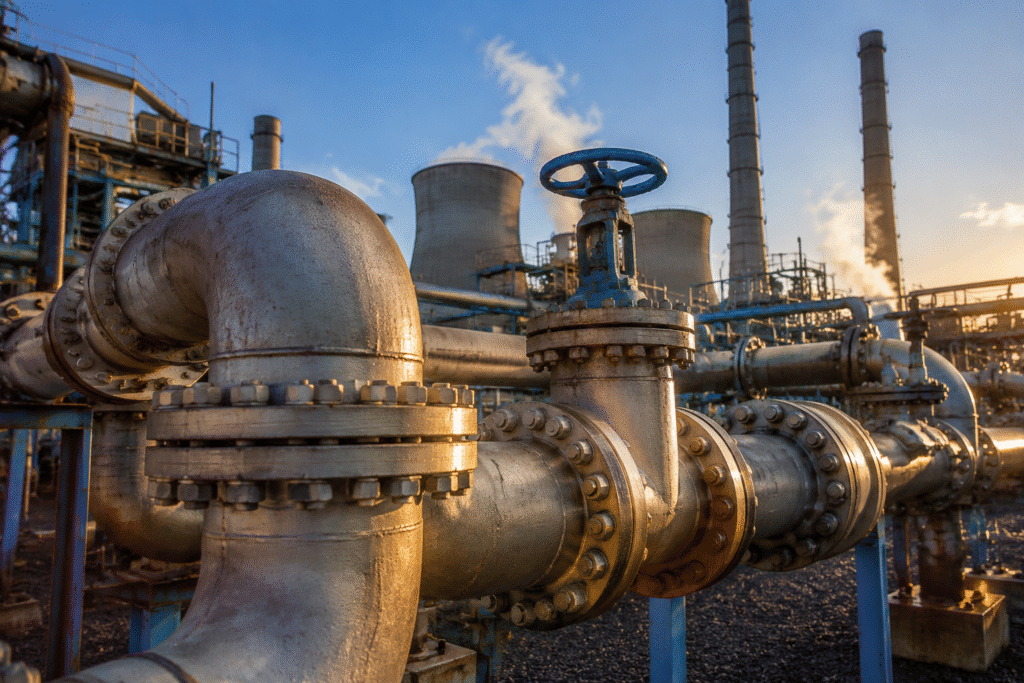
Guia de mercado de flange de tubo de aço inoxidável: $5.8Dados da indústria B, 600# Avaliações, Insights de seleção rosqueada e soldada
O flange de tubo de aço inoxidável market is growing with global process industries that demand corrosion resistance, qualidade rastreável, e contenção de pressão confiável. De acordo com a pesquisa Grand View (2024), o mercado global de flanges industriais foi avaliado em $5.8 bilhão em 2023 e está projetado para atingir $7.2 bilhão por 2030.
That growth reflects a clear B2B reality. Engineers and procurement managers need more than a product list. They need material guidance, conformidade padrão, pressure-class clarity, and supplier confidence for Stainless, Aço, Flanges, Rosqueado, 600#, Cano, and Flange applications.
Why the Stainless Steel Pipe Flange Market Is Expanding Across Industrial Sectors
Demand for stainless steel pipe flange products continues to rise because corrosion, tempo de inatividade, and inspection risk remain expensive in industrial piping systems. De acordo com Statista (2024), a indústria de petróleo e gás é responsável por aproximadamente 35% do consumo global de flanges.
That share matters because upstream, meio do caminho, and downstream assets require flanged joints that support maintenance access and sealing reliability. Além disso, operators increasingly specify alloy upgrades in sour service, offshore, dessalinização, e linhas químicas.
Regional production capacity also shapes sourcing decisions. De acordo com IBISWorld (2024), Ásia-Pacífico é responsável por mais de 45% da produção global de flanges, sendo a China o maior fabricante.
Portanto, buyers often evaluate Chinese manufacturers for both cost efficiency and export readiness. No entanto, supplier selection still depends on certifications, controle de usinagem, precisão dimensional, e qualidade da documentação.
Em termos práticos, stainless steel flanges win share because they combine corrosion resistance with mechanical strength and good fabrication characteristics. Notas como ASTM A182 F304, F304L, F316, and F316L remain standard choices for refineries, estações de tratamento de água, e sistemas utilitários de qualidade alimentar.
De acordo com a Inteligência Mordor (2024), growth in water infrastructure and energy projects is accelerating demand for stainless and duplex piping components in Asia and the Middle East. Como resultado, buyers increasingly ask for EN 10204 3.1 certificados de inspeção, PMI, hydrostatic test data, and surface finish records.
For many EPCs and distributors, the purchase decision now includes more than nominal size and pressure class. It includes lead time, Capacidade de usinagem CNC, embalagem de exportação, and the ability to produce custom dimensions in ANSI B16.5, ANSI B16.47, DIN, JIS, GOST, e PT 1092 formatos.
This is where an experienced manufacturer adds measurable value. SASA FLANGE serves Oil & Gás, Petroquímica, Geração de energia, Construção naval & Marinho, Tratamento de Água, and Construction markets with ISO 9001:2015 and PED 2014/68/EU certified manufacturing processes.
Adicionalmente, sourcing teams increasingly consolidate purchasing around fewer approved vendors. That trend favors suppliers that can produce stainless steel flanges and matching fittings such as elbows, camisetas, redutores, and caps in coordinated project batches.
De acordo com a Pesquisa de Mercado Futuro (2024), industrial piping component demand is benefiting from continued capex in LNG, poder, and process automation projects. Consequentemente, flange buyers are prioritizing lifecycle cost over unit price alone.
An Intriguing shift is also visible in digital procurement. Buyers search for exact combinations like Stainless Steel Threaded Pipe Flange, 4 flange de tubo de aço inoxidável de polegada, or stainless steel flange 2, which means technical content must answer specification questions early in the buying journey.
Technical Selection of Stainless Steel Flanges, Threaded Options, e 600# Avaliações
A escolha do flange de tubo de aço inoxidável certo começa com as condições de serviço, not catalog order. Pressão, temperatura, tolerância à corrosão, cronograma de tubulação, tipo de junta, and maintenance frequency all affect the correct flange design.
De acordo com ASME B16.5, dimensões do flange, tolerâncias, classificações de pressão-temperatura, marcação, and facing rules are standardized for NPS 1/2 através 24. Para diâmetros maiores, ANSI/ASME B16.47 generally governs dimensions and drilling patterns.
Como John Reynolds, pressure equipment specialist and author on mechanical integrity, estados: “Most flange failures are selection failures before they become sealing failures in operation.” That point is critical because a mismatch between flange class, enfrentando, and bolt load can undermine even premium material grades.
Para equipes de compras, the first technical split is flange type. Weld neck flanges suit high-pressure and cyclic service. Slip-on flanges simplify alignment in lower-demand lines. Threaded designs work where welding is restricted, while blind flanges close line ends or vessel nozzles.
- Flange de pescoço soldado: Melhor para alta pressão, vibração, ciclagem térmica, e serviço de processo crítico.
- Flange deslizante: Cost-effective for moderate pressure systems and easier fit-up in fabrication shops.
- Flange de solda de soquete: Common in small-bore, high-pressure piping where smooth bore transition matters.
- Flange Rosqueada: Suitable for non-weld installations, hazardous zones, and some utility services.
- Flange cego: Used for pipeline isolation, hidroteste, e futuros pontos de expansão.
- Flange de junta sobreposta: Useful where frequent dismantling or expensive alloy stub ends justify rotation flexibility.
Material selection is the second major variable. ASTM A182 F304 and F304L are widely used for general corrosion resistance. F316 and F316L perform better in chloride-bearing media because molybdenum improves pitting resistance.
According to NACE guidance and common industry practice, teor de cloreto, temperatura operacional, and oxygen availability must be considered together when evaluating stainless grades. Portanto, 316L often becomes the safer baseline in marine, costeira, and mildly aggressive chemical duty.
Como Dr.. Karen Smith, materials scientist in corrosion engineering, estados: “304 é versátil, but 316L usually pays back fast where chlorides threaten crevice corrosion or unplanned maintenance.” That is why advanced buyers compare not just purchase price, but total installed cost.
Pressure class requires equal attention. Aulas 150, 300, e 600# are common in process piping, but the correct rating depends on material group and operating temperature under ASME pressure-temperature tables. UM 600# Stainless flange is not simply a thicker version of Class 150. It reflects a defined dimensional and pressure-temperature envelope.
According to ASTM and ASME references, forged stainless steel flanges typically offer better grain structure and pressure performance than cast alternatives in critical service. Consequentemente, many refinery and power projects specify forged A182 flanges with full traceability.
- 304 / 304eu: Serviço industrial geral, processamento de alimentos, água limpa, tubulação de serviços públicos.
- 316 / 316eu: Processamento químico, seawater-adjacent service, produtos farmacêuticos, sistemas marinhos.
- 904eu: Stronger resistance in aggressive acids and high-chloride process conditions.
- 2205 Dúplex: Higher strength and improved chloride stress corrosion resistance.
- 2507 Superduplex: Severe offshore, dessalinização, and high-salinity systems.
- Ligas de Níquel: Inconel, Monel, and Hastelloy for extreme corrosion or high-temperature requirements.
Size range is another procurement issue that competitor catalog pages often under-explain. Standard stainless steel pipe flange sizes usually run from 1/2 polegada para 24 inch in ASME B16.5, while larger sizes may follow B16.47 Series A or B. Pipe schedule also matters because bore dimensions must match the connected pipe.
Por exemplo, um 4 inch stainless steel pipe flange can be ordered for Sch 10S, Sch 40S, or Sch 80S pipe, each with a different bore. Da mesma maneira, a stainless steel flange 2 for instrumentation or utility lines may require threaded, solda de soquete, or raised face geometry depending on plant standards.
Apoiado por usinagem CNC avançada e testes de qualidade abrangentes, SASA FLANGE fabrica flanges em 304, 316, 904eu, 2205, 2507, A182, Inconel, Monel, Hastelloy, e graus de titânio. The company also offers custom sizes from 1/2 polegada para 60 inch with factory-direct supply for global OEM, EPC, e programas de distribuição.
According to ISO and PED-aligned quality expectations, document control is now central to export projects. Portanto, many buyers request MTCs, rastreabilidade do número de calor, verificações de ferrite para classes duplex, PMI, and dimensional inspection reports before shipment release.
ASME, ASTM, DIN, and EN Compliance Requirements for Stainless Steel Pipe Flange Procurement
Standards compliance is where many sourcing errors begin. A flange may look correct on paper, yet fail project requirements if the standard, enfrentando, perfuração, or material specification is mismatched.
For North American and many international projects, ASME B16.5 e ASME B16.47 define dimensions and pressure classes. ASTM A182 cobre flanges de tubos de liga forjada ou laminada e aço inoxidável, acessórios, válvulas, e peças para serviços em altas temperaturas.
Os projectos europeus especificam frequentemente EN 1092 flanges e documentação PED. German-origin projects may also reference DIN legacy dimensions, while marine and shipbuilding work can involve DNV or customer-approved standards.
The following references are especially important for engineers and buyers.
- ASME B16.5: Dimensões, tolerâncias, classificações de pressão-temperatura, enfrentando, e marcação para NPS 1/2 para 24.
- ASME B16.47: Flanges de aço de grande diâmetro, normalmente NPS 26 para 60.
- ASTM A182: Especificação de material para flanges forjados em aço inoxidável e liga.
- ASME B16.9: Factory-made wrought butt welding fittings such as elbows and reducers.
- EN 1092: Dimensões do flange europeu e classificações de pressão.
- PED 2014/68/EU: Quadro regulamentar para equipamentos sob pressão colocados no mercado da UE.
- NACE MR0175 / ISO 15156: Material suitability guidance for sour service environments.
Buyers should also distinguish dimensional compliance from material compliance. A flange can meet ASME B16.5 dimensions but still fail if the chemistry, tensile values, ferrite content, or impact properties do not match the required ASTM or project specification.
According to ASME and ASTM published requirements, classe de pressão, enfrentando, círculo de parafuso, and bore must align with the mating component. Portanto, teams should verify nominal pipe size, agendar, raised face or RTJ profile, and stud bolt selection in a single review step.
Practical comparison points include the following.
- Rosto levantado: Common in refinery, utilidade, and general process applications.
- RTJ: Preferred in high-pressure and critical hydrocarbon service.
- Rosto plano: Used with cast iron equipment or where full-face gasket loading is required.
- Rosqueado: Selected where welding is undesirable or prohibited.
As Mark Bell, engenheiro de tubulação sênior, estados: “The fastest way to delay a shutdown job is ordering the right material to the wrong drilling or facing standard.” That is why disciplined specification review saves more money than last-minute expediting.
Com ISO 9001:2015, PED 2014/68/EU, e ANÚNCIO 2000 credenciais, SASA FLANGE supports projects that require export compliance and controlled manufacturing records. The company can also provide EN 10204 3.1 documentation and coordinated supply of matching fittings for complete line classes.
For formal standard verification, procurement teams should reference primary sources such as ASME. That extra step improves bid accuracy and reduces non-conformance risk during inspection and installation.
Guia de Aplicação para Petróleo e Gás, Químico, Poder, e Projetos Marítimos
Application context should drive every stainless steel pipe flange decision. The same nominal size may need a very different grade, enfrentando, and class depending on media, ambiente externo, e filosofia de manutenção.
Em petróleo e gás, flange integrity affects safety, emissões, e tempo de atividade. De acordo com Statista (2024), o setor consome cerca de 35% de flanges globais, so the preference for robust forged connections is unsurprising.
Typical oil and gas selections include weld neck and RTJ designs for high-pressure hydrocarbons. In sour service or offshore exposure, teams may shift from 316L to duplex or super duplex where chlorides and stress conditions justify the upgrade.
Chemical processing creates a different decision tree. Corrosion resistance usually matters more than simple mechanical strength because acids, cloretos, and cleaning cycles can accelerate localized attack.
Por exemplo, 316L is common in moderate chemical service, while 904L or nickel alloys may be preferred in severe environments. Consequentemente, buyers should review media concentration, temperatura operacional, and cleaning chemistry before finalizing flange grade.
Power generation often balances pressure, temperatura, and long maintenance intervals. Stainless steel flanges appear in condensate, auxiliary cooling, instrumentação, tratamento de água, and selected process lines, while alloy steel may dominate the hottest steam circuits.
Marine and shipbuilding applications emphasize salt exposure and tight installation spaces. Portanto, 316eu, duplex, and carefully selected Threaded or compact configurations can be advantageous in utility, lastro, and equipment skids.
The following selection criteria help reduce mis-specification.
- Confirm design code and project standard before requesting quotes.
- Match flange bore to pipe schedule, not only nominal size.
- Check pressure class against operating temperature, not ambient conditions alone.
- Select facing type based on gasket design and leak-tightness target.
- Review corrosion risks including chlorides, condições de fenda, e agentes de limpeza.
- Specify documentation needs such as EN 10204 3.1, PMI, and hydrotest reports.
- Consider installation method when choosing between weld neck, deslizamento, solda de soquete, and Threaded designs.
- Ask about custom machining for non-standard drilling, long weld necks, and special facings.
Procurement teams also need realistic supply-chain planning. De acordo com IBISWorld (2024), China remains the largest manufacturing base in Asia-Pacific, which supports large-volume sourcing but also makes supplier quality systems a key differentiator.
Servindo 50+ países em todo o petróleo & Gás, Petroquímica, Poder, e indústrias marítimas, SASA FLANGE combines broad material coverage with custom manufacturing support. That includes stainless steel flanges, flanges de aço carbono, flanges de liga, and fittings such as elbows, camisetas, redutores, e tampas para fornecimento integrado de embalagens.
For buyers comparing stainless steel pipe flange price options, the best evaluation method includes total cost variables. These include machining tolerance, confiabilidade de entrega, coating or passivation needs, relatórios de teste, and claims risk from field mismatch.
Como resultado, high-performing sourcing teams create approved-vendor frameworks rather than shopping line items in isolation. For projects requiring special sizes, classes duplex, or coordinated fittings, entrando em contato SASA FLANGE early can shorten technical clarification and improve quote accuracy.
Perspectivas Futuras para Flanges de Aço Inoxidável e Recomendações Estratégicas de Compra
The outlook for stainless steel pipe flange demand remains positive because energy transition, infraestrutura hídrica, marine upgrades, and process-industry modernization all require durable piping components. De acordo com a pesquisa Grand View (2024), espera-se que o mercado cresça a partir $5.8 bilhão em 2023 para $7.2 bilhão por 2030.
That growth will not be captured evenly across all suppliers. Buyers will favor manufacturers that offer faster traceability, cobertura de liga mais ampla, and compliance with international standards and inspection demands.
De acordo com a Inteligência Mordor (2024), digital procurement and shorter project cycles are pushing industrial buyers toward vendors that can respond with complete technical data at quotation stage. Portanto, clear drawings, pressure-class tables, and material options now influence ranking in both search and sourcing platforms.
An Intriguing trend is the rise of engineered packages instead of single-part transactions. Buyers increasingly want stainless steel flanges and fittings supplied together, especially for shutdowns, fabricação de patins, and export projects where document consistency matters.
Estrategicamente, procurement managers should take five steps. Primeiro, standardize approved grades such as 304L, 316eu, 2205, e 2507 by service environment. Segundo, prequalify vendors by certification and inspection capability. Terceiro, request pricing by pressure class and facing, incluindo 600# and RTJ options. Quarto, compare lead time and not only unit price. Fifth, verify documentation before production release.
Além disso, engineering teams should build selection guides around common search behavior. Terms such as Stainless Steel Threaded Pipe Flange, stainless steel pipe flange sizes, e 4 inch stainless steel pipe flange reflect real procurement intent and should map directly to stocked or made-to-order options.
For organizations looking to reduce sourcing risk while improving technical clarity, working with a manufacturer that understands ASME, ASTM, DIN, EN, DEP, and project documentation requirements is a practical advantage. That approach supports better lifecycle value than buying purely on short-term cost.
Perguntas frequentes
Para que são usados os flanges de aço inoxidável?
●Flanges de aço inoxidável são usadas para conectar tubos, válvulas, bombas, e equipamentos de pressão em sistemas que exigem resistência à corrosão, força, and maintainable joints.
●De acordo com Statista (2024), petróleo e gás representam aproximadamente 35% do consumo global de flanges, which shows how important flanged joints remain in critical service.
●They are widely applied in petrochemical, tratamento de água, processamento de alimentos, marinho, and pharmaceutical plants where bolted access simplifies inspection and replacement.
●Os usos comuns incluem terminação de linha, equipment connection, instrument tie-ins, and isolation points with blind, pescoço de solda, deslizamento, or Threaded designs.
●For projects requiring certified materials and traceable inspection records, trabalhando com fabricantes estabelecidos como SASA FLANGE improves reliability and compliance.
Quais flanges são feitas de aço inoxidável?
●Stainless steel flanges are commonly produced in ASTM A182 classes como F304, F304L, F316, F316L, 904eu, duplex 2205, e superduplex 2507.
●ASME B16.5 covers common types including weld neck, deslizamento, solda de soquete, junta sobreposta, cego, and Threaded Flange configurations from 1/2 polegada para 24 polegada.
●These Stainless products are selected when corrosion resistance, higiene, or long service life matters more than the lowest upfront cost.
●Adicionalmente, forged stainless steel flanges are preferred in many industrial applications because they offer strong mechanical properties and better traceability than non-critical alternatives.
●For exact grade matching by media, temperatura, and pressure class such as 600#, buyers should request technical support before ordering.
Eles fazem acessórios para tubos de aço inoxidável?
●Sim, manufacturers produce stainless steel pipe fittings including elbows, camisetas, redutores, bonés, and stub ends that match stainless steel flanges in the same piping system.
●De acordo com ASME B16.9, butt weld fittings follow standardized dimensional requirements, which helps engineers align fittings with compatible Pipe and Flange assemblies.
●Stainless steel fittings are widely available in 304, 316, 316eu, 904eu, duplex, and nickel alloy grades for corrosive or high-purity service.
●Using matched materials across flanges and fittings reduces galvanic mismatch risk and simplifies documentation, qualificação de soldagem, e planejamento de manutenção.
●Para aquisição de pacotes, many buyers prefer suppliers that can deliver flanges and fittings together with EN 10204 3.1 certificates and PMI records.
Qual é o tipo mais resistente de flange de tubulação?
●Os flanges de pescoço soldado são geralmente considerados o tipo de flange de tubulação padrão mais resistente para alta pressão., alta temperatura, e serviço cíclico.
●Their long tapered hub distributes stress more effectively, e ASME B16.5 weld neck designs are widely specified in refineries, usinas de energia, e sistemas offshore.
●In many severe services, an RTJ weld neck flange in a forged stainless or alloy grade performs better than slip-on or Threaded alternatives.
●No entanto, actual strength depends on material grade, classe de pressão, fósforo chato, seleção de juntas, and bolt loading rather than flange shape alone.
●Para aplicações críticas, engineers should verify design conditions and request forged ASTM A182 material with full traceability.
What are standard stainless steel pipe flange sizes?
●Standard stainless steel pipe flange sizes under ASME B16.5 usually range from 1/2 polegada para 24 polegada, while larger diameters are typically covered by ASME B16.47.
●UM 2 polegada ou 4 inch stainless steel pipe flange may have different bore dimensions depending on whether the connected Pipe is Sch 10S, Sch 40S, or Sch 80S.
●That is why size selection must include nominal pipe size, agendar, tipo de revestimento, and pressure class instead of flange diameter alone.
●Em projetos europeus, EN 1092 dimensions may apply, so drilling and pressure ratings can differ from ASME patterns.
●For custom large-diameter or mixed-standard projects, buyers should confirm all dimensions on approved drawings before production starts.
How do buyers compare stainless steel pipe flange price and supply options?
●Buyers should compare stainless steel pipe flange price using total delivered value, not only unit cost, because documentation, tolerância de usinagem, and delivery performance affect real project cost.
●De acordo com a pesquisa Grand View (2024), o mercado global de flanges industriais atingiu $5.8 bilhão em 2023, which indicates a competitive but specification-driven sourcing environment.
●Price changes with material grade, tamanho, classe de pressão, enfrentando, requisitos de teste, and whether the flange is stock, custom-machined, or paired with fittings.
●UM 4 inch 316L raised face weld neck flange will usually price differently from a 2 inch Stainless Steel Threaded Pipe Flange or a forged 600# blind flange because processing and material inputs differ.
●For fair comparison, procurement teams should request identical quote bases that include standards, certificados, inspeção, embalagem, e prazo de entrega.
Posts Relacionados
Acabamento da face do flange: Serrilhas concêntricas vs espirais explicadas
As serrilhas concêntricas e espirais são acabamentos de face de flange usinados…
Dúplex 2205 vs Flanges 316L: Qual material você deve escolher?
Resposta rápida: Dúplex 2205 flanges são geralmente o candidato mais forte…

Definição de flange de orifício, Detalhes e visão geral dos flanges ASME B16.36: Dados de mercado, Guia de seleção e insights de conformidade
O mercado global de flanges industriais foi avaliado em $5.8 bilhão…

Guia de mercado de flange de descarte preto: Materiais, 3.5″ Compatibilidade, e dados de fornecimento B2B para flanges de pia de cozinha
A demanda por flanges descartáveis pretos está aumentando à medida que os compradores de utensílios de cozinha…