
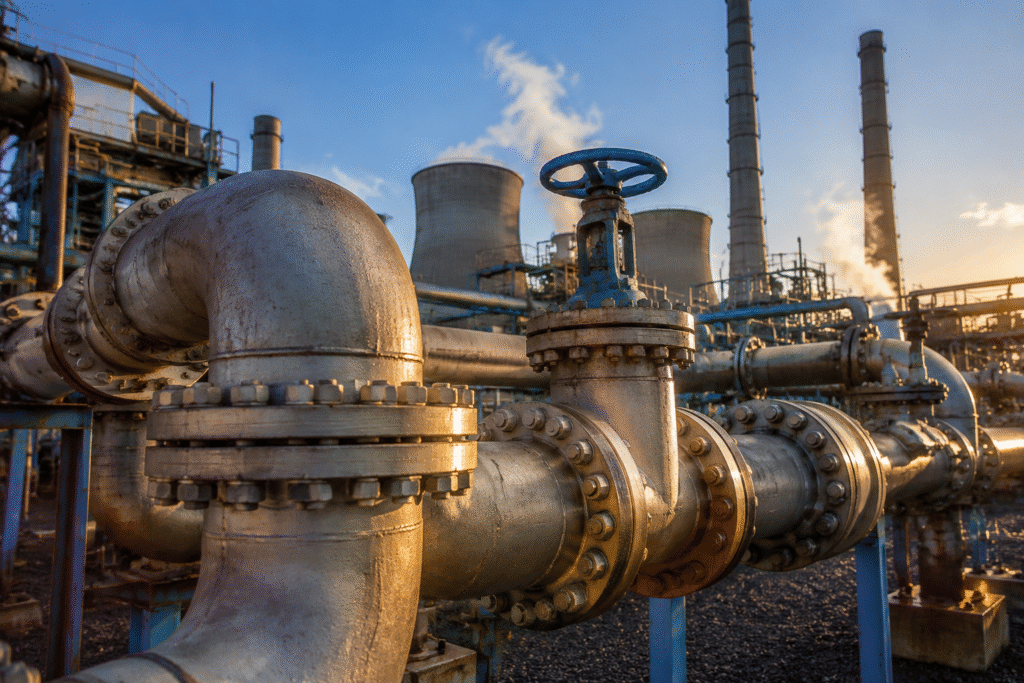
Guía del mercado de bridas para tubos de acero inoxidable: $5.8B Datos de la industria, 600# Calificaciones, Información sobre la selección de piezas roscadas y soldadas
El brida de tubería de acero inoxidable market is growing with global process industries that demand corrosion resistance, traceable quality, and reliable pressure containment. Según la investigación de Grand View (2024), El mercado mundial de bridas industriales se valoró en $5.8 mil millones en 2023 y se prevé que alcance $7.2 mil millones por 2030.
That growth reflects a clear B2B reality. Engineers and procurement managers need more than a product list. They need material guidance, standard compliance, pressure-class clarity, and supplier confidence for Stainless, Acero, Bridas, roscado, 600#, Pipe, and Flange applications.
Why the Stainless Steel Pipe Flange Market Is Expanding Across Industrial Sectors
Demand for stainless steel pipe flange products continues to rise because corrosion, falta del tiempo, and inspection risk remain expensive in industrial piping systems. Según Statista (2024), La industria del petróleo y el gas representa aproximadamente 35% del consumo global de bridas.
That share matters because upstream, centro de la corriente, and downstream assets require flanged joints that support maintenance access and sealing reliability. Además, operators increasingly specify alloy upgrades in sour service, costa afuera, desalinización, and chemical lines.
Regional production capacity also shapes sourcing decisions. Según IBISWorld (2024), Asia-Pacífico representa más de 45% de la producción mundial de bridas, siendo China el mayor fabricante.
Por lo tanto, buyers often evaluate Chinese manufacturers for both cost efficiency and export readiness. Sin embargo, supplier selection still depends on certifications, machining control, exactitud dimensional, and documentation quality.
In practical terms, stainless steel flanges win share because they combine corrosion resistance with mechanical strength and good fabrication characteristics. Grades such as ASTM A182 F304, F304L, F316, and F316L remain standard choices for refineries, water treatment plants, and food-grade utility systems.
Según la inteligencia de Mordor (2024), growth in water infrastructure and energy projects is accelerating demand for stainless and duplex piping components in Asia and the Middle East. Como resultado, buyers increasingly ask for EN 10204 3.1 inspection certificates, PMI, hydrostatic test data, and surface finish records.
For many EPCs and distributors, the purchase decision now includes more than nominal size and pressure class. It includes lead time, CNC machining capability, export packaging, and the ability to produce custom dimensions in ANSI B16.5, ANSI B16.47, DIN, JIS, GOST, y ES 1092 formats.
This is where an experienced manufacturer adds measurable value. SASA FLANGE serves Oil & Gas, Petroquímico, Generación de energía, Construcción naval & Marina, Tratamiento de agua, and Construction markets with ISO 9001:2015 and PED 2014/68/EU certified manufacturing processes.
Además, sourcing teams increasingly consolidate purchasing around fewer approved vendors. That trend favors suppliers that can produce stainless steel flanges and matching fittings such as elbows, camisetas, reductores, and caps in coordinated project batches.
Según Market Research Future (2024), industrial piping component demand is benefiting from continued capex in LNG, fuerza, and process automation projects. Como consecuencia, flange buyers are prioritizing lifecycle cost over unit price alone.
An Intriguing shift is also visible in digital procurement. Buyers search for exact combinations like Stainless Steel Threaded Pipe Flange, 4 inch stainless steel pipe flange, or stainless steel flange 2, which means technical content must answer specification questions early in the buying journey.
Technical Selection of Stainless Steel Flanges, Threaded Options, y 600# Calificaciones
Choosing the right stainless steel pipe flange starts with service conditions, not catalog order. Presión, temperatura, tolerancia a la corrosión, cronograma de tuberías, gasket type, and maintenance frequency all affect the correct flange design.
De acuerdo a ASME B16.5, flange dimensions, tolerancias, clasificaciones de presión-temperatura, calificación, and facing rules are standardized for NPS 1/2 a través de 24. Para diámetros mayores, ANSI/ASME B16.47 generally governs dimensions and drilling patterns.
As John Reynolds, pressure equipment specialist and author on mechanical integrity, estados: “Most flange failures are selection failures before they become sealing failures in operation.” That point is critical because a mismatch between flange class, frente a, and bolt load can undermine even premium material grades.
For procurement teams, the first technical split is flange type. Weld neck flanges suit high-pressure and cyclic service. Slip-on flanges simplify alignment in lower-demand lines. Threaded designs work where welding is restricted, while blind flanges close line ends or vessel nozzles.
- Brida de cuello soldado: Best for high pressure, vibración, ciclo térmico, and critical process service.
- Slip-On Flange: Cost-effective for moderate pressure systems and easier fit-up in fabrication shops.
- Brida de soldadura: Common in small-bore, high-pressure piping where smooth bore transition matters.
- Brida roscada: Suitable for non-weld installations, hazardous zones, and some utility services.
- Brida ciega: Used for pipeline isolation, hydrotesting, y futuros puntos de expansión.
- Brida articular: Useful where frequent dismantling or expensive alloy stub ends justify rotation flexibility.
Material selection is the second major variable. ASTM A182 F304 and F304L are widely used for general corrosion resistance. F316 and F316L perform better in chloride-bearing media because molybdenum improves pitting resistance.
According to NACE guidance and common industry practice, contenido de cloruro, operating temperature, and oxygen availability must be considered together when evaluating stainless grades. Por lo tanto, 316L often becomes the safer baseline in marine, costero, and mildly aggressive chemical duty.
Como Dr.. Karen Smith, materials scientist in corrosion engineering, estados: “304 is versatile, but 316L usually pays back fast where chlorides threaten crevice corrosion or unplanned maintenance.” That is why advanced buyers compare not just purchase price, but total installed cost.
Pressure class requires equal attention. Classes 150, 300, y 600# are common in process piping, but the correct rating depends on material group and operating temperature under ASME pressure-temperature tables. A 600# Stainless flange is not simply a thicker version of Class 150. It reflects a defined dimensional and pressure-temperature envelope.
According to ASTM and ASME references, forged stainless steel flanges typically offer better grain structure and pressure performance than cast alternatives in critical service. Como consecuencia, many refinery and power projects specify forged A182 flanges with full traceability.
- 304 / 304l: General industrial service, procesamiento de alimentos, clean water, utility piping.
- 316 / 316l: Procesamiento químico, seawater-adjacent service, productos farmaceuticos, marine systems.
- 904l: Stronger resistance in aggressive acids and high-chloride process conditions.
- 2205 Dúplex: Higher strength and improved chloride stress corrosion resistance.
- 2507 Súper Dúplex: Severe offshore, desalinización, and high-salinity systems.
- Aleaciones de níquel: Inconel, Monel, and Hastelloy for extreme corrosion or high-temperature requirements.
Size range is another procurement issue that competitor catalog pages often under-explain. Standard stainless steel pipe flange sizes usually run from 1/2 pulgada a 24 inch in ASME B16.5, while larger sizes may follow B16.47 Series A or B. Pipe schedule also matters because bore dimensions must match the connected pipe.
Por ejemplo, a 4 inch stainless steel pipe flange can be ordered for Sch 10S, Sch 40S, or Sch 80S pipe, each with a different bore. Likewise, a stainless steel flange 2 for instrumentation or utility lines may require threaded, soldadura de encaje, or raised face geometry depending on plant standards.
Respaldado por mecanizado CNC avanzado y pruebas de calidad integrales, SASA FLANGE fabrica bridas en 304, 316, 904l, 2205, 2507, A182, Inconel, Monel, Hastelloy, and Titanium grades. The company also offers custom sizes from 1/2 pulgada a 60 inch with factory-direct supply for global OEM, EPC, and distributor programs.
According to ISO and PED-aligned quality expectations, document control is now central to export projects. Por lo tanto, many buyers request MTCs, trazabilidad del número de calor, ferrite checks for duplex grades, PMI, and dimensional inspection reports before shipment release.
ASME, ASTM, DIN, and EN Compliance Requirements for Stainless Steel Pipe Flange Procurement
Standards compliance is where many sourcing errors begin. A flange may look correct on paper, yet fail project requirements if the standard, frente a, perforación, or material specification is mismatched.
For North American and many international projects, ASME B16.5 y ASME B16.47 define dimensions and pressure classes. ASTM A182 covers forged or rolled alloy and stainless steel pipe flanges, guarniciones, valvulas, and parts for high-temperature service.
European projects often specify EN 1092 flanges and PED documentation. German-origin projects may also reference DIN legacy dimensions, while marine and shipbuilding work can involve DNV or customer-approved standards.
The following references are especially important for engineers and buyers.
- ASME B16.5: Dimensiones, tolerancias, clasificaciones de presión-temperatura, frente a, and marking for NPS 1/2 a 24.
- ASME B16.47: Large-diameter steel flanges, typically NPS 26 a 60.
- ASTM A182: Material specification for forged stainless and alloy flanges.
- ASME B16.9: Factory-made wrought butt welding fittings such as elbows and reducers.
- EN 1092: European flange dimensions and pressure ratings.
- DEP 2014/68/UE: Regulatory framework for pressure equipment placed on the EU market.
- NACE MR0175 / ISO 15156: Material suitability guidance for sour service environments.
Buyers should also distinguish dimensional compliance from material compliance. A flange can meet ASME B16.5 dimensions but still fail if the chemistry, tensile values, ferrite content, or impact properties do not match the required ASTM or project specification.
According to ASME and ASTM published requirements, clase de presión, frente a, bolt circle, and bore must align with the mating component. Por lo tanto, teams should verify nominal pipe size, cronograma, raised face or RTJ profile, and stud bolt selection in a single review step.
Practical comparison points include the following.
- Raised Face: Common in refinery, utility, and general process applications.
- RTJ: Preferred in high-pressure and critical hydrocarbon service.
- Flat Face: Used with cast iron equipment or where full-face gasket loading is required.
- roscado: Selected where welding is undesirable or prohibited.
As Mark Bell, senior piping engineer, estados: “The fastest way to delay a shutdown job is ordering the right material to the wrong drilling or facing standard.” That is why disciplined specification review saves more money than last-minute expediting.
Con ISO 9001:2015, DEP 2014/68/UE, y anuncio 2000 cartas credenciales, SASA FLANGE supports projects that require export compliance and controlled manufacturing records. The company can also provide EN 10204 3.1 documentation and coordinated supply of matching fittings for complete line classes.
For formal standard verification, procurement teams should reference primary sources such as ASME. That extra step improves bid accuracy and reduces non-conformance risk during inspection and installation.
Application Guide for Oil and Gas, Químico, Fuerza, and Marine Projects
Application context should drive every stainless steel pipe flange decision. The same nominal size may need a very different grade, frente a, and class depending on media, external environment, and maintenance philosophy.
En petróleo y gas, flange integrity affects safety, emissions, and uptime. Según Statista (2024), the sector consumes about 35% of global flanges, so the preference for robust forged connections is unsurprising.
Typical oil and gas selections include weld neck and RTJ designs for high-pressure hydrocarbons. In sour service or offshore exposure, teams may shift from 316L to duplex or super duplex where chlorides and stress conditions justify the upgrade.
Chemical processing creates a different decision tree. Corrosion resistance usually matters more than simple mechanical strength because acids, chlorides, and cleaning cycles can accelerate localized attack.
Por ejemplo, 316L is common in moderate chemical service, while 904L or nickel alloys may be preferred in severe environments. Como consecuencia, buyers should review media concentration, operating temperature, and cleaning chemistry before finalizing flange grade.
Power generation often balances pressure, temperatura, and long maintenance intervals. Stainless steel flanges appear in condensate, auxiliary cooling, instrumentation, tratamiento de agua, and selected process lines, while alloy steel may dominate the hottest steam circuits.
Marine and shipbuilding applications emphasize salt exposure and tight installation spaces. Por lo tanto, 316l, dúplex, and carefully selected Threaded or compact configurations can be advantageous in utility, ballast, and equipment skids.
The following selection criteria help reduce mis-specification.
- Confirm design code and project standard before requesting quotes.
- Match flange bore to pipe schedule, not only nominal size.
- Check pressure class against operating temperature, not ambient conditions alone.
- Select facing type based on gasket design and leak-tightness target.
- Review corrosion risks including chlorides, condiciones de grieta, and cleaning agents.
- Specify documentation needs such as EN 10204 3.1, PMI, and hydrotest reports.
- Consider installation method when choosing between weld neck, deslizarse, soldadura de encaje, and Threaded designs.
- Ask about custom machining for non-standard drilling, long weld necks, and special facings.
Procurement teams also need realistic supply-chain planning. Según IBISWorld (2024), China remains the largest manufacturing base in Asia-Pacific, which supports large-volume sourcing but also makes supplier quality systems a key differentiator.
Servicio 50+ países de todo el petróleo & Gas, Petroquímico, Fuerza, e industrias marinas, SASA FLANGE combines broad material coverage with custom manufacturing support. That includes stainless steel flanges, bridas de acero al carbono, bridas de aleación, and fittings such as elbows, camisetas, reductores, and caps for integrated package supply.
For buyers comparing stainless steel pipe flange price options, the best evaluation method includes total cost variables. These include machining tolerance, delivery reliability, coating or passivation needs, informes de prueba, and claims risk from field mismatch.
Como resultado, high-performing sourcing teams create approved-vendor frameworks rather than shopping line items in isolation. For projects requiring special sizes, duplex grades, or coordinated fittings, contactando SASA FLANGE early can shorten technical clarification and improve quote accuracy.
Future Outlook for Stainless Steel Flanges and Strategic Buying Recommendations
The outlook for stainless steel pipe flange demand remains positive because energy transition, water infrastructure, marine upgrades, and process-industry modernization all require durable piping components. Según la investigación de Grand View (2024), the market is expected to grow from $5.8 mil millones en 2023 a $7.2 mil millones por 2030.
That growth will not be captured evenly across all suppliers. Buyers will favor manufacturers that offer faster traceability, broader alloy coverage, and compliance with international standards and inspection demands.
Según la inteligencia de Mordor (2024), digital procurement and shorter project cycles are pushing industrial buyers toward vendors that can respond with complete technical data at quotation stage. Por lo tanto, clear drawings, pressure-class tables, and material options now influence ranking in both search and sourcing platforms.
An Intriguing trend is the rise of engineered packages instead of single-part transactions. Buyers increasingly want stainless steel flanges and fittings supplied together, especially for shutdowns, skid fabrication, and export projects where document consistency matters.
Strategically, procurement managers should take five steps. First, standardize approved grades such as 304L, 316l, 2205, y 2507 by service environment. Segundo, prequalify vendors by certification and inspection capability. Third, request pricing by pressure class and facing, incluido 600# and RTJ options. Fourth, compare lead time and not only unit price. Fifth, verify documentation before production release.
Además, engineering teams should build selection guides around common search behavior. Terms such as Stainless Steel Threaded Pipe Flange, stainless steel pipe flange sizes, y 4 inch stainless steel pipe flange reflect real procurement intent and should map directly to stocked or made-to-order options.
For organizations looking to reduce sourcing risk while improving technical clarity, working with a manufacturer that understands ASME, ASTM, DIN, EN, PED, and project documentation requirements is a practical advantage. That approach supports better lifecycle value than buying purely on short-term cost.
Preguntas frecuentes
¿Para qué se utilizan las bridas de acero inoxidable??
●Se utilizan bridas de acero inoxidable para conectar tuberías., valvulas, zapatillas, y equipos a presión en sistemas que requieren resistencia a la corrosión, fortaleza, and maintainable joints.
●Según Statista (2024), oil and gas accounts for approximately 35% del consumo global de bridas, which shows how important flanged joints remain in critical service.
●They are widely applied in petrochemical, tratamiento de agua, procesamiento de alimentos, marina, and pharmaceutical plants where bolted access simplifies inspection and replacement.
●Common uses include line termination, equipment connection, instrument tie-ins, and isolation points with blind, weld neck, deslizarse, or Threaded designs.
●For projects requiring certified materials and traceable inspection records, trabajando con fabricantes establecidos como SASA FLANGE improves reliability and compliance.
¿Qué bridas están hechas de acero inoxidable??
●Stainless steel flanges are commonly produced in ASTM A182 grades such as F304, F304L, F316, F316L, 904l, dúplex 2205, and super duplex 2507.
●ASME B16.5 covers common types including weld neck, deslizarse, soldadura de encaje, junta de regazo, ciego, and Threaded Flange configurations from 1/2 pulgada a 24 pulgada.
●These Stainless products are selected when corrosion resistance, hygiene, or long service life matters more than the lowest upfront cost.
●Además, forged stainless steel flanges are preferred in many industrial applications because they offer strong mechanical properties and better traceability than non-critical alternatives.
●For exact grade matching by media, temperatura, and pressure class such as 600#, buyers should request technical support before ordering.
¿Fabrican accesorios para tuberías de acero inoxidable??
●Sí, manufacturers produce stainless steel pipe fittings including elbows, camisetas, reductores, gorras, and stub ends that match stainless steel flanges in the same piping system.
●De acuerdo a ASME B16.9, butt weld fittings follow standardized dimensional requirements, which helps engineers align fittings with compatible Pipe and Flange assemblies.
●Stainless steel fittings are widely available in 304, 316, 316l, 904l, dúplex, and nickel alloy grades for corrosive or high-purity service.
●Using matched materials across flanges and fittings reduces galvanic mismatch risk and simplifies documentation, welding qualification, and maintenance planning.
●For package procurement, many buyers prefer suppliers that can deliver flanges and fittings together with EN 10204 3.1 certificates and PMI records.
¿Cuál es el tipo de brida de tubería más resistente??
●Weld neck flanges are generally considered the strongest standard piping flange type for high-pressure, alta temperatura, and cyclic service.
●Their long tapered hub distributes stress more effectively, y ASME B16.5 weld neck designs are widely specified in refineries, plantas de energía, and offshore systems.
●In many severe services, an RTJ weld neck flange in a forged stainless or alloy grade performs better than slip-on or Threaded alternatives.
●Sin embargo, actual strength depends on material grade, clase de presión, bore match, selección de juntas, and bolt loading rather than flange shape alone.
●Para aplicaciones críticas, engineers should verify design conditions and request forged ASTM A182 material with full traceability.
What are standard stainless steel pipe flange sizes?
●Standard stainless steel pipe flange sizes under ASME B16.5 usually range from 1/2 pulgada a 24 pulgada, while larger diameters are typically covered by ASME B16.47.
●A 2 inch or 4 inch stainless steel pipe flange may have different bore dimensions depending on whether the connected Pipe is Sch 10S, Sch 40S, or Sch 80S.
●That is why size selection must include nominal pipe size, cronograma, tipo de revestimiento, and pressure class instead of flange diameter alone.
●In European projects, EN 1092 dimensions may apply, so drilling and pressure ratings can differ from ASME patterns.
●For custom large-diameter or mixed-standard projects, buyers should confirm all dimensions on approved drawings before production starts.
How do buyers compare stainless steel pipe flange price and supply options?
●Buyers should compare stainless steel pipe flange price using total delivered value, not only unit cost, because documentation, machining tolerance, and delivery performance affect real project cost.
●Según la investigación de Grand View (2024), the global industrial flange market reached $5.8 mil millones en 2023, which indicates a competitive but specification-driven sourcing environment.
●Price changes with material grade, tamaño, clase de presión, frente a, test requirements, and whether the flange is stock, custom-machined, or paired with fittings.
●A 4 inch 316L raised face weld neck flange will usually price differently from a 2 inch Stainless Steel Threaded Pipe Flange or a forged 600# blind flange because processing and material inputs differ.
●For fair comparison, procurement teams should request identical quote bases that include standards, certificados, inspección, packaging, and lead time.
Posts Relacionados
Definición de brida de orificio, Detalles y descripción general de bridas ASME B16.36: Datos de mercado, Guía de selección e información sobre cumplimiento
El mercado mundial de bridas industriales se valoró en $5.8 mil millones…
Guía del mercado de bridas de eliminación negras: Materiales, 3.5″ Compatibilidad, y datos de abastecimiento B2B para bridas de fregaderos de cocina
La demanda de bridas de eliminación negras está aumentando a medida que los compradores de accesorios de cocina…
Guía de tipos de bridas: 2024 Datos, Estándares, y mejores prácticas de selección para tuberías industriales
El mercado global de tipos de bridas continúa expandiéndose a medida que…
3 Guía de compra de bridas en pulgadas: Datos de mercado, Dimensiones, Clasificaciones de presión, y selección de bridas roscadas
El 3 La brida en pulgadas sigue siendo un componente crítico en la industria.…