
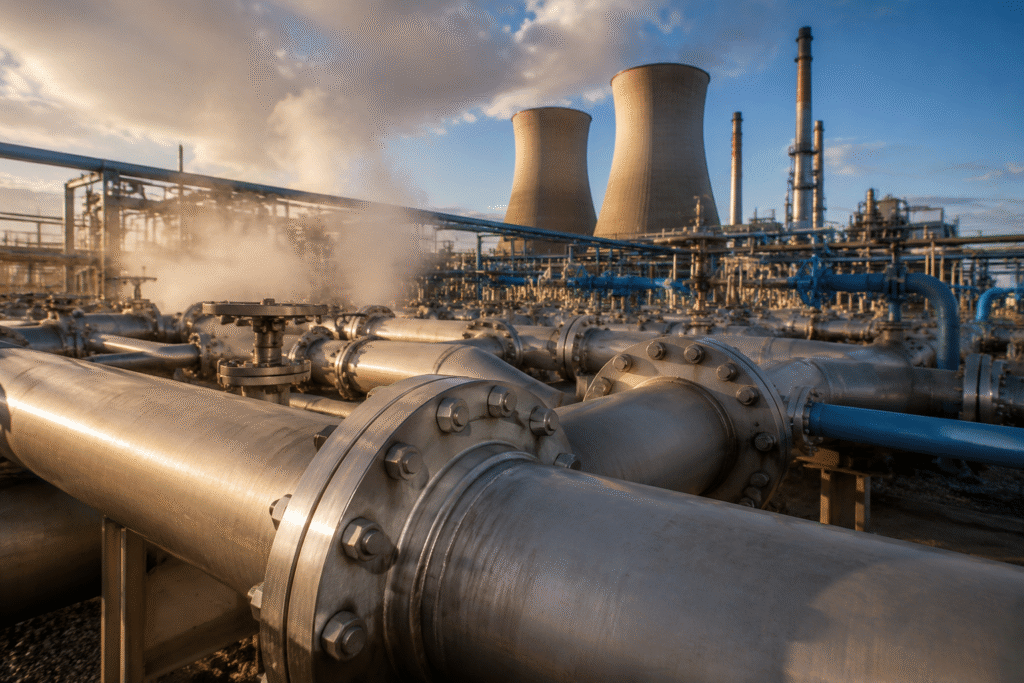
Guia de conformidade de flange de aço inoxidável ASME e EN
De acordo com a pesquisa Grand View (2024), o mercado global de flanges industriais foi avaliado em $5.8 bilhão em 2023 e está projetado para atingir $7.2 bilhão por 2030. Esse crescimento faz flange de tubo de aço inoxidável selection more strategic for EPC contractors, OEMs, and plant buyers who need corrosion resistance, conformidade, e valor do ciclo de vida.
Para engenheiros, a verdadeira decisão não é apenas sobre preço. It is about matching flange ratings, alloy grades, face types, and applicable standards such as ASME B16.5 e ASME B16.47 to the service environment.
Drivers do mercado industrial por trás da demanda por flanges de tubos de aço inoxidável
The global flange sector is expanding because energy, água, and process industries continue to invest in new pipeline systems and maintenance programs. De acordo com IBISWorld (2024), Ásia-Pacífico é responsável por mais de 45% da produção global de flanges, com a China continuando a ser o maior fabricante.
Essa concentração regional é importante para as equipes de compras. It affects lead time, rastreabilidade do moinho, capacidade de exportação, and the availability of stainless, liga, and carbon steel grades in both standard and custom dimensions.
De acordo com Statista (2024), a indústria de petróleo e gás é responsável por aproximadamente 35% do consumo global de flanges. Portanto, specifications for sour service, offshore corrosion, elevated temperature duty, and high-pressure piping continue to shape the global buying pattern for flange products.
Em paralelo, water treatment and marine sectors are raising demand for 316L, duplex, and higher-alloy materials. Além disso, stricter uptime targets are pushing buyers toward materials that reduce unplanned shutdowns and total installed cost.
De acordo com a Inteligência Mordor (2024), industrial infrastructure modernization in Asia and the Middle East is accelerating demand for pressure-rated piping components. Como resultado, buyers increasingly compare not only flange cost, but also documentation packages such as EN 10204 3.1, PMI, registros de hidroteste, e relatórios de inspeção dimensional.
The Hidden Advantages of stainless steel pipe flange products often appear after installation. Stainless grades can deliver better corrosion resistance, improved hygienic performance, resistência à oxidação mais forte, and lower maintenance frequency than many coated carbon steel alternatives.
No entanto, not all Stainless Steel Flanges? are equal. Grade selection should consider chloride content, process temperature, classe de pressão, compatibilidade da junta, and whether welding will affect sensitization resistance.
Como John Reynolds, a corrosion and materials engineer in the refining sector, estados: “A flange is never just a connector; é um limite de pressão, and material mismatch is one of the fastest ways to create long-term reliability issues.” That view aligns with ASME and ASTM best practice, where system integrity depends on the combined performance of flange, aparafusamento, junta, and weld preparation.
For buyers evaluating dependable supply partners, SASA FLANGE brings relevant industrial credentials to the discussion. Com ISO 9001:2015 e certificações PED 2014/68/EU, the company manufactures stainless steel flanges, flanges de aço carbono, flanges de liga, e acessórios para tubos para óleo & Gás, Petroquímica, Geração de energia, Marinho, Tratamento de Água, e projetos de construção.
SASA FLANGE also supports a wide range of grades, incluindo 304, 316, 316eu, 904eu, 2205, 2507, A105, A182, Inconel, Monel, Hastelloy, e titânio. Adicionalmente, it offers custom sizes from 1/2 polegada para 60 polegadas, backed by CNC machining and quality inspection for export markets.
Comparação técnica de tipos de flanges de tubos de aço inoxidável, Usos, e vantagens ocultas
The most effective way to Choose a Flange is to evaluate service conditions first and geometry second. Na prática, Tipo, face, agendar partida, classe de pressão, and material grade must work together across the whole Pipe system.
De acordo com a Pesquisa de Mercado Futuro (2024), industrial buyers increasingly prefer long-life piping components that lower maintenance intervals and downtime costs. Portanto, Stainless flange demand is rising in chemical, dessalinização, de qualidade alimentar, and offshore systems where corrosion resistance drives total value.
Como Dr.. Elena Markovic, a materials scientist focused on process metallurgy, estados: “The hidden cost of a low-grade flange is rarely visible at purchase, but it becomes obvious when chloride attack, vazamento na junta, or thermal cycling starts to compromise the joint.” Her comment is especially relevant when comparing 304, 316eu, 904eu, duplex 2205, e superduplex 2507.
The most common stainless steel pipe flange Types include weld neck, escorregar, cego, solda de soquete, rosqueado, e junta sobreposta. Each design has different stress distribution, requisitos de soldagem, maintenance benefits, and installation economics.
- Flange de pescoço soldado: Best for high pressure and cyclic service because the tapered hub improves stress transfer.
- Deslizar no flange: Popular for moderate-pressure systems because installation is simpler and fabrication cost is often lower.
- Flange cega: Usado para fechar extremidades de linha, válvulas, and vessel nozzles for testing or future expansion.
- Flange de solda de soquete: Comum em furo menor, high-pressure systems where alignment is important.
- Flange roscada: Útil onde a soldagem é restrita, embora as limitações de pressão e vibração devam ser consideradas.
- Flange de junta sobreposta: Preferred where frequent dismantling is required and stub ends simplify alignment.
When buyers compare 304 e 316 series stainless grades, molybdenum content is usually the dividing line. Nota 316 and 316L offer better resistance to chlorides and aggressive chemical media than 304 e 304L, which makes them common in marine, farmacêutico, and coastal process applications.
Para ambientes severos, higher alloys create measurable Hidden Advantages. Grades such as 904L, duplex 2205, e 2507 improve pitting resistance, resistência à corrosão sob tensão, and strength-to-weight performance, especially in brine, água do mar, and sour service conditions.
According to NACE guidance for corrosion control and material selection, chloride content and temperature strongly influence stainless performance in process systems (NACE, 2024). Consequentemente, a 316L Flange may perform well in one unit, while duplex becomes the safer option in another.
Pressure class and standard are equally important. ASME B16.5 geralmente cobre NPS 1/2 através 24, enquanto ASME B16.47 addresses larger diameter flanges from NPS 26 através 60, depending on Series A and Series B dimensions (ASME, 2023).
These distinctions affect bolt circle, espessura da flange, and weight. Portanto, buyers should not assume interchangeability across B16.5, B16.47, DIN, JIS, e sistemas EN.
- ASME B16.5: Padrão para flanges de tubos e acessórios flangeados, NPS 1/2 para 24.
- ASME B16.47: Flanges de aço de grande diâmetro, NPS 26 para 60.
- ASTM A182: Common forged material specification for stainless and alloy flanges.
- EN 1092-1: Widely used European flange standard.
- DIN e JIS: Important for regional project specifications and replacement compatibility.
A technical purchasing review should also include facing type and sealing philosophy. Rosto levantado, cara plana, junta tipo anel, and tongue-and-groove configurations all influence gasket seating stress and leak integrity.
According to API and ASME field data summarized by industry analysts, a significant share of bolted-joint leakage events trace back to installation issues rather than flange metallurgy alone. Como resultado, even the best Stainless Steel Pipe Flange can underperform if bolt load, flange alignment, or gasket compression is incorrect.
Apoiado por usinagem CNC avançada e testes de qualidade abrangentes, SASA FLANGE supplies weld neck, escorregar, cego, rosqueado, junta sobreposta, and custom Flanges for multi-standard projects. Manufacturing in 304, 316, 904eu, 2205, 2507 e outras notas premium, the company supports both standard procurement and engineered replacements.
Para equipes de projeto comparando fornecedores, material traceability is often decisive. EN 10204 3.1 certificação, PMI para verificação de liga, inspeção dimensional, and surface finish control help reduce receiving risk and site rework.
ASME B16.5, B16.47, ASTM, DIN, and EN Compliance for Stainless Steel Flange Procurement
Standards are the language of reliable flange procurement. Eles definem dimensões, classificações de pressão-temperatura, tolerâncias, testing expectations, and material requirements across global projects.
For forged stainless Flange products, ASTM A182 remains one of the most referenced specifications. Além disso, ASME B16.5 e ASME B16.47 establish dimensional and pressure class requirements that directly affect assembly compatibility.
De acordo com a ASME (2023), as classificações de pressão-temperatura variam de acordo com o grupo de material e classe de flange, incluindo classe 150, 300, 600, 900, 1500, e 2500. Portanto, buyers must verify not only nominal size, but also the exact standard, enfrentando, material, and service temperature before issuing a purchase order.
European and international projects often specify EN 1092-1, DIN, or mixed-standard interfaces. Em contraste, North American refinery and pipeline jobs often prioritize ASME, ASTM, and API references.
- ASME B16.5: Small and medium nominal sizes with established pressure classes.
- ASME B16.47: Large-diameter steel flanges with Series A and Series B variations.
- ASTM A182: Material properties for forged or rolled alloy and stainless steel flanges.
- EN 1092-1: European flange dimensions and pressure designations such as PN10, PN16, PN40.
- NACE MR0175: Material guidance for sour service environments where sulfide stress cracking is a concern.
Procurement managers should also ask about compliance packages. A strong documentation set typically includes MTC 3.1, rastreabilidade do número de calor, relatórios dimensionais, inspeção visual, PMI quando necessário, and packing controls for export shipment.
Inspection capability is a practical differentiator in global sourcing. According to ISO quality management guidance and PED requirements, controle de processo, calibration discipline, and documented verification are central to pressure component compliance (ISO, 2015; DEP, 2014/68/UE).
That is where supplier maturity matters. Com ISO 9001:2015, PED 2014/68/EU, e ANÚNCIO 2000 credenciais, SASA FLANGE aligns manufacturing and quality control with project-driven documentation needs.
A empresa também atende 50+ países em todo o petróleo & Gás, Petroquímica, Poder, e indústrias marítimas. Além disso, it offers export-oriented support for stainless steel flanges, flanges de aço carbono, flanges de liga, e ASME B16.9 pipe fittings including elbows, camisetas, redutores, e bonés.
Buyers replacing imported components should pay attention to interchangeability limits. A nominal 4 inch stainless steel pipe flange under ASME may not match the drilling pattern or thickness of a DIN or EN equivalent.
For technical verification, engineers should consult the official standards publisher when preparing final specifications, como ASME.org. That extra step can prevent costly site mismatch, especially on revamp projects with mixed legacy systems.
Além disso, pressure systems in corrosive duty may require more than dimensional compliance. Material hardness, ferrite balance in duplex grades, and surface finish can all affect long-term sealing reliability.
Como escolher flange de tubo de aço inoxidável para óleo, Gás, Poder, Marinho, e Sistemas de Água
The best stainless steel pipe flange choice depends on media, temperatura, pressão, aula de inspeção, e filosofia de manutenção. No entanto, many procurement delays happen because specifications focus only on size and omit service conditions.
Em óleo & Gás, weld neck and RTJ configurations often dominate critical lines because they support higher pressure and better joint integrity. De acordo com Statista (2024), this sector alone consumes about 35% of all global flanges, which explains why hydrocarbon standards heavily influence product design and inventory planning.
Em plantas petroquímicas e químicas, alloy selection becomes the central issue. 316L may be adequate for general corrosion resistance, enquanto 904L, Hastelloy, or duplex can be required for chloride, ácido sulfúrico, or mixed-media conditions.
Na geração de energia, thermal cycling and pressure fluctuations shape Flange decisions. Portanto, engineers often prioritize forged materials, controlled machining tolerances, and proven gasket compatibility over lowest initial cost.
Marine and shipbuilding applications add another layer of complexity. Spray de sal, umidade, splash zone exposure, and maintenance access frequently justify upgrading from 304 to 316L or duplex grades.
Water treatment systems often require a balance between cost and corrosion life. Stainless options can outperform coated carbon steel where disinfection chemistry, água salobra, or intermittent wet-dry cycles accelerate surface degradation.
- Choose 304/304L for general industrial service with moderate corrosion exposure and good weldability.
- Escolha 316/316L for chloride-bearing environments, exposição marinha, and more aggressive process media.
- Escolher 2205 duplex for stronger chloride resistance and higher mechanical strength.
- Choose 904L or nickel alloys for highly corrosive chemical duty.
- Escolha o pescoço de solda for severe pressure, vibração, e ciclagem térmica.
- Choose slip on where fabrication simplicity and budget are priorities.
- Choose blind for isolation, testando, and future line expansion.
Como Michael Trent, a senior piping engineer for offshore EPC projects, estados: “The right flange is selected by the system, not by the catalog page.” That means engineers should review line class, tolerância à corrosão, estilo de junta, material de aparafusamento, and fabrication method together.
Practical sourcing criteria should include more than material grade. Buyers should evaluate mill source, capacidade de usinagem, consistência dimensional, embalagem de exportação, tempo de resposta, and whether the vendor can support non-standard drilling or thickness requirements.
For projects requiring custom manufacturing, SASA FLANGE supports a broad size range from 1/2 polegada para 60 inches with factory-direct pricing. Adicionalmente, the company can produce stainless, carbono, liga, and special material Flanges for project-specific drawings and mixed-standard packages.
That flexibility is valuable when contractors need both flanges and fittings from one source. It reduces supplier fragmentation, simplifies quality review, and can improve logistics planning for shutdown and turnaround work.
Perspectivas futuras para fornecimento de flanges para tubos de aço inoxidável, Preços, and Strategic Sourcing
Market conditions indicate that industrial buyers will continue balancing cost control with reliability. De acordo com a pesquisa Grand View (2024), the flange market is forecast to grow from $5.8 bilhão em 2023 para $7.2 bilhão por 2030, which signals sustained procurement activity across infrastructure and process industries.
Ao mesmo tempo, material price volatility will remain a challenge. Níquel, molibdênio, energy costs, and freight conditions directly affect the selling price of stainless steel pipe flange products.
De acordo com IBISWorld (2024), Asia-Pacific contributes more than 45% da produção global de flanges. Portanto, strategic buyers should secure qualified supply channels in advance rather than waiting for urgent project windows.
Three practical recommendations stand out for 2024 e além. Primeiro, standardize approved material and documentation requirements early in the RFQ process.
Segundo, compare suppliers on delivered value rather than piece price alone. That includes machining quality, capacidade de teste, confiabilidade do prazo de entrega, e experiência de exportação.
Terceiro, build flexibility into sourcing plans for both ASME and international projects. Mixed-standard environments are increasingly common, and they require technical review before release to production.
For companies planning new projects or replacement programs, a technically capable manufacturer can reduce commercial and operational risk. In that context, trabalhando com SASA FLANGE offers buyers access to certified manufacturing, ampla cobertura de materiais, and responsive support for industrial flange and fitting requirements.
Perguntas frequentes
Quais são os diferentes tipos de flanges de aço inoxidável?
●Os principais tipos de flange de aço inoxidável são pescoço de solda, escorregar, cego, rosqueado, solda de soquete, e junta sobreposta, e ASME B16.5 covers most standard sizes from NPS 1/2 para 24.
●Each type serves a different function because weld neck flanges handle high stress well, while slip on flanges reduce fabrication complexity in moderate-pressure systems.
●Para projetos que exigem seleção correta do tipo, verificação de classe de pressão, e rastreabilidade de materiais, trabalhando com fabricantes estabelecidos como SASA FLANGE helps ensure better fit-up and documentation.
O que é melhor 304 ou 420 aço inoxidável?
●Nota 304 is generally better for stainless steel pipe flange service because it offers stronger corrosion resistance and better weldability than 420 in most industrial piping applications.
●Nota 420 is a martensitic stainless steel with higher hardness, but it is less suitable for corrosive flange duty where sealing reliability and weld performance matter.
●For most process, marinho, e sistemas de água, buyers should prioritize 304, 316, or duplex grades and confirm ASTM A182 compliance before ordering.
Quais são os três tipos de flanges?
●The three most commonly specified flange types in industrial projects are weld neck, escorregar, and blind flanges because they cover most connection, transição, and isolation needs.
●Weld neck is preferred for severe pressure and temperature cycles, slip on is common for economy and ease of installation, and blind flanges are used to close line ends or test sections.
●Engineers should still review service conditions, because threaded or lap joint flanges may be more suitable in small bore or frequent maintenance applications.
Qual é o código ASME para flanges de aço inoxidável?
●The primary ASME dimensional standards for stainless steel flanges are ASME B16.5 e ASME B16.47, enquanto ASTM A182 commonly defines forged stainless material requirements.
●ASME B16.5 aplica-se ao NPS 1/2 através 24, e ASME B16.47 addresses large-diameter flanges from NPS 26 através 60 with Series A and Series B differences.
●Buyers should specify both the ASME standard and the ASTM material grade on purchase documents to avoid dimensional or metallurgical mismatch.
How do I evaluate stainless steel pipe flange price?
●Stainless steel pipe flange price depends on material grade, classe de pressão, tipo de flange, raw material costs, complexidade de usinagem, e requisitos de certificação, como EN 10204 3.1.
●De acordo com a pesquisa Grand View (2024), o mercado global de flanges atingiu $5.8 bilhão em 2023, and that scale reflects ongoing cost pressure from alloy metals, energia, and logistics.
●Para comparar cotações com precisão, buyers should request matched specifications for standard, tamanho, tipo de rosto, aula, test documents, and delivery terms before making a decision.
Como escolho um fabricante ou fornecedor de flange confiável?
●A reliable flange manufacturer should have relevant certifications, sistemas de qualidade documentados, experiência de exportação, and the ability to supply ASME, ASTM, DIN, and EN compliant products.
●De acordo com IBISWorld (2024), A Ásia-Pacífico representa mais de 45% da produção global de flanges, so supplier qualification should include traceability, capacidade de inspeção, and shipment performance.
●For buyers needing stainless steel flanges and fittings from one source, partnering with qualified producers such as SASA FLANGE can reduce sourcing risk and improve project coordination.
Posts Relacionados
Acabamento da face do flange: Serrilhas concêntricas vs espirais explicadas
As serrilhas concêntricas e espirais são acabamentos de face de flange usinados…
Dúplex 2205 vs Flanges 316L: Qual material você deve escolher?
Resposta rápida: Dúplex 2205 flanges são geralmente o candidato mais forte…

Definição de flange de orifício, Detalhes e visão geral dos flanges ASME B16.36: Dados de mercado, Guia de seleção e insights de conformidade
O mercado global de flanges industriais foi avaliado em $5.8 bilhão…

Guia de mercado de flange de descarte preto: Materiais, 3.5″ Compatibilidade, e dados de fornecimento B2B para flanges de pia de cozinha
A demanda por flanges descartáveis pretos está aumentando à medida que os compradores de utensílios de cozinha…