
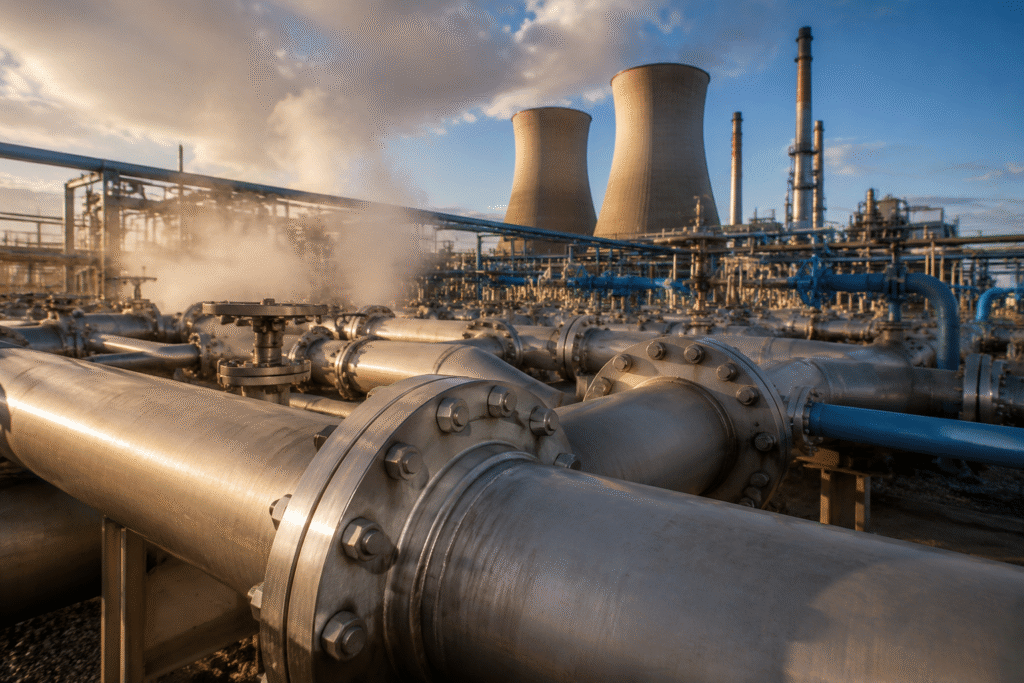
คู่มือการปฏิบัติตามหน้าแปลนเหล็กสแตนเลส ASME และ EN
จากการวิจัยของแกรนด์วิว (2024), ตลาดหน้าแปลนอุตสาหกรรมทั่วโลกมีมูลค่าอยู่ที่ $5.8 พันล้านใน 2023 และคาดว่าจะไปถึง $7.2 พันล้านโดย 2030. การเติบโตนั้นทำให้ หน้าแปลนท่อสแตนเลส selection more strategic for EPC contractors, OEM, and plant buyers who need corrosion resistance, การปฏิบัติตาม, และมูลค่าวงจรชีวิต.
สำหรับวิศวกร, the real decision is not only about price. It is about matching flange ratings, alloy grades, ประเภทใบหน้า, and applicable standards such as ASME B16.5 และ ASME B16.47 to the service environment.
ตัวขับเคลื่อนตลาดอุตสาหกรรมที่อยู่เบื้องหลังความต้องการหน้าแปลนท่อสแตนเลส
The global flange sector is expanding because energy, น้ำ, and process industries continue to invest in new pipeline systems and maintenance programs. อ้างอิงจาก IBISWorld (2024), บัญชีเอเชียแปซิฟิกมีมากกว่า 45% ของการผลิตหน้าแปลนทั่วโลก, โดยจีนยังคงเป็นผู้ผลิตรายใหญ่ที่สุด.
การกระจุกตัวในระดับภูมิภาคมีความสำคัญต่อทีมจัดซื้อ. มันส่งผลต่อระยะเวลารอคอย, mill traceability, ความสามารถในการส่งออก, and the availability of stainless, โลหะผสม, and carbon steel grades in both standard and custom dimensions.
ตามสถิติของสตาติสต้า (2024), อุตสาหกรรมน้ำมันและก๊าซมีสัดส่วนประมาณ 35% ของการบริโภคหน้าแปลนทั่วโลก. ดังนั้น, specifications for sour service, offshore corrosion, elevated temperature duty, and high-pressure piping continue to shape the global buying pattern for flange products.
ในแบบคู่ขนาน, water treatment and marine sectors are raising demand for 316L, ดูเพล็กซ์, and higher-alloy materials. นอกจากนี้, stricter uptime targets are pushing buyers toward materials that reduce unplanned shutdowns and total installed cost.
ตามข้อมูลของ Mordor Intelligence (2024), industrial infrastructure modernization in Asia and the Middle East is accelerating demand for pressure-rated piping components. ส่งผลให้, buyers increasingly compare not only flange cost, but also documentation packages such as EN 10204 3.1, พีเอ็มไอ, บันทึกการทดสอบไฮโดรเทส, และรายงานการตรวจสอบมิติ.
The Hidden Advantages of stainless steel pipe flange products often appear after installation. Stainless grades can deliver better corrosion resistance, improved hygienic performance, ต้านทานการเกิดออกซิเดชันที่แข็งแกร่งขึ้น, and lower maintenance frequency than many coated carbon steel alternatives.
อย่างไรก็ตาม, ไม่ใช่หน้าแปลนสแตนเลสทั้งหมด? are equal. Grade selection should consider chloride content, อุณหภูมิกระบวนการ, ระดับความดัน, ความเข้ากันได้ของปะเก็น, and whether welding will affect sensitization resistance.
ดังเช่นจอห์น เรย์โนลด์ส, a corrosion and materials engineer in the refining sector, รัฐ: “A flange is never just a connector; มันเป็นขอบเขตความกดดัน, and material mismatch is one of the fastest ways to create long-term reliability issues.” That view aligns with ASME and ASTM best practice, where system integrity depends on the combined performance of flange, การโบลต์, ปะเก็น, and weld preparation.
For buyers evaluating dependable supply partners, SASA FLANGE brings relevant industrial credentials to the discussion. กับ ISO 9001:2015 และการรับรอง PED 2014/68/EU, the company manufactures stainless steel flanges, หน้าแปลนเหล็กคาร์บอน, หน้าแปลนโลหะผสม, และอุปกรณ์ท่อสำหรับน้ำมัน & แก๊ส, ปิโตรเคมี, การผลิตไฟฟ้า, มารีน, การบำบัดน้ำ, และโครงการก่อสร้าง.
SASA FLANGE also supports a wide range of grades, รวมทั้ง 304, 316, 316ล, 904ล, 2205, 2507, A105, A182, อินโคเนล, โมเนล, ฮาสเตลลอย, และไทเทเนียม. นอกจากนี้, it offers custom sizes from 1/2 นิ้วถึง 60 นิ้ว, backed by CNC machining and quality inspection for export markets.
Technical Comparison of Stainless Steel Pipe Flange Types, การใช้งาน, และข้อดีที่ซ่อนอยู่
The most effective way to Choose a Flange is to evaluate service conditions first and geometry second. ในทางปฏิบัติ, พิมพ์, ใบหน้า, ตารางการแข่งขัน, ระดับความดัน, and material grade must work together across the whole Pipe system.
ตามการวิจัยตลาดอนาคต (2024), industrial buyers increasingly prefer long-life piping components that lower maintenance intervals and downtime costs. ดังนั้น, Stainless flange demand is rising in chemical, การแยกเกลือออกจากน้ำ, เกรดอาหาร, and offshore systems where corrosion resistance drives total value.
ในฐานะดร. เอเลนา มาร์โควิช, a materials scientist focused on process metallurgy, รัฐ: “The hidden cost of a low-grade flange is rarely visible at purchase, but it becomes obvious when chloride attack, การรั่วไหลของปะเก็น, or thermal cycling starts to compromise the joint.” Her comment is especially relevant when comparing 304, 316ล, 904ล, ดูเพล็กซ์ 2205, และซูเปอร์ดูเพล็กซ์ 2507.
The most common stainless steel pipe flange Types include weld neck, ลื่นบน, ตาบอด, เชื่อมซ็อกเก็ต, เกลียว, และข้อต่อตัก. Each design has different stress distribution, welding requirements, maintenance benefits, and installation economics.
- หน้าแปลนคอเชื่อม: Best for high pressure and cyclic service because the tapered hub improves stress transfer.
- สลิปบนหน้าแปลน: Popular for moderate-pressure systems because installation is simpler and fabrication cost is often lower.
- หน้าแปลนตาบอด: ใช้เพื่อปิดปลายบรรทัด, วาล์ว, and vessel nozzles for testing or future expansion.
- หน้าแปลนเชื่อมซ็อกเก็ต: พบได้ทั่วไปในรูขนาดเล็ก, high-pressure systems where alignment is important.
- หน้าแปลนเกลียว: มีประโยชน์ในกรณีที่จำกัดการเชื่อม, although pressure and vibration limitations must be considered.
- หน้าแปลนร่วมตัก: Preferred where frequent dismantling is required and stub ends simplify alignment.
When buyers compare 304 และ 316 series stainless grades, molybdenum content is usually the dividing line. ระดับ 316 and 316L offer better resistance to chlorides and aggressive chemical media than 304 และ 304 ลิตร, which makes them common in marine, ยา, and coastal process applications.
For severe environments, higher alloys create measurable Hidden Advantages. Grades such as 904L, ดูเพล็กซ์ 2205, และ 2507 improve pitting resistance, ความต้านทานการแตกร้าวของการกัดกร่อนจากความเครียด, and strength-to-weight performance, especially in brine, น้ำทะเล, and sour service conditions.
According to NACE guidance for corrosion control and material selection, chloride content and temperature strongly influence stainless performance in process systems (เนซ, 2024). เพราะเหตุนี้, a 316L Flange may perform well in one unit, while duplex becomes the safer option in another.
Pressure class and standard are equally important. ASME B16.5 โดยทั่วไปครอบคลุมถึง NPS 1/2 ผ่าน 24, ในขณะที่ ASME B16.47 จัดการกับหน้าแปลนที่มีเส้นผ่านศูนย์กลางใหญ่ขึ้นจาก NPS 26 ผ่าน 60, depending on Series A and Series B dimensions (ASME, 2023).
These distinctions affect bolt circle, ความหนาของหน้าแปลน, and weight. ดังนั้น, buyers should not assume interchangeability across B16.5, บ16.47, DIN, JIS, และระบบ EN.
- ASME B16.5: มาตรฐานสำหรับหน้าแปลนท่อและอุปกรณ์หน้าแปลน, กรมอุทยานฯ 1/2 ถึง 24.
- ASME B16.47: หน้าแปลนเหล็กเส้นผ่านศูนย์กลางขนาดใหญ่, กรมอุทยานฯ 26 ถึง 60.
- ASTM A182: Common forged material specification for stainless and alloy flanges.
- EN 1092-1: Widely used European flange standard.
- ดินและ JIS: Important for regional project specifications and replacement compatibility.
A technical purchasing review should also include facing type and sealing philosophy. เงยหน้าขึ้น, หน้าแบน, ข้อต่อชนิดแหวน, and tongue-and-groove configurations all influence gasket seating stress and leak integrity.
According to API and ASME field data summarized by industry analysts, a significant share of bolted-joint leakage events trace back to installation issues rather than flange metallurgy alone. ส่งผลให้, even the best Stainless Steel Pipe Flange can underperform if bolt load, flange alignment, or gasket compression is incorrect.
ได้รับการสนับสนุนจากเครื่องจักร CNC ขั้นสูงและการทดสอบคุณภาพที่ครอบคลุม, SASA FLANGE supplies weld neck, ลื่นบน, ตาบอด, เกลียว, ข้อต่อตัก, and custom Flanges for multi-standard projects. Manufacturing in 304, 316, 904ล, 2205, 2507 และเกรดพรีเมี่ยมอื่นๆ, the company supports both standard procurement and engineered replacements.
For project teams comparing suppliers, material traceability is often decisive. EN 10204 3.1 การรับรอง, PMI สำหรับการตรวจสอบโลหะผสม, การตรวจสอบมิติ, and surface finish control help reduce receiving risk and site rework.
ASME B16.5, บ16.47, ASTM, DIN, and EN Compliance for Stainless Steel Flange Procurement
Standards are the language of reliable flange procurement. พวกเขากำหนดมิติ, การจัดอันดับความดันอุณหภูมิ, ความคลาดเคลื่อน, testing expectations, and material requirements across global projects.
For forged stainless Flange products, ASTM A182 remains one of the most referenced specifications. นอกจากนี้, ASME B16.5 และ ASME B16.47 establish dimensional and pressure class requirements that directly affect assembly compatibility.
ตามข้อมูลของ ASME (2023), การให้คะแนนอุณหภูมิความดันจะแตกต่างกันไปตามกลุ่มวัสดุและประเภทหน้าแปลน, รวมถึงคลาสด้วย 150, 300, 600, 900, 1500, และ 2500. ดังนั้น, buyers must verify not only nominal size, but also the exact standard, หันหน้าไปทาง, วัสดุ, and service temperature before issuing a purchase order.
European and international projects often specify EN 1092-1, DIN, or mixed-standard interfaces. ในทางตรงกันข้าม, North American refinery and pipeline jobs often prioritize ASME, ASTM, and API references.
- ASME B16.5: Small and medium nominal sizes with established pressure classes.
- ASME B16.47: Large-diameter steel flanges with Series A and Series B variations.
- ASTM A182: Material properties for forged or rolled alloy and stainless steel flanges.
- EN 1092-1: European flange dimensions and pressure designations such as PN10, PN16, PN40.
- NACE MR0175: Material guidance for sour service environments where sulfide stress cracking is a concern.
Procurement managers should also ask about compliance packages. A strong documentation set typically includes MTC 3.1, การติดตามหมายเลขความร้อน, รายงานมิติ, การตรวจสอบด้วยสายตา, PMI เมื่อจำเป็น, and packing controls for export shipment.
Inspection capability is a practical differentiator in global sourcing. According to ISO quality management guidance and PED requirements, การควบคุมกระบวนการ, calibration discipline, and documented verification are central to pressure component compliance (ISO, 2015; พีอีดี, 2014/68/สหภาพยุโรป).
That is where supplier maturity matters. กับ ISO 9001:2015, พีอีดี 2014/68/สหภาพยุโรป, และโฆษณา 2000 ข้อมูลรับรอง, SASA FLANGE aligns manufacturing and quality control with project-driven documentation needs.
ทางบริษัทยังให้บริการ 50+ ประเทศทั่วน้ำมัน & แก๊ส, ปิโตรเคมี, พลัง, และอุตสาหกรรมทางทะเล. นอกจากนี้, it offers export-oriented support for stainless steel flanges, หน้าแปลนเหล็กคาร์บอน, หน้าแปลนโลหะผสม, และ ASME B16.9 pipe fittings including elbows, เสื้อยืด, ตัวลด, และหมวกแก๊ป.
Buyers replacing imported components should pay attention to interchangeability limits. A nominal 4 inch stainless steel pipe flange under ASME may not match the drilling pattern or thickness of a DIN or EN equivalent.
For technical verification, engineers should consult the official standards publisher when preparing final specifications, เช่น ASME.org. That extra step can prevent costly site mismatch, especially on revamp projects with mixed legacy systems.
นอกจากนี้, pressure systems in corrosive duty may require more than dimensional compliance. Material hardness, ferrite balance in duplex grades, and surface finish can all affect long-term sealing reliability.
วิธีการเลือกหน้าแปลนท่อสแตนเลสสำหรับน้ำมัน, แก๊ส, พลัง, มารีน, และระบบน้ำ
The best stainless steel pipe flange choice depends on media, อุณหภูมิ, ความดัน, inspection class, และปรัชญาการบำรุงรักษา. อย่างไรก็ตาม, many procurement delays happen because specifications focus only on size and omit service conditions.
ในน้ำมัน & แก๊ส, weld neck and RTJ configurations often dominate critical lines because they support higher pressure and better joint integrity. ตามสถิติของสตาติสต้า (2024), this sector alone consumes about 35% of all global flanges, which explains why hydrocarbon standards heavily influence product design and inventory planning.
ในโรงงานปิโตรเคมีและเคมี, alloy selection becomes the central issue. 316L may be adequate for general corrosion resistance, ในขณะที่ 904L, ฮาสเตลลอย, or duplex can be required for chloride, กรดซัลฟิวริก, or mixed-media conditions.
ในการผลิตไฟฟ้า, thermal cycling and pressure fluctuations shape Flange decisions. ดังนั้น, engineers often prioritize forged materials, controlled machining tolerances, and proven gasket compatibility over lowest initial cost.
Marine and shipbuilding applications add another layer of complexity. สเปรย์เกลือ, ความชื้น, splash zone exposure, and maintenance access frequently justify upgrading from 304 to 316L or duplex grades.
Water treatment systems often require a balance between cost and corrosion life. Stainless options can outperform coated carbon steel where disinfection chemistry, น้ำกร่อย, or intermittent wet-dry cycles accelerate surface degradation.
- เลือก 304/304L สำหรับงานอุตสาหกรรมทั่วไปที่มีการกัดกร่อนปานกลางและเชื่อมได้ดี.
- เลือก 316/316L for chloride-bearing environments, การสัมผัสทางทะเล, and more aggressive process media.
- เลือก 2205 ดูเพล็กซ์ for stronger chloride resistance and higher mechanical strength.
- Choose 904L or nickel alloys for highly corrosive chemical duty.
- เลือกคอเชื่อม for severe pressure, การสั่นสะเทือน, และการปั่นจักรยานด้วยความร้อน.
- Choose slip on where fabrication simplicity and budget are priorities.
- Choose blind for isolation, การทดสอบ, and future line expansion.
ดังเช่นไมเคิล เทรนท์, a senior piping engineer for offshore EPC projects, รัฐ: “The right flange is selected by the system, not by the catalog page.” That means engineers should review line class, ค่าเผื่อการกัดกร่อน, สไตล์ปะเก็น, วัสดุสลักเกลียว, and fabrication method together.
Practical sourcing criteria should include more than material grade. Buyers should evaluate mill source, ความสามารถในการตัดเฉือน, ความสม่ำเสมอของมิติ, บรรจุภัณฑ์ส่งออก, เวลาตอบสนอง, and whether the vendor can support non-standard drilling or thickness requirements.
For projects requiring custom manufacturing, SASA FLANGE supports a broad size range from 1/2 นิ้วถึง 60 inches with factory-direct pricing. นอกจากนี้, the company can produce stainless, คาร์บอน, โลหะผสม, and special material Flanges for project-specific drawings and mixed-standard packages.
That flexibility is valuable when contractors need both flanges and fittings from one source. It reduces supplier fragmentation, simplifies quality review, and can improve logistics planning for shutdown and turnaround work.
แนวโน้มในอนาคตสำหรับการจัดหาหน้าแปลนท่อสแตนเลส, ราคา, and Strategic Sourcing
Market conditions indicate that industrial buyers will continue balancing cost control with reliability. จากการวิจัยของแกรนด์วิว (2024), the flange market is forecast to grow from $5.8 พันล้านใน 2023 ถึง $7.2 พันล้านโดย 2030, which signals sustained procurement activity across infrastructure and process industries.
ในเวลาเดียวกัน, material price volatility will remain a challenge. นิกเกิล, โมลิบดีนัม, ต้นทุนพลังงาน, and freight conditions directly affect the selling price of stainless steel pipe flange products.
อ้างอิงจาก IBISWorld (2024), เอเชียแปซิฟิกมีส่วนสนับสนุนมากกว่า 45% ของการผลิตหน้าแปลนทั่วโลก. ดังนั้น, strategic buyers should secure qualified supply channels in advance rather than waiting for urgent project windows.
Three practical recommendations stand out for 2024 และมากกว่านั้น. อันดับแรก, standardize approved material and documentation requirements early in the RFQ process.
ที่สอง, compare suppliers on delivered value rather than piece price alone. That includes machining quality, ความสามารถในการทดสอบ, ความน่าเชื่อถือของเวลานำ, และประสบการณ์การส่งออก.
ที่สาม, build flexibility into sourcing plans for both ASME and international projects. Mixed-standard environments are increasingly common, and they require technical review before release to production.
For companies planning new projects or replacement programs, a technically capable manufacturer can reduce commercial and operational risk. ในบริบทนั้น, ทำงานกับ SASA FLANGE offers buyers access to certified manufacturing, ความครอบคลุมของวัสดุในวงกว้าง, and responsive support for industrial flange and fitting requirements.
คำถามที่พบบ่อย
หน้าแปลนสแตนเลสมีกี่ประเภท??
●ประเภทหน้าแปลนสแตนเลสหลักคือคอเชื่อม, ลื่นบน, ตาบอด, เกลียว, เชื่อมซ็อกเก็ต, และข้อต่อตัก, และ ASME B16.5 covers most standard sizes from NPS 1/2 ถึง 24.
●Each type serves a different function because weld neck flanges handle high stress well, while slip on flanges reduce fabrication complexity in moderate-pressure systems.
●สำหรับโครงการที่ต้องการเลือกประเภทให้ถูกต้อง, การตรวจสอบระดับความดัน, และการตรวจสอบย้อนกลับของวัสดุ, ทำงานร่วมกับผู้ผลิตที่จัดตั้งขึ้นเช่น SASA FLANGE helps ensure better fit-up and documentation.
ซึ่งจะดีกว่า 304 หรือ 420 สแตนเลส?
●ระดับ 304 is generally better for stainless steel pipe flange service because it offers stronger corrosion resistance and better weldability than 420 in most industrial piping applications.
●ระดับ 420 เป็นเหล็กกล้าไร้สนิมมาร์เทนซิติกที่มีความแข็งสูงกว่า, but it is less suitable for corrosive flange duty where sealing reliability and weld performance matter.
●For most process, ทะเล, และระบบน้ำ, buyers should prioritize 304, 316, or duplex grades and confirm ASTM A182 compliance before ordering.
หน้าแปลนสามประเภทคืออะไร?
●The three most commonly specified flange types in industrial projects are weld neck, ลื่นบน, and blind flanges because they cover most connection, การเปลี่ยนแปลง, และความต้องการการแยกตัว.
●Weld neck is preferred for severe pressure and temperature cycles, slip on is common for economy and ease of installation, and blind flanges are used to close line ends or test sections.
●Engineers should still review service conditions, because threaded or lap joint flanges may be more suitable in small bore or frequent maintenance applications.
รหัส ASME สำหรับหน้าแปลนสแตนเลสคืออะไร?
●The primary ASME dimensional standards for stainless steel flanges are ASME B16.5 และ ASME B16.47, ในขณะที่ ASTM A182 โดยทั่วไปจะกำหนดข้อกำหนดวัสดุสแตนเลสปลอมแปลง.
●ASME B16.5 applies to NPS 1/2 ผ่าน 24, และ ASME B16.47 addresses large-diameter flanges from NPS 26 ผ่าน 60 with Series A and Series B differences.
●Buyers should specify both the ASME standard and the ASTM material grade on purchase documents to avoid dimensional or metallurgical mismatch.
How do I evaluate stainless steel pipe flange price?
●Stainless steel pipe flange price depends on material grade, ระดับความดัน, ประเภทหน้าแปลน, raw material costs, ความซับซ้อนของเครื่องจักร, และข้อกำหนดการรับรองเช่น EN 10204 3.1.
●จากการวิจัยของแกรนด์วิว (2024), ถึงตลาดหน้าแปลนทั่วโลกแล้ว $5.8 พันล้านใน 2023, and that scale reflects ongoing cost pressure from alloy metals, พลังงาน, and logistics.
●เพื่อเปรียบเทียบใบเสนอราคาได้อย่างถูกต้อง, buyers should request matched specifications for standard, ขนาด, ประเภทใบหน้า, ระดับ, test documents, and delivery terms before making a decision.
ฉันจะเลือกผู้ผลิตหน้าแปลนหรือผู้จำหน่ายหน้าแปลนที่เชื่อถือได้ได้อย่างไร?
●A reliable flange manufacturer should have relevant certifications, ระบบคุณภาพที่จัดทำเป็นเอกสาร, ประสบการณ์การส่งออก, and the ability to supply ASME, ASTM, DIN, and EN compliant products.
●อ้างอิงจาก IBISWorld (2024), ตัวแทนของภูมิภาคเอเชียแปซิฟิกสิ้นสุดลงแล้ว 45% ของการผลิตหน้าแปลนทั่วโลก, so supplier qualification should include traceability, ความสามารถในการตรวจสอบ, and shipment performance.
●For buyers needing stainless steel flanges and fittings from one source, partnering with qualified producers such as SASA FLANGE can reduce sourcing risk and improve project coordination.
โพสต์ที่เกี่ยวข้อง
หน้าแปลนเสร็จสิ้น: อธิบาย Serrations แบบศูนย์กลางและแบบเกลียว
ฟันปลาแบบศูนย์กลางและแบบเกลียวมีทั้งการตกแต่งผิวหน้าแปลนด้วยเครื่องจักร…
ดูเพล็กซ์ 2205 เทียบกับหน้าแปลน 316L: คุณควรเลือกวัสดุใด?
ตอบด่วน: ดูเพล็กซ์ 2205 หน้าแปลนมักจะเป็นตัวเลือกที่แข็งแกร่งกว่า…

คำจำกัดความหน้าแปลนปาก, รายละเอียดและภาพรวมหน้าแปลน ASME B16.36: ข้อมูลการตลาด, คู่มือการคัดเลือกและข้อมูลเชิงลึกด้านการปฏิบัติตามข้อกำหนด
ตลาดหน้าแปลนอุตสาหกรรมทั่วโลกมีมูลค่าอยู่ที่ $5.8 พันล้าน…

คู่มือการตลาดหน้าแปลนการกำจัดสีดำ: วัสดุ, 3.5″ ความเข้ากันได้, และการจัดหาข้อมูล B2B สำหรับหน้าแปลนอ่างล้างจาน
ความต้องการหน้าแปลนกำจัดสีดำเพิ่มขึ้นเนื่องจากผู้ซื้ออุปกรณ์ติดตั้งในครัว…