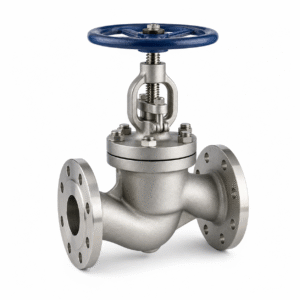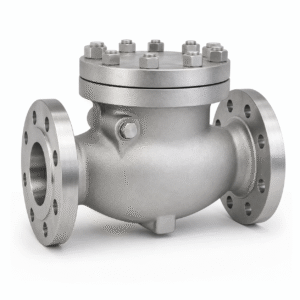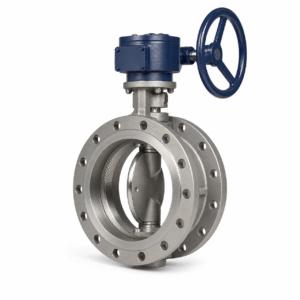
Description
Super duplex stainless steel industrial valve
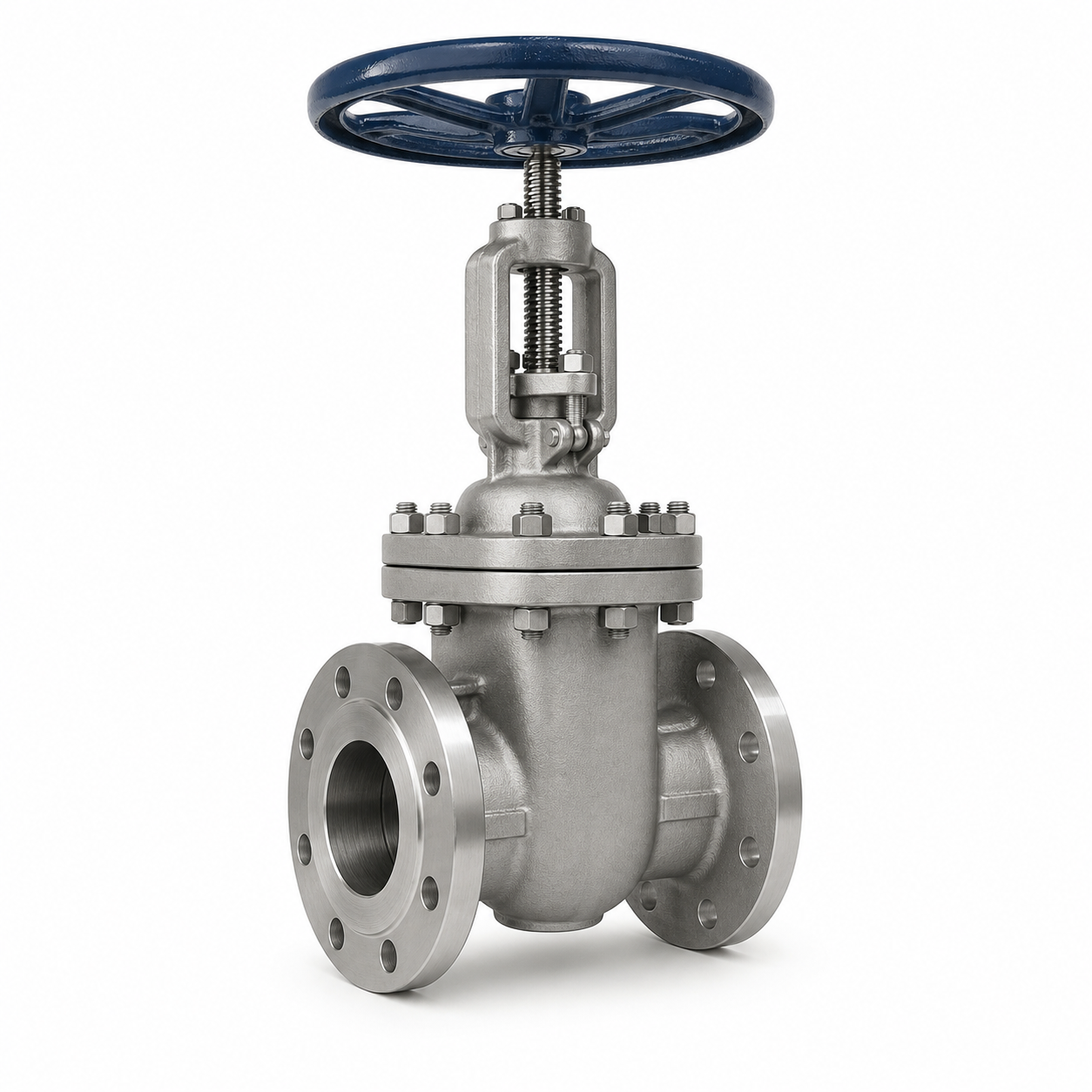
Super Duplex 2507 Wedge Gate Valve
A severe chloride-service valve material for seawater, offshore, desalination and aggressive process systems. The wedge gate valve configuration is engineered for fully open or fully closed isolation with low open-position pressure loss.
What is a Super Duplex 2507 Wedge Gate Valve?
A Super Duplex 2507 Wedge Gate Valve combines a highly alloyed ferritic-austenitic stainless steel with high strength and strong resistance to chloride pitting, crevice corrosion and stress-corrosion cracking with a full-opening linear isolation design that raises a wedge out of a substantially straight flow path.
2507 requires disciplined material procurement, forming, welding, heat treatment and testing to preserve phase balance and corrosion performance. A wedge gate valve is not normally used for throttling because partial opening can produce vibration and seat or guide damage.
Super Duplex 2507 Wedge Gate Valve specifications
| Product | Super Duplex 2507 Wedge Gate Valve |
|---|---|
| Valve construction | Bolted-bonnet outside-screw-and-yoke rising-stem gate valve with flexible or solid wedge |
| Nominal material | Super Duplex 2507 |
| UNS / EN reference | UNS S32750; EN 1.4410 |
| Product forms | Wrought ASTM A182 F53; project-approved ASTM A995/A890 cast grade selected by chemistry and properties; exact component specification required |
| Design standards | API 600 and ASME B16.34; API 602 for applicable compact forged designs |
| Pressure testing | API 598 or project-specified shell, backseat and closure testing |
| Pressure rating | ASME Class or PN rating verified against exact material, size, construction and design temperature |
| End connections | RF/RTJ flanged or butt-weld ends according to design |
| Operation | Handwheel, gearbox, electric, pneumatic or hydraulic actuator |
| Documentation | EN 10204 3.1 material records, pressure test report, GA drawing and project inspection records as ordered |
This is an engineered inquiry product, not a universal stock specification. Final availability depends on valve size, pressure class, material form, trim, seat system, operator, quantity and required code edition.
Super Duplex 2507 material selection
| Selection point | Engineering guidance |
|---|---|
| Material profile | a highly alloyed ferritic-austenitic stainless steel with high strength and strong resistance to chloride pitting, crevice corrosion and stress-corrosion cracking |
| Why it is selected | High strength and high resistance to localized chloride corrosion when correctly manufactured and specified. |
| Typical service | Seawater injection, desalination, offshore topsides, brine and aggressive chloride-bearing process systems. |
| Limitations to check | Upper and lower service-temperature limits, hydrogen exposure, galvanic coupling and intermetallic precipitation require engineering review. |
| Specification route | Wrought ASTM A182 F53; project-approved ASTM A995/A890 cast grade selected by chemistry and properties; exact component specification required |
| Verification | 100 percent PMI where ordered, MTC and heat treatment review, ferrite testing plus specified ASTM A923, corrosion, impact and NDE requirements. |
Wedge Gate Valve design and standards
API 600
Common design basis for bolted-bonnet steel gate valves, including material, trim, testing and marking requirements.
ASME B16.34
General pressure-temperature and valve design requirements within scope.
API 598
Shell, backseat and closure pressure testing when specified.
API 624 / ISO 15848-1
Fugitive-emission qualification is specific to the packing system and qualified valve design.
Wedge flexibility, seat hardfacing, stem/packing system, body cavity drainage, thermal binding risk and operating thrust require service-specific review.
Fire-safe, fugitive-emission, sour-service, oxygen, cryogenic, chlorine and PED requirements apply only when explicitly defined and supported for the exact offered configuration.
Typical applications
| Industry | Material service context | Valve selection focus |
|---|---|---|
| Offshore oil and gas | Seawater injection, firewater and chloride-rich process systems | Full-open isolation, wedge/seat materials, thermal effects, packing emissions and operator thrust |
| Desalination | High-chloride feed, brine and reverse-osmosis support systems | Full-open isolation, wedge/seat materials, thermal effects, packing emissions and operator thrust |
| Chemical processing | Aggressive chloride and acidic streams after compatibility review | Full-open isolation, wedge/seat materials, thermal effects, packing emissions and operator thrust |
| Marine engineering | Seawater cooling and critical marine utility systems | Full-open isolation, wedge/seat materials, thermal effects, packing emissions and operator thrust |
Application examples are not a corrosion or design approval. The end user must verify process chemistry, contaminants, pressure, temperature, velocity, cycling, emissions and regulatory requirements.
Quality, testing and traceability
Heat-number traceability and EN 10204 3.1 records matched to the ordered component specifications.
100 percent PMI where ordered, MTC and heat treatment review, ferrite testing plus specified ASTM A923, corrosion, impact and NDE requirements.
API 598 or project-specified shell, backseat and closure testing, with acceptance and leakage criteria stated on the order.
GA drawing, dimensions, marking, operation, pressure test and specified NDE/third-party records.
RFQ checklist
- Valve design standard and required edition
- Nominal size and ASME Class or PN rating
- Exact material specifications for pressure boundary, trim, seats, packing and bolting
- Flexible or solid wedge, seat/hardfacing, stem arrangement, packing and operator requirements
- End connection, facing and face-to-face requirement
- Fluid composition, concentration, contaminants and solids
- Design and operating pressure/temperature
- PMI, corrosion testing, NDE, witnessing and document requirements
Frequently asked questions
How is super duplex 2507 different from duplex 2205?
2507 contains higher chromium, molybdenum and nitrogen and generally offers greater strength and localized-corrosion resistance. It also requires tighter fabrication and heat-treatment control.
Is 2507 automatically suitable for all seawater service?
No. Temperature, chlorination, crevices, deposits, flow, galvanic couples and cathodic protection affect performance. The complete system must be reviewed.
What documentation should be requested?
Common requirements include EN 10204 3.1 records, PMI, heat-treatment evidence, ferrite results and specified corrosion, impact and NDE reports.
Can a wedge gate valve be used for throttling?
Normally no. It is intended for fully open or fully closed service; extended partial opening can damage the wedge, seats and guides.
What is the difference between flexible and solid wedges?
A flexible wedge can accommodate limited alignment and thermal effects, while a solid wedge is more rigid. Selection follows the design and service conditions.
Can Super Duplex 2507 be used for every component in this wedge gate valve?
Not automatically. Pressure-boundary, trim, stem or shaft, seating, packing, gasket and bolting materials have different mechanical and corrosion duties. The complete bill of materials must be engineered for the service.
Related Super Duplex 2507 valve products
Need a broader comparison? View the general stainless steel and alloy gate valves guide or browse all Gate Valves.
Request a Super Duplex 2507 Wedge Gate Valve quotation
Send the valve specification, exact material grades, size, pressure class, operating conditions, quantity and inspection requirements for technical review.