
Description
Nickel-iron-chromium alloy industrial valve
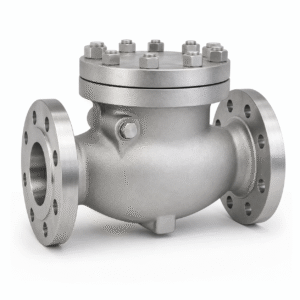
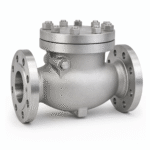
Alloy 20 Swing Check Valve
A chemical-process valve material associated with sulfuric-acid, pickling and fertilizer duties. The swing check valve configuration is engineered for backflow prevention in steady-flow process and utility lines.
What is a Alloy 20 Swing Check Valve?
A Alloy 20 Swing Check Valve combines a nickel-iron-chromium alloy containing copper and molybdenum, developed for resistance in sulfuric-acid and related chemical environments with an automatic non-return design whose hinged disc opens with forward flow and closes as flow decelerates or reverses.
Alloy 20 selection must use concentration-temperature corrosion data and account for contaminants, aeration, velocity and crevices. Check valves should be sized from minimum, normal and maximum flow plus transient behavior rather than automatically matching the pipe size.
Alloy 20 Swing Check Valve specifications
| Product | Alloy 20 Swing Check Valve |
|---|---|
| Valve construction | Bolted-cover swing check valve with hinged disc and service-specific seat/hinge arrangement |
| Nominal material | Alloy 20 |
| UNS / EN reference | UNS N08020; EN 2.4660 |
| Product forms | Wrought/forged ASTM B462 or ASTM A182 F20 as applicable; cast ASTM A351 CN7M; component specification controlled by design |
| Design standards | API 594 and ASME B16.34; API 6D only for specifically designed pipeline-service valves |
| Pressure testing | API 598 or project-specified shell and closure testing |
| Pressure rating | ASME Class or PN rating verified against exact material, size, construction and design temperature |
| End connections | RF/RTJ flanged or butt-weld ends according to design |
| Operation | Automatic; external lever/weight, spring assist or dashpot only when engineered |
| Documentation | EN 10204 3.1 material records, pressure test report, GA drawing and project inspection records as ordered |
This is an engineered inquiry product, not a universal stock specification. Final availability depends on valve size, pressure class, material form, trim, seat system, operator, quantity and required code edition.
Alloy 20 material selection
| Selection point | Engineering guidance |
|---|---|
| Material profile | a nickel-iron-chromium alloy containing copper and molybdenum, developed for resistance in sulfuric-acid and related chemical environments |
| Why it is selected | Useful resistance to sulfuric acid and a range of chemical environments, with fabrication characteristics familiar to stainless-alloy shops. |
| Typical service | Sulfuric-acid processing, fertilizer, pickling, chemical transfer and pharmaceutical process systems. |
| Limitations to check | It is not a universal acid alloy. Hydrochloric acid, oxidizing contaminants and mixed acids can change performance significantly. |
| Specification route | Wrought/forged ASTM B462 or ASTM A182 F20 as applicable; cast ASTM A351 CN7M; component specification controlled by design |
| Verification | PMI for nickel, chromium, copper and molybdenum plus heat traceability and component-specific MTC review. |
Swing Check Valve design and standards
API 594
Common design and testing basis for check valves within its scope.
ASME B16.34
Pressure-temperature, material and general valve design requirements within scope.
API 598
Shell and closure pressure-testing basis when specified.
API 6D
Pipeline-service requirements apply only to valves specifically designed and documented to API 6D.
Disc stability, minimum velocity, pressure drop, orientation, pump trip and system transients affect slam risk and service life.
Fire-safe, fugitive-emission, sour-service, oxygen, cryogenic, chlorine and PED requirements apply only when explicitly defined and supported for the exact offered configuration.
Typical applications
| Industry | Material service context | Valve selection focus |
|---|---|---|
| Sulfuric-acid processing | Transfer, dilution and process systems within verified concentration-temperature limits | Minimum stable velocity, orientation, pressure drop, disc dynamics, closure leakage and transient control |
| Fertilizer | Acid and chemical handling systems after compatibility review | Minimum stable velocity, orientation, pressure drop, disc dynamics, closure leakage and transient control |
| Pickling | Selected acid circulation and transfer duties | Minimum stable velocity, orientation, pressure drop, disc dynamics, closure leakage and transient control |
| Pharmaceutical and fine chemical | Corrosive reagent and batch-process systems | Minimum stable velocity, orientation, pressure drop, disc dynamics, closure leakage and transient control |
Application examples are not a corrosion or design approval. The end user must verify process chemistry, contaminants, pressure, temperature, velocity, cycling, emissions and regulatory requirements.
Quality, testing and traceability
Heat-number traceability and EN 10204 3.1 records matched to the ordered component specifications.
PMI for nickel, chromium, copper and molybdenum plus heat traceability and component-specific MTC review.
API 598 or project-specified shell and closure testing, with acceptance and leakage criteria stated on the order.
GA drawing, dimensions, marking, operation, pressure test and specified NDE/third-party records.
RFQ checklist
- Valve design standard and required edition
- Nominal size and ASME Class or PN rating
- Exact material specifications for pressure boundary, trim, seats, packing and bolting
- Minimum/normal/maximum flow, fluid properties, line orientation and pump/system transient data
- End connection, facing and face-to-face requirement
- Fluid composition, concentration, contaminants and solids
- Design and operating pressure/temperature
- PMI, corrosion testing, NDE, witnessing and document requirements
Frequently asked questions
Why is Alloy 20 used in sulfuric-acid service?
Its nickel, chromium, molybdenum and copper balance can provide useful resistance across selected sulfuric-acid conditions. Exact concentration, temperature and contaminants remain decisive.
What cast grade is commonly associated with Alloy 20 valves?
ASTM A351 CN7M is a commonly specified cast grade associated with Alloy 20-type service. Forged components use their applicable wrought specification.
Can Alloy 20 replace Hastelloy C276?
Not as a blanket substitution. The alloys have different chemistry, strength and corrosion behavior. Selection must follow actual process corrosion data and the piping material specification.
What causes swing check valve slam?
Oversizing, low velocity, excessive disc travel and rapid flow reversal can cause impact closure. Correct hydraulic sizing and transient review are essential.
Can a swing check valve be installed vertically?
Only when approved for vertical upward flow and the operating velocity can open and stabilize the disc. Follow the qualified design and installation instructions.
Can Alloy 20 be used for every component in this swing check valve?
Not automatically. Pressure-boundary, trim, stem or shaft, seating, packing, gasket and bolting materials have different mechanical and corrosion duties. The complete bill of materials must be engineered for the service.
Related Alloy 20 valve products
Need a broader comparison? View the general stainless steel and alloy check valves guide or browse all Check Valves.
Request a Alloy 20 Swing Check Valve quotation
Send the valve specification, exact material grades, size, pressure class, operating conditions, quantity and inspection requirements for technical review.