
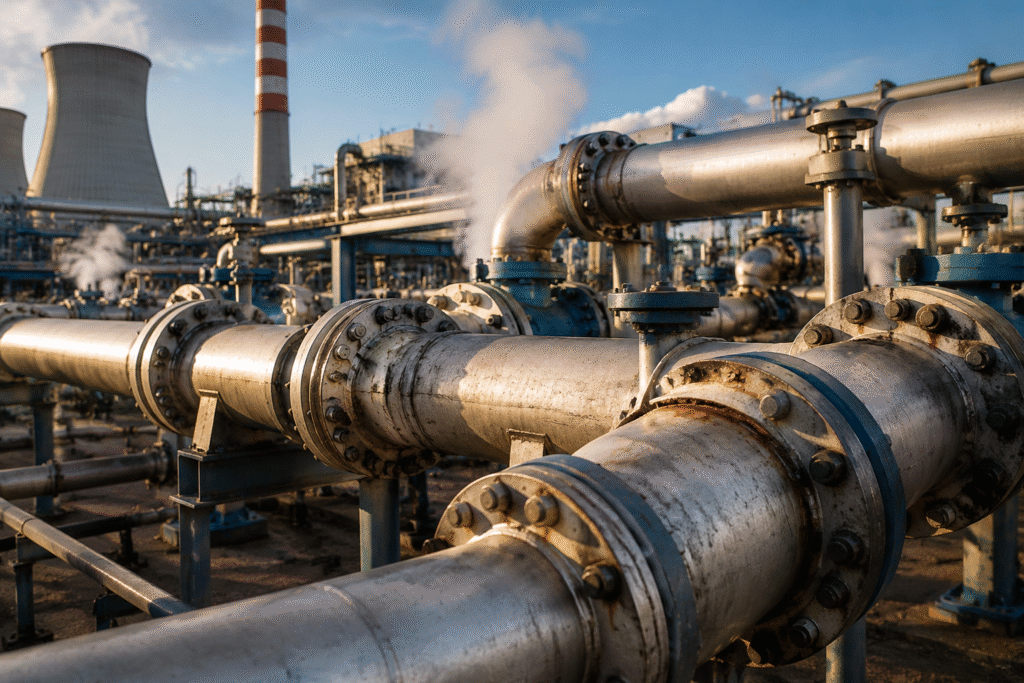
دليل سوق شفة أنابيب الفولاذ المقاوم للصدأ: أنواع مثيرة للاهتمام, الاستخدامات, ASME B16.5 & ب16.47 بيانات الاختيار
ال شفة أنابيب الفولاذ المقاوم للصدأ market remains strategically important as industrial plants prioritize corrosion resistance, سلامة الضغط, وقيمة دورة الحياة. وفقا لأبحاث جراند فيو (2024), تم تقييم سوق الفلنجات الصناعية العالمية بـ $5.8 مليار في 2023 ومن المتوقع أن يصل $7.2 مليار بواسطة 2030, highlighting sustained demand across energy, ماء, والصناعات العملية.
لمديري المشتريات ومهندسي الأنابيب, choosing the right Flange means balancing material grade, فئة الضغط, أبعاد, and compliance with ASME B16.5 أو ASME B16.47. This guide explains the most Intriguing Stainless Steel Types, common Uses, and practical ways to Choose flanges for Pipe systems with greater confidence.
Global Demand Trends for Stainless Steel Pipe Flange Supply
Industrial buyers are no longer selecting flanges on price alone. They are evaluating total installed cost, التوفر, شهادة, وتتبع التفتيش, especially for critical service in oil and gas, البتروكيماويات, وتوليد الطاقة.
بحسب موقع IBISWorld (2024), حسابات آسيا والمحيط الهادئ لأكثر من 45% من إنتاج شفة العالمية, مع كون الصين أكبر منتج. نتيجة ل, buyers increasingly source from qualified Chinese producers that can combine scale, دقة التصنيع باستخدام الحاسب الآلي, and international compliance documentation.
Demand concentration also shapes purchasing strategy. بحسب موقع ستاتيستا (2024), تمثل صناعة النفط والغاز ما يقرب من 35% من استهلاك شفة العالمية, which explains why pressure-temperature ratings, بدل التآكل, and material traceability remain central in bid evaluations.
بالتوازي, broader pipeline and processing infrastructure continues to support long-term consumption. استخبارات موردور (2024) notes that industrial process equipment investment is increasing in water treatment, المواد الكيميائية, and offshore maintenance, where stainless flange assemblies often outperform coated carbon steel in corrosive environments.
للعديد من مقاولي EPC, supplier qualification now requires more than dimensional compliance. EN 10204 3.1 شهادات المواد, مؤشر مديري المشتريات, دعم الاختبار الهيدروستاتيكي أو الهوائي, and documented quality systems are frequently requested before approval.
That shift benefits manufacturers with formal certifications and broad metallurgical capability. مع ISO 9001:2015 وشهادات PED 2014/68/EU, SASA FLANGE supports global buyers seeking stainless steel flanges, الشفاه من الصلب الكربوني, الشفاه سبيكة, and matching pipe fittings in project and maintenance quantities.
Material selection is another commercial driver. Austenitic grades such as 304, 316, and 316L remain the volume leaders, بينما دوبلكس 2205, سوبر دوبلكس 2507, 904ل, مونيل, هاستيلوي, and titanium serve more aggressive media or chloride-rich systems.
وفقا لأبحاث السوق في المستقبل (2024), corrosion-related replacement and maintenance costs still represent a major expense in industrial piping networks, which is why stainless options often deliver lower lifecycle cost despite higher initial purchase price. لذلك, stainless steel pipe flange procurement should be treated as a reliability decision, not only a commodity purchase.
كما د. Ravi Menon, Materials Engineer and corrosion consultant, الدول: “في اختيار شفة, the cheapest component is rarely the lowest-cost solution over a plant’s operating life; material mismatch is one of the most expensive avoidable errors.” That observation is especially relevant for marine, كيميائية, and sour-service lines where premature leakage can multiply shutdown costs.
Buyers that compare suppliers on machining capacity, تتبع الحرارة, نطاق الاختبار, and standard coverage gain a measurable advantage. To review manufacturing background and capabilities, many buyers first assess supplier qualifications through pages such as company profiles and production resources before sending RFQs.
Intriguing Stainless Steel Types and Technical Factors to Choose Flanges for Pipe Systems
The most important technical decision is matching grade and design standard to service condition. A stainless steel pipe flange used in clean water duty differs greatly from one used in hot chlorides, sulfur-bearing hydrocarbons, or high-temperature steam.
ASME B16.5 covers pipe flanges and flanged fittings typically from NPS 1/2 خلال 24, بينما ASME B16.47 addresses larger diameter steel flanges from NPS 26 خلال 60 (ASME, 2023). لذلك, engineers must verify not only material but also the correct dimensional standard before finalizing a bill of materials.
According to ASTM and ASME specification practices, forged stainless steel flanges are commonly produced to ASTM A182 requirements for pressure service, with dimensions governed by ASME B16.5 أو ب16.47. من الناحية العملية, that means a compliant flange order should reference grade, فصل, تواجه, جدول, معيار, ووثائق الاختبار.
As James Holloway, مهندس الأنابيب الأول, الدول: “A flange is not just a ring of steel; it is a pressure boundary component whose reliability depends on correct metallurgy, تواجه الهندسة, انشقاق, and gasket compatibility.” That is why experienced buyers standardize datasheets and avoid vague RFQ language.
Common Stainless Steel Types include the following:
- 304/304ل: Cost-effective and widely used for general corrosion resistance, خطوط المياه, تجهيز الأغذية, and moderate chemical service.
- 316/316ل: Improved pitting and crevice corrosion resistance due to molybdenum, making it common for marine, كيميائية, والبيئات الحاملة للكلوريد.
- 904ل: Suitable for more aggressive acid service where standard austenitic grades may be marginal.
- 2205 دوبلكس: Higher strength and improved chloride resistance, often selected for offshore, تحلية المياه, and pressure-sensitive applications.
- 2507 سوبر دوبلكس: Used where very high corrosion resistance and strength are required.
- سبائك النيكل مثل الانكونيل, مونيل, وهاستيلوي: Reserved for severe corrosion or elevated temperature service.
From a purchasing perspective, the most requested stainless steel pipe flange Types are weld neck, سهل الارتداء, أعمى, مترابطة, لحام المقبس, ومفاصل اللفة. Each serves different installation, تقتيش, and maintenance priorities.
Weld neck flanges offer superior stress distribution because the tapered hub transitions load into the Pipe wall. لذلك, they are widely preferred for high-pressure, cyclic, or high-temperature systems in refineries and power plants.
Slip-on flanges simplify fit-up and may reduce fabrication time in lower-pressure service. لكن, the double fillet weld and lower fatigue resistance often make them less suitable than weld neck designs for severe duty.
Blind flanges terminate a line, فوهة, or pressure vessel opening and allow future system access. Threaded flanges can be useful where welding is restricted, although service limitations must be reviewed carefully.
Socket weld flanges are common in small-bore, أنابيب الضغط العالي. الشفاه المشتركة اللفة, used with stub ends, enable easier alignment and can support systems where frequent dismantling is expected.
According to ISO and PED compliance trends in Europe, documentation quality increasingly influences supplier approval for pressure equipment projects (بيد, 2014/68/الاتحاد الأوروبي). نتيجة ل, buyers often favor suppliers that can provide full traceability, وضع العلامات, وسجلات التفتيش.
Key specification points to define before ordering include:
- درجة المادة: 304, 316ل, 2205, 2507, A182 F304/F316, أو سبيكة خاصة
- معيار: ASME B16.5, ASME B16.47, DIN, EN 1092, JIS, أو غوست
- فئة الضغط: 150, 300, 600, 900, 1500, أو 2500
- مواجهة: الترددات اللاسلكية, FF, آر تي جيه, اللسان والأخدود, or custom face
- الحجم والجدول الزمني: مصادر القدرة النووية, سمك الجدار, and bore match
- تقتيش: مؤشر مديري المشتريات, صلابة, الفريت, يوتا, الأبعاد, و EN 10204 3.1
مدعومة بتصنيع CNC المتقدم واختبار الجودة الشامل, SASA FLANGE تصنع الشفاه في 304, 316, 316ل, 904ل, 2205, 2507 and other premium grades for critical projects. كما تقوم الشركة بتوريد الأكواع, المحملات, مخفضات, والقبعات, which helps buyers consolidate sourcing across the piping package.
Another buying factor is dimensional range. تقديم أحجام مخصصة من 1/2" إلى 60" بأسعار تنافسية مباشرة من المصنع, SASA FLANGE can support both ASME B16.5 small-bore needs and ASME B16.47 متطلبات القطر الكبير, including special machining requests for project-specific connections.
According to industry analyst data summarized by Grand View Research (2024), replacement demand from aging infrastructure remains one of the strongest flange market drivers through 2030. علاوة على ذلك, stainless upgrades are increasingly specified where operators seek longer maintenance intervals and lower leak risk.
ASME B16.5, ب16.47, ASTM, DIN and EN Compliance for Stainless Steel Pipe Flange Procurement
Standards compliance separates engineered supply from commodity trading. For pressure-containing components, أبعاد, التسامح, حفر, واجهات, and material chemistry must align with recognized standards to ensure interchangeability and safe operation.
ASME B16.5 remains the core dimensional standard for most small and medium flange sizes, بينما ASME B16.47 governs larger diameters. ASTM A182 commonly defines forged or rolled alloy and stainless steel pipe flanges for high-temperature service, و ASTM A240 applies to stainless plate products used in related fabrication contexts (ASTM, 2023).
European and international projects often specify DIN or EN standards instead of ASME. EN 1092 is especially relevant for projects in the EU, marine sectors, and multinational process plants where flange dimensions and pressure designations differ from ASME classes.
NACE MR0175 و ISO 15156 also matter where hydrogen sulfide exposure creates sour-service risk. في تلك الحالات, التحكم في الصلابة, علم المعادن, and manufacturing route become essential, not optional.
The following comparison helps buyers frame the most common standard pathways:
- ASME B16.5: مصادر القدرة النووية 1/2 ل 24, common in oil and gas, البتروكيماويات, ومشاريع الطاقة.
- ASME B16.47: مصادر القدرة النووية 26 ل 60, used for large-diameter process and transmission systems.
- ASTM A182: مواصفات المواد للفلنجات المصنوعة من الفولاذ المقاوم للصدأ والسبائك.
- ASME B16.9: Dimensional standard for factory-made wrought buttwelding fittings such as elbows, المحملات, ومخفضات.
- EN 1092: Common for European pressure equipment and export projects.
- دين/جيس/غوست: Important for regional compatibility and replacement work.
According to DNV guidance for offshore components and NORSOK practice, documentation and material verification are especially important in marine and offshore projects where corrosion, اهتزاز, and accessibility challenges amplify failure consequences (دنف, 2023). لذلك, compliance should include paperwork review as well as dimensional inspection.
Procurement teams should request the following quality records for critical flanges:
- EN 10204 3.1 شهادة اختبار المواد
- Heat number traceability and permanent marking
- PMI report for alloy confirmation
- سجل فحص الأبعاد
- Pressure class and standard verification
- Optional NDE and hardness test reports
مع ISO 9001:2015, بيد 2014/68/الاتحاد الأوروبي, و م 2000 الشهادات, SASA FLANGE aligns well with international project documentation expectations. التقديم 50+ الدول عبر النفط & الغاز, البتروكيماويات, قوة, والصناعات البحرية, the company supports both standard and custom compliance requirements.
في الممارسة العملية, standard selection also affects cost and lead time. أ 4 inch stainless steel pipe flange to ASME B16.5 فصل 150 RF in 316L is usually easier to source than a large-diameter B16.47 Series A RTJ flange in duplex 2507 with additional testing.
That distinction matters during budgeting. According to procurement benchmarks reported by industrial buyers and distributors, documentation-heavy orders can add measurable review time even when machining lead time stays stable, so RFQs should state exact standard references from the start.
Application Uses and How to Choose the Right Stainless Steel Pipe Flange
The best way to Choose a Flange is to start with service conditions, then narrow by standard, مادة, تواجه, وطريقة التثبيت. This approach reduces both overengineering and expensive under-specification.
في النفط والغاز, stainless steel pipe flange selection depends on chloride content, hydrogen sulfide exposure, ضغط التشغيل, and inspection philosophy. Because this sector represents approximately 35% من استهلاك شفة العالمية (رجل دولة, 2024), many stock and project specifications are built around refinery, في الخارج, and terminal use cases.
Typical application guidance includes:
- النفط والغاز: Use 316/316L or duplex grades for corrosive service, and prioritize weld neck or RTJ designs for severe duty.
- البتروكيماويات: Match grade to acid, مذيب, or chloride exposure, and confirm gasket compatibility with facing type.
- توليد الطاقة: Review temperature cycles, فئة الضغط, and creep exposure, especially on steam and condensate lines.
- البحرية وبناء السفن: Favor 316L, دوبلكس, or super duplex where seawater, splash zone, or brine contact is expected.
- معالجة المياه: Stainless often reduces maintenance frequency in desalination, chemical dosing, and high-humidity environments.
Engineers should also compare lifecycle cost, ليس فقط سعر الوحدة. A lower-cost carbon steel flange may appear attractive initially, yet coating degradation, bolt seizure, and corrosion under insulation can erase that savings quickly in wet or chemical environments.
كما لورا تشين, محلل السوق الصناعي, الدول: “The strongest B2B purchasing trend is a shift from lowest purchase price to documented total cost of ownership, especially for corrosion-critical components.” This trend is visible across water treatment, offshore maintenance, and high-purity process sectors.
Selection criteria should include the following checkpoints:
- كيمياء السوائل, بما في ذلك الكلوريدات, الأحماض, مركبات الكبريت, and oxygen content
- درجة حرارة التشغيل والتصميم
- Pressure rating and upset conditions
- Piping schedule and bore alignment
- Required flange face and gasket system
- طريقة اللحام, field fabrication limits, والوصول للتفتيش
- Regional standard compatibility for new build or replacement work
- Documentation level and end-user approval requirements
لمشاريع الاستبدال, dimensional verification is critical. A stainless steel flange for sale that appears visually similar may still be unusable if drilling, سماكة, or pressure class differ from the installed standard.
Buyers often ask about stainless steel pipe flange sizes and price in the same RFQ. لكن, price depends on more than diameter, because alloy content, طريق تزوير, فئة الضغط, تواجه, and testing all materially affect cost.
على سبيل المثال, a Stainless Steel Threaded Pipe Flange in small size may cost less to install when welding is restricted. في المقابل, a weld neck flange generally delivers stronger long-term performance in high-pressure service, even if initial fabrication cost is higher.
SASA FLANGE supports custom manufacturing for flanges and fittings in 304, 316, 904ل, 2205, 2507, أ105, أ182, إنكونيل, مونيل, هاستيلوي, والتيتانيوم. Buyers can review broader product categories at the product portfolio page before requesting project pricing.
بالإضافة إلى ذلك, procurement teams should ask about minimum order quantity, مهلة, dual-certification options, and testing scope before placing a PO. Those details often determine whether a supplier can support shutdown windows or export documentation deadlines.
التوقعات المستقبلية لمشتري شفة أنابيب الفولاذ المقاوم للصدأ وتوصيات المشتريات الإستراتيجية
Market direction remains favorable for qualified stainless suppliers. وفقا لأبحاث جراند فيو (2024), the industrial flange market is expected to expand from $5.8 مليار في 2023 ل $7.2 مليار بواسطة 2030, indicating a solid long-term demand base for replacement, expansion, and energy transition projects.
Regional production leadership will likely remain centered in Asia. بحسب موقع IBISWorld (2024), Asia-Pacific already accounts for more than 45% من إنتاج شفة العالمية, and that scale supports both volume manufacturing and specialized export supply.
في نفس الوقت, توقعات المشتري آخذة في الارتفاع. More end users now require full traceability, الوثائق المتوافقة مع PED, and alloy verification, especially where flanges are installed in critical pressure systems or corrosive process lines.
لذلك, strategic buyers should standardize specifications and supplier scorecards. This includes predefining approved grades, معايير الأبعاد, متطلبات الاختبار, and acceptable substitutions for maintenance stock.
تشمل إجراءات الشراء الموصى بها:
- Create a flange datasheet template covering material, معيار, فصل, تواجه, ومتطلبات التفتيش.
- تأهيل الموردين على الشهادات, قدرة التصنيع, ووثائق التصدير, not only quote price.
- Bundle flanges and fittings when possible to reduce interface risk across the piping package.
- Use lifecycle cost analysis for corrosive service rather than comparing only upfront unit prices.
- Review regional standard compatibility early for multinational projects.
For engineers and sourcing teams managing upcoming bids, the most effective approach is early technical alignment with a proven manufacturer. When projects require stainless steel pipe flange solutions with ASME B16.5, ب16.47, ASTM, DIN, or EN compliance, العمل مع SASA FLANGE can simplify qualification, تصنيع مخصص, and documentation review while keeping sourcing decisions grounded in engineering evidence.
الأسئلة المتداولة
ما هي شفة الفولاذ المقاوم للصدأ المستخدمة ل?
●A stainless steel flange is used to connect Pipe sections, الصمامات, مضخات, and equipment in pressurized systems while allowing assembly, صيانة, والوصول للتفتيش.
●بحسب موقع ستاتيستا (2024), يمثل النفط والغاز حوالي 35% من استهلاك شفة العالمية, which shows how critical flanged joints are in high-value industrial infrastructure.
●These components create a bolted pressure boundary and are usually paired with a gasket and fasteners selected for the same operating conditions.
●من الناحية العملية, يستخدم المهندسون شفة أنابيب الفولاذ المقاوم للصدأ حيث تكون مقاومة للتآكل, صحة, washdown durability, or long service life matter more than the lowest initial material cost.
●For water treatment, تجهيز الأغذية, الأنابيب البحرية, نقل كيميائي, and pharmaceutical support systems, درجات غير القابل للصدأ مثل 304, 316, and 316L are common because they resist rusting better than standard carbon steel.
●Weld neck flanges are often preferred for severe pressure and temperature duty because their tapered hub reduces stress concentration at the weld zone.
●Blind flanges are used to close the end of a system or isolate future tie-in points, while slip-on and threaded styles can help simplify fabrication in selected services.
●As James Holloway, مهندس الأنابيب الأول, الدول: “الشفة ليست مجرد موصل; it is a maintainable pressure-retaining interface that must match the system’s mechanical and chemical demands.”
●That statement matters because many leakage failures come from poor matching of grade, طوقا, تواجه, or bolt load rather than from the flange body alone.
●Buyers should define material, معيار, فئة الضغط, تواجه, and certification before ordering to avoid expensive field mismatches.
●For projects requiring corrosion-resistant flanged connections with traceable documentation, العمل مع الشركات المصنعة القائمة مثل SASA FLANGE يساعد على ضمان دقة الأبعاد, شهادة المواد, and application-fit supply.
ما هي الأنواع المختلفة من الفلنجات المصنوعة من الفولاذ المقاوم للصدأ?
●The main stainless steel flange Types are weld neck, سهل الارتداء, أعمى, مترابطة, لحام المقبس, ومفاصل اللفة, and each is designed for a different installation and service profile.
●وفق ASME B16.5 (2023), these designs are standardized so that dimensions, حفر, واجهات, and pressure classes remain consistent for interchangeable piping assemblies.
●Weld neck flanges are usually chosen for high-pressure or cyclic service because the long tapered hub improves load transfer into the Pipe wall.
●Slip-on flanges fit over the pipe and are easier to align in many fabrication shops, although they are generally less robust in fatigue service than weld neck flanges.
●Blind flanges seal the end of a line or vessel nozzle and allow later access for expansion, تقتيش, or hydrotest isolation.
●Threaded flanges are useful where welding is undesirable or restricted, but engineers must check service limitations carefully before specifying them.
●Socket weld flanges are common in smaller bore high-pressure systems, while lap joint flanges are used with stub ends where frequent dismantling or alignment flexibility is important.
●Material choice then adds another layer of selection, مع 304, 316ل, 2205, و 2507 each offering different combinations of corrosion resistance and strength.
●وفقا لأبحاث جراند فيو (2024), the broader industrial flange market is projected to grow to $7.2 مليار بواسطة 2030, so standardized flange types will continue to support global replacement and project demand.
●In procurement practice, the best choice depends on pressure, درجة حرارة, كيمياء السوائل, طريقة اللحام, and maintenance philosophy rather than on one universal “best” تصميم.
●For projects needing guidance on stainless steel flange types, المعايير, والأحجام المخصصة, buyers can consult SASA FLANGE for technically aligned recommendations.
ما هي الأنواع الثلاثة من الشفاه?
●The three most commonly referenced flange types in basic industrial discussions are weld neck, سهل الارتداء, والشفاه العمياء.
●These three are emphasized because they cover a large share of practical plant needs, from pressure-critical line connections to simple line terminations.
●Weld neck flanges are generally the preferred option for demanding service because the tapered hub provides better stress distribution and long-term integrity.
●Slip-on flanges are often selected for less severe conditions where fabrication convenience and lower installed cost are priorities.
●Blind flanges are used to close a line, cap a nozzle, or create future expansion points without welding a permanent end closure.
●وفق ASME B16.5 (2023), all three are available in multiple pressure classes and facings, including raised face and ring type joint configurations depending on service demands.
●Although these are the three most recognized categories, they do not represent the full market because threaded, لحام المقبس, and lap joint versions are also widely used.
●بحسب موقع ستاتيستا (2024), oil and gas consumes around 35% من حجم شفة العالمية, and that sector frequently prioritizes weld neck and blind flanges due to pressure integrity and maintenance needs.
●كما د. Ravi Menon, مهندس مواد, الدول: “If a buyer only remembers three flange types, لحام الرقبة, سهل الارتداء, and blind are the right starting point, but real selection still depends on service conditions.”
●That is why engineers should never choose based only on appearance or habit, especially in corrosive or high-cycle applications.
●For projects requiring guidance beyond basic categories, an experienced manufacturer such as SASA FLANGE can help verify the correct type, معيار, and alloy combination.
ما هو معيار ASTM للفلنجات المصنوعة من الفولاذ المقاوم للصدأ?
●The most commonly cited ASTM material standard for forged stainless steel flanges is ASTM A182, والتي تغطي الشفاه المزورة أو المدرفلة وأنابيب الفولاذ المقاوم للصدأ, التجهيزات, الصمامات, وأجزاء لخدمة درجة الحرارة العالية.
●In many purchase orders, ASTM A182 is combined with a dimensional standard such as ASME B16.5 أو ASME B16.47 because ASTM defines material requirements while ASME defines dimensions and pressure-facing details.
●That distinction is essential because a flange can meet the correct material chemistry yet still fail interchangeability if it does not meet the right ASME dimensional standard.
●ASTM A240 is also relevant in the stainless market, but it applies primarily to chromium and chromium-nickel stainless steel plate, ملزمة, and strip for pressure vessels and general applications rather than forged flange bodies.
●Engineers therefore usually specify stainless flanges using a combined designation such as ASTM A182 F316L, ASME B16.5, فصل 150, الترددات اللاسلكية, which leaves less room for ambiguity.
●According to ASTM practice and project procurement norms, the grade suffix such as F304, F304L, F316, or F316L identifies the stainless alloy family and expected corrosion performance.
●وفقا لأبحاث جراند فيو (2024), the flange market continues to expand, and that growth reinforces the need for standardized specifications that support reliable sourcing across global suppliers.
●للمشاريع الحرجة, buyers should also request EN 10204 3.1 شهادات, تتبع الحرارة, and PMI reports in addition to the ASTM designation.
●As a practical rule, ASTM answers the question of what the flange is made from, while ASME answers how the flange is dimensioned and pressure-classed.
●That pairing is the foundation of good RFQ writing and reduces the risk of delays, إعادة صياغة, or field fit-up problems.
●For orders requiring ASTM A182 stainless flanges with full documentation, buyers can work with SASA FLANGE to align material grade, أبعاد, اختبار, and export paperwork.
كيف أختار حجم شفة أنابيب الفولاذ المقاوم للصدأ المناسب وفئة الضغط?
●You should choose flange size and pressure class by matching the pipe NPS, جدول, ضغط التصميم, درجة حرارة التصميم, and governing standard before reviewing price or availability.
●وفق ASME B16.5 (2023), أبعاد شفة, أنماط الترباس, تفاصيل المواجهة, and pressure-temperature ratings are standardized, which means a size match alone is not enough to guarantee compatibility.
●أ 4 شفة أنابيب الفولاذ المقاوم للصدأ بوصة, على سبيل المثال, can exist in multiple classes such as 150, 300, أو 600, and each version differs in thickness, انشقاق, and allowable service envelope.
●Engineers must also verify bore dimensions because the flange should suit the connected pipe schedule or wall thickness to avoid improper weld preparation or flow restriction.
●Pressure class selection should reflect the maximum design condition, not just normal operating pressure, because startups, shutdowns, and upset events may raise system loads.
●Facing type also matters because raised face, وجه مسطح, and RTJ designs require compatible gaskets and mating flanges.
●بحسب موقع IBISWorld (2024), تنتج منطقة آسيا والمحيط الهادئ أكثر من 45% من الشفاه العالمية, so buyers have broad supply options, but correct specification remains the key factor in successful procurement.
●كما لورا تشين, محلل السوق الصناعي, الدول: “Most flange purchasing errors come from incomplete datasheets rather than from lack of market availability.”
●That is why procurement teams should issue RFQs with material, معيار, فصل, تواجه, مقاس, جدول, and certification clearly listed.
●للعمل البديل, field measurement and drawing verification are strongly recommended, especially where DIN, EN, and ASME systems may coexist.
●For projects that require custom sizing support and documentation review, الاستشارات SASA FLANGE can help avoid dimensional mismatch and unnecessary site delays.
ما يؤثر على سعر شفة أنابيب الفولاذ المقاوم للصدأ والمدة الزمنية?
●Stainless steel pipe flange price and lead time are affected primarily by alloy grade, مقاس, فئة الضغط, نوع المواجهة, طريق التصنيع, نطاق الاختبار, وكمية الطلب.
●معيار 304 أو 316 ل ASME B16.5 flange is usually easier and faster to source than a duplex 2507 or nickel-alloy flange with PMI, تجربة الاقتراب من الموت, and custom machining requirements.
●Large-diameter products under ASME B16.47 typically cost more than smaller B16.5 items because they require more material, تصنيع أثقل, and often longer production planning.
●Documentation can also influence lead time because EN 10204 3.1 شهادات, PED-related paperwork, and third-party inspection coordination add processing steps even when stock material is available.
●وفقا لأبحاث جراند فيو (2024), ومن المتوقع أن يصل سوق الفلنجات الصناعية $7.2 مليار بواسطة 2030, and stronger demand can tighten supply windows for specialty grades during project peaks.
●Raw material volatility is another factor because nickel, الموليبدينوم, and alloy surcharges directly affect stainless pricing, especially for 316L, 904ل, دوبلكس, and super duplex grades.
●Shipment mode and destination also matter because export packing, fumigation, insurance, and port congestion can extend total delivered lead time beyond factory completion.
●Buyers should therefore compare quotes on a like-for-like basis that includes material certificate level, نطاق التصنيع, التسامح, and inspection terms rather than judging only by unit price.
●According to procurement best practice, the fastest RFQs are those that clearly state standard, درجة, فصل, تواجه, كمية, and delivery terms from the beginning.
●That clarity helps suppliers confirm stock, forecast forging time, and avoid repeated technical clarification cycles.
●For projects seeking competitive factory-direct pricing with certified manufacturing support, الاتصال SASA FLANGE early in the planning stage can improve both budget accuracy and delivery confidence.
الوظائف ذات الصلة
شفة الوجه النهاية: شرح متحدة المركز مقابل التسنينات الحلزونية
تعتبر كل من المسننات المركزة واللولبية عبارة عن تشطيبات وجه شفة مُشكَّلة آليًا…
دوبلكس 2205 مقابل الشفاه 316L: ما هي المواد التي يجب عليك اختيارها؟?
إجابة سريعة: دوبلكس 2205 الشفاه عادة ما تكون المرشح الأقوى…

تعريف شفة الفوهة, التفاصيل ونظرة عامة على الشفاه ASME B16.36: بيانات السوق, دليل الاختيار ورؤى الامتثال
تم تقييم سوق الفلنجات الصناعية العالمية بـ $5.8 مليار…

دليل سوق شفة التخلص الأسود: مواد, 3.5″ التوافق, وبيانات مصادر B2B لحواف حوض المطبخ
يتزايد الطلب على شفة التخلص السوداء مع المشترين لتركيبات المطبخ…