
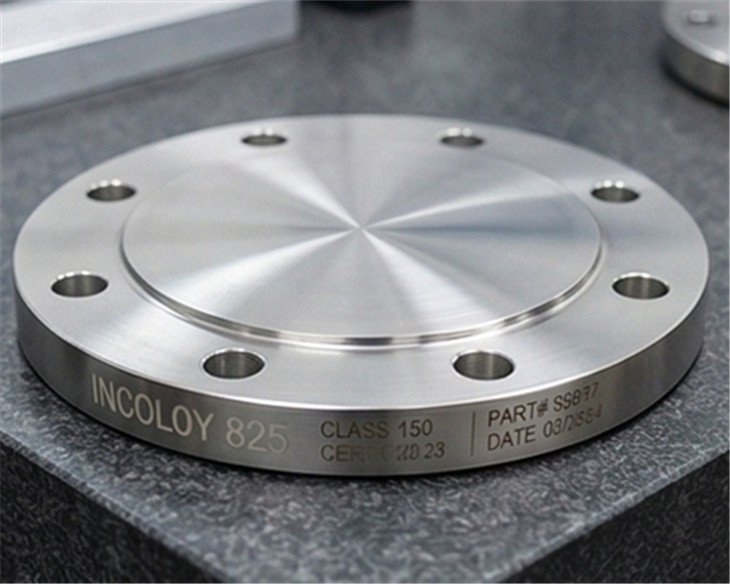
Where Are ASTM A182 F22 Flanges Commonly Used?
Direct answer
ASTM A182 F22 flanges are commonly specified in 2.25Cr-1Mo piping systems used for elevated-temperature refinery, petrochemical, power-generation and industrial steam service. The grade is selected as part of an engineered material system; suitability depends on design pressure and temperature, the process environment, adjoining pipe grade and qualified fabrication procedures.
Key takeaways
- F22 is primarily a high-temperature strength and oxidation-resistance choice, not a universal corrosion solution.
- Weld neck flanges are common in critical F22 piping because they support full-penetration butt-welded joints.
- Heat treatment, hardness, welding controls and traceable documentation are central to procurement.
Refinery and petrochemical service
F22 is widely associated with chrome-moly process lines in hydroprocessing, hydrogen service, hot hydrocarbon circuits and other refinery units where the approved material class requires elevated-temperature strength. Actual suitability depends on process chemistry, hydrogen damage assessment, corrosion study and the adopted design code.
The flange is only one part of the circuit. Pipe, fittings, valves, bolting, gasket and weld metal must be selected as a compatible system, with any special hydrogen-service requirements written into the purchase specification.
Power generation and high-temperature steam
Power and industrial plants may use F22 flanges in steam, boiler auxiliary and high-temperature process systems designed around 2.25Cr-1Mo materials. Designers evaluate creep strength, thermal cycling, start-stop duty and joint loads rather than relying on a generic service-temperature claim.
For cyclic or heavily loaded connections, weld neck geometry is commonly preferred. The bore and weld end must match the pipe wall so the field weld can be made and examined under the qualified procedure.
F22 is not automatically corrosion-resistant
The chromium and molybdenum additions improve high-temperature behaviour compared with plain carbon steel, but F22 can still corrode in wet, acidic, chloride-bearing or contaminated environments. Internal corrosion, external corrosion under insulation and shutdown condensation require separate evaluation.
Coatings, insulation design, water exclusion and preservation may be needed for external protection. Process-side material selection remains the responsibility of the corrosion and piping design basis.
Procurement checklist for F22 flanges
- ASTM A182 F22 class/condition required by the project specification
- ASME B16.5 size, pressure class, type, facing and bore
- Heat treatment and mechanical-property evidence
- Hardness limits and test locations where specified
- PMI, MT or UT and third-party witness points
- EN 10204 3.1 documentation and heat-number traceability
Record the exact standard editions in the purchase order. Later edition changes should be reviewed, not assumed to be automatically equivalent.
Frequently asked questions
Is F22 suitable for sour service?
Only when the project specification and applicable sour-service requirements approve the material condition, hardness, welding and environmental limits.
Which pipe grade is commonly paired with an F22 flange?
ASTM A335 P22 pipe is commonly associated with an ASTM A182 F22 flange in compatible chrome-moly systems, subject to the approved line class.
Can F22 be used outdoors without protection?
Bare alloy steel can rust during storage and service. External coating, preservation and corrosion-under-insulation controls should follow the project environment.
Primary standards referenced
- ASTM A182/A182M-26 — Forged or Rolled Alloy and Stainless Steel Piping Components
- ASME B16.5-2025 — Pipe Flanges and Flanged Fittings, NPS 1/2 Through NPS 24
Always verify the edition specified by the purchase order and obtain the complete controlled standard for design and acceptance.
Request an alloy steel flange quotation
Send the material grade, standard, NPS, pressure class, flange type, facing, pipe schedule, quantity and inspection requirements. SASA FLANGE will review the technical description before quotation.
Related Posts
C-2000 vs C22 Flanges: Material Selection and RFQ Checks
Compare C-2000 and C22 flange material identities, service conditions, forging…
NDT Inspection Methods for Forged Alloy Steel Flanges
A buyer-focused guide to non-destructive testing methods for forged alloy…

Hardness Testing Requirements for F11, F22 and F91 Flanges
A practical guide to specifying and interpreting hardness tests on…
How to Read ASTM A182 Flange Markings
A field guide to interpreting ASTM A182 and ASME B16.5…