
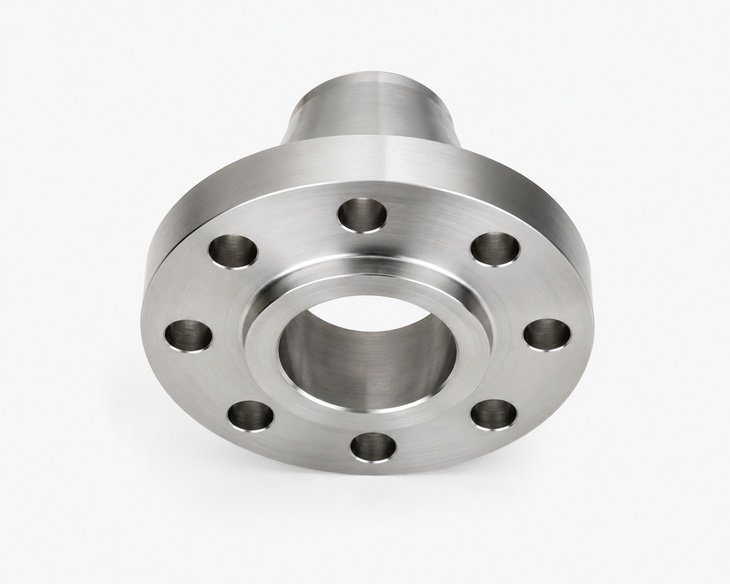
RFQ-Checkliste für kundenspezifische 316L-Flansche: 10 Details zur Bestätigung
Technical news & procurement guidance | SASA FLANGE
Schnelle Antwort
What should a custom 316L flange RFQ include?
A custom 316L flange request for quotation should include the approved drawing and revision, Materialspezifikation, Auslegungsdruck und -temperatur, mating dimensions, langweilig, Dichtfläche, Toleranzen, Inspektionsanforderungen, traceability documents, and quantity with delivery terms. If the geometry differs from a standard flange, identify who will approve the pressure design before manufacturing begins.
A request such as “316L flange to drawing” can leave important questions unanswered. One supplier may quote a finished forging; another may assume a different product form, inspection scope or sealing-face finish. The prices then describe different deliverables.
This checklist is for buyers sourcing 316L custom forged flanges for equipment connections, replacement parts and project-specific piping. It helps turn an inquiry into a quotation that purchasing, engineering and inspection teams can compare.
10 details to confirm before requesting a quotation
| RFQ item | Informationen zur Verfügung zu stellen | Question it resolves |
|---|---|---|
| 1. Drawing control | Drawing number, revision, units and approval status | Which geometry is being priced? |
| 2. Material and product form | Full specification, Grad, edition and required manufacturing route | Is a finished forging required? |
| 3. Service and design basis | Auslegungsdruck, Temperatur, medium and governing design code | Who verifies pressure suitability? |
| 4. Mating connection | Außendurchmesser, Lochkreis, hole quantity and diameter, Orientierung | Will both sides fit together? |
| 5. Bore and connection end | Langweilig, pipe wall thickness and weld-end details where applicable | Does the flange match the pipe or nozzle? |
| 6. Sealing interface | Verblendungstyp, gasket details, finish and groove geometry if applicable | Is the complete joint compatible? |
| 7. Dimensional acceptance | Critical tolerances, flatness and agreed measurement method | How will the finished part be accepted? |
| 8. Inspektionsumfang | Required examinations, Ausmaß, acceptance criteria and witness points | Which checks are included in the price? |
| 9. Dokumentation | Certificate type, Rückverfolgbarkeit der Wärme, marking and inspection reports | What evidence accompanies the flange? |
| 10. Kommerzieller Umfang | Menge, delivery location, gewünschtes Datum, packaging and supply boundaries | Are quotations commercially comparable? |
Separate material specification from flange design
“316L” is a material description, not a complete purchasing specification. For an ordered forging, identify the required grade, wie zum Beispiel ASTM A182 F316L, and the applicable edition. ASTM A182/A182M addresses forged alloy and stainless steel piping components and includes material, heat-treatment and mechanical-property requirements. A generic “316L” statement does not establish compliance with that specification. See the ASTM A182/A182M Umfang.
Keep the material certificate separate from the drawing approval. Ask the supplier to identify the offered product form and any proposed substitution before accepting the quotation. Engineering should also confirm material suitability for the actual process conditions; a familiar grade name alone is not a service assessment.
A matching bolt pattern does not establish a pressure rating. ASME B16.5 addresses dimensions and pressure-temperature ratings within its defined scope. A custom flange that departs from the applicable standard geometry needs an appropriate design basis and approval; copying the bolt holes from a Class 150 flange does not automatically make the custom part Class 150-rated. Refer to the ASME B16.5 Umfang and the project-adopted edition.
Define the mating joint before machining
For a replacement flange, provide the mating equipment drawing where available. Record how the measurements were obtained and distinguish verified dimensions from estimates. Photographs can show the connection arrangement, but they do not establish tolerances, hidden geometry or allowable loads.
For a weld-neck design, state the actual pipe or nozzle interface. For a blind flange, clarify any tapped holes, instrument ports or machining allowances. Resolve conflicting dimensions before the drawing is released for production.
The flange, gasket and fasteners work together. Identify the sealing surface and required gasket arrangement rather than leaving the finish to a general “standard” note. ASME PCC-1 provides assembly guidance within its scope; the project should define the applicable joint assembly procedure separately from the manufacturing drawing.
Make inspection and documentation part of the RFQ
Specify which inspections are required, who performs them, and the acceptance criteria. If positive material identification, ultrasonic examination or liquid penetrant examination is requested, state the method and coverage instead of using a broad “100% tested” phrase. Ask for any purchaser witness or hold points to be identified in the inspection plan.
Agree on the document package before ordering: Materialzertifikat, Dimensionsbericht, specified examination reports, marking record and packing list. Require a clear link between the supplied item, its heat identification and the relevant certificate. Unser ASTM A182 flange MTC checklist provides a related document-review guide.
A practical RFQ template
Thema: Anfrage – Custom 316L flange to approved drawing
- Part definition: Drawing number and revision; Flanschtyp; dimensions and units.
- Material: Required specification, Grad, edition and product form.
- Design: Medium, Auslegungsdruck und -temperatur, governing code and design-approval responsibility.
- Interfaces: Mating drawing, langweilig, gegenüber, gasket and bolting information.
- Qualität: Tolerances, Inspektionsplan, acceptance criteria, certificates and marking.
- Liefern: Menge, Verpackung, delivery location, required date and whether gaskets or fasteners are included.
Ask the supplier to return a quotation with explicit assumptions, exclusions and a list of deviations for review. Confirm when the quoted lead time starts, particularly if drawing approval or material availability is a prerequisite.
Häufig gestellte Fragen
Ist ASTM A182 F316L the same as an ASME B16.5 Flansch?
NEIN. ASTM A182 F316L identifies a material specification and grade for the relevant product form. ASME B16.5 addresses flange requirements within its scope. An order may need both, plus project-specific conditions.
Can I order a custom flange using only an old sample?
A sample can support measurement, but the RFQ should lead to an approved drawing and documented design basis. Agree on responsibility for reverse engineering, dimensional verification and pressure suitability before manufacture.
Does a material certificate prove a custom flange is pressure-rated?
NEIN. Material documentation and pressure-design verification answer different questions. The custom geometry, service conditions and applicable design rules also need review.
What should I do if the final drawing is not ready?
Request a budgetary quotation and identify the unresolved dimensions and requirements. Ask which assumptions affect price or delivery. Release production only after the relevant technical information is approved.
Request a custom 316L flange quotation
Schicken SASA FLANGE your drawing, required material, Menge und Servicebedingungen. Include the inspection and delivery requirements so the quotation can address the same scope your project needs.
Send your RFQ to SASA FLANGE | View the custom 316L flange product
This procurement guide summarizes questions to resolve before ordering. Final design, material selection and acceptance requirements belong in the approved project documents. Linked standards pages describe their scope; use the complete editions specified for the project.
Verwandte Beiträge
Legierung 20 Kugelventil für Schwefelsäureanwendungen: RFQ-Checkliste
Erfahren Sie, wie Sie eine Legierung angeben 20 Kugelventil für…
ASTM A320 L7 vs. L7M Stehbolzen: Was Käufer überprüfen müssen
Vergleichen Sie Stehbolzen ASTM A320 L7 und L7M: Stärke, Härte,…
ASTM B564 UNS N06625 Flansche: Grad 1 vs. Note 2
Erfahren Sie, wie ASTM B564 bewertet wird 1 und Note 2 anwenden…
C-2000 vs. C22-Flansche: Materialauswahl und RFQ-Prüfungen
Vergleichen Sie die Materialidentitäten der Flansche C-2000 und C22, Servicebedingungen, Schmieden…