
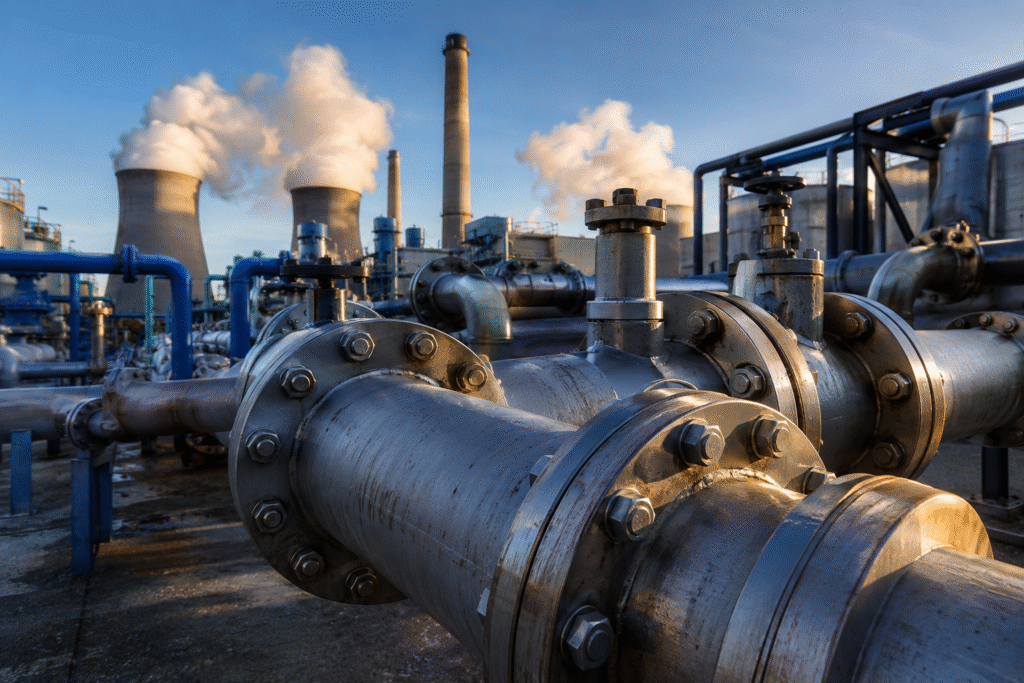
Edelstahl-Flanschtypen für industrielle Anwendungen
Laut Grand View Research (2024), Der globale Markt für Industrieflansche wurde mit bewertet $5.8 Milliarden in 2023 und wird voraussichtlich erreicht werden $7.2 Milliarden von 2030. That growth highlights why the stainless steel pipe flange remains a critical component for industrial piping systems that demand corrosion resistance, Druckintegrität, und lange Lebensdauer.
Für Beschaffungsmanager und Rohrleitungsingenieure, the hidden advantages of stainless steel pipe flange selection go beyond material cost alone. The right flange improves sealing reliability, reduces maintenance intervals, and supports compliance with ASME, ASTM, DIN, and EN requirements in demanding sectors.
Stainless Steel Pipe Flange Demand Is Rising Across Global Industrial Markets
Laut IBISWorld (2024), Der asiatisch-pazifische Raum macht mehr als aus 45% der weltweiten Flanschproduktion, wobei China der größte Hersteller ist. daher, buyers increasingly evaluate not only price, sondern auch die Rückverfolgbarkeit der Mühle, Bearbeitungskonsistenz, and export compliance when sourcing flanges.
Laut Statista (2024), auf die Öl- und Gasindustrie entfallen ca 35% des weltweiten Flanschverbrauchs. Darüber hinaus, Petrochemie, Stromerzeugung, Wasseraufbereitung, and marine industries continue to specify stainless and alloy flange systems for corrosion-critical duty.
In praktischer Hinsicht, stainless steel flanges support leak-tight connections in piping networks that handle steam, Chemikalien, Meerwasser, Kohlenwasserstoffe, and aggressive process fluids. Infolge, grades such as 304, 316, 316L, 904L, 2205, Und 2507 remain central to engineering specifications worldwide.
Laut Mordor-Geheimdienst (2024), industrial process modernization and energy infrastructure investment are increasing demand for higher-integrity piping components in emerging economies. Außerdem, flange buyers now expect certified documentation, PMI-Fähigkeit, Und EN 10204 3.1 material test reports as standard procurement requirements.
That market shift favors manufacturers that can combine forging, CNC-Bearbeitung, Inspektion, and export packaging under one quality system. Mit ISO 9001:2015 und PED 2014/68/EU-Zertifizierungen, SASA FLANGE supports industrial buyers seeking dependable stainless steel and alloy flange supply for global projects.
Another important factor is lifecycle cost. Laut Market Research Future (2024), corrosion-related maintenance can represent a major share of total operating expense in process plants, which is why stainless flange materials often deliver stronger value over time than lower-cost alternatives.
Als John Reynolds, Materials Engineering Specialist, Staaten: “Im korrosiven Einsatz, flange material selection is rarely a commodity decision because the cost of one leak or shutdown can exceed the purchase price of the entire connection.” That perspective explains why end users scrutinize metallurgy, Verkleidungsende, and pressure class before approving suppliers.
Buyers also increasingly compare stainless steel pipe flange options by lead time, customization range, and standards coverage. In contrast to generic stock sellers, experienced manufacturers can offer RF, FF, RTJ, mit Gewinde, Muffenschweißen, reinschlüpfen, Überlappungsgelenk, and weld neck configurations across multiple pressure ratings.
For companies managing EPC projects, turnaround maintenance, or OEM production, this broader capability matters. It simplifies sourcing and reduces vendor count while keeping dimensions aligned with ANSI B16.5, ANSI B16.47, DIN, JIS, GOST, und EN 1092 Standards.
Intriguing Stainless Steel Pipe Flange Types, Materialien, und versteckte Vorteile
The most intriguing aspect of stainless steel pipe flange engineering is how small design differences can significantly affect strength, Ermüdungsbeständigkeit, und Dichtungsleistung. daher, selecting among flange types should always start with the service medium, Temperaturbereich, Druckklasse, und Gelenkkonfiguration.
Entsprechend ASME B16.5, Flanschabmessungen, Bohren, gegenüber, and pressure-temperature ratings must remain standardized to ensure interchangeability across piping systems (ASME, 2023). Zusätzlich, ASTM material standards such as ASTM A182 Und ASTM A240 define chemical composition and mechanical properties for forged stainless components (ASTM, 2023).
Als Dr. Helen Carter, Korrosionsberater, Staaten: “316L wird oft vorgezogen 304 in chloride-bearing environments because molybdenum improves pitting resistance, especially when maintenance access is limited.” Jedoch, Duplex-Sorten wie z 2205 und Super-Duplex 2507 can outperform austenitic grades where high strength and chloride resistance are both required.
Gemäß NACE-Leitfaden, chloride stress corrosion cracking risk increases as temperature and chloride concentration rise, especially in austenitic stainless steels (NACE, 2023). Folglich, Marine, Off-Shore-, and desalination applications often move from 316L to duplex or super duplex specifications.
Common stainless steel pipe flange materials include the following:
- 304 und 304L für allgemeine Industrieanwendungen, food process lines, and non-chloride environments.
- 316 and 316L for chemical processing, Meeresexposition, and moderate chloride service.
- 904L for aggressive acids and higher corrosion resistance requirements.
- 2205 duplex for higher strength and improved resistance to chloride pitting.
- 2507 super duplex for severe offshore and seawater duty.
- Inconel, Monel, Hastelloy, and titanium for highly specialized corrosive or high-temperature systems.
The hidden advantages of a well-specified stainless steel pipe flange include more than corrosion resistance. Darüber hinaus, buyers gain dimensional stability, strong weldability in low-carbon grades, geringeres Kontaminationsrisiko, and improved service life in cyclic operations.
The main flange types used in industrial piping include:
- Weld neck flange for high-pressure and high-temperature service.
- Slip on flange for moderate pressure lines and cost-effective installation.
- Socket weld flange for small-bore high-pressure piping.
- Threaded flange for systems where welding is impractical.
- Lap joint flange for frequent dismantling and stub-end assemblies.
- Blindflansch zum Leitungsabschluss, Wartungsisolation, and hydrotesting.
Weld neck designs usually offer the best fatigue resistance because the tapered hub reduces stress concentration at the bore transition. Im Gegensatz, slip on flanges lower fabrication cost, but they are generally less suitable for severe cyclic or high-integrity service.
Gemäß den Offshore-Richtlinien von DNV, component traceability and material compatibility are essential in safety-critical piping systems (DNV, 2023). daher, projects often require heat number traceability, PMI-Überprüfung, Härteprüfung, and pressure-class confirmation before shipment.
Manufacturing quality also affects field performance. Unterstützt durch fortschrittliche CNC-Bearbeitung und umfassende Qualitätsprüfungen, SASA FLANGE produces stainless steel flanges in 304, 316, 904L, 2205, 2507 and other premium grades for buyers who need repeatable tolerances and export-ready documentation.
For engineers comparing types, the following selection logic is practical:
- Choose weld neck for high cycle fatigue, Thermoschock, or high design pressure.
- Choose slip on where budget matters and service severity is moderate.
- Choose blind flanges for pressure-retaining closures and inspection points.
- Choose threaded flanges for low-temperature utility lines or non-weld installations.
- Choose duplex or super duplex where chlorides and strength requirements are both high.
Gemäß ISO-Qualitätsmanagementprinzipien, process control and traceability significantly improve consistency in industrial component manufacturing (ISO, 2023). Infolge, buyers increasingly favor suppliers that can issue dimensional reports, chemical analysis data, Und EN 10204 3.1 certificates with every lot.
ASME, ASTM, DIN, und EN-Normen, die die Konformität von Edelstahlrohrflanschen definieren
Standards compliance is one of the fastest ways to separate industrial-grade flanges from general fabricated parts. daher, every stainless steel pipe flange should be checked against dimensional, Material, Druck, and documentation standards before purchase approval.
The primary standards used in global flange procurement include:
- ASME B16.5 for pipe flanges and flanged fittings from NPS 1/2 durch 24.
- ASME B16.47 für Stahlflansche mit großem Durchmesser aus NPS 26 durch 60.
- ASTM A182 für geschmiedete oder gewalzte Rohrflansche aus Legierung und Edelstahl.
- ASME B16.9 for related butt weld fittings used in the same piping systems.
- EN 1092 für europäische Flanschabmessungen und Druckbezeichnungen.
- DIN and JIS standards for regional industrial requirements.
Gemäß der Druckgeräterichtlinie, pressure-retaining components supplied into qualifying EU applications must satisfy conformity and documentation requirements relevant to PED 2014/68/EU (Europäische Kommission, 2024). Zusätzlich, offshore and sour-service applications may require alignment with NACE MR0175 and project-specific owner standards.
Buyers should also distinguish between material standards and dimensional standards. ASTM A182, Zum Beispiel, tells you what the forged stainless material must be, während ASME B16.5 tells you how the flange must be sized, drilled, and rated.
Eine praktische Compliance-Checkliste enthält:
- Material grade confirmation such as F304, F304L, F316, F316L, F51, oder F53.
- Pressure class verification such as Class 150, 300, 600, 900, 1500, oder 2500.
- Facing type confirmation including RF, FF, oder RTJ.
- Dimensional tolerance inspection to ASME or EN requirements.
- Mill test certificates and EN 10204 3.1 Dokumentation.
- Optionales PMI, Härte, Ferrit, and hydrostatic or NDT records.
Für multinationale Projekte, standard harmonization matters because mixed specifications can create fit-up delays and procurement errors. Zum Beispiel, ASME Class ratings and EN PN ratings are not directly interchangeable, so engineers should review pressure-temperature data carefully before substitution.
Laut ASME, flange pressure-temperature ratings vary by material group and design standard, not by nominal size alone (ASME, 2023). Folglich, a stainless steel pipe flange in Class 300 may have a different allowable pressure than a carbon steel flange under the same nominal class designation.
Mit ISO 9001:2015, PED 2014/68/EU, und AD 2000 Zertifizierungen, SASA FLANGE aligns its production and quality assurance with internationally recognized compliance expectations. That is especially valuable for EPC contractors and distributors who need documented conformity for export markets and regulated industries.
Käufer können den Produktumfang überprüfen SASA FLANGE Produktseiten and company capabilities through das Firmenprofil. For technical standard details, the official ASME-Website remains an authoritative external reference for current code guidance.
In sourcing practice, standards discipline reduces total project risk. It helps prevent mismatched bolting patterns, incorrect bore schedules, unsuitable metallurgy, and documentation gaps that can delay inspection release or commissioning.
So wählen Sie einen Edelstahlrohrflansch für Öl aus & Gas, Chemisch, Leistung, and Marine Applications
Choosing the correct stainless steel pipe flange starts with the operating envelope, not the catalog image. daher, Ingenieure sollten den Druck definieren, Temperatur, Korrosionsmechanismus, Liniengröße, Flanschtyp, gegenüber, and required documentation before comparing suppliers.
Im Öl- und Gasservice, Die Zuverlässigkeit des Flansches wirkt sich direkt auf Sicherheit und Betriebszeit aus. Laut Statista (2024), Der Sektor macht ca. aus 35% des weltweiten Flanschverbrauchs, which explains the industry’s strong focus on traceability, sour-service suitability, and pressure-class accuracy.
For oil and gas projects, selection priorities often include:
- Weld neck flanges for high-pressure lines and cyclic duty.
- 316L, Duplex 2205, oder 2507 for chloride-containing or offshore environments.
- RTJ facing for severe pressure containment requirements.
- NACE MR0175 review for sour or H2S-related service.
- PMI und 3.1 certification for critical package approval.
In der chemischen Verarbeitung, corrosion resistance usually dominates the decision. Folglich, 316L is common for general process service, während 904L, Hastelloy, or other nickel alloys may be needed for concentrated acids or mixed chemical streams.
Power generation introduces a different balance of risk. Hohe Temperatur, Temperaturwechsel, and steam service often favor weld neck designs with carefully controlled metallurgy and machining quality to maintain gasket seating and long-term integrity.
Marine and shipbuilding applications add constant chloride exposure and maintenance constraints. In diesen Fällen, duplex and super duplex flange materials can offer a stronger combination of strength and corrosion resistance than standard austenitic stainless grades.
Als Mark Ellison, Leitender Rohrleitungsingenieur, Staaten: “The best flange choice is the one that matches the real service condition, because overspecification wastes budget and underspecification creates failure risk.” That is why experienced suppliers ask about media chemistry, operating excursions, and mating component standards before quoting.
When evaluating suppliers, procurement teams should compare more than unit price. Darüber hinaus, they should review manufacturing range, minimum order flexibility, Wärmebehandlungskontrolle, Bearbeitungskapazität, Inspektionsverfahren, and packaging for export transport.
Use the following checklist to choose correctly:
- Bestätigen Sie die Nennrohrgröße, Zeitplan, and required bore match.
- Confirm flange standard such as ASME B16.5, B16.47, DIN, oder EN 1092.
- Confirm pressure rating and service temperature limits.
- Confirm material grade and corrosion allowance requirements.
- Confirm facing type and gasket compatibility.
- Confirm testing, Zertifikate, and traceability expectations.
- Confirm delivery schedule, Menge, and custom machining needs.
Portion 50+ Länder in ganz Öl & Gas, Petrochemie, Leistung, und Marineindustrie, SASA FLANGE bietet maßgeschneiderte Größen von an 1/2 Zoll zu 60 Zoll mit wettbewerbsfähigen Direktpreisen ab Werk. That capability supports both standard stocking programs and project-based manufacturing for OEMs, EPC firms, and industrial distributors.
In many tenders, the decision also depends on whether the supplier can provide matching fittings. Since stainless steel flanges and fittings must work as one system, manufacturers that also supply elbows, T-Shirts, Reduzierstücke, and caps simplify sourcing and reduce dimensional mismatch risk.
Zum Beispiel, a seawater cooling line may require duplex weld neck flanges, butt weld elbows to ASME B16.9, and documented PMI across the package. Ähnlich, a pharmaceutical utility line may prioritize 316L cleanliness, consistent surface finish, and accurate bore alignment rather than extreme pressure class.
Zukunftsaussichten für die Beschaffung von Edelstahlrohrflanschen und strategische Kaufempfehlungen
The outlook for stainless steel pipe flange sourcing remains positive as energy, Wasser, und industrielle Modernisierungsprojekte werden weltweit fortgesetzt. Laut Grand View Research (2024), Es wird erwartet, dass der Markt weiter wächst $5.8 Milliarden in 2023 Zu $7.2 Milliarden von 2030, which indicates sustained demand for qualified manufacturers.
Gleichzeitig, buyers face tighter documentation expectations and more volatile alloy pricing. daher, strategic procurement now depends on supplier qualification, framework agreements, and technical standard alignment as much as on unit cost.
Laut IBISWorld (2024), Der asiatisch-pazifische Raum produziert mehr als 45% der globalen Flanschleistung, which gives buyers broad sourcing options but also raises the importance of supplier audits and quality verification. Zusätzlich, regulatory and project owners increasingly demand PED conformity, Rückverfolgbarkeit, and certificate packages that support faster inspection release.
For distributors and EPC teams, the most effective strategy is to prequalify suppliers before urgent demand arises. That means reviewing manufacturing scope, Inspektionssysteme, Rückverfolgbarkeit der Rohstoffe, Bearbeitungsfähigkeit, and response speed for custom orders.
Recommended actions include:
- Standardisieren Sie zugelassene Güten wie 304L, 316L, 2205, Und 2507 by application class.
- Build specification sheets that define flange type, gegenüber, Bewertung, and certificate requirements.
- Qualify at least one supplier capable of both flanges and fittings.
- Request sample MTCs, Inspektionsberichte, and photo records before large project awards.
- Nutzen Sie die Lebenszykluskosten, nicht nur der Kaufpreis, when comparing stainless and duplex options.
Infolge, procurement teams can reduce rework, avoid incompatible substitutions, and improve project schedule confidence. For buyers who need custom stainless, Legierung, or duplex flange support backed by international certifications and technical responsiveness, eine Diskussion mit SASA FLANGE durch its engineering sales team ist ein praktischer nächster Schritt.
Häufig gestellte Fragen
Wofür werden Edelstahlflansche verwendet??
●Zur Verbindung von Rohren werden Edelstahlflansche verwendet, Ventile, Pumps, and pressure equipment in systems that require strength, Korrosionsbeständigkeit, und zuverlässige Abdichtung.
●Laut Statista (2024), Allein Öl und Gas machen ca. aus 35% des weltweiten Flanschverbrauchs, which shows how essential flanges are in mission-critical piping networks.
●Sie sind in petrochemischen Anlagen weit verbreitet, Kraftwerke, Meeressysteme, Wasseraufbereitungsanlagen, Lebensmittelverarbeitungslinien, and pharmaceutical utilities because stainless materials resist oxidation and many corrosive media better than carbon steel.
●The exact use depends on flange type, gegenüber, und Druckstufe, so a weld neck flange may suit high-pressure steam service while a slip on flange may fit moderate-pressure utility piping.
●For projects requiring traceable material certificates, Standardkonformität, und Sondergrößen, Zusammenarbeit mit etablierten Herstellern wie SASA FLANGE helps ensure the flange matches both design code and operating conditions.
Welche Flansche bestehen aus Edelstahl??
●Übliche Edelstahlflansche verfügen über einen Schweißhals, reinschlüpfen, blind, mit Gewinde, Muffenschweißen, und Überlappungsgelenkkonstruktionen, hergestellt in Qualitäten wie z 304, 304L, 316, 316L, 904L, 2205, Und 2507.
●ASTM A182 covers forged stainless steel pipe flanges, während ASME B16.5 Und ASME B16.47 define dimensional and pressure-class requirements for many industrial sizes and ratings.
●In der Praxis, 304 Und 316 grades dominate general industrial use, but duplex stainless flanges are increasingly selected where higher strength and chloride resistance are needed.
●Als Dr. Helen Carter, Korrosionsberater, Staaten: “Material selection should reflect the actual corrosion mechanism, because stainless is a category, not a single performance level.”
●If you need stainless steel flange types matched to pipe schedule, Dichtungsstil, und Medienchemie, it is best to request a technical review from a qualified supplier before finalizing the order.
Stellen sie Rohrverbindungsstücke aus Edelstahl her??
●Ja, stainless steel pipe fittings are widely manufactured and commonly supplied alongside flanges to create complete corrosion-resistant piping systems.
●ASME B16.9 covers many butt weld fittings such as elbows, T-Shirts, Reduzierstücke, und Mützen, and these are available in stainless grades including 304, 316L, 2205, Und 2507 for industrial service.
●Laut Market Research Future (2024), process industries continue to increase spending on higher-integrity piping components to reduce maintenance and unplanned downtime.
●That means buyers often source stainless steel flanges and fittings together so that dimensions, Metallurgie, and certification packages remain consistent across the line class.
●For engineered packages, it is advisable to work with a manufacturer that can supply both flanges and fittings with EN 10204 3.1 documentation and verified material traceability.
Was ist die stärkste Art von Rohrleitungsflansch??
●In most industrial piping applications, the weld neck flange is considered the strongest standard flange type because its tapered hub distributes stress efficiently between the flange and pipe.
●Gemäß ASME-Designpraxis, weld neck flanges are preferred for high-pressure, hohe Temperatur, and cyclic service where fatigue resistance is critical (ASME, 2023).
●Strength also depends on material grade, Druckklasse, und Serviceumgebung, so a duplex or super duplex weld neck flange may outperform an austenitic stainless alternative in chloride-heavy conditions.
●Threaded or slip on flanges can be suitable for less severe service, but they are generally not the first choice for demanding applications involving vibration, Wärmeausdehnung, or repeated pressure cycling.
●For critical process lines, engineers should evaluate flange type, gegenüber, Metallurgie, and code compliance together rather than choosing based on nominal strength alone.
Wie wähle ich zwischen 304 Und 316 Edelstahl-Rohrflanschqualitäten?
●Wählen 304 or 304L for general industrial service, but choose 316 oder 316L bei Chloridexposition, chemical contact, or marine atmosphere increases corrosion risk.
●Als Dr. Helen Carter, Korrosionsberater, Staaten: “316L wird oft vorgezogen 304 in chloride-bearing environments because molybdenum improves pitting resistance, especially when maintenance access is limited.”
●Aus Beschaffungssicht, 304 usually offers a lower purchase price, während 316 often delivers lower lifecycle cost in aggressive service by reducing corrosion-related replacement frequency.
●Gemäß NACE-Leitfaden (2023), chloride stress corrosion cracking risk rises with temperature and chloride concentration, which is why operating conditions matter more than general material popularity.
●When the service is highly corrosive or offshore, buyers should also compare duplex grades such as 2205 instead of limiting the decision to 304 gegen 316.
Was beeinflusst den Preis für Edelstahlrohrflansche??
●Der Preis für Edelstahlrohrflansche hängt hauptsächlich von der Materialqualität ab, Flanschtyp, Größe, Druckklasse, Bearbeitungskomplexität, Zertifizierungsanforderungen, und Auftragsvolumen.
●Zum Beispiel, A 4 Zoll-Rohrflansch aus Edelstahl der Klasse 316L 300 generally costs more than a 304 slip on flange of the same size because the alloy content and machining demands are higher.
●Laut Grand View Research (2024), continued growth in global flange demand and infrastructure investment can influence raw material procurement patterns and lead times across the supply chain.
●Additional cost drivers include PMI testing, EN 10204 3.1 Zertifizierung, PED-Dokumentation, special facing such as RTJ, and custom drilling or nonstandard dimensions.
●The most accurate approach is to request a quotation that includes grade, Standard, Menge, Größenbereich, and documentation scope so suppliers can price the full technical requirement rather than only the base flange.
Verwandte Beiträge
Flanschoberflächenfinish: Konzentrische vs. spiralförmige Verzahnungen erklärt
Konzentrische und spiralförmige Verzahnungen sind beide bearbeitete Flanschflächenoberflächen…
Duplex 2205 vs. 316L-Flansche: Welches Material sollten Sie wählen??
Schnelle Antwort: Duplex 2205 Flansche sind normalerweise der stärkere Kandidat…

Definition des Öffnungsflansches, Details und Übersicht über ASME B16.36-Flansche: Marktdaten, Auswahlhilfe und Compliance-Einblicke
Der globale Markt für Industrieflansche wurde mit bewertet $5.8 Milliarde…

Marktführer für schwarze Entsorgungsflansche: Materialien, 3.5″ Kompatibilität, und B2B-Beschaffungsdaten für Küchenspülenflansche
Die Nachfrage nach schwarzen Entsorgungsflanschen steigt bei Käufern von Küchenarmaturen…