
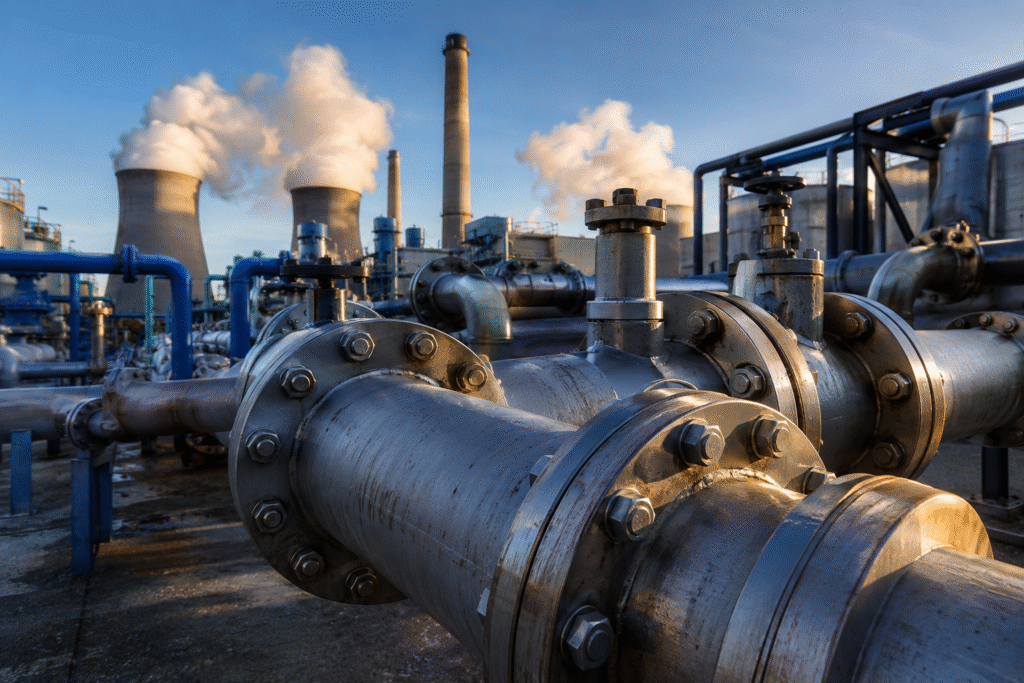
Các loại mặt bích thép không gỉ cho ứng dụng công nghiệp
Theo nghiên cứu của Grand View (2024), thị trường mặt bích công nghiệp toàn cầu được định giá ở mức $5.8 tỷ trong 2023 và dự kiến sẽ đạt $7.2 tỷ bởi 2030. That growth highlights why the stainless steel pipe flange remains a critical component for industrial piping systems that demand corrosion resistance, tính toàn vẹn áp lực, và tuổi thọ dài.
Dành cho người quản lý mua sắm và kỹ sư đường ống, the hidden advantages of stainless steel pipe flange selection go beyond material cost alone. The right flange improves sealing reliability, reduces maintenance intervals, and supports compliance with ASME, ASTM, DIN, and EN requirements in demanding sectors.
Stainless Steel Pipe Flange Demand Is Rising Across Global Industrial Markets
Theo IBISWorld (2024), Châu Á - Thái Bình Dương chiếm hơn 45% sản xuất mặt bích toàn cầu, với Trung Quốc là nhà sản xuất lớn nhất. Vì thế, người mua ngày càng đánh giá không chỉ giá, but also mill traceability, machining consistency, and export compliance when sourcing flanges.
Theo Statista (2024), ngành dầu khí chiếm khoảng 35% tiêu thụ mặt bích toàn cầu. Hơn thế nữa, hóa dầu, phát điện, xử lý nước, and marine industries continue to specify stainless and alloy flange systems for corrosion-critical duty.
Về mặt thực tế, stainless steel flanges support leak-tight connections in piping networks that handle steam, hóa chất, nước biển, hiđrocacbon, and aggressive process fluids. Kết quả là, grades such as 304, 316, 316L, 904L, 2205, Và 2507 remain central to engineering specifications worldwide.
Theo Mordor Intelligence (2024), industrial process modernization and energy infrastructure investment are increasing demand for higher-integrity piping components in emerging economies. Hơn nữa, flange buyers now expect certified documentation, Khả năng PMI, Và EN 10204 3.1 material test reports as standard procurement requirements.
That market shift favors manufacturers that can combine forging, gia công CNC, điều tra, and export packaging under one quality system. Với ISO 9001:2015 và chứng nhận PED 2014/68/EU, SASA FLANGE supports industrial buyers seeking dependable stainless steel and alloy flange supply for global projects.
Another important factor is lifecycle cost. Theo Nghiên cứu thị trường Tương lai (2024), corrosion-related maintenance can represent a major share of total operating expense in process plants, which is why stainless flange materials often deliver stronger value over time than lower-cost alternatives.
Như John Reynolds, Materials Engineering Specialist, tiểu bang: “Trong dịch vụ ăn mòn, flange material selection is rarely a commodity decision because the cost of one leak or shutdown can exceed the purchase price of the entire connection.” That perspective explains why end users scrutinize metallurgy, đối mặt với kết thúc, and pressure class before approving suppliers.
Buyers also increasingly compare stainless steel pipe flange options by lead time, customization range, and standards coverage. In contrast to generic stock sellers, experienced manufacturers can offer RF, FF, RTJ, xâu chuỗi, ổ cắm hàn, trượt vào, khớp nối, and weld neck configurations across multiple pressure ratings.
For companies managing EPC projects, turnaround maintenance, or OEM production, this broader capability matters. It simplifies sourcing and reduces vendor count while keeping dimensions aligned with ANSI B16.5, ANSI B16.47, DIN, JIS, GOST, và VN 1092 tiêu chuẩn.
Các loại mặt bích ống thép không gỉ hấp dẫn, Nguyên vật liệu, và Ưu điểm tiềm ẩn
The most intriguing aspect of stainless steel pipe flange engineering is how small design differences can significantly affect strength, chống mỏi, và hiệu suất niêm phong. Vì thế, selecting among flange types should always start with the service medium, phạm vi nhiệt độ, lớp áp lực, and joint configuration.
Theo ASME B16.5, kích thước mặt bích, khoan, đối mặt, and pressure-temperature ratings must remain standardized to ensure interchangeability across piping systems (ASME, 2023). Ngoài ra, ASTM material standards such as ASTM A182 Và ASTM A240 define chemical composition and mechanical properties for forged stainless components (ASTM, 2023).
Như Tiến sĩ. Helen Carter, Tư vấn ăn mòn, tiểu bang: “316L thường được ưa thích hơn 304 in chloride-bearing environments because molybdenum improves pitting resistance, especially when maintenance access is limited.” Tuy nhiên, các lớp song công như 2205 và siêu song công 2507 can outperform austenitic grades where high strength and chloride resistance are both required.
Theo hướng dẫn của NACE, chloride stress corrosion cracking risk increases as temperature and chloride concentration rise, especially in austenitic stainless steels (NACE, 2023). Do đó, hàng hải, ngoài khơi, and desalination applications often move from 316L to duplex or super duplex specifications.
Common stainless steel pipe flange materials include the following:
- 304 and 304L for general industrial service, dây chuyền chế biến thực phẩm, and non-chloride environments.
- 316 and 316L for chemical processing, tiếp xúc với biển, and moderate chloride service.
- 904L for aggressive acids and higher corrosion resistance requirements.
- 2205 duplex for higher strength and improved resistance to chloride pitting.
- 2507 super duplex for severe offshore and seawater duty.
- Inconel, Monel, Hastelloy, and titanium for highly specialized corrosive or high-temperature systems.
The hidden advantages of a well-specified stainless steel pipe flange include more than corrosion resistance. Hơn thế nữa, buyers gain dimensional stability, strong weldability in low-carbon grades, nguy cơ ô nhiễm thấp hơn, and improved service life in cyclic operations.
The main flange types used in industrial piping include:
- Weld neck flange for high-pressure and high-temperature service.
- Slip on flange for moderate pressure lines and cost-effective installation.
- Mặt bích hàn ổ cắm cho đường ống cao áp cỡ nhỏ.
- Threaded flange for systems where welding is impractical.
- Lap joint flange for frequent dismantling and stub-end assemblies.
- Mặt bích mù để chấm dứt đường dây, cách ly bảo trì, và thử thủy lực.
Weld neck designs usually offer the best fatigue resistance because the tapered hub reduces stress concentration at the bore transition. Ngược lại, slip on flanges lower fabrication cost, but they are generally less suitable for severe cyclic or high-integrity service.
Theo hướng dẫn ra nước ngoài của DNV, component traceability and material compatibility are essential in safety-critical piping systems (DNV, 2023). Vì thế, projects often require heat number traceability, Xác minh PMI, kiểm tra độ cứng, and pressure-class confirmation before shipment.
Manufacturing quality also affects field performance. Được hỗ trợ bởi gia công CNC tiên tiến và kiểm tra chất lượng toàn diện, SASA FLANGE produces stainless steel flanges in 304, 316, 904L, 2205, 2507 and other premium grades for buyers who need repeatable tolerances and export-ready documentation.
For engineers comparing types, the following selection logic is practical:
- Choose weld neck for high cycle fatigue, sốc nhiệt, or high design pressure.
- Choose slip on where budget matters and service severity is moderate.
- Choose blind flanges for pressure-retaining closures and inspection points.
- Choose threaded flanges for low-temperature utility lines or non-weld installations.
- Choose duplex or super duplex where chlorides and strength requirements are both high.
Theo nguyên tắc quản lý chất lượng ISO, process control and traceability significantly improve consistency in industrial component manufacturing (ISO, 2023). Kết quả là, buyers increasingly favor suppliers that can issue dimensional reports, chemical analysis data, Và EN 10204 3.1 certificates with every lot.
ASME, ASTM, DIN, và các tiêu chuẩn EN xác định sự tuân thủ của mặt bích ống thép không gỉ
Standards compliance is one of the fastest ways to separate industrial-grade flanges from general fabricated parts. Vì thế, every stainless steel pipe flange should be checked against dimensional, vật liệu, áp lực , and documentation standards before purchase approval.
The primary standards used in global flange procurement include:
- ASME B16.5 for pipe flanges and flanged fittings from NPS 1/2 bởi vì 24.
- ASME B16.47 for large diameter steel flanges from NPS 26 bởi vì 60.
- ASTM A182 cho mặt bích ống thép không gỉ và hợp kim rèn hoặc cán.
- ASME B16.9 for related butt weld fittings used in the same piping systems.
- EN 1092 về kích thước mặt bích và ký hiệu áp suất của mặt bích Châu Âu.
- DIN and JIS standards for regional industrial requirements.
Theo Chỉ thị về Thiết bị Áp lực, pressure-retaining components supplied into qualifying EU applications must satisfy conformity and documentation requirements relevant to PED 2014/68/EU (Ủy ban Châu Âu, 2024). Ngoài ra, offshore and sour-service applications may require alignment with NACE MR0175 and project-specific owner standards.
Buyers should also distinguish between material standards and dimensional standards. ASTM A182, Ví dụ, tells you what the forged stainless material must be, trong khi ASME B16.5 tells you how the flange must be sized, drilled, and rated.
Danh sách kiểm tra tuân thủ thực tế bao gồm:
- Material grade confirmation such as F304, F304L, F316, F316L, F51, hoặc F53.
- Pressure class verification such as Class 150, 300, 600, 900, 1500, hoặc 2500.
- Facing type confirmation including RF, FF, hoặc RTJ.
- Dimensional tolerance inspection to ASME or EN requirements.
- Mill test certificates and EN 10204 3.1 tài liệu.
- PMI tùy chọn, độ cứng, ferit, and hydrostatic or NDT records.
Đối với các dự án đa quốc gia, standard harmonization matters because mixed specifications can create fit-up delays and procurement errors. Ví dụ, ASME Class ratings and EN PN ratings are not directly interchangeable, so engineers should review pressure-temperature data carefully before substitution.
Theo ASME, flange pressure-temperature ratings vary by material group and design standard, not by nominal size alone (ASME, 2023). Do đó, a stainless steel pipe flange in Class 300 may have a different allowable pressure than a carbon steel flange under the same nominal class designation.
Với ISO 9001:2015, PED 2014/68/EU, và AD 2000 chứng chỉ, SASA FLANGE aligns its production and quality assurance with internationally recognized compliance expectations. That is especially valuable for EPC contractors and distributors who need documented conformity for export markets and regulated industries.
Buyers can review product scope through SASA FLANGE trang sản phẩm and company capabilities through the company profile. For technical standard details, the official Trang web ASME remains an authoritative external reference for current code guidance.
In sourcing practice, standards discipline reduces total project risk. It helps prevent mismatched bolting patterns, incorrect bore schedules, unsuitable metallurgy, and documentation gaps that can delay inspection release or commissioning.
Cách chọn mặt bích ống thép không gỉ cho dầu & Khí đốt, Hóa chất, Quyền lực, and Marine Applications
Choosing the correct stainless steel pipe flange starts with the operating envelope, not the catalog image. Vì thế, engineers should define pressure, nhiệt độ, cơ chế ăn mòn, kích thước dòng, loại mặt bích, đối mặt, and required documentation before comparing suppliers.
Trong dịch vụ dầu khí, flange reliability directly affects safety and uptime. Theo Statista (2024), ngành này chiếm khoảng 35% tiêu thụ mặt bích toàn cầu, which explains the industry’s strong focus on traceability, sour-service suitability, and pressure-class accuracy.
For oil and gas projects, selection priorities often include:
- Weld neck flanges for high-pressure lines and cyclic duty.
- 316L, hai mặt 2205, hoặc 2507 for chloride-containing or offshore environments.
- RTJ facing for severe pressure containment requirements.
- NACE MR0175 review for sour or H2S-related service.
- PMI và 3.1 certification for critical package approval.
Trong xử lý hóa học, corrosion resistance usually dominates the decision. Do đó, 316L is common for general process service, trong khi 904L, Hastelloy, or other nickel alloys may be needed for concentrated acids or mixed chemical streams.
Power generation introduces a different balance of risk. Nhiệt độ cao, đạp xe nhiệt, and steam service often favor weld neck designs with carefully controlled metallurgy and machining quality to maintain gasket seating and long-term integrity.
Marine and shipbuilding applications add constant chloride exposure and maintenance constraints. Trong những trường hợp này, duplex and super duplex flange materials can offer a stronger combination of strength and corrosion resistance than standard austenitic stainless grades.
Như Mark Ellison, Kỹ sư đường ống cao cấp, tiểu bang: “The best flange choice is the one that matches the real service condition, because overspecification wastes budget and underspecification creates failure risk.” That is why experienced suppliers ask about media chemistry, operating excursions, and mating component standards before quoting.
When evaluating suppliers, procurement teams should compare more than unit price. Hơn thế nữa, they should review manufacturing range, minimum order flexibility, kiểm soát xử lý nhiệt, công suất gia công, thủ tục kiểm tra, and packaging for export transport.
Use the following checklist to choose correctly:
- Xác nhận kích thước ống danh nghĩa, lịch trình, and required bore match.
- Confirm flange standard such as ASME B16.5, B16.47, DIN, hoặc VN 1092.
- Confirm pressure rating and service temperature limits.
- Confirm material grade and corrosion allowance requirements.
- Confirm facing type and gasket compatibility.
- Xác nhận kiểm tra, giấy chứng nhận, and traceability expectations.
- Confirm delivery schedule, Số lượng, và nhu cầu gia công tùy chỉnh.
Phục vụ 50+ các quốc gia trên khắp dầu mỏ & Khí đốt, hóa dầu, Quyền lực, và ngành hàng hải, SASA FLANGE cung cấp kích thước tùy chỉnh từ 1/2 inch đến 60 inch với giá cả cạnh tranh trực tiếp tại nhà máy. That capability supports both standard stocking programs and project-based manufacturing for OEMs, EPC firms, and industrial distributors.
Trong nhiều cuộc đấu thầu, the decision also depends on whether the supplier can provide matching fittings. Since stainless steel flanges and fittings must work as one system, manufacturers that also supply elbows, áo thun, bộ giảm tốc, and caps simplify sourcing and reduce dimensional mismatch risk.
Ví dụ, a seawater cooling line may require duplex weld neck flanges, butt weld elbows to ASME B16.9, and documented PMI across the package. Tương tự, a pharmaceutical utility line may prioritize 316L cleanliness, consistent surface finish, and accurate bore alignment rather than extreme pressure class.
Triển vọng tương lai đối với việc mua sắm mặt bích ống thép không gỉ và các khuyến nghị mua chiến lược
The outlook for stainless steel pipe flange sourcing remains positive as energy, Nước, và các dự án hiện đại hóa công nghiệp tiếp tục diễn ra trên toàn thế giới. Theo nghiên cứu của Grand View (2024), thị trường dự kiến sẽ tăng trưởng từ $5.8 tỷ trong 2023 ĐẾN $7.2 tỷ bởi 2030, which indicates sustained demand for qualified manufacturers.
Đồng thời, buyers face tighter documentation expectations and more volatile alloy pricing. Vì thế, strategic procurement now depends on supplier qualification, framework agreements, and technical standard alignment as much as on unit cost.
Theo IBISWorld (2024), Châu Á-Thái Bình Dương sản xuất hơn 45% sản lượng mặt bích toàn cầu, which gives buyers broad sourcing options but also raises the importance of supplier audits and quality verification. Ngoài ra, regulatory and project owners increasingly demand PED conformity, truy xuất nguồn gốc, and certificate packages that support faster inspection release.
For distributors and EPC teams, the most effective strategy is to prequalify suppliers before urgent demand arises. That means reviewing manufacturing scope, hệ thống kiểm tra, truy xuất nguồn gốc nguyên liệu, khả năng gia công, and response speed for custom orders.
Recommended actions include:
- Tiêu chuẩn hóa các loại được phê duyệt như 304L, 316L, 2205, Và 2507 by application class.
- Build specification sheets that define flange type, đối mặt, đánh giá, and certificate requirements.
- Qualify at least one supplier capable of both flanges and fittings.
- Request sample MTCs, báo cáo kiểm tra, and photo records before large project awards.
- Sử dụng chi phí vòng đời, không chỉ giá mua, when comparing stainless and duplex options.
Kết quả là, procurement teams can reduce rework, avoid incompatible substitutions, and improve project schedule confidence. For buyers who need custom stainless, hợp kim, or duplex flange support backed by international certifications and technical responsiveness, a discussion with SASA FLANGE bởi vì its engineering sales team là một bước thực tế tiếp theo.
Câu hỏi thường gặp
Mặt bích thép không gỉ dùng để làm gì?
●Mặt bích inox được dùng để nối các đường ống, van, máy bơm, và thiết bị chịu áp lực trong các hệ thống đòi hỏi độ bền, chống ăn mòn, và niêm phong đáng tin cậy.
●Theo Statista (2024), Riêng dầu khí đã chiếm khoảng 35% tiêu thụ mặt bích toàn cầu, which shows how essential flanges are in mission-critical piping networks.
●Chúng được quy định rộng rãi trong các nhà máy hóa dầu, trạm điện, hệ thống biển, cơ sở xử lý nước, food processing lines, and pharmaceutical utilities because stainless materials resist oxidation and many corrosive media better than carbon steel.
●Việc sử dụng chính xác phụ thuộc vào loại mặt bích, đối mặt, và đánh giá áp suất, so a weld neck flange may suit high-pressure steam service while a slip on flange may fit moderate-pressure utility piping.
●For projects requiring traceable material certificates, tuân thủ tiêu chuẩn, và kích thước tùy chỉnh, làm việc với các nhà sản xuất có uy tín như SASA FLANGE helps ensure the flange matches both design code and operating conditions.
Mặt bích nào được làm bằng thép không gỉ?
●Mặt bích thép không gỉ phổ biến bao gồm cổ hàn, trượt vào, mù, xâu chuỗi, ổ cắm hàn, và các thiết kế khớp nối được sản xuất ở các cấp độ như 304, 304L, 316, 316L, 904L, 2205, Và 2507.
●ASTM A182 covers forged stainless steel pipe flanges, trong khi ASME B16.5 Và ASME B16.47 define dimensional and pressure-class requirements for many industrial sizes and ratings.
●Trong thực tế, 304 Và 316 grades dominate general industrial use, but duplex stainless flanges are increasingly selected where higher strength and chloride resistance are needed.
●Như Tiến sĩ. Helen Carter, Tư vấn ăn mòn, tiểu bang: “Material selection should reflect the actual corrosion mechanism, because stainless is a category, not a single performance level.”
●If you need stainless steel flange types matched to pipe schedule, phong cách đệm, and media chemistry, it is best to request a technical review from a qualified supplier before finalizing the order.
Họ có sản xuất phụ kiện đường ống bằng thép không gỉ không?
●Đúng, stainless steel pipe fittings are widely manufactured and commonly supplied alongside flanges to create complete corrosion-resistant piping systems.
●ASME B16.9 covers many butt weld fittings such as elbows, áo thun, bộ giảm tốc, và mũ, and these are available in stainless grades including 304, 316L, 2205, Và 2507 for industrial service.
●Theo Nghiên cứu thị trường Tương lai (2024), process industries continue to increase spending on higher-integrity piping components to reduce maintenance and unplanned downtime.
●That means buyers often source stainless steel flanges and fittings together so that dimensions, luyện kim, and certification packages remain consistent across the line class.
●For engineered packages, it is advisable to work with a manufacturer that can supply both flanges and fittings with EN 10204 3.1 documentation and verified material traceability.
Mặt bích ống loại nào bền nhất?
●In most industrial piping applications, the weld neck flange is considered the strongest standard flange type because its tapered hub distributes stress efficiently between the flange and pipe.
●Theo thực hành thiết kế ASME, weld neck flanges are preferred for high-pressure, nhiệt độ cao, and cyclic service where fatigue resistance is critical (ASME, 2023).
●Sức mạnh cũng phụ thuộc vào loại vật liệu, lớp áp lực, and service environment, so a duplex or super duplex weld neck flange may outperform an austenitic stainless alternative in chloride-heavy conditions.
●Threaded or slip on flanges can be suitable for less severe service, but they are generally not the first choice for demanding applications involving vibration, giãn nở nhiệt, hoặc đạp xe áp lực lặp đi lặp lại.
●For critical process lines, engineers should evaluate flange type, đối mặt, luyện kim, and code compliance together rather than choosing based on nominal strength alone.
Làm thế nào để tôi lựa chọn giữa 304 Và 316 lớp mặt bích ống thép không gỉ?
●Chọn 304 or 304L for general industrial service, but choose 316 hoặc 316L khi tiếp xúc với clorua, chemical contact, or marine atmosphere increases corrosion risk.
●Như Tiến sĩ. Helen Carter, Tư vấn ăn mòn, tiểu bang: “316L thường được ưa thích hơn 304 in chloride-bearing environments because molybdenum improves pitting resistance, especially when maintenance access is limited.”
●Từ góc độ mua sắm, 304 usually offers a lower purchase price, trong khi 316 often delivers lower lifecycle cost in aggressive service by reducing corrosion-related replacement frequency.
●Theo hướng dẫn của NACE (2023), chloride stress corrosion cracking risk rises with temperature and chloride concentration, which is why operating conditions matter more than general material popularity.
●When the service is highly corrosive or offshore, buyers should also compare duplex grades such as 2205 instead of limiting the decision to 304 so với 316.
Điều gì ảnh hưởng đến giá mặt bích ống thép không gỉ?
●Giá mặt bích ống thép không gỉ phụ thuộc chủ yếu vào loại vật liệu, loại mặt bích, kích cỡ, lớp áp lực, độ phức tạp gia công, yêu cầu chứng nhận, và khối lượng đặt hàng.
●Ví dụ, Một 4 inch stainless steel pipe flange in 316L Class 300 generally costs more than a 304 slip on flange of the same size because the alloy content and machining demands are higher.
●Theo nghiên cứu của Grand View (2024), continued growth in global flange demand and infrastructure investment can influence raw material procurement patterns and lead times across the supply chain.
●Additional cost drivers include PMI testing, EN 10204 3.1 chứng nhận, Tài liệu PED, special facing such as RTJ, and custom drilling or nonstandard dimensions.
●The most accurate approach is to request a quotation that includes grade, tiêu chuẩn, Số lượng, phạm vi kích thước, and documentation scope so suppliers can price the full technical requirement rather than only the base flange.
bài viết liên quan
Mặt bích hoàn thiện: Giải thích về răng cưa đồng tâm và xoắn ốc
Các răng cưa đồng tâm và xoắn ốc đều được gia công hoàn thiện mặt bích…
song công 2205 so với mặt bích 316L: Bạn nên chọn chất liệu nào?
Trả lời nhanh: song công 2205 mặt bích thường là ứng cử viên mạnh hơn…

Định nghĩa mặt bích lỗ, Chi tiết và tổng quan về mặt bích ASME B16.36: Dữ liệu thị trường, Hướng dẫn lựa chọn và thông tin chi tiết về tuân thủ
Thị trường mặt bích công nghiệp toàn cầu được định giá ở mức $5.8 tỷ…

Hướng dẫn thị trường mặt bích xử lý màu đen: Nguyên vật liệu, 3.5″ Khả năng tương thích, và dữ liệu tìm nguồn cung ứng B2B cho mặt bích bồn rửa nhà bếp
Nhu cầu mặt bích xử lý màu đen đang tăng lên khi người mua đồ đạc nhà bếp…