
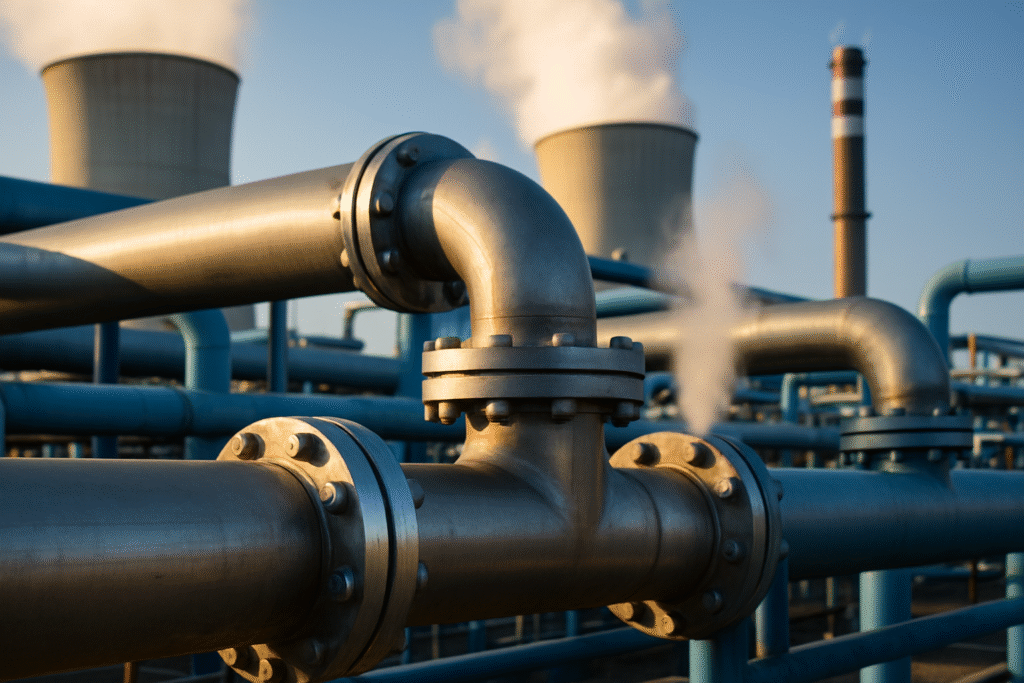
Panduan Flange Pipa Stainless Steel: Keuntungan Tersembunyi, Jenis, Penggunaan dan Data Seleksi ASME B16.5/B16.47
Permintaan flensa pipa baja tahan karat terus meningkat karena pabrik industri mengutamakan ketahanan terhadap korosi, kehidupan pelayanan, dan kepatuhan. Menurut Penelitian Grand View (2024), pasar flensa industri global dihargai $5.8 miliar masuk 2023 dan diperkirakan akan tercapai $7.2 miliar oleh 2030, which highlights why buyers are comparing the hidden advantages of flange materials more carefully.
Untuk kontraktor EPC, insinyur pabrik, dan manajer pengadaan, the intriguing value of stainless steel flanges lies in lifecycle cost reduction rather than unit price alone. Lebih-lebih lagi, the right stainless steel pipe flange can improve leak integrity, menyederhanakan pemeliharaan, and support compliance with ASME B16.5, ASME B16.47, ASTM, DIN, dan persyaratan EN.
Penggerak Pasar Industri Dibalik Permintaan Flange Pipa Stainless Steel
Global demand for flanges remains closely tied to energy, air, and process infrastructure investment. Menurut Statista (2024), industri minyak dan gas menyumbang sekitar 35% konsumsi flensa global, which makes material reliability a commercial as well as a technical issue.
Regional manufacturing capacity also shapes sourcing strategy. Menurut IBISWorld (2024), Asia-Pasifik menyumbang lebih dari itu 45% produksi flensa global, dengan Tiongkok sebagai produsen terbesar, and that concentration influences lead times, penetapan harga, and specification availability.
These market conditions explain why buyers increasingly ask not just “Flanges?” but “Which flange grade, jenis, kelas tekanan, and traceability package best fit my service?” As a result, stainless steel options such as 304, 316, 316L, 904L, 2205, Dan 2507 have moved from niche selections to standard procurement choices in many sectors.
Menurut Intelijen Mordor (2024), industrial process equipment investment is growing steadily across water treatment, bahan kimia, dan pembangkit listrik, which supports long-term demand for corrosion resistant pipe components. Lebih-lebih lagi, replacement cycles in mature facilities are creating recurring demand for stainless steel pipe flange assemblies, siku, kaos, reduksi, dan topi.
From a purchasing perspective, stainless steel flanges often justify their premium through lower maintenance frequency and better resistance to chlorides, asam, and humid environments. Sebaliknya, lower-cost carbon steel flange options may require coatings, corrosion allowances, or more frequent replacement in aggressive media.
ASME standards remain central to this discussion. ASME B16.5 mencakup flensa pipa dan fitting flensa dari NPS 1/2 melalui 24, ketika ASME B16.47 addresses large diameter steel flanges from NPS 26 melalui 60 (ASME, 2023).
That distinction matters because many industrial buyers need both standard process piping flanges and larger line pipe connections on the same project. Karena itu, supplier capability across B16.5 and B16.47 can reduce sourcing complexity and improve schedule control.
SASA FLANGE operates in this environment as a factory-focused manufacturer of stainless steel flanges, flensa baja karbon, flensa paduan, dan alat kelengkapan pipa. Dengan ISO 9001:2015 dan sertifikasi PED 2014/68/EU, the company supports projects that require controlled manufacturing, dokumentasi, dan kepatuhan ekspor.
Manufacturing scope also matters when engineers need more than one alloy family. SASA FLANGE produces flanges in 304, 316, 316L, 904L, 2205, 2507, A105, A182, tidak konel, Monel, Hastelloy, dan Titanium, which helps buyers consolidate procurement under one technically capable supplier.
Menurut Riset Pasar Masa Depan (2024), global investment in water treatment systems continues to grow as municipalities and industrial plants upgrade corrosion-prone infrastructure. Akibatnya, stainless steel pipe flange selections are becoming more common in desalination, wastewater, and high-purity systems.
Seperti James Holloway, Insinyur Perpipaan Senior, negara bagian: “A flange is never just a connector in critical service; it is a pressure boundary component whose material, menghadap, and dimensional accuracy directly affect safety and uptime.” That view reflects how experienced engineers assess total risk rather than initial piece price.
Hidden Advantages of Stainless Steel Pipe Flange Types and Technical Selection
The most intriguing aspect of a stainless steel pipe flange is its ability to combine mechanical strength with corrosion resistance across varied process conditions. Namun, performance depends on matching alloy, tipe flensa, kelas tekanan, menghadap, and pipe schedule to the actual medium and temperature.
ASTM A182 biasanya digunakan untuk flensa pipa baja tahan karat dan paduan tempa atau canai, perlengkapan, katup, dan suku cadang untuk layanan suhu tinggi (ASTM, 2023). Secara praktis, this standard supports many common grades such as F304, F304L, F316, F316L, F51, and F53 for refinery, kimia, and offshore applications.
According to NACE guidance for sour service material selection, kandungan klorida, paparan H2S, and hardness control can significantly affect corrosion performance in process systems (NACE, 2023). Karena itu, duplex and super duplex flanges often become the preferred choice where pitting resistance and stress corrosion cracking resistance are critical.
Sebagai Dr. Elena Morris, Ilmuwan Material, negara bagian: “The hidden advantages of stainless steel are rarely hidden to operators dealing with unplanned shutdowns, because alloy selection directly influences pitting resistance, gasket sealing reliability, and maintenance intervals.” Her observation explains why technically informed buyers often specify lifecycle metrics in RFQs.
When engineers compare stainless steel flange types, they usually focus on both joint design and service severity. Misalnya, weld neck flange designs distribute stress efficiently, while slip on flange designs may offer easier installation in lower-pressure service.
- Flensa leher las: preferred for cyclic loading, tekanan tinggi, and elevated temperature service.
- Selipkan flensa: economical for low to moderate pressure systems with easier alignment.
- Flensa buta: used to terminate a line, nosel, or vessel opening for inspection or future expansion.
- Flensa las soket: common in smaller bore high-pressure piping.
- Flensa berulir: used where welding is impractical, especially in certain utility services.
- Flensa sambungan putaran: suitable for systems requiring frequent dismantling and alignment flexibility.
Material selection should be equally systematic. Nilai 304 works well in general industrial environments, ketika 316 and 316L provide improved resistance to chlorides due to molybdenum content.
Untuk layanan yang lebih agresif, 904L offers strong resistance in acidic media, ketika 2205 Dan 2507 duplex grades improve strength and corrosion performance. Sebaliknya, paduan nikel seperti Inconel, Monel, and Hastelloy are typically chosen for very demanding chemical or high-temperature service.
The following comparison helps procurement teams align alloy and service condition:
- 304/304L: general purpose process lines, makanan, air, dan layanan kimia ringan.
- 316/316L: laut, klorida, farmasi, and many petrochemical environments.
- 904L: sulfuric acid and severe corrosion applications.
- 2205 rangkap: di lepas pantai, desalinasi, and higher-strength chloride service.
- 2507 super dupleks: severe seawater and high-pitting-risk systems.
Pressure class and facing selection also affect sealing performance. Raised face remains the most common facing for process piping, while ring type joint designs are preferred in high-pressure and high-integrity applications, khususnya pada sistem minyak dan gas.
Menurut ASME (2023), dimensi flensa, pengeboran, toleransi, and pressure-temperature ratings must align with the applicable standard class. Sebagai akibat, sebuah Kelas 150 stainless steel pipe flange cannot be evaluated the same way as a Class 600 atau Kelas 1500 flens, even if the nominal size is identical.
Buyers should also consider size range and fabrication flexibility. Dengan mesin CNC canggih dan pengujian kualitas yang komprehensif, SASA FLANGE menawarkan ukuran khusus dari 1/2 inci ke 60 inci, covering ASME B16.5 and B16.47 dimensions as well as DIN, JIS, gost, dan EN 1092 persyaratan.
That manufacturing breadth matters when projects combine U.S., Eropa, and regional specifications. Lebih-lebih lagi, unified sourcing improves document control for MTCs, laporan dimensi, PMI, catatan uji hidro, Dan EN 10204 3.1 certification packages.
Menurut ISO (2023), quality management systems improve process consistency, ketertelusuran, and customer confidence in regulated manufacturing. Karena itu, suppliers with ISO 9001:2015, PED 2014/68/UE, dan IKLAN 2000 credentials often reduce qualification friction for international projects.
In technical buying, one of the hidden advantages is the ability to standardize a flange and pipe fitting package. If a supplier can provide flange, siku, tee, peredam, and cap components in matched metallurgy, project teams simplify QA review and lower mismatch risk during installation.
This is especially useful in modular fabrication and skidded systems. Dalam kasus tersebut, dimensional consistency and heat traceability across all welded and flanged items directly support fabrication productivity and audit readiness.
ASME B16.5, B16.47, ASTM, Kepatuhan DIN dan EN untuk Flensa Baja Tahan Karat
Compliance is one of the strongest buying filters in industrial piping. Engineers do not simply choose a flange by appearance or price, because pressure boundary components must satisfy dimensional, bahan, dan persyaratan dokumentasi.
ASME B16.5 Dan ASME B16.47 are the most referenced standards for steel flanges in many international projects. ASME B16.5 umumnya mencakup NPS 1/2 ke 24, ketika ASME B16.47 covers large diameter flanges from NPS 26 ke 60 (ASME, 2023).
Standar ASTM mendefinisikan kimia material dan sifat mekanik. ASTM A182 applies to forged stainless and alloy flanges, while related product standards may govern plate or fitting materials depending on component type and fabrication route.
European and international projects often require DIN or EN dimensions in addition to ASME. EN 1092 is widely used for flanges in European systems, and PED 2014/68/EU may apply when pressure equipment enters the EU market.
Untuk insinyur yang membandingkan standar, the following quick reference is useful:
- ASME B16.5: ukuran, kelas tekanan, menghadap, pengeboran, tolerances for NPS 1/2 ke 24.
- ASME B16.47: large diameter flange dimensions for NPS 26 ke 60.
- ASME B16.9: factory-made wrought butt welding fittings such as elbows, kaos, reduksi, dan topi.
- ASTM A182: forged or rolled stainless and alloy flange materials.
- EN 1092: European dimensional standard for flanges.
- NACE MR0175/ISO 15156: panduan materi untuk lingkungan layanan asam.
Pressure class comparison often becomes a source of confusion. Kelas 150, 300, 600, 900, 1500, Dan 2500 indicate pressure-temperature performance categories, but actual allowable pressure depends on material group and operating temperature (ASME, 2023).
Untuk alasan itu, engineers must verify design conditions before approving substitutions. A low-temperature water system may accept a broader range of flange options than a hot hydrocarbon line or a sour gas header.
Menurut DNV (2023), offshore and marine projects place added emphasis on traceability, tunjangan korosi, and documentation because maintenance access is limited and failure consequences are high. Akibatnya, stainless steel and duplex flanges remain common in marine, FPSO, dan sistem utilitas lepas pantai.
Purchasers should also request inspection and testing details up front. Typical requirements include positive material identification, pemeriksaan dimensi, hardness checks where relevant, pressure rating verification, menandai ulasan, Dan EN 10204 3.1 sertifikat.
SASA FLANGE supports these needs with ISO 9001:2015, PED 2014/68/UE, dan IKLAN 2000 certified manufacturing processes. Didukung oleh permesinan CNC canggih dan pengujian kualitas yang komprehensif, the company supplies stainless steel flanges and fittings for oil and gas, petrokimia, pembangkit listrik, pembuatan kapal, pengolahan air, dan proyek konstruksi.
For reference on dimensional requirements, buyers should consult the official ASME standard library and project specifications. Selain itu, purchase orders should clearly define flange type, ukuran, kelas, menghadap, kelas materi, standar, kuantitas, ruang lingkup pemeriksaan, dan format penandaan.
Seperti Robert Chen, Project Procurement Consultant, negara bagian: “Most flange procurement errors are specification errors, not manufacturing errors, and the fix is precise data on class, menghadap, paduan, and certification from day one.” That advice remains highly practical for EPC and maintenance teams alike.
Cara Memilih Jenis Flange Pipa Stainless Steel untuk Oli, Gas, Kekuatan, Sistem Kelautan dan Perairan
The best way to choose a stainless steel pipe flange is to begin with the service environment. Medium composition, suhu operasi, tekanan desain, mekanisme korosi, and maintenance access should guide every material and flange type decision.
Dalam minyak dan gas, weld neck and RTJ flange configurations are common for high-integrity service. Menurut Statista (2024), sektor ini mengkonsumsi sekitar 35% flensa global, so buyers typically emphasize traceability, NACE alignment, and pressure class accuracy.
Di pabrik petrokimia, 316L and duplex grades often support chloride-bearing and corrosive process streams. Namun, where sour service or severe pitting risk exists, engineers may move toward 2205, 2507, or nickel alloy solutions.
Power generation systems impose a different selection logic. Uap, siklus termal, and high pressure frequently favor weld neck flange designs with strong mechanical performance and reliable butt-weld transitions to pipe.
Marine and shipbuilding applications place heavy emphasis on saltwater corrosion. Karena itu, 316L, 2205, Dan 2507 are often specified for seawater, pemberat, penggosok, and deck utility systems where corrosion failure would disrupt operations.
Water treatment buyers often balance budget and longevity. In many potable, proses, and wastewater lines, stainless steel flange systems can reduce coating maintenance and improve hygiene compared with painted carbon steel alternatives.
Selection criteria should be reviewed in a structured way:
- Konfirmasikan cairan proses, kadar klorida, pH, dan risiko kontaminasi.
- Check design pressure, suhu operasi, dan kondisi yang mengecewakan.
- Match flange type to mechanical loading and maintenance needs.
- Memeriksa ASME B16.5 or B16.47 size and class requirements.
- Specify facing type such as RF, FF, atau RTJ.
- Align material with ASTM A182 grade and corrosion requirements.
- Meminta EN 10204 3.1, PMI, and additional inspections when needed.
- Tinjau waktu tunggu, kemasan ekspor, and documentation capability.
In smaller bore systems, threaded flange and socket weld designs can still be practical, especially where space is limited or field welding must be controlled. Namun demikian, these designs must still be checked against service conditions, getaran, and code limitations.
Manufaktur khusus juga dapat menentukan dalam pelaksanaan proyek. Many international buyers need mixed orders that include standard ASME flanges, pengeboran non-standar, hasil akhir menghadap khusus, and matched pipe fittings.
Porsi 50+ negara-negara di seluruh Minyak & Gas, Petrokimia, Kekuatan, dan industri Kelautan, SASA FLANGE supports custom manufacturing across stainless, karbon, rangkap, dan nilai paduan nikel. That flexibility helps EPC contractors source both standard and project-specific items from one experienced partner.
Misalnya, a desalination project may require 2205 flensa leher las, super duplex reducers, and 316L stub ends in the same package. Juga, a refinery turnaround may require blind flange replacements, urgent elbows, and high-class forged flanges with fast documentation turnaround.
Procurement teams should also compare more than price. A lower quote may exclude testing, sertifikasi, pengepakan yang aman untuk ekspor, or machining tolerances that become expensive later during inspection or installation.
Menurut Riset Pasar Masa Depan (2024), infrastructure upgrades and industrial modernization continue to support demand for premium corrosion resistant piping products. Sebagai akibat, buyers who choose on total installed value rather than unit price alone often achieve better reliability outcomes.
Prospek Masa Depan Pengadaan Flange Pipa Stainless Steel dan Rekomendasi Pembelian Strategis
The outlook for stainless steel pipe flange procurement remains positive because asset owners continue to prioritize reliability, keamanan, and corrosion control. Menurut Penelitian Grand View (2024), pasar flensa industri diproyeksikan akan tercapai $7.2 miliar oleh 2030, which indicates sustained global purchasing activity.
Several trends are shaping future buying behavior. Pertama, buyers increasingly request duplex and super duplex materials for longer service life in corrosive systems.
Kedua, documentation quality is becoming a stronger differentiator. kepatuhan PED, EN 10204 3.1 sertifikat, laporan PMI, and traceable heat numbers now influence supplier approval as much as base price in many international tenders.
Ketiga, supplier consolidation is accelerating. Procurement teams prefer manufacturers that can provide flange and pipe fitting packages under one quality system, because this reduces communication gaps and shortens project timelines.
Menurut ISO (2023), robust quality systems reduce process variation and support repeatable outcomes in industrial manufacturing. Karena itu, buyers should prioritize factories that combine machining capability, keluasan materi, dan disiplin inspeksi.
Practical recommendations are straightforward. Define service conditions precisely, align the flange standard with the piping code, verify alloy suitability, and request the exact testing and documentation package before production begins.
It also helps to standardize approved grades where possible. Doing so can reduce spare inventory complexity, simplify training, and speed future maintenance planning across multiple plants or project phases.
For buyers seeking intriguing but commercially practical hidden advantages, the most valuable gains often come from fewer failures, easier audits, and longer replacement cycles. That is why many project teams now evaluate stainless steel flanges as strategic reliability components rather than commodity hardware.
When projects require ASME B16.5 or B16.47 flanges, forged ASTM materials, ukuran khusus, or mixed flange and fitting packages, working early with SASA FLANGE can simplify technical review and sourcing decisions. Lebih-lebih lagi, factory-direct support can help engineering and procurement teams balance compliance, waktu tunggu, and cost with greater confidence.
Pertanyaan yang Sering Diajukan
Untuk apa flensa baja tahan karat digunakan?
●Flensa baja tahan karat digunakan untuk menyambung pipa, katup, pompa, and equipment in a bolted piping system that allows inspection, pemeliharaan, and safe pressure containment.
●Menurut Statista (2024), minyak dan gas menyumbang sekitar 35% konsumsi flensa global, which shows how widely stainless steel flange connections are used in critical industrial service.
●Dalam praktiknya, engineers use a stainless steel pipe flange where corrosion resistance, kekuatan, and repeatable sealing performance matter, khususnya dalam pengolahan kimia, laut, pengolahan air, and hygienic service.
●Common applications include line terminations with blind flange designs, nozel peralatan, pump suction and discharge connections, and removable joints in process pipe systems.
●For projects requiring long service life, ketertelusuran, dan kepatuhan standar, bekerja dengan produsen mapan seperti SASA FLANGE helps ensure the correct ASME class, Kelas materi ASTM, and certification package are specified from the start.
Apa standar flensa baja tahan karat?
●Standar dimensi utama untuk flensa baja tahan karat adalah ASME B16.5 untuk NPS 1/2 ke 24 Dan ASME B16.47 untuk NPS 26 ke 60, ketika ASTM A182 commonly defines forged stainless flange materials.
●Menurut ASME (2023), flange standards control dimensions, pengeboran, menghadap, toleransi, dan peringkat tekanan-suhu, which is why engineers must match both the dimensional code and the material specification.
●Many export projects also require EN 1092, DIN, or JIS flange standards, and EU-bound pressure equipment may require PED 2014/68/EU documentation in addition to normal material certificates.
●When buyers ask about the “standard” for stainless steel flanges, the correct answer usually includes several layers such as ASME geometry, Kelas materi ASTM, ruang lingkup pemeriksaan, dan persyaratan kode khusus proyek.
●For applications involving mixed regional standards or custom drilling patterns, produsen seperti SASA FLANGE can help align ASME, DIN, EN, and material documentation requirements before production begins.
Apakah mereka membuat alat kelengkapan pipa stainless steel?
●Ya, manufacturers produce a full range of stainless steel pipe fittings including elbows, kaos, reduksi, topi, rintisan berakhir, and special fabricated components for process and utility piping systems.
●Menurut ASME B16.9 (2023), butt welding fittings such as elbows, kaos, reduksi, and caps are standardized for dimensions and end preparation, which supports interchangeability in industrial pipe systems.
●Stainless steel fittings are commonly made in grades such as 304, 316, 316L, 904L, 2205, Dan 2507 to match the corrosion and pressure requirements of the associated flange and pipe assembly.
●Procurement teams often benefit from sourcing flanges and fittings together because matched metallurgy, dokumentasi, and dimensional consistency reduce fabrication risk and simplify QA review.
●For projects that require a complete flange and fitting package, produsen mapan seperti SASA FLANGE can supply coordinated components with EN 10204 3.1 documentation and project-specific inspection support.
Sebutkan tiga jenis flensa?
●The three most commonly referenced flange types are weld neck flange, slip pada flensa, dan flensa buta, meskipun berulir, las soket, dan desain sambungan pangkuan juga banyak digunakan.
●Menurut praktik ASME, weld neck flange designs are preferred in higher pressure and higher temperature service because the tapered hub improves stress distribution at the pipe transition.
●Slip on flange designs are often selected for lower to moderate pressure systems where simpler alignment and lower fabrication cost are priorities, while blind flange designs close the end of a pipe or nozzle.
●Engineers do not choose among these flange types by habit alone, because vibration, pemuatan siklik, frekuensi pemeliharaan, jenis paking, and pressure class all influence the best option.
●For buyers comparing flange types across ASME B16.5 and B16.47 systems, working with technically experienced suppliers like SASA FLANGE helps ensure the chosen design matches both service demands and fabrication realities.
How do buyers choose the right stainless steel pipe flange size and pressure class?
●Buyers choose the correct stainless steel pipe flange by matching nominal pipe size, jadwal, kelas tekanan, tipe menghadap, and operating temperature to the system design data.
●Menurut ASME (2023), peringkat tekanan-suhu bervariasi menurut kelompok bahan dan kelas, jadi a 4 flensa pipa baja tahan karat inci di Kelas 150 serves a different duty envelope than the same size in Class 600.
●Engineers should verify whether the project requires ASME B16.5 dimensi untuk NPS 1/2 ke 24 atau ASME B16.47 dimensions for larger pipe, because interchangeability cannot be assumed across standards.
●It is also important to confirm gasket compatibility, pola baut, tunjangan korosi, and any requirements for raised face, wajah datar, or RTJ sealing surfaces before placing the order.
●Untuk proyek yang melibatkan pengeboran khusus, non-standard sizes, or mixed pressure classes, produsen mapan seperti SASA FLANGE can review drawings and recommend a compliant flange specification package before production starts.
What affects stainless steel pipe flange price in industrial procurement?
●Harga flensa pipa baja tahan karat terutama dipengaruhi oleh tingkat paduan, tipe flensa, ukuran, kelas tekanan, kompleksitas pemesinan, kondisi pasar bahan baku, ruang lingkup pengujian, and required certifications.
●Menurut Penelitian Grand View (2024), pasar flensa industri tercapai $5.8 miliar masuk 2023, and that scale reflects ongoing cost sensitivity as well as strong demand for higher-value corrosion resistant materials.
●A 316L weld neck flange usually costs more than a 304 slip pada flensa, and duplex or nickel alloy flanges typically command higher prices due to chemistry, kekuatan, and more demanding manufacturing controls.
●Price should also be assessed against total installed value, because omitted PMI, EN 10204 3.1 sertifikat, Dokumentasi PED, or dimensional inspection can lead to higher downstream costs during site acceptance.
●For industrial buyers comparing stainless steel pipe flange for sale options, produsen seperti SASA FLANGE can provide factory-direct quotations that reflect technical requirements, ruang lingkup sertifikasi, and realistic lead times instead of headline pricing alone.
Posting Terkait
Selesai Wajah Flange: Penjelasan Gerigi Konsentris vs Spiral
Gerigi konsentris dan spiral keduanya merupakan penyelesaian permukaan flensa yang dikerjakan dengan mesin…
Rangkap 2205 vs Flensa 316L: Bahan Mana Yang Harus Anda Pilih?
Jawaban cepat: Rangkap 2205 flensa biasanya merupakan kandidat yang lebih kuat…

Definisi Flensa Lubang, Detail dan Ikhtisar Flensa ASME B16.36: Data Pasar, Panduan Seleksi dan Wawasan Kepatuhan
Pasar flensa industri global dihargai $5.8 miliar…

Panduan Pasar Flensa Pembuangan Hitam: Bahan, 3.5″ Kesesuaian, dan Data Sumber B2B untuk Flensa Wastafel Dapur
Permintaan flensa pembuangan hitam meningkat sebagai pembeli perlengkapan dapur…