
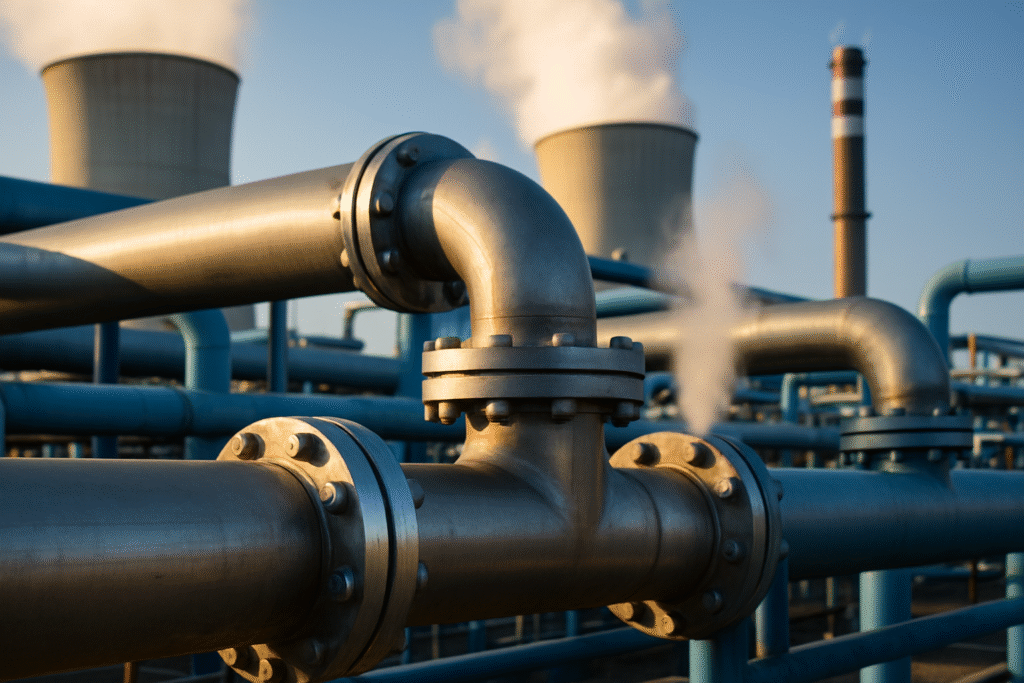
Guía de brida de tubería de acero inoxidable: Ventajas ocultas, Tipos, Usos y datos de selección de ASME B16.5/B16.47
La demanda de bridas para tuberías de acero inoxidable continúa aumentando a medida que las plantas industriales priorizan la resistencia a la corrosión., vida útil, y cumplimiento. Según la investigación de Grand View (2024), El mercado mundial de bridas industriales se valoró en $5.8 mil millones en 2023 y se prevé que alcance $7.2 mil millones por 2030, which highlights why buyers are comparing the hidden advantages of flange materials more carefully.
Para contratistas EPC, ingenieros de planta, y gerentes de adquisiciones, the intriguing value of stainless steel flanges lies in lifecycle cost reduction rather than unit price alone. Además, the right stainless steel pipe flange can improve leak integrity, simplificar el mantenimiento, and support compliance with ASME B16.5, ASME B16.47, ASTM, DIN, y requisitos EN.
Impulsores del mercado industrial detrás de la demanda de bridas para tuberías de acero inoxidable
Global demand for flanges remains closely tied to energy, agua, and process infrastructure investment. Según Statista (2024), La industria del petróleo y el gas representa aproximadamente 35% del consumo global de bridas, which makes material reliability a commercial as well as a technical issue.
La capacidad de fabricación regional también da forma a la estrategia de abastecimiento. Según IBISWorld (2024), Asia-Pacífico representa más de 45% de la producción mundial de bridas, siendo China el mayor fabricante, and that concentration influences lead times, precios, and specification availability.
These market conditions explain why buyers increasingly ask not just “Flanges?” but “Which flange grade, tipo, clase de presión, and traceability package best fit my service?” As a result, stainless steel options such as 304, 316, 316l, 904l, 2205, y 2507 have moved from niche selections to standard procurement choices in many sectors.
Según la inteligencia de Mordor (2024), industrial process equipment investment is growing steadily across water treatment, quimicos, y generación de energía, which supports long-term demand for corrosion resistant pipe components. Además, replacement cycles in mature facilities are creating recurring demand for stainless steel pipe flange assemblies, codos, camisetas, reductores, y gorras.
From a purchasing perspective, stainless steel flanges often justify their premium through lower maintenance frequency and better resistance to chlorides, ácidos, and humid environments. En contraste, lower-cost carbon steel flange options may require coatings, tolerancias a la corrosión, or more frequent replacement in aggressive media.
ASME standards remain central to this discussion. ASME B16.5 Cubre bridas de tuberías y accesorios bridados de NPS. 1/2 a través de 24, mientras ASME B16.47 addresses large diameter steel flanges from NPS 26 a través de 60 (ASME, 2023).
That distinction matters because many industrial buyers need both standard process piping flanges and larger line pipe connections on the same project. Por lo tanto, supplier capability across B16.5 and B16.47 can reduce sourcing complexity and improve schedule control.
SASA FLANGE operates in this environment as a factory-focused manufacturer of stainless steel flanges, bridas de acero al carbono, bridas de aleación, y accesorios de tuberías. Con ISO 9001:2015 y certificaciones PED 2014/68/UE, the company supports projects that require controlled manufacturing, documentación, y cumplimiento de exportaciones.
Manufacturing scope also matters when engineers need more than one alloy family. SASA FLANGE produces flanges in 304, 316, 316l, 904l, 2205, 2507, A105, A182, Inconel, Monel, Hastelloy, y titanio, which helps buyers consolidate procurement under one technically capable supplier.
Según Market Research Future (2024), global investment in water treatment systems continues to grow as municipalities and industrial plants upgrade corrosion-prone infrastructure. Como consecuencia, stainless steel pipe flange selections are becoming more common in desalination, wastewater, and high-purity systems.
Como James Holloway, Ingeniero Senior de Tuberías, estados: “A flange is never just a connector in critical service; it is a pressure boundary component whose material, frente a, and dimensional accuracy directly affect safety and uptime.” That view reflects how experienced engineers assess total risk rather than initial piece price.
Hidden Advantages of Stainless Steel Pipe Flange Types and Technical Selection
The most intriguing aspect of a stainless steel pipe flange is its ability to combine mechanical strength with corrosion resistance across varied process conditions. Sin embargo, performance depends on matching alloy, tipo de brida, clase de presión, frente a, and pipe schedule to the actual medium and temperature.
ASTM A182 is commonly used for forged or rolled alloy and stainless steel pipe flanges, guarniciones, valvulas, y piezas para servicio de alta temperatura (ASTM, 2023). En términos prácticos, this standard supports many common grades such as F304, F304L, F316, F316L, F51, and F53 for refinery, químico, y aplicaciones offshore.
According to NACE guidance for sour service material selection, contenido de cloruro, H2S exposure, and hardness control can significantly affect corrosion performance in process systems (NACE, 2023). Por lo tanto, duplex and super duplex flanges often become the preferred choice where pitting resistance and stress corrosion cracking resistance are critical.
Como Dr.. Elena Morris, Científico de materiales, estados: “The hidden advantages of stainless steel are rarely hidden to operators dealing with unplanned shutdowns, because alloy selection directly influences pitting resistance, gasket sealing reliability, and maintenance intervals.” Her observation explains why technically informed buyers often specify lifecycle metrics in RFQs.
When engineers compare stainless steel flange types, they usually focus on both joint design and service severity. Por ejemplo, weld neck flange designs distribute stress efficiently, while slip on flange designs may offer easier installation in lower-pressure service.
- Brida con cuello para soldar: preferred for cyclic loading, presión alta, and elevated temperature service.
- Brida deslizante: economical for low to moderate pressure systems with easier alignment.
- Brida ciega: used to terminate a line, boquilla, or vessel opening for inspection or future expansion.
- Brida para soldar: common in smaller bore high-pressure piping.
- Brida roscada: used where welding is impractical, especially in certain utility services.
- Brida de junta solapada: suitable for systems requiring frequent dismantling and alignment flexibility.
Material selection should be equally systematic. Calificación 304 works well in general industrial environments, mientras 316 and 316L provide improved resistance to chlorides due to molybdenum content.
Para un servicio más agresivo, 904L offers strong resistance in acidic media, mientras 2205 y 2507 duplex grades improve strength and corrosion performance. En contraste, nickel alloys such as Inconel, Monel, and Hastelloy are typically chosen for very demanding chemical or high-temperature service.
The following comparison helps procurement teams align alloy and service condition:
- 304/304l: general purpose process lines, alimento, agua, y servicio de productos químicos suaves.
- 316/316l: marina, cloruros, farmacéutico, and many petrochemical environments.
- 904l: sulfuric acid and severe corrosion applications.
- 2205 dúplex: costa afuera, desalinización, and higher-strength chloride service.
- 2507 súper dúplex: severe seawater and high-pitting-risk systems.
Pressure class and facing selection also affect sealing performance. Raised face remains the most common facing for process piping, while ring type joint designs are preferred in high-pressure and high-integrity applications, especially in oil and gas systems.
Según ASME (2023), dimensiones de la brida, perforación, tolerancias, and pressure-temperature ratings must align with the applicable standard class. Como resultado, una clase 150 stainless steel pipe flange cannot be evaluated the same way as a Class 600 o clase 1500 brida, even if the nominal size is identical.
Buyers should also consider size range and fabrication flexibility. Con mecanizado CNC avanzado y pruebas de calidad integrales, SASA FLANGE ofrece tamaños personalizados desde 1/2 pulgada a 60 pulgada, cubierta ASME B16.5 and B16.47 dimensions as well as DIN, JIS, GOST, y ES 1092 requisitos.
That manufacturing breadth matters when projects combine U.S., europeo, and regional specifications. Además, unified sourcing improves document control for MTCs, informes dimensionales, PMI, registros de hidroprueba, y EN 10204 3.1 certification packages.
Según ISO (2023), quality management systems improve process consistency, trazabilidad, and customer confidence in regulated manufacturing. Por lo tanto, suppliers with ISO 9001:2015, DEP 2014/68/UE, y anuncio 2000 credentials often reduce qualification friction for international projects.
In technical buying, one of the hidden advantages is the ability to standardize a flange and pipe fitting package. If a supplier can provide flange, codo, tee, reductor, and cap components in matched metallurgy, project teams simplify QA review and lower mismatch risk during installation.
This is especially useful in modular fabrication and skidded systems. en esos casos, dimensional consistency and heat traceability across all welded and flanged items directly support fabrication productivity and audit readiness.
ASME B16.5, B16.47, ASTM, DIN and EN Compliance for Stainless Steel Flanges
Compliance is one of the strongest buying filters in industrial piping. Engineers do not simply choose a flange by appearance or price, because pressure boundary components must satisfy dimensional, material, y requisitos de documentación.
ASME B16.5 y ASME B16.47 are the most referenced standards for steel flanges in many international projects. ASME B16.5 generalmente cubre NPS 1/2 a 24, mientras ASME B16.47 Cubre bridas de gran diámetro de NPS. 26 a 60 (ASME, 2023).
Las normas ASTM definen la química de los materiales y las propiedades mecánicas.. ASTM A182 Se aplica a bridas de aleación y acero inoxidable forjado., while related product standards may govern plate or fitting materials depending on component type and fabrication route.
European and international projects often require DIN or EN dimensions in addition to ASME. EN 1092 is widely used for flanges in European systems, and PED 2014/68/EU may apply when pressure equipment enters the EU market.
For engineers comparing standards, the following quick reference is useful:
- ASME B16.5: dimensiones, clases de presión, vueltas, perforación, tolerances for NPS 1/2 a 24.
- ASME B16.47: large diameter flange dimensions for NPS 26 a 60.
- ASME B16.9: factory-made wrought butt welding fittings such as elbows, camisetas, reductores, y gorras.
- ASTM A182: forged or rolled stainless and alloy flange materials.
- EN 1092: European dimensional standard for flanges.
- NACE MR0175/ISO 15156: material guidance for sour service environments.
Pressure class comparison often becomes a source of confusion. Clase 150, 300, 600, 900, 1500, y 2500 indicate pressure-temperature performance categories, but actual allowable pressure depends on material group and operating temperature (ASME, 2023).
Por esa razón, engineers must verify design conditions before approving substitutions. A low-temperature water system may accept a broader range of flange options than a hot hydrocarbon line or a sour gas header.
Según DNV (2023), offshore and marine projects place added emphasis on traceability, tolerancia a la corrosión, and documentation because maintenance access is limited and failure consequences are high. Como consecuencia, stainless steel and duplex flanges remain common in marine, FPSO, y sistemas de servicios públicos marinos.
Purchasers should also request inspection and testing details up front. Typical requirements include positive material identification, inspección dimensional, hardness checks where relevant, verificación de clasificación de presión, revisión de calificación, y EN 10204 3.1 certificados.
SASA FLANGE supports these needs with ISO 9001:2015, DEP 2014/68/UE, y anuncio 2000 certified manufacturing processes. Respaldado por mecanizado CNC avanzado y pruebas de calidad integrales, the company supplies stainless steel flanges and fittings for oil and gas, petroquímico, generación de energía, construcción naval, tratamiento de agua, y proyectos de construcción.
For reference on dimensional requirements, buyers should consult the official ASME standard library and project specifications. Además, purchase orders should clearly define flange type, tamaño, clase, frente a, grado del material, estándar, cantidad, alcance de la inspección, and marking format.
As Robert Chen, Project Procurement Consultant, estados: “Most flange procurement errors are specification errors, not manufacturing errors, and the fix is precise data on class, frente a, aleación, and certification from day one.” That advice remains highly practical for EPC and maintenance teams alike.
How to Choose Stainless Steel Pipe Flange Types for Oil, Gas, Fuerza, Marine and Water Systems
The best way to choose a stainless steel pipe flange is to begin with the service environment. Composición media, temperatura de funcionamiento, presión de diseño, mecanismo de corrosión, and maintenance access should guide every material and flange type decision.
En petróleo y gas, weld neck and RTJ flange configurations are common for high-integrity service. Según Statista (2024), este sector consume alrededor 35% de bridas globales, so buyers typically emphasize traceability, NACE alignment, and pressure class accuracy.
En plantas petroquímicas, 316L and duplex grades often support chloride-bearing and corrosive process streams. Sin embargo, where sour service or severe pitting risk exists, engineers may move toward 2205, 2507, or nickel alloy solutions.
Power generation systems impose a different selection logic. Vapor, ciclo térmico, and high pressure frequently favor weld neck flange designs with strong mechanical performance and reliable butt-weld transitions to pipe.
Marine and shipbuilding applications place heavy emphasis on saltwater corrosion. Por lo tanto, 316l, 2205, y 2507 are often specified for seawater, lastre, scrubber, and deck utility systems where corrosion failure would disrupt operations.
Water treatment buyers often balance budget and longevity. In many potable, proceso, and wastewater lines, stainless steel flange systems can reduce coating maintenance and improve hygiene compared with painted carbon steel alternatives.
Selection criteria should be reviewed in a structured way:
- Confirm process fluid, nivel de cloruro, pH, y riesgo de contaminación.
- Check design pressure, temperatura de funcionamiento, and upset conditions.
- Match flange type to mechanical loading and maintenance needs.
- Verificar ASME B16.5 or B16.47 size and class requirements.
- Specify facing type such as RF, FF, o RTJ.
- Align material with ASTM A182 grade and corrosion requirements.
- Pedido EN 10204 3.1, PMI, and additional inspections when needed.
- Revisar el tiempo de entrega, embalaje de exportación, and documentation capability.
In smaller bore systems, threaded flange and socket weld designs can still be practical, especially where space is limited or field welding must be controlled. Sin embargo, these designs must still be checked against service conditions, vibración, and code limitations.
Custom manufacturing can also be decisive in project execution. Many international buyers need mixed orders that include standard ASME flanges, perforación no estándar, acabados de revestimiento especiales, and matched pipe fittings.
Servicio 50+ países de todo el petróleo & Gas, Petroquímico, Fuerza, e industrias marinas, SASA FLANGE supports custom manufacturing across stainless, carbón, dúplex, y grados de aleación de níquel. That flexibility helps EPC contractors source both standard and project-specific items from one experienced partner.
Por ejemplo, a desalination project may require 2205 bridas con cuello para soldar, super duplex reducers, and 316L stub ends in the same package. Asimismo, a refinery turnaround may require blind flange replacements, urgent elbows, and high-class forged flanges with fast documentation turnaround.
Procurement teams should also compare more than price. A lower quote may exclude testing, proceso de dar un título, export-safe packing, or machining tolerances that become expensive later during inspection or installation.
Según Market Research Future (2024), infrastructure upgrades and industrial modernization continue to support demand for premium corrosion resistant piping products. Como resultado, buyers who choose on total installed value rather than unit price alone often achieve better reliability outcomes.
Perspectivas futuras para la adquisición de bridas para tuberías de acero inoxidable y recomendaciones de compra estratégica
The outlook for stainless steel pipe flange procurement remains positive because asset owners continue to prioritize reliability, seguridad, and corrosion control. Según la investigación de Grand View (2024), the industrial flange market is projected to reach $7.2 mil millones por 2030, which indicates sustained global purchasing activity.
Several trends are shaping future buying behavior. Primero, buyers increasingly request duplex and super duplex materials for longer service life in corrosive systems.
Segundo, documentation quality is becoming a stronger differentiator. Cumplimiento de DEP, EN 10204 3.1 certificados, Informes PMI, and traceable heat numbers now influence supplier approval as much as base price in many international tenders.
Tercero, supplier consolidation is accelerating. Procurement teams prefer manufacturers that can provide flange and pipe fitting packages under one quality system, because this reduces communication gaps and shortens project timelines.
Según ISO (2023), robust quality systems reduce process variation and support repeatable outcomes in industrial manufacturing. Por lo tanto, buyers should prioritize factories that combine machining capability, material breadth, y disciplina de inspección.
Practical recommendations are straightforward. Define service conditions precisely, align the flange standard with the piping code, verify alloy suitability, and request the exact testing and documentation package before production begins.
It also helps to standardize approved grades where possible. Doing so can reduce spare inventory complexity, simplify training, and speed future maintenance planning across multiple plants or project phases.
For buyers seeking intriguing but commercially practical hidden advantages, the most valuable gains often come from fewer failures, easier audits, and longer replacement cycles. That is why many project teams now evaluate stainless steel flanges as strategic reliability components rather than commodity hardware.
When projects require ASME B16.5 or B16.47 flanges, forged ASTM materials, tamaños personalizados, or mixed flange and fitting packages, working early with SASA FLANGE can simplify technical review and sourcing decisions. Además, factory-direct support can help engineering and procurement teams balance compliance, plazo de entrega, and cost with greater confidence.
Preguntas frecuentes
¿Para qué se utiliza una brida de acero inoxidable??
●A stainless steel flange is used to connect pipe, valvulas, zapatillas, and equipment in a bolted piping system that allows inspection, mantenimiento, y contención segura de la presión.
●Según Statista (2024), El petróleo y el gas representan aproximadamente 35% del consumo global de bridas, which shows how widely stainless steel flange connections are used in critical industrial service.
●En la práctica, engineers use a stainless steel pipe flange where corrosion resistance, fortaleza, and repeatable sealing performance matter, especially in chemical processing, marina, tratamiento de agua, and hygienic service.
●Common applications include line terminations with blind flange designs, boquillas de equipo, pump suction and discharge connections, and removable joints in process pipe systems.
●For projects requiring long service life, trazabilidad, y cumplimiento de normas, trabajando con fabricantes establecidos como SASA FLANGE helps ensure the correct ASME class, Grado de material ASTM, and certification package are specified from the start.
¿Cuál es el estándar para bridas de acero inoxidable??
●The main dimensional standards for stainless steel flanges are ASME B16.5 para NPS 1/2 a 24 y ASME B16.47 para NPS 26 a 60, mientras ASTM A182 commonly defines forged stainless flange materials.
●Según ASME (2023), flange standards control dimensions, perforación, vueltas, tolerancias, y clasificaciones de presión y temperatura, which is why engineers must match both the dimensional code and the material specification.
●Many export projects also require EN 1092, DIN, or JIS flange standards, and EU-bound pressure equipment may require PED 2014/68/EU documentation in addition to normal material certificates.
●When buyers ask about the “standard” for stainless steel flanges, the correct answer usually includes several layers such as ASME geometry, Grado de material ASTM, alcance de la inspección, and project-specific code requirements.
●For applications involving mixed regional standards or custom drilling patterns, fabricantes como SASA FLANGE can help align ASME, DIN, EN, and material documentation requirements before production begins.
¿Fabrican accesorios para tuberías de acero inoxidable??
●Sí, manufacturers produce a full range of stainless steel pipe fittings including elbows, camisetas, reductores, gorras, extremos del trozo, and special fabricated components for process and utility piping systems.
●De acuerdo a ASME B16.9 (2023), butt welding fittings such as elbows, camisetas, reductores, and caps are standardized for dimensions and end preparation, which supports interchangeability in industrial pipe systems.
●Stainless steel fittings are commonly made in grades such as 304, 316, 316l, 904l, 2205, y 2507 to match the corrosion and pressure requirements of the associated flange and pipe assembly.
●Procurement teams often benefit from sourcing flanges and fittings together because matched metallurgy, documentación, and dimensional consistency reduce fabrication risk and simplify QA review.
●For projects that require a complete flange and fitting package, fabricantes establecidos como SASA FLANGE can supply coordinated components with EN 10204 3.1 documentation and project-specific inspection support.
¿Cuáles son los tres tipos de bridas??
●Los tres tipos de bridas a los que se hace referencia más comúnmente son bridas con cuello soldado., brida deslizante, y brida ciega, aunque roscado, soldadura de encaje, y los diseños de juntas superpuestas también se utilizan ampliamente.
●Según la práctica ASME, weld neck flange designs are preferred in higher pressure and higher temperature service because the tapered hub improves stress distribution at the pipe transition.
●Slip on flange designs are often selected for lower to moderate pressure systems where simpler alignment and lower fabrication cost are priorities, while blind flange designs close the end of a pipe or nozzle.
●Engineers do not choose among these flange types by habit alone, because vibration, carga cíclica, frecuencia de mantenimiento, tipo de junta, and pressure class all influence the best option.
●For buyers comparing flange types across ASME B16.5 and B16.47 systems, working with technically experienced suppliers like SASA FLANGE helps ensure the chosen design matches both service demands and fabrication realities.
How do buyers choose the right stainless steel pipe flange size and pressure class?
●Buyers choose the correct stainless steel pipe flange by matching nominal pipe size, cronograma, clase de presión, tipo de revestimiento, and operating temperature to the system design data.
●Según ASME (2023), Las clasificaciones de presión y temperatura varían según el grupo y la clase de materiales., entonces un 4 Brida de tubería de acero inoxidable en pulgadas en clase 150 serves a different duty envelope than the same size in Class 600.
●Engineers should verify whether the project requires ASME B16.5 dimensiones para NPS 1/2 a 24 o ASME B16.47 dimensions for larger pipe, because interchangeability cannot be assumed across standards.
●It is also important to confirm gasket compatibility, patrón de pernos, tolerancia a la corrosión, and any requirements for raised face, cara plana, or RTJ sealing surfaces before placing the order.
●For projects involving custom drilling, non-standard sizes, or mixed pressure classes, fabricantes establecidos como SASA FLANGE can review drawings and recommend a compliant flange specification package before production starts.
What affects stainless steel pipe flange price in industrial procurement?
●El precio de la brida de tubería de acero inoxidable se ve afectado principalmente por el grado de aleación., tipo de brida, tamaño, clase de presión, complejidad del mecanizado, condiciones del mercado de materias primas, alcance de la prueba, and required certifications.
●Según la investigación de Grand View (2024), El mercado de bridas industriales alcanzó $5.8 mil millones en 2023, and that scale reflects ongoing cost sensitivity as well as strong demand for higher-value corrosion resistant materials.
●A 316L weld neck flange usually costs more than a 304 brida deslizante, and duplex or nickel alloy flanges typically command higher prices due to chemistry, fortaleza, and more demanding manufacturing controls.
●Price should also be assessed against total installed value, because omitted PMI, EN 10204 3.1 certificados, documentación DEP, or dimensional inspection can lead to higher downstream costs during site acceptance.
●For industrial buyers comparing stainless steel pipe flange for sale options, fabricantes como SASA FLANGE can provide factory-direct quotations that reflect technical requirements, alcance de la certificación, and realistic lead times instead of headline pricing alone.
Posts Relacionados
Acabado de la cara de la brida: Dentados concéntricos versus espirales explicados
Los dentados concéntricos y en espiral son acabados de cara de brida mecanizados.…
Dúplex 2205 frente a bridas 316L: ¿Qué material debería elegir??
respuesta rapida: Dúplex 2205 Las bridas suelen ser el candidato más fuerte.…

Definición de brida de orificio, Detalles y descripción general de bridas ASME B16.36: Datos de mercado, Guía de selección e información sobre cumplimiento
El mercado mundial de bridas industriales se valoró en $5.8 mil millones…

Guía del mercado de bridas de eliminación negras: Materiales, 3.5″ Compatibilidad, y datos de abastecimiento B2B para bridas de fregaderos de cocina
La demanda de bridas de eliminación negras está aumentando a medida que los compradores de accesorios de cocina…