
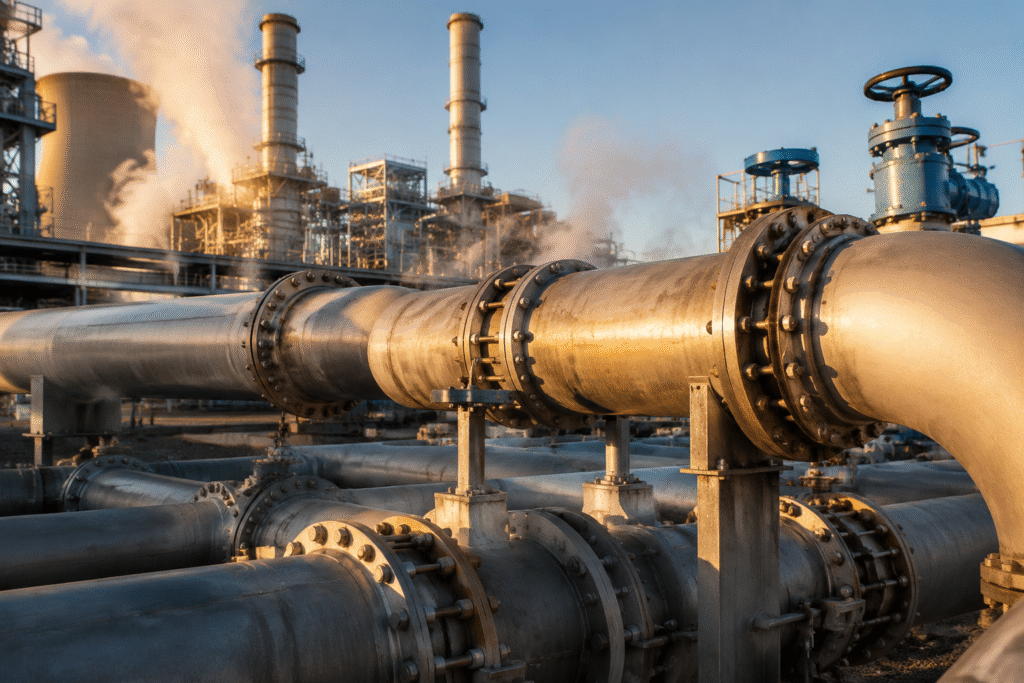
圧力と腐食リスクによるステンレス製フランジの選択
産業プロジェクトが耐食性を優先するため、ステンレス鋼管フランジの需要は増加し続けています, 圧力の完全性, とライフサイクル価値. グランドビューリサーチによると (2024), 世界の工業用フランジ市場は次のように評価されました。 $5.8 億で 2023 に達すると予測されています $7.2 10億まで 2030.
エンジニアと調達チーム向け, 成長は実際的な現実を反映しているということ. ステンレス, 鋼鉄, および合金のフランジはオイルにおいて依然として重要です & ガス, 石油化学, 力, 海洋, 漏洩の危険がある水処理システム, ダウンタイム, コンプライアンスコストが高い.
ステンレス鋼管フランジの調達に関する産業市場の状況
プロセスプラントが老朽化した配管インフラを更新し、より高性能な材料を指定しているため、工業用フランジの市場は拡大しています。. IBISWorldによると (2024), アジア太平洋地域が占める割合は超過 45% 世界のフランジ生産量の, 中国が最大の製造国である.
地域の製造力が大量を必要とするバイヤーにとって重要であること, トレーサビリティ, 短いリードタイム. また、世界の調達チームが強力な機械加工を備えた中国のサプライヤーをますます評価している理由も説明されています。, 検査, およびドキュメントのエクスポート機能.
最終用途の需要は依然として重工業に集中している. 統計局によると (2024), 石油・ガス産業が約 35% 世界のフランジ消費量の, 耐圧接続を中核的な調達カテゴリーに.
さらに, フランジの購入決定はより技術的になっている. 購入者は価格だけでなく比較するようになりました, ASTMグレードも, ASME圧力クラス, EN準拠, MTC の可用性, 腐食代, および総設置コスト.
ステンレス鋼管フランジ用途, 304, 316, 316l, 904l, 2205, そして 2507 耐食性と機械的性能のバランスをとるため、頻繁に指定されます。. 塩化物サービスでは, しかし, エンジニアは、孔食のリスクを軽減するために、標準のオーステナイトグレードから二相または超二相に移行することがよくあります。.
モルドール情報局によると (2024), 産業プロセスの近代化とエネルギーインフラへの投資により、より信頼性の高い配管コンポーネントの需要が世界中で加速しています。. 結果として, 標準のカタログ アイテムは、多くの EPC および MRO バイヤーにとってもはや十分ではありません.
カスタムボアの必要性がますます高まっています, 非標準の穴あけ, 特殊な表面仕上げ, プロジェクト固有のパッケージ化. したがって, メーカーの能力は材料グレードとほぼ同じくらい重要になっています.
SASA FLANGE この環境では次のように動作します ISO 9001:2015 および PED 2014/68/EU 認証, 石油業界全体の顧客にサービスを提供する & ガス, 石油化学, 力, 海洋産業. 高度な CNC 加工と包括的な品質テストに裏付けられています, 同社はステンレス鋼フランジを供給しています, 炭素鋼フランジ, 合金フランジ, およびパイプ継手の材質 304 および316L~904L, 2205, 2507, インコネル, モネル, ハステロイ, とチタン.
実際の調達用語では, フランジの信頼性は製造精度に依存するため、これは重要です. フェイスの高さを高めた, 穴の公差, ボルト穴の位置合わせ, セレーション仕上げ, と熱トレーサビリティはすべてフィットアップとシール性能に影響します.
ISO に準拠した品質管理原則に準拠, プロセスの一貫性により手戻りが軽減される, 検査紛争, 現場での設置の遅れ (ISO, 2024). さらに, サードパーティのドキュメントなど EN 10204 3.1 多くの場合、規制対象の輸出主導型プロジェクトでは認証が必須となります。.
調達チームは、フランジに関する基本的な問題以外にも目を向ける必要があります。? 種類と用途は評価の一部にすぎません. 隠れた利点は高品質のシステムから得られることが多い, 冶金制御, そしてサポートする能力 ASME B16.5, ASME B16.47, DIN, JIS, ゴスト, とEN 1092 単一の工場ソースからの寸法要件.
ステンレス鋼管フランジの種類, 隠れた利点, および専門家の選択に関する洞察
ステンレス製管フランジの種類が豊富, ただし、正しい選択は常に圧力クラスに依存します, 中くらい, 温度, 周期負荷, とメンテナンス戦略. 結果として, ウェルドネックの選択, スリップオン, 盲目, ねじ切りされた, ラップジョイント, フランジの設計は習慣ではなくエンジニアリング データに基づいて行う必要があります。.
ジョン・ブレスリン役, 上級配管エンジニア, 州: “使用条件が厳しい場合、フランジは消耗品ではありません; フェーシング仕上げ, 冶金, 寸法精度は漏れのない性能に直接影響します。” この見解は製油所の現場での経験と一致しています, LNG基地, およびオフショアプラットフォーム.
によると ASME B16.5, NPSの寸法標準化 1/2 を通して 24 メーカー間での互換性と一貫したシール性能をサポート (ASME, 2024). より大きな直径の場合, ASME B16.47 NPSをカバーします 26 を通して 60 そして伝達に不可欠なものとなる, ストレージ, および水インフラプロジェクト (ASME, 2024).
したがって, 適切な標準を指定することが最初のステップです. 2 つ目は、フランジの設計を製造および使用条件に適合させることです。.
- 溶接ネックフランジ: 高圧に最適, 高温, テーパーハブが応力分散を改善するため、周期的なサービスが可能.
- スリップオンフランジ: コスト効率が高く、位置合わせが簡単, 特に低圧から中圧システムや製造に適したプロジェクト向け.
- ブラインドフランジ: 線を分離するために使用されます, 配管システムの終端処理, 将来の拡張ポイントをサポートします.
- ねじ付きフランジ: 溶接が制限されている場所で役立ちます, ただし、通常は圧力が低く、過酷ではないサービスに限定されます。.
- ソケット溶接フランジ: 小口径共通, 滑らかなボアと強力なジョイントが必要な高圧ライン.
- ラップジョイントフランジ: 頻繁に解体が必要で、耐食性のスタブエンドによりコストが最適化されるシステムに最適.
素材の選択も同様に重要です. ASTM A182 多くのステンレスおよび合金グレードの主要な鍛造継手およびフランジ仕様です, その間 ASTM A240 プレート製品が関連する製造およびクラッドシステムで使用される場合に関連します (ASTM, 2024).
オーステナイト系グレードの中で, 304 および 304L は多用途性と経済性を維持します. しかし, 316 および 316L は、モリブデンが耐孔食性および耐すきま腐食性を向上させるため、塩化物含有環境で優れた耐性を提供します。.
マーケットリサーチの将来によると (2024), 耐食合金は、信頼性とメンテナンス目標の厳格化により、プロセス産業での需要が平均を上回る伸びを示しています. 加えて, 事業者は購入価格だけでなく、ライフサイクル全体のコストを計算するケースが増えています。.
この変化は、次のような二相グレードの使用が増加していることを説明しています。 2205 そして 2507. これらの材料は、標準の 300 シリーズ ステンレス グレードよりも高い強度を提供します。, より薄い壁の設計や、要求の厳しいサービスにおける安全マージンの向上をサポートできます。.
博士として. エレナ・マルコビッチ, 材料科学者, 州: “最適なフランジ選択により腐食モードのバランスがとれます, 動作温度, と検査哲学, 合金の威信だけではありません。” 彼女の指摘は特にオフショアに当てはまります, サワーサービス, および淡水化アプリケーション.
一般的なステンレスグレードを比較するエンジニア向け, 次のマトリックスは実際的な概要を示しています.
- 304/304l: 一般産業用, 良好な溶接性, 水処理に適した, 食品グレードのユーティリティ, およびマイルドケミカルサービス.
- 316/316l: 優れた耐塩化物性, 海洋で好まれる, 化学薬品, および沿岸環境.
- 904l: 酸性および塩化物が豊富な環境での強い耐性, 多くの場合、強力な化学処理に指定されます.
- 2205 二重: 海洋およびプロセス用途向けのより高い強度と強力な塩化物応力腐食割れ耐性.
- 2507 スーパーデュプレックス: 重度の腐食にさらされる高塩化物および海水システムで優れたパフォーマンスを発揮.
NACE の腐食管理ガイダンスに準拠, ボルトで固定されたフランジ接合部の材料の不一致は、過酷な条件下で局所的な破損を促進する可能性があります (ネイス, 2024). その結果, フランジ, ガスケット, ボルト締め, 配管材料も一つのシステムとして見直す必要がある.
寸法の詳細は購入者の正しい選択方法にも影響します. 顔のタイプ, RFなどの, RTJ, そしてFF, ガスケットの設計とサービスクラスが一致している必要があります.
例えば, リングタイプジョイント フランジは、金属間の溝形状が信頼性の高いシールをサポートするため、高圧炭化水素用途で一般的です。. 対照的に, 平面接続は、鋳鉄または低ボルト負荷の機器ノズルでよく使用されます。.
SASA FLANGE 1/2からのカスタムサイズを提供します" 60まで" 競争力のある工場直販価格で、ANSI B16.5 をサポート, ANSI B16.47, ASME B16.9, DIN, JIS, ゴスト, とEN 1092 要件. さらに, 同社はエルボを製造できます, ティー, 減速機, 一致するグレードのキャップ, これにより、完全なパイプ システムのパッケージ調達が簡素化されます。.
大規模プロジェクトの場合, サプライヤーの統合により、管理と検査の複雑さが軽減されます. フランジおよびフィッティング パッケージの複数のベンダーを管理する代わりに, EPC チームは材料証明書を一元管理できる, PMI記録, および寸法レポート.
このアプローチにより、サプライヤー間の許容誤差の不一致のリスクも軽減されます。. したがって, スプールの組み立てやターンアラウンド作業中の現場の生産性を向上させることができます。.
ASME B16.5, B16.47, ASTM, DIN, ステンレス鋼フランジの供給に関する EN 準拠
規格への準拠は事務手続きだけの問題ではありません. ステンレス鋼管フランジを確実に取り付けるためのフレームワークです。, シール, 安全にサービスを遂行する.
ASME B16.5 NPS のパイプ フランジとフランジ付き継手をカバーします 1/2 に 24. ASME B16.47 NPS からのより大きな直径に適用されます 26 に 60, ボルトパターンと質量の異なるシリーズAとシリーズBに分かれています。 (ASME, 2024).
ASTM 材料規格は化学特性と機械的特性を定義します. 鍛造ステンレスフランジ用, ASTM A182 重要な仕様です, while corresponding pipe and plate standards must be checked for system compatibility (ASTM, 2024).
ヨーロッパのプロジェクトでは多くの場合、EN が必要です 1092 寸法と PED 準拠. さらに, petrochemical and offshore buyers may ask for NACE MR0175 レビュー, DNV-related documentation, or customer-specific QA plans depending on media and jurisdiction.
- ASME B16.5: Standard for flanges up to NPS 24, widely used in refinery, 石油化学, そして電力プロジェクト.
- ASME B16.47: Standard for large-diameter flanges from NPS 26 に 60 for transmission and infrastructure systems.
- ASTM A182: Material specification for forged or rolled alloy and stainless steel pipe flanges and forged fittings.
- EN 1092: European flange dimensional standard widely used in EU and export projects.
- NACE MR0175: Corrosion-related material guidance for sour service environments.
- PED 2014/68/EU: 欧州市場における圧力機器の規制枠組み.
Buyers should also request the right inspection and documentation package. 一般的な要件には MTC が含まれます EN 10204 3.1, PMI, hardness testing where applicable, 寸法検査, hydrostatic or pneumatic test evidence at system level, and marking traceability.
According to DNV-oriented supply chain practice, traceability and certification quality strongly influence approval speed for critical industrial components (DNV, 2024). 結果として, well-documented flange manufacturers often reduce project bottlenecks more effectively than low-price suppliers with weak paperwork control.
There is also an important distinction between dimensional compliance and actual quality execution. A flange may technically match ASME B16.5 寸法, yet poor forging quality, 表面仕上げ, or heat traceability can still create installation and audit problems.
そのため, procurement specifications should define more than standard numbers. They should state material grade, クラス評価, 対面タイプ, テスト範囲, コーティングまたは不動態化の必要性, packaging requirements, and certificate expectations.
と ISO 9001:2015, PED 2014/68/EU, とAD 2000 認証, SASA FLANGE supports quality-driven procurement for export and regulated markets. The company also manufactures flanges in 304, 316, 904l, 2205, 2507 その他のプレミアムグレード, 高度なCNC加工と包括的な品質テストに裏付けられています.
From a compliance perspective, that matters in audits and bid evaluations. Engineers can compare suppliers more clearly when the manufacturer provides dimensional reports, 熱数, 原材料のトレーサビリティ, and standard-specific conformity records.
加えて, mixed-standard projects require careful coordination. A system may combine ASME piping classes with EN equipment interfaces, so bolt circles, face forms, and pressure nomenclature must be reviewed line by line.
したがって, experienced flange manufacturers provide technical clarification before production begins. That early review prevents expensive remake costs and avoids site-fit disputes later in the project.
申請ガイド: How to Choose Stainless Steel Pipe Flange by Industry, プレッシャー, and Corrosion Risk
The best way to Choose a stainless steel pipe flange is to start with actual service conditions. 中くらい, 温度, 圧力クラス, 塩化物含有量, inspection interval, and shutdown cost should all shape the final decision.
油中 & ガス, flange failure can create severe production losses. したがって, weld neck and RTJ Flanges in ASTM A182 F316/F316L, デュプレックス 2205, またはスーパーデュプレックス 2507 are common in corrosive and high-pressure applications.
統計局によると (2024), 石油・ガス部門は約 35% 世界のフランジ消費量の. That scale explains why this sector often drives higher standards for documentation, サワーサービスのレビュー, 寸法の一貫性.
石油化学・化学プラントにおいて, corrosion mechanism usually governs material choice. 酸, 塩化物, and elevated temperatures may justify 316L, 904l, ハステロイ, or Monel depending on concentration and process upset risk.
Power generation projects often emphasize pressure class, 熱サイクル, and outage reliability. 結果として, weld neck and socket weld connections are frequently selected for steam, 凝縮水, and auxiliary high-pressure lines.
Marine and shipbuilding environments add external chloride exposure to the challenge. その結果, 316L is often the baseline, while duplex grades become attractive for seawater, バラスト, およびオフショアユーティリティシステム.
Water treatment and desalination projects require careful balancing of budget and corrosion performance. For less aggressive service, 304L may be acceptable, but 316L, 2205, または 2507 are often preferred where chloride levels are high.
- メディアの互換性: 塩化物をチェックする, 硫黄化合物, 酸度, 固体, および洗浄用の化学薬品.
- 動作温度: Confirm whether the grade is suitable for sustained elevated temperature service.
- 圧力クラス: Match Class 150, 300, 600, 900, 1500, または 2500 to design conditions and code basis.
- フランジタイプ: ウェルドネックを選択してください, スリップオン, 盲目, ねじ切りされた, ソケット溶接, or lap joint based on fabrication and stress profile.
- 対面スタイル: RF を検証する, RTJ, or FF compatibility with the gasket and mating equipment.
- 検査範囲: Define MTC 3.1, PMI, 臨死体験, フェライト, 硬度, or third-party witness needs.
- プロジェクトのロジスティクス: Review MOQ, リードタイム, 梱包, マーキング, および輸出書類.
According to API-oriented project procurement practices, standardization of component classes reduces inventory complexity and maintenance downtime (API, 2024). しかし, over-standardization can be costly if the material grade is excessive for the real service environment.
That is why experienced engineering review is essential. A lower initial price can become more expensive if corrosion, 漏れ, or replacement frequency increases over time.
SASA FLANGE supports custom manufacturing for industrial buyers needing non-standard sizes, 特殊な穴あけ, large-diameter dimensions, or matching fittings in one package. 給仕 50+ 石油を巡る国々 & ガス, 石油化学, 力, 海洋産業, the company can help procurement teams align technical requirements with practical delivery schedules.
例えば, a marine contractor may need 4 inch stainless steel pipe flange items in 316L with EN 1092 掘削, while an EPC contractor may require ASME B16.5 クラス 300 ネックフランジを溶接します 2205 と EN 10204 3.1 証明書. These are very different applications, even when the word Stainless appears in both RFQs.
同様に, ステンレス鋼フランジを探しているバイヤー 2 インチ, ステンレス鋼管フランジのサイズ, or Stainless Steel Threaded Pipe Flange options should verify more than nominal size. Bore schedule, 顔のタイプ, 圧力定格, and welding procedure compatibility all affect suitability.
Future Outlook for Stainless Steel Pipe Flange Supply and Strategic Sourcing Recommendations
The outlook for stainless steel pipe flange sourcing remains positive because industrial decarbonization, LNG expansion, water treatment investment, and asset replacement all support long-term demand. グランドビューリサーチによると (2024), 産業用フランジ市場は次の規模に達すると予想されます $7.2 10億まで 2030.
同時に, sourcing expectations are becoming stricter. Buyers increasingly want digital documentation, heat-level traceability, faster inspection turnaround, and integrated supply of flanges plus fittings.
IBISWorldによると (2024), Asia-Pacific continues to dominate flange production, which gives global buyers access to scale and competitive pricing. しかし, procurement success will depend on selecting qualified manufacturers rather than chasing the lowest quote.
したがって, strategic buyers should build supplier scorecards around five factors. These are standards compliance, 物質的な幅広さ, ドキュメントの品質, 加工精度, and on-time delivery performance.
It is also wise to segment purchases by criticality. Standard utility Flanges can often be sourced on price efficiency, while offshore, サワーサービス, and high-temperature items should be sourced on technical reliability and certification strength.
As industrial specifications become more demanding, manufacturers that combine ASME, ASTM, DIN, EN, and PED familiarity will gain an advantage. That is especially true for projects spanning multiple geographies and end-user approval systems.
For procurement managers evaluating long-term partners, the Hidden Advantages usually appear in execution. These include responsive engineering support, project-level customization, consistent markings, and complete quality dossiers.
Companies seeking a dependable supplier for stainless steel pipe flange, 合金フランジ, and matching fittings can review capabilities through SASA FLANGE. For projects that require certified materials, カスタムディメンション, および輸出対応ドキュメント, early technical engagement typically shortens procurement cycles and reduces total project risk.
よくある質問
ステンレス鋼フランジにはどのような種類がありますか?
●ステンレス鋼フランジの主なタイプはウェルドネックです。, スリップオン, 盲目, ねじ切りされた, ソケット溶接, そしてラップジョイント, と ASME B16.5 covering most sizes from NPS 1/2 に 24 (ASME, 2024).
●Each type serves a different function because stress distribution, 溶接方法, メンテナンスアクセス, and sealing performance vary by design.
●For projects requiring accurate type selection and full certification, のような確立されたメーカーと協力する SASA FLANGE フランジが圧力クラスに適合していることを確認するのに役立ちます, 顔のタイプ, and material grade.
どちらが良いですか 304 または 420 ステンレス鋼?
●ほとんどのステンレス鋼管フランジ用途に対応, 304 一般にそれよりも優れています 420 because it offers stronger corrosion resistance and easier weldability in industrial piping service.
●学年 420 マルテンサイト系ステンレス鋼で、硬度と耐摩耗性が重要な場合によく使用されます。, but it is less suitable for corrosive process piping and standard flange fabrication.
●When engineers need flange materials for water, 化学薬品, 海洋, or general industrial duty, 304 または 316 grades are usually the safer and more common choice under ASTM A182 supply practice.
3種類のフランジとは何ですか?
●The three most commonly referenced flange types in basic industrial discussions are weld neck, スリップオン, and blind flanges because they cover many connection, 組み立て, and isolation needs.
●Weld neck flanges are preferred for higher pressure and cyclic duty, slip on flanges simplify fabrication for moderate service, ブラインド フランジがラインまたはノズルの端を閉じます。.
●If the service includes elevated pressure, 塩化物, or strict code review, buyers should request a technical recommendation based on ASME B16.5 クラス, 対面タイプ, and ASTM grade.
ステンレス鋼フランジの ASME コードとは何ですか?
●ステンレス鋼フランジの主な ASME 規格は次のとおりです。 ASME B16.5 NPS向け 1/2 に 24 そして ASME B16.47 NPS向け 26 に 60, その間 ASTM A182 commonly governs forged stainless material (ASME, 2024; ASTM, 2024).
●これらの規格は寸法を定義します, 掘削, 圧力温度定格, 公差, and material reference frameworks that support interchangeability and safe installation.
●輸出または規制されたプロジェクトの場合, buyers should also confirm related EN 1092, PED 2014/68/EU, そして EN 10204 3.1 documentation requirements before placing the order.
ステンレス鋼管フランジの価格に影響を与えるもの?
●ステンレス鋼管フランジの価格は主に合金グレードに影響されます, サイズ, 圧力クラス, フランジタイプ, 加工の複雑さ, 検査範囲, そして注文量, while volatile nickel and molybdenum costs can significantly change 316L and higher-alloy pricing.
●グランドビューリサーチによると (2024), continued market growth and industrial demand are keeping corrosion-resistant flange categories strategically important across global supply chains.
●見積もりを正確に比較するには, procurement teams should review whether the price includes MTC 3.1, PMI, フェーシング仕上げ, 輸出梱包, and any third-party inspection requirements.
産業プロジェクト用のフランジ メーカーまたはフランジ ベンダーを選択するにはどうすればよいですか?
●A strong flange manufacturer should demonstrate ASME and ASTM familiarity, ISO 9001:2015 品質管理, 材料のトレーサビリティ, 加工精度, and documented export experience for Oil & ガス, 力, 海兵隊, or Water Treatment projects.
●IBISWorldによると (2024), アジア太平洋地域では以上の生産が行われています 45% グローバルフランジの, so supplier evaluation should focus on capability and compliance rather than geography alone.
●For buyers needing custom sizes, premium grades like 2205 または 2507, and complete documentation packages, 連絡する SASA FLANGE 現実的な次のステップです.
関連投稿

オリフィスフランジの定義, 詳細と ASME B16.36 フランジの概要: 市場データ, 選択ガイドとコンプライアンスに関する洞察
世界の工業用フランジ市場は次のように評価されました。 $5.8 十億…

ブラックディスポフランジ市場ガイド: 材料, 3.5″ 互換性, キッチン シンク フランジの B2B 調達データ
キッチン設備の購入者として黒色の使い捨てフランジの需要が高まっています…