
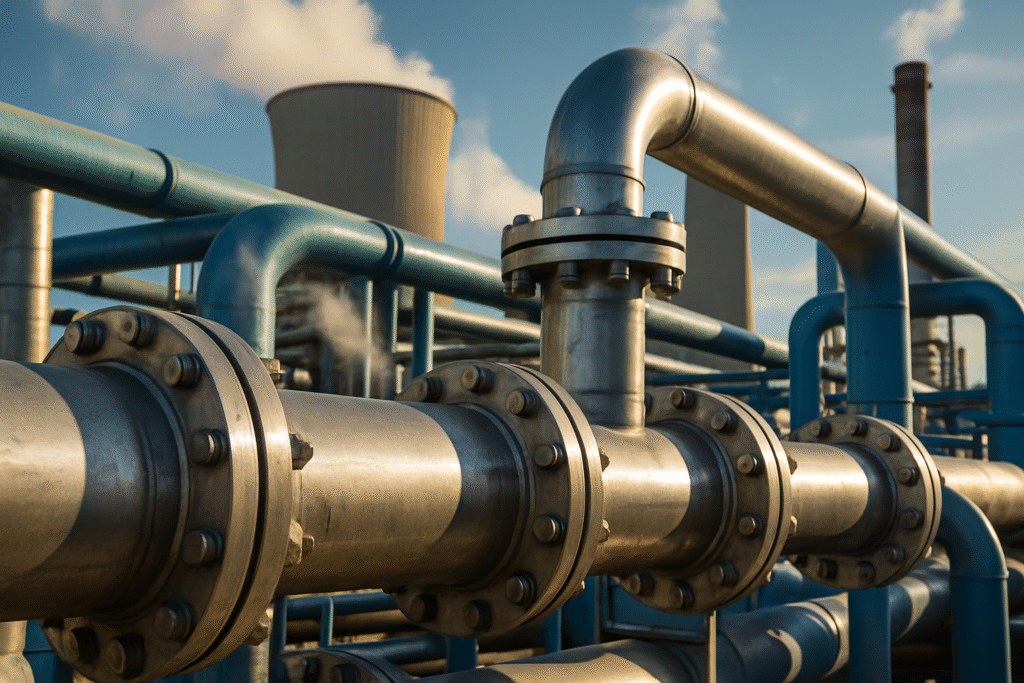
ステンレス鋼管フランジガイド: 隠れた利点, 種類, 用途, と72億ドルの市場での選び方
プロセス産業がより安全な製品への投資に伴い、ステンレス鋼管フランジの需要が増加し続けています, より長持ちする配管システム. グランドビューリサーチによると (2024), 世界の工業用フランジ市場は次のように評価されました。 $5.8 億で 2023 に達すると予測されています $7.2 10億まで 2030, which makes material selection and supplier qualification more critical than ever.
調達チームおよび配管エンジニア向け, the intriguing question is not only which stainless steel flange to buy, but also which hidden advantages different flange grades deliver across corrosion, 温度, プレッシャー, とライフサイクルコスト. This guide explains stainless steel pipe flange types, 用途, 標準, and selection criteria for industrial buyers who need reliable, compliant components.
ステンレス鋼管フランジの需要を支える産業市場の原動力
Global demand for industrial flanges remains closely tied to energy, 水, and process infrastructure spending. 統計局によると (2024), 石油・ガス産業が約 35% 世界のフランジ消費量の, which confirms how strongly upstream, 中流, and downstream projects influence stainless steel purchasing cycles.
Regional manufacturing strength also shapes supply chain decisions. IBISWorldによると (2024), アジア太平洋地域が占める割合は超過 45% 世界のフランジ生産量の, 中国が最大の製造国である, giving buyers access to broad capacity, 競争力のある価格設定, and shorter lead-time options.
These numbers matter because flange procurement has become more data-driven. Buyers now compare not only unit price, but also EN 10204 3.1 ドキュメント, PMIの利用可能性, PED準拠, and traceability across heats and batches.
結果として, stainless steel pipe flange sourcing increasingly favors manufacturers with proven quality systems and export experience. SASA FLANGE, に支えられた ISO 9001:2015 および PED 2014/68/EU 認証, ステンレス鋼フランジを供給します, 炭素鋼フランジ, 合金フランジ, およびオイル用配管継手 & ガス, 石油化学, 力, 海兵隊, および水処理部門.
The hidden advantages of stainless steel flanges often become clear only after years of operation. Compared with lower-alloy alternatives, the right stainless material can reduce corrosion-related shutdowns, extend maintenance intervals, and improve hygiene or media purity in sensitive service.
モルドール情報局によると (2024), industrial infrastructure investment in water treatment and desalination continues to support above-average growth for corrosion-resistant piping components. したがって, stainless steel pipe flange demand is no longer limited to petrochemicals alone.
加えて, offshore and marine applications continue to move toward higher-performance duplex and super duplex materials. マーケットリサーチの将来によると (2024), corrosion-resistant alloy demand in industrial piping is expanding as operators target lower total cost of ownership in high-chloride environments.
B2Bバイヤー向け, that means flange selection cannot be treated as a commodity decision. A poor choice in grade, 直面している, or pressure class can create leakage risk, premature pitting, and expensive rework during installation or shutdown windows.
Manufacturers with material breadth have an advantage here. SASA FLANGE でフランジを製造します 304, 316, 316l, 904l, 2205, 2507, A182, インコネル, モネル, ハステロイ, およびチタングレード, while also offering custom sizes from 1/2" 60まで" グローバルプロジェクト向け.
さらに, advanced CNC machining and comprehensive quality testing help ensure tolerances align with project specifications. Buyers can review product capabilities through SASA FLANGE 製品範囲 and evaluate manufacturing background at the company profile page.
ステンレス鋼管フランジの種類, 隠れた利点, and Material Selection Factors
Stainless steel pipe flange performance depends on three core variables: base alloy, フランジ設計, and service condition. しかし, many procurement teams focus too heavily on upfront cost and underestimate the long-term value of choosing the right flange configuration.
ジョン・レイノルズ役, corrosion and materials consultant, 州: “The cheapest flange is rarely the lowest-cost flange over the life of the plant, especially in chloride, 酸っぱい, or cyclic-temperature service.” That insight reflects why engineers evaluate corrosion rate, fabrication compatibility, and inspection requirements before release for purchase.
According to ASTM and ASME design practice, flange selection must align with pressure-temperature ratings, 材料化学, and end connection requirements (ASME, 2023). 実務的には, that means a 316L weld neck flange for a chemical process line serves a very different purpose than a 304 slip-on flange in general utility service.
The most common stainless materials include 304/304L and 316/316L. 学年 304 offers broad corrosion resistance and good weldability, その間 316 and 316L add molybdenum for stronger resistance in chloride-containing media and more aggressive chemical environments.
Higher-performance alloys solve more demanding problems. 例えば, 904L improves resistance in sulfuric and phosphoric acid service, 両面印刷中 2205 そしてスーパーデュプレックス 2507 より高い強度と塩化物応力腐食割れに対する耐性の向上を実現します。.
博士として. Lisa Chen, 工業用合金の材料科学者, 州: “Duplex stainless flanges are often selected when end users need both mechanical strength and chloride resistance without the full cost profile of nickel alloys.” したがって, duplex grades have become increasingly attractive in offshore, 脱塩, and fertilizer projects.
によると NACE MR0175 and ISO material guidance, sour service and chloride exposure can significantly affect alloy selection (ネイス, 2023). さらに, ASME B16.5 そして ASME B16.47 set critical dimensional and pressure-class frameworks for most industrial flange applications (ASME, 2023).
Common stainless steel pipe flange types include the following:
- 高圧用ウェルドネックフランジ, 熱サイクル, 重要なプロセスライン.
- Slip-on flange for moderate-pressure systems where ease of alignment and lower installed cost matter.
- Blind flange for terminating systems, 圧力試験, and future expansion allowances.
- Socket weld flange for smaller bore, high-pressure piping with clean bore transition.
- Threaded flange for low-pressure or temporary systems where welding is not preferred.
- Lap joint flange for systems requiring frequent dismantling or corrosion-resistant stub ends.
Each design has hidden advantages beyond its basic definition. ウェルドネックフランジ, 例えば, reduces stress concentration at the hub transition, while a lap joint flange can lower replacement costs when expensive alloy stub ends are paired with lower-cost backing flanges.
Facing selection also matters. Raised face remains common in ANSI systems, ring type joint suits high-pressure hydrocarbon service, and flat face is often specified where cast iron or flat-faced mating equipment requires lower bolt-induced bending stress.
オフショア システムに関する DNV ガイダンスによると, bolted joint integrity is a major reliability factor in hydrocarbon and marine service (DNV, 2023). したがって, ガスケットの互換性, ボルト材質, トルク制御, and flange finish must be considered together rather than as separate line items.
The following material overview helps industrial buyers compare common choices:
- 304/304l: 良好な一般的な耐食性, excellent formability, common in food, 水, および軽化学サービス.
- 316/316l: better pitting resistance than 304, preferred for marine atmosphere, 塩化物, そして化学処理.
- 321/347: stabilized grades for elevated temperature applications where carbide precipitation control matters.
- 904l: stronger resistance in aggressive acidic environments and selected fertilizer or acid service.
- 2205: high strength plus strong chloride resistance for offshore, パルプと紙, そして水処理.
- 2507: superior pitting and crevice corrosion resistance for severe chloride and subsea environments.
Procurement teams should also verify whether dual certification is available, 304/304L または 316/316L など. This can improve flexibility for fabrication and code compliance, especially when welding and low-carbon requirements are specified.
SASA FLANGE supports these requirements with stainless steel pipe flange and fitting production in multiple grades, backed by CNC machining, 寸法検査, PMI, 水力試験の調整, そして EN 10204 3.1 documentation support. Buyers seeking project-specific guidance can connect directly through SASA FLANGE お問い合わせページ.
ASME, ASTM, DIN, およびステンレス鋼管フランジの準拠に関する EN 規格
Industrial flange procurement should begin with standards compliance, not catalog images. The main dimensional and design references for stainless steel pipe flange products are ANSI B16.5, ANSI B16.47, ASME B16.9 for related butt weld fittings, DIN, JIS, ゴスト, とEN 1092.
材料規格も同様に重要です. ASTM A182 通常、鍛造または圧延合金およびステンレス鋼のパイプフランジをカバーします, 鍛造継手, および高温用バルブ, その間 ASTM A240 プレートに適用されます, シート, and strip used in pressure vessels and general applications (ASTM, 2023).
によると ASME B16.5, standard flange sizes generally cover NPS 1/2 を通して 24, その間 ASME B16.47 extends large-diameter flange dimensions beyond that range (ASME, 2023). This matters because dimensional mismatches create installation delays, gasket sealing issues, and avoidable site modifications.
ヨーロッパのプロジェクトでは多くの場合、EN が必要です 1092 compliance and PED-related documentation. 対照的に, North American projects more often prioritize ASME and ASTM callouts, especially in refining, LNG, and pipeline-connected process plants.
For quick reference, buyers typically review these specifications:
- ASME B16.5: 寸法, 公差, 圧力温度定格, NPS用のマーキングと 1/2 に 24 フランジ.
- ASME B16.47: NPS用大径鋼フランジ 26 に 60.
- ASTM A182: forged stainless and alloy flange material specification.
- ASME B16.9: factory-made wrought butt welding fittings used with flange-connected systems.
- EN 1092-1: ヨーロッパのフランジ寸法, 圧力クラス, and facing standards.
- NACE MR0175: material guidance for sour service resistance.
Pressure class selection must match actual operating conditions. Typical ASME pressure classes include 150, 300, 600, 900, 1500, そして 2500, and the allowable pressure decreases as service temperature increases.
As Mark Patel, シニア配管エンジニア, 州: “Many flange failures trace back to rating and gasket mismatches rather than metallurgy alone.” したがって, engineers must review design pressure, 状況の混乱, ボルト荷重, and thermal excursions before finalizing a purchase order.
Quality documentation is no longer optional in many export markets. PED 2014/68/EU, ISO 9001:2015, とAD 2000 credentials strengthen supplier approval, especially for pressure equipment, EU-bound projects, and regulated process applications.
SASA FLANGE operates within this compliance-driven environment, offering stainless steel pipe flange products with ISO 9001:2015, PED 2014/68/EU, とAD 2000 サポート. This is especially relevant for buyers who need full traceability, MTC, and dimensional conformance across multi-line orders.
加えて, buyers should confirm whether the supplier can support project-specific inspection requirements. These may include PMI, 硬さ試験, フェライトの二重グレードのチェック, ユタ州, 目視検査, or third-party witness review depending on EPC or end-user specifications.
For technical standard verification, procurement managers may also consult ASME 直接. しかし, supplier capability remains the deciding factor in whether documents, マーキング, and physical parts truly align at shipment stage.
That is why supplier evaluation should combine standards knowledge with manufacturing control. Buyers can request drawings, test plans, and quotation support through SASA FLANGE when project documentation and nonstandard dimensions are involved.
油用ステンレス鋼管フランジの選び方, ガス, 化学薬品, 力, および海洋用途
The right stainless steel pipe flange depends on media, 温度, プレッシャー, 腐食のメカニズム, メンテナンス哲学. Although many buyers begin with a material grade, the better approach is to define the complete operating envelope first.
石油およびガスシステム用, flange integrity under pressure cycling and corrosive media is essential. 統計局によると (2024), この部門は約を消費します 35% グローバルフランジの, so code compliance, シールの信頼性, and material traceability usually drive specification.
Typical application guidance includes the following:
- 石油とガス: weld neck or RTJ flanges in 316L, デュプレックス 2205, またはスーパーデュプレックス 2507 for offshore and sour or chloride-bearing service.
- 化学処理: 316l, 904l, or nickel alloy flanges where acids, 溶剤, or chlorides can accelerate localized corrosion.
- 発電: high-temperature grades and forged flanges with verified rating performance for steam, 凝縮水, および補助システム.
- 海洋および造船: 316l, 2205, または 2507 for seawater, バラスト, スクラバー, および淡水化システム.
- 水処理: 304, 316l, and duplex materials depending on chlorination level, brine exposure, and maintenance targets.
Flange type must also match maintenance and installation needs. 例えば, blind flanges simplify future line expansion planning, while threaded stainless steel pipe flange connections may fit low-pressure instrument or maintenance-access lines where welding is inconvenient.
When buyers compare stainless steel pipe flange sizes, they should evaluate more than nominal diameter. 外径, ボルトサークル, ボルト穴の数, 対面タイプ, wall thickness compatibility, and schedule transition all affect fit-up and sealing performance.
The most important selection factors are usually these:
- 流体化学, 塩化物含有量を含む, H2S 暴露, 酸濃度と.
- 動作温度範囲と設計温度範囲.
- Pressure class and upset condition allowance.
- Required flange type and facing style.
- Applicable code standard, のような ASME B16.5 またはEN 1092-1.
- 溶接性, 製造ルート, and post-installation inspection needs.
- ドキュメントパッケージ, 含む EN 10204 3.1 とトレーサビリティ.
- リードタイム, lot consistency, and supplier export capability.
ISO品質管理ガイダンスによる, supplier consistency directly affects downstream quality outcomes (ISO, 2023). したがって, buyers should compare not only alloy and dimensions, but also production control, テスト手順, and historical delivery reliability.
SASA FLANGE serves more than 50 石油を巡る国々 & ガス, 石油化学, 力, および海洋部門. 加えて, the company offers custom manufacturing in forged and machined flange configurations, plus matching pipe fittings such as elbows, ティー, 減速機, そしてキャップ.
Custom manufacturing becomes especially valuable when project teams face nonstandard drilling, large-diameter requirements, または特殊な合金の組み合わせ. This is where a capable supplier can shorten engineering loops and reduce procurement fragmentation across multiple vendors.
実際の調達用語では, buyers should issue RFQs with complete data. Include material grade, 標準, 圧力クラス, 直面している, サイズ, 量, testing needs, マーキング, 書類, 行き先, and any third-party inspection requirement.
That level of detail improves quotation accuracy and lowers the risk of technical clarification delays. For project support on stainless steel pipe flange selection, material matching, またはカスタムディメンション, teams can contact SASA FLANGE 直接.
ステンレス鋼管フランジ調達の今後の見通しと戦略的な購入の提案
The flange market outlook remains positive as energy transition, industrial modernization, and water infrastructure investment continue. グランドビューリサーチによると (2024), 市場は~から成長すると予想される $5.8 億で 2023 に $7.2 10億まで 2030, which indicates steady long-term procurement demand.
同時に, supply chains are becoming more selective. Buyers increasingly require shorter lead times, dual-certified materials, higher documentation transparency, and stronger corrosion-performance evidence before approving a stainless steel pipe flange supplier.
IBISWorldによると (2024), Asia-Pacific remains the dominant production region with over 45% 世界の生産高の. したがって, buyers who build relationships with qualified Chinese manufacturers can often secure better production flexibility and cost competitiveness.
しかし, the future is not only about price. It is about lifecycle performance, compliance readiness, and supply resilience across volatile raw material and freight conditions.
Strategic recommendations for industrial buyers include the following:
- 304Lなどの認定グレードを標準化, 316l, 2205, そして 2507 by service condition.
- Use total cost of ownership rather than piece price as the primary buying metric.
- Prequalify suppliers based on ISO 9001:2015, PED, 検査能力, and export history.
- リクエスト EN 10204 3.1, PMI, クリティカルラインのトレーサビリティと.
- フランジの位置合わせ, ガスケット, ボルト締め, and torque procedures as one sealing system.
- Create framework agreements for recurring size ranges to reduce lead time volatility.
The intriguing hidden advantages of stainless steel flanges become clearer when procurement and engineering work together early. Better alloy selection and better flange design reduce leakage risk, improve uptime, and support safer operation in aggressive industrial environments.
For companies evaluating new suppliers or expanding approved vendor lists, a manufacturer with broad material coverage and strong documentation support offers a measurable advantage. その文脈で, SASA FLANGE provides a practical option for buyers seeking factory-direct stainless steel pipe flange supply with global project experience and responsive technical communication.
よくある質問
ステンレス製フランジの主な種類は何ですか?
●最も一般的なステンレス鋼管フランジのタイプは溶接ネックです。, スリッポン, 盲目, ソケット溶接, ねじ切りされた, そしてラップジョイント, と ASME B16.5 covering most standard dimensions from NPS 1/2 に 24.
●Weld neck flanges are usually preferred for high-pressure and cyclic service, while slip-on and threaded designs are more common in lower-pressure utility lines.
●For projects requiring exact pressure class, 直面している, そして素材のマッチング, のような確立されたメーカーと協力する SASA FLANGE helps ensure compliant selection and documentation.
What is the ASME code for stainless steel flanges?
●The main ASME dimensional standard for stainless steel pipe flange products is ASME B16.5, while large-diameter flanges are commonly covered by ASME B16.47 and material is often specified under ASTM A182.
●実際に, buyers must confirm both the dimensional standard and the material specification because a correct alloy alone does not guarantee fit-up or pressure-rating compliance.
●For critical industrial orders, 特定 ASME B16.5 or B16.47 together with ASTM A182 学年, 圧力クラス, 直面している, そして EN 10204 3.1 要件.
どちらかを選択するにはどうすればよいですか 304 そして 316 stainless steel flange materials?
●学年 304 一般的なサービスに広く使用されています, しかし 316 and 316L offer better resistance in chloride-containing environments because molybdenum improves pitting resistance.
●統計局によると (2024), 石油とガスが約 35% 世界のフランジ消費量の, so many industrial users prefer 316L or duplex grades where corrosion risk could disrupt uptime.
●If the service includes seawater, 塩化物, or aggressive chemicals, buyers should usually prioritize 316L or a higher alloy after corrosion review.
使用可能なステンレス鋼管フランジのサイズ?
●Standard stainless steel pipe flange sizes typically start at NPS 1/2 and extend to NPS 24 下 ASME B16.5, その間 ASME B16.47 covers larger diameters up to NPS 60.
●Size selection must consider pipe schedule, ボルトパターン, フランジ外径, 直面している, and pressure class rather than nominal size alone.
●For custom requirements such as 4 inch stainless steel pipe flange orders, oversized drilling, or large-diameter flanges, it is best to confirm full dimensional drawings before production.
ステンレス鋼管フランジの価格に影響を与えるもの?
●Stainless steel pipe flange price is mainly influenced by alloy grade, フランジタイプ, サイズ, 圧力クラス, raw material cost, 加工の複雑さ, およびテスト要件.
●グランドビューリサーチによると (2024), フランジ市場に到達 $5.8 億で 2023, and rising demand in corrosion-resistant applications continues to affect pricing for 316L, 904l, 2205, そして 2507 製品.
●To control cost without sacrificing reliability, buyers should compare total delivered value, including compliance, リードタイム, テスト, および予想耐用年数.
Can stainless steel flanges and fittings be sourced together for one project?
●はい, many industrial buyers source stainless steel flanges and fittings together to improve dimensional consistency, 文書管理, and delivery coordination across the piping package.
●This approach is especially useful when projects need matching elbows, ティー, 減速機, キャップ, and stainless steel pipe flange items under ASME B16.9 そして ASME B16.5 要件.
●For multi-item packages involving custom sizes, プレミアム合金, または書類を輸出する, consolidated sourcing through SASA FLANGE can reduce procurement complexity and expedite execution.
関連投稿

オリフィスフランジの定義, 詳細と ASME B16.36 フランジの概要: 市場データ, 選択ガイドとコンプライアンスに関する洞察
世界の工業用フランジ市場は次のように評価されました。 $5.8 十億…

ブラックディスポフランジ市場ガイド: 材料, 3.5″ 互換性, キッチン シンク フランジの B2B 調達データ
キッチン設備の購入者として黒色の使い捨てフランジの需要が高まっています…