
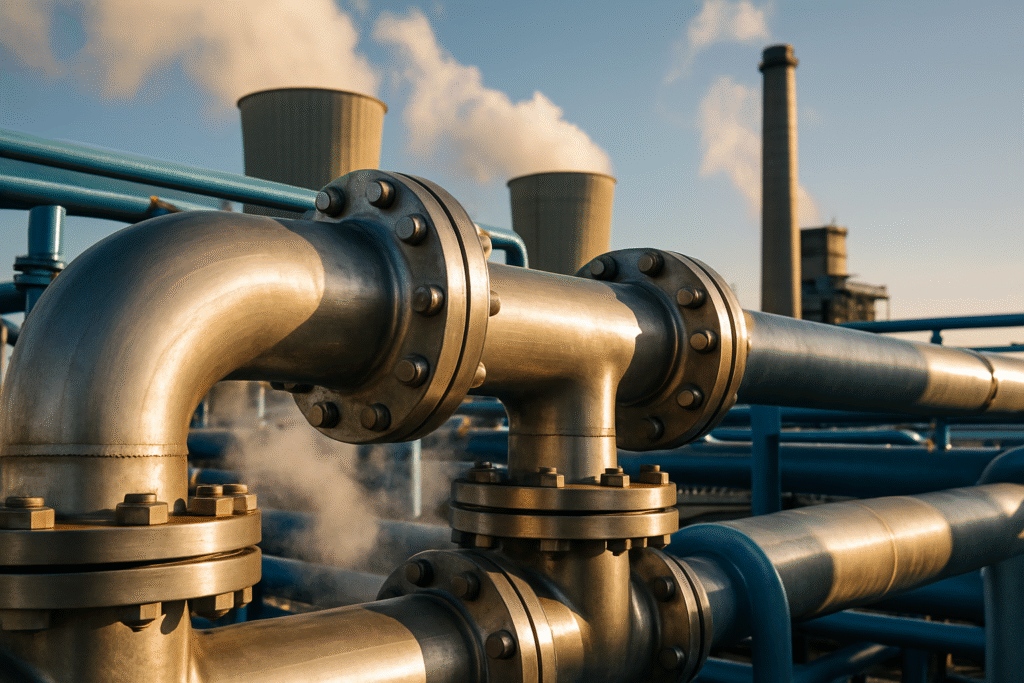
ステンレス鋼管フランジ市場 2024: 隠れた利点, 種類, 用途, およびさまざまなフランジの選択方法
グランドビューリサーチによると (2024), 世界の工業用フランジ市場は次のように評価されました。 $5.8 億で 2023 に達すると予測されています $7.2 10億まで 2030. That growth is one reason the stainless steel pipe flange remains a critical component for industrial use, especially where reliability, 耐食性, and code compliance drive procurement decisions.
エンジニアとバイヤー向け, the hidden advantages of stainless steel pipe flange selection go beyond corrosion performance alone. さまざまなフランジのタイプ, 圧力クラス, 合金, and manufacturing controls directly affect lifecycle cost, シャットダウンのリスク, and long-term pipe system safety.
Why the Stainless Steel Pipe Flange Market Keeps Expanding Across Industrial Sectors
Industrial demand for stainless steel pipe flange products continues to rise because operators need longer service life in aggressive media. 統計局によると (2024), 石油・ガス産業が約 35% 世界のフランジ消費量の, which shows how strongly energy projects shape flange demand.
さらに, regional manufacturing concentration matters for sourcing strategy. IBISWorldによると (2024), アジア太平洋地域が占める割合は超過 45% 世界のフランジ生産量の, 中国が最大の製造国である.
That production scale gives buyers wider access to ASTM A182 forged stainless grades, larger size ranges, and shorter replenishment cycles. しかし, procurement teams still need to verify traceability, 熱処理制御, PMIテスト, and dimensional compliance against ASME B16.5, ASME B16.47, DIN, JIS, ゴスト, とEN 1092 要件.
The stainless steel pipe flange is widely specified in Oil & ガス, 石油化学, 海洋, 水処理, and power generation because stainless grades perform well in humid, 塩化物含有, and cyclic-temperature environments. 対照的に, lower-cost carbon steel options may require coating systems, more frequent maintenance, or replacement in corrosive duty.
モルドール情報局によると (2024), industrial processing investments in energy, 水インフラ, and chemicals continue to support steady demand for corrosion-resistant piping components. したがって, buyers increasingly compare total installed cost rather than only initial flange price.
As material engineer Dr. ヘレン・モリス, 腐食スペシャリスト, 州: “The most economical flange is rarely the cheapest forged piece; it is the component that minimizes leakage risk, maintenance exposure, and unplanned shutdown over the asset life.” That view is especially relevant when comparing 304, 316l, 904l, デュプレックス 2205, そしてスーパーデュプレックス 2507 for different media.
実務的には, different flanges serve different mechanical and maintenance priorities. Weld neck flange designs handle severe cyclic service well, slip-on flanges support less critical systems economically, and blind flanges isolate lines safely during testing or maintenance.
Buyers also look beyond material to supplier capability. SASA FLANGE, 給仕 50+ 石油を巡る国々 & ガス, 石油化学, 力, 海洋産業, supports projects requiring forged stainless steel flanges, 合金フランジ, and matching pipe fittings in standards such as ANSI B16.5, ANSI B16.47, ASME B16.9, DIN, JIS, ゴスト, とEN 1092.
と ISO 9001:2015 および PED 2014/68/EU 認証, manufacturers can better align with documentation-heavy projects in Europe and export markets. さらに, EN 10204 3.1 材料証明書, 水圧試験記録, PMIレポート, and dimensional inspection reports help reduce approval delays.
調達の観点から, the hidden advantages of a high-quality stainless steel pipe flange include reduced corrosion allowance, more predictable maintenance planning, stronger resale value of plant assets, and easier compliance with owner specifications. 結果として, technical procurement teams increasingly prioritize qualified suppliers over spot-price vendors.
技術的な詳細: Intriguing Stainless Steel Pipe Flange Advantages, 種類, と材料の選択
The stainless steel pipe flange family includes many forged and plate-based configurations, each suited to different pipe layouts and pressure classes. によると ASME B16.5, フランジ寸法, 対面タイプ, 掘削, and pressure-temperature ratings must match the designated class and material group (ASME, 2023).
In engineering practice, material choice usually begins with media, 塩化物濃度, 動作温度, and expected maintenance interval. しかし, designers must also consider gasket compatibility, ボルト荷重, external vibration, and whether the joint will be disassembled frequently.
As piping consultant James Ortega, 上級配管エンジニア, 州: “Most flange failures begin with a mismatch between service conditions and selection assumptions, not with the forging itself.” したがって, the best way to choose different flanges is to align alloy, 直面している, クラス, and connection type with the actual process envelope.
Common stainless steel grades used in a stainless steel pipe flange include 304, 304l, 316, 316l, 321, 347, 904l, デュプレックス 2205, そしてスーパーデュプレックス 2507. ASTM A182 covers many forged or rolled alloy and stainless steel pipe flanges, 鍛造継手, バルブ, および高温サービス用部品 (ASTM, 2024).
Among these grades, 304 and 304L are popular for general industrial use because they balance cost, 成形性, 耐食性. 対照的に, 316 and 316L include molybdenum, 塩化物を含む環境での耐孔食性を向上させます。.
For higher chloride content or sour service, duplex and super duplex alloys often provide better strength-to-weight ratio and stronger resistance to stress corrosion cracking. NACE MR0175 そして ISO 15156 should guide material acceptance for H2S-containing environments where sulfide stress cracking risks increase (ネイス, 2023).
- 304/304l: general utility systems, マイルドケミカルサービス, 食品加工, and indoor water lines.
- 316/316l: 海洋, 沿岸, 製薬, and chloride-exposed piping.
- 904l: stronger resistance in sulfuric and aggressive chemical environments.
- 2205 デュプレックス: higher strength and improved chloride stress corrosion cracking resistance.
- 2507 スーパーデュプレックス: severe offshore and high-salinity applications.
Different flange types also influence fatigue performance and assembly efficiency. The most common types include weld neck, スリッポン, 盲目, ソケット溶接, ねじ切りされた, 重ね継手フランジ.
- ウェルドネックフランジ: 高圧に好ましい, 高温, そして循環サービス.
- スリップオンフランジ: easier alignment and lower fabrication cost for moderate duty.
- ブラインドフランジ: used for line blanking, テスト, およびメンテナンスの分離.
- ソケットウェルドフランジ: common in small-bore, 高圧システム.
- ねじ付きフランジ: useful where welding is impractical or restricted.
- 重ね継手フランジ: supports systems requiring frequent dismantling.
マーケットリサーチの将来によると (2024), corrosion-resistant alloys are gaining share in process industries because operators seek longer maintenance intervals and lower leak probability. さらに, alloy upgrades can reduce replacement frequency in lines exposed to seawater, コースティクス, or mixed chemical streams.
Pressure class is another key variable. で ASME B16.5 システム, 一般的な評価にはクラスが含まれます 150, 300, 600, 900, 1500, そして 2500, while larger diameters may fall under ASME B16.47 Series A or B depending on project specification.
Procurement managers should not assess price by diameter alone. あ 4 316Lクラスのインチステンレス鋼管フランジ 300, RF finish, と EN 10204 3.1 certification and PMI testing, differs significantly in cost from a 304 slip-on flange of the same nominal size.
高度な CNC 加工と包括的な品質テストに裏付けられています, SASA FLANGE でフランジを製造します 304, 316, 316l, 904l, 2205, 2507, A105, A182, インコネル, モネル, ハステロイ, とチタン. That range helps EPC contractors consolidate sourcing across both corrosion-resistant and high-temperature alloy systems.
多くのプロジェクトで, buyers also need elbows, ティー, 減速機, and caps from the same source to avoid dimensional mismatch. 以来 ASME B16.9 governs many butt weld fitting dimensions, pairing flanges and fittings from a supplier familiar with the same tolerances simplifies fit-up on site.
ISOによると (2023), quality management discipline lowers nonconformance risk when production, 検査, and documentation follow controlled procedures. その結果, a certified system such as ISO 9001:2015 often matters as much as nominal material grade.
Another hidden advantage of the stainless steel pipe flange is cleanliness. Stainless surfaces are easier to maintain in pharmaceutical, 食べ物, 超純水, and high-spec process systems where contamination control matters.
As metallurgist Dr. Aaron Patel, 材料科学者, 州: “Selecting a stainless flange is an exercise in balancing chemistry, 冶金, 圧力設計, and fabrication practicality.” That is why experienced manufacturers evaluate not just different flanges, but the whole piping envelope.
基準, テスト, and Compliance Requirements for Stainless Steel Pipe Flange Procurement
Compliance is often the difference between a smooth project release and a delayed shipment. ステンレス鋼管フランジ用, the most referenced standards include ASME B16.5, ASME B16.47, ASTM A182, ASTM A240, EN 1092-1, DIN規格, and project-specific specifications from API, ノルウェー, DNV, or end users.
ASME B16.5 NPS 用のフランジとフランジ付き継手をカバーします 1/2 を通して 24. ASME B16.47 applies to larger steel flanges from NPS 26 を通して 60, depending on series and pressure class (ASME, 2023).
ASTM A182 addresses forged or rolled alloy and stainless steel components for high-temperature service. ASTM A240, 対照的に, is usually referenced for chromium and chromium-nickel stainless plate, シート, and strip used for vessels and general applications (ASTM, 2024).
European projects may require EN 1092-1 寸法準拠および PED 2014/68/EU 文書. したがって, manufacturers supplying to EU-regulated pressure equipment markets must maintain material traceability and conformity assessment records carefully.
- 寸法規格: ASME B16.5, ASME B16.47, EN 1092-1, DIN, JIS, ゴスト.
- 材料規格: ASTM A182, ASTM A240, ASTM A276, customer-approved MDS.
- テストと文書化: PMI, 硬度, 水圧試験, フェライトチェック, intergranular corrosion test, EN 10204 3.1.
- Service-specific requirements: NACE MR0175, ISO 15156, PED 2014/68/EU, 広告 2000.
Below is a practical comparison used by many buyers during technical review.
| 標準 | Main Focus | 一般的な使用方法 |
|---|---|---|
| ASME B16.5 | 寸法, 評価, 直面している | NPS 1/2 に 24 プロセス配管 |
| ASME B16.47 | Large diameter flange dimensions | NPS 26 に 60 パイプライン |
| ASTM A182 | 鍛造ステンレスおよび合金素材 | Forged flange procurement |
| EN 1092-1 | ヨーロッパのフランジ寸法と PN 定格 | EU projects and PED scope |
| NACE MR0175 | Sour service material suitability | H2S-containing environments |
DNVによると (2023), offshore and marine projects increasingly demand stricter documentation, トレーサビリティ, and corrosion-resistance validation due to lifecycle safety requirements. 加えて, many owners request positive material identification for all critical alloy flanges before installation.
When buyers compare different flanges, they should verify both manufacturing and inspection scope. A compliant flange should meet dimensional tolerances, フェーシング仕上げ, bolt-hole alignment, マーキングルール, and required test frequency.
と ISO 9001:2015, PED 2014/68/EU, とAD 2000 資格, SASA FLANGE supports projects that require controlled quality systems and export documentation. フランジの製造 304, 316, 904l, 2205, 2507 その他のプレミアムグレード, the company serves buyers who need certified materials for energy, 水, 海洋, および化学サービス.
クリティカルなアプリケーション向け, documentation should include heat number traceability, raw material certificates, 寸法検査報告書, そして EN 10204 3.1 証明書. さらに, 表面状態, セレーション仕上げ, and flange facing type must match gasket design to ensure leak-tight assembly.
Buyers should also confirm whether the supplier can produce custom sizes from 1/2 インチから 60 インチ, 非標準の穴あけ, and special alloy combinations. That flexibility is valuable when revamps must interface with legacy DIN, ansi, and mixed-spec piping systems.
For formal code reference, engineers can review current requirements at ASME. That step is helpful when project documents cite the latest edition rather than a generic standard name.
申請ガイド: オイルに合わせてさまざまなフランジを選択する方法, ガス, 化学薬品, 力, および海洋システム
Choosing the right stainless steel pipe flange starts with service conditions rather than catalog habit. エンジニアはプレッシャーを定義する必要がある, 温度, 流体化学, 腐食代, メンテナンスの頻度, and installation method before selecting a type.
油中 & ガス, flange selection often prioritizes pressure containment, 酸っぱいサービスの適性, and fatigue performance. したがって, weld neck designs in ASTM A182 F316L, F51, or higher-alloy materials are common in upstream, 中流, and refinery process units.
統計局によると (2024), 約 35% 世界のフランジ消費量の大半は石油とガスから来ています. That share explains why API-aligned project documentation, 工場のトレーサビリティ, and NACE compatibility frequently shape purchasing requirements.
石油化学および化学処理において, the hidden advantages of stainless and duplex flanges appear in corrosive media handling. 316L may suit moderate chloride and solvent service, 一方904L, ハステロイ, or duplex alloys are often chosen for stronger acid or mixed-chemistry exposure.
Power generation applications focus on thermal cycling, スチームサービス, and shutdown reliability. 結果として, engineers often specify forged flange materials with stable mechanical properties and verified heat treatment records.
Marine and shipbuilding systems need strong pitting resistance in saline environments. したがって, 316l, 2205 デュプレックス, そして 2507 super duplex often outperform standard materials in seawater-adjacent pipe systems, バラストライン, and deck utility services.
- For corrosive water lines, prioritize 316L or duplex over 304 where chlorides are elevated.
- For high-pressure cyclic service, choose weld neck over slip-on whenever design permits.
- For shutdown blinds and hydrotest points, specify blind flanges with correct facing and bolt load.
- For small-bore high-pressure service, evaluate socket weld flanges carefully.
- メンテナンスの多いシステム向け, lap joint assemblies may simplify dismantling.
Procurement teams should also compare fabrication and field installation cost. Although slip-on flanges can reduce initial machining and fit-up complexity, weld neck flanges often provide better long-term performance in demanding service.
Different flange faces affect gasket choice and leak integrity. 盛り上がった面はプロセスプラントでは一般的です, ring type joint is used in higher-pressure critical service, and flat face appears in certain low-pressure or cast equipment connections.
When buyers ask how to choose a pipe flange for industrial use, these criteria usually matter most.
- 材質グレードと耐食性.
- 圧力クラスと温度定格.
- Flange type and connection method.
- Applicable standards and project approvals.
- テスト範囲, 証明書, とトレーサビリティ.
- リードタイム, MOQ, and logistics capability.
カスタムサイズを提供 1/2 インチから 60 競争力のある工場直販価格のインチ, SASA FLANGE supports standard and custom production for EPC contractors and distributors. 加えて, 同社はエルボを供給しています, ティー, 減速機, and caps to simplify package procurement for complete pipe systems.
例えば, a water treatment plant may use 304L slip-on flanges in non-chlorinated utility lines, while specifying 316L or duplex flanges in higher-chloride process areas. 同様に, an offshore skid may require 2205 溶接ネックフランジ, ASME B16.5 クラス 600, NACE-compliant, と EN 10204 3.1 PMI記録と.
If your project requires mixed materials, カスタム穴あけ, or rapid technical review, 連絡する SASA FLANGE early can shorten approval cycles. Early supplier engagement also helps avoid mismatches between pipe schedule, bore dimension, and flange hub geometry.
Future Outlook for Stainless Steel Pipe Flange Sourcing and Strategic Recommendations for Buyers
The outlook for stainless steel pipe flange demand remains positive because industrial operators continue investing in resilience, 腐食防止, and longer asset life. グランドビューリサーチによると (2024), 市場は~から成長すると予測されている $5.8 億で 2023 に $7.2 10億まで 2030.
That trend is reinforced by infrastructure modernization, water treatment expansion, and energy transition projects that still require robust pipe connections. さらに, stricter leakage prevention and documentation expectations favor qualified manufacturers with established testing systems.
IBISWorldによると (2024), Asia-Pacific maintains over 45% 世界のフランジ生産量の, so supply chain strategy should combine cost advantage with quality verification. したがって, buyers should prequalify suppliers based on certification, alloy capability, inspection resources, 輸出経験.
戦略的に, B2B buyers should standardize flange selection logic across sites. A clear matrix for media, 温度, 圧力クラス, and approved materials reduces engineering variation and simplifies inventory planning.
They should also request lifecycle-based comparisons instead of unit-price-only quotes. 多くの場合, the hidden advantages of upgraded stainless or duplex flanges include fewer failures, lower coating cost, and reduced downtime exposure.
Recommended actions for procurement and engineering teams include the following.
- Create an approved materials list tied to service conditions and standards.
- Require EN 10204 3.1 certificates and PMI for critical alloys.
- Confirm dimensional standard, 対面タイプ, and schedule compatibility before PO release.
- Review supplier capability for both flanges and matching ASME B16.9 継手.
- Assess total cost across maintenance, 交換, and outage risk.
For buyers evaluating different flanges, a capable manufacturing partner should offer metallurgical depth, 加工精度, and documentation discipline. That is why many global projects prefer suppliers that can combine stainless, デュプレックス, ニッケル合金, and custom flange production under one controlled system.
For upcoming tenders involving stainless steel flanges and fittings, early technical coordination with an experienced manufacturer can improve bid accuracy and delivery confidence. 認定された材料が必要なプロジェクトの場合, カスタムディメンション, または輸出対応の文書, 一緒に働く SASA FLANGE 現実的な次のステップです.
よくある質問
ステンレス鋼フランジは何に使用されますか?
●パイプの接続にはステンレス製のフランジが使用されます, バルブ, パンプス, 耐食性が必要なシステムの圧力機器など, 保守性, and pressure-tight sealing.
●統計局によると (2024), 石油とガスは約 35% 世界のフランジ消費量の, which shows how common these components are in critical process lines.
●石油化学プラントで広く使用されています, 船舶用配管, 水処理スキッド, 食品加工システム, and power generation units because grades such as 304, 316l, そして 2205 handle moisture, 化学薬品, and temperature changes better than many coated carbon steel options.
●Common use points include pump suction and discharge nozzles, タンク接続, instrument branches, ユーティリティヘッダー, and removable spool joints where maintenance access matters.
●Engineers usually select the flange by matching material, 圧力クラス, 直面している, and type to the process fluid and piping code, のような ASME B16.5 またはEN 1092-1.
●For projects requiring corrosion-resistant forged flanges with EN 10204 3.1 ドキュメント, のような確立されたメーカーと協力する SASA FLANGE helps ensure dimensional consistency and traceability.
ステンレス鋼の管継手を製造していますか?
●はい, manufacturers make stainless steel pipe fittings such as elbows, ティー, 減速機, キャップ, カップリング, and stub ends for both welded and threaded piping systems.
●によると ASME B16.9, many butt weld fittings follow standardized dimensions that help maintain fit-up consistency across process piping systems (ASME, 2023).
●These fittings are commonly produced in grades like 304, 304l, 316, 316l, 904l, 2205, そして 2507, depending on corrosion level, プレッシャー, 温度, そしてオーナーの仕様.
●実際に, buyers often source flanges and fittings together because mixed suppliers can create tolerance conflicts, weld-end mismatch, or documentation gaps during inspection and site assembly.
●Industries such as petrochemical, 海洋, 医薬品, and water treatment typically require stainless fittings where corrosion control, 衛生, or long service life matter more than the lowest initial purchase price.
●For buyers who need coordinated supply of stainless steel flanges and fittings under one quality system, メーカーのような SASA FLANGE can simplify procurement and inspection planning.
配管フランジの中で最も強度が高いのは何ですか?
●ウェルドネック フランジは一般に、高圧用の配管フランジの中で最も強力なタイプと考えられています。, 高温, そして循環サービス.
●Its tapered hub improves stress distribution between the flange and pipe, which is why it is widely specified in refinery units, オフショアスキッド, and power plant systems where vibration or pressure cycling is severe.
●ASME B16.5 includes weld neck flanges across multiple pressure classes, クラスを含む 150 を通して 2500, and that range supports both moderate and very demanding process conditions.
●Blind flanges can also be very robust for line closure, but they serve a different function because they isolate the end of a piping run rather than connect two piping components.
●Strength still depends on more than flange style because material grade, 壁の厚さ, ボルト荷重, 対面タイプ, ガスケットの選択, and operating temperature all affect joint integrity.
●クリティカルなアプリケーション向け, engineers should verify design conditions and choose forged code-compliant products from experienced suppliers such as SASA FLANGE.
What is the difference between MS flange and SS flange?
●The main difference is that an MS flange is made from mild steel, while an SS flange is made from stainless steel with chromium-based corrosion resistance.
●Stainless steel typically contains at least 10.5% クロム, which forms a passive film that helps protect the surface in wet or chemically active environments (ASTM, 2024).
●MS flanges usually cost less at the start, but they often need painting, 亜鉛メッキ, or other corrosion protection in outdoor or process service where rusting can occur quickly.
●SS flanges such as 304 or 316L cost more initially, yet they often deliver lower lifecycle cost in marine, 化学薬品, 衛生的な, and water-treatment systems because they need less maintenance and replacement.
●Another practical difference is cleanliness because stainless steel is often preferred where contamination control, washdown durability, or aesthetic appearance matters.
●For buyers comparing lifecycle performance instead of unit price alone, のような確立されたサプライヤー SASA FLANGE can help evaluate the right option by media, 圧力クラス, およびプロジェクト標準.
What is the ASME code for stainless steel flanges?
●The most common ASME dimensional code for stainless steel flanges is ASME B16.5, while large-diameter steel flanges are commonly covered by ASME B16.47.
●ASME B16.5 NPSに適用される 1/2 を通して 24 and defines dimensions, 圧力温度定格, フェーシング, 公差, and marking for many flanged connections (ASME, 2023).
●Material itself is usually specified separately under ASTM standards, そして ASTM A182 is one of the most common specifications for forged stainless steel pipe flanges and forged fittings.
●That means a complete purchase order often references both a dimensional standard and a material standard, のような ASME B16.5 plus ASTM A182 F316L.
●European projects may instead reference EN 1092-1, and mixed-standard systems must be reviewed carefully because bolt patterns, 厚さ, and pressure ratings may differ.
●For technical procurement, it is best to confirm the latest code edition and project note set with a qualified flange manufacturer before finalizing production.
適切なステンレス鋼管フランジを選択するにはどうすればよいですか?
●You should choose the right stainless steel pipe flange by matching material grade, フランジタイプ, 圧力クラス, 直面している, and inspection scope to the actual process conditions.
●グランドビューリサーチによると (2024), 産業用フランジ市場は次の規模に達すると予想されます $7.2 10億まで 2030, which reflects how much industrial spending depends on reliable and application-specific flange selection.
●例えば, 304 may suit general utility service, 316L is often preferred for chloride exposure, そして 2205 または 2507 may be better for offshore or high-salinity systems where stronger corrosion resistance is required.
●Weld neck flanges are usually chosen for high-pressure or cyclic service, while slip-on and threaded designs may suit less severe duties or installation constraints.
●Buyers should also review ASME B16.5 またはEN 1092-1 コンプライアンス, リクエスト EN 10204 3.1 証明書, and confirm pipe schedule compatibility to avoid fit-up errors in fabrication.
●For projects with custom dimensions, 特殊合金, or strict documentation requirements, experienced suppliers like SASA FLANGE can provide practical selection support.
関連投稿

オリフィスフランジの定義, 詳細と ASME B16.36 フランジの概要: 市場データ, 選択ガイドとコンプライアンスに関する洞察
世界の工業用フランジ市場は次のように評価されました。 $5.8 十億…

ブラックディスポフランジ市場ガイド: 材料, 3.5″ 互換性, キッチン シンク フランジの B2B 調達データ
キッチン設備の購入者として黒色の使い捨てフランジの需要が高まっています…