
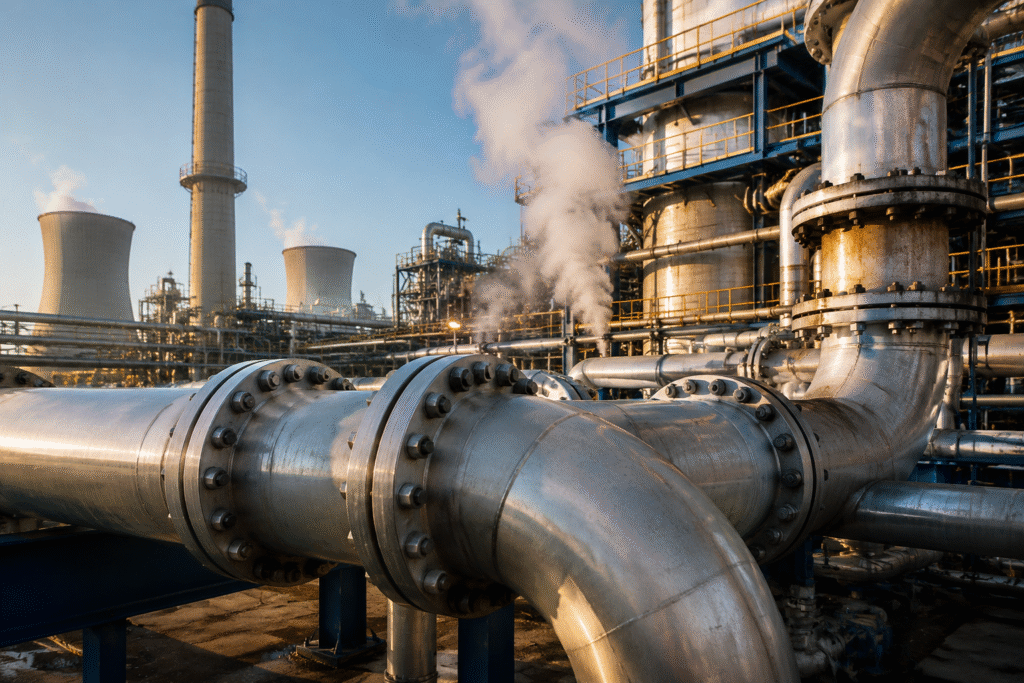
ステンレス鋼管フランジ市場ガイド: 7 データに裏付けられた隠れた利点, 種類, 用途, および ASME B16.5/B16.47 の選択に関する洞察
産業資産所有者が耐食性を優先するため、ステンレス鋼管フランジの需要は増加し続けています, 稼働時間, とライフサイクル価値. グランドビューリサーチによると (2024), 世界の工業用フランジ市場は次のように評価されました。 $5.8 億で 2023 に達すると予測されています $7.2 10億まで 2030, which makes stainless solutions increasingly important for engineers and procurement teams.
For buyers comparing Intriguing, ステンレス, 鋼鉄, Hidden, 利点, 多用途性, 耐久性, ステンレス, フランジ, 種類, 用途, 選ぶ, ASME, B16.5, B16.47 criteria, the real issue is not marketing language. The real issue is selecting the correct alloy, 圧力クラス, 直面している, and standard for long-term reliability.
ステンレス鋼管フランジの需要, 市場構造, と調達の現実
Industrial flange sourcing has become more global and more specification-driven. IBISWorldによると (2024), アジア太平洋地域が占める割合は超過 45% 世界のフランジ生産量の, 中国が最大の製造国である.
This matters because buyers now evaluate not only price, トレーサビリティも, 工場証明書, 加工公差, および輸出コンプライアンス. したがって, qualified manufacturers with ISO 9001:2015 systems and PED-aligned documentation have a measurable advantage in international tenders.
統計局によると (2024), 石油・ガス産業が約 35% 世界のフランジ消費量の. That concentration explains why materials such as 316L, 2205, A182 F304/F316, and high-performance nickel alloys remain strategically important in offshore, 製油所, and sour-service projects.
加えて, the replacement market is growing because aging facilities require shutdown maintenance and piping integrity upgrades. 結果として, 購入者のリクエストが増えています EN 10204 3.1 材料証明書, PMI, 水圧試験の記録, and dimensional inspection reports before approval.
The Hidden Advantages of stainless steel pipe flange products are most visible in total cost of ownership. Stainless materials typically reduce maintenance frequency in chloride-bearing, 湿気が多い, and washdown environments, especially when compared with uncoated carbon steel in aggressive service.
ASME B16.5 そして ASME B16.47 remain central to dimensional compatibility for NPS sizes, 掘削, そしてプレッシャークラス. しかし, engineers must also align flange selection with ASTM material standards such as ASTM A182 鍛造フランジ用と ASTM A240 for corresponding plate products used elsewhere in the system.
マーケットリサーチの将来によると (2024), process piping modernization and energy infrastructure investment are supporting a mid-single-digit annual growth outlook for industrial flow-control components. さらに, stricter safety expectations are pushing procurement teams toward suppliers that can document chemistry, 機械的特性, and heat treatment clearly.
そこが SASA FLANGE fits naturally into the supply chain conversation. と ISO 9001:2015 および PED 2014/68/EU 認証, manufacturing flanges in 304, 316, 904l, 2205, 2507 その他のプレミアムグレード, the company supports projects that require quality assurance rather than simple commodity sourcing.
For global EPCs and distributors, supplier responsiveness also matters. 1/2からのカスタムサイズを提供します" 60まで" 競争力のある工場直販価格, SASA FLANGE helps bridge the gap between standard catalog items and engineered specials.
Buyers should also note the growing importance of marine desalination, power generation retrofits, and water treatment infrastructure. モルドール情報局によると (2024), industrial water infrastructure investments continue to accelerate in Asia and the Middle East, which directly supports demand for corrosion resistant flanges and fittings.
実際に, that means a stainless steel pipe flange is no longer chosen only for premium projects. It is now a mainstream engineered component for facilities that need leak integrity, repeatable assembly, and predictable service life across diverse operating conditions.
ステンレス鋼製管フランジの種類に関する技術ガイド, 隠れた利点, と材料の選択
The best stainless steel pipe flange selection starts with service conditions, not stock availability. 温度, プレッシャー, 塩化物含有量, 循環ロード, ガスケットの互換性, and installation method all influence the correct choice.
ジョン・ピーターソン役, 上級配管エンジニア, 州: “A flange failure rarely begins at the flange alone; it usually begins with a mismatch between material grade, 直面している, ボルト締め, ガスケット, and operating environment.” That observation reflects why experienced buyers review the entire joint assembly rather than flange dimensions alone.
によると ASME B16.5, flange ratings depend on material group and temperature, not only nominal class (ASME, 2020). したがって, クラス 150, 300, 600, or higher must be verified against actual design conditions.
The most common stainless grades in industrial piping are 304, 304l, 316, と316L. 学年 304 offers strong general corrosion resistance and good formability, その間 316 and 316L add molybdenum for improved pitting resistance in chloride exposure.
For more severe service, duplex and super duplex grades provide higher strength and improved resistance to stress corrosion cracking. それに応じて, 2205 そして 2507 are often specified for offshore, 汽水, and chemical systems where austenitic grades may be marginal.
博士として. エレナ・モリス, 材料科学者, 説明する: “The Hidden Advantages of duplex stainless flanges lie in the balance of strength and corrosion resistance, which can reduce wall thickness requirements in the broader piping system.” That balance can lower total installed weight in selected applications.
によると NACE MR0175/ISO 15156, material suitability in sour environments requires careful review of hardness, 冶金, and service limits (ネイス, 2023). したがって, buyers should never assume that a generic stainless grade is automatically acceptable for H2S-bearing service.
Standard flange Types cover a wide range of joint designs and installation methods. しかし, the most common configurations in B2B procurement include the following.
- 溶接ネックフランジ: 高圧に最適, 熱サイクル, and critical service because the tapered hub improves stress distribution.
- スリップオンフランジ: Popular for lower pressure systems and cost-sensitive fabrication because installation is straightforward.
- ソケット溶接フランジ: Used for small bore, high pressure lines where a smooth bore and compact design are needed.
- ねじ付きフランジ: Suitable for limited non-weld applications, especially where hot work must be avoided.
- ブラインドフランジ: 隔離するために使用されます, 検査する, or future-proof systems for expansion.
- ラップジョイントフランジ: Practical where frequent dismantling or alignment flexibility is important.
The Hidden Advantages of choosing the correct facing are often underestimated. Raised Face remains the most common for process plants, while Ring Type Joint is preferred in high-pressure, high-temperature service where metallic sealing performance is required.
For large-diameter lines, ASME B16.47 becomes critical. B16.47 Series A and Series B cover larger flanges than B16.5, and they differ in bolt circle and flange mass, したがって、互換性を慎重に確認する必要があります.
によると ASTM A182/A182M, forged or rolled alloy and stainless steel pipe flanges must meet chemical and mechanical requirements tied to grade designation (ASTM, 2023). This is especially important when comparing low-cost offers that may not provide full material traceability.
Procurement teams should also compare flange selection factors side by side.
- 304/304l: Good general service, 食品加工, 水道管, 軽い化学薬品の使用.
- 316/316l: 優れた耐塩化物性, marine atmosphere exposure, and aggressive process water.
- 904l: Improved resistance in sulfuric and phosphoric acid environments.
- 2205: Higher strength and better chloride SCC resistance for offshore and process plants.
- 2507: Premium option for severe chlorides and seawater handling.
- インコネル, モネル, ハステロイ, チタン: Selected for extreme corrosion, elevated temperature, or specialty chemical duty.
高度な CNC 加工と包括的な品質テストに裏付けられています, SASA FLANGE supplies stainless steel pipe flange products and matching fittings for projects that require dimensional accuracy and documentation discipline. 同社はエルボも製造しています, ティー, 減速機, そしてキャップ, which simplifies package purchasing for EPC contractors and industrial distributors.
Another practical point is availability across flange sizes and classes. Buyers often need sizes from 1/2" 24まで" で ASME B16.5 and larger diameters under ASME B16.47, プラスRF, FF, RTJ, and custom drilling options for replacement work.
オフショア システムに関する DNV ガイダンスによると, material performance must be evaluated together with environmental exposure, design stress, そして製造品質 (DNV, 2023). 言い換えると, premium material alone cannot compensate for poor machining, weld preparation, or uncontrolled heat input during fabrication.
That is why experienced flange manufacturers invest in process control, PMI, and inspection planning. For buyers comparing Flanges for diverse Uses, the most effective approach is a specification matrix that aligns alloy, 標準, 圧力クラス, 直面している, and test requirements before RFQ release.
ASME B16.5, B16.47, ASTM, DIN, ステンレス鋼管フランジの調達に関するEN適合性およびEN適合性
Standards compliance is the backbone of safe piping procurement. Without consistent dimensional and material standards, field fit-up problems, 漏洩リスク, and approval delays increase quickly.
ASME B16.5 covers pipe flanges and flanged fittings for sizes NPS 1/2 NPSを通じて 24 in pressure Classes 150 を通して 2500. 対照的に、, ASME B16.47 NPS の大口径スチールフランジをカバー 26 NPSを通じて 60, which is essential for waterworks, transmission, and large process systems.
ASTM規格は材料要件を定義します, while ASME dimensional standards define geometry and pressure-temperature frameworks. したがって, a complete purchase order should reference both, のような ASME B16.5 クラス 300 RF in ASTM A182 F316L.
European and international buyers also request DIN and EN dimensions. EN 1092 is particularly relevant in projects where PN ratings, European drilling patterns, and PED compliance are mandatory.
- ASME B16.5: Standard flanges up to NPS 24.
- ASME B16.47: Large diameter flanges from NPS 26 に 60.
- ASTM A182: Forged or rolled alloy and stainless steel flange material.
- EN 1092: ヨーロッパのフランジ寸法と圧力指定.
- DIN: Widely used German flange dimensional system in legacy and export projects.
- NACE MR0175/ISO 15156: Material guidance for sour service.
For regulated exports, certification packages can influence supplier qualification as much as price. PED 2014/68/EU ドキュメント, EN 10204 3.1 検査証明書, and lot traceability often determine whether a shipment can move smoothly into an EU-regulated project.
ISO品質管理原則に基づく, process consistency reduces defect risk and improves corrective action effectiveness (ISO, 2015). 結果として, manufacturers with documented controls generally perform better in repeat industrial orders than traders with limited production oversight.
When comparing standards, buyers should review a few common procurement checkpoints.
- Confirm exact standard edition and size range.
- Verify material grade and heat number traceability.
- Match pressure class or PN rating to design code.
- RFなどの対向タイプを指定してください, FF, またはRTJ.
- リクエスト EN 10204 3.1 certificates where needed.
- Define NDE, PMI, 硬度, and hydrotest requirements clearly.
参考までに, engineers can review official ASME standards information at ASME.org. This step is useful when aligning corporate specifications with the latest published code framework.
SASA FLANGE naturally aligns with these procurement expectations. と ISO 9001:2015 および PED 2014/68/EU 認証, and with service coverage across Oil & ガス, 石油化学, 発電, 造船 & 海兵隊, 水処理, と建設, the company supports both standard and project-specific compliance needs.
給仕 50+ 石油を巡る国々 & ガス, 石油化学, 力, 海洋産業, SASA FLANGE also supports custom drilling, 特殊なフェーシング, and multiple material systems from stainless to nickel alloy. That flexibility is valuable when mixed-standard projects include ASME, DIN, JIS, ゴスト, and EN requirements in one package.
The most common cause of avoidable flange procurement errors is incomplete specification language. したがって, buyers should never rely on terms like stainless flange alone when ordering critical line classes.
Application-Based Selection: 油用ステンレス鋼管フランジの選び方, ガス, 化学薬品, 力, 海洋プロジェクト
The best way to Choose a stainless steel pipe flange is by application logic. 業界, 流体化学, 設計圧力, maintenance strategy, and fabrication method all shape the right specification.
石油とガスにおいて, flange reliability directly affects containment and safety. Since the sector consumes around 35% of global flanges according to Statista (2024), it remains the benchmark market for high-specification joint design.
上流および中流プロジェクト向け, 316L の溶接ネック フランジ, 2205, or approved sour-service materials often dominate. 加えて, RTJ facings and higher pressure classes are common where pressure cycling and vibration are present.
石油化学・化学プラントにおいて, corrosion mechanism analysis should lead the material decision. 例えば, 316L may suit moderate chloride service, 一方904L, ハステロイ, or duplex may be more appropriate for stronger acids or mixed corrosive media.
Power generation applications often balance temperature, プレッシャー, and maintenance intervals. その結果, buyers may specify stainless or alloy flanges for boiler auxiliaries, 凝縮水システム, and aggressive water treatment lines.
Marine and shipbuilding environments create a different challenge because salt exposure accelerates pitting and crevice corrosion. したがって, 316L is widely used, but duplex or super duplex can offer better long-term performance in seawater-adjacent systems.
Water treatment projects increasingly use stainless flanges because hygiene, 耐食性, and low maintenance matter in continuous service. モルドール情報局によると (2024), infrastructure expansion in desalination and municipal water treatment is boosting demand for corrosion-resistant piping components.
Selection criteria should be practical and documented.
- メディア構成, 塩化物を含む, 酸, 硫化物, そして固体.
- 動作温度範囲と設計温度範囲.
- Pressure class and code requirement.
- Pipe schedule and flange bore match.
- フェーシングの種類とガスケットの互換性.
- Welding method, site installation limits, そして検査計画.
- Required certificates such as EN 10204 3.1, PED, or PMI records.
The Hidden Advantages of strong supplier engineering support become obvious during custom projects. A manufacturer that can review drawings, confirm drilling, and coordinate fittings with flange packages reduces the risk of field mismatch and procurement delay.
That capability matters for replacement work as well. Legacy systems often need non-standard dimensions, unusual facings, or mixed-code compatibility, especially in brownfield plants and export facilities.
With advanced CNC machining and broad material coverage including 304, 316, 316l, 904l, 2205, 2507, A105, A182, インコネル, モネル, ハステロイ, とチタン, SASA FLANGE supports both standard and custom manufacturing requirements. This is particularly useful when a buyer needs flanges, 肘, ティー, 減速機, and caps from one audited source.
Procurement managers should also compare lead time risk, 単価だけではなく. A lower-cost quote can become expensive if missing documents, poor tolerances, or rework cause schedule slippage during fabrication or shutdown windows.
For stainless steel pipe flange sourcing, a disciplined RFQ should include size, クラス, 直面している, 標準, 材質グレード, 量, テスト, 証明書, 行き先, and packaging requirements. さらに, 写真, マーキングフォーマット, and palletization requirements can prevent downstream logistics issues.
When buyers ask about Versatility and durability, the practical answer is simple. Stainless flanges perform best when their alloy, 標準, and fabrication quality match the actual service envelope.
Future Outlook for Stainless Steel Pipe Flange Supply Chains and Strategic Buying Recommendations
The flange market outlook remains positive because industrial investment is broadening across energy, 水, 海洋, およびプロセス部門. グランドビューリサーチによると (2024), market value is expected to rise from $5.8 億で 2023 に $7.2 10億まで 2030.
同時に, competition is intensifying in standard products. したがって, differentiation is shifting toward technical support, ドキュメントの品質, 材料の入手可能性, and custom machining responsiveness.
IBISWorldによると (2024), Asia-Pacific remains the center of global production capacity. しかし, global buyers now demand stronger visibility into quality systems, 輸出梱包, and inspection readiness before awarding large orders.
Digital procurement will also influence buying behavior. More engineers and sourcing teams now expect downloadable certificates, fast drawing review, and rapid quotation turnaround for ASME B16.5 and B16.47 items.
戦略的に, buyers should focus on four actions.
- Standardize approved flange specifications by service type and corrosion risk.
- Prequalify manufacturers with strong certification and inspection systems.
- Bundle flanges and fittings to reduce vendor complexity.
- Track total cost of ownership instead of only ex-works unit price.
As procurement cycles become shorter, technically capable manufacturers become more valuable. For projects requiring stainless steel pipe flange packages with custom sizes, premium materials, and traceable compliance records, early engagement with experienced suppliers improves both cost control and project certainty.
For engineering teams evaluating current or upcoming demand, 連絡する SASA FLANGE can help clarify material options, 標準の調整, and custom manufacturing feasibility before final RFQ release.
よくある質問
ステンレス鋼フランジにはどのような種類がありますか?
●The most commonly specified stainless steel pipe flange types are weld neck, スリップオン, ソケット溶接, ねじ切りされた, ラップジョイント, そして盲目, そして ASME B16.5 covers most standard sizes through NPS 24.
●Each design serves a different duty because weld neck flanges handle stress and thermal cycling well, while slip on flanges simplify fabrication and blind flanges isolate lines for maintenance.
●重要なサービス用, buyers should match flange type with material grade, 圧力クラス, 直面している, コード要件, and for engineered support on custom stainless flange packages, のような確立されたメーカーと協力する SASA FLANGE improves fit-up accuracy and documentation quality.
どちらが良いですか 304 または 420 ステンレス鋼?
●ほとんどのフランジ用途に対応, 304 一般にそれよりも優れています 420 なぜなら 304 offers stronger corrosion resistance and weldability, その間 420 is a martensitic grade used more often where hardness matters.
●In practical piping systems, 304 and 304L are widely used for water, 食べ物, および軽化学サービス, 一方 420 is less common for pressure-retaining flange joints due to its different metallurgical behavior.
●If chloride exposure, 海洋の雰囲気, or aggressive process water is present, buyers should often move beyond both options and evaluate 316L or duplex grades with a qualified supplier such as SASA FLANGE.
ステンレス鋼を最も多く使用している産業は何ですか?
●Across flange demand, oil and gas is the largest single end-use sector, そしてStatistaによると (2024), それはおよそを占めます 35% 世界のフランジ消費量の.
●しかし, stainless steel usage is also high in food processing, 医薬品, 海洋システム, 水処理, and chemical processing because corrosion resistance and hygiene are essential in those sectors.
●When evaluating industry demand, buyers should focus on actual media, maintenance interval, and regulatory requirements rather than sector labels alone, especially for projects involving ASME B16.5 または B16.47 フランジ.
3種類のフランジとは何ですか?
●The three flange types most commonly referenced in introductory discussions are weld neck, スリップオン, そして盲目, although industrial catalogs contain several more standard designs.
●高圧および周期的なサービスにはウェルドネック フランジが推奨されます, slip on flanges are widely used for easier alignment and welding, and blind flanges seal line ends for inspection or future expansion.
●For real-world procurement, engineers should not stop at these three categories because facing type, 圧力クラス, and material grade are equally important to joint reliability.
どちらかを選択するにはどうすればよいですか ASME B16.5 そして ASME B16.47 for a stainless steel pipe flange?
●ASME B16.5 通常、NPS のフランジに適用されます 1/2 NPSへ 24, その間 ASME B16.47 NPS からの大口径をカバー 26 NPSへ 60 and includes Series A and Series B dimensions.
●The correct standard depends on nominal size, 圧力クラス, mating flange compatibility, ボルトサークル, そしてプロジェクトコード, so buyers must verify dimensional interchangeability before ordering.
●For large-diameter replacement work or custom drilling requirements, experienced manufacturers like SASA FLANGE can help confirm standard alignment and avoid costly field mismatch.
What affects stainless steel pipe flange price the most?
●ステンレス鋼管フランジの価格は主に材料グレードに影響されます, フランジタイプ, 圧力クラス, サイズ, 直面している, テスト要件, and certificate level such as EN 10204 3.1.
●グランドビューリサーチによると (2024), the broader flange market is growing steadily, and this keeps pricing sensitive to alloy surcharges, machining demand, and regional supply conditions.
●見積もりを正確に比較するには, buyers should request a fully itemized offer that includes standard, 学年, 寸法, 検査範囲, 梱包, and lead time rather than comparing unit price alone.
関連投稿

オリフィスフランジの定義, 詳細と ASME B16.36 フランジの概要: 市場データ, 選択ガイドとコンプライアンスに関する洞察
世界の工業用フランジ市場は次のように評価されました。 $5.8 十億…

ブラックディスポフランジ市場ガイド: 材料, 3.5″ 互換性, キッチン シンク フランジの B2B 調達データ
キッチン設備の購入者として黒色の使い捨てフランジの需要が高まっています…