
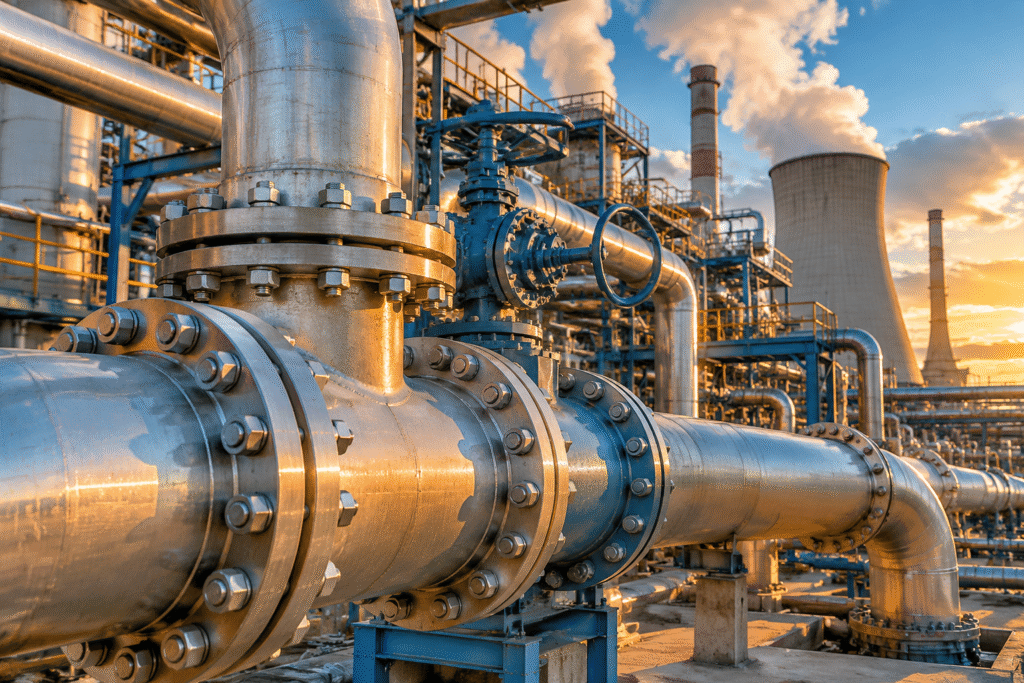
Stainless Steel Flange Supply Chains and Buying Priorities
の ステンレス鋼管フランジ market is expanding with industrial capex, プラントのアップグレード, より厳しい信頼性目標. グランドビューリサーチによると (2024), 世界の工業用フランジ市場は次のように評価されました。 $5.8 億で 2023 に達すると予測されています $7.2 10億まで 2030, which makes stainless steel pipe flange sourcing a strategic decision for engineers and procurement teams.
For buyers comparing the most common materials, hidden advantages often come from corrosion performance, 溶接性, 検査トレーサビリティ, and standards compliance rather than unit price alone. したがって, this guide explains intriguing stainless steel pipe flange types, 用途, selection criteria, and compliance requirements for industrial service.
ステンレス鋼管フランジの需要, 市場の成長, and Procurement Priorities
Global demand remains strong because flanges sit at every critical junction of pressure piping, 回転装置, and field assembly. IBISWorldによると (2024), アジア太平洋地域が占める割合は超過 45% 世界のフランジ生産量の, 中国が最大の製造国である.
That supply concentration matters for B2B buyers because lead time, mill source stability, and testing capability directly affect project schedules. 結果として, qualified manufacturers with export experience and documented quality systems are gaining share.
End-use concentration is equally important. 統計局によると (2024), 石油・ガス産業が約 35% 世界のフランジ消費量の, while petrochemical, 発電, 海洋, and water treatment remain major buyers.
これらの分野では, downtime is expensive and leakage risk is unacceptable. その結果, engineers usually prioritize correct pressure class, ガスケットの互換性, and material chemistry over the lowest quote.
The most common stainless grades for a stainless steel pipe flange are 304, 304l, 316, と316L. しかし, aggressive chloride, 酸っぱい, or high-temperature service often pushes specifications toward 904L, デュプレックス 2205, スーパーデュプレックス 2507, またはインコネルなどのニッケル合金, モネル, そしてハステロイ.
マーケットリサーチの将来によると (2024), corrosion-resistant alloy demand in process industries is increasing at over 5% annually due to harsher media and longer design life targets. さらに, 購入者のリクエストが増えています EN 10204 3.1 ドキュメント, PMI, and third-party inspection before release.
Standards also shape buying behavior. ASME B16.5 NPSをカバーします 1/2 を通して 24, その間 ASME B16.47 より大きな直径に対応, そして ASTM A182 defines forged alloy and stainless flange materials for high-temperature service (ASME; ASTM, 2023).
Because project teams work across global specifications, many RFQs now include ANSI, DIN, JIS, ゴスト, とEN 1092 requirements in the same package. したがって, suppliers need machining flexibility and strong document control.
と ISO 9001:2015 および PED 2014/68/EU 認証, SASA FLANGE supports international buyers that need stainless steel flanges, 炭素鋼フランジ, 合金フランジ, and pipe fittings under recognized compliance frameworks. さらに, the company manufactures in 304, 316, 316l, 904l, 2205, 2507, A105, A182, チタン, およびその他のプレミアムグレードのオイル & ガス, 石油化学, 力, 海兵隊, および水処理プロジェクト.
調達管理者向け, this means supplier evaluation should go beyond brochures. It should include machining capacity, ヒートトレーサビリティ, NDT availability, 寸法検査, and responsiveness on custom drawings.
ステンレス鋼製管フランジの種類に関する技術ガイド, 材料, と隠れた利点
The most intriguing aspect of a stainless steel pipe flange is that the visible geometry tells only part of the story. The hidden advantages usually come from metallurgy, flange facing accuracy, bore finish, and how well the flange matches the actual process condition.
ジョン・ブリーン役, 上級配管エンジニア, 州: “A flange that is correct on paper can still fail in service if material selection ignores chlorides, 熱サイクル, or bolt load retention.” That is why serious buyers compare pressure class, alloy chemistry, ガスケットの設計, and installation method together.
Among the most common types, weld neck flanges provide superior stress distribution because the tapered hub transitions load into the pipe wall. Slip on flanges reduce fabrication cost and simplify alignment, while blind flanges isolate systems for testing, メンテナンス, or future tie-ins.
Threaded flanges remain useful where welding is restricted, especially on small-bore utility lines. Socket weld flanges are also common in high-pressure small-diameter piping, although crevice-sensitive services may require careful review.
- ウェルドネック: 高圧に好ましい, 循環ロード, 重要なプロセスライン.
- スリッポン: economical for low to moderate pressure systems and easier field fit-up.
- 盲目: used for line closure, 水圧試験, そして今後の拡張ポイント.
- ネジ付き: suitable for non-weld installations on small sizes.
- ソケットウェルド: selected for small-bore high-pressure service.
- ラップジョイント: useful where frequent dismantling and rotational alignment are required.
Material selection drives long-term performance. 学年 304 and 304L remain the most common austenitic options for general industrial service because they balance cost, 成形性, 耐食性.
学年 316 316Lにモリブデンを添加, which improves pitting resistance in chloride environments. したがって, 316L is often preferred for coastal plants, 水処理スキッド, 食品加工, and many chemical services.
For more aggressive conditions, 904L improves resistance to reducing acids and chlorides. 二重 2205 そしてスーパーデュプレックス 2507 deliver higher strength and better chloride stress corrosion resistance, which can reduce wall thickness in selected services.
モルドール情報局によると (2024), stainless and duplex materials are gaining share in desalination and offshore systems due to longer maintenance intervals and corrosion control benefits. 加えて, NACE MR0175 そして ISO 15156 remain key references where sour service is involved (NACE/ISO, 2023).
Surface finish and sealing face matter as much as alloy choice. Raised face is the most common facing in ASME B16.5 プロセス配管, while RTJ is selected for high-pressure, 高温, and hydrocarbon containment duties.
Flat face flanges are used where mating equipment, such as cast iron valves or pumps, cannot tolerate bending loads from raised face assembly. その結果, the wrong facing can create leakage or equipment stress even when the metal grade is correct.
According to ASME guidance and industry field data, bolted joint integrity issues account for a significant portion of fugitive emissions events in process plants (ASME, 2023). したがって, 寸法精度, セレーション仕上げ, and proper bolt preload are critical quality attributes.
博士として. エレナ・モリス, 材料科学者, 州: “The best flange choice is not the highest alloy by default; it is the alloy that matches chloride content, 温度, pH, and fabrication method without overengineering the asset.” That principle helps buyers control lifecycle cost instead of simply chasing premium grades.
高度な CNC 加工と包括的な品質テストに裏付けられています, SASA FLANGE 1/2からのカスタムサイズを提供します" 60まで" across ANSI B16.5, ANSI B16.47, DIN, JIS, ゴスト, とEN 1092 要件. さらに, 会社は肘をサポートします, ティー, 減速機, and caps for buyers who prefer consolidated piping packages.
For project teams comparing types and uses, the following technical checkpoints usually determine whether a flange will perform as intended:
- 圧力クラスと設計温度.
- Pipe schedule and bore matching.
- Corrosion allowance and media composition.
- フェーシングタイプ: RF, FF, RTJ, または特別な仕上げ.
- Welding procedure compatibility and HAZ sensitivity.
- Inspection scope including PMI, ユタ州, PT, そして寸法チェック.
- などのドキュメント EN 10204 3.1, MTC, and hydrotest records.
ISO および PED コンプライアンス慣行に準拠, traceability and material identification become more important as service severity rises (ISO; PED, 2024). 結果として, established manufacturers that can manage heat numbers, テストレポート, and export packaging reduce project risk substantially.
ASME, ASTM, DIN, およびステンレス鋼管フランジの品質を定義する EN 規格
A stainless steel pipe flange should never be purchased on dimensions alone. It must align with the applicable manufacturing, 材料, 圧力-温度, 検査, and certification standards for the intended service.
ASME B16.5 is the primary dimensional standard for flanges from NPS 1/2 を通して 24. ASME B16.47 より大きな直径までカバー範囲を拡大, その間 ASME B16.9 governs many associated butt weld fittings used in the same piping package.
Material compliance often starts with ASTM A182 for forged stainless and alloy flanges. In plate-based or fabricated applications, specifications may also reference ASTM A240 or project-specific mill requirements.
ヨーロッパのプロジェクトでは頻繁にENが必要になります 1092 flange dimensions and PED 2014/68/EU conformity. 対照的に, mixed international projects may combine ASME design with EN documentation and customer-specific QA plans.
- ASME B16.5: dimensional standard for most common flange sizes and classes.
- ASME B16.47: large diameter flange dimensions.
- ASTM A182: forged or rolled alloy and stainless materials for flanges.
- ASME B16.9: butt weld fitting dimensions for elbows, ティー, 減速機, そしてキャップ.
- EN 1092: European flange standard for PN-rated systems.
- NACE MR0175 / ISO 15156: sour service material requirements.
According to ASTM and ASME standard frameworks, 寸法公差, マーキング, and material traceability are not optional extras. They are core compliance requirements that affect fit-up, 安全性, and client acceptance (ASTM; ASME, 2023).
オフショア用, 海洋, and energy infrastructure, additional owner specifications may invoke DNV, ノルウェー, or project-specific corrosion allowances. したがって, procurement teams should verify the full data sheet before comparing quotations.
ベンダーを評価するとき, engineers should request clear confirmation of these items:
- 材料グレードと二重認証, such as 304/304L or 316/316L.
- 圧力クラス, 対面タイプ, そしてボアスケジュール.
- Heat treatment and corrosion testing scope where required.
- PMI availability for stainless, デュプレックス, およびニッケル合金.
- EN 10204 3.1 または 3.2 検査書類.
- マーキング, パッキング, および輸出コンプライアンス.
マイケル・トレント役, 産業市場アナリスト, 州: “The quality gap between flange suppliers is rarely visible in a catalog; it appears in documentation discipline, 寸法の一貫性, and response to nonconformance.” That observation aligns with how EPC buyers actually score vendors.
と ISO 9001:2015, PED 2014/68/EU, とAD 2000 資格, SASA FLANGE is positioned for buyers that need documented quality assurance and export-ready support. さらに, 給仕 50+ 石油を巡る国々 & ガス, 石油化学, 力, and Marine industries demonstrates familiarity with international specifications and third-party inspection expectations.
Buyers can also review supplier capability directly through SASA FLANGE サポートに連絡する when RFQs include nonstandard drilling, custom forgings, or mixed-material packages. 多くのプロジェクトで, that early technical review prevents costly mismatches between flange class, ガスケットの種類, and actual operating envelope.
権威ある参考資料として, engineers can consult the applicable dimensions and pressure-temperature rules at ASME. しかし, the final procurement decision should always align with the project piping class, client specification, and approved vendor list.
How to Choose Flanges for Oil and Gas, 化学薬品, 力, 海兵隊, および給水システム
Choosing the right stainless steel pipe flange starts with the service condition, not the catalog photo. プレッシャー, 温度, 塩化物含有量, maintenance philosophy, and installation method determine whether the most common option is also the correct one.
In oil and gas facilities, weld neck and RTJ flanges dominate critical hydrocarbon service because they handle pressure, 熱サイクル, and sealing integrity well. 統計局によると (2024), この分野では約 35% グローバルフランジ体積の, so specification discipline remains especially important.
石油化学・化学プラントにおいて, 316l, 904l, or alloy grades may be needed where media includes chlorides, 酸, or mixed-phase streams. したがって, corrosion review should include upset conditions and cleaning chemicals, not only normal operation.
Power generation systems often require high-pressure classes, controlled bolting, and repeatable gasket seating. In steam or thermal cycling service, flange alignment and weld quality can affect long-term reliability as much as base material selection.
Marine and shipbuilding applications demand strong resistance to seawater exposure, スプラッシュゾーン, and atmospheric corrosion. その結果, 316l, デュプレックス 2205, そしてスーパーデュプレックス 2507 frequently appear in desalination, バラスト, オフショア, and deck piping systems.
Water treatment systems may use slip on, ねじ切りされた, or weld neck flanges depending on pipe size, メンテナンスアクセス, and media chemistry. Although the process pressure may be lower, chloride concentration and disinfection chemistry can still drive alloy upgrades.
- Choose 304/304L for general utility and mild corrosive service.
- Choose 316/316L for chloride exposure, coastal environments, and broader chemical resistance.
- Choose 904L for stronger acid and chloride resistance in specialized plants.
- 選ぶ 2205 または 2507 when higher strength and SCC resistance are required.
- Choose weld neck for critical process piping and cyclic service.
- Choose slip on where economy and easier installation are priorities.
- Choose blind flanges for isolation, テスト, and expansion planning.
グランドビューリサーチによると (2024), industrial investment in energy, 水, and process infrastructure continues to support flange demand across both replacement and greenfield projects. 結果として, buyers increasingly seek suppliers that can deliver flanges and fittings together, reducing interface risk.
SASA FLANGE supports custom manufacturing for unusual drilling patterns, 特別な厚さ, and project-specific dimensions, 肘も供給しながら, ティー, 減速機, and caps in matching materials. さらに, the company can support 304, 316, 316l, 904l, 2205, 2507, A182, チタン, and other alloys for integrated package procurement.
For buyers comparing price, the cheapest flange may become the costliest if it causes weld repairs, 漏れ, or delayed inspection release. したがって, total installed cost should include machining quality, テスト記録, logistics reliability, and after-sales technical response.
When RFQs involve custom sizes from 1/2" 60まで" 競争力のある工場直販価格, early discussion improves manufacturability and lead time. Procurement teams can coordinate directly through SASA FLANGE to align dimensions, 標準, and documentation before order placement.
Future Outlook for Stainless Steel Pipe Flange Supply Chains and Strategic Buying
The outlook for the stainless steel pipe flange market remains positive because industrial operators continue to replace aging piping assets and invest in corrosion-resistant systems. グランドビューリサーチによると (2024), 市場は~から成長すると予想される $5.8 億で 2023 に $7.2 10億まで 2030.
同時に, supply chains are becoming more selective. Buyers now expect shorter lead times, stronger QA documentation, and better visibility into raw material sourcing.
IBISWorldによると (2024), アジア太平洋地域では以上のものを生産しています 45% グローバルフランジ出力の, which means supplier qualification in China and the wider region will remain strategically important. しかし, procurement teams should balance price advantage with verification of certification scope, 加工品質, 輸出経験.
Digital procurement is also changing vendor evaluation. More RFQs now request full technical submittals, drawing confirmation, PMIレポート, and shipping milestones before payment approval.
エンジニアリング主導のバイヤー向け, several recommendations stand out:
- 承認されたフランジ タイプをサービス カテゴリごとに標準化.
- Use lifecycle cost instead of piece price as the comparison basis.
- Require EN 10204 3.1 and heat traceability for stainless and alloy orders.
- Audit suppliers on machining, 検査, and packaging practices.
- Bundle flanges and fittings where possible to reduce interface errors.
さらに, hidden advantages increasingly come from supplier responsiveness and technical clarity. A manufacturer that flags a bore mismatch or facing conflict before production can save weeks of rework at site.
That is why experienced exporters remain valuable partners, especially for EPC packages and shutdown-critical replacements. For projects requiring certified stainless steel pipe flange supply, custom forgings, または混合材料パッケージ, と関わる SASA FLANGE early can support faster technical alignment and cleaner procurement execution.
よくある質問
ステンレス鋼フランジにはどのような種類がありますか?
●溶接ネックを含むさまざまなタイプのステンレス鋼フランジ, スリップオン, 盲目, ねじ切りされた, ソケット溶接, およびラップジョイントの設計, と ASME B16.5 covering the most common industrial dimensions.
●ウェルドネックフランジは高圧および周期的サービスに適しています, while slip on flanges are often chosen for easier alignment and lower fabrication cost in moderate-duty pipe systems.
●For projects requiring the right mix of types, 標準, and material grades such as 304, 316, 316l, 2205, または 2507, のような確立されたメーカーと協力する SASA FLANGE helps ensure dimensional accuracy and traceable documentation.
どちらが良いですか 304 または 420 ステンレス鋼?
●学年 304 is generally better for stainless steel pipe flange applications because it offers stronger corrosion resistance and weldability than 420 in most industrial piping environments.
●学年 420 is a martensitic stainless steel that provides higher hardness, but it is far less common for process flanges because bolted piping service usually values corrosion resistance over blade-like wear properties.
●フランジ購入者向け, 304 または 316 grades are the most common choices under ASTM A182 and related specifications, and material selection should be confirmed against media, 温度, and fabrication requirements.
ステンレス鋼を最も多く使用している産業は何ですか?
●Process industries and infrastructure sectors consume very large stainless volumes, but oil and gas remains the biggest flange end-user, accounting for about 35% Statista による世界のフランジ消費量 (2024).
●Stainless steel is also widely used in petrochemical, 食品加工, 水処理, 海洋, 製薬, and power generation applications because it combines corrosion resistance with good fabricability.
●If your project serves corrosive or regulated environments, selecting a supplier that can provide EN 10204 3.1 レポート, PEDのサポート, and correct flange facing options is the most practical approach.
3種類のフランジとは何ですか?
●一般的な業界の議論で最もよく参照される 3 種類のフランジは、ウェルドネックです。, スリップオン, and blind flanges because they cover most pressure piping assembly needs.
●過酷な使用にはウェルドネックフランジが推奨されます, slip on flanges are used for easier installation and cost control, and blind flanges are installed to close line ends or isolate equipment during testing.
●In actual procurement, engineers should also review threaded, ソケット溶接, and lap joint options because the correct stainless steel pipe flange type depends on service pressure, メンテナンスアクセス, コード要件.
ステンレス鋼管フランジの価格に影響を与えるもの?
●ステンレス鋼管フランジの価格は主に合金グレードに影響されます, サイズ, 圧力クラス, 対面タイプ, 原材料費, 加工時間, および次のような認定要件 EN 10204 3.1 または PED ドキュメント.
●例えば, a 316L weld neck flange usually costs more than a 304 slip on flange because molybdenum alloying, より重い機械加工, and more demanding service conditions increase total production cost.
●To get an accurate quotation, buyers should provide size, スケジュール, 標準, クラス, 材料, 直面している, 量, およびテスト要件, and they can contact SASA FLANGE for project-based pricing.
産業プロジェクト用のフランジ メーカーまたはフランジ ベンダーを選択するにはどうすればよいですか?
●A reliable flange manufacturer should demonstrate ISO 9001:2015 品質管理, standards compliance such as ASME B16.5 またはEN 1092, and documented capability in the materials your piping class requires.
●IBISWorldによると (2024), アジア太平洋地域では以上の生産が行われています 45% グローバルフランジ出力の, so vendor selection should focus on traceability, 検査規律, 輸出梱包, and lead-time reliability rather than geography alone.
●重要なプロジェクトの場合, choose a vendor that can supply flanges and fittings together, support custom sizes from 1/2 インチから 60 インチ, and respond quickly to technical clarifications before production starts.
関連投稿

オリフィスフランジの定義, 詳細と ASME B16.36 フランジの概要: 市場データ, 選択ガイドとコンプライアンスに関する洞察
世界の工業用フランジ市場は次のように評価されました。 $5.8 十億…

ブラックディスポフランジ市場ガイド: 材料, 3.5″ 互換性, キッチン シンク フランジの B2B 調達データ
キッチン設備の購入者として黒色の使い捨てフランジの需要が高まっています…