
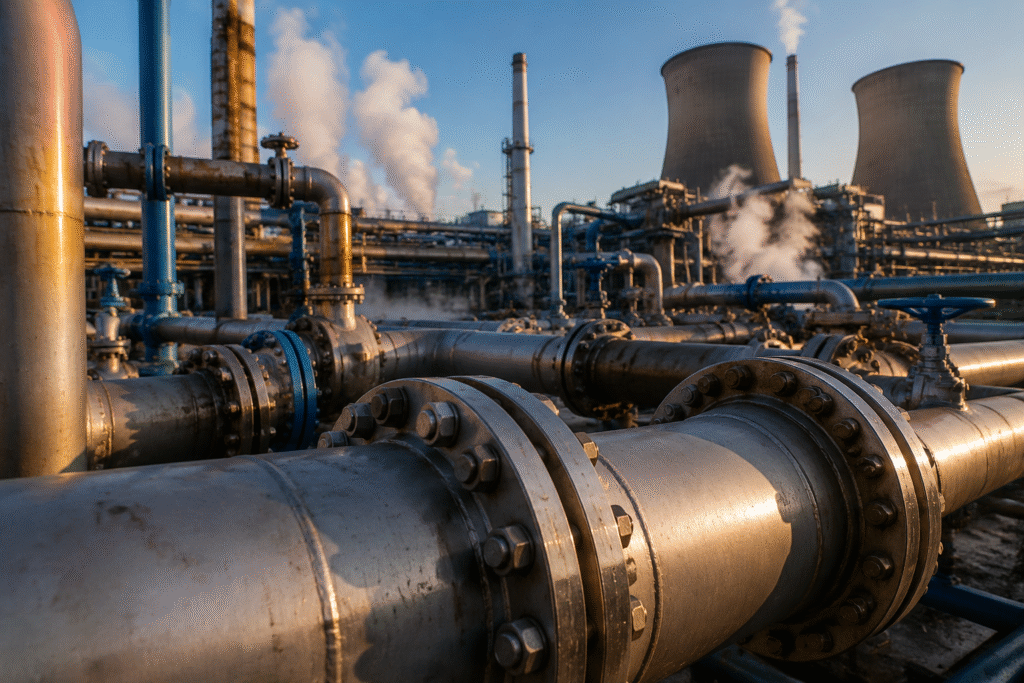
ステンレス鋼管フランジ: 7 データに裏付けられた利点, 種類, 用途, 産業用バイヤー向けの選択ガイド
ステンレス鋼のパイプフランジは、現代のプロセス配管の中核コンポーネントであり続けています, そしてその市場の重要性はエネルギー全体にわたって拡大し続けています, 化学薬品, 海洋, と水システム. グランドビューリサーチによると (2024), 世界の工業用フランジ市場は次のように評価されました。 $5.8 億で 2023 に達すると予測されています $7.2 10億まで 2030, confirming strong long-term demand for engineered flange solutions.
調達チーム向け, the intriguing and often hidden advantages of stainless steel pipe flange products include corrosion resistance, 耐久性, 圧力の完全性, とライフサイクル価値. したがって, engineers increasingly choose stainless, 鋼鉄, and alloy flange systems based not only on initial cost, but also on reliability, 規格準拠, and total operating risk.
ステンレス鋼管フランジの需要を支える産業市場の原動力
Global infrastructure investment and plant modernization are reshaping the flange supply chain. IBISWorldによると (2024), アジア太平洋地域が占める割合は超過 45% 世界のフランジ生産量の, 中国が最大の製造国である, which directly affects lead times, 調達戦略, and price competitiveness.
Demand concentration also matters for buyers. 統計局によると (2024), 石油・ガス産業が約 35% 世界のフランジ消費量の, making energy projects one of the strongest demand drivers for stainless steel pipe flange manufacturing.
These numbers explain why buyers now require stronger documentation, more predictable metallurgy, and better delivery performance. 結果として, qualified suppliers must provide traceability, 圧力クラスのコンプライアンス, and consistent machining quality across standard and custom flange orders.
産業サービスにおいて, a flange is not a simple connector. It is a pressure-retaining component that affects sealing, メンテナンスアクセス, 点検頻度, and shutdown risk throughout the life of a piping system.
モルドール情報局によると (2024), 淡水化の成長, LNG, and chemical processing is increasing demand for corrosion-resistant piping materials worldwide. さらに, ステンレスグレードなど 304, 316, 316l, 904l, 2205, そして 2507 are gaining wider use where chloride exposure, 洗浄サイクル, or mixed media create long-term corrosion concerns.
For buyers comparing flange manufacturers, technical breadth now matters more than catalog size alone. A capable supplier should cover ASME B16.5, ANSI B16.47, DIN, JIS, ゴスト, とEN 1092 dimensions while supporting forged materials under ASTM and ASME specifications.
That requirement is especially relevant in EPC procurement and MRO replacement work. In those environments, size mismatch, incorrect facing, or incomplete mill documentation can delay projects faster than raw material shortages.
SASA FLANGE operates in this market with a factory-focused model that aligns with engineering and procurement priorities. と ISO 9001:2015 および PED 2014/68/EU 認証, SASA FLANGE supports projects requiring stainless steel flanges, 炭素鋼フランジ, 合金フランジ, and pipe fittings in global industrial applications.
高度な CNC 加工と包括的な品質テストに裏付けられています, 同社はフランジを製造しています 304, 316, 316l, 904l, 2205, 2507, A105, A182, インコネル, モネル, ハステロイ, とチタン. さらに, buyers can review the company profile at https://sasaflange.com/about-us/ and product scope at https://sasaflange.com/products/.
マーケットリサーチの将来によると (2024), industrial stainless demand continues to rise in processing environments that require low maintenance and long service intervals. したがって, the versatility of stainless flange systems is becoming a strategic procurement factor rather than a premium option.
For buyers evaluating hidden advantages, one of the most important is lifecycle predictability. A correctly selected stainless steel pipe flange can reduce corrosion-related replacement frequency, lower leakage risk, and simplify inspection planning over years of operation.
ステンレス鋼製管フランジの種類に関する技術ガイド, 材料, と隠れた利点
The main types of stainless steel pipe flange products include weld neck, スリップオン, 盲目, ソケット溶接, ねじ切りされた, ラップジョイント, ロングウェルドネックデザイン. Each flange type serves a different purpose based on pressure class, 熱サイクル, 配管応力, およびメンテナンス要件.
ASME B16.5 寸法をカバーします, 公差, 圧力温度定格, マーキング, NPSまでのフランジのテスト 24, その間 ASME B16.47 extends coverage for larger diameters (ASME, 2023). したがって, flange selection should start with design code and service condition, not just price or availability.
As Gary Haws, piping engineer and refinery consultant, 州: “A flange failure rarely begins at the gasket alone; it usually begins with a poor match between material, 直面している, ボルト締め, and service condition.” That observation remains highly relevant in corrosive service and high-cycle thermal systems.
The most common stainless grades for industrial flange applications are 304/304L and 316/316L. しかし, more severe conditions may require 904L, デュプレックス 2205, スーパーデュプレックス 2507, or nickel alloys where chlorides, 酸, or crevice corrosion risk exceed austenitic steel limits.
According to ASTM material guidance and common process industry practice, 304 offers good general corrosion resistance and cost efficiency. 対照的に, 316 316Lにモリブデンを添加, which improves resistance in chloride-containing environments and many chemical services (ASTM, 2023).
NACE腐食ガイダンスによる, chloride stress corrosion cracking risk increases significantly as temperature and chloride concentration rise (ネイス, 2023). したがって, engineers often choose duplex or higher-alloy grades instead of standard 304 in offshore, brackish, or aggressive water applications.
- 304 / 304l: general industrial use, 食品プロセスシステム, low to moderate corrosion exposure.
- 316 / 316l: 化学処理, marine-adjacent service, pharmaceutical and higher chloride environments.
- 904l: strong resistance in certain acidic and chloride-rich applications.
- 2205 デュプレックス: higher strength, 耐孔食性の向上, good option for offshore and produced water systems.
- 2507 スーパーデュプレックス: severe chloride service, subsea-related systems, high pitting resistance equivalent requirements.
圧力クラスの選択も同様に重要です. Common ratings include Class 150, 300, 600, 900, 1500, そして 2500, and the allowable pressure changes with temperature and material group as defined by ASME B16.5 (ASME, 2023).
Facing choice affects sealing performance and maintenance behavior. Raised face remains common in process plants, while ring type joint is preferred in high-pressure and high-temperature services where metal-to-metal gasket seating is required.
博士として. ヘレン・モリス, materials scientist specializing in process metallurgy, 州: “The durability of a stainless flange depends less on the word stainless and more on alloy chemistry, fabrication quality, and the real chemistry of the process stream.” That quote highlights why buyers should request application-based material review.
実務的には, a stainless steel pipe flange should be evaluated against several engineering variables. These variables determine whether the flange will perform well over long operating cycles.
- 流体化学, 塩化物を含む, 硫黄化合物, 酸, および洗浄剤.
- 動作温度および設計温度.
- Design pressure and surge conditions.
- Piping vibration, 外部負荷, そして熱膨張.
- 必要な規格, のような ASME B16.5, EN 1092, or DIN flange dimensions.
- Documentation level, 含む EN 10204 3.1 材料証明書.
ISO品質管理原則に基づく, documented process control improves consistency in repeat manufacturing (ISO, 2023). その結果, suppliers with CNC machining, PMI機能, 寸法検査, and hydro or NDT support provide stronger risk control for project buyers.
SASA FLANGE supports this requirement through a broad material range and custom manufacturing capability. 1/2からのカスタムサイズを提供します" 60まで" 競争力のある工場直販価格, the company serves projects in Oil & ガス, 石油化学, 力, 造船 & 海兵隊, 水処理, と建設.
For buyers who need technical review, 図面, or project quotations, direct communication is often the fastest route to specification clarity. したがって, project teams can contact SASA FLANGE for dimensional confirmation, grade selection, そして配送計画.
基準, コンプライアンス, and Quality Requirements for Stainless Steel Pipe Flange Supply
産業調達において, compliance is not optional. A stainless steel pipe flange must match the governing dimensional standard, 材質仕様, 圧力クラス, 面の詳細, and testing requirements before it reaches site.
The most frequently referenced dimensional standards include ASME B16.5, ASME B16.47, DIN, とEN 1092. Material specifications often align with ASTM A182 鍛造フランジ用と ASTM A240 for plate products, depending on component type and manufacturing route (ASTM, 2023).
国際的なプロジェクトの場合, regional code alignment can drive supplier selection. EN 1092 is commonly required in European and export projects, while PED 2014/68/EU applies to pressure equipment placed on the EU market under defined conformity rules.
欧州委員会の PED 枠組みによると, pressure-retaining components must meet essential safety requirements and conformity procedures where applicable (PED, 2014). したがって, ドキュメント, トレーサビリティ, and marking are critical procurement checkpoints.
Buyers should also understand that standard compliance does not eliminate the need for project-specific requirements. End users may add NACE MR0175, DNV, ノルウェー, or customer inspection clauses for sour service, offshore use, or critical process systems.
- ASME B16.5: flanges and flanged fittings up to NPS 24.
- ASME B16.47: 大径鋼製フランジ.
- ASME B16.9: 工場製鍛突合せ溶接継手.
- ASTM A182: 鍛造または圧延合金およびステンレス鋼の管フランジ, 継手, バルブ, と部品.
- EN 1092: ヨーロッパのフランジ寸法と圧力指定.
- NACE MR0175: material requirements for sour service environments.
Material certificates also influence buyer confidence. EN 10204 3.1 certification provides inspection documentation linked to heat number and test records, which supports traceability and auditability during project execution.
According to DNV practice for offshore procurement, material traceability and manufacturing control are foundational to pressure component reliability (DNV, 2023). 結果として, quality assurance systems should include heat traceability, 寸法検証, and where required, PMI and NDT review.
SASA FLANGE integrates these expectations into its export-oriented production model. と ISO 9001:2015, PED 2014/68/EU, とAD 2000 資格, the company supports industrial buyers seeking compliant flange and fitting supply for regulated markets.
Quality also depends on manufacturing discipline. Machining accuracy for bolt holes, ハブの寸法, bore finish, and facing serration directly affects fit-up and sealing, especially when flange assemblies are installed across multiple vendor packages.
エンジニア向け, the hidden advantages of working with a qualified flange vendor include fewer NCRs, better fit-up control, and improved document readiness for client inspection. Those factors are often more valuable than small unit-price differences on critical path projects.
Buyers evaluating manufacturers can also review recognized industry sources such as https://www.asme.org/ for current standards guidance. 並行して, they can request technical support and quotations through https://sasaflange.com/contact-us/.
適切なオイル用ステンレス鋼管フランジの選び方, ガス, 化学薬品, 力, および海洋用途
Choosing the correct stainless steel pipe flange requires a structured review of service conditions, コード要件, とメンテナンス戦略. しかし, many procurement delays begin when teams compare only nominal size and price without checking metallurgy, 直面している, and pressure-temperature limits.
石油とガスにおいて, フランジの選択は圧力クラスに依存することが多い, 酸っぱいサービスの暴露, と腐食代の考え方. 上流・中流用, engineers may specify forged ASTM A182 F316/F316L, デュプレックス 2205, or higher-alloy materials where chlorides and CO2 create aggressive conditions.
統計局によると (2024), 石油とガスは周囲を表します 35% 世界のフランジ消費量の, so this sector heavily influences stocking patterns and lead-time planning. したがって, buyers serving energy projects should align their RFQs with actual service chemistry and inspection requirements from the start.
石油化学・化学プラントにおいて, media compatibility drives most decisions. 316L often performs well in moderate corrosive service, 一方904L, ハステロイ, モネル, or other high-alloy options may be necessary for stronger acids, mixed chlorides, または温度の上昇.
Power generation creates different demands. High-temperature cycling, スチームサービス, and shutdown maintenance schedules can shift preference toward weld neck flange designs that better manage stress at the pipe-to-flange transition.
Marine and shipbuilding applications prioritize seawater resistance, コンパクトなメンテナンス計画, and dependable supply. 結果として, duplex stainless and carefully selected 316L flanges are common where washdown, salt exposure, and confined installation conditions increase corrosion risk.
- Confirm design code and flange standard before sourcing.
- Match material grade to actual media, not just industry habit.
- Check pressure class against design temperature.
- Select the correct facing for gasket type and leak-tightness target.
- リクエスト EN 10204 3.1 certificates for traceable projects.
- Verify whether NACE MR0175, PED, or client inspection applies.
- Review required quantity, delivery window, and packaging method.
Another important factor is system maintenance philosophy. Slip on flanges may suit lower-pressure utility systems and certain fabrication preferences, while weld neck flanges are usually selected for critical process service with higher stress and fatigue concerns.
Threaded flanges remain useful where welding is restricted, although their use should follow project engineering review. ブラインドフランジ, meanwhile, are essential for isolation points, future tie-ins, 水圧試験, and maintenance shutdown planning.
マイケル・トレント役, senior piping procurement advisor, 州: “The best flange choice is the one that fits the code, the media, and the maintenance plan at the same time.” This practical view helps buyers avoid over-specification in low-risk systems and under-specification in corrosive service.
Custom manufacturing also matters when project dimensions, non-standard bores, or special facings are required. SASA FLANGE supports custom flange production and matching pipe fittings, 肘も含めて, ティー, 減速機, そしてキャップ, which helps simplify package sourcing for EPC and distributor buyers.
フランジの製造 304, 316, 904l, 2205, 2507 その他のプレミアムグレード, SASA FLANGE 奉仕する 50+ 石油を巡る国々 & ガス, 石油化学, 力, 海洋産業. Buyers can use https://sasaflange.com/contact-us/ to discuss drawings, 材料オプション, and factory-direct supply planning.
今後の展望, 戦略的な調達, and Long-Term Value from Stainless Steel Pipe Flange Procurement
The flange market outlook remains positive because industrial upgrades continue across energy, 水, and processing sectors. グランドビューリサーチによると (2024), 市場は~から成長すると予想される $5.8 億で 2023 に $7.2 10億まで 2030, which signals stable long-term demand.
That growth will likely increase pressure on lead times for forged stainless materials and larger-diameter projects. さらに, buyers may see greater separation between low-cost catalog trading and manufacturers with verified quality systems, 輸出書類, and machining control.
IBISWorldによると (2024), アジア太平洋地域では以上のものを生産しています 45% グローバルフランジ出力の, 中国は依然として最大の製造拠点である. したがって, strategic sourcing should focus on supplier qualification, not only regional origin or short-term price movement.
Procurement teams can improve outcomes by building approved vendor lists around measurable criteria. Those criteria should include certification scope, material range, 寸法規格, documentation capability, quality control methods, and communication speed.
例えば, buyers should ask whether a supplier can provide forged stainless and alloy flanges, project-specific dimensions, EN 10204 3.1 証明書, and support for DIN, EN, and ASME designs in one package. If the answer is yes, sourcing becomes faster and commercial risk becomes lower.
The hidden advantages of a strong flange supply partner are often operational rather than promotional. Better fit-up, fewer site modifications, clearer certificates, and more predictable lead times can reduce total project cost far more effectively than a marginal unit-price discount.
今後数年間で, corrosion-resistant materials will become more important as plants face harsher media, tighter emission control, and higher uptime expectations. その結果, the versatility and durability of stainless steel pipe flange solutions will remain central to piping reliability strategy.
For industrial buyers who need compliant, custom, and export-ready flange supply, SASA FLANGE offers a practical path forward through certified manufacturing, 幅広い材料範囲, and responsive technical support. Teams planning upcoming projects can review products at https://sasaflange.com/products/ or connect directly through https://sasaflange.com/contact-us/ for specification-based quotations.
よくある質問
ステンレス鋼フランジにはどのような種類がありますか?
●最も一般的なステンレス鋼フランジのタイプは溶接ネックです。, スリップオン, 盲目, ソケット溶接, ねじ切りされた, ラップジョイント, 長いウェルドネック, と ASME B16.5 covering many standard dimensions up to NPS 24.
●Each type suits a different duty because weld neck flanges handle higher stress more effectively, while slip on and threaded options are often chosen for easier fabrication in less severe service.
●For projects requiring exact flange type selection, pressure class review, and certified materials such as 304, 316l, 2205, または 2507, のような確立されたメーカーと協力する SASA FLANGE helps ensure dimensional accuracy and compliance.
どちらが良いですか 304 または 420 ステンレス鋼?
●ほとんどのステンレス鋼管フランジ用途に対応, 304 通常よりも優れています 420 because it provides stronger corrosion resistance and is more widely used under ASTM A182 and related industrial specifications.
●学年 420 熱処理後の硬度が高くなります, but it is generally less suitable for corrosive piping duties where moisture, 化学薬品, or chlorides affect flange performance over time.
●If your project involves process piping, 水処理, petrochemical service, または海洋暴露, 304 or 316-based flange solutions are typically the safer recommendation and can be reviewed with SASA FLANGE.
3種類のフランジとは何ですか?
●The three flange types most commonly discussed in basic piping practice are weld neck, スリップオン, and blind flanges because they cover many connection, 遷移, and isolation needs in industrial systems.
●Weld neck flanges are preferred for higher-pressure or cyclic services, slip on flanges are often used in lower-pressure fabrication-friendly systems, and blind flanges seal line ends or nozzle openings for isolation.
●Buyers should still confirm design code, 直面している, and class rating before ordering because the correct stainless steel pipe flange depends on pressure, メディア, and maintenance requirements rather than a simple three-type summary.
ステンレス鋼フランジの ASME コードとは何ですか?
●ステンレス鋼フランジの主な ASME 寸法コードは次のとおりです。 ASME B16.5, その間 ASME B16.47 applies to larger-diameter steel flanges and ASTM A182 鍛造ステンレス材料の要件を一般的に定義します.
●これらの規格は寸法を管理します, 圧力温度定格, 公差, マーキング, そしてテスト, which means buyers must check both geometry and material specification before approving a flange order.
●輸出または規制されたプロジェクトの場合, it is wise to confirm whether EN 1092, PED 2014/68/EU, NACE MR0175, or client-specific inspection requirements also apply alongside ASME standards.
How do I choose between a stainless steel slip on flange and a weld neck flange?
●A weld neck flange is generally the better choice for high-pressure, 高温, or cyclic service because its tapered hub improves stress distribution at the pipe connection point.
●A stainless steel slip on flange can be more economical and easier to align in lower-pressure systems, but it usually offers less fatigue resistance than a properly specified weld neck design.
●When uptime, 疲労寿命, and critical process integrity matter, engineers should compare service loads, クラス評価, and inspection requirements before finalizing the flange type.
ステンレス鋼管フランジの価格とリードタイムに影響を与えるもの?
●Stainless steel pipe flange price and delivery depend mainly on grade, サイズ, 圧力クラス, 鍛造ルート, 加工の複雑さ, 認定レベル, そして量, with duplex and nickel alloys typically costing more than 304 または316L.
●IBISWorldによると (2024), Asia-Pacific supplies over 45% 世界のフランジ生産量の, so regional manufacturing concentration can influence export lead times and sourcing strategy for large project packages.
●To reduce commercial risk, buyers should request quotations that clearly state material grade, 標準, テスト証明書, 直面している, delivery terms, and inspection scope before comparing offers from any flange vendor or manufacturer.
関連投稿

オリフィスフランジの定義, 詳細と ASME B16.36 フランジの概要: 市場データ, 選択ガイドとコンプライアンスに関する洞察
世界の工業用フランジ市場は次のように評価されました。 $5.8 十億…

ブラックディスポフランジ市場ガイド: 材料, 3.5″ 互換性, キッチン シンク フランジの B2B 調達データ
キッチン設備の購入者として黒色の使い捨てフランジの需要が高まっています…