
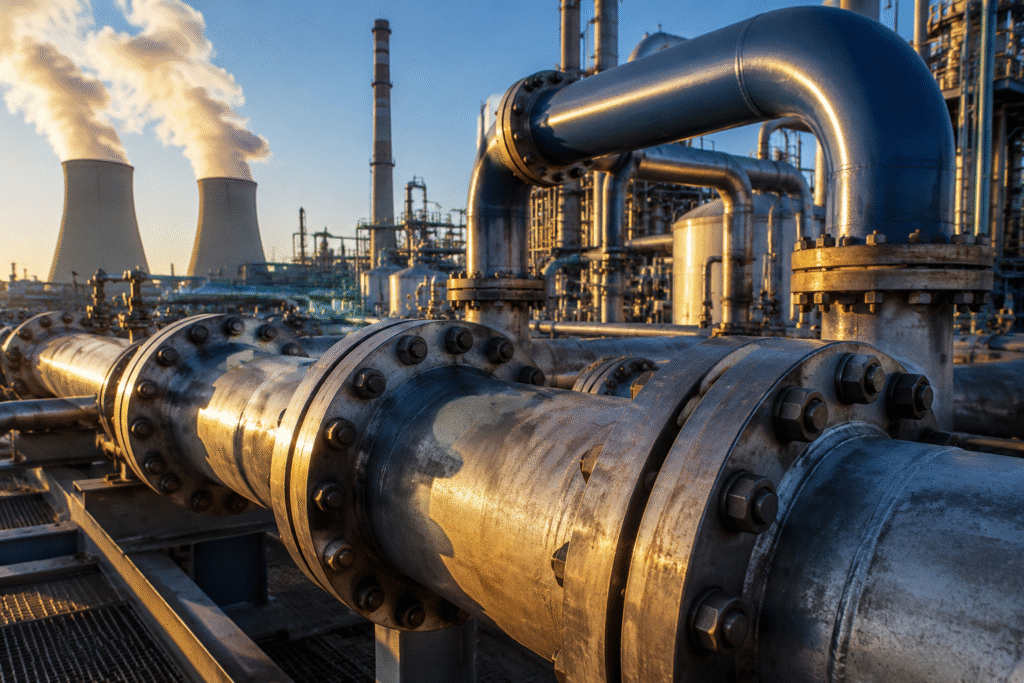
ステンレス鋼管フランジガイド: 7 データに裏付けられた利点, 種類, 用途と選定基準
産業事業者が耐食性を優先するため、ステンレス鋼管フランジの需要は増加し続けています, ライフサイクル価値, 重要な配管システムにおけるコンプライアンスと. グランドビューリサーチによると (2024), 世界の工業用フランジ市場は次のように評価されました。 $5.8 億で 2023 に達すると予測されています $7.2 10億まで 2030, which makes material selection more strategic than ever.
エンジニアと調達チーム向け, the intriguing value of stainless solutions is no longer hidden. The advantages of stainless steel pipe flange products now extend beyond durability into traceability, 圧力の完全性, and long-term operating efficiency.
Why Stainless Steel Pipe Flange Demand Is Growing Across Industrial Markets
Industrial buyers are choosing stainless steel pipe flange products because plant uptime depends on leak-tight, corrosion-resistant joints. さらに, modern projects demand components that meet ASME, ASTM, DIN, and EN requirements without adding excessive maintenance risk.
IBISWorldによると (2024), アジア太平洋地域が占める割合は超過 45% 世界のフランジ生産量の, 中国が最大の製造国である. したがって, global sourcing strategies increasingly focus on qualified Chinese manufacturers that can combine scale, 加工精度, および文書管理.
統計局によると (2024), 石油・ガス産業が約 35% 世界のフランジ消費量の. 結果として, the market strongly favors materials such as 304, 316, 316l, 2205, そして 2507 酸っぱいサービスのために, オフショア, 製油所, および化学処理用途.
Stainless grades remain attractive because they balance mechanical strength and corrosion resistance in chloride, 湿気が多い, and high-purity environments. 対照的に, lower-alloy materials may require more frequent coating, 検査, or replacement in aggressive service.
ASME B16.5 そして ASME B16.47 govern key dimensional and pressure-temperature requirements for many industrial flanges, その間 ASTM A182 defines forged stainless and alloy flange material requirements (ASME, 2023; ASTM, 2023). その結果, buyers should evaluate both the material grade and the governing dimensional standard before placing an order.
The hidden procurement risk often lies in incomplete quality documentation rather than the flange itself. したがって, reputable suppliers should provide mill test reports, ヒートトレーサビリティ, 寸法検査, そして EN 10204 3.1 documentation when required.
材料工学博士として. ヘレン・モリスは次のように述べています: “フランジは単なるコネクタではありません; it is a pressure boundary component, so alloy selection and standard compliance directly influence reliability.” That insight is especially relevant in petrochemical, オフショア, and power generation systems where flange failure can shut down an entire line.
SASA FLANGE serves industrial customers in Oil & ガス, 石油化学, 発電, 造船, 水処理, と建設. と ISO 9001:2015 および PED 2014/68/EU 認証, the company supports global buyers seeking compliant stainless steel flanges and fittings from a factory-direct source.
さらに, sourcing from an experienced manufacturer helps buyers align design intent with actual production capability. For more supplier details, 購入者はレビューできる company background and explore available categories at product pages.
ステンレス鋼管フランジの種類, Materials and Hidden Advantages in Real Service
The versatility of a stainless steel pipe flange comes from the range of flange types, 圧力クラス, and metallurgy available for different services. しかし, choosing correctly requires understanding how type, 学年, and application interact.
モルドール情報局によると (2024), industrial infrastructure upgrades in energy and water sectors are accelerating demand for corrosion-resistant piping components worldwide. さらに, buyers increasingly request premium materials that reduce total cost of ownership rather than only minimizing purchase price.
配管コンサルタントとしてマーク・エリソン, PE, 州: “The best flange selection starts with the process fluid, then temperature, then pressure class, and only after that with price.” This sequence helps engineers avoid short-term cost decisions that create long-term maintenance failures.
The most common stainless steel pipe flange materials include ASTM A182 F304, F304L, F316, F316L, F904L, F51, とF53. さらに, specialized projects may specify Inconel, モネル, ハステロイ, or Titanium when standard stainless grades cannot handle the environment.
- 304 / 304l: Good general corrosion resistance for water, 食品加工, and moderate industrial service.
- 316 / 316l: Improved molybdenum-bearing resistance to chlorides and many chemical media.
- 904l: Stronger performance in reducing acids and severe corrosion environments.
- 2205 二重: Higher strength and strong pitting resistance for offshore and process systems.
- 2507 スーパーデュプレックス: Premium solution for high chloride and high-pressure service.
In many specifications, 316L remains the default choice for process plants that require better chloride resistance than 304L. 対照的に, duplex and super duplex are often chosen when higher strength allows thinner wall design or improved resistance to stress corrosion cracking.
マーケットリサーチの将来によると (2024), demand for duplex stainless components in energy and marine systems is growing at over 5% 毎年. したがって, procurement teams should evaluate duplex options earlier in the design stage instead of treating them as late substitutions.
The main flange Types used in industrial piping include weld neck, スリップオン, 盲目, ソケット溶接, ねじ切りされた, そしてラップジョイント. Each Flange configuration has different benefits for alignment, bore continuity, インストール速度, および検査アクセス.
- ウェルドネックフランジ: 高圧に最適, 熱サイクル, テーパーハブが応力集中を軽減するため、重要なサービスが可能.
- スリップオンフランジ: Common for lower-pressure systems where installation efficiency and cost control matter.
- ブラインドフランジ: 終了するために使用されます, 隔離する, or future-proof piping systems.
- ねじ付きフランジ: Useful where welding is restricted or field conditions are difficult.
- ソケットウェルドフランジ: 小口径用によく選ばれます, 高圧配管.
- 重ね継手フランジ: Suitable when frequent dismantling is required.
For engineers comparing stainless steel flange types, the hidden advantages often appear during maintenance cycles. Weld neck designs can lower fatigue risk, while blind flanges simplify line isolation and hydrotest management.
Pressure class also matters. Common ASME classes include 150, 300, 600, 900, 1500, そして 2500, and the allowable pressure decreases as temperature rises according to ASME pressure-temperature ratings (ASME, 2023).
That is why a 4 inch stainless steel pipe flange for steam service may require a very different class and facing than the same nominal size in a water line. 同じく, a Stainless Steel Threaded Pipe Flange may fit utility service but not a severe cyclic process unit.
SASA FLANGE でフランジを製造します 304, 316, 316l, 904l, 2205, 2507 その他のプレミアムグレード, 高度な CNC 加工と包括的な品質テストによってサポートされています。. さらに, 同社はカスタムサイズを提供しています 1/2 インチから 60 inch with competitive factory-direct pricing for export projects.
Buyers looking to Choose the right product should match material grade, フランジフェーシング, クラス評価, and inspection requirements before RFQ release. Project teams can discuss custom specifications directly through SASA FLANGE サポートに連絡する.
基準, Certification and Compliance for Stainless Steel Flanges and Fittings
Compliance is essential because stainless steel flanges and Fittings often serve as pressure boundary components in regulated environments. したがって, every purchase order should reference the exact manufacturing standard, 材料規格, 検査範囲, and document package.
Key dimensional and manufacturing references include ASME B16.5 NPS向け 1/2 を通して 24, ASME B16.47 より大きな直径用, そして ASME B16.9 突合せ溶接継手用. さらに, international buyers often request DIN, JIS, ゴスト, またはEN 1092 dimensions for plant compatibility.
材料規格も同様に重要です. ASTM A182 covers forged or rolled alloy and stainless flanges, 鍛造継手, および高温用バルブ, その間 ASTM A240 covers stainless plate products used in some flange and fitting-related applications (ASTM, 2023).
NACE MR0175 / ISO 15156 becomes critical when sour service is involved because sulfide stress cracking can quickly compromise unsuitable materials (ネイス, 2023). 同じく, PED 2014/68/EU requirements can apply for equipment supplied into the European market.
- ASME B16.5: 寸法, 公差, 圧力温度定格, フェーシング, そしてマーキング.
- ASME B16.47: Large-diameter flanges for major line sizes.
- ASTM A182: Material chemistry and mechanical requirements for forged stainless flanges.
- EN 1092: Common European flange dimensional standard.
- NACE MR0175: Material guidance for H2S-containing environments.
- EN 10204 3.1: Inspection document often requested by procurement teams.
ISOによると (2023), documented quality systems reduce variation in manufacturing and inspection processes across serial production. 結果として, ISO 9001:2015 certification remains a meaningful baseline for industrial flange suppliers serving multinational customers.
サプライヤーを比較するバイヤー向け, certifications should be matched with actual process control. A certificate alone does not confirm machining accuracy, PMI機能, 水圧試験のサポート, フェライト制御, or packaging discipline for export shipments.
That is why leading procurement teams request dimensional reports, PMI結果, hardness checks where applicable, and full traceability from raw material to final marking. さらに, export projects often require third-party inspection by SGS, BV, TUV, or similar agencies before shipment.
SASA FLANGE operates with ISO 9001:2015, PED 2014/68/EU, とAD 2000 credentials to support demanding industrial supply chains. さらに, the company can provide EN 10204 3.1 certification and coordinate inspection requirements for international EPC and MRO buyers.
The following comparison helps clarify common standard selection logic:
- ASME system: Preferred for North America, global EPC, 石油とガス, および製油所プロジェクト.
- EN / DIN system: Preferred for European industrial plants and equipment integration.
- JIS system: Common in Japanese standards environments and some Asian installations.
- Custom drawings: Required for OEM skids, packaged units, and retrofit dimensions.
Procurement managers should also verify flange facing requirements such as RF, FF, RTJ, or custom serration patterns. 重要なサービス中, a mismatch between gasket type and flange facing can cause leakage even when the metallurgy is correct.
For authoritative standard details, buyers should consult the relevant organization directly, 含む ASME. Internal coordination with an experienced manufacturer shortens review cycles, especially when mixed standards or special materials are involved.
油用ステンレス鋼管フランジ ソリューションの選び方, ガス, 力, 海洋および水システム
選択は使用条件から始める必要があります, not with price alone. 例えば, 流体化学, 塩化物, 温度, プレッシャー, cycling frequency, and inspection requirements all influence the correct flange specification.
油中 & Gas projects, stainless steel pipe flange selection often focuses on sour service, 海洋腐食, and high-integrity bolted joints. したがって, 316l, 2205, そして 2507 are commonly reviewed depending on chloride level and design pressure.
オフショア システムに関する DNV ガイダンスによると (DNV, 2023), material performance in chloride-rich marine environments is a major design factor for long service life. その結果, duplex or super duplex may outperform standard austenitic grades in many offshore skid and seawater applications.
石油化学プラント内, 材料の酸との適合性, 溶剤, and chlorides becomes decisive. さらに, low-carbon grades like 304L and 316L help reduce sensitization risk after welding in many process lines.
発電用, thermal cycling and pressure transients often drive flange type selection. 結果として, weld neck designs are frequently preferred in steam, 凝縮水, and high-temperature auxiliary systems.
Marine and shipbuilding projects require strong resistance to salt-laden atmospheres and splash-zone exposure. したがって, 316l, 2205, そして 2507 are often considered for deck piping, バラストシステム, fire lines, および淡水化ユニット.
Water treatment systems also benefit from stainless flange durability because chemical dosing and variable water quality can accelerate corrosion in coated carbon steel components. さらに, clean finish and low maintenance support lifecycle savings in municipal and industrial treatment plants.
- Check the medium: Confirm chloride content, pH, 硫化物, および洗浄用の化学薬品.
- Check pressure and temperature: Match ASME class and material limits to operating and upset conditions.
- フランジの種類を確認する: Select weld neck, スリップオン, 盲目, ねじ切りされた, ソケット溶接, or lap joint by service severity.
- Check facing: RF を検証する, FF, or RTJ against gasket design.
- Check documentation: Request MTC, PMI, 寸法レポート, そして EN 10204 3.1 必要に応じて.
- Check installation constraints: Consider weld access, アライメント公差, and future maintenance.
As corrosion specialist James Ortega notes: “Many flange failures start as specification shortcuts rather than manufacturing defects.” That is why the best Guide for procurement teams is to evaluate total installed risk, not simply the unit price of a Flange.
Lead time and supply continuity are also major purchasing variables. 統計局によると (2024), energy infrastructure expansion continues to support high demand for piping components, which can tighten delivery windows for special alloys and large diameters.
SASA FLANGE supports custom manufacturing for flanges and fittings including elbows, ティー, 減速機, and caps in stainless, 炭素鋼, 合金, and nickel-based grades. 高度な CNC 加工と包括的な品質テストに裏付けられています, 会社がサービスを提供します 50+ 石油を巡る国々 & ガス, 石油化学, 力, 海洋産業.
For projects needing custom drawings, 混合規格, or urgent export packing, buyers can coordinate directly through お問い合わせページ. This approach is especially helpful when evaluating stainless steel pipe flange sizes, special bore schedules, or project-specific marking requirements.
ステンレス鋼管フランジ調達の今後の見通しと戦略的な購入の提案
ステンレス鋼管フランジの需要見通しは依然として明るい。, 水, and industrial modernization projects continue worldwide. グランドビューリサーチによると (2024), 市場は~から成長すると予想される $5.8 億で 2023 に $7.2 10億まで 2030, indicating steady long-term demand.
同時に, 調達行動が変化している. Buyers now compare not only stainless steel pipe flange price, but also lifecycle cost, ドキュメントの品質, country-of-origin risk, and response speed for technical clarification.
Digital procurement is also reshaping vendor evaluation. マーケットリサーチの将来によると (2024), B2B industrial sourcing platforms and direct manufacturer engagement are reducing reliance on purely local inventory channels, especially for specialized flange grades and custom dimensions.
したがって, strategic buyers should build approved vendor lists around measurable capability. That includes material breadth, 加工能力, 検査サポート, 輸出経験, and responsiveness during deviation review.
- 304Lなどの認定グレードを標準化, 316l, 2205, そして 2507 サービスカテゴリー別.
- Prequalify suppliers against ASME, ASTM, PED, および文書要件.
- Request pricing in parallel with lead time, MTC format, 及び検査範囲.
- Use total cost evaluation for replacement frequency, downtime risk, and maintenance labor.
- Plan early for large-diameter or special alloy orders because mill availability can vary.
The most intriguing opportunity for buyers is hidden in lifecycle optimization. A slightly higher initial investment in the correct stainless material can reduce shutdowns, gasket failures, and replacement frequency over many years of operation.
For engineering-led organizations, the smart path is to align specification discipline with reliable supply partnerships. Companies seeking compliant, export-ready stainless steel pipe flange solutions can review available product ranges or connect with SASA FLANGE for project-specific support.
よくある質問
ステンレス鋼フランジは何に使用されますか?
●パイプの接続にはステンレス製のフランジが使用されます, バルブ, パンプス, 耐食性が必要なシステムの圧力容器など, 機械的強度, and reliable sealing under pressure.
●統計局によると (2024), 石油・ガス産業が約 35% 世界のフランジ消費量の, which shows how important flanged joints are in critical process piping.
●石油化学プラントで広く使用されています, オフショアプラットフォーム, water treatment facilities, 発電所, 船舶用配管, and food-grade systems because stainless materials resist rust, 塩化物, and frequent cleaning cycles better than many coated alternatives.
●Common applications include line connection, 機器の絶縁, メンテナンスアクセス, そして今後の拡張ポイント, especially when operators need dismantling capability that welded joints alone cannot provide.
●For projects requiring certified materials and full traceability, のような確立されたメーカーと協力する SASA FLANGE ASMEへの準拠を確保するのに役立ちます, ASTM, and EN documentation expectations.
ステンレス鋼の管継手を製造していますか?
●はい, メーカーはエルボなどのステンレス鋼管継手を製造しています, ティー, 減速機, キャップ, and stub ends for both welded and threaded piping systems.
●ASME B16.9 is one of the key standards for factory-made wrought butt-welding fittings, while ASTM material grades such as 304, 316, and duplex variants support different corrosion and temperature requirements (ASME, 2023; ASTM, 2023).
●These fittings are commonly paired with stainless steel flanges to create complete piping assemblies for chemical processing, 発電, 海上サービス, and high-purity utility lines.
●実際に, buyers should match fitting grade, 壁の厚さ, and end preparation to the same piping specification as the flange to avoid weld mismatch or corrosion imbalance.
●For integrated flange and fitting supply, などの老舗メーカー SASA FLANGE can simplify sourcing, 検査, and export documentation in one package.
ステンレス鋼製のフランジは何ですか?
●多くのフランジ設計はステンレス鋼で作られています, ウェルドネックを含む, スリップオン, 盲目, ねじ切りされた, ソケット溶接, and lap joint flanges in grades such as 304, 316, 316l, 904l, 2205, そして 2507.
●ASTM A182 is a widely referenced material standard for forged stainless flanges, そして ASME B16.5 defines the dimensions and pressure-temperature framework for many of these products (ASTM, 2023; ASME, 2023).
●Material choice depends on fluid chemistry, 動作温度, 塩化物への曝露, 圧力クラス, and whether the service involves offshore, 酸っぱいガス, or hygienic conditions.
●例えば, 316L is often chosen for chloride-bearing environments, while duplex stainless can offer higher strength and stronger resistance to pitting in seawater or aggressive process media.
●For projects needing guidance on grades, flange facings, or custom sizes, experienced suppliers like SASA FLANGE can help align the flange design with actual operating conditions.
3種類のフランジとは何ですか?
●The three most commonly referenced flange types in basic industrial discussions are weld neck, スリップオン, ブラインドフランジ.
●Weld neck flanges are preferred for high-pressure and high-temperature service because their tapered hub improves stress distribution, while slip on flanges are valued for easier alignment and lower fabrication cost in less severe service.
●Blind flanges are used to close the end of a piping system or vessel nozzle, which makes them essential for isolation, 水圧試験, そして今後のシステム拡張.
●Although these three are the most familiar, many projects also use threaded, ソケット溶接, and lap joint designs depending on maintenance access, small-bore service, or welding restrictions.
●実際的なルールとして, engineers should select flange type by pressure, 温度, 疲労の露出, and maintenance needs rather than by initial price alone.
What is the ASME code for stainless steel pipe flange?
●ASME B16.5 is the most common dimensional standard for stainless steel pipe flange products from NPS 1/2 を通して 24, その間 ASME B16.47 covers many larger diameters.
●Material requirements are typically specified separately through ASTM standards such as ASTM A182 鍛造ステンレスフランジ用, so buyers must reference both the dimensional and material standard on purchase documents.
●ASMEによると (2023), 圧力と温度の定格は材料グループとフランジのクラスによって異なります, which means the same nominal size can have different allowable limits at different temperatures.
●That is why complete specifications should include flange type, クラス, 直面している, 標準, ASTMグレード, テスト要件, and certificate format instead of only naming the pipe size.
●For regulated projects or export orders, confirming ASME compliance with an experienced manufacturer reduces the risk of mismatch during inspection and installation.
どちらかを選択するにはどうすればよいですか 304 そして 316 ステンレス鋼フランジ?
●選ぶ 304 stainless flanges for general industrial service with moderate corrosion exposure, そして選択してください 316 塩化物の場合は 316L, coastal conditions, またはより攻撃的な化学物質が存在する.
●The addition of molybdenum in 316 improves pitting and crevice corrosion resistance, which is why many marine, 化学薬品, and water treatment projects specify 316L over 304L.
●グランドビューリサーチによると (2024), industrial buyers are increasingly prioritizing lifecycle value, and that favors materials that reduce replacement and maintenance costs in corrosive service.
●実務的には, 304 may be fully suitable for indoor utility lines or mild process conditions, その間 316 is often the safer long-term option for outdoor, 沿岸, or chloride-bearing systems.
●When service conditions are uncertain, buyers should review process chemistry and operating limits with a qualified supplier before finalizing the flange grade.
関連投稿

オリフィスフランジの定義, 詳細と ASME B16.36 フランジの概要: 市場データ, 選択ガイドとコンプライアンスに関する洞察
世界の工業用フランジ市場は次のように評価されました。 $5.8 十億…

ブラックディスポフランジ市場ガイド: 材料, 3.5″ 互換性, キッチン シンク フランジの B2B 調達データ
キッチン設備の購入者として黒色の使い捨てフランジの需要が高まっています…