
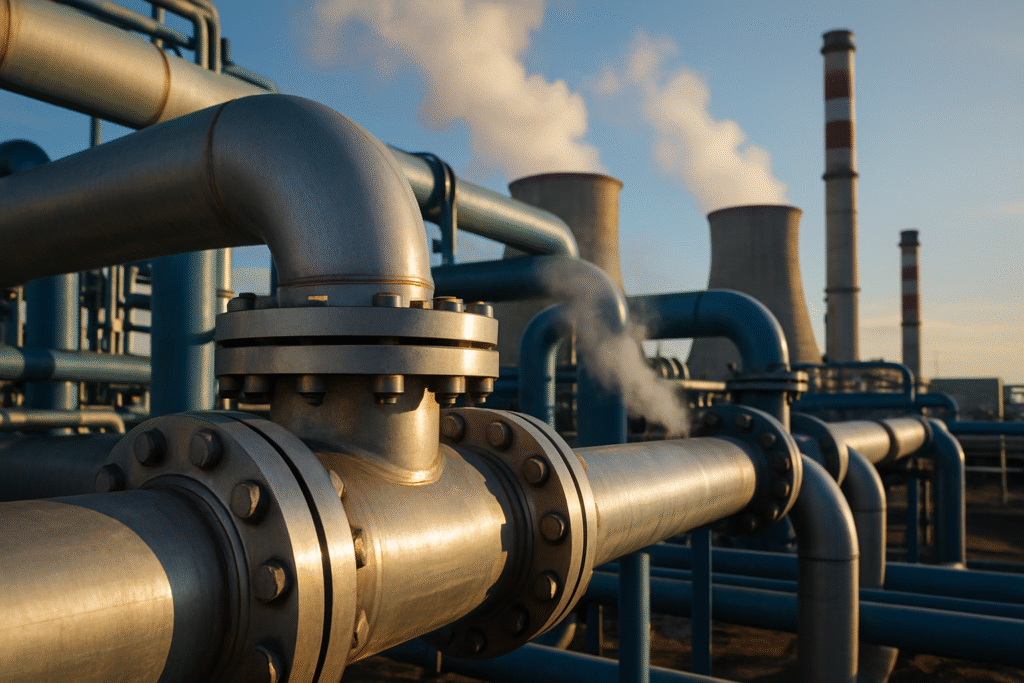
Perspectivas do mercado de flanges de tubos de aço inoxidável: 7 Insights baseados em dados sobre tipos, Usos, ASME B16.5 & B16.47
O flange de tubo de aço inoxidável remains a core component in industrial piping because corrosion resistance, integridade de pressão, e o valor do ciclo de vida afetam diretamente o tempo de atividade da planta. De acordo com a pesquisa Grand View (2024), o mercado global de flanges industriais foi avaliado em $5.8 bilhão em 2023 e está projetado para atingir $7.2 bilhão por 2030.
Para equipes de compras e engenheiros, que o crescimento reflete uma realidade simples. Reliable flange selection reduces leakage risk, supports code compliance, and improves total installed cost across oil and gas, petroquímico, poder, marinho, e sistemas de tratamento de água.
Global Demand Trends Shaping the Stainless Steel Pipe Flange Market
Industrial buyers are evaluating more than price when sourcing a stainless steel pipe flange. They now compare material traceability, mill certification, precisão de usinagem, pressure class availability, and delivery performance across global suppliers.
De acordo com IBISWorld (2024), Ásia-Pacífico é responsável por mais de 45% da produção global de flanges, sendo a China o maior fabricante. Como resultado, sourcing strategies increasingly favor qualified manufacturers with strong export quality systems and broad standards coverage.
De acordo com Statista (2024), a indústria de petróleo e gás é responsável por aproximadamente 35% do consumo global de flanges. Portanto, demand remains tightly linked to upstream, meio do caminho, refinaria, GNL, and offshore capital expenditure cycles.
Ao mesmo tempo, stainless grades continue gaining preference in corrosive and hygienic service. Futuro da pesquisa de mercado (2024) notes that corrosion-resistant alloy demand is rising with stricter lifecycle and maintenance targets in chemical processing and water infrastructure.
These trends explain why buyers search not only for flange sizes and pressure ratings, but also for hidden advantages such as lower maintenance frequency and better weld performance. In contrast with lower-cost carbon steel in corrosive service, stainless solutions often deliver stronger long-term value.
Como o engenheiro de materiais Dr.. Elena Markovic states: “Flange failure is rarely caused by one variable alone. Seleção de materiais, classe de pressão, compatibilidade da junta, and machining tolerance all interact in service.”
That is why standards-based sourcing matters. ASME B16.5 cobre flanges de tubos e acessórios flangeados em NPS 1/2 através 24, enquanto ASME B16.47 cobre flanges de aço de grande diâmetro da NPS 26 através 60 (ASME, 2023).
Para projetos internacionais, engineers also compare DIN, EN 1092, JIS, and GOST drilling and dimensional systems. Além disso, end users often require EN 10204 3.1 certificados de materiais, PMI, registros de testes hidrostáticos, and full traceability for critical service.
SASA FLANGE operates in this environment as a factory-focused supplier serving customers in 50+ países em todo o petróleo & Gás, Petroquímica, Poder, e indústrias marítimas. Com ISO 9001:2015 e certificações PED 2014/68/EU, the company supports projects that require both compliance and competitive factory-direct sourcing.
Fabricação de flanges em 304, 316, 316eu, 904eu, 2205, 2507, A105, A182, Inconel, Monel, Hastelloy, e titânio, SASA FLANGE addresses standard and specialty piping requirements. Adicionalmente, tamanhos personalizados a partir de 1/2" para 60" help buyers consolidate supply for mixed-material packages.
De acordo com a Inteligência Mordor (2024), process industry investment in corrosion-resistant piping components is growing at over 4% annually in several regional markets. Consequentemente, stainless steel flange procurement is becoming more specification-driven and less purely price-driven.
Para compradores B2B, the most intriguing factor is not simply product availability. It is the hidden advantages of choosing the correct stainless steel flange types for the exact pipe medium, teor de cloreto, classe de pressão, e temperatura de operação.
Tipos de flange de tubo de aço inoxidável, Vantagens ocultas, e seleção de materiais
A stainless steel pipe flange is not a commodity in high-consequence service. The correct flange design affects stress distribution, qualidade de solda, acesso de inspeção, and sealing reliability over thousands of thermal and pressure cycles.
De acordo com a orientação da ASME, flange selection must align with system design pressure, temperatura de projeto, carga do parafuso, and gasket characteristics (ASME, 2023). Portanto, engineers should evaluate geometry and metallurgy together rather than treating them as separate decisions.
As piping consultant Michael Trent, Educação Física, estados: “A weld neck flange still offers the most robust fatigue performance for severe cyclic duty because the tapered hub improves stress transition into the pipe.”
The most common stainless steel flange types used in industrial pipe systems include the following.
- Flange de pescoço soldado: Preferido para alta pressão, alta temperatura, and cyclic service because of its tapered hub and full-penetration butt weld.
- Flange deslizante: Common in moderate pressure systems where easier alignment and lower initial fabrication cost matter.
- Flange cega: Usado para encerrar, isolar, or future-proof a piping line or vessel nozzle.
- Flange de solda de soquete: Suitable for smaller bore pipe systems, especially where socket welding is acceptable.
- Flange roscada: Selected when welding should be avoided or where field installation constraints apply.
- Flange de junta sobreposta: Applied with stub ends where frequent dismantling or expensive alloy conservation is important.
When engineers compare types, they should also compare practical uses and hidden advantages. Por exemplo, a blind flange simplifies future expansion planning, while a lap joint flange can reduce the cost of exotic alloy systems.
Material grade is equally decisive. ASTM A182 forged stainless grades such as F304, F304L, F316, and F316L remain standard choices for process piping, while duplex and super duplex grades address chloride stress and pitting concerns (ASTM, 2024).
304 and 304L are widely used because they balance corrosion resistance, facilidade de fabricação, and cost control. No entanto, 316 e 316L contêm molibdênio, which generally improves resistance in chloride-bearing media and many chemical environments.
In aggressive duty, buyers increasingly choose 904L, 2205, ou 2507. De acordo com as orientações da NACE, chloride-containing environments can accelerate localized corrosion in austenitic stainless grades if alloy selection does not match the service chemistry (NACE, 2023).
The most relevant stainless steel material groups for flange procurement include:
- 304 / 304L for general industrial service and food-grade applications.
- 316 / 316L for marine atmosphere, serviço químico, and better chloride resistance.
- 904L for stronger resistance to certain acids and severe corrosion environments.
- 2205 duplex for higher strength and improved resistance to pitting and stress corrosion cracking.
- 2507 super duplex para offshore, água do mar, and highly aggressive chloride service.
- High-performance nickel alloys for extreme temperature or chemical exposure.
De acordo com a pesquisa Grand View (2024), infrastructure modernization and process safety upgrades are key growth drivers in industrial flange demand. Como resultado, more EPC contractors now specify upgraded metallurgy where lifecycle cost justifies the premium.
Dimensional and pressure class coverage also matters. ASME B16.5 geralmente cobre a classe 150, 300, 600, 900, 1500, e 2500 flanges up to NPS 24, while B16.47 addresses larger diameters used in transmission and plant piping.
Buyers should also assess manufacturing capability, not just catalog range. Apoiado por usinagem CNC avançada e testes de qualidade abrangentes, SASA FLANGE fornece flanges de aço inoxidável, flanges de aço carbono, flanges de liga, e acessórios para tubos, incluindo cotovelos, camisetas, redutores, e bonés.
This broader scope helps procurement teams bundle complete piping packages. Além disso, mixed orders reduce coordination risk when projects require flanges, acessórios, and compatible documentation under one supplier quality system.
The most effective way to choose a stainless steel pipe flange is to align five technical filters at once.
- Meio de serviço, incluindo cloretos, sulfetos, ácidos, sólidos, e produtos químicos de limpeza.
- Design pressure and design temperature, including upset and cyclic conditions.
- Padrão aplicável, como ASME B16.5, ASME B16.47, DIN, JIS, ou PT 1092.
- Método de instalação, including weld type, field access, e requisitos de inspeção.
- Documentation package, incluindo EN 10204 3.1, PMI, tratamento térmico, and PED needs.
De acordo com ISO (2023), quality consistency and traceability remain central to industrial component risk reduction. Portanto, established manufacturers with controlled production and inspection workflows tend to perform better in critical procurement programs.
ASME, ASTM, DIN, e conformidade EN para flanges de aço inoxidável
Industrial flange procurement starts with standards compliance because dimensions, classificações de pressão-temperatura, tolerâncias, and material requirements must match the design code. Na prática, the wrong standard can create immediate installation mismatch or long-term integrity risk.
The most referenced flange standards include ASME B16.5, ASME B16.47, EN 1092, DIN series dimensions, and JIS equivalents. Adicionalmente, material specifications often reference ASTM A182 para flanges forjadas e ASTM A240 for plate products used in related fabrication.
For code-driven projects, engineers should distinguish between dimensional standards and material standards. ASME B16.5 and B16.47 define flange dimensions and ratings, while ASTM standards define material chemistry, propriedades mecânicas, e testes.
- ASME B16.5: Pipe flanges and flanged fittings from NPS 1/2 para 24.
- ASME B16.47: Flanges de aço de grande diâmetro da NPS 26 para 60.
- ASME B16.9: Acessórios para soldagem de topo forjados feitos na fábrica.
- ASTM A182: Flanges de tubos de liga forjada ou laminada e aço inoxidável e acessórios forjados.
- EN 1092-1: European flanges with PN pressure designations.
- NACE MR0175/ISO 15156: Orientação de materiais para ambientes de serviço ácidos.
Para projetos multinacionais, cross-standard comparison is essential because ASME Class ratings differ from EN PN ratings. Portanto, dimensional drilling, tipo de revestimento, and bolting arrangement must be verified before purchase release.
Engineers should also check facing type. Rosto levantado, cara plana, junta tipo anel, and tongue-and-groove interfaces serve different sealing conditions and should match the gasket and operating envelope.
Inspection and documentation are another compliance layer. PED 2014/68/EU projects often require traceability, revisão de certificado, and conformity documentation in addition to normal dimensional and material verification.
De acordo com a estrutura PED da Comissão Europeia (2024), pressure equipment components placed in regulated EU applications must meet defined conformity obligations. Como resultado, purchasing teams increasingly ask for PED declarations, EN 10204 3.1 certificados, and material heat traceability before shipment.
Testing scope often includes PMI, teste de dureza, verificações dimensionais, inspeção visual, and hydrostatic or pneumatic verification where relevant. In sour or chloride-rich service, procurement documents may also require corrosion-related material restrictions under NACE or project-specific specifications.
As corrosion specialist Prof. Daniel Reeves notes: “The cheapest flange becomes the most expensive when documentation gaps delay a shutdown project or trigger site rejection.”
That is why supplier quality systems matter. Com ISO 9001:2015, PED 2014/68/EU, e ANÚNCIO 2000 credenciais, SASA FLANGE supports documentation-sensitive projects requiring traceability and internationally recognized compliance frameworks.
Buyers should also confirm that flange and fitting packages are specification-aligned. If the flange is ASTM A182 F316L but the connected fitting is outside the required chemistry or schedule tolerance, system performance can still be compromised.
Por esse motivo, many EPC and MRO teams prefer suppliers that can provide coordinated flange and fitting solutions. A single quality point reduces the risk of mismatched bevels, incompatible schedules, or incomplete certification records.
When reviewing standards, procurement managers should ask these questions:
- Does the flange follow ASME, DIN, JIS, GOST, or EN dimensional requirements?
- Does the material meet ASTM or equivalent chemistry and mechanical property requirements?
- Is the pressure class or PN rating suitable for the design temperature?
- Will documentation include EN 10204 3.1, rastreabilidade do número de calor, and PED records if required?
- Are NACE or project corrosion restrictions applicable to the service medium?
For formal standard references, os compradores podem revisar ASME publications directly. No entanto, project-specific interpretation should always be validated against piping class documents and engineering design conditions.
Como escolher flanges de aço inoxidável para óleo, Gás, Químico, Poder, e Sistemas Marítimos
Choosing the right stainless steel pipe flange requires system-level thinking. The flange must work with the pipe schedule, projeto de junta, carga do parafuso, operating profile, and corrosion mechanism expected in actual service.
Em petróleo e gás, pressure containment and material traceability dominate the decision. De acordo com Statista (2024), o setor de petróleo e gás representa cerca de 35% do consumo global de flanges, so supply reliability and project documentation are major procurement priorities.
For upstream gathering, refinery process units, and LNG lines, weld neck flanges often remain the preferred option. Their geometry supports demanding duty, especially where thermal cycling, vibração, or frequent pressure swings are present.
Em plantas petroquímicas e químicas, media compatibility often outweighs initial flange price. Portanto, 316eu, 904eu, 2205, ou 2507 may be justified where chlorides, ácidos, or mixed process streams can attack lower-alloy materials.
Power generation applications require attention to pressure class, temperatura, and cyclic fatigue. High-integrity forged flanges with verified dimensions help avoid fit-up delays during outages and turnaround windows.
Marine and shipbuilding systems present another selection challenge because salt-laden environments accelerate corrosion. Como resultado, 316L and duplex grades often deliver better lifecycle performance than standard austenitic grades in exposed or splash-zone applications.
The most practical flange selection criteria for engineers and buyers include:
- Fluid composition and corrosion mechanism.
- Faixa de temperatura operacional e de projeto.
- Pressure class or PN requirement.
- Tamanho do tubo, espessura da parede, and facing compatibility.
- Installation method and weld procedure requirements.
- Inspeção, rastreabilidade, and documentation level.
- Expected maintenance interval and shutdown cost.
Por exemplo, a water treatment skid may use slip-on flanges for economical assembly in low-to-medium pressure service. Em contraste, an offshore chemical injection line may require duplex weld neck flanges with full PMI and EN 10204 3.1 certificação.
Buyers also search for stainless steel flange sizes, 4 opções de flange de tubo de aço inoxidável em polegadas, and threaded configurations for maintenance stock. Portanto, inventory planning should distinguish between standard MRO sizes and long-lead engineered items.
Custom manufacturing capability is especially important in project business. SASA FLANGE oferece tamanhos personalizados de 1/2" para 60" and supports ANSI B16.5, ANSI B16.47, ASME B16.9, DIN, JIS, GOST, e PT 1092 requisitos.
That flexibility helps when projects combine U.S., European, and legacy plant standards in one package. Além disso, coordinated production of flanges and pipe fittings can shorten sourcing cycles and simplify inspection planning.
Procurement managers should also compare total cost beyond unit price. Embalagem, documentação de exportação, confiabilidade do prazo de entrega, rework risk, and nonconformance rates all affect the real landed cost of a flange order.
De acordo com IBISWorld (2024), A China continua a ser a maior base industrial na região Ásia-Pacífico, o que representa mais 45% da produção global de flanges. Portanto, selecting a qualified Chinese supplier with robust QA can provide both cost advantages and dependable supply continuity.
Em termos práticos, the best way to choose is to issue a clear RFQ with these details:
- Standard and pressure rating.
- Material grade and corrosion requirement.
- Tamanho, enfrentando, e furou detalhes.
- Quantidade e destino.
- Documentation and inspection scope.
- Required delivery date and packing standard.
When those details are defined early, suppliers can quote accurately and reduce clarification cycles. For projects requiring certified stainless, duplex, or special alloy flanges, engaging SASA FLANGE early can improve technical alignment before purchase order release.
Perspectivas Futuras, Recomendações Estratégicas de Compra, e Vantagem Competitiva
As perspectivas para a demanda por flanges de tubos de aço inoxidável permanecem positivas porque a renovação da infraestrutura, projetos de transição energética, and stricter reliability expectations continue to support investment. De acordo com a pesquisa Grand View (2024), espera-se que o mercado cresça a partir $5.8 bilhão em 2023 para $7.2 bilhão por 2030.
Growth alone does not guarantee easy sourcing, no entanto. Buyers still face raw material volatility, specification complexity, and project schedules that leave little room for rework or documentation errors.
That is why strategic sourcing should prioritize technically capable suppliers over purely low-cost offers. Em tubulações industriais, the hidden advantages of precision machining, verified metallurgy, and complete compliance records often outweigh marginal price differences.
Several strategic recommendations stand out for 2025 e além.
- Padronize classes aprovadas, como 304L, 316eu, 2205, e 2507 por categoria de serviço.
- Pré-qualificar fornecedores para ASME, EN, and PED documentation before tender stage.
- Bundle flanges and fittings where possible to reduce interface risk.
- Use lifecycle cost models for corrosive service instead of first-cost comparison alone.
- Maintain safety stock for critical stainless steel flange sizes used in shutdown maintenance.
De acordo com a Inteligência Mordor (2024), industrial asset owners increasingly prioritize reliability-centered maintenance and corrosion management. Como resultado, flange procurement decisions are becoming more integrated with plant integrity strategies.
For procurement leaders, the most intriguing opportunity lies in specification discipline. When materials, padrões, and quality records are clearly defined, suppliers can deliver faster and buyers can reduce commercial and technical friction.
Para engenheiros, the best outcome comes from matching flange types and uses to actual service conditions rather than catalog habit. Por exemplo, choosing a higher-alloy flange in chloride service can prevent failures that would cost far more than the initial upgrade.
Apoiado por usinagem CNC avançada, testes de qualidade abrangentes, and export experience across core process industries, SASA FLANGE continues to support global buyers seeking dependable stainless steel flange supply. For detailed technical support on stainless steel pipe flange requirements, buyers can review product options, cobertura de padrões, and project assistance through the company’s engineering and sales channels.
Perguntas frequentes
O que é melhor 304 ou 420 aço inoxidável?
●304 stainless steel is generally better for a stainless steel pipe flange because it offers stronger corrosion resistance and is widely used under ASTM A182 F304 and related industrial specifications.
●420 stainless steel has higher hardness after heat treatment, but it is less suitable for most corrosive pipe and flange service because its martensitic structure sacrifices corrosion performance for wear resistance.
●Para tubulação de processo, procurement teams should usually choose 304 ou 316 grades unless the application specifically requires hardness over corrosion resistance, e fabricantes como SASA FLANGE can help confirm the correct grade against actual media and temperature conditions.
Qual será a temperatura 304 suportar aço inoxidável?
●304 stainless steel can serve in many industrial applications up to approximately 870°C in intermittent service and about 925°C in continuous oxidation service, although actual flange limits depend on design code, classe de pressão, e configuração conjunta.
●ASME pressure-temperature ratings and ASTM material properties should always govern final flange selection because a stainless grade’s oxidation limit is not the same as an allowable flange design condition.
●For critical high-temperature pipe systems, buyers should verify ASME B16.5 tabelas de classificação, compatibilidade da junta, and weld procedure requirements before ordering a stainless steel pipe flange from a qualified supplier such as SASA FLANGE.
Quais são os 5 tipos de aço inoxidável?
●As cinco principais famílias de aços inoxidáveis são austeníticas, ferrítico, martensítico, duplex, e aços inoxidáveis endurecidos por precipitação, and each family delivers different strength, corrosão, e características de fabricação.
●Austenitic grades such as 304 e 316 dominate industrial flange applications, enquanto as classes duplex, como 2205 e 2507 are often selected for higher strength and improved chloride resistance in offshore and chemical service.
●When choosing stainless steel flanges and fittings, engineers should match the stainless family to corrosion mechanism, temperatura, soldabilidade, and code requirements rather than selecting by price alone.
Qual é o código ASME para flanges de aço inoxidável?
●The main ASME dimensional standards for stainless steel flanges are ASME B16.5 para NPS 1/2 através 24 e ASME B16.47 for large diameter flanges from NPS 26 através 60.
●The stainless flange material itself is commonly specified under ASTM A182, so buyers should understand that ASME standards define dimensions and ratings while ASTM standards define material properties and chemistry.
●For compliant procurement, engineers should review both the applicable ASME flange standard and the required ASTM grade, then confirm facing, classe de pressão, and certification requirements with the manufacturer before purchase.
O que afeta o preço do flange do tubo de aço inoxidável?
●O preço do flange do tubo de aço inoxidável depende principalmente do grau da liga, tamanho, classe de pressão, complexidade de usinagem, escopo de certificação, e quantidade do pedido, with duplex and high-nickel materials typically costing more than 304 ou 316 notas.
●De acordo com a pesquisa Grand View (2024), o mercado de flanges industriais atingiu $5.8 bilhão em 2023, and that scale reflects how raw material volatility and project demand can influence global pricing for forged and machined components.
●Buyers should request quotes with complete details on standard, tamanho, enfrentando, material, and documentation because clear RFQ data improves price accuracy and reduces hidden commercial risk.
How do I choose a flange manufacturer for industrial projects?
●A strong flange manufacturer should offer standards compliance, materiais rastreáveis, capacidade de inspeção, embalagem de exportação, and certifications such as ISO 9001:2015 and PED 2014/68/EU where required.
●De acordo com IBISWorld (2024), A Ásia-Pacífico produz mais de 45% de flanges globais, so supplier qualification should focus on quality systems and technical capability rather than geography alone.
●Para projetos que exigem aço inoxidável, duplex, or custom-size flanges with EN 10204 3.1 documentação, trabalhando com fabricantes estabelecidos como SASA FLANGE helps reduce sourcing risk and improve technical consistency.
Posts Relacionados
Acabamento da face do flange: Serrilhas concêntricas vs espirais explicadas
As serrilhas concêntricas e espirais são acabamentos de face de flange usinados…
Dúplex 2205 vs Flanges 316L: Qual material você deve escolher?
Resposta rápida: Dúplex 2205 flanges são geralmente o candidato mais forte…

Definição de flange de orifício, Detalhes e visão geral dos flanges ASME B16.36: Dados de mercado, Guia de seleção e insights de conformidade
O mercado global de flanges industriais foi avaliado em $5.8 bilhão…

Guia de mercado de flange de descarte preto: Materiais, 3.5″ Compatibilidade, e dados de fornecimento B2B para flanges de pia de cozinha
A demanda por flanges descartáveis pretos está aumentando à medida que os compradores de utensílios de cozinha…