
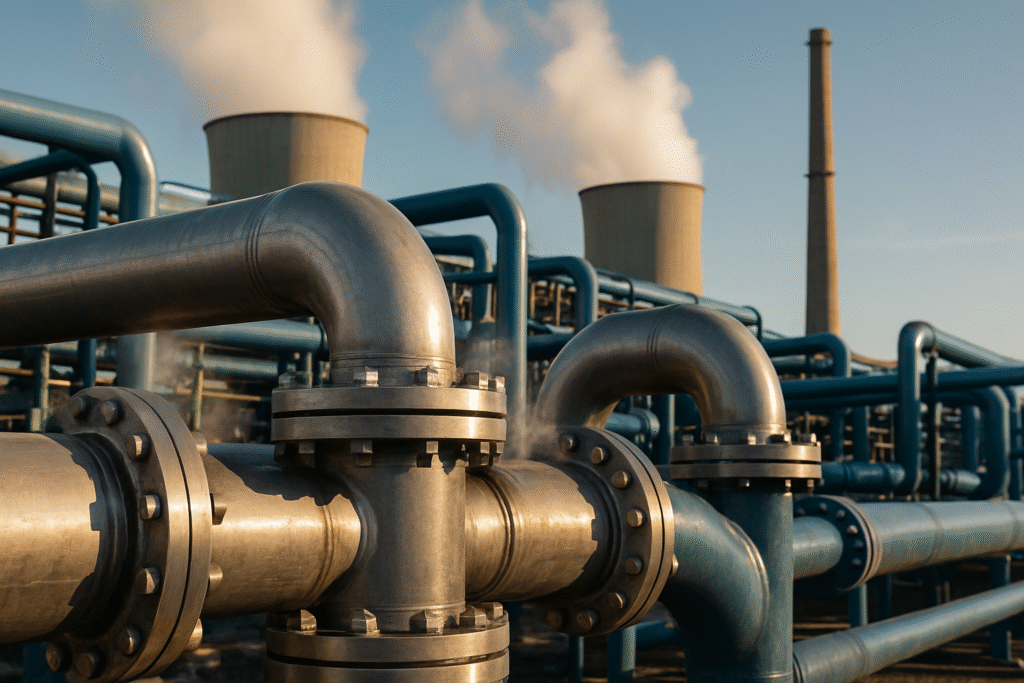
Flange de tubo de aço inoxidável: Dados intrigantes, Vantagens ocultas, Tipos, Usos, e como escolher ASME B16.5 & B16.47 Flanges
O flange de tubo de aço inoxidável remains a critical component in modern process piping, e a procura do mercado confirma o seu valor estratégico. De acordo com a pesquisa Grand View (2024), o mercado global de flanges industriais foi avaliado em $5.8 bilhão em 2023 e está projetado para atingir $7.2 bilhão por 2030, driven by energy, água, e indústrias de processo.
Para engenheiros e gerentes de compras, the intriguing part is not only the size of the market but the hidden advantages of material and standard selection. Portanto, understanding stainless steel flange types, ASME B16.5 e ASME B16.47 dimensões, and application-specific grade choice directly improves lifecycle cost and plant reliability.
Industrial Market Trends Shaping Stainless Steel Pipe Flange Demand
Global demand for stainless steel flanges continues to track industrial expansion, corrosion-control priorities, and infrastructure investment. De acordo com IBISWorld (2024), Ásia-Pacífico é responsável por mais de 45% da produção global de flanges, sendo a China o maior fabricante.
This production concentration affects lead time, raw material access, and factory-direct pricing for buyers worldwide. Como resultado, many EPC contractors and distributors now evaluate not only product compliance but also the manufacturing ecosystem behind each flange supplier.
The oil and gas sector remains the largest single demand center for flange products. De acordo com Statista (2024), a indústria de petróleo e gás é responsável por aproximadamente 35% do consumo global de flanges, em grande parte porque a montante, meio do caminho, and downstream systems require bolted, inspectable, pressure-rated connections.
Em contraste, water treatment and marine sectors increasingly specify stainless steel pipe flange products for corrosion resistance and maintenance reduction. Além disso, power generation and petrochemical plants often require mixed-material packages that combine stainless steel flanges with elbows, camisetas, redutores, e bonés.
Buyers also face a broader technical choice set than in the past. Common austenitic grades like 304, 304eu, 316, and 316L still dominate general service, enquanto 904L, duplex 2205, e superduplex 2507 are chosen for aggressive chloride service and higher strength.
De acordo com a Pesquisa de Mercado Futuro (2024), corrosion-resistant alloy demand in process equipment is growing at a faster rate than commodity carbon steel in chemical and offshore applications. That trend reflects rising shutdown costs, stricter environmental performance targets, and greater awareness of total cost of ownership.
Para equipes de compras, this means a flange cannot be treated as a generic commodity in every project. A weld neck flange in ASTM A182 F316L, por exemplo, may deliver a much lower risk profile than a lower-grade alternative when chloride exposure, carregamento cíclico, or media contamination are present.
Como engenheiro de tubulação John Reynolds, former corrosion specialist and industry author, estados: “Material selection errors rarely fail in the quotation stage; they fail in service, when downtime is most expensive.” That observation is especially relevant for stainless steel pipe flange purchases tied to offshore platforms, serviço azedo, e linhas de processo de alta pureza.
Manufacturers with strong process control are therefore gaining preference. SASA FLANGE, apoiado por ISO 9001:2015 e certificações PED 2014/68/EU, fornece aço inoxidável, aço carbono, and alloy flanges in grades including 304, 316, 316eu, 904eu, 2205, e 2507.
Adicionalmente, buyers increasingly request traceability, EN 10204 3.1 certificação, PMI, testes hidrostáticos, and dimensional inspection reports before shipment. Portanto, a supplier’s quality system now matters almost as much as the nominal standard stamped on the flange.
De acordo com a Inteligência Mordor (2024), industrial operators are investing more heavily in asset integrity programs and predictive maintenance. Consequentemente, flange selection is moving upstream in procurement strategy, especially for critical pipe systems where leakage risk, fugitive emissions, and unplanned outages carry significant financial penalties.
Stainless Steel Flanges Types, Materiais, and Hidden Advantages for Industrial Pipe Systems
The most common stainless steel flange types include weld neck, deslizamento, cego, solda de soquete, rosqueado, e projetos de juntas sobrepostas. No entanto, a melhor escolha depende da classe de pressão, cronograma de tubulação, química de fluidos, ciclagem térmica, e requisitos de inspeção.
ASME B16.5 cobre flanges de tubos e acessórios flangeados da NPS 1/2 através 24, enquanto ASME B16.47 aborda tamanhos maiores do NPS 26 através 60 for many configurations. For projects requiring large-diameter stainless steel pipe flange dimensions, B16.47 Series A and Series B differences can materially affect bolt pattern, peso, and mating compatibility (ASME, 2023).
Como Dr.. Hongmei Li, materials scientist in corrosion engineering, estados: “The hidden advantages of stainless steel are realized when alloy chemistry matches chloride level, temperatura, e método de fabricação.” Portanto, selecting 316L over 304 is not just a material upgrade; it is often a risk-control decision for chemical, marinho, e serviço de tratamento de água.
According to ASTM specifications used across the industry, ASTM A182 applies to forged or rolled alloy and stainless steel pipe flanges, acessórios forjados, e válvulas para serviço em alta temperatura, enquanto ASTM A240 placa de cobertura, folha, and strip for pressure vessel and general applications (ASTM, 2024). These distinctions matter because forged flange integrity, grain flow, and pressure performance differ from plate-based fabrication routes.
Para equipes de engenharia, the main flange forms can be assessed as follows:
- Flange de pescoço soldado: Melhor para alta pressão, alta temperatura, and cyclic service due to tapered hub geometry and butt-weld connection.
- Flange deslizante: Cost-effective for lower-pressure service and easier alignment, but typically less fatigue-resistant than weld neck designs.
- Flange cega: Used to terminate a piping system or allow future expansion and inspection access.
- Flange de solda de soquete: Common in smaller-bore, high-pressure systems where socket depth and fillet welding are preferred.
- Flange roscada: Útil onde a soldagem é restrita, though pressure and vibration suitability must be checked carefully.
- Flange de junta sobreposta: Preferred where frequent dismantling or expensive corrosion-resistant alloy stub ends improve cost control.
The intriguing difference between popular grades becomes clearer when viewed through application risk. Nota 304 offers good corrosion resistance and favorable fabrication economics, enquanto 316 and 316L add molybdenum for stronger resistance in chloride-bearing environments.
Além disso, duplex 2205 can provide nearly double the yield strength of 316L in many conditions, which may reduce wall thickness requirements in properly engineered systems. According to NACE guidance and industry corrosion practice, duplex materials are often selected where chloride stress corrosion cracking is a design concern (NACE, 2023).
Specialty grades also serve specific needs:
- 904eu: Enhanced resistance to reducing acids and chlorides in aggressive chemical service.
- 2205 duplex: Excellent balance of strength and pitting resistance for offshore and process applications.
- 2507 superduplex: Higher PREN and stronger seawater resistance for severe marine exposure.
- Inconel, Monel, Hastelloy, Titânio: Selecionado para corrosão extrema, temperatura, or contamination-control requirements.
De acordo com a pesquisa Grand View (2024), corrosion and maintenance costs in process industries remain among the main drivers behind alloy upgrades in connection hardware. Como resultado, buyers increasingly compare lifecycle cost instead of only initial unit price.
That shift highlights one of the hidden advantages of premium stainless steel flange selection: fewer leak events, lower maintenance labor, and longer replacement intervals. In high-consequence systems, one avoided shutdown can offset a large difference in flange package cost.
Manufacturing capability is equally important. SASA FLANGE oferece tamanhos personalizados de 1/2 polegada para 60 polegadas, producing stainless steel flanges to ANSI B16.5, ANSI B16.47, DIN, JIS, GOST, e PT 1092 standards with advanced CNC machining and comprehensive quality testing.
Procurement teams should also ask whether a supplier can provide matching pipe fittings and mixed material packages. That matters because flange performance depends on the total joint assembly, including gasket type, aparafusamento, face de flange, acabamento superficial, and connected pipe schedule.
According to ISO-aligned quality practice across pressure-component manufacturing, dimensional accuracy and traceability are fundamental to field fit-up and joint reliability. Portanto, a stainless steel pipe flange supplier should be evaluated on machining tolerance, facing finish control, Capacidade PMI, e disciplina de documentação, não apenas a amplitude do catálogo.
ASME, ASTM, DIN, e EN para conformidade com flanges de tubos de aço inoxidável
Compliance is a purchasing filter, not a paperwork exercise. Em projetos industriais, the flange must match the governing piping code, pressão de projeto, especificação de materiais, inspection requirement, and destination-market regulation.
The core standards most buyers encounter include ASME B16.5, ASME B16.47, ASTM A182, EN 1092-1, and relevant DIN or JIS dimensions. In Europe and export projects, PED 2014/68/EU can also shape marking, documentação, and conformity requirements.
For clarity, the major standards serve different purposes:
- ASME B16.5: Dimensões, tolerâncias, classificações de pressão-temperatura, materiais, marcações, and testing for flanges NPS 1/2 para 24.
- ASME B16.47: Large-diameter steel flanges NPS 26 para 60 in Series A and Series B formats.
- ASTM A182: Material specification for forged or rolled alloy and stainless steel flanges and forged fittings.
- ASME B16.9: Acessórios para soldagem de topo forjados feitos na fábrica, como cotovelos, camisetas, redutores, e bonés.
- EN 1092-1: Dimensões do flange europeu, designações de pressão, e enfrentando exigências.
- NACE MR0175/ISO 15156: Material guidance for sour service environments where sulfide stress cracking is a concern.
De acordo com ASME, proper flange selection requires alignment between pressure class, temperatura, and material group. Portanto, uma aula 300 stainless steel flange in one alloy may not have identical pressure-temperature limits as the same nominal class in another material family.
Engineers should also distinguish forged flanges from fabricated alternatives. Forjado ASTM A182 flanges generally offer superior structural continuity and are widely specified for pressure service, while fabricated solutions may be acceptable only where project standards permit them.
Ao comparar padrões, buyers should review:
- Nominal pipe size and flange outside diameter.
- Bolt circle diameter and bolt quantity.
- Tipo de revestimento, incluindo RF, FF, e RTJ.
- Pressure class or PN designation.
- Grau do material, tratamento térmico, and corrosion service suitability.
- Documentos de inspeção como EN 10204 3.1.
These details directly affect field interchangeability. A mismatch between ASME B16.5 e PT 1092 dimensions can stop installation, even when the material grade itself is correct.
According to DNV guidance used in marine and offshore projects, flange integrity depends not only on material but also on bolting practice, seleção de juntas, preload control, e ambiente de serviço (DNV, 2023). Consequentemente, procurement teams should source flanges as part of a controlled joint system rather than as isolated parts.
Com ISO 9001:2015, PED 2014/68/EU, e ANÚNCIO 2000 credenciais, SASA FLANGE supports buyers who require export-ready documentation and multi-standard supply. A empresa fabrica flanges em 304, 316, 316eu, 904eu, 2205, 2507, A105, A182, Inconel, Monel, Hastelloy, and Titanium for oil and gas, petroquímico, poder, marinho, e projetos de tratamento de água.
That capability is especially valuable in EPC packages that combine stainless steel flanges with elbows, camisetas, redutores, e bonés. Além disso, single-source procurement can simplify QA review, reduce interface risk, and improve delivery coordination across project milestones.
Como escolher o flange de tubo de aço inoxidável certo para óleo, Gás, Químico, Poder, e usos marinhos
A escolha do flange de tubo de aço inoxidável correto começa com as condições de serviço, not with price. Engineers should define pressure class, temperatura de projeto, perfil de corrosão, media cleanliness, método de união, and maintenance philosophy before requesting quotations.
For oil and gas applications, flanges de pescoço soldado em 316L, duplex 2205, ou super duplex 2507 are often preferred where pressure, vibração, and chloride exposure are significant. De acordo com Statista (2024), petróleo e gás representam aproximadamente 35% do consumo global de flanges, so suppliers with deep energy-sector experience usually understand traceability, Requisitos NACE, and shutdown-critical delivery schedules.
No serviço petroquímico, the media determines the alloy. Por exemplo, 316L may perform well in moderate corrosive duty, enquanto 904L, Hastelloy, or other nickel alloys may be required for stronger acids, cloretos mistos, or contamination-sensitive process streams.
Na geração de energia, thermal cycling and pressure transients often push designers toward weld neck flanges and high-integrity forged components. Portanto, flange type selection must consider fatigue resistance, not only static pressure.
Marine and shipbuilding environments impose a different set of risks. Spray de sal, seawater contact, and crevice corrosion can quickly punish under-specified materials, so duplex and super duplex grades frequently deliver better long-term value than commodity stainless options.
Water treatment systems often use 304, 316, and duplex flanges depending on chloride concentration and disinfection chemistry. Além disso, buyers should verify gasket compatibility, because an otherwise suitable flange can still fail at the joint if sealing materials are poorly matched to media and temperature.
A practical selection checklist includes:
- Confirm applicable standard: ASME B16.5, ASME B16.47, DIN, JIS, ou PT 1092.
- Match flange type to loading: pescoço de solda, deslizamento, cego, solda de soquete, rosqueado, ou junta sobreposta.
- Verify alloy against corrosion risks: 304, 316eu, 904eu, 2205, 2507, or nickel alloy.
- Check pressure class, enfrentando, and compatible pipe schedule.
- Exigir EN 10204 3.1, PMI, e inspeção dimensional para serviços críticos.
- Revise o prazo de entrega, embalagem, documentação de exportação, and project support.
As industry analyst Michael Reed notes: “The lowest flange price seldom equals the lowest installed cost once inspection, ajuste, and maintenance are included.” That is why experienced procurement teams compare total package value, including QA, suporte técnico, and consistency across repeat orders.
Custom manufacturing can also be decisive in project execution. SASA FLANGE suporta dimensões personalizadas, materiais especiais, and complete flange-plus-fitting supply for projects across 50+ países, helping buyers consolidate sourcing while maintaining standard compliance.
Por um 4 flange de tubo de aço inoxidável de polegada, por exemplo, the specification should define not only NPS and pressure class but also facing type, grau de material, cronograma de tubulação, and gasket seating requirement. Without those details, quotations may look comparable while delivering materially different field performance.
Buyers evaluating stainless steel flange price should also understand the variables behind cost:
- Material grade and alloy surcharge.
- Forging route and machining complexity.
- Pressure class and wall section.
- Teste, documentação, e inspeção de terceiros.
- Heat treatment and PMI requirements.
- Order volume and delivery urgency.
Portanto, the best way to choose is to issue a clear technical datasheet and compare supplier responses line by line. This approach reduces hidden risk and improves apples-to-apples procurement decisions for pipe and flange packages.
Future Outlook for Stainless Steel Flanges and Strategic B2B Buying Recommendations
The outlook for stainless steel flanges remains favorable as energy transition projects, infraestrutura hídrica, atualizações offshore, and industrial modernization continue. De acordo com a pesquisa Grand View (2024), espera-se que o mercado cresça a partir $5.8 bilhão em 2023 para $7.2 bilhão por 2030, reflecting durable long-term demand.
Ao mesmo tempo, buyers should expect more scrutiny on quality assurance, rastreabilidade, and lifecycle economics. Além disso, as plants pursue emission reduction and asset integrity targets, flange leakage prevention will remain a measurable procurement priority.
Asia-Pacific will likely remain central to supply availability and cost competitiveness. De acordo com IBISWorld (2024), the region already contributes over 45% da produção global de flanges, and China continues to hold a leading manufacturing position.
That trend creates opportunity, but it also raises the importance of supplier qualification. Portanto, procurement managers should favor manufacturers that combine standards compliance, sistemas de qualidade documentados, ampla capacidade de material, and responsive technical communication.
Estrategicamente, B2B buyers should take five actions:
- Standardize approved flange specifications by service category.
- Prequalify manufacturers with ISO 9001:2015 and PED capability.
- Compare o custo do ciclo de vida, não apenas preço unitário.
- Bundle flanges and fittings where possible to reduce interface risk.
- Request complete documentation before shipment release.
For companies sourcing stainless steel pipe flange products for oil and gas, petroquímico, poder, marinho, or water treatment applications, technical support from the manufacturer can accelerate safer decisions. If your project requires ASME B16.5, B16.47, EN 1092, or special alloy compliance, conectando-se com SASA FLANGE can help align material, tamanho, certificação, and delivery requirements early in the procurement cycle.
Perguntas frequentes
Para que serve um flange de aço inoxidável?
●A stainless steel flange is used to connect pipe, válvulas, bombas, and pressure equipment in systems that require a secure, inspectable, and maintainable bolted joint.
●De acordo com Statista (2024), petróleo e gás representam aproximadamente 35% do consumo global de flanges, which shows how important flanged joints are in critical industrial service.
●Common uses include line connections, bicos de equipamento, dead-end closures with blind flanges, and maintenance points where frequent disassembly is required.
●In corrosive or hygienic service, stainless steel flange materials such as 304, 316, and 316L are often chosen because they resist rusting better than carbon steel in many environments.
●Para projetos que exigem ASME B16.5 ou PT 1092 conformidade, trabalhando com fabricantes estabelecidos como SASA FLANGE helps ensure the flange matches pressure class, enfrentando, and material certification requirements.
Eles fazem acessórios para tubos de aço inoxidável?
●Sim, os fabricantes produzem acessórios para tubos de aço inoxidável, como cotovelos, camisetas, redutores, and caps for butt-welded and threaded piping systems.
●ASME B16.9 is one of the key standards for factory-made wrought buttwelding fittings, and ASTM material specifications define the applicable stainless grades for pressure service.
●These fittings are commonly supplied in 304, 316, 316eu, 904eu, 2205, e 2507 dependendo do risco de corrosão, temperatura, e requisitos de força.
●De acordo com a Pesquisa de Mercado Futuro (2024), corrosion-resistant alloy demand is rising as operators focus on reliability and lower maintenance cost across chemical, marinho, e sistemas de tratamento de água.
●When buyers source flanges and fittings together, they usually gain better dimensional consistency, simpler QA review, and fewer field fit-up issues.
Qual é o padrão para flanges de aço inoxidável?
●Os principais padrões dimensionais para flanges de aço inoxidável são ASME B16.5 para NPS 1/2 para 24 e ASME B16.47 for larger diameters up to NPS 60.
●Material compliance is commonly specified under ASTM A182 para flanges de aço inoxidável forjado, enquanto DENTRO 1092-1 is widely used for European projects.
●De acordo com a ASME (2023), flange selection must consider pressure-temperature ratings, tipo de revestimento, aparafusamento, and material group instead of nominal size alone.
●In sour service or regulated applications, additional requirements such as NACE MR0175, PED 2014/68/EU, e EN 10204 3.1 documentation may apply.
●Procurement teams should always verify whether the project requires ASME, DIN, EN, JIS, or mixed standard compatibility before placing a flange order.
Qual é o tipo mais resistente de flange de tubulação?
●The weld neck flange is generally considered the strongest standard piping flange for high-pressure and high-temperature service because its tapered hub reduces stress concentration.
●Its butt-weld connection provides better fatigue resistance than a slip-on flange in systems with vibration, ciclagem térmica, or severe operating conditions.
●De acordo com a DNV (2023), flange integrity depends on total joint design, so even the strongest flange type still requires correct bolting, seleção de juntas, and preload control.
●In demanding service, a forged ASTM A182 flange de pescoço soldado em 316L, duplex 2205, ou 2507 may offer significantly better long-term performance than a lower-grade alternative.
●For critical pipe systems, engineers should validate flange type by code, stress analysis, and service environment rather than by habit or price alone.
Como faço para escolher entre 304 e 316 stainless steel flange materials?
●Escolher 304 stainless steel for general industrial service with moderate corrosion exposure, e escolha 316 or 316L where chlorides, marine conditions, or stronger chemicals are present.
●The key difference is molybdenum in 316 notas, which improves pitting and crevice corrosion resistance in many aggressive environments.
●Como Dr.. Hongmei Li, cientista de materiais, estados: “The hidden advantages of stainless steel are realized when alloy chemistry matches chloride level, temperatura, e método de fabricação.”
●De acordo com a pesquisa Grand View (2024), growing demand for corrosion-resistant alloys reflects the cost of downtime and maintenance in process industries.
●Se o serviço envolver água do mar, exposição química, or stricter lifecycle targets, solicitando orientação técnica de SASA FLANGE is a practical step before final material approval.
Quais fatores afetam o preço do flange do tubo de aço inoxidável?
●O preço do flange do tubo de aço inoxidável depende principalmente do grau da liga, classe de pressão, tamanho, rota de forjamento, escopo de teste, e requisitos de documentação.
●UM 4 flange de tubo de aço inoxidável de polegada em ASTM A182 F316L com EN 10204 3.1, PMI, and third-party inspection will cost more than a basic 304 slip-on flange with standard documents.
●De acordo com IBISWorld (2024), Ásia-Pacífico é responsável por mais de 45% da produção global de flanges, which strongly influences global pricing, disponibilidade, and lead-time competition.
●Buyers should compare quotes based on total delivered value, including machining quality, certificação, embalagem, and schedule reliability rather than unit price only.
●For repeat industrial supply, factory-direct sourcing often improves cost control when the manufacturer can provide both flanges and fittings under one quality system.
Posts Relacionados
Acabamento da face do flange: Serrilhas concêntricas vs espirais explicadas
As serrilhas concêntricas e espirais são acabamentos de face de flange usinados…
Dúplex 2205 vs Flanges 316L: Qual material você deve escolher?
Resposta rápida: Dúplex 2205 flanges são geralmente o candidato mais forte…

Definição de flange de orifício, Detalhes e visão geral dos flanges ASME B16.36: Dados de mercado, Guia de seleção e insights de conformidade
O mercado global de flanges industriais foi avaliado em $5.8 bilhão…

Guia de mercado de flange de descarte preto: Materiais, 3.5″ Compatibilidade, e dados de fornecimento B2B para flanges de pia de cozinha
A demanda por flanges descartáveis pretos está aumentando à medida que os compradores de utensílios de cozinha…