
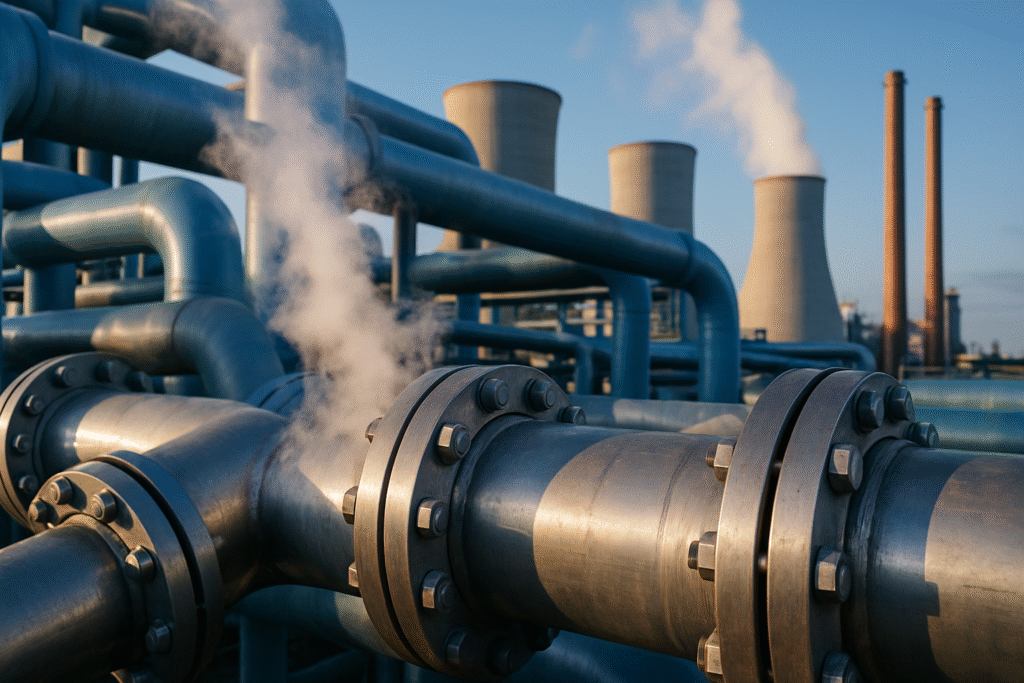
Dados de mercado de flanges de tubos de aço inoxidável: Vantagens ocultas, Tipos, Usos, e como escolher o flange mais comum
De acordo com a pesquisa Grand View (2024), o mercado global de flanges industriais foi avaliado em $5.8 bilhão em 2023 e está projetado para atingir $7.2 bilhão por 2030. That growth highlights why the stainless steel pipe flange remains a strategic component for engineers and buyers who need corrosion resistance, integridade de pressão, e longa vida útil.
Para equipes de compras, the most intriguing question is no longer whether to use Stainless Steel Flanges, but which hidden advantages, tipos, and uses deliver the best lifecycle value. Portanto, understanding the most common flange materials, padrões, and selection criteria can reduce maintenance risk and improve total installed cost.
Tendências de demanda global moldando a aquisição de flanges para tubos de aço inoxidável
The flange market is expanding because industrial infrastructure spending continues across energy, água, e setores de processo. De acordo com IBISWorld (2024), Ásia-Pacífico é responsável por mais de 45% da produção global de flanges, sendo a China o maior fabricante.
That production concentration affects lead times, fornecimento de matéria-prima, and price stability for buyers worldwide. Além disso, it explains why manufacturers with strong export systems and traceable quality procedures have gained preference in international sourcing.
End-use demand also remains highly concentrated in critical-service industries. De acordo com Statista (2024), a indústria de petróleo e gás é responsável por aproximadamente 35% do consumo global de flanges.
This figure matters because Oil & Gas projects often specify higher-grade stainless and alloy materials, testes rigorosos, e rastreabilidade total do material. Como resultado, buyers increasingly compare suppliers on standards compliance rather than price alone.
Em paralelo, corrosion-driven replacement cycles are supporting stainless steel demand in coastal, químico, e instalações de tratamento de água. Inteligência Mordor (2024) notes that industrial stainless applications continue to grow as operators seek lower maintenance and longer operating life.
That trend favors 304, 316, 316eu, duplex, and super duplex grades in aggressive environments. Em contraste, carbon steel often remains attractive for dry, non-corrosive, and cost-sensitive systems.
The most common flange choices still include weld neck, escorregar, cego, solda de soquete, rosqueado, e projetos de juntas sobrepostas. No entanto, selection now depends more heavily on media chemistry, carregamento cíclico, and inspection requirements than on simple initial cost.
Por exemplo, um 4 inch stainless steel pipe flange used in offshore chlorides will require a different alloy logic than a similar size in building services. Portanto, technical evaluation must cover pressure class, tipo de revestimento, limites de temperatura, and corrosion allowances.
De acordo com ASME B16.5, dimensional standardization remains essential for interchangeability in NPS 1/2 através 24 flanges (ASME, 2023). Para diâmetros maiores, ASME B16.47 governs many dimensions and drilling patterns.
Buyers also need to align material specifications with forged or plate-based production routes. ASTM A182 commonly applies to forged stainless steel flanges, enquanto ASTM A240 covers stainless plate products used in related fabrication (ASTM, 2024).
Manufacturers that combine machining precision with broad material availability can support faster project execution. Apoiado por usinagem CNC avançada e testes de qualidade abrangentes, SASA FLANGE supplies stainless steel flanges and fittings in 304, 316, 316eu, 904eu, 2205, 2507, e outras notas premium.
Com ISO 9001:2015 e certificações PED 2014/68/EU, SASA FLANGE supports projects requiring EN 10204 3.1 documentos, inspeção dimensional, PMI, and hydrostatic or NDT verification where applicable. Adicionalmente, the company serves buyers across Oil & Gás, Petroquímica, Poder, Marinho, Tratamento de Água, and Construction sectors in 50+ países.
Vantagens ocultas, Tipos comuns, and Technical Selection of Stainless Steel Pipe Flange
The hidden advantages of stainless steel pipe flange systems extend beyond basic corrosion resistance. They also include cleaner internal surfaces, menor risco de contaminação, reliable weldability in common grades, and stronger long-term value in harsh service.
De acordo com a Pesquisa de Mercado Futuro (2024), industrial buyers increasingly prioritize lifecycle cost over purchase price when specifying piping components. Portanto, a higher-grade stainless flange can often lower shutdown frequency and replacement expense over time.
Como Dr.. Michael Trento, Engenheiro de Materiais e consultor de corrosão, estados: “In chloride-bearing or cyclic-temperature service, the wrong flange alloy can fail long before the pipe does, so material matching is not optional.” That insight is especially relevant when comparing 304/304L with 316/316L or duplex grades.
The most common Stainless Steel Flanges for industrial use are well understood, yet each design has distinct mechanical and installation implications. Além disso, each flange type affects welding procedure, tolerância de alinhamento, acesso de inspeção, and pressure performance.
- Flange de pescoço soldado: Melhor para alta pressão, ciclagem térmica, e serviço crítico porque o cubo cônico reduz a concentração de tensão.
- Deslizar no flange: Easier to align and often lower in fabrication cost, but less preferred for severe fatigue duty.
- Flange cega: Usado para fechar extremidades de linha, isolar sistemas, or allow future expansion and maintenance access.
- Flange de solda de soquete: Common in smaller bore high-pressure piping where bore alignment is controlled.
- Flange roscada: Útil onde a soldagem é restrita, though service conditions must suit threaded joints.
- Flange de junta sobreposta: Favored when frequent dismantling is required or when using expensive corrosion-resistant stub ends selectively.
Material grade selection is equally important because not all stainless steels perform the same way. The most common flange materials include 304, 304eu, 316, 316eu, 321, 347, 904eu, 2205, e 2507.
Nota 304 offers balanced strength, conformabilidade, and cost for general industrial service. No entanto, nota 316 or 316L is usually chosen when chlorides, exposição marinha, or more aggressive chemical media are present because molybdenum improves pitting resistance.
For higher temperature service, stabilized or heat-resistant grades may be preferable. ASTM and ASME material rules should always be checked against actual service conditions, especially when sensitization, corrosão sob tensão, or sulfide exposure are possible.
De acordo com as orientações da NACE, chloride stress corrosion cracking risk rises materially with temperature and tensile stress in austenitic stainless steels (NACE, 2023). Portanto, duplex or super duplex options can be more suitable in offshore and produced-water systems.
As Laura Jensen, Engenheiro de Tubulação Sênior, estados: “The best way to Choose a flange is to treat it as a system component, not a commodity, because facing finish, carga do parafuso, seleção de juntas, and metallurgy work together.” This is why experienced buyers assess the full joint assembly rather than only the flange drawing.
Pressure class and facing type must also align with the gasket and bolting package. Raised face remains the most common flange facing in refinery and process piping, while ring type joint facings serve higher-pressure, higher-integrity services.
- Common pressure classes: Aula 150, 300, 600, 900, 1500, 2500.
- Revestimentos comuns: Rosto levantado (RF), Rosto plano (FF), Junta tipo anel (RTJ).
- Common inspections: PMI, dimensional check, hardness test, UT, PT, MT, hydro test review.
- Documentos comuns: CTM EN 10204 3.1, lista de embalagem, registros de tratamento térmico, Relatórios de END.
Em compras práticas, stainless steel pipe flange sizes must be checked against nominal pipe size, agendar, acabamento do furo, and drilling compatibility. Even a standard 2 polegada ou 4 inch stainless steel pipe flange can create site delays if wall thickness, enfrentando, or bolt circle is mismatched.
De acordo com ISO (2023), dimensional and quality consistency reduces assembly deviation and leakage risk in regulated systems. Consequentemente, buyers should confirm not only standard numbers, but also tolerances, marcação, and traceability requirements before purchase.
Manufacturing capability strongly influences final product consistency. Oferecendo tamanhos personalizados de 1/2″ para 60″ com preços competitivos direto da fábrica, SASA FLANGE supports forged and machined flange supply for standard and project-specific applications.
That capability matters for buyers sourcing Stainless, Aço, liga, and duplex flanges together with elbows, camisetas, redutores, e bonés. It simplifies vendor qualification and improves package consistency across complete piping systems.
ASME, ASTM, DIN, and EN Compliance for Stainless Steel Pipe Flange Quality
Standards compliance is the clearest dividing line between commodity supply and reliable industrial performance. Portanto, procurement teams should evaluate every stainless steel pipe flange against dimensional, material, testando, e requisitos de documentação.
The primary dimensional standard for most industrial flanges is ASME B16.5 para NPS 1/2 para 24. Para diâmetros maiores, ASME B16.47 Series A or B commonly applies, particularly in process plants and transmission systems.
Material compliance usually references ASTM or ASME material specifications. ASTM A182 covers forged or rolled alloy and stainless flanges, acessórios, válvulas, e peças para serviços em altas temperaturas, enquanto ASTM A240 aplica-se à placa inoxidável de cromo e cromo-níquel, folha, e tira.
European and international projects often require DIN, EN 1092, or PED-linked conformity. Nesses casos, marcação, designação de pressão, rastreabilidade de materiais, and declaration procedures must align with the purchasing code and end-user specification.
De acordo com a estrutura PED 2014/68/UE da Comissão Europeia, pressure equipment placed on the EU market must meet essential safety requirements and applicable conformity assessment routes. That is why PED documentation can be a decisive factor in export-oriented flange procurement.
For engineers comparing standards, the following framework is practical and widely used. Além disso, it reduces errors during supplier evaluation and technical bid clarification.
- ASME B16.5: Flanges para tubos e acessórios flangeados, NPS 1/2 para 24.
- ASME B16.47: Flanges de aço de grande diâmetro, normalmente NPS 26 para 60.
- ASME B16.9: Factory-made wrought buttwelding fittings such as elbows and tees.
- ASTM A182: Forged stainless and alloy materials for flanges and fittings.
- EN 1092: Dimensões europeias de flange e classes de pressão.
- NACE MR0175 / ISO 15156: Material guidance for sour service in oil and gas.
Technical buyers should also verify whether additional project clauses apply. Por exemplo, offshore and marine specifications may reference DNV or NORSOK requirements, while refinery work may add hardness control, ferrite limits, or specific corrosion testing.
Documentation quality affects inspection efficiency and downstream compliance. Portanto, reliable suppliers provide heat number traceability, resultados de testes químicos e mecânicos, relatórios dimensionais, and packing methods that protect raised face serrations.
De acordo com ISO 9001 auditing data, controlled process documentation significantly improves manufacturing consistency across repeat production lots (ISO, 2023). That matters in framework contracts where interchangeability and repeatability are essential.
Com ISO 9001:2015, PED 2014/68/EU, e ANÚNCIO 2000 credenciais, SASA FLANGE supports projects requiring controlled quality systems and international documentation packages. Além disso, the company can coordinate supply of Stainless Steel Flanges and ASME B16.9 fittings from a single source via its product range.
Buyers often ask whether lower-cost alternatives can substitute for fully certified material. In most critical services, the answer is no, because leakage, unplanned shutdown, and compliance failures cost far more than the initial savings.
As Robert Hale, Analista de mercado industrial, estados: “Certification and traceability are no longer premium extras in energy and process projects; they are baseline procurement requirements.” That shift has pushed manufacturers to invest more heavily in testing, documentação, e conformidade de exportação.
How to Choose the Most Common Flange for Oil, Gás, Químico, Poder, e Serviço Marítimo
Choosing the most common flange for a project starts with service conditions, not catalog availability. Portanto, engenheiros devem definir pressão, temperatura, composição média, risco de corrosão, cleaning regime, and inspection access before selecting design and alloy.
Para petróleo & Linhas de gás, flanges de pescoço de solda em ASTM A182 F316/L, duplex 2205, ou super duplex 2507 are often preferred for high integrity service. This is especially true in offshore, água produzida, and sour service systems where mechanical loading and corrosion interact.
For petrochemical and chemical processing, the key issue is compatibility with acids, solventes, cloretos, e produtos químicos de limpeza. Como resultado, 316eu, 904eu, Monel, Hastelloy, or titanium may be specified depending on the fluid and temperature envelope.
Power generation applications frequently prioritize pressure class, resistência ao ciclismo térmico, e estabilidade dimensional. Portanto, flange selection must consider startup and shutdown cycles, steam chemistry, e tensão de assentamento da junta.
Marine and shipbuilding systems add salinity, splash-zone corrosion, and vibration concerns. Nestes ambientes, 316eu, duplex 2205, e 2507 often provide stronger lifecycle performance than general-purpose austenitic grades.
- Choose 304/304L for general industrial service with moderate corrosion exposure and good weldability.
- Escolha 316/316L for chlorides, atmosferas marinhas, and more aggressive water chemistry.
- Choose 904L for stronger acid resistance where standard austenitic grades may be insufficient.
- Escolher 2205 duplex for a balance of strength and chloride resistance.
- Escolher 2507 superduplex for highly aggressive offshore or desalination conditions.
Dimensional selection is equally practical. Tamanhos de flange de tubo de aço inoxidável, incluindo 2 polegada, 4 polegada, and large-diameter variants, should be checked against line class, cronograma de furo, carga do parafuso, and available installation space.
Raised face flanges remain the most common flange option for industrial process piping because they balance sealing performance and broad gasket compatibility. No entanto, flat face flanges may be required on cast equipment nozzles to avoid damage from bolt-induced bending.
Buyers should also evaluate delivery risk and package consolidation. Procuring flanges together with elbows, camisetas, redutores, bonés, and buttweld fittings reduces coordination issues and can simplify inspection and shipping.
This is particularly important for EPC contractors and overseas distributors who need mixed-material orders under one documentation set. For projects requiring custom drilling, espessura fora do padrão, ou padrões mistos, SASA FLANGE can support custom manufacturing and technical review.
De acordo com a pesquisa Grand View (2024), infrastructure and industrial reinvestment will continue supporting flange demand across water treatment, poder, and petrochemical segments. Consequentemente, procurement teams that standardize approved vendors now will be better positioned for future schedule pressure.
Perspectivas futuras para fornecimento de flanges de tubos de aço inoxidável e decisões estratégicas de compra
The outlook for stainless steel pipe flange demand remains positive because asset owners continue upgrading aging pipelines, process plants, e sistemas utilitários. De acordo com a pesquisa Grand View (2024), espera-se que o mercado atinja $7.2 bilhão por 2030, indicating sustained purchasing activity across industrial sectors.
Ao mesmo tempo, buyers face greater scrutiny on documentation, sustentabilidade, and supply resilience. Portanto, the best sourcing strategy combines technical qualification, regional logistics planning, and material optimization rather than chasing the lowest unit price.
One important trend is the move toward higher-performance alloys in corrosive service. In contrast to earlier buying patterns, more operators now specify duplex or premium austenitic grades where downtime costs justify the upgrade.
Another trend is tighter integration between fittings and flange procurement. Como resultado, vendors that can supply Stainless Steel Flanges, acessórios para soldar, and custom machined items under the same QA system offer a clear commercial advantage.
Procurement managers should take four actions now. Primeiro, standardize approved flange types and material grades by service class. Segundo, prequalify suppliers for ASME, ASTM, EN, e documentação PED. Terceiro, compare lifecycle cost, not only quoted price. Quarto, confirm traceability, escopo de inspeção, and packing before order release.
For distributors and EPC buyers, supplier responsiveness also matters because schedule certainty can outweigh small price differences. Backed by advanced CNC machining, ampla capacidade de material, e suporte à exportação, SASA FLANGE remains a practical manufacturing partner for projects requiring standard and custom stainless steel pipe flange solutions.
Whether the requirement involves the Most Common Flange in 304/316 or project-grade 2205, 2507, Inconel, Monel, Hastelloy, ou titânio, the priority is technical fit and verified quality. Buyers who want deeper specification support, desenhos, or quotations can review details through SASA FLANGE as part of a structured sourcing process.
Perguntas frequentes
Para que são usados os flanges de aço inoxidável?
●Stainless steel pipe flange components are used to connect pipe, válvulas, bombas, e equipamentos de pressão, permitindo a montagem, inspeção, and future maintenance in industrial piping systems.
●De acordo com Statista (2024), o setor de petróleo e gás representa aproximadamente 35% do consumo global de flanges, which shows how critical flanges are in high-integrity process networks.
●They are commonly selected for water treatment, petroquímico, geração de energia, marinho, and food-grade applications because stainless alloys offer corrosion resistance, good mechanical stability, and cleanable surfaces.
●The exact Uses depend on media chemistry, temperatura, classe de pressão, e estratégia de manutenção, então solde o pescoço, escorregar, cego, rosqueado, and lap joint designs are chosen for different operating conditions.
●For projects requiring traceable ASTM A182 material, ASME B16.5 dimensões, e EN 10204 3.1 certificação, trabalhando com fabricantes estabelecidos como SASA FLANGE helps ensure consistent quality and specification control.
Qual é o código ASME para flanges de aço inoxidável?
●The main ASME dimensional code for stainless steel pipe flange products is ASME B16.5 para tamanhos NPS 1/2 através 24, enquanto ASME B16.47 é comumente usado para diâmetros maiores.
●ASME standards define dimensions, perfuração, tolerâncias, classificações de pressão-temperatura, e enfrentando detalhes, but the material itself is often specified under ASTM A182 para flanges inoxidáveis forjados.
●De acordo com a ASME (2023), standardization improves interchangeability and helps reduce installation errors in multi-vendor piping systems.
●Buyers should also check whether related codes such as ASME B31.3, EN 1092, PED 2014/68/EU, or project specifications apply, especially for export, refinaria, or high-pressure service.
●For procurement accuracy, confirm the flange type, classe de pressão, enfrentando, chato, and material grade before ordering, and consider qualified suppliers like SASA FLANGE when certified documentation is required.
What are stainless steel flange types?
●The most common Stainless Steel Flange types are weld neck, escorregar, cego, solda de soquete, rosqueado, e junta sobreposta, and each type serves a different installation and loading condition.
●Weld neck flanges are preferred for higher pressure and cyclic service, while slip on flanges are easier to align and blind flanges are used to close line ends or isolate sections.
●According to industrial piping practice under ASME B16.5 e B16,47, flange type selection affects stress distribution, método de soldagem, assento da junta, and long-term leak resistance.
●Raised face is the Most Common facing for process service, whereas RTJ is widely used in higher-pressure applications that demand stronger sealing integrity.
●If you need help to Choose between common and custom flange Types, including duplex, 904eu, or large-diameter options, a technical review with a manufacturer such as SASA FLANGE can shorten the selection cycle.
Como faço para escolher entre 304 e 316 materiais de flange de tubo de aço inoxidável?
●Nota 304 is usually the most economical choice for general industrial service, enquanto 316 offers stronger resistance to chlorides and corrosive media because it contains molybdenum.
●According to corrosion guidance referenced by NACE (2023), chloride-bearing environments can significantly increase pitting and stress corrosion risk for standard austenitic stainless grades at elevated temperatures.
●That means 304 often suits indoor utility, água limpa, and non-aggressive service, enquanto 316 or 316L is a stronger option for marine, costeira, químico, and higher-purity systems.
●You should compare process fluid, temperatura operacional, produtos químicos de limpeza, expected service life, and replacement cost instead of comparing alloy price alone.
●Para aplicações exigentes, request material certificates, PMI, and expert support before buying, especially when evaluating whether a standard Stainless or higher-performance alloy is the better long-term fit.
What are common stainless steel pipe flange sizes and dimensions?
●Common stainless steel pipe flange sizes start at 1/2 polegada e pode se estender até 60 polegadas, although ASME B16.5 normalmente cobre NPS 1/2 através 24 e ASME B16.47 covers many larger sizes.
●Dimensions vary by nominal pipe size, classe de pressão, tipo de revestimento, e cronograma de furo, so a 4 flange de tubo de aço inoxidável de polegada na classe 150 will differ significantly from a 4 Classe polegada 600 flange.
●According to ASME dimensional rules, diâmetro externo, círculo de parafuso, bolt hole count, grossura, and raised face height must all match the selected standard and class.
●Buyers should verify schedule compatibility because bore mismatch can create turbulence, welding issues, and fit-up delays during fabrication or site installation.
●Para compras práticas, send the NPS, agendar, padrão, classe de pressão, material, and facing details together so the supplier can quote accurately and avoid dimensional mismatch.
O que afeta o preço e o prazo de entrega do flange do tubo de aço inoxidável?
●O preço do flange do tubo de aço inoxidável depende principalmente do grau da liga, tamanho, classe de pressão, rota de forjamento, complexidade de usinagem, escopo de inspeção, e requisitos de certificação.
●De acordo com IBISWorld (2024), Ásia-Pacífico é responsável por mais de 45% da produção global de flanges, so regional manufacturing concentration can influence raw material access, export logistics, and delivery timing.
●Lead time also changes with quantity, perfuração personalizada, dimensões fora do padrão, NDT requirements, and whether documentation such as EN 10204 3.1 or PED compliance is required.
●Em muitos projetos, the hidden cost is not unit price but delay, retrabalhar, or failed inspection, so buyers should compare total procurement risk rather than only the initial quotation.
●To improve value, request a complete technical and commercial offer covering material certificate, inspeção, embalagem, and shipment schedule before final supplier selection.
Posts Relacionados
Acabamento da face do flange: Serrilhas concêntricas vs espirais explicadas
As serrilhas concêntricas e espirais são acabamentos de face de flange usinados…
Dúplex 2205 vs Flanges 316L: Qual material você deve escolher?
Resposta rápida: Dúplex 2205 flanges são geralmente o candidato mais forte…

Definição de flange de orifício, Detalhes e visão geral dos flanges ASME B16.36: Dados de mercado, Guia de seleção e insights de conformidade
O mercado global de flanges industriais foi avaliado em $5.8 bilhão…

Guia de mercado de flange de descarte preto: Materiais, 3.5″ Compatibilidade, e dados de fornecimento B2B para flanges de pia de cozinha
A demanda por flanges descartáveis pretos está aumentando à medida que os compradores de utensílios de cozinha…