
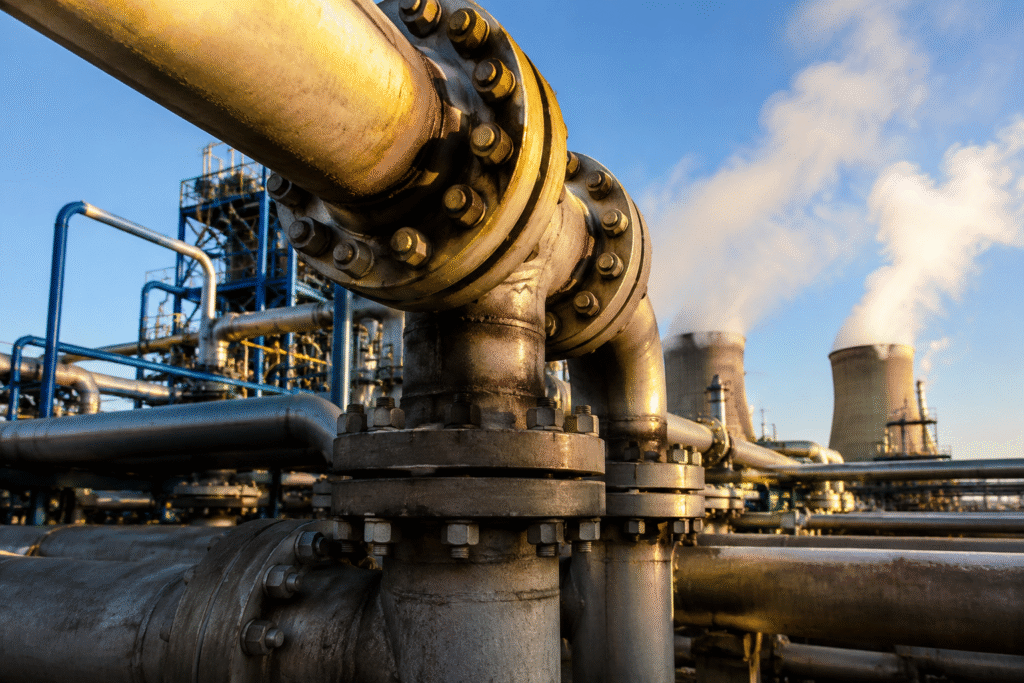
Flanges de tubo de aço inoxidável: Tipos, Guia de Padrões e Seleção
A demanda por flanges para tubos de aço inoxidável continua aumentando à medida que os sistemas industriais exigem maior resistência à corrosão, desempenho de processo mais limpo, e maior vida útil. De acordo com a pesquisa Grand View (2024), o mercado global de flanges industriais foi avaliado em $5.8 bilhão em 2023 e está projetado para atingir $7.2 bilhão por 2030, which makes flange selection a strategic purchasing decision rather than a simple commodity buy.
Para engenheiros e gerentes de compras, o desafio mais comum não é encontrar flanges. It is choosing the right grade, classe de pressão, enfrentando, and standard for each pipe system. This guide explains the intriguing and often hidden advantages, tipos, and uses of stainless steel flanges, while showing how to choose products that meet technical and commercial goals.
Por que a demanda por flanges para tubos de aço inoxidável continua crescendo na indústria global
Industrial buyers increasingly specify stainless steel because downtime now costs more than initial material savings. De acordo com Statista (2024), a indústria de petróleo e gás é responsável por aproximadamente 35% do consumo global de flanges, which highlights how critical reliable piping connections remain in severe service.
No nível de fabricação, supply concentration also matters. De acordo com IBISWorld (2024), Ásia-Pacífico é responsável por mais de 45% da produção global de flanges, sendo a China o maior fabricante, so buyers often evaluate both production scale and export quality systems before issuing purchase orders.
This market shift favors suppliers that combine metallurgy knowledge with process control. Portanto, ISO 9001:2015 documentação, PED 2014/68/EU compliance, EN 10204 3.1 registros de inspeção, and traceable heat numbers have become practical procurement requirements rather than optional extras.
Many end users now move from carbon steel to stainless grades in water treatment, petroquímico, e sistemas marinhos. Além disso, life-cycle cost analysis often shows that corrosion-related failures, gasket leaks, and unplanned shutdowns outweigh the higher upfront price of stainless steel components.
Como resultado, a stainless steel pipe flange is now specified not only for corrosion resistance, but also for hygiene, estabilidade térmica, fabrication flexibility, e redução de manutenção. This is especially true where chlorides, produtos químicos de limpeza, or fluctuating temperatures shorten the life of lower-grade materials.
De acordo com a Pesquisa de Mercado Futuro (2024), industrial process equipment demand in emerging economies continues to expand at a moderate single-digit CAGR, supporting steady consumption of flanges, acessórios forjados, and pipe accessories. Além disso, water infrastructure upgrades and power generation retrofits are adding new demand outside traditional oil and gas sectors.
Para compradores B2B, this means product selection should align with operating conditions, not generic catalog descriptions. UM 304 slip on flange may be cost-effective in mild service, whereas 316L, 2205 duplex, or 904L may be necessary in chloride-bearing or aggressive chemical environments.
Manufacturers with broad grade coverage can reduce sourcing complexity. Com ISO 9001:2015 e certificações PED 2014/68/EU, SASA FLANGE fornece flanges de aço inoxidável, flanges de aço carbono, flanges de liga, e acessórios para tubos em 304, 316, 316eu, 904eu, 2205, 2507, A182, Inconel, Monel, Hastelloy, and Titanium grades for international industrial projects.
That breadth matters because many projects mix standards and materials in one package. Por exemplo, a refinery expansion may require ASME B16.5 flanges de pescoço de solda, ASME B16.9 cotovelos, EN 1092 flanges de placa, and corrosion-resistant reducers with matching mill test reports.
Como John Reynolds, consulting materials engineer, estados: “The hidden advantage of stainless steel flanges is not only corrosion resistance. It is process reliability under combined thermal, mecânico, and chemical stress.” That principle explains why experienced EPC contractors assess total system compatibility before confirming a flange vendor.
Tipos de flange de tubo de aço inoxidável, Materiais, and Hidden Advantages for Industrial Use
The most common stainless steel pipe flange materials are ASTM A182 F304, F304L, F316, F316L, F321, F347, duplex F51, and super duplex F53. No entanto, the correct choice depends on temperature, composição média, método de soldagem, classe de pressão, e acesso para manutenção.
ASTM and ASME standards remain central to selection. ASTM A182 cobre flanges de tubos de liga forjada ou laminada e aço inoxidável, acessórios forjados, e válvulas para serviço em alta temperatura, enquanto ASME B16.5 define dimensões, tolerâncias, classificações de pressão-temperatura, and marking requirements for flanges from NPS 1/2 através 24 (ASME).
Stainless grade selection starts with corrosion behavior. 304 and 304L offer good general corrosion resistance and competitive cost, enquanto 316 and 316L include molybdenum for better pitting resistance in chloride-containing environments. Portanto, 316L is often preferred in offshore, químico, e aplicações de tratamento de água.
Higher alloy stainless grades solve more severe problems. 321 e 347 provide stabilization for elevated temperature service, while 904L improves resistance in sulfuric and phosphoric acid conditions. Em contraste, duplex 2205 e superduplex 2507 fornecer maior resistência e melhor resistência à corrosão sob tensão por cloreto.
De acordo com a Inteligência Mordor (2024), demand for corrosion-resistant alloys in industrial fluid handling is rising as operators extend asset life and reduce maintenance costs. Adicionalmente, NACE guidance continues to influence material choices in sour service and corrosive hydrocarbon environments (NACE, 2024).
Buyers should also understand flange type because geometry affects installation cost, qualidade de solda, and service integrity. The most common flange designs include:
- Flange de pescoço soldado para alta pressão, alta temperatura, e carregamento cíclico.
- Slip on flange for moderate pressure systems and easier alignment.
- Flange cego para terminação de linha, testando, e futuros pontos de expansão.
- Flange de solda de soquete para furo pequeno, tubulação de alta pressão.
- Threaded flange where welding is impractical or restricted.
- Flange de junta sobreposta para sistemas que requerem desmontagem frequente.
Each type has distinct engineering value. Por exemplo, weld neck flanges transfer stress more effectively through the tapered hub, while slip on flanges reduce fabrication complexity and can lower installed labor cost in utility service.
Facing selection is equally important. Raised face is the most common in process plants, ring type joint is preferred in higher pressure hydrocarbon service, and flat face is often used where mating equipment or cast iron components require uniform compression.
Como Dr.. Helen Carter, cientista de materiais, estados: “Procurement errors usually happen when buyers compare stainless grades by price alone, rather than by chloride level, temperatura, and welding demands.” That observation is especially relevant in desalination, escapamento marítimo, e serviço químico agressivo.
The hidden advantages of a well-selected stainless steel pipe flange include more than simple leak containment. They also include lower cleaning frequency, improved appearance in hygienic systems, easier passivation, better compatibility with stainless pipe fittings, and longer service intervals under thermal cycling.
Engineers should match material and flange style to the service envelope. A useful short checklist includes:
- Meio de processo: água, vapor, hidrocarbonetos, ácidos, cloretos, slurry.
- Temperatura operacional e pressão de projeto.
- Tamanho do tubo, agendar, and flange class such as 150, 300, 600, ou superior.
- Welding requirement and available site fabrication controls.
- Padrões aplicáveis, como ASME B16.5, ASME B16.47, DIN, JIS, GOST, ou PT 1092.
- Documentos de inspeção como EN 10204 3.1, PMI, hidroteste, and NDT reports.
According to ISO guidance and common project specifications, traceability and repeatability are now essential for critical piping components (ISO, 2024). Consequentemente, quality assurance should include dimensional checks, verificação de materiais, inspeção de superfície, marcação, and packing suitable for export logistics.
Apoiado por usinagem CNC avançada e testes de qualidade abrangentes, SASA FLANGE oferece tamanhos personalizados de 1/2 polegada para 60 inch across stainless, duplex, liga de níquel, and carbon steel ranges. This helps EPC contractors consolidate sourcing for flanges, cotovelos, camisetas, redutores, and caps under one supplier review process.
Para equipes de compras, this broader capability can reduce lead-time risk. It also simplifies technical alignment between flange and fitting materials, especially where complete line packages require the same heat treatment, nível de inspeção, and document set.
ASME, ASTM, DIN, and EN Requirements That Govern Stainless Steel Pipe Flange Quality
Standards determine whether a flange fits, selos, and performs under design conditions. Portanto, buyers should confirm both dimensional standard and material standard before requesting quotations or approving drawings.
Em sistemas ASME, B16.5 covers NPS 1/2 para 24, while B16.47 addresses larger diameter flanges. ASTM A182 governs forged stainless flange materials, e ASTM A240 often supports plate material references used in related stainless components. Em projetos europeus, EN 1092 is a key flange standard, while DIN legacy references may still appear in plant documentation.
For procurement efficiency, the following comparison is useful:
- ASME B16.5: classificações de pressão-temperatura, dimensões, tolerâncias, enfrentando, marking for common process flanges.
- ASME B16.47: large-diameter flange dimensions for major pipeline and plant applications.
- ASTM A182: forged stainless and alloy flange material requirements.
- ASME B16.9: factory-made wrought butt welding fittings used with flange-connected systems.
- EN 1092: European flange dimensions and PN pressure classes.
- NACE MR0175: materials guidance for sour service environments.
Compliance is not only a paperwork issue. Afeta diretamente a intercambialidade, bolt alignment, compressão da junta, and safe operation over time. Como resultado, even a small mismatch in drilling pattern, enfrentando, or pressure class can cause expensive field delays.
According to DNV project guidance and PED requirements, pressure equipment for regulated markets must demonstrate conformity, documentação, and traceable production control (PED 2014/68/EU; DNV, 2024). That is why serious buyers ask for MTCs, registros de inspeção dimensional, and third-party witness options before shipment.
Certification also influences supplier selection. Com ISO 9001:2015, PED 2014/68/EU, e ANÚNCIO 2000 credenciais, SASA FLANGE supports export-oriented industrial buyers who require structured quality systems for Oil & Gás, Petroquímica, Geração de energia, Construção naval, Tratamento de Água, e setores de construção.
In stainless steel pipe flange procurement, quality details should be verified in writing. Recommended checkpoints include:
- Material grade and ASTM designation.
- Tipo de flange, enfrentando, classe de pressão, and size range.
- Padrão aplicável, como ASME B16.5 ou PT 1092.
- Testing scope including PMI, dureza, hydrostatic test, and NDT if required.
- Document package including EN 10204 3.1 certificate and heat traceability.
- Marcação, embalagem, and export preservation requirements.
Adicionalmente, buyers should confirm whether the flange is forged, plate-cut, or special machined. Forged stainless flanges usually offer superior grain flow and mechanical consistency for critical service, whereas plate flanges can be economical in selected low-pressure applications when project specifications allow them.
Como Mark Ellison, engenheiro de tubulação sênior, estados: “Standards compliance is the first filter, but real quality comes from repeatable manufacturing and verification at every stage.” That is why capable flange manufacturers invest in CNC equipment, medidores calibrados, material traceability systems, and documented inspection workflows.
For teams comparing flange manufacturers or a flange vendor for long-term supply, the most useful question is simple. Can the supplier consistently deliver the same dimensions, metalurgia, acabamento superficial, and documents across repeat orders and multiple project locations?
Buyers can review more capabilities through SASA FLANGE recursos do produto e histórico da empresa em o perfil do fabricante. That extra visibility helps qualify suppliers before RFQ release, especially for approved vendor list processes.
How to Choose the Most Common Flanges for Oil, Gás, Químico, Poder, e Sistemas Marítimos
Selection begins with service conditions, not catalog popularity. The most common flanges are weld neck, escorregar, cego, solda de soquete, rosqueado, e junta sobreposta, but each one suits different pressure, manutenção, and fabrication needs.
Em petróleo e gás, weld neck flanges often lead because they handle vibration, flutuação de pressão, and thermal cycling well. De acordo com Statista (2024), petróleo e gás representam cerca 35% do consumo global de flanges, which explains why API-related project requirements influence buying patterns across the market.
Em plantas petroquímicas e químicas, stainless grade choice becomes more critical than flange shape alone. Por exemplo, 316eu, 904eu, 2205, ou 2507 pode ser selecionado onde cloretos, ácidos, or mixed chemical streams challenge standard 304 material.
Power generation applications often combine elevated temperature and pressure. Portanto, engineers frequently evaluate 321, 347, liga de aço, ou ASTM A182 material options depending on steam service, thermal fatigue exposure, e requisitos de código.
Sistemas marítimos e de construção naval aumentam a exposição ao sal, umidade, e restrições de espaço. Nestes casos, duplex stainless can offer an excellent balance of strength and chloride resistance, while compact dimensional control remains important for prefabricated piping modules.
The practical selection criteria below help reduce material mismatch and field rework:
- Match flange material to pipe and fitting metallurgy where galvanic and corrosion issues matter.
- Confirme a classe de pressão em relação à pressão e temperatura projetadas, not ambient operating assumptions.
- Choose facing type based on gasket design and leak-tightness requirement.
- Review flange type against weld access, inspection feasibility, and expected maintenance frequency.
- Solicitar EN 10204 3.1 certificates for traceability in critical service.
- Specify dimensions and standards clearly for global projects using ASME, DIN, JIS, GOST, or EN systems.
Size also influences purchasing behavior. Pesquisa tamanhos de flange de tubo de aço inoxidável, 4 flange de tubo de aço inoxidável de polegada, Flange de aço inoxidável 2, and Stainless Steel Threaded Pipe Flange typically reflect users moving from information gathering to product comparison and quoting.
No entanto, unit price alone should not drive selection. Stainless steel pipe flange price varies by grade, rota de forjamento, classe de pressão, enfrentando, quantidade, escopo de teste, and market nickel costs. Como resultado, the lowest quote may not deliver the lowest installed cost.
For custom packages, buyers often need elbows, camisetas, redutores, and caps together with matching flanges. Offering custom manufacturing capabilities and a broad material portfolio, SASA FLANGE can support coordinated supply for standard and non-standard projects across 50+ países.
That matters when projects require mixed sizes from 1/2 polegada para 60 polegada, prazos curtos, or special grades like Inconel, Monel, Hastelloy, ou Titânio. It also supports OEMs and EPC contractors who prefer fewer vendors, clearer accountability, and more stable quality records.
When evaluating a flange manufacturer, procurement teams should also ask about MOQ, production capacity, Capacidade de usinagem CNC, coating or pickling treatment, and document lead time. These details affect schedule performance as much as nominal manufacturing lead time.
Portanto, a robust sourcing process combines engineering review, supplier qualification, planejamento de inspeção, and logistics coordination. That approach is especially important when buying stainless steel flanges and fittings for shutdown windows, fabricação de patins, or export projects with strict document submission milestones.
Future Outlook for Stainless Steel Flanges and Strategic Sourcing Recommendations
The flange market will likely remain resilient because replacement demand, infrastructure upgrades, and corrosion-control spending continue to support industrial investment. De acordo com a pesquisa Grand View (2024), espera-se que o mercado cresça a partir $5.8 bilhão em 2023 para $7.2 bilhão por 2030, which signals stable long-term demand for qualified suppliers.
Ao mesmo tempo, buyers are becoming more data-driven. They increasingly compare total cost of ownership, lead-time reliability, registros de conformidade, and failure risk rather than focusing only on spot pricing for the most common flanges.
Several trends are shaping future procurement. These include broader use of duplex and super duplex materials, stronger demand for PED-compliant documentation, and greater emphasis on traceability, PMI, and digital inspection records. Além disso, projects now expect faster technical responses during the RFQ stage.
For sourcing managers, três recomendações se destacam:
- Standardize approved grades and flange types by service category to reduce specification drift.
- Prequalify flange manufacturers with proven CNC machining, capacidade de inspeção, e documentação de exportação.
- Compare quotes on total delivered value, including certification, testando, embalagem, and schedule confidence.
Para engenheiros, material selection should remain tied to corrosion mechanism, temperatura, and operating pressure. Para equipes de compras, supplier evaluation should include communication speed, technical clarity, and repeat-order consistency.
Companies planning upcoming refinery, tratamento de água, marinho, or power projects can benefit from early technical discussion before finalizing the bill of materials. Em muitos casos, this avoids costly overspecification in mild service and prevents dangerous underspecification in chloride-rich or high-temperature duty.
With manufacturing expertise in stainless steel pipe flange products, acessórios forjados, and custom dimensions, SASA FLANGE remains a practical partner for industrial buyers seeking traceable quality and factory-direct supply. Teams that need project support, technical clarification, or current production schedules can start the conversation through direct contact with SASA FLANGE.
Perguntas frequentes
Para que são usados os flanges de aço inoxidável?
●Flanges de aço inoxidável são usadas para conectar tubos, válvulas, bombas, e equipamentos em sistemas que exigem resistência, resistência à corrosão, e vedação confiável sob pressão.
●De acordo com Statista (2024), petróleo e gás representam cerca de 35% do consumo global de flanges, which shows how essential flanged connections remain in critical industrial service.
●Eles são amplamente utilizados no tratamento de água, petroquímico, marinho, processamento de alimentos, and power plants because grades such as 304, 316eu, 2205, e 2507 can handle different chemical and temperature conditions.
●Common uses include line connection points, acesso de manutenção, bicos de equipamento, inspection spools, and blind ends for testing or future expansion.
●For projects requiring traceable materials, correct pressure class, and standards like ASME B16.5 ou PT 1092, trabalhando com fabricantes estabelecidos como SASA FLANGE helps ensure dependable performance.
Eles fazem acessórios para tubos de aço inoxidável?
●Sim, os fabricantes produzem acessórios para tubos de aço inoxidável, como cotovelos, camisetas, redutores, and caps to match stainless flanges in the same piping system.
●ASME B16.9 é o padrão principal para conexões de solda de topo forjadas feitas em fábrica, and many industrial projects specify these fittings together with ASTM A182 stainless flanges for material consistency.
●Using matching stainless fittings and flanges improves corrosion compatibility, integridade da solda, e rastreabilidade de inspeção, especialmente em produtos químicos, offshore, and hygienic process lines.
●Os materiais comuns incluem 304, 316, 316eu, 904eu, 2205, e 2507, while the right choice depends on chloride level, temperatura operacional, e pressão de projeto.
●For buyers who need flanges and fittings in one coordinated package, SASA FLANGE pode simplificar o controle de fornecimento e documentação.
Quais flanges são feitas de aço inoxidável?
●Most major industrial flange types can be made from stainless steel, incluindo pescoço de solda, escorregar, cego, solda de soquete, rosqueado, e projetos de juntas sobrepostas.
●ASTM A182 commonly covers forged stainless steel flange materials such as F304, F304L, F316, F316L, F321, F347, and duplex grades for more demanding service.
●The most common stainless choices are 304 e 316L, but higher alloy materials like 904L, 2205, e 2507 are often selected where chloride resistance or higher strength is required.
●Buyers should also confirm facing type, classe de pressão, and standard because a stainless flange must fit the full piping specification rather than just the material grade.
●For technical support on stainless steel flange types, dimensões, and mill certification requirements, it is advisable to work with an experienced flange vendor.
Quais são os três tipos de flanges?
●Os três tipos de flange mais comumente referenciados em discussões industriais básicas são pescoço de solda, escorregar, e flanges cegas.
●Flanges com pescoço soldado são preferidos para serviços de alta pressão ou alta temperatura, slip on flanges are popular for moderate-duty systems with easier installation, and blind flanges close the end of a piping line or vessel nozzle.
●Na prática, engineers also use socket weld, rosqueado, e flanges de junta sobreposta, so the final selection should reflect process conditions, necessidades de inspeção, e estratégia de manutenção.
●De acordo com ASME B16.5, these flange types must meet strict dimensional and rating requirements to ensure interchangeability and sealing reliability.
●Para sistemas críticos, it is best to review flange type selection with the manufacturer before ordering, especially when project standards, schedule numbers, and facing details are tightly controlled.
Qual é o código ASME para flanges de aço inoxidável?
●The main ASME standard for most stainless steel pipe flange dimensions and ratings is ASME B16.5, enquanto ASME B16.47 applies to many larger diameter flanges.
●Material specification is usually handled by ASTM A182 para flanges inoxidáveis forjados, so buyers should verify both the ASME dimensional standard and the ASTM material standard together.
●ASME B16.5 geralmente cobre NPS 1/2 através 24 and includes pressure-temperature ratings, tolerâncias, enfrentando, marcação, and bolt dimensions needed for proper fit-up.
●European or mixed-standard projects may also reference EN 1092 or DIN systems, so technical review is important before manufacturing begins.
●If your project requires PED documentation, EN 10204 3.1 certificação, or custom machining beyond standard catalog items, a qualified supplier such as SASA FLANGE can help align the specification package.
Como faço para escolher entre 304 e 316 materiais de flange de tubo de aço inoxidável?
●Escolher 304 for general industrial service with moderate corrosion exposure, e escolha 316 ou 316L quando cloretos, produtos químicos, or marine conditions increase the risk of pitting and crevice corrosion.
●316 contém molibdênio, which improves resistance in more aggressive environments, and that is why it is often preferred for coastal facilities, processamento químico, e sistemas de tratamento de água.
●The price difference can be justified when reduced maintenance, fewer leaks, and longer equipment life lower total ownership cost over time.
●According to industry practice and materials guidance, 316L is especially valuable when welding is required because its lower carbon content helps reduce sensitization risk.
●For uncertain service conditions, buyers should submit process media, temperatura, pressão, and chloride data to the supplier before final material approval.
Posts Relacionados
Acabamento da face do flange: Serrilhas concêntricas vs espirais explicadas
As serrilhas concêntricas e espirais são acabamentos de face de flange usinados…
Dúplex 2205 vs Flanges 316L: Qual material você deve escolher?
Resposta rápida: Dúplex 2205 flanges são geralmente o candidato mais forte…

Definição de flange de orifício, Detalhes e visão geral dos flanges ASME B16.36: Dados de mercado, Guia de seleção e insights de conformidade
O mercado global de flanges industriais foi avaliado em $5.8 bilhão…

Guia de mercado de flange de descarte preto: Materiais, 3.5″ Compatibilidade, e dados de fornecimento B2B para flanges de pia de cozinha
A demanda por flanges descartáveis pretos está aumentando à medida que os compradores de utensílios de cozinha…